Author name: admin

Energy & Technology

Zetrix AI Says Partnership Under Review Following Thai Raid On Worldcoin

KUALA LUMPUR, Zetrix AI Bhd said its partnership with Tools for Humanity, the developer behind Worldcoin, remains valid but is currently under review following reports of a raid on a Worldcoin-linked exchange in Thailand. The agreement — inked last year between Zetrix AI (then known as MyEG Services Bhd), Tools for Humanity and state-owned Mimos Bhd — is “still in effect and presently under further evaluation by the three parties,”. Thai authorities recently raided a Worldcoin-affiliated iris scanning and exchange site in Bangkok, arresting several individuals for operating an unlicensed digital asset business. The incident has intensified global scrutiny of Worldcoin, which collects biometric data through iris scans to create digital identities — a practice that has raised privacy concerns. In August 2024, MyEG announced a memorandum of understanding (MoU) with Mimos, the Worldcoin Foundation and Tools for Humanity to explore integrating Worldcoin’s identity verification technology into Malaysia’s blockchain infrastructure. Mimos clarifies scope of involvementMimos, under the Ministry of Science, Technology and Innovation, said its role in the collaboration is limited to technology assessment and development. “Our participation focuses on evaluating advanced technologies for potential use cases,” the agency said in an emailed statement, adding that all initiatives are guided by national priorities and regulatory frameworks to ensure data security, trust and governance. The agency reiterated its commitment to supporting Malaysia’s digital transformation agenda through research and strategic partnerships that strengthen the local technology ecosystem. Zetrix AI distances itself from Worldcoin’s operationsZetrix AI clarified that neither Worldcoin Foundation nor Tools for Humanity operates any digital asset exchange business and that the company is unaware of any such activities in Malaysia. While Worldcoin conducts iris-scanning operations locally using its Orb devices, Zetrix AI said its involvement is limited to renting space at its nationwide branches. “Zetrix AI is not directly involved, although we do rent some space to them where appropriate,” the spokesperson said. Despite recent developments, Zetrix AI maintains that its collaboration with Mimos and Tools for Humanity continues to hold potential for advancing Malaysia’s blockchain infrastructure initiatives.
News

Kumpulan Kitacon Wins RM86.6m Contract For Housing Project At The Mines Resort City

KUALA LUMPUR, Kumpulan Kitacon Bhd has secured an RM86.58 million contract from Earth Pavilion Sdn Bhd to construct residential units at The Mines Resort City in Selangor. The project, to be undertaken by its wholly owned subsidiary Kitacon Sdn Bhd, comprises two phases: Phase 3: 34 units of three-storey semi-detached and zero-lot homes Phase 4: 47 units of three-storey zero-lot and bungalow houses Construction will commence on Nov 1, 2025, and is expected to be completed within 24 months, the group said in a bourse filing. Kitacon added that the contract is expected to contribute positively to its earnings and net assets per share for the financial year ending Dec 31, 2025 (FY2025) and onwards. For the first half of FY2025, the group posted a net profit of RM26.41 million, up 9.9% from RM24.02 million a year earlier, despite a 12.5% decline in revenue to RM413.34 million due to several projects nearing completion. CGS International projected stronger earnings in the second half of FY2025, supported by margin expansion and ongoing township projects such as Bandar Bukit Raja and Elmina. As of June, Kitacon’s tender book stood at RM913 million, comprising 83% residential and 17% industrial projects. The group has secured RM375 million worth of new contracts so far this year, including an RM88 million residential project from GuocoLand Group. At Tuesday’s midday break, Kitacon shares slipped 0.5 sen or 0.68% to 72.5 sen, valuing the company at RM362.7 million.

News

LAC Med Signs Underwriting Deal For Main Market Listing

KUALA LUMPUR, LAC Med Bhd has entered into an underwriting agreement with RHB Investment Bank Bhd and Alliance Islamic Bank Bhd for its upcoming initial public offering (IPO) on the Main Market of Bursa Malaysia, which is targeted for December 2025. In a statement, the medical solutions provider said the IPO proceeds will be used to accelerate its market expansion, strengthen its product portfolio, and enhance its range of medical devices and services. LAC Med also plans to diversify into two new business segments — Equipment-as-a-Service (EaaS) and Medical Equipment Asset Management Services (MEAMS) — to build recurring income streams post-listing. Part of the IPO funds will be channelled towards regional expansion in Indonesia, relocation to a larger head office with expanded storage space, and the establishment of a product demonstration showroom. Group chief executive officer Liew Yoon Poh said the IPO marks an important milestone for LAC Med’s next phase of growth. “Our listing will enable us to expand our suite of integrated medical solutions, driving better patient care and operational efficiency for healthcare providers. Through our partnerships with global brands, we aim to deliver best-in-class technologies and services to the market,” he said.

Energy & Technology

Equator, China State Firm To Export Indonesian Power To Singapore

SINGAPORE, Singapore-based Equator Renewables Asia and China’s state-owned CRE International (CREI), a subsidiary of China National Nuclear Corp, have teamed up to develop a major solar and battery project in Indonesia’s Riau Islands to export clean electricity to Singapore. The partners plan to complete construction of a 900-megawatt (MW) solar photovoltaic (PV) plant and a 1.2 gigawatt-hour (GWh) battery energy storage system (BESS) by 2029, which will generate about 830 GWh of renewable energy annually, Equator said in a statement on Tuesday. Under the collaboration, CREI will lead investments, construction, and operations for the solar and battery facilities, while Equator will oversee transmission and coordinate power offtake arrangements. The multibillion-dollar project marks Equator’s first under Singapore’s cross-border renewable energy import initiative with Indonesia. The company is among six firms granted conditional approval to supply low-carbon electricity to Singapore. Financial terms were not disclosed. Cross-border grid links are seen as vital for Southeast Asia’s energy transition, reducing the region’s dependence on fossil fuels. Singapore aims to import around six gigawatts (GW) of low-carbon electricity by 2035, representing roughly one-third of its power needs. The city-state currently sources about 1% of its clean power from Malaysia.

Investment & Market Trends

Taiwan’s Ichia Inaugurates New RM490 Mil Manufacturing Plant In Malaysia

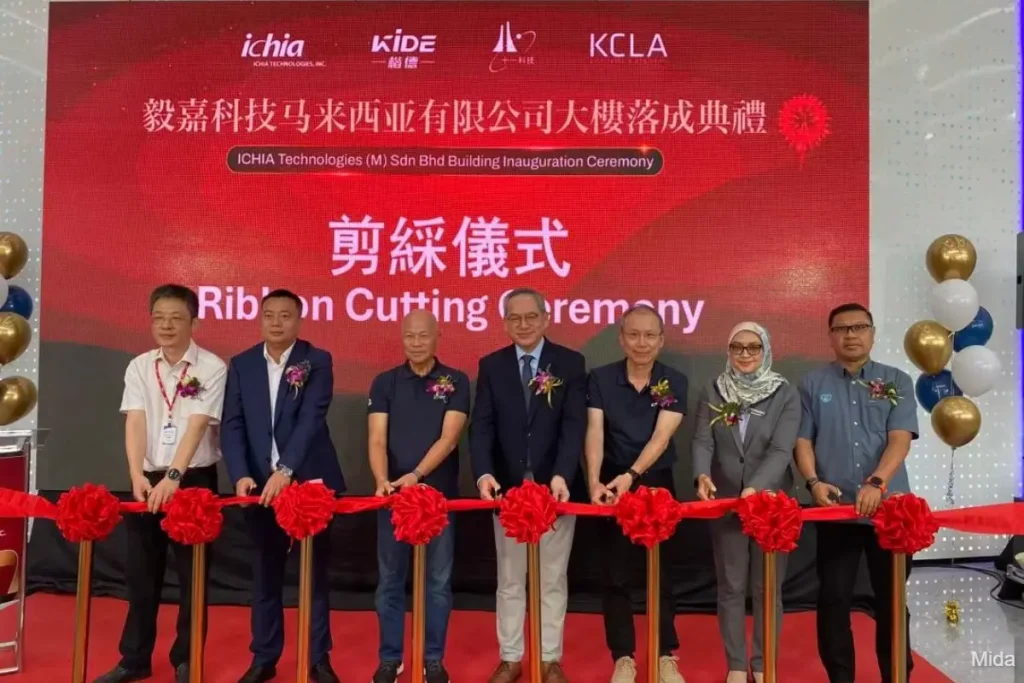
KUALA LUMPUR, Taiwanese electronic components manufacturer Ichia Technologies Inc has officially launched its second production facility at Kulim Hi-Tech Park, Kedah, marking a significant expansion of its presence in Malaysia. (From left) Edri Eastern China Branch deputy director and general manager Liu XiaoHu, Kide International Sdn Bhd chairman Huang WeiJun, Ichia Technologies Inc chairman Benng Huang, Taipei Economic and Cultural Office in Malaysia deputy representative James Buu, Ichia Technologies Inc CEO Eric Tseng, Mida Kedah director Nazlizan Abdullah and Invest Kedah chief operating officer Noor Ikhsan Abdul Aziz. The RM490 million investment is expected to generate around 600 new job opportunities in the state, according to the Malaysian Investment Development Authority (Mida) in a statement on Tuesday. Ichia chairman Huang Chiu-Yung said the new facility would play a central role in strengthening the group’s long-term growth amid global supply chain realignments and tariff challenges. “Our new facility in Kulim will be a key driver of Ichia’s sustainable growth as we continue adapting to global manufacturing shifts,” Huang said. Spanning over 55,000 sq m, the new plant will serve as Ichia’s second-largest manufacturing base worldwide. Listed on the Taiwan Stock Exchange, Ichia reported revenues exceeding US$311 million (RM1.3 billion) in 2024. The Kulim facility will focus on producing printed circuit boards, assemblies, and components primarily for the automotive and telecommunications industries. Mida CEO Datuk Sikh Shamsul Ibrahim Sikh Abdul Majid said the investment underscores Malaysia’s growing role as a strategic hub in the global electrical and electronics (E&E) supply chain, while also helping nurture local talent. Invest Kedah chief operating officer Noor Ikhsan Abdul Aziz added that Ichia’s expansion would enhance the local ecosystem by creating high-value employment and fostering new business opportunities for local suppliers.

News

Creador Names Ex-Ekuinas CEO Syed Yasir Arafat As Senior Adviser

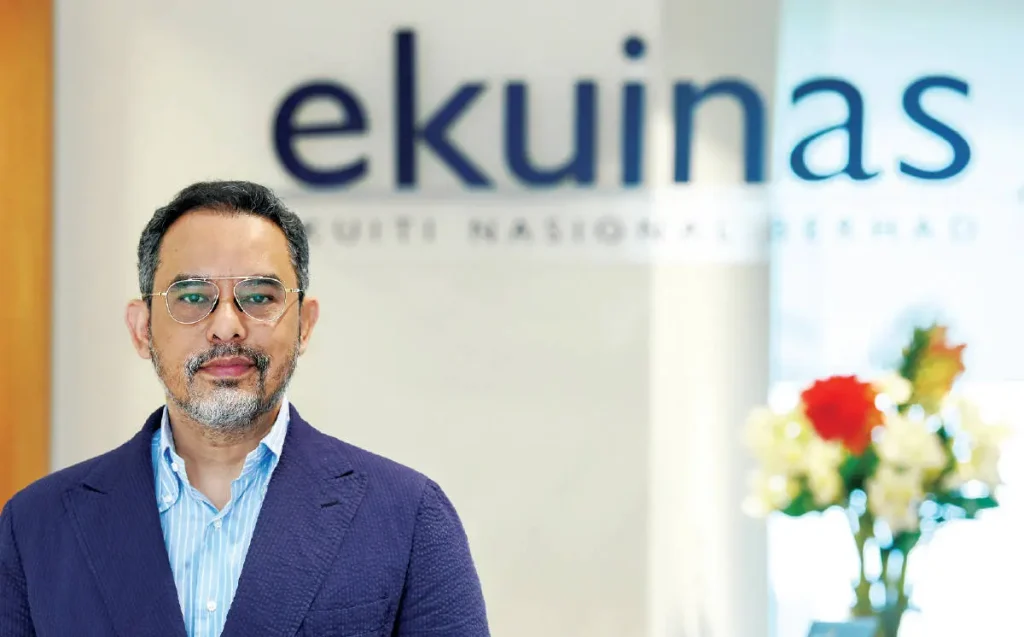
KUALA LUMPUR, Regional private equity firm Creador has appointed former Ekuiti Nasional Bhd (Ekuinas) chief executive officer Datuk Syed Yasir Arafat Syed Abd Kadir as its senior adviser, as part of efforts to strengthen its investment footprint in Malaysia. In this new role, Syed Yasir will assist Creador in sourcing and executing strategic investments across key sectors, particularly healthcare and pharmaceuticals, advanced manufacturing, and business-to-business (B2B) services. Datuk Syed Yasir Arafat Syed Abd Kadir stepped down from Ekuinas on March 31 after 15 years at the state-owned private equity firm, including nine as chief executive officer. “Syed Yasir brings a wealth of leadership experience and an extensive professional network that will enhance Creador’s ability to create value and build sustainable partnerships,” the firm said in a statement on Tuesday. According to Creador, Syed Yasir will work closely with its investment team to provide strategic insights, support deal origination, and contribute to portfolio development. His appointment reflects Creador’s continued focus on expanding its presence and fostering long-term growth in the Malaysian market. Founded in 2011, Creador is a private equity firm specialising in South and Southeast Asia, with more than US$3 billion (RM12.63 billion) raised across six funds and investments in over 60 companies to date. Syed Yasir stepped down from Ekuinas on March 31 after 15 years with the state-backed private equity firm, including nine years as CEO. He was succeeded by Aliff Omar Mohamad Omar, previously Ekuinas’ senior director of investment. During his tenure, Syed Yasir oversaw RM4 billion in managed funds and RM5.6 billion worth of investments in 28 companies. He also led the creation of Dana Asas, a Bumiputera-focused fund, and introduced private credit as a new investment asset class.

News

Uber Eyes Investment In Hong Kong IPOs Of Pony AI And WeRide

Uber Technologies Inc is reportedly planning to invest in the Hong Kong listings of autonomous vehicle companies Pony AI Inc and WeRide Inc, signaling its continued commitment to expanding partnerships in the Chinese robotaxi sector. According to sources familiar with the matter, Uber may invest around US$100 million (RM420.2 million) in Pony AI’s share sale. Pony AI, which went public in the US last year, aims to raise up to US$972 million in its Hong Kong offering, with the potential to increase the size of the deal through an over-allotment option. San Francisco-based Uber is also eyeing WeRide’s Hong Kong listing, although the exact investment amount has not been disclosed. Other potential investors in the offerings may include Grab Holdings Ltd, Singapore’s state investor Temasek Holdings Pte, and German engineering giant Robert Bosch GmbH. WeRide, which also went public in the US a year ago, filed for a Hong Kong IPO seeking up to US$398 million. Discussions are ongoing, and the investment plans could change, according to the sources. Uber, Pony AI, and WeRide did not immediately comment. Previously, Uber invested in the US IPOs of both Pony AI and WeRide, and in May announced an additional US$100 million investment in WeRide. The ride-hailing firm has also collaborated with Pony AI earlier this year to launch autonomous services in the Middle East and partnered with WeRide in Abu Dhabi. Since their US debuts, Pony AI’s American depositary receipts have gained more than 50%, while WeRide’s have fallen 28% over the same period. Both companies plan to use proceeds from their Hong Kong listings to scale autonomous driving operations. Pony AI intends to commercialise its Level 4 robotaxi and robotruck technology and fund research and development, aiming for profitability by 2028–2029. WeRide plans to advance its autonomous driving technology, accelerate commercial mass production of Level 4 fleets, and expand its operations over the next five years, although it has yet to turn a profit. Grab, meanwhile, is also moving into autonomous mobility, recently investing in Michigan-based May Mobility to bring robotaxi services to Southeast Asia and partnering with WeRide to deploy fleets in the region. This move by Uber reflects the growing strategic importance of autonomous vehicle technologies in Asia and its push to deepen collaboration with key robotaxi developers in China and beyond.

Investment & Market Trends

India, Russia Ink Fighter Jet Manufacturing Deal Ahead Of Putin Visit

India and Russia have formalised an agreement to jointly produce passenger aircraft, just weeks before Russian President Vladimir Putin’s scheduled visit, highlighting the continued strength of ties between New Delhi and Moscow despite growing pressure from the United States. Under the deal, India’s state-owned Hindustan Aeronautics Ltd (HAL) will collaborate with Russia’s United Aircraft Corp (UAC) to manufacture the SJ-100 civil commuter aircraft, HAL said in a statement on Tuesday (Oct 27). The announcement did not clarify whether the agreement includes technology transfer to India or specify the investment involved. “This will also be the first instance wherein a complete passenger aircraft will be produced in India,” HAL said, adding that the collaboration reflects “mutual trust between the organisations.” Under the pact, HAL will have the rights to manufacture SJ-100 twin-engine, narrow-body aircraft for Indian customers. The timing of the announcement comes as India prepares to host Putin in December, amid US criticism over New Delhi’s continued purchases of Russian crude. Washington has also imposed 50% tariffs on Indian goods, citing both trade barriers and India’s ongoing ties with Moscow. The partnership supports Prime Minister Narendra Modi’s push to expand domestic manufacturing and improve short-haul connectivity, as India plans to double its number of airports to 350 by 2047. HAL did not provide details on the capital required for the project or which Indian carriers might adopt the aircraft. The company has previously faced challenges in producing sufficient fighter jets for the Indian Air Force, raising questions about its broader aerospace capabilities.

News

PayPal Strikes Payments Wallet Deal With OpenAI’s ChatGPT, Shares Surge

PayPal Holdings Inc. announced on Tuesday a strategic partnership with OpenAI, enabling ChatGPT users to make purchases using PayPal’s digital wallet, driving the company’s shares up 13% in pre-market trading. The fintech giant also raised its full-year financial outlook and declared its first-ever dividend in 27 years, signaling strong confidence in its cash flow and long-term profitability. Under the agreement, PayPal’s global merchant network will be integrated with ChatGPT, allowing users to buy products directly through the AI-powered platform. The move comes as AI-driven shopping tools gain traction, offering digital assistants that autonomously research, compare, and purchase items based on user preferences, budgets, reviews, and price tracking. “By partnering with OpenAI and adopting the Agentic Commerce Protocol, PayPal will power seamless payments and commerce experiences, helping customers move from chat to checkout in just a few taps,” said PayPal CEO Alex Chriss. Upgraded Forecast and Dividend Announcement PayPal now expects full-year adjusted earnings per share (EPS) between US$5.35 and US$5.39, up from its previous guidance of US$5.15 to US$5.30, and exceeding analysts’ consensus of US$5.24. In a historic first, the company’s board approved a quarterly dividend of 14 cents per share, reflecting a targeted payout ratio of 10% of adjusted profits. Over recent years, under Chriss’s leadership, PayPal has shifted its focus toward profitability rather than rapid revenue growth. After peaking during the pandemic, the company faced slower growth as consumer spending returned to physical stores, prompting cost-cutting measures and a pivot to higher-margin services. Despite broader economic pressures, PayPal’s core payment volumes have remained resilient. Total payment volume grew 7% on a foreign-exchange neutral basis, reaching US$458.1 billion (RM1.9 trillion), underscoring the durability of its business.

Investment & Market Trends

Japan And US Announce Initial Projects Under US$550 Billion Flagship Fund

Japan and the US have unveiled the first list of potential projects under their US$550 billion (RM2.31 trillion) joint investment fund, offering a first glimpse into the initiatives that could be supported under the framework of their landmark trade agreement. The announcement came during a signing ceremony in Tokyo on Tuesday, where US Commerce Secretary Howard Lutnick highlighted some of the highest-profile commitments, naming companies such as SoftBank Group, Westinghouse, and Toshiba Corp. Project sizes range from US$350 million to as much as US$100 billion. A fact sheet released by Japan’s trade ministry also listed additional Japanese firms interested in launching projects in sectors including energy, artificial intelligence (AI), and critical minerals. Lutnick described the moment as “really, really exciting,” noting that these projects form the foundation for broader cooperation between the two countries. The initial announcements aim to flesh out a trade deal reached earlier this year, under which US tariffs on Japanese goods were lowered and capped in exchange for Japan committing to invest US$550 billion in US projects. Key projects outlined include: Westinghouse (Energy): Construction of AP1000 nuclear reactors and smaller modular reactors, potentially involving Mitsubishi Heavy Industries, Toshiba Group, and IHI, with an estimated scale of up to US$100 billion. GE Vernova/Hitachi (Energy): Small modular reactor (SMR) construction, also valued up to US$100 billion. Bechtel (Energy): Large-scale power and industrial infrastructure, including power plants, substations, and transmission systems, worth up to US$25 billion. SoftBank Group (Energy): Development of large-scale power infrastructure, up to US$25 billion. NuScale/ENTRA1 Energy: Power projects to support AI applications, including gas-thermal and nuclear generation. Toshiba: Strengthening AI infrastructure through the supply of power modules, data center transformers, and other power-generation equipment. Carbon Holdings (Critical Minerals): Construction of a greenfield ammonia and urea fertiliser facility, valued at up to US$3 billion. The fund, still in its “launch phase,” will see preliminary project work vetted by a Japanese consultation committee and the US investment committee before final approval by the US president, Lutnick said. The goal is to start physical construction once projects are greenlit, a process expected to take several months. Energy-related projects dominate the initial list in terms of scale, with both Westinghouse and GE Vernova/Hitachi SMR projects estimated at up to US$100 billion each. Other projects under consideration span semiconductors, pharmaceuticals, metals, shipbuilding, AI, and quantum computing, reflecting the fund’s dual focus on economic growth and national security. The US retains final decision-making authority over which projects are funded, though Japan is expected to provide input. The investment fund is designed to complement the July trade agreement, which lowered US car duties from 27.5% to 15% and capped tariffs on other Japanese imports, while promoting collaboration on high-priority industries. Lutnick emphasised that these companies were “fully vetted with the Japanese” and that the fund aims to build foundational infrastructure critical to both nations’ economic and security interests. This marks a major step in operationalising the US$550 billion fund, with projects spanning multiple high-impact sectors, from clean energy and critical minerals to AI and quantum computing, reflecting a coordinated effort to strengthen the economic partnership between Japan and the United States.

Scroll to Top

Subscribe
FREE Newsletter