Author name: admin

Energy & Technology

Sabah Acquires 25% Ownership In Petronas’ PFLNG 3 Project

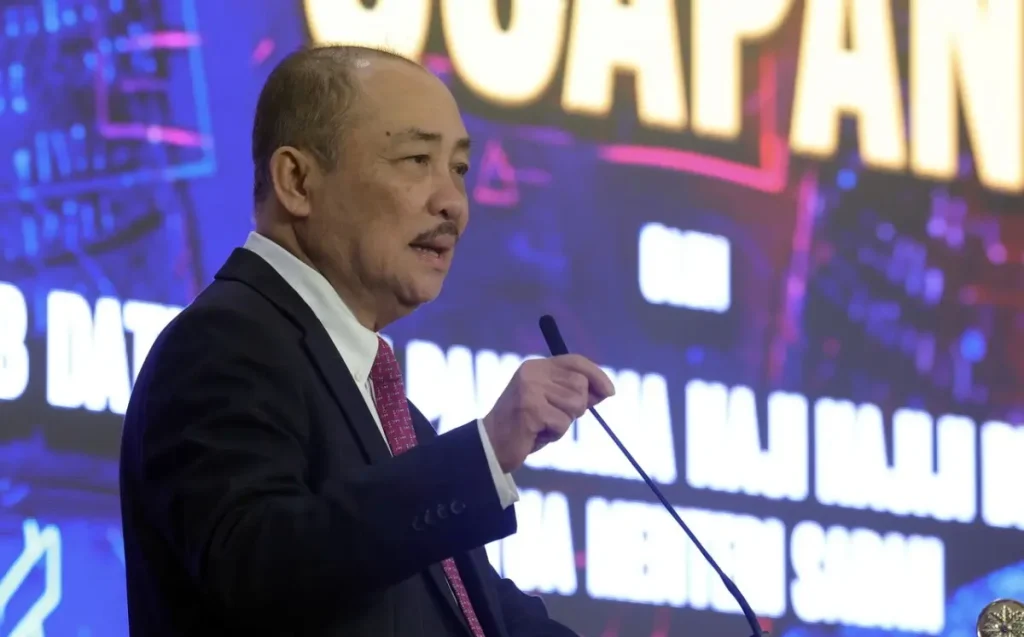
KOTA KINABALU, Sabah has officially completed the acquisition of a 25% equity stake in Petronas PFLNG 3 Sdn Bhd, marking a significant step forward in the state’s efforts to strengthen its participation in Malaysia’s oil and gas sector and deepen collaboration with Petroliam Nasional Bhd (Petronas). Chief Minister Datuk Seri Hajiji Noor said the move, executed through SMJ Energy Sdn Bhd — Sabah’s state-owned energy company — in partnership with Petronas LNG Sdn Bhd, represents a major milestone in enhancing Sabah’s role in upstream and downstream energy ventures. “This acquisition not only reinforces the close working relationship between Sabah and Petronas, but also sets the foundation for future strategic collaborations in the oil and gas industry,” Hajiji said in a statement on Friday. Petronas PFLNG 3 is currently developing a US$3.1 billion (RM13 billion) nearshore floating liquefied natural gas (FLNG) facility located at the Sipitang Oil and Gas Industrial Park (SOGIP). Designed to produce two million tonnes of LNG annually, the project is scheduled to commence operations in the second half of 2027. Hajiji said the state’s participation in PFLNG 3 aligns with Sabah’s broader ambition to secure a stronger foothold in key energy projects within its borders, ensuring greater revenue generation and long-term sustainability for its energy sector. The equity acquisition follows the signing of a heads of agreement between SMJ Energy and Petronas LNG Sdn Bhd in July 2025, witnessed by Hajiji and Petronas president and group chief executive officer Tan Sri Tengku Muhammad Taufik in Kuala Lumpur. “With this partnership, Sabah is taking concrete steps towards becoming a significant player in Malaysia’s LNG industry. It reflects our commitment to developing local capacity, encouraging technology transfer, and ensuring that the people of Sabah benefit directly from the state’s natural resources,” Hajiji said. The latest acquisition adds to SMJ Energy’s expanding investment portfolio, which already includes a 50% participation interest in the Samarang Production Sharing Contract, a 10% stake in Petronas LNG 9 Sdn Bhd, and 25% equity in Petronas Chemicals Fertiliser Sabah Sdn Bhd (SAMUR). In addition, SMJ Energy fully owns Sabah International Petroleum Sdn Bhd (SIP), which manages strategic offshore assets such as floating production storage and offloading (FPSO) and floating storage and offloading (FSO) vessels — key infrastructure supporting the state’s growing energy operations. Hajiji added that the state government will continue exploring new partnerships with Petronas and other major players to advance Sabah’s participation in sustainable energy development, boost industrial activity at SOGIP, and enhance the state’s position as a regional energy hub.
Energy & Technology

Nvidia Signs AI Partnerships With South Korea’s Top Conglomerates

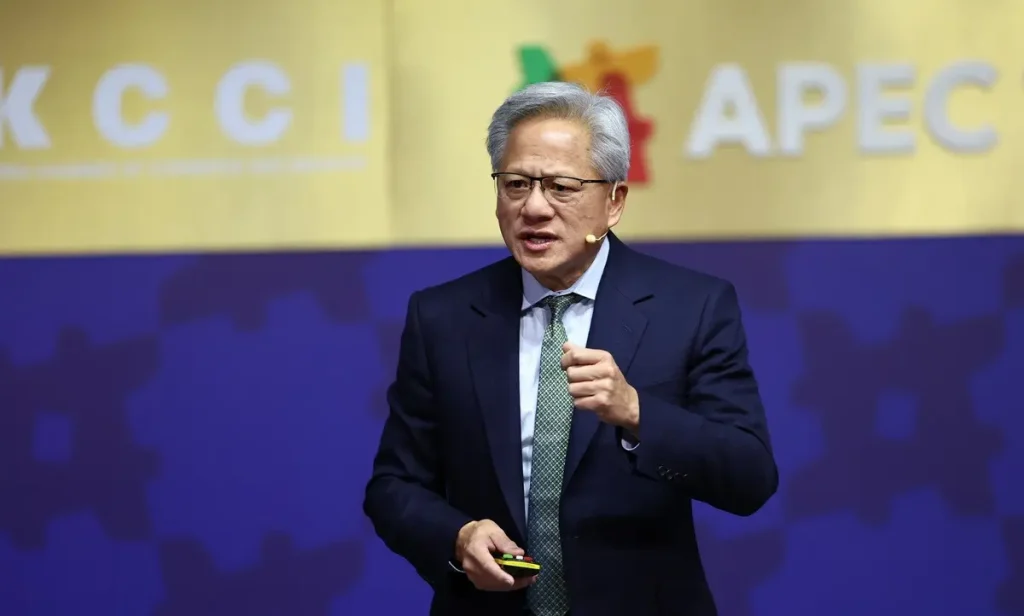
Nvidia Corp has sealed a major deal with South Korea’s largest conglomerates to supply its advanced AI technology, strengthening its global footprint in artificial intelligence infrastructure. In collaboration with the Ministry of Science and major corporate giants — Samsung Electronics Co, Hyundai Motor Group, and SK Group — Nvidia will deliver over 260,000 AI accelerator chips to power South Korea’s expanding AI ecosystem. Financial details of the deal were not disclosed. Nvidia CEO Jensen Huang is in South Korea, attending the Asia-Pacific Economic Cooperation CEO Summit on Friday. The agreements were formalised during the Asia-Pacific Economic Cooperation (APEC) CEO Summit 2025, attended by Nvidia chief executive officer Jensen Huang, who is on an international campaign to promote AI adoption and extend Nvidia’s technological reach. Under the partnership, the South Korean government plans to establish “sovereign AI” infrastructure, deploying more than 50,000 Nvidia accelerators in national data centres and facilities owned by Kakao Corp, Naver Corp, and NHN Cloud Corp. “South Korea’s goal is to become the AI capital of the Asia-Pacific region,” President Lee Jae Myung said in a statement. Samsung Electronics, one of the world’s largest chipmakers, will set up a massive “AI factory” equipped with over 50,000 Nvidia chips. The company is also in discussions to supply next-generation HBM4 memory to Nvidia, aiming to begin mass production soon. Hyundai Motor Group will deploy a similar number of Nvidia’s Blackwell chips to enhance its AI model development, manufacturing automation, and autonomous driving technologies. Both companies will jointly invest US$3 billion (RM12.6 billion) to build a national AI computing centre in South Korea. Meanwhile, SK Group, along with its affiliates SK Telecom Co and SK Hynix Inc, will roll out Nvidia’s RTX Pro 6000 Blackwell chips to power Asia’s first “industrial AI cloud”, supporting robotics and advanced AI applications. The latest wave of deals underscores Nvidia’s dominance in the global AI boom, which has propelled its market capitalisation past US$5 trillion earlier this week. However, questions remain over whether Nvidia will be allowed to sell its high-end Blackwell processors to China amid ongoing U.S. export restrictions. Huang told Bloomberg News that while he hopes to re-enter the Chinese market, there are currently no concrete plans. The United States has tightened export controls on advanced AI chips to China. While former U.S. President Donald Trump has expressed openness to discussing the issue with Beijing, it was reportedly not addressed in his recent meeting with President Xi Jinping.

News

Capital A’s Rally Stalls Near 10-Month Peak As PN17 Exit Optimism Cools

KUALA LUMPUR, Shares in Capital A Bhd retreated on Friday, ending a four-day winning streak after touching a 10-month high, as investors took profit amid the group’s ongoing efforts to finalise its regularisation plan and exit from Practice Note 17 (PN17) status. The counter slipped as much as 3% to 98 sen in early trading before edging up slightly to 99 sen at the midday break, still 2% lower for the day. Over 14 million shares changed hands, giving the company a market capitalisation of about RM4.3 billion. The pullback followed Thursday’s statement from Capital A’s chief executive officer Tan Sri Tony Fernandes, who said the group expects to complete its PN17 regularisation by December, after satisfying or obtaining waivers for all remaining conditions tied to its aviation restructuring. Under its regularisation plan, unveiled in April 2024, Capital A will divest its short-haul aviation assets — AirAsia Aviation Group Ltd and AirAsia Bhd — to AirAsia X Bhd for RM6.8 billion. The move will consolidate all short- and medium-haul AirAsia carriers under a single listed entity, streamlining the group’s airline operations. Capital A and AAX have since overcome a key hurdle in the restructuring after AAX and its Thai partner agreed to buy out minority shareholders in Asia Aviation PCL, which operates Thai AirAsia, rather than seeking a regulatory waiver. In addition, AAX plans to raise RM1 billion through a private placement to support the expanded airline group’s operations, with investor details expected to be announced soon, Fernandes said. According to Bloomberg data, Capital A has four “hold” ratings and one “buy” recommendation from analysts, with a 12-month consensus target price of RM1.12, unchanged after the update. The latest developments mark a crucial step for Capital A, which has been working to exit PN17 status since early 2022 following pandemic-driven losses that triggered the classification.

Energy & Technology

YTL Power Completes Nvidia-Powered AI Data Centre In Johor

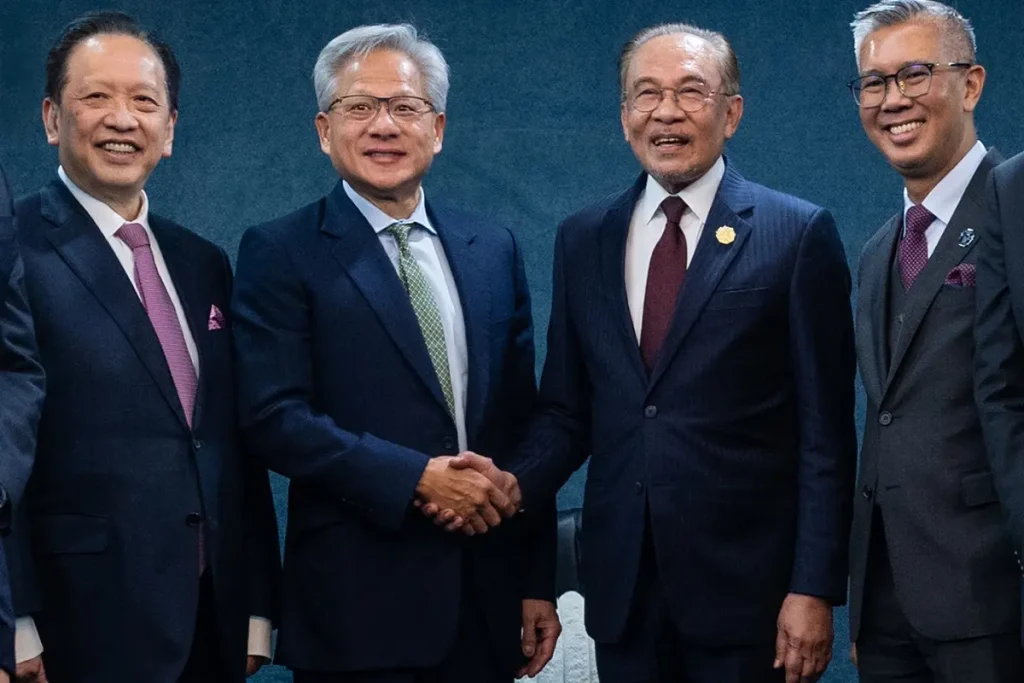
KUALA LUMPUR, Malaysia’s ambitions to become a regional hub for artificial intelligence (AI) have taken a major step forward with the completion and launch of the country’s first Nvidia-powered AI data centre in Johor, developed by YTL Power International Bhd in collaboration with US technology giant Nvidia Corp. In a statement, YTL Power announced that the cutting-edge facility—powered by Nvidia’s latest liquid-cooled NVL72 Grace Blackwell (GB200) GPUs—is now fully operational and will anchor the new YTL AI Cloud, designed to deliver large-scale computing power for AI, high-performance computing (HPC), and machine learning workloads. The announcement followed a high-level meeting in Gyeongju, South Korea, during the Apec Leaders’ Economic Summit 2025, where Prime Minister Datuk Seri Anwar Ibrahim met with Nvidia founder and CEO Jensen Huang and YTL Power managing director Datuk Seri Yeoh Seok Hong. Investment, Trade and Industry Minister Tengku Datuk Seri Zafrul Abdul Aziz was also present. During the meeting, YTL Power briefed Anwar and Zafrul on the successful completion of the AI data centre, located within the 600MW YTL Green Data Center Park in Kulai, Johor. The facility is expected to serve as the foundation for Malaysia’s AI ecosystem, powering both government and citizen-facing AI applications under the YTL AI Cloud platform. Anwar congratulated YTL Power and Nvidia on the achievement, calling it “a significant milestone that strengthens Malaysia’s position in the global AI landscape.” He added that the project aligns with the government’s goal to make AI and digital innovation key drivers of the national economy. “I congratulate YTL and Nvidia on achieving this major milestone and hope it will accelerate Malaysia’s AI transformation for the benefit of all citizens,” said Anwar. Meanwhile, Zafrul noted that the government’s RM5.9 billion allocation under Budget 2026 aims to strengthen the country’s AI infrastructure, foster innovation, and attract more global tech investments. “This project exemplifies Malaysia’s readiness to lead in next-generation digital technologies,” he said. Yeoh said the new facility will deliver one of the world’s most advanced AI supercomputing systems, making Malaysia a key player in regional AI and data centre development. “With the YTL AI Cloud now operational, we are ready to support Malaysia’s growing demand for advanced AI capabilities across both public and private sectors,” he said. Located on a 1,640-acre campus in Johor, the data centre is powered by renewable energy from a 500MW solar plant. It is built to handle large-scale, high-performance AI and deep learning workloads, supporting enterprises, researchers, and government initiatives seeking sustainable computing power. On Friday, shares in YTL Power rose as much as 1.77% to RM4.02, before closing 1.01% higher at RM3.99, with 8.06 million shares traded. The utilities group currently holds a market capitalisation of RM34.63 billion, reflecting growing investor confidence in its expansion into digital infrastructure and AI-driven ventures.

Investment & Market Trends

China Scraps Gold Tax Exemption, Dealing Blow To Major Bullion Market

China has announced the end of a long-standing tax incentive on gold, a move expected to raise consumer prices and potentially dampen demand in one of the world’s largest bullion markets. Effective Nov 1, Beijing will abolish the value-added tax (VAT) offset previously granted to retailers who purchased gold from the Shanghai Gold Exchange, whether sold in its original form or after being processed, according to a new directive issued by the Ministry of Finance. The policy shift marks a significant change for China’s gold industry, which has long benefited from tax exemptions that helped keep domestic gold prices competitive. Analysts say the move is part of the government’s broader effort to boost fiscal revenues, as slowing economic growth, a prolonged property sector downturn, and rising local government debt have weighed heavily on public finances. While the change is expected to strengthen the government’s tax base, it will also raise retail gold prices across China — a country where gold ownership remains deeply rooted in cultural traditions and seen as a hedge against inflation and currency volatility. Retailers are likely to pass on the additional tax burden to consumers, potentially cooling household demand that has been a major driver of global gold purchases. The timing of the policy shift coincides with heightened volatility in the global bullion market. A surge in retail and institutional buying earlier this year propelled gold prices to record highs, breaching the US$4,000-per-ounce mark in early October. However, that rally has since stalled amid profit-taking and easing demand for safe-haven assets following a temporary trade truce between the US and China. Global gold prices also retreated sharply in recent weeks — marking one of the worst sell-offs in more than a decade — as exchange-traded fund (ETF) inflows reversed after months of consistent buying. Seasonal factors, such as the end of India’s festive buying period, have also contributed to the pullback. Despite the near-term correction, analysts remain optimistic about the long-term trajectory of gold prices. They point to continued central bank accumulation, expectations of US interest rate cuts, and persistent geopolitical tensions that are likely to sustain demand for the metal as a safe store of value. “Even with the recent volatility, the macroeconomic backdrop still favours gold,” said one market strategist. “China’s policy shift may reduce local demand temporarily, but globally, the fundamental drivers — from monetary easing to diversification of reserves — remain intact.” Some analysts predict that gold could still approach the US$5,000-per-ounce level within the next 12 months, supported by robust central bank purchases and lingering uncertainties in global markets. In the short term, however, China’s removal of the tax break is expected to reshape local market dynamics, with higher costs squeezing retailer margins and moderating consumer enthusiasm. The move underscores Beijing’s balancing act between fiscal prudence and market stability — even in sectors as culturally and economically significant as gold.

Events

Malaysia Strengthens Global Footprint At MIAPEX And AICOVE 2025

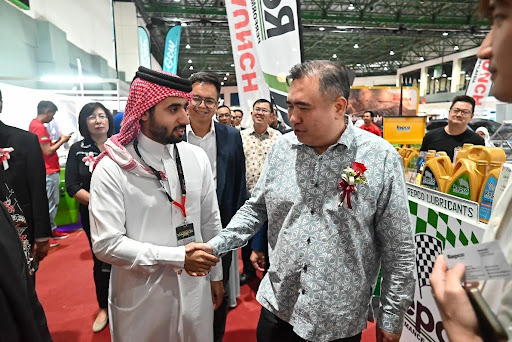
Kuala Lumpur, Malaysia’s ambition to become a key player in the global automotive supply chain gained momentum as MIAPEX 2025 and AICOVE 2025 concluded with record participation from international exhibitors and buyers. The events underscored Malaysia’s rising competitiveness in automotive exports and its expanding role in ASEAN’s economic landscape. Mr Tom Kek , Executive Director of AsiaAuto Venture Sdn Bhd , Mr Jet Ong , Chairperson of MIAPEX 2025 and AICOVE 2025 , Dato KK Wong , President of Seklta , YB Anthony Loke , Minister of Transport Malaysia , Dato Ng Koon Sin , President of Malaysia Trucking Federation , Mr Nazrul , CEO of AsiaAuto Venture Sdn Bhd , Mr Por , Executive Director of AsiaAuto Venture Sdn Bhd , Mr Matahari Lee , Executive Director , AsiaAuto Venture Sdn Bhd .  The double expo was successfully concluded after three dynamic days of exhibitions, business networking, and international collaboration from 24 to 26 October 2025 at the Selangor Mines International Exhibition & Convention Centre. Success for the Industry Now in its 5th edition, MIAPEX 2025 once again reaffirmed its position as one of the region’s most influential automotive and parts exhibitions. Running concurrently with AICOVE 2025, the event drew tremendous response from industry players, showcasing innovations across the entire automotive and commercial vehicle value chain. The expos featured over 350 booths representing exhibitors from Malaysia, Japan, China, India, Taiwan, Singapore, and Germany, highlighting products ranging from automotive components , trucks , car accessories to heavy vehicle parts, workshop tools, and advanced automotive and e-mobility technologies. Trade visitors and buyers attended from across the globe — including the Middle East, USA, South America, Europe, Asia and Australia — reinforcing Malaysia’s position as a fast-growing automotive hub in the ASEAN region. Supported by Key Industry Associations The strong participation of Malaysia’s leading automotive associations added significant value to the event. Among the supporting partners were: Malaysia Trucking Federation (MTF) Selangor and Kuala Lumpur Trucking Association ( Seklta ) The Selangor and Federal Territory Engineering and Motor Parts Traders Association (EMPTA) Federal Territory & Selangor Automobil Repairers’ Association (FTSARA) Federation of Automobile Workshop Owners’ Association of Malaysia (FAWOAM) Selangor and Federal Territory Tyre Dealers and Retreaders’ Association (STDRA) Malaysia Automotive Recyclers Association (MAARA) Malaysia Commercial Vehicle Traders Association (MCVTA) Malaysia Used Autoparts Traders’ & Recyclers’ Association (MUVATA) Persatuan Usahawan Automotif Prosper Malaysia The event was endorsed by MATRADE and supported by MyCEB Malaysia, reflecting strong government recognition of MIAPEX and AICOVE’s role in promoting Malaysia’s automotive trade and exports. Highlights and Key Takeaways Throughout the three-day event, participants experienced a range of activities including business networking sessions, product demonstrations, technical forums, and a special townhall dialogue with JPJ and APAD, which attracted strong interest from industry stakeholders seeking clarity on Malaysia’s latest transportation policies. Organizing Chairperson Mr. Jet Ong expressed his appreciation for the overwhelming support: “The success of MIAPEX and AICOVE 2025 reflects the unity and strength of Malaysia’s automotive industry. We are proud to have created a platform where ideas, trade, and innovation come together — driving our local champions toward global recognition.” Thousands of visitors filled the exhibition halls of MIECC throughout the three-day event, as MIAPEX and AICOVE 2025 showcased the best of Malaysia’s automotive and commercial vehicle industries — from cutting-edge innovations to global business networking opportunities. He added that the events’ objective — to open doors to untapped market segments and foster regional partnerships that redefine industry benchmarks — was fully achieved through strong local and international participation. Driving Forward As MIAPEX and AICOVE continue to grow, the organizing committee aims to further strengthen Malaysia’s role as an ASEAN automotive trade hub by expanding international collaborations and creating more impactful industry engagement opportunities in the years to come.

News

ACE Market-Bound Aquawalk Targets RM114.3 Million In IPO

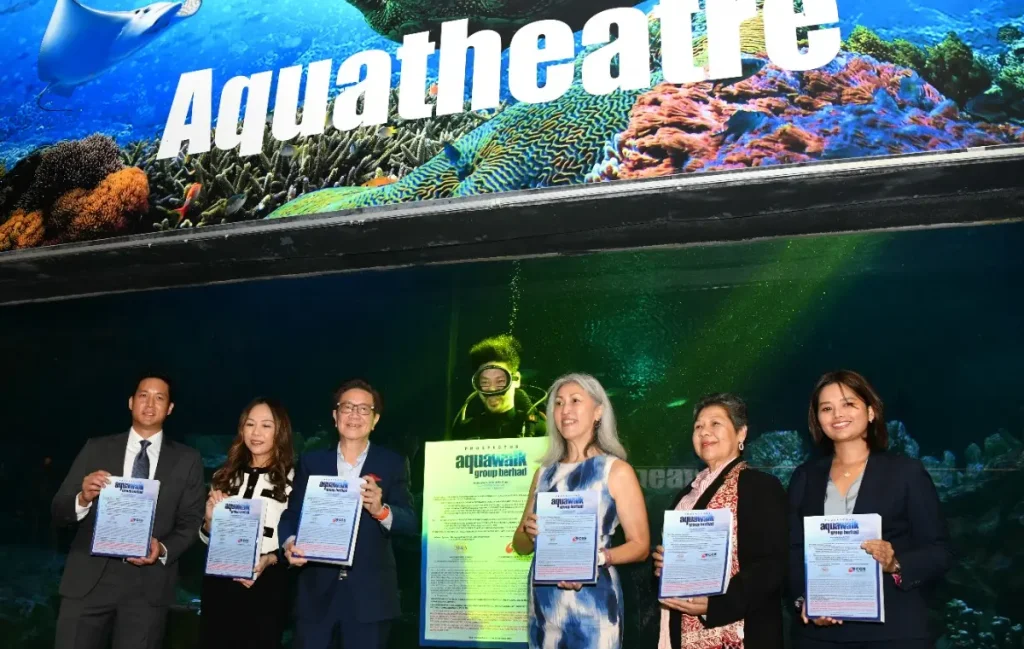
KUALA LUMPUR, Aquawalk Group Bhd is set to raise RM114.3 million from its initial public offering (IPO) ahead of its ACE Market debut on Bursa Malaysia Securities Bhd on Nov 19, 2025. The developer and operator of Aquaria KLCC said RM89.77 million, or 78.6% of the proceeds, will be allocated for capital expenditure, while RM3 million (2.6%) will go toward upgrading information technology systems. Another RM14.94 million (12.7%) is earmarked for working capital, and RM7 million (6.1%) for listing-related expenses. Aquawalk Group CEO Daryl Foong described the listing as a major milestone for both the company and Malaysia’s tourism sector. “It shows Malaysia’s ability to deliver world-class entertainment and education, while advancing conservation efforts sustainably and profitably,” he said at the launch of the company’s prospectus. Foong said the group plans regional expansion with new oceanariums in Surabaya, Indonesia, and Kota Kinabalu, Sabah, aiming for completion within three years. “These locations will range from 40,000 to 70,000 sq ft, while our larger Phuket facility spans about 100,000 sq ft. Construction will start after the IPO, with each site employing nearly 100 permanent staff, excluding construction-related jobs,” he added. In addition to Aquaria KLCC, the group owns and operates Aquaria Phuket and holds a 40% stake in Jakarta Aquarium and Safari. The IPO comprises a public issue of 368.6 million new ordinary shares and an offer for sale of 368.6 million existing shares. Of the public issue, 92.15 million shares are available to the Malaysian public, 4.68 million to eligible directors, employees, and contributors, and 271.76 million via private placement. The offer for sale includes 230.37 million shares for Bumiputera investors approved by the Investment, Trade and Industry Ministry and 138.22 million shares for selected investors through private placement. Priced at 31 sen per share, Aquawalk will have a market capitalisation of RM571.3 million upon listing, based on a total enlarged share capital of 1.84 billion shares. Applications for the public issue open today and close at 5 pm on Nov 7, 2025. M&A Securities is acting as adviser, sponsor, and managing underwriter for the IPO, with CGS International serving as joint underwriter and joint placement agent.

Investment & Market Trends

AIIB, Four Malaysian Banks To Raise Up To US$6 Billion For ASEAN Infrastructure

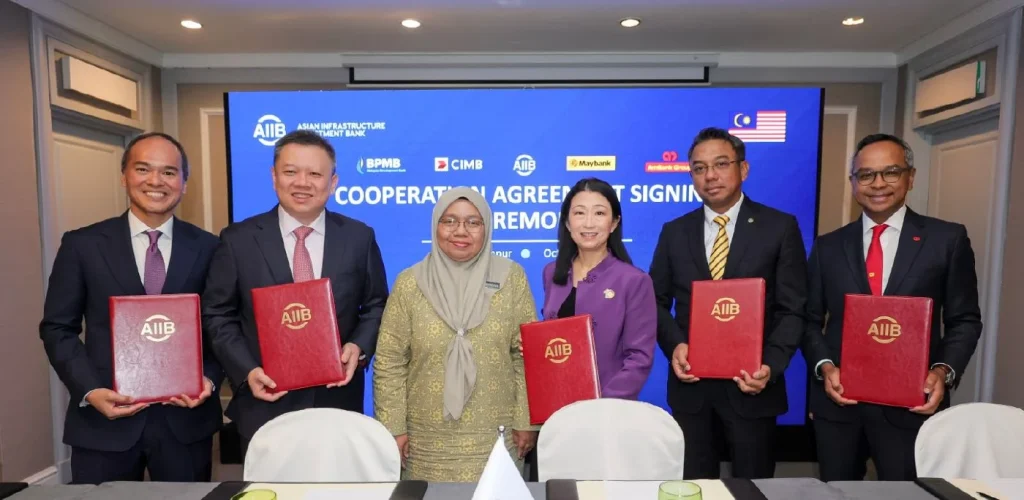
KUALA LUMPUR, The Asian Infrastructure Investment Bank (AIIB) has partnered with four Malaysian banks to mobilise up to US$6 billion (RM25.1 billion) for sustainable, technology-driven infrastructure projects across ASEAN. The participating banks are Malayan Banking Bhd (Maybank), CIMB Bank Bhd, AMMB Holdings Bhd, and Bank Pembangunan Malaysia Bhd. The cooperation agreements, effective until October 2031, were signed following the ASEAN Summit in Kuala Lumpur, underscoring a shared commitment to advancing green and inclusive infrastructure, enhancing regional connectivity, and attracting private capital to meet the region’s growing infrastructure needs. Under the partnerships, the banks will support investments in key sectors including renewable energy, power transmission and distribution, transport, digital infrastructure, and telecommunications. AIIB highlighted that the collaboration leverages the Malaysian banks’ regional expertise in managing large-scale infrastructure assets, combined with AIIB’s capacity to provide long-term debt and equity financing. Kim-See Lim, AIIB’s Chief Investment Officer for Public Sector (Region 1) and Financial Institutions and Funds (Global) Clients, said each bank brings unique strengths in terms of regional presence and expertise across asset classes, while AIIB contributes its convening power, ESG standards, and ability to catalyse additional capital for regional connectivity projects such as the Asia Power Grid (APG). She added that ASEAN, projected to become the world’s fourth-largest economy by 2030, will require expanded energy capacity to drive prosperity and economic growth. “We look forward to being a part of the region’s energy transition,” Lim said. Founded in 2016, AIIB is a multilateral development bank focused on financing sustainable infrastructure. AAA-rated by major international credit rating agencies, AIIB has mobilised over US$64 billion across more than 300 projects in 38 countries.

News

Zafrul: Malaysia To Keep Ban On Raw Rare Earth Exports

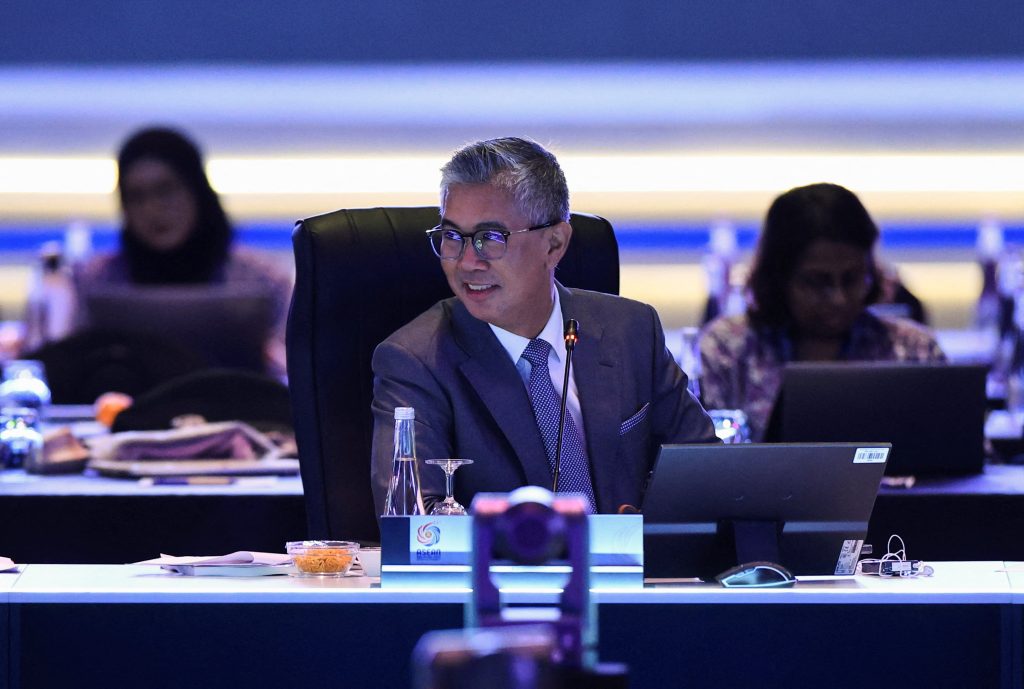
KUALA LUMPUR, Malaysia will maintain its ban on the export of raw rare earth elements (REE) to ensure that value-added processing and downstream development take place domestically, said Investment, Trade and Industry Minister Tengku Datuk Seri Zafrul Abdul Aziz. He said the policy aims to strengthen Malaysia’s industrial base while promoting sustainable growth and technological advancement in the REE sector. “At the same time, we continue to welcome foreign investment and technology partnerships in the mining and processing of REE to help build a complete and competitive domestic ecosystem,” Zafrul said during a special briefing session on the Malaysia-US Reciprocal Trade Agreement (ART) in the Dewan Rakyat on Wednesday. “Malaysia values strategic collaboration with the US and other nations in developing the local REE industry, including potential trilateral cooperation involving Malaysia, the US, and Australia, such as with Lynas,” he added. The minister stressed that Malaysia’s policy seeks to avoid the export of unprocessed, low-value raw materials, ensuring that the country benefits first from local processing and value creation. “The same principle applies to REE and other critical minerals. Once processing and value addition are completed in Malaysia according to our laws and standards, the resulting high-value products can be exported as part of global supply chains,” he said. Addressing concerns regarding the Malaysia-US ART, Zafrul clarified that the agreement will be implemented in accordance with Malaysia’s national laws and strategic priorities to safeguard domestic interests while expanding new trade opportunities. He also noted that the list of proposed procurements under the ART does not involve new government expenditure, but instead reflects commercial arrangements by private sector players. “For instance, Malaysia Aviation Group’s purchase of Boeing aircraft was announced in March 2025, well before the tariff announcement by US President Donald Trump,” he said. “Similarly, Petronas’ decision to procure liquefied natural gas (LNG) from the US forms part of its strategy to ensure supply security and fulfil its domestic and international obligations. It was a commercial decision — not a political one,” he added. Zafrul further emphasised that under the ART framework, Malaysia is now recognised as a “trusted supply chain partner”, which is expected to facilitate smoother trade flows, especially for strategic and high-technology goods. “This recognition strengthens Malaysia’s position as a regional investment hub and preferred destination for companies seeking to access the US market,” he said. He added that Malaysia’s strong commitment under the ART would also be taken into account in the US government’s ongoing investigation into the semiconductor sector under Section 232 of the US Trade Expansion Act 1962, which is expected to conclude by the end of 2025.

News

Infomina Faces RM225.7m Counterclaim From Bank Of The Philippine Islands

KUALA LUMPUR, Computer mainframe systems specialist Infomina Bhd (KL) said its Philippine subsidiary has been hit with a RM225.67 million counterclaim by the Bank of the Philippine Islands (BPI), escalating the ongoing legal dispute between the two parties over an alleged wrongful contract termination. In a filing with Bursa Malaysia on Wednesday, Infomina said the counterclaim includes an “unprecedented” PHP3 billion (RM212.66 million) in exemplary damages, PHP173.48 million (RM12.3 million) as a refund of fees, and PHP10 million (RM710,000) in legal costs. BPI is also seeking to include members of Infomina Philippines’ board of directors and Infomina’s group chief technology officer, Siow Liew Fei, as additional defendants in the case. “Based on legal advice, Infomina Philippines remains confident in the merits of its claims against BPI, as well as its defences against the counterclaim — particularly with respect to the extraordinary demand of PHP3 billion in exemplary damages,” the company said. Infomina’s Philippine unit has until Nov 15 to file its defence, though the deadline may be extended by another 20 days to Dec 5. The dispute stems from BPI’s alleged wrongful termination of a 2021 software purchase and maintenance agreement with Infomina Philippines. In its original suit filed in September 2022, the company sought PHP1.65 billion (RM133 million) in damages, claiming that the termination was invalid and that BPI had failed to properly report its software usage and consumption as required under the agreement. Infomina said the legal proceedings are ongoing, and it will make further announcements as necessary. Despite the legal developments, the company’s share price closed three sen or 2.19% higher at RM1.40 on Wednesday, valuing the group at RM841.75 million. The outcome of the case, if successful, could have a material impact on Infomina’s financial performance and its operations in the Philippines, where it continues to expand its enterprise technology and data infrastructure services.

Scroll to Top

Subscribe
FREE Newsletter