Cover Stories

Cover Stories, The Executives

Alliance Islamic Bank Redefining Islamic Finance for a Sustainable Future

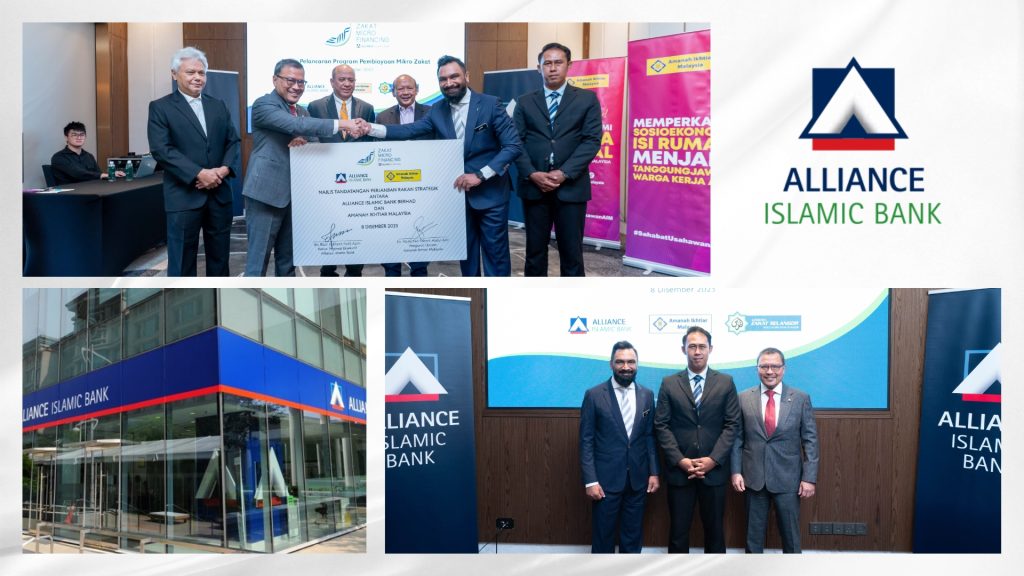
Alliance Islamic Bank is setting itself apart in a rapidly evolving financial landscape by integrating social and environmental considerations into its Islamic finance operations. As the Islamic banking sector transitions from merely adapting conventional products to embracing a more impactful philosophy, Alliance Islamic Bank is leading the charge with a commitment beyond financial performance. In an exclusive interview, The Exchange Asia spoke with Rizal IL-Ehzan Fadil Azim, CEO of Alliance Islamic Bank Berhad, to gain insights on how the institution is revolutionising Islamic banking to differentiate itself from its peers. Traditionally, Islamic banks have been viewed as conventional banks with Shariah-compliant modifications. This perception often involved adapting conventional financial products to meet Shariah law requirements, which sometimes meant complex transactional processes designed to connect finance with real assets and business activities. However, Rizal highlights a significant shift in this paradigm: “Our vision is not just to adapt conventional products but to create financial solutions that drive positive social and environmental change. We’re committed to being a catalyst for good, reflecting the core values of Shariah beyond mere compliance.” In 2017, Alliance Islamic Bank embraced a value-based intermediation (VBI) approach, positioning itself to generate positive societal outcomes while fulfilling the ethical mandates of Shariah. This philosophy goes beyond mere financial transactions, reflecting a deeper commitment to improving human welfare and advancing education, property rights, and intellect. Alliance Islamic Bank is at the forefront of driving the Halal economy, recognising the immense potential for growth in this space. In 2020, the bank introduced a comprehensive one-stop center dedicated to supporting businesses in navigating the Halal market. This initiative includes assistance with certification, business matching, and a full range of banking services. Rizal IL-Ehzan Fadil Azim elaborates, “Our Halal In One program has been a significant success. Since its launch, we provided more than RM2 billion to over 450 SMEs. Our objective is to foster growth and innovation in the Halal sector, helping businesses thrive in this rapidly expanding market.” Alliance Islamic Bank’s commitment to social impact is exemplified by its philanthropic efforts. The SocioBiz crowdfunding platform, introduced in 2019, focuses on supporting micro-businesses operated by the B40 community. Rizal notes, “SocioBiz has raised RM1.85 million to date, benefitting 2,200 recipients. This platform enables us to provide seed funding and engage the broader community in supporting micro-businesses, ultimately driving social and economic development.” In a unique move, Alliance Islamic Bank has integrated its capital markets services within the bank itself, rather than relying on separate investment banks. This integration allows the bank to offer a comprehensive range of financial services under one roof. “We have been involved in 5 IPOs so far this year, with more expected by the end of 2024. This integration enhances our ability to provide holistic financial solutions and contributes to greater market efficiency,” Rizal reveals. While Alliance Islamic Bank primarily focuses on the local market, its market access programs occasionally facilitate international expansion. Rizal explains, “We’ve supported businesses in accessing markets in China, Japan, Korea, and the Middle East. Our goal is to help local businesses grow globally, providing them with valuable opportunities for expansion.” Innovative Social Financing Initiatives One of the bank’s most innovative initiatives is its Zakat microfinancing programme (AZAM). This programme represents a pioneering approach to zakat, utilising zakat Wakalah to support Asnaf (underprivileged) micro-entrepreneurs in the country. By transitioning from traditional grants to a revolving fund model, Alliance Bank maximizes the impact of each contribution. “Since launching this initiative in December 2023, we have distributed RM450,000 to 90 Asnaf micro-entrepreneurs. The early results are promising, with a 100% repayment rate,” Rizal IL-Ehzan Fadil Azim shares. “This model allows us to support multiple entrepreneurs over time, creating a multiplier effect that enhances the overall impact.” Responding to Challenges with Compassion Navigating economic uncertainties, such as those brought about by the COVID-19 pandemic, requires a delicate balance of rational decision-making and empathy. During the pandemic, Alliance Bank implemented moratoriums for customers and supported employees and the community. “We offered a one-year moratorium to alleviate financial stress and supported our staff with safety measures and moral support,” Rizal recounts. “Additionally, we raised funds for hospitals and social enterprises and assisted SMEs with digital marketing and market access. These actions, while part of our CSR initiatives, became integral to our business approach and inspired further initiatives.” Looking ahead, Alliance Islamic Bank aims to strengthen its position as a leading social financing institution. “Over the next five years, we plan to increase our focus on social financing, aiming to allocate one-third of our assets to these initiatives. We will continue to innovate and introduce new social financing programs and sustainability solutions. Integrating AI and digital technologies will play a crucial role in advancing Shariah-compliant solutions and identifying areas for social and economic development,” Rizal IL-Ehzan Fadil Azim outlines. Alliance Islamic Bank’s approach to Islamic finance is a testament to its commitment to creating positive societal impacts while achieving financial growth. By aligning its financial practices with broader social goals, the bank is redefining the role of Islamic financial institutions and setting a new benchmark for what it means to be a socially responsible bank.

Cover Stories

HABIB: Elevating Malaysian Craftsmanship On The International Stage

https://www.youtube.com/watch?v=JvZKisubbuM&list=PLXNUnD-w9bUm9YmvkhNEnRGeat3fkPI73&index=4 KUALA LUMPUR: HABIB, a name synonymous with heritage and luxury, is on a mission to strengthen Malaysia’s position in the global market to ensure that each of its jewellery creation is worthy of international standards. The homegrown jeweller, established 66 years ago in Malaysia, aims to instil a sense of national pride among Malaysians while appealing to a universal audience. Habib Group Executive Chairman Dato’ Sri Meer Sadik Habib said the company is also shifting the stereotype of homegrown products and promoting Malaysian identity globally. “We have a strong Malaysian element in everything we do because we are proud to be a Malaysian brand. We want to be a brand that Malaysians will be proud of first, and then we want to put Malaysia on the map of the world with our culture and tradition weaved into our products. We are working on this,” Meer Sadik told The Exchange Asia in an exclusive interview. In diversifying its approach, HABIB prioritises several key elements, namely quality and creativity, ensuring that every aspect of its products and designs reflects the pinnacle of global standards. “One of our milestones was initiating the production of designs unique to the world. In terms of differentiation, our focus on diamonds as an investment stands out, particularly with certified diamonds that retain substantial value, providing customers with a viable asset,” Meer Sadik said. Touching on the local perception of Malaysian-made products, Meer Sadik said the challenge is to change people’s mindsets about local products. “People think Malaysian brands are not good enough. That is the current mindset. They believe international brands are better and local brands are below average. What we are doing now is changing that mindset. We want to be a brand that Malaysians can be proud of and globally accepted,” he said. HABIB has achieved international acclaim, earning the trust of esteemed names that have selected the brand as their exclusive distributor or collaborator. These notable partnerships encompass Pandora, recognised for its customisable charm jewellery from Denmark; Stephen Webster, a prominent London-based jewellery brand, and Ice-Watch, an affordable luxury watch brand from Belgium. In addition to the jewellery business, HABIB is involved with various other businesses such as Ar-Rahnu Express and Chantique, as well as international brands like Hearts on Fire and Korloff. The group has also invested in real estate, hospitality, as well as food and beverage businesses. Moving on, Meer Sadik expects the gold price to be strong throughout this year. “For the last few years, most countries have created a lot of debt, which has created inflation. And the best hedge against inflation is gold, so people buy gold. The gold price has not increased significantly in the past few years due to high interest rates in the United States; however, there are talks of impending interest rate reductions, which may prompt an increase in gold prices,” Meer Sadik said. He said HABIB anticipates a potential increase in gold prices as rates decrease, depending primarily on the movement of interest rates in the US. “Additionally, fluctuations in the ringgit’s value, which may strengthen if US interest rates decline, could further influence the balance of gold pricing,” he said. Meer Sadik also calls on the government not to impose a luxury tax on jewellery, as many Malaysians, including those in the B40 and M40 income brackets, opt to purchase gold as a means of savings. He said a significant portion of the population also does not have bank accounts, and they buy gold or gold jewellery as a form of investment when they have surplus funds. “I sincerely hope there won’t be any tax implementations on jewellery,” Meer Sadik said. He said that a few years ago, when the option to withdraw funds from Employees Provident Fund was announced, there was a noticeable surge in gold purchases, particularly among the B40 and M40 groups. “While I fully endorse the government’s consideration of imposing taxes for the T20 group, ensuring minimal impact on the B40, our observations reveal a substantial number of B40 individuals, including those in the M40 category, engaging in jewellery purchases, notably gold. “So, the implementation of taxes will determine what happens next. Without taxes, people will probably buy jewellery, especially gold,” Meer Sadik said. HABIB will continue to be present at strategic places and are looking to open a few branches this year. Meer Sadik said an outlet in Tun Razak Exchange (TRX) was recently opened, and the company plans to open another outlet in Menara 118. “We are also assessing our expansion plans, focusing on broader international growth this year. We are venturing beyond Malaysia into various regional destinations within Southeast Asia. We already have a presence in Singapore, the Philippines, Hong Kong and Taiwan,” Meer Sadik said, adding that HABIB is not just about profit and loss. “That is the last thing that we look at. We want to make a significant difference in the lives of people. We are in this business started by my late father. It is because of what he wanted – to be in the business of ‘happiness’. So that is something that we strive for,” Meer Sadik said.

Cover Stories

A Philanthropic Scion: The Social Entrepreneurship Journey of Rebekah Yeoh

In light of various social issues that arose from volatile geopolitical, social enterprises and the entrepreneurs responsible for such organisations behind the scenes have faced challenging conditions in their mission to make the world a better place. This has not only brought more awareness to the public on the impact that one could make with a little bit of effort, but it also inspired more social entrepreneurs to take a bold step forward in coming up with initiatives that would contribute to improving the lives of the underprivileged community. A good example of this would be Rebekah Yeoh, granddaughter of late billionaire Yeoh Tiong Lay, who is the founder of Malaysia’s largest conglomerate, YTL Corporation. In an exclusive interview with The Exchange Asia, Rebekah shared how her parents – including her father and Executive Chairman of YTL Group, Tan Sri Francis Yeoh Sock Ping – had always exposed her and her siblings to the reality of financial illiteracy among the underprivileged communities in rural areas. According to Rebekah, her parents believed that it was necessary to reveal the hardship of living conditions of other people outside of the ‘cosy lives’ of the privileged few. “This effectually had a long-term impact on my interests and life direction. I did my economic bachelor’s thesis on microfinancing for neglected communities and I had always dreamed of pioneering a sustainable charity engine,” she said, elaborating on how her grandfather and father had built the empire of YTL Group from humble beginnings, which encouraged her to fuse the aspect of business and charity together. “With that, Recyclothes was born, which was also influenced by my ‘passion for fashion’ and my sister, Ruth’s fight against environmental wastage,” added Rebekah, who is also the Corporate Finance Director of YTL. For her current role in YTL, she oversees cash management responsibilities while also supporting mergers and acquisitions (M&As), accounting and project financing activities. She has also assisted in undertaking several corporate exercises for over 10 years as the group seeks ways to expand, grow its global footprint, and sprawl into evolving industries relevant to the shifting norms of today. When asked about her decision to join YTL Corporation, Rebekah answered with, “I believe it was the natural progression of realising one’s potential through the support of family members which was the main appeal. Education played a very integral role in my family’s upbringing, considering my grandmother was a teacher most of her life, and our family invested a lot into the importance of education. With such efforts, Rebekah said that the best way to put all that education to good use is by channelling it all back to the people, which completes the circle of life by honouring the people who had given so much to mould her to become the person she is today. However, the professional responsibilities she has with YTL Corporation never distracted her from her mission to bring about positive change, especially for those who could not afford to do so for themselves. Reaching Out With Nimble Fingers In 2015, 18-year-old Rebekah founded a sustainable empowerment programme to help children develop talent and entrepreneurial skills in Cambodia, dubbed Nimble Fingers Cambodia. “The programme adopts a three-pronged methodology constituting micro-finance, enterprising and sustainable giving that ultimately aims to instil an early culture in children to accumulate disposable income and savings instead of squander it away. “Through the programme, they could use profits to be reinvested into their own ‘mini enterprises’ so that they learn about capital spending, savings and value-add. The children can be trained from a young age to monitor their finances and cultivate conservative financial etiquette,” Rebekah explained. She said that Nimble Fingers Cambodia is an initiative that she holds close to her heart because of the children that are involved in the programme. “I fell in love with the children the minute I met them. They have such pure hearts, so willing to share despite having so little, and they treat each other like family. The childcare centre raised them to heal others through love. “I felt they deserved a chance to build their lives through practising sound financial etiquette, and this program empowers them from a young to reach beyond minimum wage by giving them the confidence to pursue work encompassed around their genuine interests,” Rebekah said, adding that the programme is also able to provide the initial ‘push’ for the children to explore their future career paths and discover their talents. Moreover, Rebekah said that the programme teaches them about team coordination and shared stakeholding within a business. “They were beholden to the poor education system in Cambodia which lacks the basic practical skills of finance and book-keeping. Business knowledge combined with a good heart is unformidable!” she continued. Making a Difference With Global Shapers Apart from being an active philanthropist, Rebekah is also an alumnus of the Global Shapers Community Kuala Lumpur – an initiative that allows anyone and everyone to give back through a series of projects with causes revolving around the homeless, children, women and/or education. “I am a strong admirer of Jeffrey Sach’s research in economic scarcity. I agree with him wholeheartedly that ‘perpetual charity is not a sustainable option to eliminating poverty’, and I am convinced that enterprise is a more effective way of unlocking the potential of these individuals to create wealth for the long term, and this is what Global Shapers has pioneered over the years,” Rebekah explained. She said that Global Shapers became an outlet for her to let her inner economic creativity run wild when it comes to community projects. According to her, there were infinite planes that people could achieve, and the best way to do it than with other shapers who contributed a diverse range of manpower, knowledge, experience, and support. “I was submerged into a pool of professionals who had ventured into their own social projects taking various natures and forms. I was the weak link as I had the most to learn. “The best part about

Cover Stories, Energy & Technology, ESG

NanoMalaysia: Breaking the Stigma of the Hydrogen Economy

KUALA LUMPUR: The topic of renewable and clean energy has been making headway in recent months, with automotive companies racing to roll out their EV cars, trucks and buses, as global acceptance continues to increase. In Malaysia, the government launched the Hydrogen Economy and Technology Roadmap (HETR) in October 2023, highlighting the country’s plans and aspirations to become a regional leader in the renewable energy (RE) industry. Spearheading this mission behind the scenes is NanoMalaysia Bhd, an agency operating under the Ministry of Science, Technology and Innovation (MOSTI) to develop innovative technologies revolving around the hydrogen economy. According to NanoMalaysia Bhd Chief Executive Officer, Dr Rezal Khairi Ahmad, there has always been an interest in hydrogen energy solutions, going back as early as the 60s. However, the usage of fossil fuels as a source of energy was already rising at the time and has remained a widely used commodity to this day since it is ‘faster and easier’ to get. “Fossil fuel was considered cheap back then. When it’s cheap, people don’t care about the pollution it causes,” Dr Rezal commented. This caused the hydroeconomy to experience several false starts. But now, the interest is back – so much so that the HETR launched by the government estimates that the industry will be worth over US$189.19 billion (RM824 billion) by 2050. Dr Rezal revealed that NanoMalaysia drafted its own hydrogen roadmap that predated the one launched by the government. Because of this, the company was appointed as the lead consultant who engaged with various stakeholders to create the HETR – a subset of Malaysia’s National Energy Transition Roadmap (NETR). “We were given the mandate because the government recognised one of our early investments in hydrogen technology in 2016, demonstrating that NanoMalaysia has the competency, the commercial know-how and market insights for us to draw up a comprehensive roadmap,” Dr Rezal explained. The Energy Trilemma According to Dr Rezal, the hydrogen economy revolves around the philosophy of the energy trilemma: accessibility, affordability and sustainability. “Hydrogen checks all the boxes. It’s accessible because it is a resource that is available everywhere in everything around us (including biomass, domestic waste, hydrocarbon from fossil fuels, etc.) It is truly the people’s fuel,” Dr Rezal said. He explained that while solar power is a non-solid energy that can be stored and utilised through solar batteries and solar panels, hydrogen typically comes in the form of gas that can also be harnessed and stored for long-term use through fuel cell technology, similar to fuel cell electric vehicle (EV) batteries. “This could be an opportunity for the government to democratise access to energy. By doing so, we could mitigate the risks that could affect fuel prices, like geopolitical crises, which would end up victimising people like us,” Dr Rezal continued. “We want to give the people the ability to generate hydrogen anytime, anywhere and store it for a long time right in your backyard, which you can’t do with fossil fuels,” he added. Having that in mind, NanoMalaysia is working on developing the technology that could achieve just that, known as the electroliser (looks and functions similar to a water filter system) to decentralise hydrogen for personal use. “We’ll first seed the idea of innovation of the hydrogen economy and we’ll bridge industry players with academic researchers to turn the idea into a commercial technology to benefit the people at large at an affordable price. “The government, through us, will provide the catalytical nudge, allowing us to develop prototypes for us to make demonstrations to make the idea/technology investable for the private sector to take up,” Dr Rezal went on. Currently, the hydrogen being widely produced is known as ‘dirty hydrogen’, which is extracted from fossil fuels and emits carbon dioxide (CO2), globally priced at US$1.5 (RM7.15) per kg. He explained that the cleanest version of hydrogen is categorised as ‘turquoise hydrogen’ and can be produced through the process of pyrolysis, which is what Dr Rezal believes Malaysia should be looking into. With further research and development, NanoMalaysia aims to provide turquoise hydrogen at only US$1 (RM4.75) per kg. Through pyrolysis, NanoMalaysia can produce hydrogen without emitting CO2, turning it into a sustainable energy source. “As it is now, the domestic waste being decomposed in landfills and dumping grounds produces biomethane where hydrogen can be extracted from. If we can leverage these sites and turn them into small-scale heavy production centres in various locations, it could cater as a sustainable energy source to the mass public, even in rural areas,” Dr Rezal opined. The Hydrogen Hyper Reactor Another one of NanoMalaysia’s innovations for the hydrogen economy is its patent-pending ‘hyper reactor’, which is hydrogen that has been transformed into a solid state. Dr Rezal revealed that the hyper reactor has already been integrated into many of NanoMalaysia’s transportation prototypes to be used as demonstrations, to successfully commercialise this innovation in Malaysia. “We are working with companies like Prasarana to allow them to plug a hyper reactor ‘battery’ into the testing vehicles to replace their fossil fuel engines. By doing this, we’re hoping to create more demand for this innovation,” Dr Rezal said. He also mentioned that NanoMalaysia will be given 3 Toyota Mirai from BMW Mobility to conduct test runs on the car model for the next 2 years, demonstrating to the public how safe and economically viable hydrogen fuel is. Additionally, the company is also communicating with numerous bus and truck companies to adopt fuel cell EVs (that utilise hydrogen) as early as October this year. When asked about how hydrogen energy will disrupt the EV industry, Dr Rezal commented, “We are not rivalling the EV battery industry – we are supporting it. Our overarching target for EV is to reach 14% of total industry volume by 2030 and 38% by 2040.” However, one of the main concerns that would significantly affect the success rate of hydrogen adoption is the public’s level of acceptance. “There needs to be a gradual wean of processes and how

Cover Stories

Synology: Malaysia’s Cybersecurity Threats To Rise In 2024

KUALA LUMPUR: Malaysia’s cybersecurity threats are expected to rise in 2024 based on the country’s ongoing significant cybersecurity concern for individuals and businesses. Taiwan-based network attached storage (NAS) company Synology Inc noted that Malaysia reported 494,699 leaked accounts, reflecting a troubling trend in digital security breaches. While predicting exact numbers is challenging, the figures are almost guaranteed to rise in 2024 unless immediate and decisive action is taken. “I think the message is clear. The time to act is now. Raising cybersecurity awareness, strengthening the resilience of your business infrastructure, and implementing advanced data protection protocols with drills are essential,” Synology sales account manager Jason Sin told The Exchange Asia. Sin said that while Synology does not have specific statistics on the percentage of data breaches, it is crucial to recognise the profound impact such breaches can have on the overall cybersecurity landscape. He said the compromise of government data poses significant risks, jeopardising the safety and privacy of citizens and potentially leading to national security threats. “Again, it is essential to prioritise data protection in the public sector. Implementing measures such as centralising data, utilising on-premise storage solutions, and adhering to high-standard security methods, including WORM (Write-Once-Read-Many) encryption and backup protocols. “These proactive steps are vital for upholding the security and trust of the public in an era where safeguarding sensitive information is paramount,” he said. “In the Malaysian business landscape, growing concerns about data scattering, loss, and cybersecurity threats demand vigilance. “Synology addresses these challenges with a reliable and centralised hybrid storage solution,” Sin noted. For financial institutions in Malaysia, adopting robust cryptographic controls is imperative to ensure the thorough protection of sensitive data and information. “While cryptographic controls are not within our primary expertise, Synology has a proven track record of supporting financial institutions globally through our comprehensive data protection solutions. “In various countries worldwide, including notable banks, Synology has demonstrated its ability to support financial institutions,” Sin said. He pointed out IdeaBank that entrusted Synology’s Active Backup Suite to safeguard the data of over 2500 users, encompassing Microsoft M365 accounts, including Drive, Mail, SharePoint Sites, Contracts, and Calendar. Sin said this showcases the versatility and effectiveness of Synology’s solutions in meeting financial institutions’ complex data protection needs on a global scale. Further, Sin noted that Synology continues collaborating with Malaysian businesses by understanding their unique data protection needs and challenges. He said that through customised solutions, including NAS systems with scalable security features and comprehensive support, Synology tailors its offerings to meet the specific requirements of the local market, ensuring businesses can protect their data effectively against cyber threats. “We have a retail customer who recently experienced a cyber attack on their domain, resulting in ransomware encrypting files within their shared folders. “Fortunately, they had previously created an Immutable Snapshot on their Synology NAS. This allowed them to quickly restore their files, isolating the NAS from their network during the process. Despite the attack, the Synology DSM operating system remained operational, thanks to the customer’s stringent security policies to prevent unauthorised access. This incident underscores the importance of timely data snapshots as a preventive measure against such unfortunate events,” Sin said further. “We recommend businesses prioritising regular data backups and leveraging snapshot technology for quick data recovery in the face of cyber threats. “Additionally, we advocate for the importance of conducting regular recovery drills to test and enhance cybersecurity response capabilities,” said Sin. He said Synology also emphasises user education on cybersecurity best practices and collaborates with industry experts to stay ahead of emerging threats. “This comprehensive strategy ensures that businesses using Synology solutions are well-equipped to face the evolving cybersecurity landscape in Malaysia,” Sin said.

Cover Stories

Pos Malaysia to Remain a Significant Player In Mail, Parcel Segments

KUALA LUMPUR: National postal operator Pos Malaysia Bhd will remain a significant player in the mail and parcel business segment despite stiff challenges coming from competitors. Chief executive officer Charles Brewer said that despite the challenges, including foreign exchange fluctuations and regional geo-political concerns, Pos Malaysia will continue to upscale its operations across all business segments. He said that over the last decade, traditional mail, which has long been Pos Malaysia’s core business, has experienced a decline ranging from -2 per cent to -38 per cent. “This downward trend was exacerbated globally during the Covid-19 pandemic, with mail volumes experiencing low double-digit declines due to various disruptions,” he told The Exchange Asia in a recent interview. Pos Malaysia handles around one to one and a half million letters daily, and the decline in the business segment was due to COVID-19, which significantly contributed to the decrease in the already diminishing business sector. While the company continues navigating the challenges, Pos Malaysia expects another year of continued decline in mail volumes, a downtrend the company has faced over the past ten years. Charles said that the situation has somewhat stabilised post-Covid and is returning to pre-pandemic decline rates of 6 per cent to 8 per cent. The company’s core business is divided into two significant segments – traditional mail and parcel – presenting distinct challenges. The mail and parcel segment is Pos Malaysia’s primary business. Charles emphasised that, as the nation’s postal operator, Pos Malaysia has a vital duty to keep Malaysians connected, ensuring the timely delivery of mail. He said that in adapting to current and new challenges, Charles emphasised innovation and resilience as Pos Malaysia explored strategies for diversifying its services and reimagining its business model to remain relevant in an era where traditional mail is steadily declining. “In addressing new challenges, Pos Malaysia looks towards a future marked by innovation and strategic transformation,” Charles noted. Despite continued growth in parcel volume, which is contributed by the booming e-commerce industry, the segment has attracted many new players who are establishing their own logistics solutions, squeezing further Pos Malaysia’s tight margin. “What was initially seven, eight, or nine years ago, a significant upside opportunity is still an opportunity, but it is harder and more competitive to make a decent return in that space,” Charles said. Explaining further operations, Charles said the logistics services sector in Malaysia operates within a relatively open market, with limited regulatory constraints on new entrants. He said there are approximately 120 courier operator licenses in Malaysia, serving a population of 30 million. “To provide a perspective, the contrast with Indonesia is stark, where only about 30 licenses serve a population of 350 million. With a population of 70 million, Thailand has a similar number of licenses. “The competitive nature of Malaysia’s logistics market is one of its distinctive features, offering opportunities and challenges. The abundance of licenses contributes to a vibrant but relatively deregulated environment, becoming the first challenge in the parcel sector,” he said. Charles said the government and relevant agencies must look into creating a conducive playing field for the domestic courier industry, particularly limiting the number of foreign players to give local players a more significant market share. “We have more than 15,000 employees, and Pos Malaysia is one of the oldest companies operating in Southeast Asia and certainly one of the oldest companies in Malaysia. “We have a fantastic history, a fantastic brand, and much to be proud of. “So a big part of our transformation is transforming our culture, making sure that all of our 15,000 employees are very clear about how we need to operate and behave to keep the customers we have—more customer centricity and employee centricity, which sits right at the heart of that cultural transformation,” Charles said.

Cover Stories

Xamble Group Expands Influencer Marketing Services To ASEAN, NZ

KUALA LUMPUR: With a strong presence in Malaysia, Singapore, and Taiwan, Xamble Group Ltd is now eyeing expanding its influencer marketing services to other regions or markets. The Australian Securities Exchange (ASX)-listed Malaysian company is focusing on expanding across the ASEAN and New Zealand markets to attract more investors into its investor community. Xamble Group worked with more than 300 brands, including KFC, Unilever, P&G, and Hasbro and has access to over 20,000 influencers that reach over 20 million consumers in Malaysia, Singapore, and Taiwan through influencer marketing arm Nuffnang. Just recently, Nuffnang added The Body Shop, Taiwan Tourism, Standard Chartered and Mr DIY to its current portfolio. Xamble Group executive chairman Ganesh Kumar Bangah said more prominent brands are typically subject to more criticism from the public, especially during critical seasons involving important global events. “We work tirelessly so that our clients and brands care for us even more than usual,” he told The Exchange Asia. When asked how Xamble strengthens its relationships with existing clients and attracts new brands, Ganesh said that by strengthening relationships, the company attends to the client’s pain points to understand what they want to achieve. In addition, Xamble Group also hosts beneficial events like Nuffnang’s TMRW/TDY (Tomorrow/Today) to help clients better understand upcoming topics in the digital and influencer marketing industries. Ganesh said that in attracting new brands, Xamble Group innovates new products to supplement existing offerings, such as the Influencer Scorecard, a dedicated strategy team in place that focuses on bringing more creativity and innovation to campaigns, and the Talent Squad, an in-house talent management team that directly manages social media campaigns for influencers. “The primary objective of the investment initiative is to fortify and expand the outreach to the small and medium-sized enterprise (SME) segment through the Xamble Creators platform. “This entails strategic technological investments aimed at augmenting the platform’s functionality facilitates a seamless and direct interaction between influencers and SME brands. “The integration of an influencer solution tailored for SME brands holds the potential to amplify the scale of our business operations substantially,” said Ganesh. Xamble Creators is an innovative platform to enhance collaboration between micro and nano influencers and brands. The platform allows influencers to monetise their content by connecting them with brand campaigns that align with their interests. The platform, integrated with OpenAI’s ChatGPT, also empowers users with suggested social media posts based on campaign briefs and influencers’ preferred tones. Xamble also features a virtual robot, Xb, for tutorials and post suggestions. It is available on iOS, Android, and Huawei AppGallery and operates on SaaS (software-as-a-service) and fintech models. Targeting Asia’s prominent influencer segment, Xamble Creators focuses on authenticity and frequent audience engagement. It also includes a verified list of influencers, ensuring brand fit and addressing common concerns. This innovation aims to diversify revenue streams, enter new markets, and target the SME sector for long-term growth. Ganesh said Xamble Creators, introduced last year, continues to empower creators and influencers. “Via the app, we can access even more influencers looking for a way to connect, collaborate, and create content to earn. “Currently, we have more than 1,000 active influencers on the app, Ganesh noted. In October last year, Xamble Group signed a subscription agreement to receive an A$400,000 (RM1.2 million) investment from Georg Chmiel, a leading tech entrepreneur and public markets expert. Chmiel’s investment came in via the subscription of new chess depositary interest (CDI) at 3.5 cents per CDI. He also received 2 million options at 4.5 cents per CDI, vesting equally over five years, contingent on his directorship at each vesting date. Chmiel joined the Xamble Group board in November as an independent non-executive director. “In light of our consistently positive cash flow, as evidenced in prior ASX market announcements, Xamble Group is strategically allocating surplus funds towards future growth initiatives. “This proactive approach involves significant investments in enhancing our technology platform, primarily focusing on developing new features. “Notably, we are constructing a self-service influencer platform tailored for SMEs within our targeted markets,” Chmiel said. Chmiel and Ganesh have reviewed the strategic direction of the business and agreed on the growth path forward. Xamble Group noted that there will be continued investment in the platform, influencer community, and operations. The board is also assessing additional organic and inorganic mergers and acquisition growth opportunities as they emerge. Chmiel brings over three decades of expertise in disruptive online businesses, significantly influencing decision-making at Xamble Group. He excels at reassessing strategies, optimising team dynamics, and securing support for investment decisions through a robust network in the financial investor community. With a proven track record overseeing 40 successful mergers and acquisitions, Chmiel demonstrates a keen understanding of effective governance and the importance of technology platforms for rapid business scaling. In summary, his extensive experience and strategic vision have been instrumental in shaping Xamble Group’s direction, fostering innovation, and ensuring sustained success.

Cover Stories

KLCC: 2024 Is A Strong Year For International Conventions, Exhibitions

KUALA LUMPUR: The Kuala Lumpur Convention Centre (KLCC) anticipates 2024 to be a strong year for international conventions and exhibitions based on current industry trends and confirmed bookings. The country’s premier purpose-built venue also emphasises attracting more meetings, conventions, exhibitions, and corporate events segment (MICE), including banquets and functions, this year due to their contribution to the local economy. “The target or expectation for our corporate segment this year remains the same as last year with a slightly modified strategy. “We will be placing a higher emphasis on these segments whilst for the corporate segment, we will be focused on growing our recurrent client base through continued service quality,” KLCC general manager John Burke told The Exchange Asia. In 2023, KLCC generated over RM656 million in economic impact from local expenditure benefitting layers of the business events supply chain ecosystem, such as thevenue, hotels and hospitality, retail, event contractors, as well as associate industries like media, advertising and marketing, transportation, food and beverage and so forth. Research also shows that business event visitors spend over three times more than the average tourist and have a significant multiplier effect, with 60 per cent returning later as tourists. According to John, Malaysia also benefits significantly from these events’ knowledge transfers, learning, and trade activities. “Malaysian businesses, through business events can learn about international best practices and solutions they can apply in their organisations,” he said. John also pointed out that Malaysian businesses, through participation in international conventions or exhibitions, they can learn about global best practices, new technologies, trends relevant to their industry, and upcoming products and solutions, which they can apply in their organisations. “These events not only present new business opportunities but also provide great platforms for businesses and individuals to network with industry colleagues and potential new clients or employers from all over the world,” he said. When asked about the outlook in terms of the number of events secured and the target KLCC aims to achieve by the end of 2024, John said the centre opened the year with 37 convention bookings and 50 confirmed exhibitions. These numbers, he said, are expected to go up as more national conferences and exhibitions, short lead meetings and events are confirmed for the year. “Our focus for the year and moving forward is not so much focused on the number of events, but rather the opportunity that those events provide. “This could be in revenue, exposure, or economic impact. It is about selecting the right events for Malaysia, Kuala Lumpur and KLCC,” John pointed out. KLCC currently has 32 confirmed conventions for 2024, with 26 being international. When asked how KLCC plans to attract and secure more international events, John said the centre has a research team that studies the opportunity to bring suitable events to Malaysia. “We look at conventions and exhibitions that are especially relevant to existing and new industry sectors contributing to Malaysia’s economic, infrastructure and social growth. “We build relationships with local associations, assist them in putting together a compelling bid and presenting it to the association committee or council. “And, when bidding, we first sell Malaysia as the destination, followed by the host city, Kuala Lumpur,” he said. He said that as the premier purpose-built venue in Malaysia, KLCC also works very closely with its national bureau, the Malaysia Convention and Exhibition Bureau (MyCEB), to position Malaysia as the preferred destination for business events in the region. “We participate in all the global industry trade shows, representing Malaysia, showcasing our compelling offerings for international event organisers,” John noted. Some of the events lined up at KLCC for this year are the Ancaro Imparo Dental Conference, February 22-26, the International Café & Beverage Show, May 23-25, the 21st AILA World Congress, August 11–16, European Society for Radiotherapy and Oncology (ESTRO) meets Asia, August 23-25, the International Surgical Week, August 26-29, the Aesthetic Medicine & Surgery Conference & Exhibition (AMSC), AestheticMedicine & Surgery Conference & Exhibition (AMSC), September 20-21 and the International Union of Architects (UIA) Forum from November 15-17.

Cover Stories, Experts

Ringgit, Why The Long Face?

It’s often cited that dollar strength is driving ringgit weakness, which bears some assessment given that the dollar is currently 2.17 per cent off its peak in October 2023 while the ringgit is again revisiting last year’s weakest levels. What, then, is the reason for its underperformance? Often cited are falling exports, political stability, economic fundamentals, consumer sentiments and perhaps because Coldplay only had one concert here. The lack of compelling domestic investments and the ease of moving capital overseas have also been cited. Periods of strength are seen as an opportunity to sell the ringgit. This, amidst relatively thin market conditions, can cause a rush for the exit, resulting in a price jump in reaction to large overnight moves. Or is it something else? A farewell to cheap money Over the past 5 years, the ringgit has moved from around RM4.02 at its strongest to where it is currently. Large trend moves can be explained by the dollar’s move, especially in 2022, in anticipation and the subsequent delivery of significant fed hikes. Driving this was soaring inflation driven by supply chain disruptions and revenge spending by consumers who had not only missed out on spending for over two years but were also buoyed by government handouts. The dollar’s rise was also due to better economic conditions juxtaposed with the continued zero-Covid lockdowns in China, which had negative knock-on effects on the region. The dollar came off its peak after markets reassessed further Fed rate hikes along with a string of weaker-than-expected US data. This should have seen the ringgit return to RM4.40, but it is trading closer to RM4.75. This divergence can be attributed to where ringgit peers are trading and, more importantly, how global bond yields have moved. Misery loves company The yen and the yuan are equally weak, as are their regional peers. Their respective movements mirror the ringgit’s, with the yen again visiting its weakest levels over the past year, similar to the ringgit. The Yuan is suffering from economic fears, and should it turn into reality, it would mean significant negative consequences for the region. Perhaps reflecting this, both the baht and rupiah have also been similarly weak, with the rupiah exceeding its weakest level last year. The yen is weak due to the persistently easy monetary policy, and the Bank of Japan (BoJ) is showing no concrete signs of shifting away from it. We can expect the ringgit to gain should the BoJ dial back its stance. China, showing real signs of improvements in the property and equity market, will also be helpful. It is best to be with the one who pays The rise in global yield driven by US treasuries has also been detrimental. The US 10-year treasury yields have risen significantly from around 0.60 per cent in mid-2020 to move ahead of 5.00 per cent last year. Observations of market movements show that periods of yield increases can drive the ringgit weakness or push back against the ringgit strength. While the dollar index has turned lower from 112 and is currently in a holding pattern between 101 and 105, yields have continued to tilt upward. Looking over the past 5 years, the 10-year Malaysian yields have exceeded those of the US, and this reversed in the middle of 2023, which is now yielding 0.55 per cent lower. This negative spread is also evident across the bond yield curve, with the 2-year US treasury and fed funds rate higher than those of its Malaysian counterparts. Higher US yields and a weakening ringgit deter significant foreign fund flows into local bond markets and weaken the ringgit bid, causing an imbalance in currency demand and supply. Fret not and carry on with local holidays Putting together the weaker ringgit is rather less a reflection of domestic troubles than one that is global. A move not in isolation but in lockstep with other currencies. As such, for the ringgit to turn and become stronger, we will have to see the dollar turning lower, yields falling, BoJ shifting its policy stance, China’s economic prospects improving, weaker US data or more acts booking their shows in Malaysia. What are domestic factors? Little out there indicates a radical shift in domestic fortunes, both positive and otherwise. Keep calm and carry on comes to mind here. Malaysia has a steady economic trajectory, well-functioning financial markets with strong institutions and little prospect of significant financial market losses. What of the political front? Is it any different from the upheavals seen in the rest of the world? So, as long as the bureaucracy remains well functioning, a more dynamic political front is now a feature here and worldwide. ‘Kita jaga kita’, but the fate over the intermediate term, it seems, is left to factors outside our borders.

Scroll to Top

Subscribe
FREE Newsletter