Energy & Technology

Energy & Technology

MDEC Named National Digital Tech Validator For Digital AgTech Programme

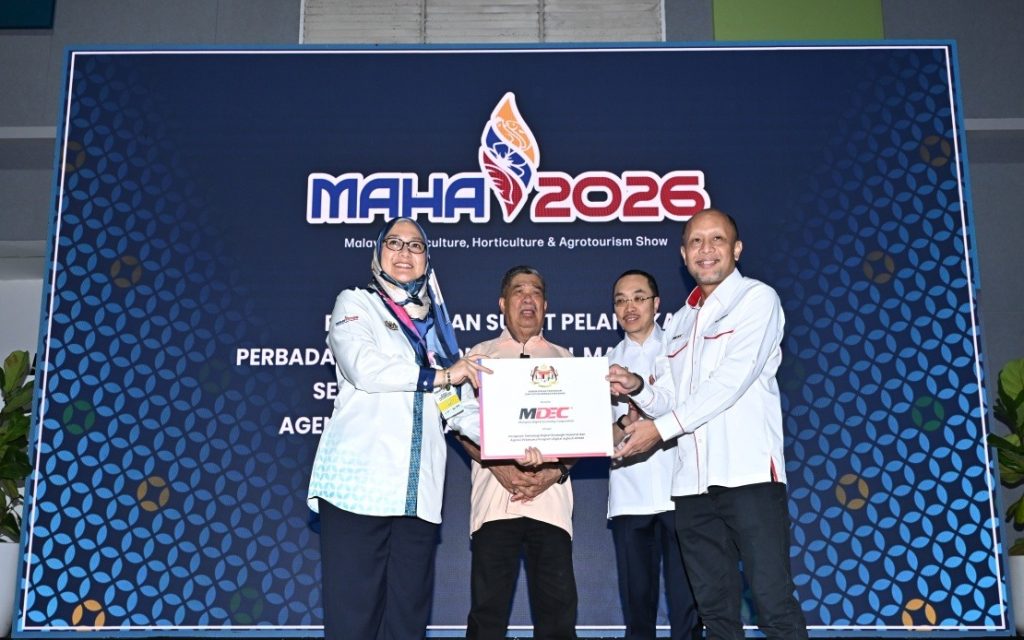
The Malaysia Digital Economy Corporation (MDEC) has been appointed by the Ministry of Agriculture and Food Security (KPKM) as the National Strategic Digital Technology Validator and implementing agency for the Digital AgTech Programme, aimed at driving digital transformation in the agri-food sector. MDEC said the appointment, announced at the Malaysia Agriculture, Horticulture and Agrotourism Exhibition (MAHA) 2026 on Aug 30, will expand its mandate to accelerate the adoption of artificial intelligence (AI) and digital technologies across the agri-food sector. “The initiative aims to increase productivity, optimise resource utilisation, strengthen food security and enhance the industry’s competitiveness,” the agency said in a statement. MDEC chief executive officer Anuar Fariz Fadzil said food security and digital economy development are two closely interrelated strategic national agendas. He said the appointment would help farmers and agro-entrepreneurs improve efficiency, expand market opportunities and strengthen the resilience of the country’s food supply. “Through i-AGRI, BidFresh and Agrovator@Sekolah, we are building an ecosystem that connects data, innovation, talent development and market access,” he added. To date, more than 800 Digital AgTech systems, including over 100 AI-based systems, have been deployed nationwide by local technology companies holding Malaysia Digital (MD) status. The implementation spans the crop, livestock, fisheries and aquaculture subsectors, with more than 30,000 participants having received training and exposure to Digital AgTech technologies. MDEC said the event also saw the launch of three strategic initiatives: the Digital Agriculture Technology Adoption Platform (i-AGRI), the BidFresh Platform and the Agrovator@Sekolah programme. The three initiatives complement one another in strengthening the country’s Digital AgTech ecosystem through data-driven planning, expanded market access and future talent development. The i-AGRI platform is an integrated platform that consolidates information on technology adoption across the crop, livestock, fisheries and aquaculture subsectors through statistics, maps, charts and interactive visualisations. BidFresh, meanwhile, directly connects agro-entrepreneurs with buyers through a digital platform that facilitates market matching, information sharing and transactions. Agrovator@Sekolah is a national talent development initiative that exposes primary and secondary school students to AI, the Internet of Things (IoT), automation and smart farming.

Energy & Technology

OGX Unit Named Distributor For Axtraction AI’s Enterprise Solutions

OGX Group Bhd said its wholly-owned subsidiary, OGX Networks Sdn Bhd, has been appointed the authorised distributor for Axtraction AI Sdn Bhd’s enterprise artificial intelligence platform-driven solutions in Malaysia. The company said the partnership covers the distribution of Axtraction AI’s core platform offerings, enabling organisations to analyse enterprise data, streamline operational processes, and support faster, more informed decision-making. The expansion into enterprise AI solutions is expected to strengthen OGX’s technology portfolio, complementing the company’s existing network, cybersecurity and enterprise data centre offerings. The addition of enterprise AI solutions is also expected to enhance OGX’s ability to support customers seeking greater workflow efficiency, improved operational visibility and more informed decision-making, as organisations continue to accelerate digital transformation and AI adoption initiatives. “We are pleased to partner with Axtraction AI as part of OGX’s continued efforts to strengthen our technology portfolio in line with evolving enterprise requirements. With organisations increasingly adopting enterprise-grade AI to improve workflows and decision-making, this partnership enhances our ability to support customers with practical AI capabilities built for complex operating environments,” said OGX executive director and managing director Tan Suan Loong.

Energy & Technology

CBH Engineering Wins RM60m Data Centre Contract In Johor

CBH Engineering Holding Bhd has secured a RM59.61 million work order for electrical infrastructure works at a data centre in Johor. Its unit, CBH Engineering Sdn Bhd (CBHESB), was awarded the contract by a private company on Wednesday, CBH said in a filing with Bursa Malaysia. The company did not identify the customer, citing a non-disclosure agreement. CBH, however, did share that the customer is principally involved in providing infrastructure for hosting and data processing services, offering some insight into the nature of the client despite the confidentiality surrounding the deal. The contract covers the design, supply and installation of electrical infrastructure for the data centre, including a high-voltage substation package and medium-voltage works, reflecting the technical scope and complexity typically associated with data centre electrical systems. The project is scheduled for completion by Sept 19, 2027, giving CBH just over a year to complete the works. CBH, which is principally involved in electrical wiring contracting and the supply of electrical items, said the contract is expected to contribute positively to its earnings and net assets per share over the course of the contract period, underscoring the financial significance of the win for the group. In a separate filing, CBH said its managing director, Cheah Boon Hwa, had disposed of 94 million indirect shares, representing a 4.998% stake in the company, estimated to be valued at RM76.14 million, through his investment vehicle Quay Holdings Sdn Bhd in a direct business transaction on Aug 20. Following the disposal, Cheah’s direct stake in the company remains unchanged at 0.058%, while his indirect equity stake now stands at 64%, reflecting a significant but still majority-controlling position within the group. Shares of CBH Engineering closed up three sen, or 3.4%, at 92.5 sen on Wednesday, giving the company a market capitalisation of RM1.74 billion.

Energy & Technology

MUFG Highlights Japan-Malaysia Partnership As Key To Asia’s Energy Transition

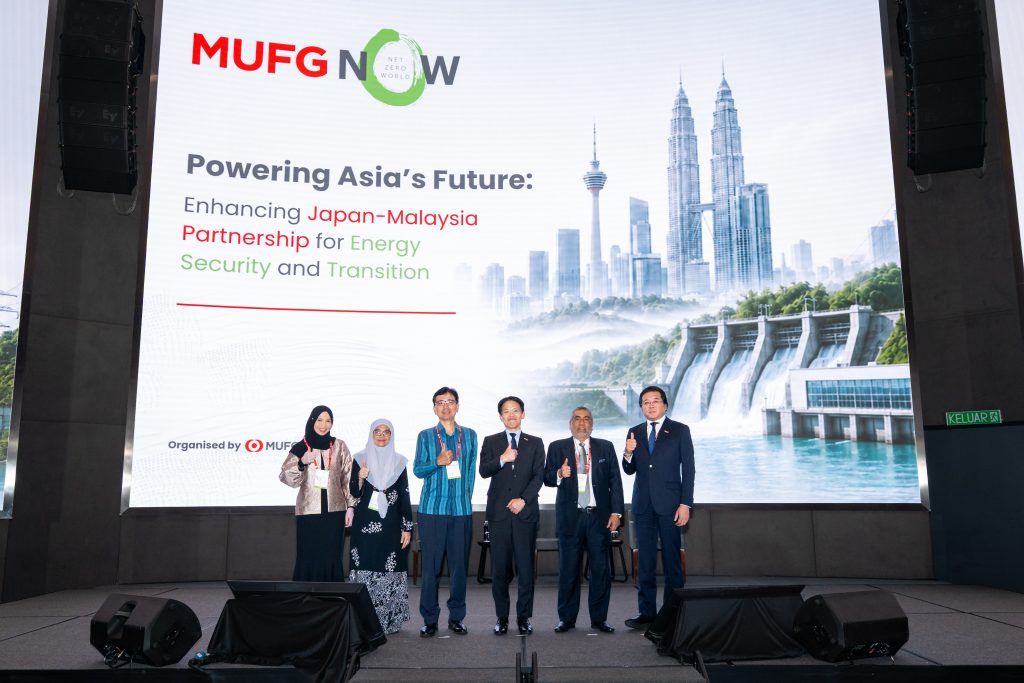
Close to 200 business leaders, policymakers and industry  experts convened at MUFG Net Zero World (MUFG N0W) Malaysia 2026 at Kuala Lumpur on Tuesday (Sept 15) to explore how closer Japan-Malaysia collaboration can strengthen regional energy security, accelerate the deployment of transition technologies and  mobilise financing for commercially viable projects.  MUFG N0W is MUFG’s flagship regional networking and thought leadership platform  bringing together public and private-sector leaders to advance practical responses to the  challenges and opportunities shaping Asia’s sustainable development.   [L-R] Puan Harmizan Mansor, General Manager of Group Corporate Finance, Petronas;  Puan Zuaida Abdullah, Deputy CEO, Investment Development, MIDA; His Excellency Noriyuki  Shikata, Ambassador of Japan to Malaysia; Yukinobu Saeki, MUFG’s Chief Executive for APAC;  YBhg. Dato’ Noorazman bin Abd Aziz, Chairman of MUFG Bank (Malaysia) Berhad; Motohide  Okuda, CEO and Country Head for MUFG Malaysia. Held under the theme “Powering Asia’s Future: Enhancing Japan-Malaysia Partnership  for Energy Security and Transition”, the event examined three connected priorities:  strengthening the Japan-Malaysia energy and industrial corridor; building Malaysia’s future  energy ecosystem; and making energy security bankable through transition finance.  The event programme covered emerging opportunities in areas including carbon capture  and storage, hydrogen, renewable energy, sustainable aviation fuel, power infrastructure  and transition finance, with a focus on moving from dialogue to investable projects.  His Excellency Noriyuki Shikata, Ambassador of Japan to Malaysia, highlighted the strength  of the Japan-Malaysia partnership in his keynote speech: “Japan’s advanced technology  and capital are actively flowing into Malaysia through proactive investments in AI,  semiconductors, supply chain resilience, and green transformation, as well as in almost all  of the 17 strategic sectors identified by the country as crucial for its growth. This is clear  evidence of the qualitative and quantitative expansion of our economic ties and presents a  bright outlook for the future.”   Puan Zuaida Abdullah, Deputy CEO, Investment Development, Malaysian Investment  Development Authority (MIDA), said in her policy address: “The global energy transition is  reshaping economic competitiveness and investment priorities. Building on decades of  partnership, Malaysia and Japan can leverage technology and green industries to   strengthen our industrial capabilities, directly supporting the New Industrial Master Plan  2030, National Energy Transition Roadmap, and Green Investment Strategy.   “MIDA is committed to turning these opportunities into high-quality investments that drive  lasting value for Malaysia,” she added.   Motohide Okuda, MUFG Malaysia’s Chief Executive Officer and Country Head said: “The  opportunities ahead are significant, but real progress will depend on our ability to move from  discussion to implementation. At MUFG, we are committed to connecting stakeholders,  mobilising capital and supporting strategic partnerships that can transform promising ideas into investable projects. By working together, we can strengthen energy security, advance  the transition journey and support sustainable economic growth across the region.”  Attendees at MUFG N0W Malaysia included speakers from leading energy players as well  as experts from the Institute of Energy Economics Japan, Asian Development Bank and  Japan Bank for International Cooperation.  MUFG’s presence in Malaysia dates to 1957, and the bank will mark its 70th year of service  in the market in 2027. Over this period, MUFG has supported Japanese companies investing  and expanding in Malaysia, while connecting Malaysian clients with opportunities across  Japan, ASEAN and its wider global network. Its capabilities span conventional and Islamic  banking, including establishing an Islamic banking arm in 2008 – the first Japanese bank to  do so in Malaysia – and contributing to the world’s first Yen-denominated Sukuk.  In addition to engaging corporate clients through MUFG N0W, the bank has also actively  collaborated with them on transactions ranging from green financing and sustainability linked loans to green trade. MUFG Malaysia was awarded Best Sustainable Bank (International) by FinanceAsia in 2024 and “Best Sustainable Finance Deal (Malaysia)” in  2025 for its collaboration with AEON Credit Service (M) Berhad, recognising Malaysia’s  largest social loan by a non-bank financial institution to date. 

Energy & Technology

CIMB Completes Malaysia’s First Tokenised Sukuk Settlement Using Tokenised Deposits

CIMB Group Holdings Bhd has completed a pilot to test the settlement of tokenised sukuk using tokenised deposits in a controlled environment, paving the way for broader applications enabled by blockchain technology. These potential applications include instant, or atomic, settlement for cross-border transactions, as well as the democratisation of investment assets — such as enabling bonds to be sold in smaller amounts that retail investors can more easily afford. The pilot was carried out through CIMB Islamic Bank Bhd in connection with a RM1.68 billion issuance under CIMB Islamic’s existing RM10 billion senior sukuk wakalah programme, with tenors of five, seven, 10 and 15 years. Of the total issuance, RM1.38 billion was issued in tokenised form and subscribed to by 12 institutional investors, while the remaining RM300 million was issued as a traditional sukuk. The order book was covered 1.73 times, with the pricing date set at Aug 19 and settlement completed on Aug 27, according to Sylvia Wong, regional head of tokenisation at CIMB Group Wholesale Banking. The key distinction between CIMB’s pilot and an earlier pilot conducted by Khazanah Nasional Bhd lies in how settlement occurred. CIMB’s pilot involved settling both the tokenised sukuk and tokenised deposits, meaning the financial asset and the cash were both settled on-chain — though the tokens mirror legal records that continue to exist within the traditional system. A tokenised deposit refers to a bank deposit recorded as a digital token on a blockchain, effectively representing commercial bank money in digital form. In contrast, Khazanah’s tokenised sukuk, which settled in mid-May, was paid for using fiat currency, or the ringgit, through traditional payment rails rather than blockchain. In that case, only the financial asset was settled on-chain, while the cash portion moved through conventional channels. “For our pilot, we created tokenised deposits to settle the tokenised sukuk, so both of these settlements are on the blockchain,” Wong said, adding that the blockchain used for the settlement is called CIMB Blockchain Connect. The digital asset custodian (DAC) involved in the pilot — the entity responsible for safeguarding clients’ tokenised assets — is not among the two DACs currently registered with the Securities Commission Malaysia (SC). “For this pilot, we cleared with the SC that a DAC licence is not required. We just need the ability to custodise these assets and the deposits,” Wong said during a press conference. What It Means for Ordinary People Wong explained that the central feature of the pilot is atomic settlement, where a buyer’s money and a seller’s asset change hands at exactly the same instant. She noted, however, that this concept holds limited relevance for individual consumers, who can already transfer and settle smaller sums instantly through existing payment infrastructure such as DuitNow. Settlement remains far from instantaneous in the institutional market, though. When large sums of money are sent overseas — for purposes such as funding a child’s education — the process can take several days as funds move through traditional channels involving multiple banks. “Now, with blockchain technology, if everyone is on the same blockchain, it happens literally instantaneously,” she said. The pilot nonetheless follows a “digital twin” approach, meaning the on-chain token mirrors traditional legal records rather than replacing them entirely; the process is therefore not conducted wholly on-chain. “The technological capability [for atomic settlement] is there, but are we ready to go [completely] instantaneous? We may not be ready just yet. Imagine, it is fine if it is RM100, but it is a different story if the amount is RM100 million, for a bank. Banks are looking for less friction, but not frictionless for now,” she said. Adopting a digital twin model means banks such as CIMB are investing in testing tokenised solutions through blockchain technology, even as traditional legal records and processes continue to run in parallel — meaning cost savings have yet to materialise. However, as more processes shift on-chain in the years ahead, banking operations could become faster and more efficient, while tokenisation could also help democratise asset classes by making them more accessible to retail investors. Making Financial Markets More Efficient According to a press release, the pilot was carried out as part of CIMB’s participation in Bank Negara Malaysia’s Digital Asset Innovation Hub, which offers a controlled environment for financial institutions to test new digital asset applications. CIMB has also been engaging with the SC on the broader development of tokenised capital market products. The completion of the pilot was announced at Menara CIMB in Kuala Lumpur, at an event attended by Finance Minister II Senator Datuk Seri Amir Hamzah Azizan. Amir Hamzah said the pilot demonstrates how Malaysia can build on its established strengths in Islamic finance and capital markets as financial infrastructure becomes increasingly digital. “Malaysia has developed deep capabilities in both Islamic finance and the capital markets. The next step is to ensure that these strengths continue to evolve alongside changes in technology and the way financial transactions are conducted. This pilot is important because it moves tokenisation beyond theory and tests how digital financial assets and commercial bank money can work together in a controlled environment. The objective is not digitalisation for its own sake, but to explore whether technology can make financial markets more efficient, transparent and connected while preserving strong standards of governance, investor protection and shariah compliance,” he said. Novan Amirudin, group chief executive officer of CIMB Group, said the pilot provided the bank and regulators with practical insights into the operational, legal and regulatory requirements involved in tokenised financial transactions. “This pilot allows us to test how tokenised financial assets can operate alongside existing market infrastructure and, importantly, how tokenised deposits can be used for settlement. The potential benefits are practical. Greater automation and faster settlement could reduce friction in financial transactions, improve liquidity management and increase capital efficiency. The experience gained from this pilot will help us assess how these capabilities can be developed further in Malaysia and, potentially, across regional and cross-border applications,” he said. Beyond Technology: Partnership

Energy & Technology

Factories Are Getting Smarter. Far East Paper Wants Smaller Businesses In The Race.

For decades, the economics of manufacturing have favoured scale. Bigger companies could afford better factories, more sophisticated machinery and greater automation. Smaller manufacturers competed with what they had. Far East Paper Products Sdn Bhd thinks that equation needs to change. The Malaysian company has spent almost half a century making products that rarely attract much attention but quietly keep industrial supply chains moving — paper cores, angle bars, edge protectors, paper pallets and other specialised packaging components. Now, it is preparing for something considerably more ambitious: taking some of the technologies transforming its own operations and making advanced automation more accessible to other SMEs. It is an unexpected next chapter for a company whose roots stretch back to 1976.   From Paper to Technology Far East Paper began as a paper core manufacturer. Today, it operates from a 170,000 sq. ft. facility producing customised, high-performance and 100% recyclable paper packaging solutions for corporate B2B customers. Its portfolio includes seamless industrial cores designed for demanding applications, alongside protective packaging and patented construction products such as FETUBE and FEPANEL. The company has received the FMM Excellence Award and maintains ISO 9001, ISO 14001:2015 and ISO 45001:2018 certifications covering quality, environmental management and workplace safety. Yet management increasingly describes its direction using terminology that sounds closer to technology than traditional manufacturing: Industrial Technopreneurship. Behind the phrase is a fundamental change in where Far East Paper believes manufacturing advantage will come from. Producing a quality product remains essential. But producing it consistently, efficiently and predictably — while using technology and data to continuously improve the process — is becoming equally important. The company is consequently investing R&D resources in Automated Storage and Retrieval Systems (ASRS), Automated Guided Vehicles (AGVs) and enterprise software designed to create a more connected digital manufacturing environment.   When Automation Changes the Worker Introducing technology into an established factory is not simply a matter of buying machines. Processes must change. More importantly, people must change with them. As a second-generation SME, Far East Paper has decades of manufacturing knowledge embedded within its workforce and operating culture. Its challenge is to preserve that knowledge while changing how the factory functions. Management developed what it calls the “Industrial Trinity” to guide the transition, combining traditional manufacturing expertise, digital infrastructure and physical automation. Crucially, the company does not position automation primarily as a means of eliminating workers. Instead, it wants to upskill employees who once operated conventional production processes into people capable of controlling increasingly sophisticated technological systems. In Far East Paper’s vision, the factory worker does not disappear. The job evolves.   Green Is Easy to Say, Harder to Manufacture A similar discipline underpins its sustainability strategy. Paper gives the company an obvious environmental proposition: its packaging solutions are designed to be recyclable. But Far East Paper argues that sustainability cannot stop at the material itself. Its “Reduce, Reuse, Recycle” approach has been supported through investment in its manufacturing facility and internationally recognised environmental and safety systems. That has required capital and, according to the company, a refusal to compromise standards simply to obtain cheaper materials. For industrial customers, such decisions are becoming increasingly relevant. A supplier’s environmental practices, certifications and material choices can affect the sustainability commitments and reputational risks of companies further along the supply chain. Going green, in other words, is becoming part of doing business.   What If SMEs Shared the Smart Factory? Far East Paper’s next project takes its transformation beyond its own factory. Under its TKS brand, the company plans to develop a 10.5-acre smart industrial hub in Selangor built around what it calls a “Shared Utility” model. The idea is to allow multiple SME tenants to access centralised advanced infrastructure, including ASRS and AGV capabilities, rather than requiring each company to make the entire investment independently. It attempts to solve an uncomfortable problem surrounding Industry 4.0. Manufacturers are constantly told they need to automate. But sophisticated automation demands capital, technical expertise, space and maintenance — precisely the resources smaller manufacturers often have less of. If Far East Paper’s model works, part of that barrier could be reduced. Instead of every SME having to build its own smart factory, some of the technology becomes shared infrastructure. It would represent a significant evolution for Far East Paper: from modernising its own manufacturing operations to creating an ecosystem that could help other manufacturers modernise theirs.   What Comes After Paper? There is another development the company is keeping deliberately under wraps. Its R&D team is working on a new product rooted in circular sustainability that, it says, will reconsider the environmental footprint associated with the final stage of the human life cycle. Details remain confidential ahead of its planned unveiling. The secrecy adds intrigue, but the larger story is already visible. A company that started with paper cores is now developing patented products, investing in automation, building shared smart-manufacturing infrastructure and exploring entirely new applications for sustainable materials. After nearly 50 years, Far East Paper’s challenge is no longer proving that it can manufacture paper products. It is proving how far the knowledge accumulated from making them can travel. And if its shared-factory experiment succeeds, Far East Paper may not just be automating its own future. It could help smaller manufacturers afford theirs.  

Energy & Technology

What Happens When Cars Get Smarter

A modern car can tell you that something is wrong. The harder question is figuring out exactly what. As vehicles have become more sophisticated, the business of repairing them has changed with them. Electronics, sensors, control modules and increasingly complex engineering systems mean that a problem appearing in one part of a car may have originated somewhere else entirely. For drivers, that complexity creates a new kind of problem: uncertainty. What actually needs repairing? Does that component really need replacing? And can you trust the person giving you the answer? Volks Maniac Garage has built its business around solving precisely that. Founded in 2016 and incorporated as Volks Maniac Automobile Sdn. Bhd. in 2023, the Shah Alam-based specialist began with strong Volkswagen roots. Today, its work covers scheduled servicing, wear-and-tear repairs, major repairs, advanced diagnostics and performance solutions for German vehicles. Its customers come primarily from the Klang Valley, although some travel from other parts of Malaysia and even Singapore. What brings them there, however, is not simply the ability to repair a car. It is the ability to understand what is wrong with it first.   Diagnosis Before Replacement For decades, the image of a mechanic was largely mechanical: tools, engines, components and grease. That picture is becoming outdated. As vehicles become more technologically advanced, diagnostics have become a larger part of automotive expertise. Reading a fault code is one thing. Understanding what caused it—and whether replacing the obvious component will actually solve the problem—is another. Volks Maniac has made that distinction central to its approach. Rather than moving immediately towards replacing parts, the workshop places emphasis on identifying the root cause of a problem before recommending what should happen next. Just as important is explaining that diagnosis to the customer. It addresses a fundamental imbalance in automotive repair. Most drivers do not possess the technical knowledge to independently determine whether a proposed repair is necessary. They depend on the workshop not only for technical expertise, but for an honest interpretation of what their vehicle needs. In that environment, transparency becomes part of the product.   A Market Outside the Dealership When Volks Maniac started, the opportunity was closely connected to Volkswagen. There was demand for workshops capable of understanding the vehicles at a specialist level while providing owners with an alternative to the traditional dealership environment. The market has since widened. More owners of German and European vehicles are looking for independent specialists, but their expectations have also increased. They want technical capability, sophisticated diagnostics and accountability alongside the accessibility of an independent workshop. Volks Maniac is responding by evolving its positioning towards becoming a broader European Engineering Specialist. It is a significant transition. Specialisation helped establish the company’s reputation. Expansion now requires it to apply that credibility across a wider range of vehicles without becoming just another general workshop.   Can Trust Be Scaled? The bigger test will come as the company expands geographically. Volks Maniac wants to build a larger footprint across Malaysia, but opening new locations creates a problem familiar to many service businesses: physical expansion is easier than replicating expertise. A second or third workshop can carry the same signage. It can use the same equipment and offer the same services. But will a customer receive the same diagnosis, communication and technical standard? That is why the company’s current investments are focused as much on systems as expansion. Volks Maniac is strengthening its operating processes, workflows, team capabilities and internal structure so that its specialist approach can eventually be reproduced across multiple branches. It is also deliberately avoiding expansion that moves faster than those systems can support. That restraint may ultimately matter more than speed.   The Workshop of the Future Volks Maniac’s next chapter will take it further from its original Volkswagen identity while retaining the specialist culture that built the business. Its ambition is broader German and European vehicle coverage, a stronger Malaysian footprint and an organisation capable of delivering consistent technical standards wherever its name appears. The opportunity is growing because cars themselves are changing. As vehicles become smarter, repairing them will demand more than the ability to replace a failed component. Workshops will increasingly need to interpret complex systems, identify the real source of problems and explain those findings to owners who may understand less and less about what is happening beneath the bonnet. Technology may make the car smarter. But it also makes the person diagnosing it more important.  

Energy & Technology

UAE Tycoon Al Ashram, MTN Agree To Build AI Data Centres In Africa

MTN Group Ltd, Africa’s largest mobile-phone operator, and Dubai-based tycoon Tarek Al Ashram will jointly develop data centres to power artificial intelligence on the continent. Al Ashram, who is also the co-founder of KKR & Co-backed Gulf Data Hub, will use his own investment firm to back the new venture, named Africa Data Hub Holding Ltd, he said in response to queries. “We see significant potential to bring our experience in developing and operating large-scale data centre platforms to African markets,” Al Ashram said, adding that Africa Data Hub will “help shape that growth.” While Africa has the fastest-growing and youngest population in the world, it has fallen behind in the global race to build out local AI capacity. Hyper-scalers including Microsoft Corp, Alibaba Group Holding Ltd and Amazon.com Inc already offer cloud services in Africa, but the continent still accounts for less than 1% of the world’s AI data centre capacity, according to World Economic Forum data. Although large-scale AI data centres — including a one-gigawatt facility planned by Microsoft and G42 in Kenya — have so far not materialised, Al Ashram said he sees growing demand for data centres across the continent. Africa now presents a “similarly compelling opportunity, driven by strong underlying demand, rapidly expanding digital economies and an increasing need for resilient and scalable infrastructure,” to what the Middle East has experienced over the years, Al Ashram said. For MTN, which operates across 16 African markets, AI forms part of a broader strategy to generate future revenue streams. Telecommunications companies globally are investing in data centres to help meet growing consumer and enterprise demand for AI, while also capturing a share of the income stream generated by hyper-scalers. “The approach that we are taking on the building of our AI business is to partner with third parties, and the entity that we are partnering with has built data centres in the UAE,” MTN chief executive Ralph Mupita said at an event on Tuesday. “We are taking a phased approach and will start building out 150 megawatts of AI data centre capacity.” The venture plans to build facilities in Nigeria and South Africa to process MTN’s own workflows, while also renting out capacity to hyper-scalers, other enterprise businesses and governments, which are increasingly seeking greater sovereignty over their data sets, Mupita said. MTN has been purchasing land and negotiating power agreements to ensure it can carry out a multiple-phased buildout of AI data centres across the continent, Mupita added.

Energy & Technology

MCE Bags RM54.28mil Contract From Perodua

MCE Holdings Bhd has secured RM54.28 million in 40-month supply contracts from Perodua to provide various automotive electronics and mechatronic components, including audio display, reverse camera and advanced driver assistance systems (ADAS)-related components for an internal combustion engine (ICE) model. In a statement, MCE said the project marks the company’s first vehicle audio display and ADAS-related components project for an ICE vehicle, building on its existing capabilities in infotainment systems for electric vehicles and further broadening its portfolio of higher-value components and systems. “The contracts were awarded to MCE’s wholly-owned subsidiary, Multi-Code Electronics Industries (M) Bhd, with production slated to begin in the fourth quarter of the financial year ending July 31, 2027,” the statement said. Production will be carried out at the group’s newly launched MCE Auto Hub in Serendah, Selangor, with an estimated total investment cost of RM4.95 million, marking a significant expansion of the company’s manufacturing capabilities to support this latest contract win. The contract award represents a strategic milestone for MCE as it continues to diversify beyond its traditional strength in electric vehicle infotainment systems, positioning the company to capture a broader share of the automotive electronics market by extending its expertise into internal combustion engine vehicles as well. This move aligns with the group’s broader strategy of expanding its product offerings and strengthening its position as a key supplier within Malaysia’s growing automotive components industry.

Energy & Technology

Alibaba To Raise $10b In Hong Kong To Fund AI Push

Alibaba announced on Sunday that it’s selling HK$80 billion (about US$10.2 billion) worth of shares to help fund its push into artificial intelligence. If completed, this would be the biggest primary follow-on share sale ever by a company listed in Hong Kong, and the third-largest in the world this year, behind only Alphabet and Intel. Alibaba says every cent of the money raised will go toward building out its “full stack” AI capabilities — covering chips, infrastructure, and AI model development. The company plans to sell 710 million shares at HK$112.70 each, a 3.6% discount to its last closing price. It hasn’t given a detailed breakdown of how the money will be split across these areas. This comes just a week after Alibaba’s latest earnings report, where it revealed it has already used up nearly half of its three-year, multi-billion-dollar spending plan. The company also said it now expects to recoup its AI investments in about 2.5 years, faster than the 3 years it had estimated earlier, thanks to strong demand. Still, profit for the quarter dropped 75% year-on-year as AI spending ramped up. CEO Eddie Wu said the heavy spending now is necessary groundwork to capture future growth. Sources familiar with the deal said demand from investors — including sovereign wealth funds — was strong enough that Alibaba increased the size of the offering. Morgan Stanley, HSBC, UBS, and CICC are handling the deal as joint bookrunners. Because the offering wasn’t registered under US securities law, American investors can’t take part. The broader context: AI spending has exploded globally since 2022. In the US alone, the four big tech giants — Microsoft, Amazon, Alphabet, and Meta — are expected to spend a combined US$725 billion on AI-related infrastructure in 2026.

Scroll to Top

Subscribe
FREE Newsletter