Energy & Technology

Energy & Technology

Huawei Malaysia And MCL Bhd Introduce Huawei eKit To Enhance SME Network Experience

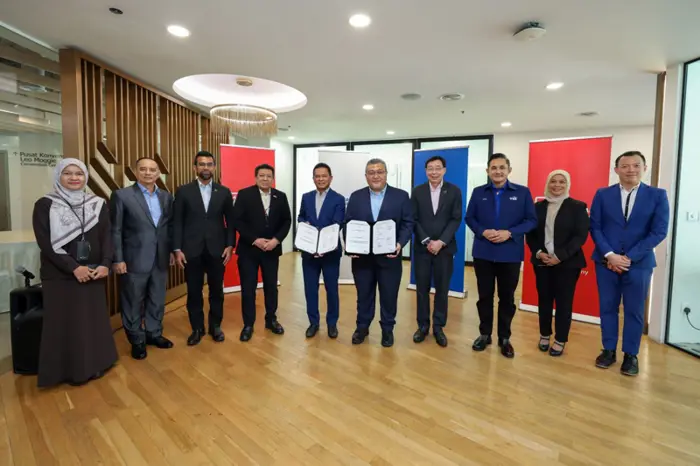
KUALA LUMPUR, Huawei Technologies (Malaysia) Sdn Bhd (“Huawei Malaysia”) has partnered with MCL Bhd to roll out its Huawei eKit solutions tailored specifically for small and medium-sized enterprises (SMEs) in Malaysia. Designed to support a wide range of industries—such as offices, hospitality, commercial real estate, and retail—the Huawei eKit aims to meet the evolving digital needs of SMEs. The Huawei eKit offers a comprehensive portfolio of network solutions that help businesses boost productivity, streamline operations, and accelerate their market readiness. As one of the industry’s most complete SME-focused offerings, it is built to enhance operational efficiency and drive digital transformation. [From Left to Right] Mr Jackson Tan, Sales Director of MCL Bhd; Mr Wade Tan, Sales Director of MCL Bhd; Mr Ben Tan, Managing Director of MCL Bhd; Mr Kevin Wang, Director of Commercial & Distribution, Huawei Enterprise Malaysia; Mr Wong Wei Lee, Distribution Sales Manager, Huawei Enterprise Malaysia; and Mr Ivan Kau, Director of Network Solution Sales, Huawei Enterprise Malaysia at the launch event marking the partnership between Huawei Technologies (Malaysia) Sdn Bhd and MCL Bhd to deliver Huawei eKit solutions for Malaysia’s SMEs. A recent launch event in Kuala Lumpur gathered over 130 key channel partners, showcasing the full capabilities of the Huawei eKit through live demos and hands-on product sessions. The suite includes switches, routers, access points, and security gateways—allowing partners to better understand its value, ease of deployment, and business applications. As Huawei Malaysia’s newly appointed Gold Distribution Partner, MCL Bhd will play a central role in expanding the eKit’s reach. Leveraging its strong distribution network and market expertise, MCL will also provide local partners with hands-on training, channel support, and a streamlined procurement process to help them deliver effective solutions to SMEs. Huawei eKit, positioned as a dedicated brand under Huawei’s distribution business, features modular, scenario-based solutions that can be easily customised to real-world SME environments. The product range includes five series covering smart collaboration tools like the Huawei IdeaHub, integrated wired and wireless connectivity, and IT infrastructure for data storage. What sets the Huawei eKit apart is its simplicity—making it easier for partners to procure, install, maintain, and learn. Its user-friendly deployment architecture is ideal for SMEs with limited IT resources, enabling quicker implementation and reduced complexity. This strategic collaboration marks a key milestone in Huawei Malaysia’s commitment to empowering local SMEs. By building a robust partner ecosystem and delivering accessible, future-proof digital tools, Huawei and MCL are helping businesses of all sizes unlock new growth opportunities in the digital era.

Energy & Technology

Amazon Closes AI Lab In Shanghai, Source Says

SHANGHAI, Amazon has shuttered its artificial intelligence research lab in Shanghai, a source familiar with the matter confirmed to AFP, marking a notable retreat amid intensifying tech rivalry between the United States and China. US tech giant Amazon has shut down its artificial intelligence research lab in Shanghai The lab, which operated under Amazon Web Services (AWS), was reportedly closed as part of a broader strategic realignment. In a WeChat post that has been widely shared on Chinese social media, lab scientist Wang Minjie attributed the move to “strategic adjustment between China and the United States.” While Amazon did not explicitly confirm the closure when contacted by AFP, AWS spokesperson Brad Glasser stated, “We’ve made the difficult business decision to eliminate some roles across particular teams in AWS. These decisions are necessary as we continue to invest, hire, and optimise resources to deliver innovation for our customers.” The dedicated AWS China webpage for the Shanghai AI lab, accessible earlier this week, had been taken offline by Friday. Archived versions show the lab was established in late 2018 with the goal of fostering collaboration with the global research community. This move follows recent job cuts at AWS—reportedly affecting hundreds—and mirrors a broader trend, as other major U.S. tech firms like Microsoft and IBM also scale back research operations in China amid escalating geopolitical and regulatory tensions.

Energy & Technology

Musk Confirms Tesla And Samsung Ink US$16.5 Billion Chip Supply Agreement

SEOUL, Tesla CEO Elon Musk has confirmed a US$16.5 billion chip supply agreement with Samsung Electronics, marking a significant boost for the South Korean tech giant’s foundry business, which has been grappling with losses. The announcement drove Samsung’s shares up by as much as 6.8%—their highest level since September last year—while Tesla shares rose 1.9% in U.S. premarket trading. Under the deal, Samsung’s chip fabrication plant in Taylor, Texas will produce Tesla’s next-generation AI6 chip. The project had faced delays due to Samsung’s struggle to attract major clients. Musk noted on social media platform X that Tesla will collaborate closely with Samsung to optimize manufacturing efficiency, even saying he would “personally walk the line” to speed up progress. He added that the US$16.5 billion figure is only a baseline, with actual output potentially “several times higher.” Industry analysts highlighted the significance of the deal. Ryu Young-ho of NH Investment & Securities said the Taylor plant had previously lacked major clients, making this order a breakthrough for Samsung. In late 2023, Reuters reported that Samsung delayed taking delivery of chipmaking equipment from ASML due to the absence of key customers, pushing the plant’s operational date to 2026. Although no official production timeline for the AI6 chip was disclosed, Musk previously said Tesla’s AI5 chips would be produced by the end of 2026, indicating AI6 could follow in 2027 or 2028. Samsung currently produces Tesla’s AI4 chips, used in its Full Self-Driving system, while rival TSMC is expected to manufacture the AI5 chips in Taiwan and later in Arizona. Samsung, the world’s top memory chipmaker, is seeking to expand into contract chip production through its foundry division. However, it holds just 8% of the global foundry market compared to TSMC’s dominant 67%, according to TrendForce. Samsung initially announced the US$16.5 billion deal without naming the client due to confidentiality clauses. However, Reuters confirmed through sources that Tesla is the recipient. The agreement comes at a critical time for Samsung, which is under pressure in the AI chip space and is set to report earnings soon. Earlier this month, the company forecast a 56% year-on-year decline in Q2 operating profit, partly due to a struggling foundry business estimated to have posted losses exceeding 5 trillion won (US$3.6 billion) in the first half of 2025. Analysts say the Tesla deal could help reduce those losses and signal a turning point for Samsung’s efforts to close the technological gap with TSMC. Still, questions remain over whether the agreement ties into broader U.S.–South Korea trade talks, as Seoul continues efforts to avoid potential 25% U.S. tariffs by deepening chip and shipbuilding partnerships. ($1 = 1,378.70 won)

Energy & Technology

PTTEP Acquires Full Ownership Of MTJDA Block A-18 In US$450 Million Deal

Thai energy giant PTT Exploration and Production (PTTEP) has acquired full ownership of Block A-18 in the Malaysia-Thailand Joint Development Area (MTJDA) through a US$450 million deal with Chevron’s subsidiaries, the company announced on July 25. According to Reuters, the agreement—inked with Hess (Bahamas) and Hess Asia Holdings, both now under Chevron following its acquisition of Hess Corp—gives PTTEP 100% equity in Hess International Oil Corp, which holds a 50% interest in Block A-18. The acquisition aligns with Chevron’s global restructuring strategy to optimise operations and reduce costs, which includes workforce downsizing and potential divestments such as its stake in a Singapore refinery. Spanning 7,250 sq km in the southern Gulf of Thailand, Block A-18 is a key natural gas producer for both Thailand and Malaysia, currently delivering around 600 million standard cubic feet of gas per day—shared equally between the two nations. “We’re proud to expand our presence in the MTJDA, a region known for its rich petroleum resources and its importance to Thailand’s energy security,” said PTTEP CEO Montri Rawanchaikul. He noted that the acquisition not only strengthens PTTEP’s foothold in the regional energy landscape but also supports Thailand’s long-term energy resilience.

Energy & Technology

Nvidia-YTL Power Partnership Set To Strengthen Malaysia’s Position As ASEAN AI Hub

KUALA LUMPUR, Malaysia is set to become a regional hub and centre of excellence for artificial intelligence (AI) in ASEAN following a landmark partnership between Nvidia Corp and YTL Power International Bhd. Investment, Trade and Industry Minister Tengku Datuk Seri Zafrul Abdul Aziz announced that the collaboration will focus on developing AI infrastructure powered by renewable energy, underpinned by an investment of RM10 billion. “This milestone project will involve the establishment of AI data centres, the deployment of Nvidia’s advanced graphics processing units (GPUs), and the development of Malaysia’s own sovereign large language model (LLM),” Tengku Zafrul said in a post on X. YTL Power, a subsidiary of YTL Corp Bhd, will also lead efforts to build a comprehensive AI ecosystem through partnerships with technology providers, suppliers, and local contractors. The minister highlighted that this partnership stems from Prime Minister Datuk Seri Anwar Ibrahim’s proactive international engagements, which are translating into transformative investments for Malaysia’s economic and tech sectors. The groundwork for this collaboration was laid in December 2023, during a meeting between Anwar, Nvidia CEO Jensen Huang, and YTL Power managing director Datuk Yeoh Seok Hong.

Energy & Technology

Samsung Inks US$16.5 Billion Chip Manufacturing Deal With Global Client

SEOUL, Samsung Electronics has signed a US$16.5 billion contract to manufacture chips for a major global company, the South Korean tech giant announced on Monday. The identity of the client and specific contract terms will remain confidential until the deal concludes at the end of 2033. Following the announcement, Samsung’s shares rose 3.5 per cent. The deal, sealed over the weekend, marks a significant win for Samsung’s contract chip manufacturing (foundry) business, which counts companies like Tesla and Qualcomm among its clients. Despite this, Samsung has faced stiff competition from industry leader TSMC, which supplies chips to tech giants such as Apple and Nvidia. The announcement comes amid South Korea’s broader push to deepen trade ties with the United States, particularly in semiconductor and shipbuilding sectors, as both nations explore ways to avoid potential 25 per cent tariffs on certain exports. Analysts noted the deal could help Samsung recover lost ground in the AI chip race, which has weighed on its profits and market share. However, the impact on its delayed Texas chip facility remains uncertain, especially as the plant has yet to secure major customers. According to BNK Investment & Securities analyst Lee Min-hee, the new order is unlikely to involve Samsung’s latest 2-nanometer technology, as the company continues to face challenges improving yields at the advanced node. Samsung has been steadily losing foundry market share to TSMC, underlining ongoing hurdles in advancing cutting-edge chip production needed to attract top-tier clients.

Energy & Technology

Chitose Group Sets Sights On Operating 10 Million Hectares Of Microalgae Production Facilities

KUALA LUMPUR, Chitose Group, the operator behind the world’s largest flat-panel photobioreactor-based microalgae facility in Kuching, Sarawak, is setting an ambitious target: developing 10 million hectares of large-scale microalgae farms across Malaysia, Indonesia, India, the Middle East, and other regions by 2050. This bold expansion could tap into a potential global market valued at US$4.2 trillion (RM17.72 trillion). Ryosuke Koike, Executive Officer of Chitose Bio Evolution Pte Ltd Ryosuke Koike, Executive Officer of Chitose Bio Evolution Pte Ltd, the group’s holding company, said Chitose aims to commercialise a wide range of microalgae-derived products, including chemicals, fuels, cosmetics, food, and animal feed. With operations already established in Japan, Singapore, Brunei, Thailand, and Vietnam, Chitose intends to build a sustainable algae-based industry as an alternative to fossil-fuel-based systems. “Our Matsuri initiative – a global collaboration with more than 100 partners, including major corporations, universities, and research institutions – supports this goal. Each production site will operate on a self-funded model, generating its own capital through cash flows,” Koike told Bernama. Rather than owning the production assets directly, Chitose aims to oversee and manage the full algae biomass supply chain. In Sarawak, the group is working alongside the Sarawak Biodiversity Centre, Japan’s Institute of Microalgal Technology (IMAT), and the New Energy and Industrial Technology Development Organization (NEDO) on a five-hectare facility established in 2023. With US$400 million in R&D funding from the Japanese government, the site is expected to expand by 2030 to support new product development from microalgal biomass. Koike highlighted Malaysia’s abundant sunlight and equatorial climate as ideal for photosynthesis-based algae farming. “Through microalgae cultivation, we aim to support global decarbonisation efforts and reduce reliance on fossil fuels,” he said, noting the wide applications of microalgae, including fuels, plastics, fibres, paint, and food. Despite global shifts in trade policies, Koike said Chitose remains focused on its long-term mission. “We’re building a society that can sustain humanity for the next thousand years,” he said. Beyond microalgae, Chitose is actively involved in sustainable agriculture in Malaysia. In Cameron Highlands, the group partners with over 20 local farmers to grow produce using eco-friendly Japanese soil cultivation methods. Chitose-brand fruits and vegetables are already sold at more than 70 retail outlets and featured in over 100 restaurants in Malaysia, Singapore, and Thailand. The group aims to increase this reach to 250 stores and 300 dining establishments across the region within three years. Koike added that Chitose is actively seeking local partners and distributors to expand its agricultural footprint, particularly in Kuala Lumpur and other urban areas. Chitose will also showcase its algae-based circular manufacturing model at Expo 2025 Osaka Kansai under the Japan Pavilion. The “Algal by Matsuri” exhibition will feature a variety of algae-derived products, from food and cosmetics to sustainable clothing, paint, PET resin, and even fuels for aviation and marine transport.

Energy & Technology

DayOne Commences Construction Of Eco-Friendly AI Data Centre In Singapore

Singapore-based data centre firm DayOne has officially broken ground on its first facility in the city-state, marking a major step forward in the company’s regional expansion and sustainability efforts. The 20-megawatt (MW) centre, set to begin operations in 2026, will feature approximately 40,000 square metres of gross floor area. DayOne Data Centers CEO Jamie Khoo speaking at the ground breaking event in Singapore on July 25. Engineered with a strong focus on sustainability, the facility will accommodate high-density air-cooled GPUs and deploy a combination of hybrid air and liquid cooling technologies—specifically designed to handle the thermal demands of AI workloads. In a pioneering move towards clean energy, DayOne will implement Solid Oxide Fuel Cell (SOFC) power systems at the site as a proof-of-concept for hydrogen-powered energy. This system is expected to contribute 0.3MW to the facility’s power needs and supports broader efforts to diversify power sources and bolster Singapore’s green energy transition. The company will seek both LEED Platinum and BCA Green Mark Platinum (GMDC:2024) certifications, aligning with global best practices in energy efficiency and environmental performance. “Our SG1 facility represents our deep commitment to Singapore as our base and regional hub, while showcasing our long-term vision to drive Southeast Asia’s digital transformation with sustainable infrastructure,” said Jamie Khoo, CEO of DayOne Data Centers. The company also operates or develops data centres across Hong Kong SAR, Indonesia, Japan, Malaysia, and Thailand. To meet its goal of running entirely on renewable energy, DayOne has signed a 10-year Power Purchase Agreement (PPA) with Sembcorp Power, a subsidiary of Sembcorp Industries. The electricity provided under the agreement will be backed by bundled Renewable Energy Certificates (RECs), sourced locally or imported via cross-border grid connections. This PPA also opens avenues for future energy collaborations. “The explosive growth of AI infrastructure demands a sustainable response. Our partnership with DayOne underscores our joint commitment to powering digital transformation with clean, future-proof solutions,” said Koh Chiap Khiong, President and CEO of Gas and Related Services and Singapore CEO at Sembcorp Industries. DayOne is also collaborating with the National University of Singapore (NUS) as part of Phase 2.0 of the Sustainable Tropical Data Center Testbed (STDCT 2.0). The initiative includes pilot testing of advanced cooling technologies adapted for tropical climates. “With STDCT 2.0, we’re trialing next-generation solutions—from flexible-fuel generators and fuel cells to state-of-the-art liquid cooling—to prove that sustainability and performance can coexist. These innovations lay the groundwork for resilient, energy-efficient digital infrastructure in Singapore and beyond,” said Professor Lee Poh Seng, STDCT Programme Director and Head of Mechanical Engineering at NUS. The SG1 facility is one of four green data centre proposals approved by the Singapore Economic Development Board (EDB) and Infocomm Media Development Authority (IMDA) in 2023, with awarded capacity to support the country’s digital growth. This development plays a key role in Singapore’s plan to add at least 300MW of new data centre capacity, a critical component of the National AI Strategy 2.0.

Energy & Technology

Singtel’s Nxera And Partners To Recruit Over 500 For Digital And Data Centre Positions

SINGAPORE, Singtel’s regional data centre subsidiary, Nxera, together with its industry partners, is set to train and recruit over 500 individuals in Singapore within the next six months to support the rapidly growing digital infrastructure space. The initiative will target both fresh graduates and mid-career professionals, offering internships, graduate programmes, work-study schemes, and full-time positions. Roles will span technical and non-technical areas such as data centre consultancy, design, engineering, operations, finance, development, and sustainability. They will hire fresh graduates and mid-career professionals in technical and non-technical functions such as data centre consultancy, design, engineering, operations and sustainability.  Nxera CEO Bill Chang said the company is expected to take on the majority of the new hires, though industry partners will also recruit to ensure the broader ecosystem is equipped with skilled talent. “We can’t hire everyone ourselves — our supply chain also needs access to skilled professionals to build innovative solutions,” he noted. The hiring push comes amid a regional surge in AI infrastructure development, which is being hampered by a shortage of qualified talent. “There’s a paradox,” Chang explained. “On one hand, AI is said to threaten jobs. On the other, those of us building AI infrastructure urgently need skilled workers. It’s about retraining and redirecting people into roles with the right skill sets to support the next generation of AI-driven data centres.” He added that the industry requires more than just engineers. “We need imaginative thinkers who can design, operate, and maintain complex infrastructure — individuals who are also champions of sustainability. This sector welcomes people from diverse backgrounds, not just those with traditional engineering experience.”

Energy & Technology

Hexza Corp Subsidiary Launches Corn-Based Ethanol Plant In Perak

KUALA LUMPUR, Hexza Corporation Bhd’s subsidiary, Chemical Industries (Malaya) Sdn Bhd (CIM), has launched a corn-based ethanol production facility in Persiaran Tasek, Ipoh—marking a significant transition from molasses to corn as its primary feedstock. The facility uses natural fermentation and distillation to produce ethanol from high-quality corn, reflecting CIM’s shift toward more sustainable and efficient manufacturing methods. Hexza Corporation Bhd’s subsidiary Chemical Industries (Malaya) Sdn Bhd (CIM) has launched a corn-based ethanol production facility in Persiaran Tasek, Ipoh. A key output of this process is distiller’s dried grains with solubles (DDGS), a high-value byproduct repurposed as livestock feed. With this innovation, CIM becomes the first company in Malaysia to manufacture and supply locally produced DDGS—contributing to food security and advancing circular economy practices. Malaysian Investment Development Authority (MIDA) CEO Datuk Sikh Shamsul Ibrahim Sikh Abdul Majid praised the project as a clear example of circular economy principles creating tangible economic value by maximising agricultural inputs and fostering high-impact downstream sectors such as animal feed production. “This initiative strengthens Malaysia’s bio-based value chain, reduces reliance on imports, and opens up new avenues for sustainable industrial development,” he said. InvestPerak CEO Mohamad Hashim Abdul Ghani highlighted CIM’s long-standing presence in Perak and said the company’s continued expansion underscores its confidence in the state’s industrial ecosystem. “The new plant not only showcases CIM’s focus on innovation and sustainability but also enhances Perak’s standing as a hub for high-value, future-ready investments,” he added. Hexza executive director Foong Leon Chiew described the launch as a strategic milestone, reinforcing CIM’s leadership in the domestic ethanol and DDGS market while underscoring its commitment to sustainable growth. Founded in 1962, CIM was Malaysia’s first ethanol producer and has since built a wide-ranging product portfolio—including ethanol of up to absolute purity, natural vinegar via its wholly owned subsidiary Bio-Acetic Products Sdn Bhd, and now, DDGS. CIM also holds MS:ISO9002 certification since 1994, with its products meeting British Pharmacopoeia standards.

Scroll to Top

Subscribe
FREE Newsletter