Energy & Technology

Energy & Technology, News

Samsung’s Harman Acquires Premium Audio Brands from Masimo in $350 Million Agreement

Samsung Electronics Co. has announced that its subsidiary Harman International will acquire the audio business of U.S.-based health technology company Masimo for 500 billion won (US$350 million). The acquisition will add a range of high-end audio brands to Harman’s existing portfolio, including Bowers & Wilkins, Denon, Marantz, Polk Audio, and Definitive Technology. These will join Harman’s established lineup, which features JBL, Harman Kardon, and AKG, according to Samsung Electronics. Masimo, known primarily for patient monitoring devices, ventured into the home audio market in 2022 with its acquisition of Sound United, the parent company of several premium audio brands, including Bowers & Wilkins. Samsung Electronics stated that this strategic acquisition would strengthen Harman’s position in the global consumer audio market, which is projected to grow from US$60.8 billion in 2025 to US$70 billion by 2029. Dave Rogers, president of Harman’s lifestyle division, said, “Built on a shared legacy of innovation and excellence in audio technology, this combined family of brands, together with the talented employees of both companies, will deliver complementary audio products, strengthen our value proposition and offer more choices to consumers.” The acquisition is expected to be finalised by the end of 2025, further bolstering Harman’s standing as a leader in the premium audio segment. –Yonhap

Energy & Technology, News

Uber Teams Up with Pony AI to Introduce Autonomous Ride-Hailing in the Middle East

Uber has announced a strategic partnership with Chinese robotaxi developer Pony AI to integrate self-driving vehicles into its ride-hailing platform, marking a significant step in the company’s expansion into autonomous transportation. The collaboration, set to debut in a key Middle Eastern market later this year, will see Pony AI’s autonomous vehicles deployed initially with a safety operator onboard. The companies plan to transition to fully autonomous operations following a successful pilot phase. This latest partnership is part of Uber’s ongoing strategy to strengthen its position in the burgeoning robotaxi sector, where it faces competition from rivals such as Lyft and electric vehicle manufacturer Tesla. In recent weeks, Uber has forged new alliances with self-driving technology firms May Mobility and Momenta and expanded its collaboration with Chinese autonomous driving company WeRide to extend services to 15 more global cities. Additionally, last year saw Uber broaden its partnership with Alphabet’s Waymo. News of the deal sent US-listed shares of Pony AI, which went public on Nasdaq in November, up nearly 13% in premarket trading, while Uber shares dipped slightly by 1%. The autonomous vehicle industry continues to attract significant investment despite the technical and regulatory challenges it faces. Governments, including the US federal administration, are actively supporting the sector by relaxing certain safety requirements while maintaining essential incident reporting mandates. Founded in 2016 and backed by Toyota, Pony AI has rapidly expanded its footprint in the robotaxi space. The Guangzhou-based company has secured licences to operate robotaxis in major Chinese cities, including Beijing, Shanghai, Guangzhou and Shenzhen, and is actively exploring further expansion into South Korea, Luxembourg, the Middle East, and other international markets. By leveraging Pony AI’s advanced autonomous technology, Uber aims to bolster its competitive edge in the global ride-hailing market, capitalising on the growing momentum in the self-driving taxi sector. –Reuters

Energy & Technology, News

Oil Prices Stabilise After Reaching Four-Year Lows on OPEC+ Output Strategy

KUALA LUMPUR: Oil prices steadied on Tuesday after falling to their lowest levels since February 2021 in the previous session, as OPEC+’s decision to accelerate production hikes continued to raise concerns over a potential supply glut amid fragile global demand. Brent crude edged up 10 cents to USD60.33 a barrel by 0050 GMT, while US West Texas Intermediate (WTI) crude also rose 10 cents to USD57.23. Both benchmarks had settled on Monday at their lowest in over four years. The market reacted to OPEC+’s announcement on Saturday of a further ramp-up in output for a second straight month. The group committed to increasing production in June by 411,000 barrels per day (bpd), bringing the cumulative hike across April, May and June to 960,000 bpd. This marks a 44 per cent rollback of the 2.2 million bpd in voluntary cuts introduced since 2022, according to Reuters estimates. OPEC+ sources indicated that the group could fully unwind these voluntary cuts by October should compliance with production quotas remain weak. Meanwhile, US shale producer Diamondback Energy revised down its output forecast for 2025, citing increased market uncertainty and rising OPEC+ supply as key pressures challenging the trajectory of US production growth. In Washington, Treasury Secretary Scott Bessent reiterated that President Donald Trump’s policy agenda – including tariffs, tax reductions, and deregulation – would support long-term investment, stating that financial markets remain “anti-fragile” despite short-term volatility. The Federal Reserve is expected to hold interest rates steady at its upcoming policy meeting on Wednesday, as the evolving tariff landscape continues to weigh on the broader economic outlook. Barclays revised its Brent crude forecast downwards by USD4 to USD70 a barrel for 2025 and projected USD62 for 2026, citing a challenging path ahead for market fundamentals amid heightened trade tensions and OPEC+’s shifting strategy. –Reuters

Energy & Technology, News

Gamuda Sells Land for RM455m, Secures RM1.01b Data Centre Project with Google Affiliate

Gamuda Berhad has entered into a strategic agreement with Pearl Computing Malaysia Sdn Bhd, an affiliate of Google, involving the sale of a 389-acre site in Port Dickson for RM455.23 million and subsequent development works valued at RM1.01 billion. The land, initially acquired by Gamuda for RM424.4 million in December 2024, will serve as the foundation for a large-scale data centre project. The transaction marks a significant milestone in Gamuda’s expansion into digital infrastructure and underscores its commitment to supporting Malaysia’s growing role in the global data centre ecosystem. In a filing with Bursa Malaysia, the engineering and construction group announced that its subsidiary, Gamuda DC Infrastructure Sdn Bhd, signed a sale and purchase agreement (SPA) as well as an external infrastructure contract with Pearl Computing on 2 May 2025. Under the agreement, Gamuda will deliver a comprehensive scope of enabling works — including civil works, utility connections, and water infrastructure — forming what it describes as a “top-to-toe” solution tailored for hyperscale clients. This includes the construction of a water treatment plant with a daily capacity of 65 million litres, due for completion in Q2 2027. An off-river storage facility, aimed at ensuring sustainable water supply and mitigating pollution during dry seasons, is also slated for delivery by Q4 2028. The infrastructure will feature pipelines connecting the plant to a service reservoir dedicated to the data centre’s operations. “The project reflects Gamuda’s full-spectrum delivery model for the fast-growing data centre sector, encompassing land development, critical utilities, and supporting infrastructure to deliver a ready-to-build platform,” the company stated in its announcement. Gamuda further highlighted that the initiative leverages its engineering expertise and advanced industrialised building system (IBS), which together enable accelerated construction timelines, enhanced cost control, and precision quality assurance — key considerations for international tech clients. The land disposal is expected to be completed in the fourth quarter of 2025, subject to the fulfilment or waiver of conditions outlined in the SPA. As of the midday trading session on Monday, Gamuda shares declined eight sen or 1.8% to RM4.32, valuing the company at RM24.9 billion. The stock has registered a year-to-date decline of 8.3%. –The Edge Malaysia

Energy & Technology, News

Maxis Expands Fibre Coverage in Penang, Targets 100,000 Homes by 2027

KUALA LUMPUR : Maxis Bhd has announced the expansion of its fibre network in Penang, with the goal of connecting over 100,000 homes across the state by 2027. The rollout will span all districts in Penang, with priority given to high-density urban areas such as Jelutong, Georgetown, Batu Maung, Bayan Lepas, and Bayan Baru, along with several key sites on the mainland. This expansion aligns with the Penang 2030 vision, which aims to transform the state into a family-focused, green, and smart region. Chief Minister Chow Kon Yeow said the initiative will enhance the state’s digital infrastructure, supporting talent development, economic growth, and digital inclusion. “High-quality internet connectivity is essential for Penang’s continued rise as a regional technology and innovation hub,” he said. Maxis CEO Goh Seow Eng noted that the project will enhance service delivery and enable broader digital participation. “With our own fibre network, we can ensure consistent service quality, offering fast, secure, and reliable connectivity,” he said. The company’s expansion in Penang is supported by the state’s Last Mile Connectivity Guidelines—Malaysia’s first such initiative—which streamlines pole-sharing and accelerates fibre deployment across providers. Maxis currently operates a fibre network exceeding 23,000km nationwide, with the capacity to serve over 500,000 homes. Its own-built infrastructure is further complemented by access partnerships with other providers, extending its reach to households across Malaysia.

Energy & Technology, News

Sarawak Issues Compliance Notice to Petronas Carigali Over Miri Terminal

The Sarawak state government has issued a legal notice to Petronas Carigali Sdn Bhd, the upstream subsidiary of Petroliam Nasional Bhd (Petronas), for allegedly operating without a valid permit at its Miri Crude Oil Terminal. According to a news report, the notice—dated 30 April—accuses the company of breaching Section 7(e) of the Distribution of Gas Ordinance (DGO) 2016, which mandates a licence for the construction, management or maintenance of gas pipelines or related facilities. Petronas Carigali has been given 21 days to obtain the required licence. Failure to comply may result in financial penalties under Section 21A of the same ordinance. This development marks the latest in a series of tensions between Sarawak and the national oil company, as the state continues efforts to assert greater regulatory control over its oil and gas resources. Sarawak established its own oil and gas regulator, Petroleum Sarawak Bhd (Petros), in 2017. The entity oversees upstream and downstream oil and gas operations within the state. However, Sarawak’s push for greater autonomy has led to continued friction with Petronas, which was formed under the federal Petroleum Development Act (PDA) 1974 and holds exclusive rights to the nation’s hydrocarbon assets. The legal notice further highlights ongoing jurisdictional disputes between the state and federal governments regarding control and licensing within Malaysia’s energy sector. –Business Times

Energy & Technology, News

LG Set to Expand Indonesian Battery Venture with Additional $1.7 Billion Investment

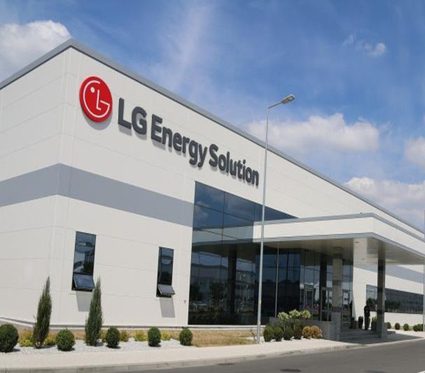
JAKARTA : South Korean conglomerate LG is poised to significantly expand its footprint in Indonesia’s electric vehicle (EV) supply chain, with plans to invest an additional $1.7 billion in a battery cell manufacturing joint venture, according to the country’s Investment Ministry. The anticipated investment will be directed towards HLI Green Power, a collaboration between LG Energy Solution, Hyundai Motor Group, and Indonesia Battery Corporation (IBC). The project’s first phase, located in Karawang, West Java, commenced operations last year with an investment of $1.1 billion. Rosan Roeslani, Indonesia’s Investment Minister, revealed that discussions with LG have advanced positively, raising expectations for the second phase of the plant’s development. “I will be visiting the Karawang facility tomorrow, as LG has initiated conversations with us regarding their interest in investing a further $1.7 billion,” Rosan said during a press briefing in Jakarta. “We are confident this additional investment will materialise promptly.” The planned injection would bring the total value of the battery cell joint venture to approximately $2.8 billion. The second phase is expected to double the plant’s production capacity from 10 gigawatt-hours (GWh) to 20 GWh annually—sufficient to power up to 300,000 electric vehicles. LG’s renewed investment signals a measured commitment to Indonesia’s EV ambitions despite the group’s recent withdrawal from a broader, multibillion-dollar battery supply chain project in the country, reportedly due to unfavourable market conditions. The Karawang facility was officially launched in July 2024 by then-President Joko Widodo, who described it as Southeast Asia’s first and largest EV battery cell plant. The plant’s first development phase was estimated at around $1 billion, with a planned output capacity of 10 GWh per year. Indonesia attracted $13.7 billion (Rp 230.4 trillion) in foreign direct investment (FDI) in the first quarter of 2025, with South Korea contributing approximately $683.3 million. The East Asian nation ranks as Indonesia’s seventh-largest source of FDI for the period, just behind the United States. –Jakarta Globe

Energy & Technology, News

Regional Gas Output in Southeast Asia Could Rise by 18 Percent with New Project Wave

Southeast Asia could witness a significant uptick in gas project activity in 2025, with the region on track to approve the highest number of final investment decisions (FIDs) in over a decade. This potential resurgence, detailed in a new report by Global Energy Monitor (GEM), signals a possible 18% increase in regional gas output.   According to the report published on Wednesday, up to 13 new gas projects may secure financing this year, supplementing the one already approved. If all proposed developments proceed, they could collectively contribute more than 20 billion cubic metres in additional annual production capacity. Despite mounting pressure to transition away from fossil fuels, Southeast Asia continues to lean heavily on natural gas as a core energy source. The region, home to over 500 million people, faces considerable financial and policy-related constraints that have hindered progress toward clean energy targets. Notably, Southeast Asia is on course to fall short of its 2025 renewable energy goal of 23% production share. Between 2020 and 2024, only 10 gas projects were approved, highlighting a potential acceleration in fossil fuel investment this year. New units proposed across Indonesia, Malaysia, Vietnam, Brunei and Myanmar could significantly expand the region’s gas infrastructure and further entrench reliance on fossil fuels. “These developments would have a significant lifespan and would lock in gas as a substantial component of the region’s energy mix,” the report stated. “Given that companies and governments are unlikely to abandon gas assets before fully exhausting reserves, the long-term implications for the regional energy transition are considerable.” However, GEM noted that FID timelines are historically subject to delays, meaning the full extent of this year’s project rollouts remains uncertain. –Bloomberg

Energy & Technology, News

Negeri Sembilan Positions Itself as Malaysia’s Next Data Centre Hub

NEGERI SEMBILAN : The state of Negeri Sembilan is rapidly positioning itself as Malaysia’s emerging hub for data centres, amid increasing constraints on approvals in Johor due to resource consumption concerns. Currently, two major data centre projects are underway in Negeri Sembilan. One development will feature a green data centre financed by United States investors, while the other will be an artificial intelligence (AI) data centre led by Malaysian infrastructure group, Gamuda Bhd. The state’s strong infrastructure network, including well-established highway connectivity, has been a critical factor in attracting these significant investments. To address the substantial resource demands of these facilities, Gamuda Bhd will also develop a dedicated water treatment plant with a daily capacity of 67 million litres. This infrastructure investment will ensure a sustainable supply to support the operational needs of the data centres. In light of the substantial water and resource requirements associated with data centre operations, the Negeri Sembilan state government has announced its intention to closely assess future proposals for similar projects. This approach aims to balance economic development with prudent resource management. –Bloomberg

Energy & Technology, News

PETRONAS Signs 11 MoUs to Elevate Malaysia’s Oil & Gas Capabilities

Kuala Lumpur — PETRONAS is setting a bold new trajectory for Malaysia’s oil and gas services and equipment (OGSE) sector. In a strategic move to future-proof the industry, the national oil and gas corporation—through Malaysia Petroleum Management (MPM)—has signed 11 memoranda of understanding (MoUs) with key industry players to enhance local capabilities and transform the nation’s energy infrastructure. These MoUs support two cornerstone initiatives: yard transformation and productivity enhancement, and skilled trade development—a clear reflection of PETRONAS’ vision to modernise and revitalise the OGSE ecosystem. “This is not merely about upgrading facilities—it’s about cultivating a future-ready workforce and positioning Malaysia as a high-performance hub for oil and gas services,” said Datuk Ir Bacho Pilong, Senior Vice President of MPM. As part of the yard transformation programme, PETRONAS has collaborated with five prominent local fabrication contractors: Brooke Holding, Ocean Might, Muhibbah Engineering, Malaysia Marine and Heavy Engineering, and Sapura Fabrication. The initiative aims to revitalise domestic fabrication yards and elevate operational efficiency. Complementing this, six additional MoUs were signed under the Skilled Trade Champion initiative, focusing on technical upskilling and capacity-building with partners including Pan-Malaysia maintenance and commissioning contractors and the Malaysia Offshore Support Vessel Owners’ Association. In tandem with its domestic strategy, PETRONAS is also strengthening its regional presence. Its subsidiary, PETRONAS LNG Ltd (PLL), recently completed its first liquefied natural gas (LNG) delivery to Vietnam, signifying the commencement of a strategic energy partnership with PetroVietnam Gas (PV Gas). The LNG cargo, dispatched from the PETRONAS LNG Complex in Bintulu, Sarawak, was delivered to the Thi Vai LNG Terminal in Vietnam’s Ba Ria-Vung Tau Province, aboard the Seri Ayu, a vessel chartered from PETRONAS’ shipping arm, MISC Berhad. Shamsairi Ibrahim, Vice President of LNG Marketing and Trading at PETRONAS, affirmed: “This collaboration underscores our commitment to supporting Vietnam’s energy needs while strengthening regional energy security.”

Scroll to Top

Subscribe
FREE Newsletter