Energy & Technology

Energy & Technology

HE Group Unit Wins RM86 Million Substation Construction Contract

HE Group Bhd announced that its wholly-owned subsidiary, Hexatech Engineering Sdn Bhd, has secured an RM86 million contract for the construction of a new 132kV/33kV substation project in Selangor. The engineering and utility infrastructure group said the contract officially commenced upon acceptance of the award and is scheduled to be completed by Oct 31, 2027. The project is expected to strengthen Hexatech Engineering’s order book and further enhance the group’s presence in the power infrastructure and utility construction sector. HE Group said the contract is anticipated to contribute positively to the group’s earnings throughout the duration of the project, barring any unforeseen circumstances. The company added that the contract will not have any impact on its share capital structure or the shareholdings of substantial shareholders. Hexatech Engineering is involved in electrical engineering and utility infrastructure works, with expertise in substation, transmission and distribution-related projects.

Energy & Technology

TNB Unit Raises RM1.05bil Via Asean Green Sukuk

Tenaga Nasional Berhad’s wholly-owned unit, TNB Kuala Muda Solar Sdn Bhd (TNBKMS), has successfully raised RM1.05 billion through the issuance of Asean Green Sustainable and Responsible Investment (SRI) Sukuk Wakalah. In a filing with Bursa Malaysia, TNB said the proceeds raised from the sukuk issuance will support the development of a large-scale solar photovoltaic (LSS PV) project in Kuala Muda, Sungai Petani, Kedah. The company said TNBKMS is responsible for undertaking the full scope of the project, including the design, engineering, procurement, construction, installation, testing and commissioning of the solar facility, as well as the ownership, operation and long-term maintenance of the plant and its related ancillary equipment and facilities. The solar project will have an installed generation capacity of 500MWac, making it one of the key renewable energy initiatives under TNB’s sustainability and energy transition agenda. According to the filing, the sukuk issuance was carried out in 17 tranches under the Asean Green SRI Sukuk Wakalah programme. TNBKMS is a wholly-owned subsidiary of TNB Renewables Sdn Bhd, which is in turn fully owned by TNB. The issuance reflects TNB’s continued commitment towards expanding its renewable energy portfolio and supporting Malaysia’s transition towards cleaner and more sustainable energy sources.

Energy & Technology

Ann Joo Secures RM37 Mil Energy Storage Contract In Kedah

Ann Joo Resources Bhd has secured a RM37.4 million contract for a battery energy storage system (BESS) project in Bukit Kayu Hitam, Kedah. The contract was awarded to its indirect wholly owned subsidiary, IAC Infrastructure Sdn Bhd, by Universal Peak Sdn Bhd, which is part of a consortium with Blueleaf Energy selected by the Energy Commission of Malaysia to develop the project. In a filing with Bursa Malaysia, Ann Joo said the scope of works includes the design, engineering, procurement, construction, installation and testing of a 100MW/400MWh utility-scale BESS facility, along with related civil, mechanical, electrical and infrastructure works. The project falls under the Energy Commission’s Malaysia Battery Energy Storage System (MyBeST) programme, which aims to strengthen the national power grid and support Malaysia’s transition towards a carbon-neutral energy system. Ann Joo said the contract duration will be finalised with Universal Peak, and the project is expected to contribute positively to the group’s future earnings and net assets. The group, traditionally known for manufacturing steel products such as billets, bars and wire rods, has also been expanding into the renewable energy space in recent years. In August 2023, Ann Joo diversified into solar energy through Ann Joo Green Energy Sdn Bhd, partnering with JAKS Solar Power Sdn Bhd and Fabulous Sunview Sdn Bhd to secure a 29.99MWac quota under Malaysia’s Corporate Green Power Programme. On Tuesday, Ann Joo shares closed down one sen or 1.47% at 67 sen, valuing the group at RM478.14 million.

Energy & Technology

Works Ministry Launches EV Charging Guidelines Handbook

The Ministry of Works has launched the Design and Installation Guidelines for Electric Vehicle (EV) Charging Systems, in conjunction with the 2026 Senior Officers’ Conference of the Public Works Department (JKR). Deputy Works Minister Datuk Seri Dr Ahmad Maslan said the initiative supports the government’s green mobility agenda and is part of efforts to drive JKR’s smart reform in line with national policies to expand EV adoption. He said the guidelines are the first of their kind in Malaysia, providing a comprehensive reference for contractors, designers, government agencies, petrol station operators, and individuals involved in installing EV charging facilities. “Previously, there were no specific guidelines on EV charging system installation. This book will serve as a reference to ensure installations are carried out at suitable locations and comply with safety requirements,” he said. He added that the initiative aims to accelerate the development of EV charging infrastructure, not only at highway rest and service (R&R) areas, but also across federal, state and municipal roads under JKR supervision. Ahmad said JKR must take a proactive role as a facilitator in expanding EV charging stations, especially along non-highway road networks, to support the transition towards cleaner energy use. He noted that the limited availability of charging stations remains one of the key factors slowing EV adoption in Malaysia. He said EV infrastructure has so far been concentrated mainly at highway R&R areas and petrol stations operated by concessionaires, while coverage on other road networks remains limited. Ahmad also said earlier recommendations by JKR include expanding EV charging points beyond highways to include federal, state and local roads managed by authorities. “This effort will support wider EV usage, whether for motorcycles, cars or buses. Charging infrastructure is essential, and the lack of it continues to hinder adoption,” he said. On broader issues, he noted that the global energy crisis continues to affect economic stability, supply chains and costs, prompting the government to remain vigilant and proactive in safeguarding public welfare. He said the Works Ministry remains committed to improving service delivery by ensuring all project planning and implementation are carried out efficiently, with integrity and careful execution. “All challenges will be addressed strategically, including optimising resources, speeding up processes and improving on-the-ground efficiency,” he added.

Energy & Technology

Schneider Electric Launches Regional Training Hub In Malaysia

French energy technology company Schneider Electric plans to open a Southeast Asia training centre in Malaysia this year, as rising demand from artificial intelligence (AI) infrastructure drives higher energy needs across the region. The expansion comes as Southeast Asia’s data centre capacity is projected to triple by 2030, with Malaysia emerging as a key hub following major investments from global tech companies including Microsoft, Amazon, and Google. Malaysia also plays a significant role in the global semiconductor industry, accounting for around 13% of worldwide testing and packaging activity. Schneider Electric said the rapid growth of AI is increasing pressure on industries to improve energy efficiency and power management, particularly in energy-intensive sectors such as data centres and semiconductor manufacturing. The planned training centre will focus on providing technical skills and hands-on training for the company’s partners and customers across the region. It will cover technologies ranging from medium-voltage energy management systems to data centre solutions. Schneider Electric added that AI adoption is also supporting its own growth, as its equipment is widely used in server infrastructure, power systems and cooling solutions required for high-performance computing facilities. The company is also incorporating AI into its own energy management tools, including predictive systems that help optimise power usage, such as adjusting cooling systems based on weather conditions. These technologies can help reduce energy consumption by around 2% to 3%, which is significant for large-scale facilities like data centres and semiconductor plants.

Energy & Technology

Pansar Secures RM235 Mil Water Plant Project In Sarawak

Marine and industrial engineering products distributor Pansar Bhd has secured a RM234.89 million contract from the Sarawak Rural Water Supply Department (JBALB) for the development of a water treatment plant project in Saratok, Betong, Sarawak. In a filing with Bursa Malaysia on Wednesday, the group said the Letter of Acceptance was awarded to its wholly-owned subsidiary, Perbena Emas Sdn Bhd. The project involves the construction of a 30 million litres per day (MLD) water treatment plant at the existing Kaki Wong plant site, as well as the development of a new raw water intake facility and two booster pump stations to support water supply infrastructure in the area. Pansar said the project is scheduled to commence in June 2026 and is expected to be completed within 30 months from the start date. The group added that the contract is expected to contribute positively to its future earnings and strengthen its order book in the infrastructure and utilities segment. On Wednesday, Pansar shares closed unchanged at 49.5 sen, giving the company a market capitalisation of approximately RM346 million.

Energy & Technology

Bina Puri Buys Water Firm In Sarawak

Bina Puri Holdings Bhd is acquiring full control of Enforture (Sarawak) Sdn Bhd, a water treatment engineering company, for an upfront cash payment of RM100,000, along with additional payments tied to the company’s future performance. In a filing with Bursa Malaysia, Bina Puri said the acquisition is expected to be completed by the end of the month and will enhance its capabilities in water treatment, water supply, and related infrastructure works. Enforture Sarawak has ongoing and pipeline projects with a combined estimated value of RM192.82 million, and is projected to generate RM52.86 million in pre-tax profit and RM40.17 million in net profit over the next two years.

Energy & Technology

Uzma Signs MOU With Mara To Explore Energy Transition And Tech Investments

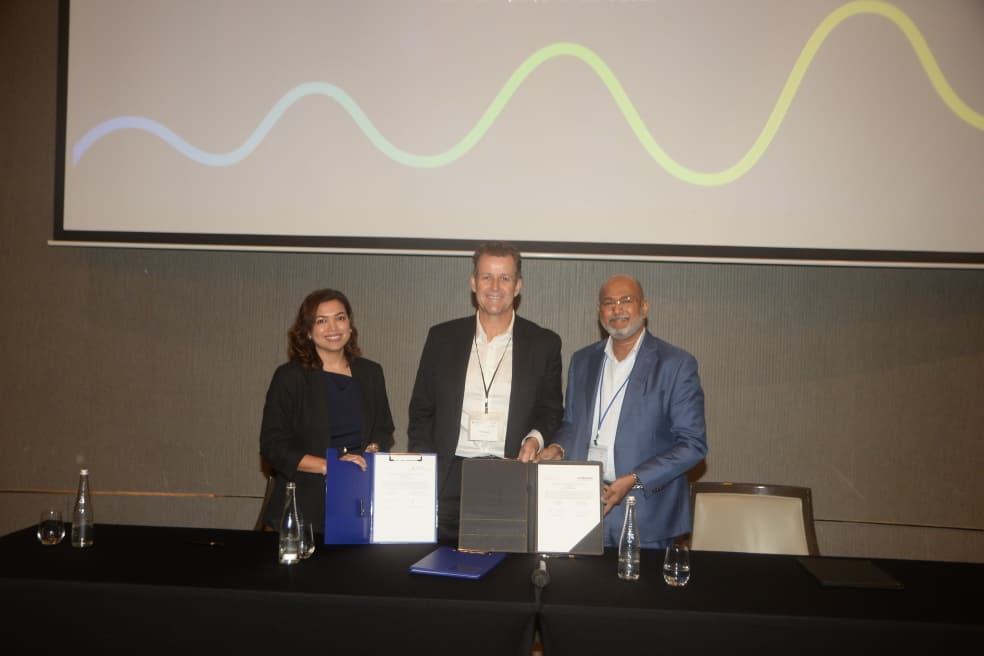
Uzma Bhd has partnered with Majlis Amanah Rakyat (Mara) to explore opportunities in renewable energy, aerospace and defence maintenance, marine engineering, and strategic investments linked to energy transition and technology development. The petroleum engineering company said the collaboration is formalised through a three-year memorandum of understanding (MOU) signed on May 3. Uzma said the partnership will also focus on developing talent pipelines through academic and executive programmes under Institusi Pendidikan Mara (IPMA), including leadership and artificial intelligence (AI) training, as well as industrial training and apprenticeship opportunities. The initiative aims to provide Mara graduates, particularly from technical and vocational education and training (TVET) institutions, with industry exposure and support the growth of Bumiputera vendors in the energy and technology sectors. Group CEO Kamarul Redzuan Muhamed said the collaboration will help align training with real industry needs and strengthen vendor development across key sectors including oil and gas and renewable energy. He added that closer industry–institution cooperation is key to ensuring talent development remains relevant, practical and future-ready. Uzma shares closed 0.5 sen lower at 44.5 sen on Monday, giving the group a market capitalisation of RM269 million.

Energy & Technology

PetGas Plans RGT-3 Project In Lumut, Seeks Joint Venture Partner

Petronas Gas Bhd (PetGas) has received a notification letter from the Ministry of Economy dated April 30, 2026, to undertake the development of the Third Regasification Terminal in Lumut, Perak (RGT-3), which will be based on a floating storage and regasification unit (FSRU) concept. In a filing with Bursa Malaysia, the group said it is also exploring the possibility of jointly developing the project with a strategic partner, as part of efforts to optimise project execution and strengthen capabilities. PetGas noted that it had conducted detailed technical and commercial assessments on the development of new gas infrastructure, taking into account long-term gas supply and demand projections for Peninsular Malaysia. Following these evaluations, the company submitted a proposal to the Energy Commission for the RGT-3 project, targeting commercial operations by the second quarter of 2029. Under the proposed design, the RGT-3 will utilise an FSRU system, where liquefied natural gas (LNG) storage and regasification activities are carried out offshore. The regasified LNG will then be transported via a connecting pipeline from the offshore facility and its onshore berthing infrastructure into the Peninsular Gas Utilisation (PGU) system. This project will mark Malaysia’s first deployment of an FSRU-based regasification terminal. The facility is planned with an LNG storage capacity of 170,000 cubic metres and a regasification capacity of up to 500 million standard cubic feet per day (mmscfd). Once operational, the terminal is expected to support additional gas demand equivalent to approximately 3.5 gigawatts of power generation capacity in Peninsular Malaysia. PetGas added that the project will be regulated by the Energy Commission, with tariffs to be determined under the Incentive-Based Regulation (IBR) framework. The development of RGT-3 is in line with PetGas’ long-term strategy to expand and strengthen its gas and utilities infrastructure portfolio. The project is expected to enhance the capacity, resilience and flexibility of Malaysia’s gas supply network, ensuring it can meet evolving energy demand while supporting the country’s broader economic and industrial growth.

Energy & Technology

ADB Launches US$70bil Plan To Boost Asia’s Power And Digital Connectivity

The Asian Development Bank (ADB) plans to support US$70 billion in energy and digital infrastructure investments by 2035, aimed at strengthening regional connectivity across Asia and the Pacific through integrated power grids and enhanced digital networks. ADB president Masato Kanda said access to reliable energy and digital infrastructure will play a critical role in shaping the region’s future, with the initiatives designed to support economic growth, competitiveness and cross-border integration. “By linking power grids and digital networks across borders, we can reduce costs, expand opportunities, and deliver reliable energy and connectivity to hundreds of millions of people,” he said in a statement. The overall plan comprises two key components: a US$50 billion Pan-Asia Power Grid Initiative (PAGI) and a US$20 billion programme focused on digital and technology connectivity. Under PAGI, investments will be directed towards strengthening transmission infrastructure and grid integration, including the development of cross-border transmission lines, substations, energy storage systems and grid digitalisation. By 2035, ADB aims to facilitate the integration of around 20 gigawatts of renewable energy across borders, build approximately 22,000 circuit-kilometres of transmission lines, and improve access to electricity for 200 million people. The initiative is also expected to create about 840,000 jobs and reduce emissions in the regional power sector by 15%. ADB expects to fund roughly half of the US$50 billion power grid initiative from its own resources, with the remainder to be raised through co-financing arrangements, including private sector participation. In addition, up to US$10 million in technical assistance will be allocated to support regulatory alignment, adoption of common technical standards, feasibility studies and project preparation. On the digital front, the Asia-Pacific Digital Highway initiative aims to mobilise US$20 billion by 2035 to develop digital corridors, strengthen data infrastructure and support the growth of AI-ready economies. Investments will focus on improving connectivity through terrestrial and subsea fibre networks, satellite systems and regional data centres. ADB plans to contribute US$15 billion towards the digital initiative, with the remaining US$5 billion to be sourced through co-financing, including from private sector partners.

Scroll to Top

Subscribe
FREE Newsletter