ESG

ESG

Petros Secures Agreements With Chinese Firms To Develop KLCH

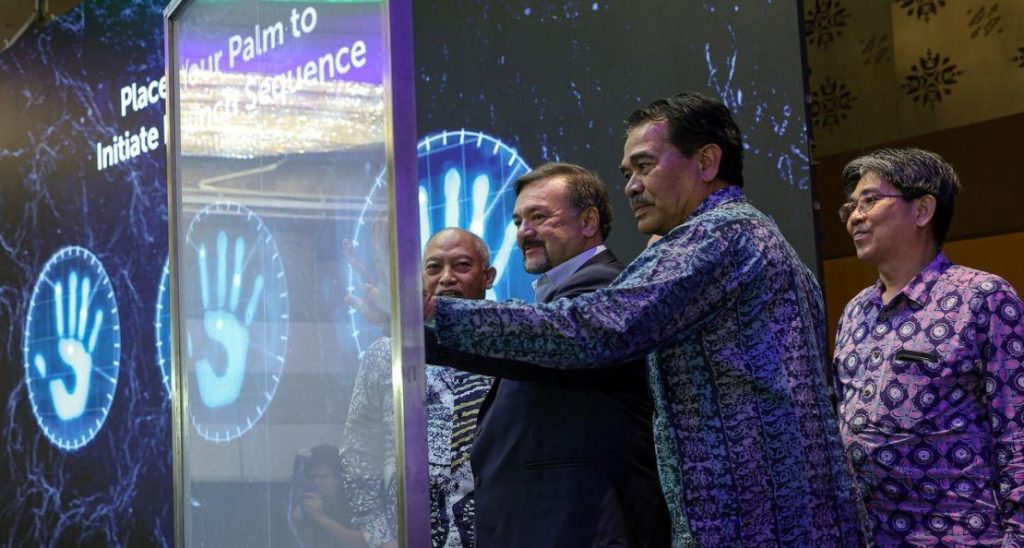
Petroleum Sarawak Bhd (Petros) is partnering with China Jiangsu International Technology Corp Group Ltd (CJI) to develop the Kuching Low Carbon Hub (KLCH). Petros signed a framework agreement with CJI and memoranda of understanding with seven other leading Chinese green-economy companies in Nanjing, China, last Thursday. Sarawak Premier Tan Sri Abang Johari Tun Openg. The Sarawak Public Communications Unit said the strong interest from these companies highlights KLCH’s potential as a globally connected low-carbon industrial hub. Sarawak Premier Tan Sri Abang Johari Tun Openg noted that the collaboration with CJI and the other Chinese firms could attract up to US$7 billion (RM28.7 billion) in green-economy investments over the next decade. “The investment in KLCH will boost Sarawak’s economy, raise GDP, and create numerous high-skilled job opportunities, improving household incomes,” he said after the signing ceremony. Also attending were Sarawak Deputy Minister for Utilities Datuk Ibrahim Baki, Petros chairman Tan Sri Hamid Bugo, group CEO Datuk Janin Girie, and CJI chairman Song Qinbo and president Zhu Xingbao. Abang Johari explained that KLCH aims to draw industries focused on low-carbon and green-energy solutions, leveraging Sarawak’s natural gas, water resources, renewable hydropower, and carbon storage potential. “These advantages make Sarawak an attractive destination for global companies producing low-carbon and green products, especially for markets in ASEAN, East Asia, and beyond,” he added.

ESG

Banks Provide Flood Relief Support To Affected Customers

In response to the recent floods, banks in Malaysia are providing a wide range of relief measures to assist affected customers. These measures include the deferment of loan or financing instalments, giving temporary financial relief to individuals and businesses struggling with the impact of flooding. Additionally, banks are offering special financing facilities to help customers repair and restore their homes, businesses, and other properties damaged by the floods. In a joint statement issued today, the Association of Banks in Malaysia (ABM) and the Association of Islamic Banking and Financial Institutions of Malaysia (AIBIM) emphasised that the banking industry is committed to supporting customers through these challenging times. The organisations highlighted that banks are taking proactive steps to reduce the financial burden on affected individuals and businesses while ensuring uninterrupted access to essential banking services. Other relief initiatives include the waiver of fees for replacing damaged bank documents, cards, and cheques, as well as providing financial assistance and adaptation facilities specifically tailored for micro, small, and medium enterprises (MSMEs) affected by flood damage. Banks are also facilitating the exchange of damaged banknotes, ensuring customers can access funds safely and securely. The associations urged customers to contact their banks through official and reliable channels, including bank branches, websites, online banking platforms, and official social media accounts, for information on available assistance programs. They cautioned customers to remain vigilant against potential scams and to avoid engaging with unauthorised parties claiming to represent financial institutions. To ensure transparency and accessibility, ABM and AIBIM noted that customers can refer to the list of member banks on their official websites for updated information regarding flood relief measures. They also confirmed that member banks will continue taking all necessary steps to maintain access to essential banking services in affected areas. The statement further indicated that banks will provide ongoing updates on relief efforts and service availability through official communication channels, reaffirming the commitment of Malaysia’s banking sector to support communities and businesses in navigating the aftermath of the floods. This coordinated effort reflects the banking industry’s role in not only providing financial services but also in strengthening resilience and recovery for individuals, families, and businesses impacted by natural disasters.

ESG

FGV To Harness Palm Waste As Malaysia’s Green Energy Engine

In the global push for net zero, many companies talk about sustainability, but few manage to turn words into action. FGV Holdings Bhd stands out as one of the rare exceptions. Once primarily known as an agribusiness giant, FGV is quietly evolving into a renewable energy (RE) leader under group CEO Dato’ Fakhrunniam Othman. Today, FGV operates one of Southeast Asia’s most diverse renewable energy portfolios, spanning biogas, biomass, biomethane, solar, and certified biofuels. By converting palm oil by-products into clean, exportable energy, the company is powering homes, industries, and export markets. For FGV, sustainability is not just about carbon targets—it is about redefining the palm oil business, turning it into a catalyst for climate action while driving growth. From Waste to Energy: Building a Circular Economy Palm oil production generates large quantities of organic residues such as palm oil mill effluent (POME), empty fruit bunches (EFB), mesocarp fibre, and palm kernel shells (PKS). If left untreated, these wastes release methane, a greenhouse gas far more potent than carbon dioxide. Through 24 biogas plants—the largest network among Malaysian plantation peers—FGV captures methane and converts it into electricity, which is sold to Tenaga Nasional Bhd under the Feed-in-Tariff (FiT) scheme. Biomass residues are used to generate heat and steam for mills, creating a total renewable energy output of approximately 150MW: 100MW from biogas and biomass, and an additional 50MW from biofuel through PKS utilisation. These initiatives bring FGV closer to its 200MW Net Zero 2050 target. At the company’s mills, by-products are upcycled into fertiliser or fuel, while compost from EFB and POME enriches the soil, improving yields—a simple yet powerful example of circular economy principles. Flagship projects like the Triang Biogas Plant in Pahang and the Umas Plant in Tawau showcase how renewable energy can deliver both financial and social impact, powering tens of thousands of homes. Cutting Carbon, Driving Impact In 2024 alone, FGV exported 33,438MWh of biogas electricity, reducing approximately 25,882 tonnes of CO₂ emissions—an increase of 20% from the previous year. The group has pledged to halve greenhouse gas emissions by 2030 and achieve net zero by 2050, with targets validated by the Science Based Targets initiative (SBTi). Every new plant expands FGV’s methane-capture network, preventing one of the world’s most potent greenhouse gases from entering the atmosphere, proving that climate leadership can coexist with operational efficiency. From Local Mills to Global Markets FGV’s renewable energy strategy also creates export value. Its Green Gold Label-certified PKS are shipped to Japan under a premium low-carbon biomass programme, while ISCC-certified feedstock qualifies for Europe’s sustainable biofuel and Sustainable Aviation Fuel supply chains. FGV is also partnering with PETRONAS and Sime Darby Plantation to produce SAF from palm oil mill waste, further advancing its renewable energy transition. Rooftop solar rollouts across mills and offices are helping diversify FGV’s RE mix while cutting electricity costs and emissions. “We are proving that Malaysia’s palm oil industry can lead in green energy exports, not just crude palm oil,” says Fakhrunniam. Policy and Partnerships Driving Growth Renewable energy projects are capital-intensive, with typical payback periods exceeding eight years. FGV mitigates risks through strategic partnerships, scale, and strict governance under GGL and ISCC standards, ensuring feedstock consistency and financial discipline. FGV’s efforts align with Malaysia’s National Energy Transition Roadmap (NETR), contributing to energy efficiency, renewable energy, bioenergy, and green mobility. The company is also exploring hydrogen and carbon capture for future growth. The Road Ahead FGV’s renewable energy roadmap includes expanding methane capture across all mills, scaling solar capacity, developing biomethane and bio-CNG plants, and decarbonising its logistics fleet. “Our mills are no longer just processing plants—they are power generators and biomass hubs driving the circular economy,” Fakhrunniam explains. “We are turning waste into wealth and powering a sustainable future for Malaysia.” FGV’s journey demonstrates that the palm oil sector can be part of the climate solution, proving that sustainability can be both purposeful and profitable.

ESG

Sarawak Energy Forms PUNB, UOB Tie-Ups To Help Vendors

Sarawak Energy Bhd (SEB) has strengthened its support for local vendors by entering new financial partnerships with Perbadanan Usahawan Nasional Bhd (PUNB) and United Overseas Bank (UOB) Malaysia, aimed at enhancing vendor capacity and bolstering the resilience of its supply chain. The collaborations were formalised through two memorandums of understanding (MOUs) signed on Nov 12 at Menara Sarawak Energy. According to SEB, these partnerships will give vendors better access to financing for working capital, equipment purchases, and business expansion — ensuring smoother project delivery across SEB’s operations. Group chief executive officer Datuk Sharbini Suhaili said the initiative reflects SEB’s long-term commitment to developing a strong, inclusive vendor ecosystem. He added that SEB’s strategy is centred around building sustainable partnerships that empower local businesses to grow alongside the state-owned energy provider. “Working with financial institutions and development agencies like PUNB and UOB helps our vendors strengthen their capabilities, secure funding, and improve performance. This supports Sustainable Development Goal 17 by advancing partnerships that foster a resilient and inclusive supply chain for Sarawak,” he said. SEB said its Vendor Development Programme (VDP) focuses on improving governance, boosting technical competencies, and creating structured engagement pathways for its supplier network. Complementing this is the Vendor Financing Programme, developed with multiple banking partners to widen access to financial support. The company noted that participation from local vendors rose by over 70% in 2024 compared to the previous year, with most contracts awarded to Sarawak-based businesses. SEB attributed this growth to its continuous efforts to build local supplier capability and promote inclusive economic development in the state. Sharbini added that SEB has also worked with other financial institutions over the years, including Bank Islam, RHB Bank, SME Bank, and Ikhtiar Factoring, to provide vendor financing solutions.

ESG

Saxon Renewables Introduces “EVolve” EV Charging Carbon Project In Asia

Saxon Renewables today announced the official registration of its EVolve Grouped Electric Vehicle (EV) Charging Project under the Verified Carbon Standard (VCS) by Verra (Project ID: 5416), registered on 6 November 2025, marking a regional milestone in bridging climate finance and clean mobility across Asia. The project is registered under the Verra VM0038 Methodology for Electric Vehicle Charging Systems, which enables emissions reductions to be quantified and issued as Verified Carbon Units (VCUs) by comparing electricity consumed for EV charging against emissions that would have been generated from equivalent travel in internal combustion engine (ICE) vehicles. Designed to accelerate the growth of electric mobility, EVolve connects carbon-credit revenue directly to the commercial model of EV-charging deployment. By integrating carbon monetisation into charging infrastructure, the project closes critical financing gaps that often slow EV adoption. Under EVolve’s grouped approach, multiple EV-charging networks can be aggregated under a unified methodology and monitoring system, significantly reducing registration costs, complexity, and time-to-market for charge point operators (CPOs). “By unlocking new carbon revenue streams, we help charge point operators, fleet owners, and infrastructure partners scale faster, reduce payback periods, and enable more cities to accelerate EV adoption,” said Reik Ong, Managing Director of Saxon Renewables. “The voluntary market is already responding positively to EVolve, with buyers actively seeking high-integrity transportation credits. Our next phase is to prepare EVolve for compliance channels such as Singapore’s carbon tax and CORSIA, which would significantly broaden market demand and strengthen long-term price resilience.” As the first grouped EV-charging carbon project of its kind in Southeast Asia (excluding Singapore), EVolve will progressively onboard charge point operators across Malaysia, Vietnam, Thailand, Indonesia, and the Philippines, with an expansion pipeline to broader Asia-Pacific markets. The project targets the deployment and integration of 30,000 charge points by 2030. Registered for a seven-year crediting period (2024–2031), with renewal options for up to two additional periods, EVolve is expected to generate approximately 300,000 tonnes of CO₂e in verified emissions reductions over its initial term. The programme directly supports national EV roadmaps, corporate net-zero targets, and potential Article 6 cooperation pathways under the Paris Agreement, offering a scalable model for cities to accelerate electrification while maintaining market integrity. Transport accounts for approximately 15 percent of global greenhouse-gas emissions. By bridging finance gaps and incentivising widespread EV infrastructure, EVolve empowers cities and businesses to transition toward cleaner, low-carbon mobility. EVolve represents a scalable blueprint for accelerating EV infrastructure across Asia’s emerging markets, reinforcing Saxon Renewables’ mission to power credible, high-impact climate solutions.

ESG

Swift Haulage Set To Expand Market Reach

Swift Haulage Bhd is set to continue focusing on strengthening its market position through initiatives aimed at improving operational efficiency and advancing sustainability across its operations. In a filing with Bursa Malaysia, the integrated logistics services provider noted that it continues to see steady demand across its core business segments, particularly in warehousing and forwarding services, which remain key drivers of its growth. For the third quarter ended September 30, 2025, Swift Haulage reported a net profit of RM7.14 million, up from RM5.77 million in the same period last year. The increase was mainly attributed to higher gross profit and other income, although this was partially offset by increased operating overheads. Revenue for the quarter rose to RM200.97 million, compared with RM183.06 million a year earlier, largely driven by container haulage, which contributed RM74 million, and land transportation, which added RM69 million. Together, these two segments accounted for 71.2% of the group’s total revenue during the period. For the nine-month period ended September 30, 2025, Swift Haulage recorded revenue of RM578.88 million, up from RM535.28 million in the previous corresponding period. However, net profit for the nine months fell to RM21.11 million from RM35.25 million previously, reflecting a combination of higher operating costs and investments in growth initiatives. The company emphasized that it remains committed to enhancing its service capabilities, including investing in advanced logistics technologies and expanding its network to better serve customers. In addition, Swift Haulage continues to integrate sustainable practices into its operations, aligning with broader industry trends towards greener logistics solutions. By focusing on operational excellence, innovation, and sustainability, Swift Haulage aims to solidify its market leadership and deliver long-term value to shareholders while meeting the evolving needs of the logistics sector.

ESG

KOLTIVA, Backed By Unilever, FCDO, And EY, Helps Sugata Improve Cocoa Supply Chain

Indonesia’s cocoa industry plays a crucial role in both local economies and global markets. However, declining productivity, aging trees, and the growing impacts of climate change continue to challenge its long-term sustainability. To address these issues, Sugata (PT Kudeungoe Sugata), a purpose-driven cocoa enterprise focused on sustainable livelihoods and environmental restoration, is leading efforts to advance regenerative cocoa production with support from KOLTIVA and global partners, including Unilever, the UK Foreign, Commonwealth & Development Office (FCDO), and EY through the TRANSFORM Bestari Challenge. The initiative aims to accelerate innovation for smallholder farmers by integrating digital traceability, climate-smart agriculture training, and inclusive financing models. By combining Sugata’s community-based approach with KOLTIVA’s proven technology ecosystem—including KoltiTrace for farm-to-bar traceability and KoltiSkills for training delivery—the collaboration seeks to build a resilient cocoa value chain that drives income diversification and supports forest conservation. Founded in 2018, Sugata has established itself as one of Indonesia’s first bean-to-bar enterprises sourcing directly from smallholders. Its mission to regenerate degraded lands and restore livelihoods positions the company as a frontrunner in sustainable cocoa innovation. Located in the eastern flank of Aceh’s 2.6 million-hectare Leuser Ecosystem, one of the world’s last intact tropical rainforests and home to Sumatran tigers, elephants, rhinos, and orangutans, the province’s cocoa belt supports local communities. With over 101,000 hectares of cocoa and an annual output of 41,000 tons, Aceh ranks as Indonesia’s fourth-largest cocoa producer. The region’s forests, rivers, lakes, and peatlands provide ecosystem services—including clean water for four million people—valued at over US$600 million annually. Yet, aging trees, pests, erratic weather, and deforestation threaten both livelihoods and ecosystems, with 20% of lowland forests lost over the past five years. Global policy drivers such as the EU Deforestation Regulation (EUDR), the UN Sustainable Development Goals (SDGs), and corporate zero-deforestation pledges are steering cocoa toward a new era. Regenerative cocoa, cultivated under biodiverse canopies and managed through agroforestry, nutrient recycling, and digital traceability, is not only a conservation strategy but also a pathway to long-term profitability and regulatory compliance. In 2024, the TRANSFORM Bestari Challenge, co-led by Unilever, FCDO, and EY, invited Indonesian enterprises to pilot solutions advancing the SDGs, offering grants of up to £300,000. The accelerator combines funding with tailored business support to address complex development challenges. In October 2024, Sugata was named one of three winners, securing funding to pilot regenerative cocoa in Southeast Aceh. This 18-month project brings together Sugata, KOLTIVA, Unilever, FCDO, and EY to make regenerative cocoa measurable, scalable, and commercially viable. Sugata engaged KOLTIVA as its implementation partner to deliver digital traceability, farm-level training, and real-time data-driven decision-making. The initiative includes five integrated workstreams: Gender Action Learning System (GALS), Demo Plot Management, Regenerative Agriculture and Agroforestry, Cocoa Waste Management, and GHG Monitoring. These efforts embed sustainability into every pod, plot, and producer decision, demonstrating that regenerative cocoa production can balance productivity, profitability, and environmental stewardship. Joe Keen Poon, Executive Chairman of KOLTIVA, said:“What we’re building with Sugata, Unilever, and FCDO in Aceh is more than a project—it’s a blueprint for responsible cocoa. Smallholders deserve not just compliance requirements, but technology, training, and fair opportunities to thrive in global markets. By integrating real-time farm data, gender-inclusive decision-making, and carbon tracking, we are proving that regeneration and profitability can go hand in hand.” Since late 2024, Sugata and KOLTIVA have co-developed training curricula, secured demonstration sites, and trained master trainers for field implementation. Within the first year, more than 500 cocoa producers across 21 villages have received training through KoltiSkills. Ten regenerative demo plots with live emissions tracking have been established, five biochar units convert cocoa waste into compost, 173 plots have been surveyed for GHG baselines, and over 100 households have adopted gender-inclusive decision-making models through GALS. Jessica Pauline, Country Lead for Finance & Business Development at Unilever Indonesia, said:“Sugata demonstrates strong commitment to positive social and environmental change. Impact enterprises like Sugata are essential to solving global sustainability challenges. Beyond funding, TRANSFORM leverages cross-sector collaboration to help enterprises scale their impact.” Despite challenges such as erratic weather and varying digital literacy, the initiative is already showing how technology, data, and inclusive participation can reshape cocoa farming—delivering measurable environmental benefits, diversified incomes, and greater resilience for smallholder communities.

ESG

Malaysia Unveils COP30 Pavilion To Drive Climate Action And Sustainable Growth

Malaysia officially unveiled its Pavilion at COP30, reaffirming the nation’s commitment to tackling the global climate crisis. Building on progress made at COP29, the Pavilion showcases Malaysia’s whole-of-nation approach and continued journey toward achieving net-zero greenhouse gas emissions by 2050, while strengthening its leadership in the region. (from left) YBrs. Encik Saiful Adib (Acting CEO, MGTC), YBhg Datuk Nor Yahati (Deputy Secretary General, NRES), and Datuk Ir. Megat Jalaluddin (CEO, TNB) at the Malaysia Pavilion opening ceremony at COP30. Themed “Climate Action Now: Net Zero Pathways Unlocked,” this year’s Pavilion highlights Malaysia’s steady progress, bringing together voices from government, industry, and civil society. Malaysia is advancing toward net-zero through robust governance and private sector engagement. As one of the world’s three great equatorial rainforest nations, Malaysia also champions biodiversity and nature-based solutions as core pillars of its low-carbon transition. Serving as the ASEAN Chair of 2025, Malaysia is deepening regional collaboration, accelerating collective climate action, and shaping a more sustainable future. Building on the momentum from COP29 in Baku, where Malaysia promoted the “Shift for Sustainability – Climate Action Now!” narrative, COP30 marks a critical step forward. It highlights Malaysia’s progress, commitment to climate justice for vulnerable communities, innovative adaptation finance, and the balance between conservation and sustainable development. The Malaysia Pavilion will focus on five key thematic areas reflecting the nation’s net-zero transition: Restoring Rainforests, Rivers, and Reefs Energy Transition Pathways for Developing Nations Climate Justice in the Global South Future-Proofing Water, Food Systems, and Industry Unlocking Finance for Net Zero Datuk Nor Yahati binti Awang, Deputy Secretary General of the Ministry of Natural Resources and Environmental Sustainability (NRES), said: “As COP30 in Belém calls for an ‘Implementation COP,’ Malaysia comes prepared to move decisively from pledges to measurable action. We aim to drive tangible and transformative change to achieve carbon neutrality and secure a sustainable future for all.” She added: “Malaysia’s participation underscores our dedication to global climate action and advancing both a whole-of-nation and whole-of-region approach, uniting partners in shared responsibility and cooperation.” The Pavilion will host a series of high-level dialogues, panel discussions, report launches, and collaborative sessions to advance regional and global conversations on climate resilience. Key highlights include: Day 1: Launch of Malaysia Pavilion Day 2: Safeguarding Our Ecosystems Day 3: Adaptation in Action Day 4: Anchored in Resilience Day 5: Igniting the Energy Shift Day 6: Financing the Future Day 7–10: Synergy in Sustainability, Emerging Voices for Change, Diverse Green & Blue Economy, and A Paradigm for Progress The Pavilion brings together national and international stakeholders, including Tenaga Nasional Berhad (TNB), the United Nations Sustainable Development Solutions Network (UN SDSN), Pos Malaysia, Yinson Holdings Berhad, Sunway Centre for Planetary Health, Amanah Lestari Alam (ALAM) under Bank Pembangunan Malaysia Berhad (BPMB), Suruhanjaya Perkhidmatan Air Negara (SPAN), Air Selangor, the World Bank, and Universiti Malaya. The Malaysia Pavilion at COP30 is spearheaded by the Ministry of Natural Resources and Environmental Sustainability (NRES), in collaboration with its implementing agency, the Malaysian Green Technology and Climate Change Corporation (MGTC), and supported by leading national partners Tenaga Nasional Berhad (TNB) and Maybank.

ESG

Assemblr Edu Expands To Malaysia, Partners On National Education In Indonesia

Assemblr EDU, a leading immersive education platform supported by Malaysian venture capital firm Ficus Capital, has partnered with Indonesia’s Ministry of Primary and Secondary Education (Kemendikdasmen) to promote the adoption of immersive learning in classrooms nationwide. The collaboration was announced during the inaugural CDT Talks organized by Kemendikdasmen’s Center for Data and Information Technology (Pusdatin) under the theme, “The Future of Learning: Immersive Technology in Indonesian Classrooms.” Yudhistira Nugraha, Secretary General of Indonesia’s Ministry of Primary and Secondary Education (Left) and Hasbi Asyadiq, Founder & CEO of Assemblr EDU (right). Through this partnership, Indonesian teachers with official @guru and @pendidik email accounts gain access to Assemblr EDU’s premium tools, including a 3D object library, digital teaching aids, AR experience builders, and 3D editors, potentially benefiting over 16 million users in the national education system. Yudistra Nugraha, Head of Pusdatin, highlighted the importance of public-private collaboration in fostering innovation in education, while Prof. Nunuk Suryani, Director General of Teachers and Education Personnel, emphasized that technology should enhance educators’ creativity and capacity rather than replace them. Expansion into Malaysia As part of its regional growth, Ficus Capital invested US$400,000 in Assemblr through its Ficus SEA Fund, marking the firm’s first cross-border investment and demonstrating its commitment to ESG-aligned, Shariah-compliant innovation in Southeast Asia. Following this, Assemblr established its Malaysian subsidiary, Assemblr Studio Sdn Bhd, aiming to replicate Indonesia’s immersive learning initiatives and empower Malaysian teachers with AR-driven tools to enhance classroom engagement. “Assemblr was built to make education more engaging and accessible for everyone. Expanding into Malaysia is a proud milestone as we continue our journey to become a global platform that empowers educators and students through immersive learning,” said Hasbi Asyadiq, Founder & CEO of Assemblr EDU. Hasbi Asyadiq (Founder & CEO of Assemblr EDU) Ficus Capital’s support reinforces Assemblr’s mission to create scalable, creative, and impactful learning environments across ASEAN. Assemblr Studio will serve as a hub for collaboration with Malaysian educators, ministries, and education-focused organizations. “Assemblr EDU equips teachers to inspire curiosity and creativity among digital-native students. We’re excited to see its impact on Malaysian classrooms,” added Hasbi. The regional expansion highlights the growing demand for tech-driven education solutions and underscores Ficus Capital’s strategy to invest in ventures that deliver sustainable and high-impact outcomes.

ESG

TNB Adopts Multi-Faceted Strategy To Drive Renewable Energy Growth

Tenaga Nasional Bhd (TNB) is stepping up its sustainability efforts under its Net Zero 2050 roadmap, driving multiple renewable energy (RE) initiatives that include hybrid hydro-floating solar projects, hydrogen partnerships, and cross-border renewable power integration. According to TNB’s chief sustainability officer, Leo Pui Yong, the company is working closely with Petroliam Nasional Bhd (PETRONAS) and Terengganu Inc to advance its renewable energy agenda. Among the key projects is the Hybrid Hydro Floating Solar and Green Hydrogen Hub in Terengganu, launched in July this year, which forms part of TNB’s broader 2.5-gigawatt hybrid solar-hydro initiative. TNB is also focusing on regional energy collaboration through the Asean Power Grid (APG), aimed at strengthening interconnections and ensuring a stable, sustainable electricity supply across Southeast Asia. The utility giant currently has five major cross-border projects in development, with a combined capacity exceeding 6,000 megawatts (MW) of renewable energy. One notable initiative is the Vietnam-Malaysia-Singapore interconnection project, which will see renewable energy generated in Vietnam transmitted to Peninsular Malaysia and Singapore. The collaboration involves TNB, PETRONAS, Sembcorp, and Petrovietnam, supporting the APG’s goal of regional energy integration. Under its carbon management strategy, TNB is targeting a 5% reduction in emission intensity starting in 2025, and aims to help consumers cut their Scope 2 emissions — indirect greenhouse gas emissions from purchased energy. Leo emphasized that TNB’s energy transition is not limited to physical infrastructure but also hinges on intelligence, digital connectivity, and human capital. “TNB remains committed to advancing Malaysia’s energy transition through strategic collaboration, robust governance, and innovation — building a secure, future-ready, and sustainable energy system for all,” she said during the Sustainable Action Conference (SAC) held recently.

Scroll to Top

Subscribe
FREE Newsletter