Investment & Market Trends

Energy & Technology, Investment & Market Trends

Digital Banks Won’t Disturb Business For Traditional Banks, Says Expert

KUALA LUMPUR: The emergence of digital banks in Malaysia does not significantly impact traditional banks, primarily due to their limited ability to achieve rapid growth within the initial years of operation. S&P Global Ratings Senior Analyst of Financial Institution Ratings in South and Southeast Asia (SSEA), Sue Ong said that the five digital banking licences issued by the Bank Negara Malaysia (BNM) in 2022 do not seem to be a game changer for now. “There are a couple of licensing requirements by BNM and the main one is that digital banking players need to serve the underbanked or unbanked population. “Malaysia already has a very high banking penetration rate at more than 90% (of the population) and these are served by the traditional Malaysian banks,” she said during a webinar themed ‘Key Credit Risks For Malaysian Banks and Economic Outlook’. BNM also requires digital banks to cap their assets at RM3 billion within the first 3 to 5 years of their operation. “This means that digital banks are unable to grow very quickly within the first few years. This will be a very small share of the total asset size of the Malaysian banking sector,” she pointed out. Meanwhile, Ong said that potential competition may come from promotional campaigns during the launch of digital banks since they could attract customers with appealing deposit offers. “But it is uncertain whether these deposits will remain steady once the promotions end, as it remains to be tested against the traditional banks’ deposit base,” she said. She also noted that traditional banks have stepped up their efforts and significantly enhanced their digital services offerings, focusing on improving user experience through mobile banking applications to compete with digital banks’ offerings. “They have introduced numerous new digital products tailored for small and medium enterprises (SMEs) and micro SMEs, which are very similar to those by digital banks,” she added. — BERNAMA

Energy & Technology, Investment & Market Trends

Sime Darby Expands Into Green Industrial Parks, Renewable Energy Market

KUALA LUMPUR: Sime Darby Plantation Bhd (SD Plantation) plans to expand its offering by participating in the proposed Kerian Integrated Green Industrial Park (KIGIP), an initiative driven by the federal government in close collaboration with the Perak state government. SD Plantation Group Managing Director Datuk Mohamad Helmy Othman Basha said it intends to collaborate with its largest shareholder Permodalan Nasional Bhd (PNB) in this 1,000-acre (404.68 ha) development, strategically located in SD Plantation’s Tali Ayer Estate in Perak. “A joint proposal was submitted to the Ministry of Investment, Trade and Industry (MITI) in February,” he said. SD Plantation said it plans to capitalise on its vast landbank in Malaysia to create a lucrative and sustainable revenue stream. KIGIP, conceptualised to attract green electrical and electronics (E&E) investments into the country, was announced by the government in Budget 2024. “The plan also involves the establishment of 660 acres (267.09ha) of solar farms as the principal green energy source for the area, designed to attract semiconductors and E&E investments, 2 of the fastest growing sectors in the global economy,” he said. He added that the decision to actively participate in the KIGIP development is an important milestone for the company as it ventures into the natural adjacency of plantation companies. KIGIP would have easy access to the North-South Expressway providing essential connectivity with major logistics hubs such as airports and sea ports, making it attractive for potential tenants and investors. The main industrial zone would cover 404.69ha in what is currently SD Plantation’s Tali Ayer Estate in Kerian. Conceptually, about 67% of the main zone would comprise industrial areas while the balance of the development will house other infrastructure such as commercial and residential facilities, as well as utilities, amenities and large green spaces. Future phases of the development would progress upon completion of its first phase. “By collaborating in such projects, instead of just signing off our land, we aim to secure more sustainable revenue streams for our shareholders,” Helmy said. The group also hold strategic landbanks in various states and active discussions are currently ongoing with several state agencies to develop the land into industrial parks. The intention is to replicate KIGIP’s green energy model where feasible. He said the group is also exploring the opportunities to develop data centres – which typically consume large amounts of energy – with its partners. — BERNAMA

Investment & Market Trends, News

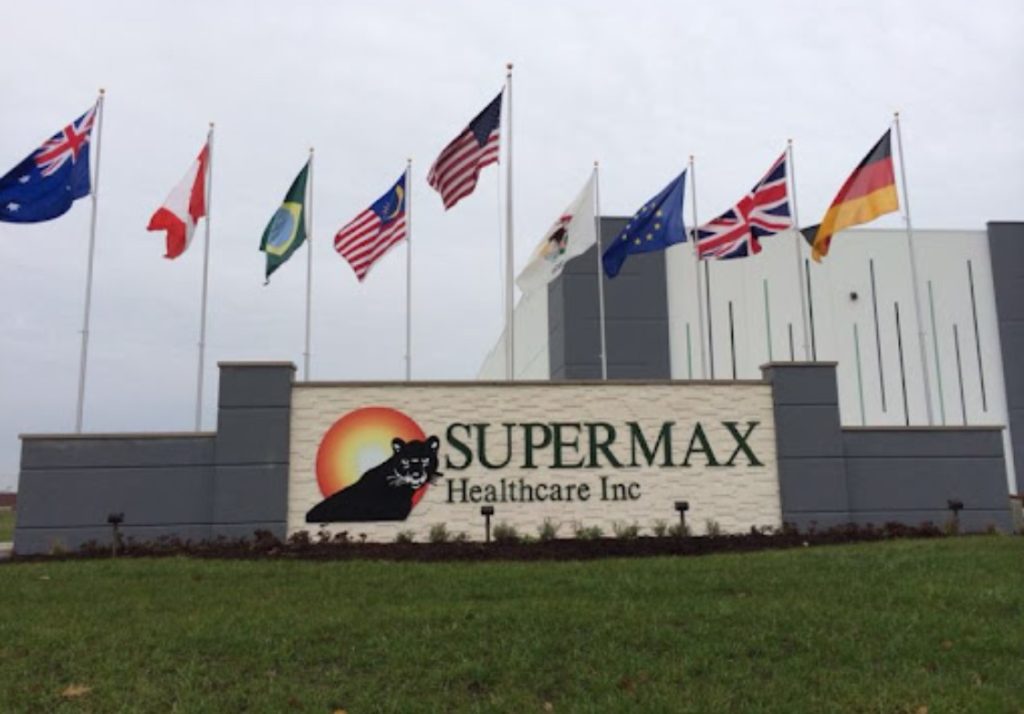
Kenanga Maintains Forecast on Supermax Following Acquisition of SHCI

KUALA LUMPUR: Kenanga Investment Bank Bhd has maintained Supermax Corp Bhd’s financial year 2024 (FY24) net profit forecast but cut its FY25 forecast by 54% due to losses from its purchase of Supermax Healthcare Canada Inc (SHCI). The investment bank said Supermax bought the remaining 33% equity interest in the loss-making Canadian unit for RM18.9 million cash, despite already owning a 67% stake. According to Supermax, the purchase will be paid in cash, financed by internally generated funds and SHCI will become a wholly-owned subsidiary of Supermax once the acquisition is complete “The RM18.9 million capital outlay will only put a minor dent in Supermax’s RM1.5 billion net cash as of 31 December 2023. “However, based on SCHI’s RM53 million net loss in June 2023, the additional 33% equity interest will add an RM17 million loss to its bottom line on a full-year basis,” it said. The research house also expects the group to face a challenging operating environment in subsequent quarters due to massive oversupply. “The group expects the current challenging operating environment to persist, with a likelihood of a meaningful recovery only sometime in 2025,” it said. Based on estimates, Kenanga said the demand-supply situation will only start to head towards equilibrium in 2026 – without new capacity coming onstream – and with a 15% a year increase in global glove demand underpinned by rising hygiene awareness, it said. It noted that rubber glove demand will rise by 30% to 390 billion pieces in 2024 due to 2023’s low base effect and resume its 15% organic growth thereafter. “This will result in an excess capacity of 212 billion pieces in 2024. Persistent overcapacity means low prices and depressed plant utilisation will continue to plague the industry in 2024,” it added. The Malaysian Rubber Glove Manufacturers Association projects a 12-15% growth in global demand for rubber gloves annually from 2023, following an estimated 25% contraction to 300 billion pieces last year. Meanwhile, Kenanga has maintained its target price of 84 sen and ‘market perform’ call on the group. — BERNAMA

Investment & Market Trends, News

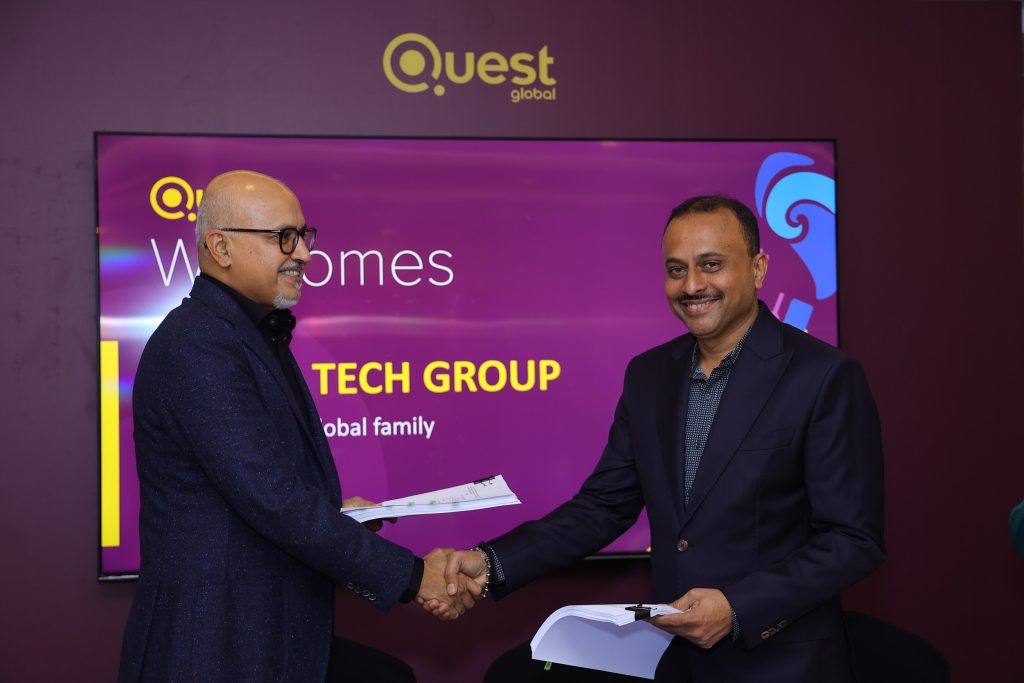
Quest Global Acquires People Tech Group to Expand Product Engineering Capabilities

SINGAPORE: Leading global product engineering services company headquartered in Singapore, Quest Global acquired a majority stake in People Tech Group, a renowned leader in next-generation digital transformation and digital innovation for Fortune 500 clients. The partnership marks a significant milestone in Quest Global’s growth journey, significantly expanding its footprint in North America within the automotive and hi-tech industries. It also enables Quest Global to better serve customers, especially original equipment manufacturers (OEMs) in the Automotive industry, by providing expanded expertise in digital transformation for software-defined vehicles (SDV). Specifically, People Tech has strong capabilities in architecture, design, UX, development and testing of human-machine interface (HMI) and applications for infotainment systems and instrument clusters. Additionally, the company specialises in Software in Loop (SIL) and Model in Loop (MIL) testing of advanced driver-assistance systems (ADAS). People Tech also strengthens Quest Global’s capabilities in enterprise software, cloud, data engineering, and analytics for the dynamic hi-tech industry. “With People Tech’s extensive experience and expertise, we are well-positioned to accelerate growth, scale operations, and address the evolving needs of our clients globally as we strive to be the most trusted partner for the world’s hardest engineering problems,” said Quest Global Chairman and CEO, Ajit Prabhu. “This strategic union moves us forward on our journey to deliver innovative digital transformation and product engineering solutions to our customers in the automotive and hi-tech industries as we continue on our journey to become a centenary organisation,” he added. Together, People Tech and Quest Global will leverage new and complementary capabilities, expand offerings to existing clients, and serve new clients with innovative digital transformation and product engineering solutions. “This marks a new chapter for People Tech, and we are thrilled to become part of the Quest Global family,” said People Tech Founder and CEO, Vishwa Prasad. “Our shared values and commitment to excellence make this integration a natural fit. We are both known for helping our customers solve their most challenging problems. With this transaction, we will be able to bring our data/AI and enterprise software services to a broader client base and leverage the substantial industry expertise of Quest Global resources,” he added.

Energy & Technology, Investment & Market Trends

Viettel to Expand in Malaysia’s Defense, High-Tech Markets

KUALA LUMPUR: At the DSA & NATSEC 2024, Viettel High Tech has signed strategic partnership agreements with leading companies in Malaysia including MIM Defense (reputable provider in high technology military products) and Transpro (40-year-experienced hi-tech System Integrator in Military and Telecommunication sector). These strategic partnership agreements will utilise the strength of both sides to develop business opportunities in SEA region. Accordingly, MIM Defense, with their comprehensive knowledge and experience in Malaysia market, will be the key partner in marketing, seeking for opportunity and distributing Viettel High Tech’s product in Malaysia, especially in the field of defense and security. Detailed list of products set out to be partnered includes Communications, Electro-Optics, Radar, Multi-system Integration, Electronic Warfare. Similarly, Viettel High Tech will be the product marketing channel of MIM Defense in Vietnam, Southeast Asia, and South Asia. These are the markets Viettel has affirmed their brand in the field. MIM Defense President Datuk Alias affirmed, “Our partnership with Viettel positions MIM Defense to deliver top-tier solutions to the Malaysian government. “Moving forward, this collaboration will enable an exchange of resources, expertise, and technologies that will strengthen the defense industries of both nations. We are particularly well-equipped in integration and providing product consignment to the Navy capabilities that are critical given the urgent maritime security needs in Malaysia. Viettel’s products have met our high standards and expectations.” Additionally, Viettel High Tech CEO Nguyen Vu Ha highlights, “Customisation is the key strength of VHT. We are confident in fulfilling any specific requirements from customers. “With this partnership, we sincerely hope our trusted partner MIM Defense can enable VHT solutions bring better value to our prospective customers, especially Malaysian Army in coming time.” Viettel’s key products leverage the latest technology platforms to ensure dependable performance in modern warfare environments. In the field of Military Communications, the models feature advanced technologies that facilitate smart shortwave transmission lines, allowing the system to automatically and swiftly select the best frequency, speed, and bandwidth. This capability ensures stable and reliable communications over distances up to several thousand kilometers. For Radar, Viettel has developed state-of-the-art near and medium-range maritime radar systems tailored for naval operations. Its Electro-Optics products are designed with high aiming stability and large focal length optical lenses, enabling the detection of targets from several tens of kilometers away. These products are compact and offer extensive connectivity, making them easily integrable with onboard command and control systems. In Electronic Warfare, Viettel has pioneered early warning systems and electronic intelligence/reconnaissance technologies that can autonomously detect, analyse, and identify radio-emitting targets, with easy updates and upgrades built into the design. During the opening ceremony, Viettel High Tech finalised a strategic cooperation agreement with TRANSPRO, a leading Malaysian company. As part of this agreement, Transpro will act as Viettel’s distribution channel in Malaysia, focusing on critical sectors. These include Modelling & Simulation, with an emphasis on combat training simulation systems, as well as 5G private networks and advanced military communications solutions.

Investment & Market Trends, News

MNRB’s Net Profit Reaches Best-Ever Performance in 50 Years

KUALA LUMPUR: MNRB Holdings Bhd recorded a jump in net profit to RM428.34 million for the financial year ended 31 March 2024 (FY24) from RM142.64 million in FY23, marking the best-ever financial performance in the company’s 50-year history. This was mainly driven by strong business expansion, underwriting results and investment returns. Revenue increased to RM3.6 billion from RM2.97 billion in the previous year, it said in a filing with Bursa Malaysia. Revenue from the insurance and takaful businesses rose 21.1% to RM3.6 billion from RM3 billion in FY23. It also noted that its profit after tax (PAT) for FY24 surged by 200.4% to RM428.4 million, surpassing the RM400 million mark. “This was mainly due to the results of the reinsurance/retakaful business amounting to RM362.4 million, primarily fuelled by strong underwriting results coupled with robust investment performance. “Overall, the group’s profitability was further strengthened by the takaful segment’s solid business fundamentals and operational efficiencies,” MNRB said. Despite challenges in the domestic and global capital markets from the macroeconomic headwinds, MNRB’s investment income and yield reached a five-year record high, with investment results touching RM588.3 million up 61.3% from FY23. With a yield of 5.64%, MNRB’s investment performance was in line with the strong returns delivered by larger institutions in Malaysia. “This purposely designed growth, with more than 80% concentration in the Malaysian market, was mainly attributable to favourable returns, following a strategic alignment of the investment portfolio, trading strategies and asset allocation model,” it noted. Additionally, the group’s reinsurance/retakaful subsidiary, Malaysian Reinsurance Bhd achieved a record-breaking RM2.5 billion gross written premiums and gross written contributions (GWP/GWC) in FY24, surpassing the RM2 billion mark for the first time. As of 31 March 2024, Malaysian Reinsurance secured the top place among Asean’s reinsurers for its GWP. For the fourth quarter ended 31 March 2024 (Q4 FY24), MNRB’s net profit rose to RM232.63 million against RM94.94 million a year ago, while revenue rose to RM816.79 million versus RM637.97 million in Q4 FY23. The group’s insurance and takaful revenue increased 30.6% to RM707.2 million in the period from RM541.3 million recorded in Q4 FY23. MNRB President and Group Chief Executive Officer Zaharudin Daud said the sukuk issuance has also helped to bring down the cost of capital and provided the company with the flexibility to execute the group’s transformation effectively. It also enabled strategic diversification into international markets and facilitated strategic partnerships, he added. Meanwhile, MNRB Chairman Datuk Johor Che Mat said the key to the company’s success was the rollout of strategic initiatives across all business lines. The significant improvements in FY24 were strategically planned with an ongoing commitment to prioritising stakeholders’ interests and championing good governance. “We noted that investors’ interest in the group has increased, reflecting the market’s confidence in the company throughout the financial year. “We continue to look beyond Malaysian shores and are leveraging current opportunities in the hard market while preparing to surmount challenges in the upcoming soft market,” he added. — BERNAMA

Investment & Market Trends, News

Rich Baby Boomers Pass On US$1.9 Tril Wealth to Future Generations

KUALA LUMPUR: Malaysia is set to draw more foreign inflows as Asia’s largest intergenerational wealth transfer is on the cards, said Securities Commission Malaysia (SC) Chairman Datuk Seri Dr Awang Adek Hussin. He said that according to HSBC Bank, Asia’s wealthy baby boomers are expected to pass on about US$1.9 trillion (RM9.01 trillion) of wealth to future generations in the coming years. “The financial planning industry is well placed to capitalise on this opportunity due to long-term relationships built over the years,” he said at the Financial Planning Symposium 2024 that was organised by the Financial Planning Association of Malaysia (FPAM). Moreover, this opportunity not only promises to elevate the quality of financial planners’ services but also broadens their client base. Furthermore, Awang Adek pointed out the growing interest in sustainability among millennial investors, something which financial planners could potentially tap into. A survey by the Institute of Capital Market Research revealed that more than 70% of millennials and Gen X are likely to invest in options that also promote sustainability. “While many investors have good intentions, they may lack knowledge about sustainable investments like environmental, social and corporate governance (ESG) or Sustainable and Responsible Investment (SRI) Funds, which we in the capital markets industry may be used to. “As such, financial planners must increase their understanding and develop capabilities in this area,” he said. To facilitate this, the SC and the Federation of Investment Managers Malaysia will issue a comprehensive guide to assist planners and consultants in navigating the complexities of SRI Funds. This guide aims to ensure that SRI considerations become a routine component of financial advice. According to Awang Adek, the financial planning sector has seen a notable improvement in the number of firms, with an increase of more than 32% since 2015. “In this regard, the release of the firm’s operating standard by FPAM is a positive step towards professionalising the industry. “It serves as a guide to support firms in establishing a solid foundation and promoting good conduct that prioritises client needs,” he said. Awang Adek said on the regulatory side, the SC has issued revised Guidelines on Conduct for Capital Market Intermediaries to elevate standards of professionalism and integrity, which will assist firms in attracting and retaining long-term clients. The revised guidelines will come into effect on 1 October 2024, allowing sufficient time for capital market intermediaries to make preparations to meet the new requirements. “Financial planners should thoroughly review and take necessary steps to ensure compliance, especially with regards to personal advise obligations,” he said. He also called financial planners to protect their clients, ensuring that they do not fall prey to unlicensed schemes and activities. Between 2019 and 2023, the SC reviewed over 3,000 complaints and inquiries related to unlicensed activities and scams, a 321% rise from under 800 complaints in 2019. He said the SC also recognises that smaller firms may struggle with market profiling. “Hence, I am pleased to announce that Capital Markets Malaysia, the SC’s promotional arm, will work in tandem with the SC to provide a platform to profile financial planning firms further. “This will serve as a contact point for prospective investors to connect with firms for various financial planning needs,” he said. — BERNAMA

Investment & Market Trends, News

Bursa’s RM2 Tril Market Cap Signals Good Trading Prospects, Says MIDF Research

PETALING JAYA: MIDF Research has forecasted “good prospects for trading activities in Bursa Malaysia this year from a corporate earnings and valuation point-of-view”. “This follows the local bourse hitting RM2 trillion in market capitalisation for the first time yesterday, with the key index at a two-year high,” it said. The research firm said it also anticipates robust economic growth, which consequently drives corporate earnings. “We also anticipate that the expectations of US interest rate cuts will lead to positive sentiment, especially among foreign investors, and this will drive better market valuations,” it said in a research note. MIDF said it has seen better trading activities thus far this year on the back of the expectation of US Federal Reserve (Fed) interest rate cuts, adding that Bursa is well-positioned to continue developing the marketplace and make further progress in its strategic plans. In the short-term though, MIDF said the ongoing global and local developments would continue to influence the volatility and performance of the securities and derivatives markets, “which at the current juncture we are sanguine.” “Hence, we are maintaining our ‘buy’ call on the stock exchange with an unchanged target price of RM8.20, pegging financial year 2025 (FY 2025) earnings per share (EPS) to a price-earnings ratio (PER) of 25 times,” it added. On the index performance, the FTSE Bursa Malaysia KLCI (FBM KLCI) saw year-to-date (YTD) (as at May 7, 2024) gains of 10.4%, making it the best-performing index in Asean thus far. “Compared to peers, only Japan’s Nikkei has outperformed with a 16% gain,” it said. MIDF noted that the support provided by local investors and the return of foreign funds in May has lifted sentiment. “Although we observed a foreign funds net outflow of RM4.25 billion between March and April, there has been a net inflow of RM1 billion in May thus far. “We are sanguine on the prospect of foreign funds returning to the Malaysian market on the back of expected US interest rate cuts and the subsequent expectation of the US dollar to weaken in light of this,” it added. Yesterday, the FBM KLCI rallied for a fourth straight day to close above the 1,600 level for the first time in two years, closing at 1,605.68, its highest close since April 8, 2022.–BERNAMA

Investment & Market Trends, News

BRI Showing Strength, Launches Buyback Amidst Stock Price Corrections

JAKARTA: PT Bank Rakyat Indonesia (Persero) Tbk (BRI) announced the commencement of a share buyback process for its shares, which comes in response to significant adjustments in BRI’s share price following the release of the Q1 2024 financial report. The buyback programme that was approved at the Annual General Meeting (AGM) on 13 March 2023, allows BRI to repurchase up to Rp1.5 trillion (RM442.2 million) worth of BBRI shares within 18 months from the date of the AGM approval. In response to significant adjustments in BBRI’s share price following the financial report, BRI has initiated a share buyback process to signal the company’s robust position compared to market perceptions. BRI President Director, Sunarso, emphasised that the buyback is intended to signal the company’s stronger position compared to market perceptions. Meanwhile, BRI Finance Director, Viviana Dyah Ayu RK underscored that management is focused on ensuring the long-term growth and health of the company, even if it requires minor corrections in the short term. “For long-term shareholders, the enhancements and improvements we’re making should yield greater benefits,” she added. In terms of BRI’s performance, amidst the dynamic global economic and geopolitical challenges, BRI has managed to achieve positive profit growth. By the end of the first quarter of 2024, BRI’s consolidated profit reached Rp15.98 trillion (RM4.71 billion), as revealed by Sunarso at the Q1 2024 Financial Performance press conference. As of March 2024, BRI has successfully disbursed loans totaling Rp1,308.65 trillion (RM386.04 billion), representing a double-digit growth of 10.89% year-on-year (YoY). Of these loans, 83.25% amounting to Rp1,089.41 trillion (RM321.42 billion) were allocated to the micro, small and medium enterprise (MSME) segment. “BRI believes that the continuous empowering of the MSME segment can contribute to the national economic resilience, considering that MSMEs account for about 97% of job creation and about 61% of Indonesia’s GDP,” Sunarso explained. The double-digit loan growth has contributed to the company’s asset increase, with BRI’s total assets reaching Rp1,989.07 trillion (RM586.85 billion), up 9.11% YoY. “With the positive performance in the first three months of 2024, BRI is optimistic about sustainable growth, prioritising prudent banking principles and effective risk management amid the evolving global economic and geopolitical landscape. BRI will focus on addressing domestic challenges, particularly through MSME empowerment,” Sunarso concluded.

Investment & Market Trends, News

Malaysia to Engage in Deeper Collaboration with China

KUALA LUMPUR: Malaysia foresees significant potential for deepened collaboration with China, mainly in industries such as infrastructure, digital economy, green development, new energy vehicles and the rare earth, said Deputy Prime Minister Datuk Seri Fadillah Yusof. He noted that Malaysia’s MADANI initiative aligns with the values and principles of the Community Shared Future (CSF) advocated by President Xi Jinping since 2013. “Both concepts advocate and promote innovation, care and compassion, inclusiveness and mutual respect. The MADANI economic framework aims to strengthen national competitiveness by focusing on fiscal sustainability, excellent governance and effective service delivery. “The two countries can translate these concepts into reality for the benefit of their people,” Fadillah said during his keynote speech at the Malaysia-China Commemorative Forum, which was presented by Deputy Energy Transition and Water Transformation Minister, Akmal Nasrullah Mohd Nasir. Fadillah also emphasised on Malaysia’s leadership in promoting renewable energy through its partnership with China, considering that both nations are heavily investing in clean technologies such as solar, wind and hydroelectric power. He said that the Malaysia-China collaboration has expanded beyond technology, with both countries actively participating in knowledge-sharing initiatives to harness the immense potential of green energy. “Through these initiatives, we strive to reduce greenhouse gas emissions and mitigate the impacts of climate change. By prioritising innovation and sustainable development, Malaysia and China are making significant contributions. “We are addressing global climate challenges while also unlocking new economic opportunities. This dual approach promotes growth while ensuring environmental stewardship,” he added. China has remained Malaysia’s largest trading partner for the past 15 years, with total trade between the 2 countries reaching US$98.8 billion (RM450.84 billion) in 2023, with imports from China amounting to US$56.69 billion (RM258.63 billion). These imports predominantly consist of electrical and electronics products, machinery and chemicals, underscoring the robust economic relationship between the two nations. Meanwhile, Malaysia-China Business Council Executive and Acting Director Datuk Alvin Tee Guan Pian highlighted an increasing interest among Chinese investors, particularly in the data centre industry. “Malaysia is among the earliest countries in the region to venture into the digital economy. We established the Multimedia Super Corridor to accelerate the industry’s growth. As we open our doors to investors, we need to ensure that we meet the local content requirements. “We must ensure that wherever investors from China come in, the local content contribution is reasonable. We don’t want to close our doors, but it must genuinely be a win-win situation,” he added. — BERNAMA

Scroll to Top

Subscribe
FREE Newsletter