Investment & Market Trends

Investment & Market Trends, News

Malaysia’s Growth Momentum Predicted to Rise Above 5% in 2Q 2024

KUALA LUMPUR: RHB Investment Bank Bhd (RHB IB) expects Malaysia’s economic growth to accelerate above 5% year-on-year (YoY) in the second quarter of 2024 (2Q24) and is likely to persist into the next quarter. According to RHB IB, its composite indicator or LEI model and Auto Regression (AR) model have accurately predicted the gross domestic product (GDP) and growth momentum since 2023, which allows investors to make pre-emptive portfolio reallocation in optimising their returns. “The RHB-LEI suggests that Malaysia’s economic growth momentum will see an immediate pickup in 1Q24 at 4.5% against our AR model, which places Malaysia’s 1Q24 GDP growth at 4.4%. “Overall, we keep our outlook for Malaysia’s GDP growth at 4.6% in 2024, underpinned by rosy external and domestic factors,” said RHB IB. It also stated that the LEI model reinforces the rigor and accuracy of the AR approach, suggesting that Malaysia’s economy will be of a better standing in 2024. RHB IB believed that Malaysia’s economy would be underpinned by resilient domestic expenditure patterns and improvement in tourism activities based on 3 catalysts. First is the country’s labour market which remains tight, with the unemployment rate returning to pre-pandemic levels on the back of healthy job creation rates. Secondly, Malaysia’s export momentum is expected to pick up in the first half of 2024 on the back of sanguine global growth assumptions and finally, relatively tame inflation pressures are being observed at this juncture. — BERNAMA

Investment & Market Trends, News

Targeted Diesel Subsidy Could Strengthen Govt Fiscal Position

KUALA LUMPUR: The implementation of a targeted diesel subsidy for consumers in Peninsular Malaysia, which is expected to save RM4 billion annually, will strengthen the government’s fiscal position and improve resource allocation while reducing fossil fuel consumption and carbon footprint.   Sunway University Economics Professor Yeah Kim Leng said the rationalisation is anticipated to benefit both the economy and the government by demonstrating a commitment to necessary reforms for fiscal sustainability and economic efficiency. “The government’s move to rationalise fuel subsidies, starting with diesel, is being carefully executed with various targeted groups shielded from price increases through fleet cards and card transfers. “These targeted subsidies will mitigate the adverse impact on inflation while generating substantial savings, particularly by reducing leakages and cross-border smuggling,” he said. Previously, Prime Minister Datuk Seri Anwar Ibrahim announced that the Cabinet had agreed to implement a targeted diesel subsidy for consumers in Peninsular Malaysia. To curb drastic increases in the prices of goods and services, the government will provide subsidies for traders using commercial diesel vehicles. Anwar also mentioned that the subsidy would involve 10 types of public transport vehicles and 23 types of goods transportation vehicles under the diesel subsidy control system. Additionally, the government has agreed to provide cash assistance to eligible private diesel vehicle owners, including smallholders, farmers and traders. Yeah opined that transport costs should not rise as most operators are provided with targeted subsidies. “Likewise, consumer inflation will be directly affected, but monitoring and enforcement by the relevant authorities need to be stepped up to prevent unjustified price increases by businesses, especially in the transport sector,” he added. Meanwhile, Bank Muamalat Malaysia Bhd’s chief economist Mohd Afzanizam Abdul Rashid said that the potential RM4 billion savings would enable the government to invest in initiatives that increase national productivity in the medium and long term. “Diesel subsidy savings will be channelled into the cash payment programme and used to enhance the competitiveness of the education, health and infrastructure sectors,” he said. He added that credit rating agencies might re-evaluate Malaysia’s rating outlook to positive if these economic reforms yield results. “An improved credit rating could attract foreign investors, particularly in portfolio investments. “This would increase foreign holdings in fixed-income instruments such as Malaysian Government Securities, Government Investment Issues (GII) and corporate bonds, potentially boosting the boosting the value of the ringgit,” he said. — BERNAMA

Investment & Market Trends, News

Global Investors Putting Their Wealth in Assets to Protect Against Volatile Markets

KUALA LUMPUR: Global investors are positioning in tangible assets such as real estate, gold, silver, art and agriculture to safeguard their wealth amid turbulent financial markets. Juwai IQI Global Chief Economist Shan Saeed said tangible asset classes are poised to outperform many other asset categories. “Gold prices are reaching all-time highs due to geopolitical risks, a positive macroeconomic outlook and stubborn inflation. “The commodities supercycle has reemerged in the macro equation, prompting global investors to adopt long-term positions,” he said. According to the latest Juwai IQI market intelligence report tracking commodity price movements over the past year, copper surged by 31%, silver by 22%, gold by 18%, zinc by 17%, aluminium by 16%, West Texas Intermediate crude by 11% and Brent crude by 9%. Coffee saw a rise of 6% while gasoline, natural gas, heating oil and wheat experienced increases of 3%, 2% and 1% respectively. “We have now adjusted our forecast in line with market expectations, anticipating gold prices to trade between US$2,600 (RM12,197) and US$3,000 (RM14,073) per ounce by December 2024. “Tangible assets such as real estate, gold and silver are making a comeback in asset portfolios, reminiscent of the 1970s era,” Saeed added. He recalled that during that time, amid stagflation characterised by higher inflation and lower growth, sophisticated investors positioned themselves in gold, silver, oil, gas and real estate. Additionally, he added that real estate has emerged as the new global currency for savvy global investors. — BERNAMA

Investment & Market Trends, Property

MIDF Amanah Stays Positive on Malaysia’s Construction Sector Due to Upcoming Projects

KUALA LUMPUR: MIDF Amanah Investment Bank Bhd has maintained a ‘positive’ call on the construction sector in view of an expected strong pipeline of civil and private jobs in the second half of 2024 (2H24). The investment bank said the industry would see the expected implementation of government projects in 2H24 in tandem with the allocation under Budget 2024, which allocated RM90 billion for development expenditure (DE). “From 24 January to 24 April, RM54.22 billion worth of projects have been awarded a 33,1% increase over the same period last year,” it said. MIDF Amanah said Deputy Works Minister Datuk Seri Ahmad Maslan’s expectations of more civil job flows starting the middle of this year further reinforced its conviction that contractors would be kept busy over the next few years, with rising demand for industrial buildings, such as data centres, warehouses and semiconductor foundries, further boosting sentiments. “The deputy minister estimated that about 40% (RM36 billion) of the DE is expected to be rolled out by mid-2024. “He also said there were an estimated RM180 billion worth of jobs in the pipeline, comprising RM90 billion from the government’s DE and RM90 billion from the private sector,” it stated. Citing his statement, MIDF said that among the expected projects in 2H24 is the Kuala Lumpur Sentral redevelopment, estimated to cost over RM1 billion and be undertaken by Malaysian Resources Corporation Bhd. Another project, the Mutiara Light Transit Line in Penang with RM10 billion allocation under Budget 2024 is anticipated to begin in 4Q24 and to be completed by 2030. The bank said that other notable projects include the Sabah-Sarawak Link Road (Phase 2) project with RM7.4 billion allocation under Budget 2024 and the Mass Rapid Transit 3 Circle Line project with tenders likely to be awarded by end-2024. MIDF Amanah posited that its top picks are Gamuda with a ‘buy’ call and a target price (TP) of RM5.98, IJM Corp (‘buy’, TP RM2.57) and Malayan Cement (‘buy’, TP RM5.33) “The construction sector had been among the best performing year-to-date which has seen the Bursa’s construction index rising 18.2%,” it added. — BERNAMA

Investment & Market Trends, News

Public Bank’s 1Q24 Net Profit Falls Amid Rise in Customer Loans

KUALA LUMPUR: Public Bank Bhd’s net profit fell by 3.5% to RM1.65 billion in the first quarter ended 31 March 2024 (1Q24) from RM1.72 billion a year ago. “The positive impact of the overnight policy rate (OPR) hikes which occurred a year ago did not recur in the quarter under review,” the bank said. Nonetheless, revenue jumped to RM6.79 billion from RM6.12 billion previously. Other operating expenses rose by RM104 million mainly due to higher personnel costs while loan impairment allowance increased by RM61.9 million from a low base of RM1.5 million in the previous corresponding quarter. “However, net interest and Islamic banking income increased by RM74.3 million due to healthy loan growth achieved during the period. “Non-interest/financing income improved marginally by RM3 million, mainly due to higher income from unit trust business, but this was partially offset by lower investment income and lower foreign exchange income,” it said. The bank added that profit continued to be supported by healthy loans and customer deposits growth. Gross loans grew by RM23.7 billion (6.2%) to RM405.3 billion as of 31 March 2024 against RM381.6 billion a year ago, contributed mainly by mortgage financing growth, hire purchase financing and commercial property financing. Total deposits from customers increased by 4.1% (RM16.5 billion) to RM420.2 billion as of 31 March 2024. Public Bank Managing Director and Chief Executive Officer Tan Sri Dr Tay Ah Lek said the group continued to sustain a commendable net return on equity of 12.3%, an efficient cost-to-income ratio of 35.4% and a stable asset quality with a gross impaired loan ratio of 0.62% for 1Q24. “The group will remain vigilant in its business approach and will continue to maintain its prudent risk profile to weather ongoing risks. “The group will continue to take a proactive approach to embrace growth opportunities and will also continue to pursue digital transformation, further stepping up its environmental, social and governance (ESG) efforts,” he said. — BERNAMA

Investment & Market Trends, News

MIDF Research Expect Exports to Grow Based on Rising Trend

KUALA LUMPUR: MIDF Research has maintained its projection that Malaysia’s good exports and imports will recover this year, growing at 5.2% (-8% in 2023) and 4.4% (-6.4% in 2023). The firm expects global electrical and electronics (E&E) trade turnaround and the broad improvement in external demand from major markets to support export recovery this year. “The pick-up in investment activities and businesses stocking up on materials in anticipation of growing demand will also help imports to recover this year. “Nevertheless, we remain cautious that the ongoing geopolitical conflicts and trade could negatively derail the trade outlook,” it said in a research note. At the same time, MIDF Research is closely monitoring demand, which is constrained by high interest rates kept for an extended period and possible weaker Chinese growth prospects. The Investment, Trade and Industry Ministry (MITI) said that Malaysia’s trade continued its upward trajectory in April 2024, recording a 12.1% growth to RM221.74 billion compared to the previous year. MITI said that exports rebounded in April 2024 by 9.1% year-on-year (YoY) to RM114.72 billion after 2 consecutive months of contraction in line with global trade recovery. “Growth was contributed mainly by higher exports of machinery, equipment and parts, chemicals and chemical products, crude petroleum, palm oil and palm oil-based agriculture products and iron and steel products,” it said. MIDF Research views April’s stronger external trade as in line with regional trends and expects further pick-up in external demand to support the economy this year. “We opine that a recovery in exports to major markets signals a broad-based and general pick-up in international trade activity in April. “We are expecting exports to grow to major markets like the US, China and ASEAN to support the overall external trade recovery this year,” it added. The commodity sector will ride on the growing demand for resource-based materials with sustained global growth. The research firm oversees E&E exports to gradually improve in the coming months in line with better global semiconductor sales and global E&E market turnaround. “Manufacturing exports will also benefit from global production recovery as firms restock and rebuild inventories,” it continued. OCBC Senior ASEAN Economist Lavanya Venkateswaran said there is likely to be some normalisation in export growth in YoY terms as favourable base effects fade. “Notwithstanding that, we expect a trend improvement in export growth supported by E&E exports in the second half of 2024 (2H24) as global electronics demand improves in line with our house view. “The trade and current account surpluses should remain supported. We maintain our 2024 current account surplus forecast of 2.5% of gross domestic product (GDP),” she said. “Resilient growth prospects and solid external balances amid benign inflationary pressures will allow Bank Negara Malaysia (BNM) to keep its policy rate unchanged in 2024. “The key risk to our forecasts is from the timing and mechanism in the introduction of targeted fuel subsidies,” she added. — BERNAMA

Investment & Market Trends, News

MITI Focuses on Non-Traditional Partners to Diversify Trade, Says Tengku Zafrul

SAMARKAND: The Investment, Trade and Industry Ministry is diversifying trade efforts by focusing on non-traditional trading partners to address the challenges in the era of globalisation. Minister Tengku Datuk Seri Zafrul Abdul Aziz said that with geopolitical challenges reducing global trade, the ministry is focusing on countries such as those in Africa, South America and West Asia. “This is exactly our strategy. Our largest trading partner is China, followed by the US. We saw that global trade fell last year with the world’s biggest countries. However, (trade with) West Asian, African and South American countries increased. “That’s part of our diversifying policy in trade (focusing on non-traditional countries). We need to focus on diversifying our trade, not on traditional markets but on new ones because that’s (where) the growth will be. We have to plan now for the future,” Tengku Zafrul said at the Sil Road Samarkand Complex in Uzbekistan. The minister is in Uzbekistan to accompany Prime Minister Datuk Seri Anwar Ibrahim, who is on an official visit to 3 Central Asian countries from 14 to 19 May. Tengku Zafrul said the 3 countries (Uzbekistan, Kyrgyz Republic and Kazakhstan) are rapidly developing with faster and stronger gross domestic product (GDP) even though economies are still small compared with Malaysia’s. “Their economic growth is huge. We can also participate in economic growth, not only among large companies but also among SMEs,” he added. According to Tengku Zafrul, the trade commitment for Malaysian exports was about RM3.1 billion including RM700 million in Kyrgyzstan, RM1.7 billion in Kazakhstan and RM710 million in Uzbekistan. Malaysia-Kyrgyzstan trade volume reached US$36.35 million (RM162.3 billion) in 2023, a 312.6% rise from 2022 with Malaysian exports of US$36.09 million (RM161.1 million) in 2023. Malaysia’s total trade with Kazakhstan in 2023 amounted to US$104.2 million (RM474.5 million). Malaysian exports totalled US$102.2 million (RM465.6 million) and imports from Kazakhstan amounted to US$1.9 million (RM8.9 million). Malaysia-Uzbekistan trade volume reached US$94.03 million (RM451.1 million) in 2023, with Malaysian exports at US$93.6 million (RM449 million) and imports at US$414,518 (RM1.99 million). On investment cooperation, Tengku Zafrul said with Malaysia’s GDP 10 times larger than Kazakhstan’s 4 times larger than Uzbekistan’s, the Central Asian Countries are seeking Malaysia to invest in their countries instead of the other way around. — BERNAMA

Investment & Market Trends, News

Kobay Forges Towards Brighter Times Ahead

GEORGETOWN: Kobay Technology Berhad (“Kobay” or “Group”), a leading engineering solutions provider listed on the Main Market, has announced its third-quarter results (“3QFY24”) and nine-month financial results for the period ended 31 March 2024 (“9MFY24”). For 3QFY24, Kobay reported a revenue of RM87.8 million, a 13.6% increase from the RM77.3 million recorded in the previous quarter (2QFY24). This growth was primarily driven by improved performance in the manufacturing segment, which saw a 19.8% increase in revenue to RM56.1 million, up from RM46.8 million in 2QFY24. The uptick in sales, particularly in high precision machined components and aerospace components, contributed to a significant 61.4% quarter-on-quarter (QoQ) growth in profit before tax (PBT) for the manufacturing arm, reaching RM5.9 million compared to RM3.6 million in 2QFY24. This revenue improvement also boosted the bottom line, with 3QFY24 net profit (profit after tax and non-controlling interest) rising by 78.7% QoQ to RM5.5 million from RM3.1 million in the preceding quarter. Dato’ Seri Koay Hean Eng, Managing Director and Chief Executive Officer of Kobay, commented, “Our manufacturing segment saw increased sales orders, particularly in high precision machined and aerospace components, reflecting our strong 3QFY24 performance. We anticipate this recovery momentum to continue into the second half of 2024. The Group remains committed to broadening our portfolio, further establishing our presence in OEM and high-level assembly services, and maintaining our customer base in the electrical and electronic (E&E) industry. Concurrently, we are enhancing operational efficiency and optimizing our cost structure.” He added, “The recent reorganization of our pharmaceutical and healthcare segment, completed in early May 2024, was aimed at consolidating and rationalizing operations. We maintain a positive long-term outlook for this segment, driven by a growing emphasis on health, wellness, and preventive care within the community.” “Additionally, construction of our affordable condominium project, Laguna Bay in southwest Penang, has commenced with sales gradually picking up. Increased tourist arrivals in Langkawi bode well for the local property market, potentially benefiting us. While we remain optimistic about the Group’s long-term prospects, we are mindful of the challenging market environment,” Dato’ Seri Koay concluded. For the nine-month period of FY24, the Group registered a revenue of RM237.8 million, compared to RM245.2 million in the same period last year. This decline was mainly due to the completion of the Langkawi project, leading to lower contributions from the property development segment. Net profit for 9MFY24 stood at RM10.8 million, down from RM27.5 million in 9MFY23, attributed to softer demand, changes in product sales mix, and elevated costs in the manufacturing segment.

Investment & Market Trends, News, Property

Sunway REIT Posts Lower Net Profit in 1Q24, Expert Expresses Cautious Optimism

KUALA LUMPUR: Sunway Real Estate Investment Trust (REIT) reported a decline in net profit to RM86.98 million in the first quarter ended 31 March 2024 (1Q24) compared to RM96. 46 million last year. Revenue also decreased by 2% to RM178.59 million from RM182.80 million previously. In a separate statement, Sunway REIT attributed the revenue contraction primarily to a lower contribution from the services segment following the cessation of rental income from Sunway Medical Centre (Tower A and B), which was disposed of in 3Q23. However, this decline was offset by improved performance in the hotel, office, industrial and other segments. SunReit Management Sdn Bhd Chief Executive Officer Clement Chen said the acquisition of 6 hypermarkets, 5 within Klang Valley and one in Johor, for RM520 million which was completed on 30 April 2024. “Based on the initial yield of approximately 8% from the purchase consideration, the rental income will more than compensate for the void in earnings resulting from the disposal of Sunway Medical Centre (Tower A and B), thereby boosting property income (NPI) for the remaining year,” he said. With this acquisition, Sunway REIT expanded its asset portfolio to 25 properties, including an inaugural property in Johor and now manages assets worth RM9.5 billion. “This solidifies our position as the 2nd largest REIT in Malaysia, measured by assets under management,” he added. Looking ahead, Chen expressed cautious optimism for 2024, citing the resilient performance of the retail segment and the steady recovery of tourist arrivals. “Furthermore, we anticipate unlocking additional NPI potential upon the completion of our proposed acquisitions and ongoing asset enhancement initiatives in Sunway Pyramid Mall, scheduled for completion in the 2nd half of 2024,” he commented. — BERNAMA

Investment & Market Trends, News

RDICE Roadmap to Contribute RM9.21 Tril to GDP by 2030, MOSTI Predicts

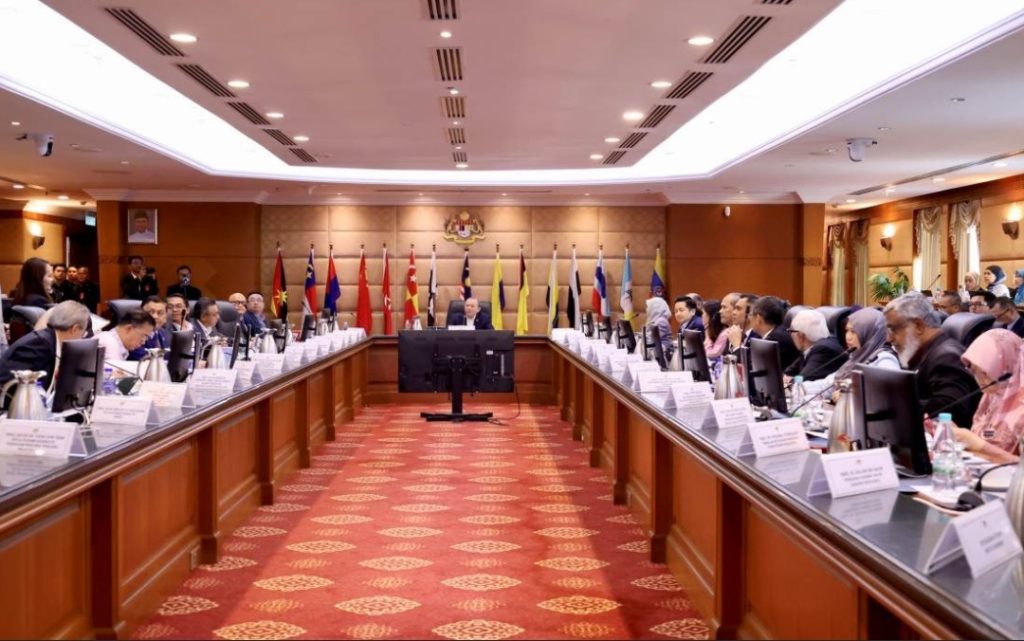
PUTRAJAYA: The implementation of the National Research, Development, Innovation, Commercialisation and Economy (RDICE) roadmap is expected to contribute RM9.21 trillion to the gross domestic product (GDP) by 2030, according to the Ministry of Science, Technology and Innovation (MOSTI). “The roadmap, containing 3 cores, 6 strategies and 20 action plans, aims to utilise the global innovation hub network, encourage the use of technology level measurement indices, introduce the return-on-value concept, profile research institutions and recognise the importance of technology transfer officers,” MOSTI said in a statement. During the meeting, it was agreed that all stakeholders must share data and information related to their respective research and development activities to be coordinated in a national master ecosystem platform to maximise the country’s R&D and commercialisation potential. Additionally, it said that the NSC also agreed with the concept of empowering the ‘blue economy’ to create sustainability of the maritime economy through balanced economic activities, along with the capacity of the maritime ecosystem to be resilient and prosperous. “A sustainable and innovative ‘blue economy’ can generate returns on value from the country’s marine and maritime sector with the potential to increase the contribution of marine and ocean resources to the country’s GDP from 21.3% to 31.5% in 2030 through the involvement of 13 relevant ministries and agencies,” MOSTI said. According to the statement, the meeting also agreed that holistic coordination should be led by the Ministry of Economy to sustain engagement sessions with stakeholders, including the state governments. MOSTI stated that the NSC recognises the importance of Malaysia to develop local technology and expertise to create an advanced industrial ecosystem of rare earth elements, with a GDP contribution of RM9.5 billion. Meanwhile, Science, Technology and Innovation Minister Chang Lih Kang said that the NSC meeting emphasised the development of highly skilled science, technology, innovation (STI) and economic talent to meet the needs of the industry, in line with the country’s focus towards developing high-growth, high-value industries. “The NSC reflects the concerted efforts of the Malaysia MADANI government via the collaboration of various ministries and agencies to deal with current challenges more effectively for the well-being of the people. “MOSTI will continue to strengthen NSC as a platform to set the direction and policy of the country’s STI through the involvement of government, industry and academia in the national development strategy, in addition to identifying potential STI areas for high-impact investments,” he added. — BERNAMA

Scroll to Top

Subscribe
FREE Newsletter