Investment & Market Trends

Investment & Market Trends

Europe’s Nervy Markets Await Israel’s Response, Fed Outlook

LONDON: European shares look set to track Asia’s negative lead on Monday after a weekend dominated by news of escalating tensions in the Middle East and fears of a wider regional conflict. The flight to safety began with talk last week of an Iranian strike on Israel and, after a raid with some 300 drones and missiles, the focus now turns to Israel’s reply. Gold XAU and the US dollar were firm, though the erstwhile safe-haven yen JPY EBS sank to a three-decade low – a reminder that market participants are still treating the Middle East primarily as a risk, albeit a growing one, while interest rates remain the main theme. Going some way to keeping that risk capped, US president Joe Biden told Israeli prime minister Benjamin Netanyahu the US will not take part in a counter-offensive against Iran. Still, the Cboe Volatility Index, or VIX – known as Wall Street’s fear gauge – is hovering near five-month highs. Oil prices were trading lower in Asia, though some analysts said that was because the risk of what Iran called retaliation had already been priced in last week and as traders wait to see if worries of a wider war actually precipitate. Brent futures LCOc1 hovered around US$90 a barrel, after touching a roughly six-month high on Friday. It has risen 17 per cent for the year, while US crude futures CLc1 have gained 19 per cent year-to-date. Any further increase in oil prices towards US$100 a barrel is going to be unwelcome news for central bankers battling rising consumer prices, with last week’s hotter-than-expected US consumer price report continuing to reverberate through markets. Later in the day, traders will get a sense of the strength of the US consumer with retail sales data for last month due. A slew of Federal Reserve speakers are also on the docket this week, with comments from Chair Jerome Powell on Tuesday coming under the spotlight. With US inflation having topped forecasts for three successive months, it’s hard to imagine the world’s most powerful central banker sticking to his same, somewhat-dovish tone from last month. While the geopolitical backdrop is likely to set the tone for the week, there are also plenty of economic events for traders to take cues from, from China’s first-quarter economic growth figures to British consumer prices. The US earnings season is also underway, though that got off to a lacklustre start after reports from the three big banks – JPMorgan Chase & Co, Wells Fargo and Citigroup – disappointed investors and sent Wall Street lower.

Investment & Market Trends

Foreign Investors’ Net Selling Rises By 11pc To RM374mil

KUALA LUMPUR: The net selling trend by foreign investors has extended into its seventh consecutive week, amounting to RM373.5 million during the shortened trading week due to the Hari Raya Aidilfitri holidays. In its latest weekly fund flow report, MIDF Research said this is about 11 per cent wider than the net selling amount of RM336 million in the prior week. It said the sectors with the highest net foreign inflows last week include property (RM75.3 million), transportation and logistics (RM26.8 million) and construction (RM16.5 million). “Sectors they were net selling were financial services (-RM285.9 million), utilities (-RM85.4 million), and consumer products and services (-RM52.7 million),” it added. Meanwhile, it said local institutions remained as net buyers of Bursa for the seventh consecutive week, snapping up RM430.7 million worth of domestic equities. “Conversely, local retailers remained as net sellers for the fifth consecutive week, with net sales amounting to RM57.1 million. “They ended their 22-day streak of net selling by making purchases of RM9.5 million on Tuesday but engaged in net selling on Monday and Friday last week,” said MIDF Research. In terms of participation, the average daily trading volume (ADTV) decreased among local retailers (-3.1 per cent) and local institutions (-15.2 per cent), but increased among foreign investors (3.1 per cent).

Investment & Market Trends

Ringgit Likely To Trade Around 4.76 To The US Dollar Next Week

KUALA LUMPUR: The ringgit is expected to remain soft and trade around RM4.76 against the American dollar next week ahead of talks by US Federal Reserve (Fed) officials on inflation and the US retail sales data. Bank Muamalat Malaysia Bhd chief economist Mohd Afzanizam Abdul Rashid said a slew of Fed officials are scheduled for talks next week, which he thinks will offer the same messages – that US inflation is still a concern and that they need to be convinced whether it can reach the American central bank’s 2 per cent goal. The US retail sales figure will be announced on Monday, with consensus estimates projecting it will grow 0.3 per cent month-on-month in March from 0.6 per cent previously. “Perhaps the first quarter of 2024 (1Q2024) gross domestic product results for China could be a market-moving data point as investors would want to gauge whether the second largest global economy could grow at around 5 per cent in 2024. Consensus estimates showed China’s economy grew 5.0 per cent year-on-year in 1Q2024,” he told Bernama. Meanwhile, he said the European Union consumer price index would also be interesting to examine. Street estimates show that the inflation rate will moderate further to 2.4 per cent in March, a sign that the European Central Bank could be on the right track to cut interest rates this year. On a Friday-to-Friday basis, the ringgit weakened to 4.7680/7730 versus the greenback compared with 4.7460/7490 a week earlier. The local note traded higher against most other major currencies. Meanwhile, he said the European Union consumer price index would also be interesting to examine. Street estimates show that the inflation rate will moderate further to 2.4 per cent in March, a sign that the European Central Bank could be on the right track to cut interest rates this year.

Investment & Market Trends

Nextgreen Global Inks MoU with Xiamen C&D To Develop Sustainable Paper Pulp Production Facility

KUALA LUMPUR: Pulp and paper manufacturer Nextgreen Global Bhd (NGB), via its subsidiary Nextgreen IOI Pulp Sdn Bhd (NIP), signed a memorandum of understanding (MoU) with Xiamen C&D Paper & Pulp Group Co Ltd (Xiamen C&D). This is a strategic collaboration for developing and operating a green and sustainable paper pulp production facility. NGB managing director Datuk Lim Thiam Huat said this strategic collaboration marks a shared commitment to innovation, sustainability, and economic development that is a win-win for both parties. “By scaling up the utilisation of the innovative preconditioning refiner chemical-recycle bleached mechanised pulp (PRC-RBMP) technology with its China-based partner, we aim to pioneer a new era of eco-friendly industrial practices, driving progress and accelerate prosperity for the region and beyond,” he said in a statement. Xiamen C&D is a wholly-owned subsidiary of Xiamen C&D Inc under Xiamen C&D Corp Ltd, a global Fortune 500 company. Under the MoU, NIP and Xiamen C&D will establish a joint venture company with equity interests of 75 per cent and 25 per cent, respectively. The paper pulp production facility is set to be developed across 43 acres of land within the 410-acre Green Technology Park (GTP) in Pekan, Pahang, part of the Eastern Corridor Economic Region (ECER). The initial production capacity is expected to be 100,000 metric tonnes of paper pulp per annum, made from oil palm empty fruit bunches, using NGB’s patented  (PRC-RBMP) technology. NIP will lead feasibility studies, project preparation, procurement, and business development while also engaging with stakeholders and external financiers. Xiamen C&D will lend support in business development, assist with securing external financing, and manage the off-take of the facility’s output. “This MoU comes on the back of our recent announcement that we have entered into a shareholders’ agreement with IOI Paper Pulp Sdn Bhd, an indirect wholly-owned subsidiary of IOI Corporation Bhd, which paves the way for the development of the first large-scale zero-waste paper pulp plant at GTP. “The swift progress highlights our dedication and nimbleness in completing our master plan,” Lim said.

Investment & Market Trends

Singapore’s Current Monetary Settings Remain Necessary And Sufficient, Says Maybank IB

KUALA LUMPUR: The Monetary Authority of Singapore (MAS) has maintained the prevailing rate of appreciation of the Singapore dollar nominal effective exchange rate (S$NEER) and kept the width and the level of the band was unchanged at the April policy meeting. Maybank Investment Bank Bhd (Maybank IB), in a report, said this was the fourth hold following five consecutive tightening moves since October 2021, in line with the research firm’s and consensus expectations. “We think MAS will ease policy only in October at the earliest via a gentler S$NEER slope,” Maybank IB noted. The bank-backed research firm said MAS has reiterated that current monetary settings remain appropriate and sufficient to ensure medium-term price stability. It said the current rate of appreciation is necessary to restrain imported inflation and domestic cost pressures. MAS remains vigilant on inflation, maintaining its view that core inflation should remain elevated earlier in the year. “The central bank mentioned that inflation should stay on ‘its broadly moderating path’ and step down in the fourth quarter (Q4) before falling further in 2025,” Maybank IB noted. The research firm also noted that MAS maintained its forecast range for core and headline inflation at 2.5-3.5 per cent in 2024. It mentioned that the uptick in January-February core inflation, at 3.4 per cent, was lower than expected due to a decline in food and travel-related services inflation. Underlying inflation, excluding the impact of the goods and services tax (GST) hike, was estimated to be unchanged from Q4. “Similar to our expectations, MAS thinks core inflation will stay around current levels in the near term. Water prices were hiked in April to 7.3 per cent, while prices of certain services, such as education and healthcare, will continue catching up with higher business costs. “Nonetheless, MAS expects a sustained moderation in imported and domestic cost pressures. “Global prices of most food commodities and intermediate and final goods remain subdued, although crude oil prices have risen over the past three months,” Maybank IB noted. Further, Maybank IB noted that MAS expects unit labour costs to rise significantly slower in 2024 as wage growth eases and labour productivity picks up. On Singapore’s gross domestic product (GDP) growth, MAS expects the outlook to brighten throughout 2024. Manufacturing and financial sectors should resume their recovery, supported by the electronics cycle upturn and easing global interest rates. Growth in the domestic-oriented sectors is expected to normalise and slow towards pre-pandemic rates, Maybank IB noted. “Given the stronger-than-expected first quarter (Q1) flash estimates, we raise our 2024 GDP growth forecast to 2.4 per cent from 2.2 per cent. “Our GDP forecast stands at the upper end of Singapore’s Ministry of Trade and Industry’s (MTI) 1-3 per cent forecast range,” Maybank IB noted. The research firm said the outlook is predicated on a recovery in manufacturing and trade-related sectors as exports rebound from their deep slump in 2023. The firm noted that the Red Sea tensions have acted as a speedbump to the manufacturing recovery but should not be a roadblock without a broader Middle East conflict. Global container freight rates have been cooling from their late-January peak while manufacturers and shippers are adapting to the disruptions in their supply chain. Consumer and tourism-sensitive services were buoyed by the strong comeback in revenge travel in the first quarter. “That said, momentum may lose some steam for the rest of the year with the near-complete normalisation in tourist arrivals to pre-pandemic levels and the fading of the ‘Taylor Swift’ boost. “Moreover, elevated inflation has prompted some households to tighten their belts, while the strong Singdollar is encouraging locals to divert their spending budgets abroad,” Maybank IB noted.

Investment & Market Trends

China’s Attractive Valuations, Low Exposures Among Investors, A Compelling Long-Term Investment

KUALA LUMPUR: China’s attractive valuations and low exposures among investors make it a compelling long-term investment, especially compared to expensive markets, which have outperformed in the last 12 months. Eastspring Investments research lead for equities, China Jingjing Weng said there have been some bright spots in China’s recent economic indicators. “The worst for the economy appears behind us, although the road ahead remains bumpy. “A sustainable market rally in China would require implementation details of the government’s equipment upgrade and consumer trade-in programme, as well as further fiscal and monetary easing. Signs that policymakers are moving ahead of the curve would also be a key catalyst,” she said. Sharing more on China’s economic indicators and opportunities for investors, Weng said China’s infrastructure spending is expected to moderate this year as the central government focuses on containing the local governments’ already elevated debt-servicing burdens. The government’s urban renewal projects can help to stabilise the property sector further but not cause a strong rebound. Nevertheless, the property sector should continue to exert less drag on the broader economy going forward, she noted. Further, China’s exports and consumption will be key to helping the country achieve its 5 per cent gross domestic product (GDP) growth target for 2024. Weng noted that amid geopolitical and trade tensions, China has been diversifying its export destinations from the United States (US) and Europe to developing countries. In line with the key goal of developing ‘new quality productive forces’ highlighted in the 2024 Government Work Report, the government has indicated that it will encourage large equipment upgrades and consumer goods trade-ins. Weng noted that this will help boost consumption. Compared to China’s economic and market downturn in 2015/16, Weng also noted that the picture on the company front appears to be more encouraging. “Overseas revenues account for 15 per cent of total revenues, up from 12.5 per cent in 2015,” she said. While China’s growth is not as strong as before, Weng said it does not mean the market lacks opportunities. “The capital goods, consumer durables, energy, banks, and utility sectors have delivered high single-digit to mid-double-digit returns year to date. “For now, we are adopting a barbell investment strategy. We like companies with low valuations, stable dividend yields, and stable fundamentals. “This is balanced against exposure to companies gaining market share from global peers or well positioned to benefit from the future technology boom in promising growth sectors,” Weng said. She said China’s attractive valuations and low exposures among investors make it a compelling long-term investment, especially when compared against expensive markets, which had outperformed in the last 12 months. “In our view, a sustainable market rally would require implementation details of the equipment upgrade and consumer trade-in programme, as well as further fiscal and monetary easing, such as cuts to interest rates and the reserve requirement ratio,” Weng said.

Investment & Market Trends

Redeemable Preference Shares (RPS) and RPS-i: Navigating the Fine Line Between Opportunity and Risk

Malaysia’s investment landscape is burgeoning with opportunities, offering a plethora of options for savvy sophisticated investors seeking to diversify their portfolios. Among these opportunities, Redeemable Preference Shares (RPS) and its Islamic counterpart, RPS-i, have emerged as significant focal points. Positioned as a unique hybrid between equity and debt instruments, these offerings promise a blend of stability and returns, ideal for investors aiming to fortify their investment strategies. Boasting preferential treatment in dividend payouts and capital distribution during liquidation, RPS provides a sense of security amidst market volatility. Its redeemable feature, a departure from the perpetual nature of traditional preference shares, offers investors a clear exit strategy, perfectly aligning with long-term investment goals. Furthermore, the allure of higher dividend yields appeals to income-oriented investors, providing a stable income stream in uncertain financial environments.   Understanding the Appeal of Preference Shares for Investors Investors opt for preference shares for various reasons, often driven by their unique characteristics and benefits. Firstly, preference shareholders typically do not seek voting rights or involvement in the company’s management. Instead, they prioritize financial returns over corporate governance participation. These investors rely on their independent assessment of the company’s performance, trusting that they will benefit from predetermined dividend payments or attractive returns on investment according to subscription terms. Moreover, preference shareholders enjoy priority over a company’s income distribution. This means they are often entitled to receive dividends before ordinary shareholders. Additionally, in the event of a company winding up, preference shareholders benefit from stronger bankruptcy protection, leveraging the concept of preferential payments. These factors contribute to the appeal of preference shares among investors seeking stable returns and protection of their investment interests.   Types of Preference Shares Various types of preference shares cater to diverse investment preferences and risk profiles. Commonly known terms include redeemable convertible preference shares, redeemable cumulative preference shares (RPS), or redeemable convertible cumulative preference shares (RCCPS), each serving specific investor needs. Cumulative preference shares guarantee preferential dividends from the date of issuance, accumulating unpaid dividends for future settlement, ensuring stability and consistent income streams. In contrast, non-cumulative preference shares do not accrue dividends from previous periods if not declared, posing higher risks regarding dividend reliability compared to cumulative shares. Redeemable preference shares, or callable shares, allow the issuer to repurchase them at a predetermined price after a specified period, offering flexibility for companies to manage their capital structure. Conversely, non-redeemable shares, or irredeemable shares, represent permanent equity ownership without the option for repurchase, providing long-term investment opportunities with potential for higher returns but subject to market fluctuations. Participating preference shares entitle holders to additional dividends based on the company’s financial performance, offering potential for higher returns during prosperous periods. Convertible preference shares offer the option to convert into common shares, providing opportunities for capital appreciation and participation in the company’s growth, albeit subject to specified conditions. Conversely, non-convertible shares lack conversion features, remaining as permanent equity stakes in the company.   Why Companies Issue Preference Shares? Many companies opt to issue preference shares as a structured method for raising funds to bolster guaranteed projects and to rebalance their share portfolios. This strategic approach allows corporations to secure financing for specific ventures while maintaining flexibility in their capital structure. Additionally, issuing preference shares provides companies with an alternative avenue for capital infusion, enabling them to diversify their funding sources and mitigate risks associated with overreliance on debt financing or common equity issuance. Notable Malaysian companies who have issued this instrument include G Captial Berhad, SP Setia Bhd, Telekom Malaysia Berhad, FGV Holdings Berhad, Qew Group Berhad and many more. Beyond individual investor benefits, RPS and RPS-i play a pivotal role in driving economic growth and development in Malaysia. By offering companies an alternative avenue for raising capital, these investment instruments fuel innovation, drive entrepreneurial endeavors, and contribute to job creation. The injection of funds into promising ventures not only benefits shareholders but also enhances the vibrancy of the economy, fostering productivity and competitiveness on regional and global scales. In essence, RPS and RPS-i serve as catalysts for progress, propelling Malaysia towards greater economic prosperity. The introduction of RPS-i, adhering to Islamic principles, adds another layer of consideration. While catering to Shariah-compliant investors, RPS-i introduces a distinct set of considerations, including compliance with Islamic financing principles. As investors weigh the pros and cons of these investment instruments, due diligence emerges as the guiding principle, empowering individuals to make informed decisions amidst the complexities of financial markets. While RPS and RPS-i offer the potential for lucrative investment opportunities and economic progress, understanding these vehicles remains crucial for safeguarding investors’ interests in an evolving economic milieu. While there are several advantages of preference shares, it’s important to be aware of the associated risks: Interest rate risk: The fixed dividends on preference stocks can become less attractive in a rising interest rate environment, as other investments may offer higher yields. Lack of voting rights: Preference shareholders do not have a say in the company’s decisions, which can be a disadvantage if the company’s management makes unfavourable choices. Market performance: The performance of preference stocks can be influenced by market conditions, and their value may fluctuate accordingly. Call risk: If you hold redeemable preference stocks, there’s a risk that the company may choose to redeem them, potentially leaving you with fewer investment opportunities.

Investment & Market Trends

Malaysia’s Manufacturing To Improve By Year-End, Says Kenanga

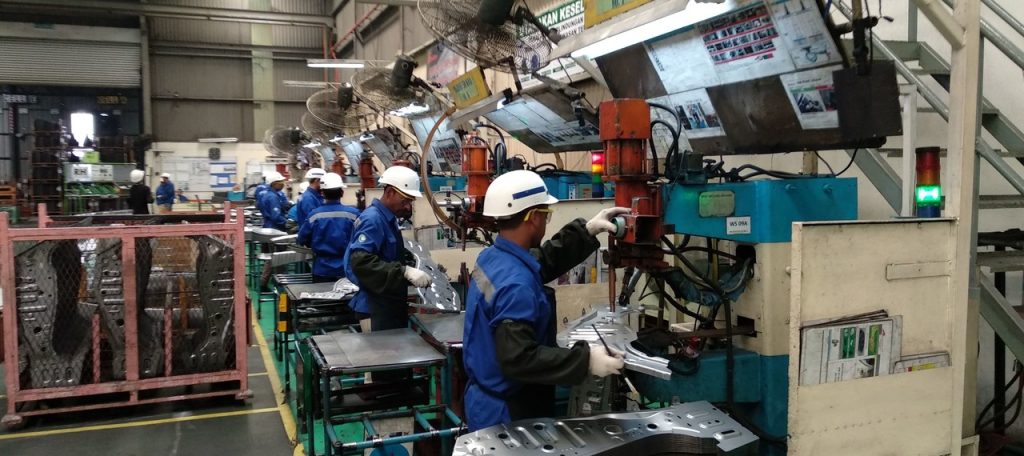
KUALA LUMPUR: Kenanga Investment Bank Bhd believes the domestic manufacturing condition will improve further towards the end of the year, mainly driven by the expected upswing in the technology cycle and China’s gradual recovery following a significant stimulus implemented by the country. The research firm said, nevertheless, the manufacturing condition could experience a sluggish recovery in the near term, as reflected by the latest manufacturing purchasing managers’ index (PMI) reading, which fell to 48.4 in March from 49.5 in February and remained at a contraction level since August 2022. “Our assumption is also premise on the positive growth trajectory supported by higher demand from regional peers and better-than-anticipated performance among advanced economies. “With that said, we project the first quarter (Q1) 2024 gross domestic product (GDP) growth to expand to 3.3 per cent and maintain the overall growth forecast at 4.5-5.0 per cent in 2024,” Kenanga said in a note. Malaysia’s industrial production index (IPI) slowed in February at 3.1 per cent year-on-year (YoY) from January’s 4.3 per cent but beat Kenanga Investment Bank Bhd’s expectations of 1.8 per cent and the consensus of 1.8 per cent. The research firm said that overall, the growth was partially weighed down by a slowdown in the manufacturing sector but mitigated by higher growth in the electricity and mining index and partly due to a lower base effect. On a month-on-month (MoM) basis, the IPI was down to -6.3 per cent from January’s 2.0 per cent, a sharp fall to a ten-month low. This was partly attributable to a seasonal factor amid shorter working months and festive holidays. Kenanga noted that the manufacturing index moderated in February at 1.2 per cent YoY from 3.7 per cent in January. Domestic-oriented manufacturing slowed to 3.8 per cent from 8.0 per cent in January. However, it remained supported by fabricated metal products (8.4 per cent), followed by other non-metallic mineral products (5.1 per cent). Export-oriented manufacturing contracted slightly at -0.1 per cent in February from 1.6 per cent in January due to a sharp decline in the manufacture of vegetable and animal oils and fats (-13.5 per cent), followed by chemicals and chemical products (-2.8 per cent) and electrical equipment (-2.2 per cent). On MoM, domestic manufacturing fell to a ten-month low of -6.3 per cent from 1.8 per cent in January, following a positive turnaround in the preceding month. Mining index growth expanded to 8.1 per cent to a 16-month high from 5.0 per cent in January. This is attributable to a higher natural gas output (11.9 per cent), followed by crude oil and natural gas extraction (8.1 per cent). On MoM, the index fell to an eight-month low of -6.9 per cent from 3.1 per cent recorded in January. The electricity index accelerated to an 18-month high, or the highest since August 2022, of 10.9 per cent from 8.3 per cent recorded in January. On a MoM basis, the index fell to a three-month low of -4.5 per cent from January’s 2.0 per cent following two straight months of expansion. Kenanga retained the forecast of the domestic manufacturing index at 4.6 per cent in 2024, as momentum may pick up in the second half (2H) of 2024.

Investment & Market Trends

AEON Credit Set To Launch Digital Islamic Bank By This Year

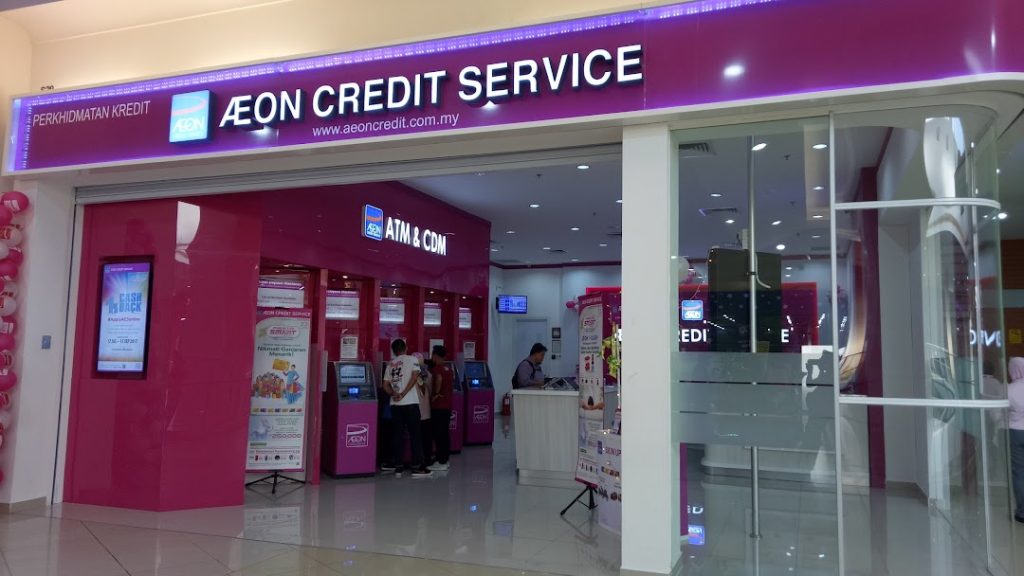
KUALA LUMPUR: AEON Credit Service (M) Bhd plans to roll out the digital Islamic bank in the first half of this year, further expanding the AEON Living Zone to bolster financial inclusivity. The AEON Living Zone, an eco-system built on the AEON Group of Companies in Malaysia, aims to provide comprehensive lifestyle and financial services solutions to the local community while fostering app-based customer acquisition. Additionally, the company will also prioritise completing its digital onboarding process for credit cards and launching a new mobile app to transform customer acquisition and experience in the financial year ending February 25, 2025 (FY25). In a statement, AEON Credit said the company will remain cautious given rising geopolitical tension, inflationary pressures and prevailing volatility in the global financial markets. “AEON Credit will continue to be prudent, placing emphasis on growing quality assets while accessing the inherent credit risks within its financial portfolios,” it said. On earnings, AEON Credit’s transaction and financing volume registered an increase of 15.9 per cent to RM1.85 billion for the fourth quarter (Q4) ended February 29 2024 (FY24) compared to RM1.60 billion recorded in the same quarter in FY23. This was primarily driven by vehicle financing, personal financing and payment business, which were also supported by the company’s strategic festive season marketing campaigns. “The expansion of our acquisition channels, including the set up of physical booth and online channels, contributed further to the increase in transaction and financing volume,” AEON Credit noted in the statement. Profit before tax (PBT) for Q4 FY24 increased by 25.3 per cent to RM162.60 million compared to RM129.81 million in Q4 FY23. Profit after tax (PAT) rose by 24.7 per cent to RM118.92 million compared to RM95.34 million recorded in the preceding year’s corresponding quarter. For the full year, AEON Credit’s revenue grew 16.6 per cent to RM1.91 billion in FY24, compared to RM1.64 billion recorded in FY23. This increase was due to higher transaction and financing volume that grew by 16.9 per cent to RM7.30 billion year-on-year (YoY). Profit before tax (PBT) and profit after tax (PAT) grew to RM565.17 million and RM424.02 million, respectively, translating to earnings per share (EPS) at 81.08 sen and a return on average equity (ROE) of 16.7 per cent. AEON Credit said the strong performance was underpinned by robust revenue growth with solid receivable growth across key products. However, this was partially offset by higher impairment losses on financing receivables that reflected an increase of RM122.08 million and increased other operating expenses in line with higher sales and revenue-generated costs. The board has recommended the payment of a final single-tier dividend of 14 sen per share to be paid on July 25 2024, subject to shareholders’ approval at the upcoming annual general meeting. The total dividend payable for FY24 amounted to RM144.25 million compared to RM126.38 million last year, marking a 14.1 per cent increase with a payout ratio of 34.0 per cent. AEON Credit’s gross financing receivables increased by 12.9 per cent to RM12.23 billion YoY, driven by strong demand across our products. The launch of a pre-assessment and digital onboarding processes that are backed by an AI-based scoring model to improve decision-making accuracy and provide a seamless onboarding experience contributed to this growth. Due to the company’s strong asset recovery efforts and implementation of a risk-based collection strategy, the non-performing loans (NPL) ratio reduced to 2.57 per cent in FY24 compared to 2.89 per cent in FY23.

Investment & Market Trends

SBH Marine Holdings To Expand Aquaculture Farms Operations

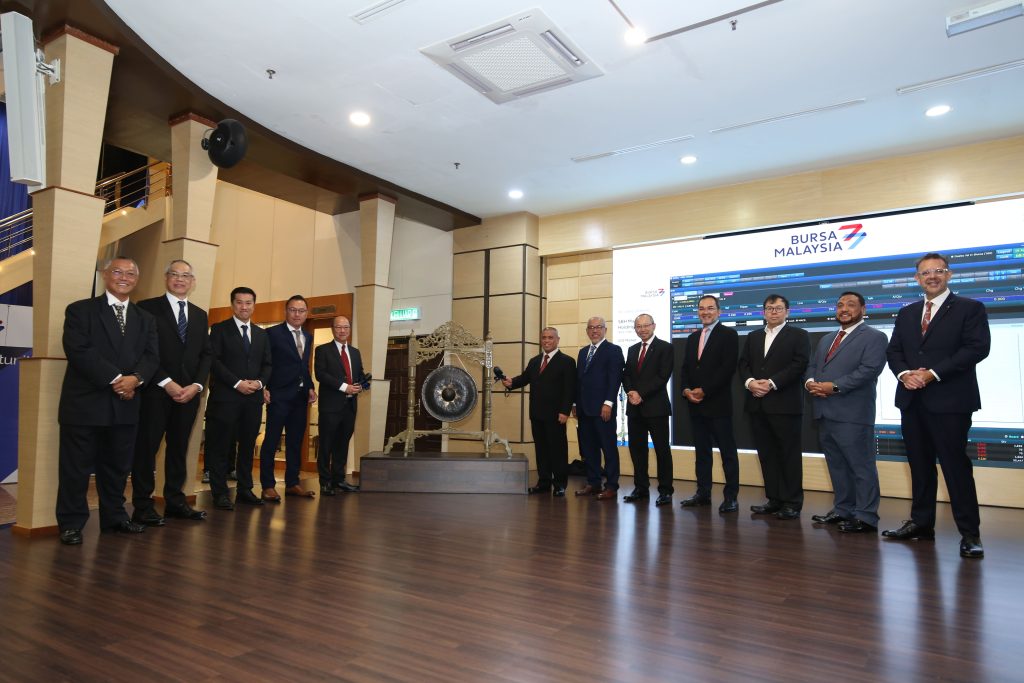
KUALA LUMPUR: Perak-based integrated frozen seafood producer SBH Marine Holdings Bhd (SMH) aims to expand its aquaculture farms further by doubling the shrimp harvest capacity to 1,800 tonnes annually, adding a new 4,000-ton seafood processing plant, and opening its in-house shrimp hatchery centre. Independent non-executive chairman Mohd Salim Dulatti said these measures aim to reduce reliance on external suppliers and cater to the growing demand for sustainable seafood in the future. He said SMH’s facility, which can process up to 4,800 tonnes annually and has a 1,000-tonne cold storage facility, stands as a symbol of growth and capability, and moving forward, the company see immense opportunities for growth and expansion. “For over two decades, SMH has been at the forefront of the frozen seafood market, driven by our unwavering passion for crafting superior seafood products, with a special focus on prawns, shrimp, cuttlefish, squid, and octopus. “Our farms, which span over 440 acres of aquaculture land, are a testament to our dedication to producing fresh, sustainable, and top-quality shrimp. “Presently, our farms, capable of producing up to 900 tonnes of shrimp annually, comply with strict biosecurity and sustainable aquaculture practices, allowing our seafood products to be exported globally, serving dining tables from Europe to the Middle East and throughout Asia,” Mohd Salim said at the listing ceremony in Bursa Malaysia today. SMH debuted as a public listed company on the ACE market of Bursa Malaysia, with shares opened at a price of RM0.25, representing a 15.9 per cent premium over its issue price of RM0.22 per share, with an opening volume of 21.23 million shares. The company raised a total of RM39.6 million through the public issue of 180.0 million shares. More than 70 per cent of this gross amount will be used for business expansion, with 40.4 per cent, or RM16.0 million, channelled for the development of the Selinsing shrimp farm, 16.4 per cent, or RM6.5 million, for the construction of its second seafood processing plant, and another 15.4 per cent, or RM6.1 million, for the purchase of machinery, equipment, and motor vehicles. The remaining proceeds of RM7.0 million and RM4.0 million have been earmarked for working capital and listing expenses, respectively. SMH’s listed shares are classified as Shariah-compliant by the Shariah Advisory Council of the Securities Commission Malaysia. The company’s public issue portion, which was made available to the Malaysian public via balloting, was oversubscribed by a rate of 27.7 times, with a total of over 10,000 applications for over 1.2 billion shares. Besides being the sole underwriter of SMH’s initial public offering (IPO), KAF Investment Bank Bhd is also the principal adviser, sponsor and sole placement agent for this exercise. WYNCORP Advisory Sdn Bhd is the corporate finance adviser of SMH’s IPO.

Scroll to Top

Subscribe
FREE Newsletter