Investment & Market Trends

Energy & Technology, Investment & Market Trends

ARB Collaborated With UTM, Attrelogix To Establish AI Data Analysis Lab

KUALA LUMPUR: Main Market-listed information technology (IT) software and platform provider ARB Bhd has collaborated with Universiti Teknologi Malaysia (UTM) and Attrelogix Networks Sdn Bhd (ANSB) to establish an artificial intelligence (AI) data analysis lab. This initiative is set to revolutionise the field of AI technologies in Malaysia and beyond. The collaboration brings together ARB as the platform partner, UTM as the research partner, and ANSB as the technology partner. The partnership aims to harness the collective expertise and resources of the parties involved to develop an advanced AI data analysis system that will provide actionable insights and facilitate agile decision-making processes. ARB executive director Hong Zi Shen said through this initiative, the collaboration of the AI data analysis lab marks a significant milestone in its journey to advance AI research in AI and technology by collaborating with leading institutions and experts in the field. “We are confident in our ability to drive innovation, inspire learning and shape the future of AI. “Together with our collaboration partners from local universities and technology partners, we look forward to unlocking new possibilities and shaping the future of AI-driven solutions,” he said in a statement. In light of UTM’s establishment of Malaysia’s first AI study centre, this collaborative endeavour has been undertaken to foster a mutually beneficial relationship to materialise the AI study centre’s objectives of establishing an AI data analysis lab. The partnerships will focus on creating an AI system which will contribute to the opportunity to enhance research capabilities in AI, serve as a platform for the development of cutting-edge AI technologies and solutions, and support educational initiatives by providing students and researchers with hands-on experience in AI development, fostering a deeper understanding of AI concepts and techniques. Additionally, ARB will provide scholarships and sponsorships to UTM students engaged in research activities in AI data analysis, nurturing the next generation of AI experts. The partnership aims to develop greater expertise in AI technologies through strategic collaborations and initiatives. ANSB director Kent Choong said this partnership with UTM marks a significant milestone in its journey towards becoming a partner in AI and technology. “By involving the first AI data analysis lab in Malaysia, we are not only advancing the technological landscape but also empowering our students and researchers to push the boundaries of innovation,” he said. UTM Azman Hashim International Business School Dean Professor Dr Rosmini Omar, who represents UTM, shared her excitement about the collaboration. “UTM is committed to being at the forefront of AI education and research. “This collaboration with ARB and ANSB will enable us to leverage our expertise and facilities to make significant strides in AI data analysis and contribute to developing cutting-edge solutions that will benefit industries and society as a whole,” she said. The partnership between ARB, UTM, and ANSB is poised to set new AI research and development standards and drive innovation and excellence in the field.
Investment & Market Trends

Topmix Positive On Sustained Raw Material Prices

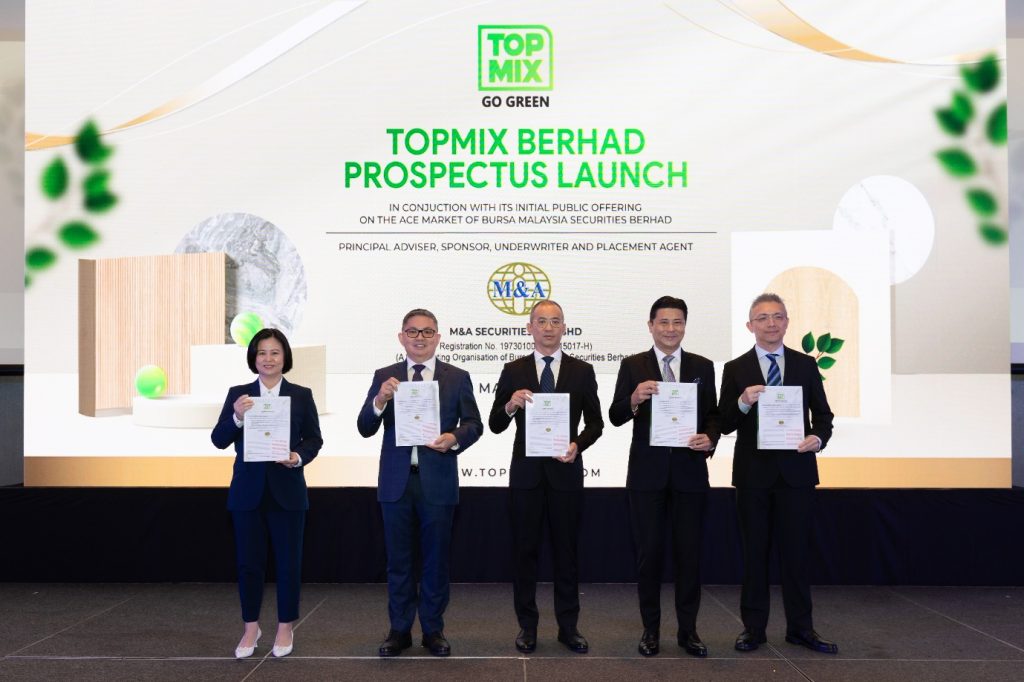
KUALA LUMPUR: ACE-market-bound surface decorative products company Topmix Bhd does not anticipate any hike in raw material prices this year as the company has strategic plans to mitigate any fluctuations. Managing director Teo Quek Siang said the company handles the raw materials for its products through its original equipment manufacturer (OEM), and it will only take finished products for customisation to cater to customers from diverse industries. “We do not anticipate any hike on our raw material prices in the medium term as we take all our products from our OEMs. “We expect prices to sustain for the term as we continue to cater our products to diverse industries in Malaysia,” he told reporters at the company’s prospectus launch. According to the prospectus, Topmix OEM suppliers are Zhejiang Rexin Decorative Material Co Ltd and Melatone Group through their Malaysian subsidiaries. Topmix purchases from Zhejiang Rexin and Melatone Group accounted for 75.52 per cent to 81.81 per cent of its total purchases for the financial years 2020, 2021, 2022 and the financial year ended 2023. Topmix markets a wide range of own-brand surface decorative products, including high-pressure laminate (HPL), compact panels, wall panels, PVC edging, decorative boards and PVC plywood used in various commercial and residential interior surface applications. Its customer base spans local hardware product dealers, stockists, interior designers, contractors of residential and commercial properties, and carpenters. “Demand for surface decorative products is growing in popularity as they are durable, cost-effective, have a long shelf life, and enhance the aesthetic appeal of interior spaces. “Our upcoming initial public offering (IPO) will enable us to accelerate our expansion plans and further strengthen our market presence in the industry,” Teo said. Topmix is raising RM25.6 million under its IPO, with RM11.3 million (44.2 per cent) earmarked for general working capital while RM6.0 million (23.3 per cent) is allocated towards business expansion, marketing and sales, including establishing a new sales office and expanding warehouse capacity. The company also plans to allocate RM5.3 million (20.8 per cent) to expand into melamine-faced chipboard (MFC) product assembly. The remaining RM3.0 million (11.7 per cent) will be allocated to defray listing expenses. According to the prospectus, Topmix plans to expand in Malaysia to capture business opportunities in Penang and tap and market its surface decorative solutions by establishing a sales office, including a showroom and warehouse. Topmix intends to utilise RM3.08 million from the IPO proceeds to fund to setup the sales office in Penang, which will include the cost of setting up the sales office including showroom and warehouse (RM1.90 million), purchase of motor vehicles (RM0.34 million) and office equipment (RM0.07 million) and manpower requirement for 12 months (RM0.77 million). “This allows us to maintain a larger inventory, ensuring timely and cost-efficient order fulfilment for our customers,” Teo said. Topmix expects the demand for surface decorative products will grow due to recovery in the property markets, increased foreign and domestic investments, population growth and urbanisation, higher income levels and supportive government initiatives to encourage home ownership. “To capitalise on this trend, we will intensify our marketing and sales activities and strengthen our Topmix HPL mobile application with features such as augmented reality technology and a 360-degree virtual tour of our showroom to increase brand and product awareness,” Teo said. Topmix’s IPO exercise encompasses a public issuance of 82.7 million new ordinary shares, representing 21.0 per cent of its enlarged share capital, an offer for sale of 19.7 million existing shares, or 5.0 per cent of its enlarged share capital by way of private placement to selected investors. Out of the 82.7 million new shares, 19.7 million shares will be made available to the Malaysian public via balloting, 7.9 million shares to its eligible directors, employees and persons who have contributed to the success of Topmix, while the remaining 55.1 million shares are reserved to selected Bumiputera investors approved by the Ministry of Investment, Trade and Industry (MITI) and selected investors via private placement. Based on the IPO price of RM0.31 per share and its enlarged issued shares of 393.9 million, Topmix’s market capitalisation upon listing is approximately RM122.1 million. On earnings, Topmix’s revenue rose from RM27.5 million in FY20 to RM65.8 million in FY22 ended December 31, 2022, representing a two-year compound annual growth rate (CAGR) of 54.7 per cent. Concurrently, net profit surged from RM2.4 million in FY20 to RM8.5 million in FY22, signifying a two-year CAGR of 88.2 per cent. For FY23, Topmix reported a revenue and net profit of RM51.0 million and RM5.6 million, respectively. HPL products segment accounted for 94.1 per cent of the company’s revenue in FY23, while the remaining 5.9 per cent is attributed to the other surface decorative products segment and kitchen and wardrobe accessories segment. The company will be listed on the ACE Market of Bursa Malaysia on April 23, 2024. M&A Securities is the IPO exercise’s principal adviser, sponsor, underwriter, and placement agent.

Investment & Market Trends

Kelington Initiates Second Plant, Boosting Liquid Carbon Dioxide Production

KUALA LUMPUR: Integrated engineering solutions provider Kelington Group Bhd (KGB), through its 90.71 per cent owned subsidiary Ace Gases Sdn Bhd (AGSB), has commenced liquid carbon dioxide (LCO2) production at the company’s second plant in Kerteh, Terengganu. The plant has a production capacity of 70,000 tonnes per year. The latest commencement brings KGB’s production capacity of LCO2 to 120,000 tonnes per year. At the LCO2 plant, CO2 waste gas sourced from the Petronas gas processing plant is purified and converted into food-grade LCO2, which is used across diverse applications, particularly in the Food and Beverage (F&B) sector for the production of carbonated drinks and the creation of dry ice for food freezing. KGB chief executive officer Ir Raymond Gan said the company first ventured into LCO2 manufacturing with the commencement of the first plant, with a production capacity of 50,000 tonnes per year, in October 2019. “Having reached its full capacity, this expansion enables us to stay ahead of the growing market demand. “Commencement of the second LCO2 plant will position us for further revenue growth from our industrial gas segment as we now have the capacity to meet rising demand effectively,” he said in a statement. He said the prospects of its LCO2 manufacturing business are promising, especially as the closure of petrochemical plants overseas due to environmental concerns has led to a global shortage of LCO2, which is essential in many industrial processes. “Over 70 per cent of KGB’s LCO2 is currently exported, serving markets in Singapore, Australia, New Zealand, Fiji, Indonesia and the Philippines. “The enhanced capacity allows us to further broaden our market footprint, both within these existing territories and into new regions,” Gan said. In addition to the manufacturing facilities, KGB has a robust support infrastructure, including storage tanks and a fleet of vehicles. This facilitates the secure and efficient distribution of LCO2 both domestically and internationally. KGB’s strategic diversification into engineering services and industrial gas manufacturing ensures a balanced portfolio for long-term sustainability. While engineering services offer project-based revenue, the industrial gas segment promises a steady, recurring income, enhancing KGB’s financial resilience and growth potential across various market conditions and sectors. By balancing across both segments, the company can capitalise on opportunities across different market cycles and sectors.

Investment & Market Trends

Asian Stocks Constrained Amid US Rate Timing Doubts

SINGAPORE: Asian equities climbed on Tuesday but could not break this month’s highs as mixed messages from US Federal Reserve policymakers left doubts hanging over the timing of interest rate cuts. The risk of Japan intervening to prevent further falls in the yen put a little pressure on the dollar, however it rose against the yuan on speculation that China may tolerate a weaker currency. MSCI’s broadest index of Asia-Pacific shares outside Japan rose 0.6 per cent, with gains for South Korean chipmakers SK Hynix and Samsung Electronics leading the Kospi up 1.2 per cent. Japan’s rocketing Nikkei was steady, as was the yen at 151.31 per dollar. Overnight, Chicago Fed president Austan Goolsbee said he had pencilled in three rate cuts this year, while Fed governor Lisa Cook urged caution and Atlanta Fed president Raphael Bostic re-iterated Friday remarks trimming his expectations to one cut. The diversity of views throws a few wildcards into the policy outlook while markets wait on the next US inflation indicators due when many markets will be closed for Good Friday. “Comments by FOMC participants suggest to us that four voters – Bostic, Bowman, Mester, and Barkin – see zero, one or two cuts this year,” said Standard Chartered strategist Steve Englander. “We still think (chairman Jerome) Powell has eight votes for easing, but he probably does not want an 8-4 vote on the first cut of the cycle. Rather, he may hope that good inflation outcomes will allow him to swing a couple of votes into the cutting camp in the coming months.” Interest rate futures price about three Fed rate cuts this year and about a three-in-four chance of the first cut in June. US two-year yields, which track short-term interest rate expectations, rose in New York trade overnight then fell 4.5 basis points in the Asia morning to 4.58 per cent. S&P 500 futures rose 0.1 per cent and the cash index closed 0.3 per cent lower overnight. In foreign exchange, Monday’s rhetoric from Japan’s top currency diplomat, Masato Kanda, kept the yen steady as traders weigh the risk of Japan buying heavily. Kanda said the yen’s recent slide was “strange” and “speculative”. The Bank of Japan (BOJ) lifted interest rates last week but the yen has fallen near to three-decade lows on the dollar. “Much like in 2016, when the BOJ cut rates to negative and (dollar/yen) went down, this month’s BOJ decision to exit negative rates is a nothingburger and a red herring for (dollar/yen),” said Spectra Markets President Brent Donnelly. “The pair continues to follow some combination of US yields and Nikkei, with yields the primary driver.” China’s yuan opened steady after a stronger-than-expected fixing of its trading band, but selling pressure soon drove it to the weak side of its 200-day moving average at 7.2165 per dollar. Markets were unsettled by a sharp drop in the yuan on Friday, after months of tight trading, and some speculate China is loosening its grip on the currency to allow it to fall. “Whether this reflects a shift in FX policy remains to be seen but accommodative monetary conditions are necessary in the face of growth headwinds,” said BofA Securities’ strategist Adarsh Sinha. “If (yuan) depreciation sustains and coincides with a weaker credit impulse, Asia FX is vulnerable.” Later on Tuesday, the Reserve Bank of New Zealand’s chief economist is due to speak and US manufacturing, services and consumer confidence figures are due. US core PCE data is due on Friday. Gold and oil prices were broadly steady in commodities trade, with spot gold US$2,169 an ounce and Brent crude futures up 24 cents a barrel to US$86.99. Bitcoin hovered just above US$70,000 after rising sharply on Monday.

Investment & Market Trends

TCS Group Secures RM140.27Mil Bandar Seri Coalfields Retail Park Commercial Complex Contract

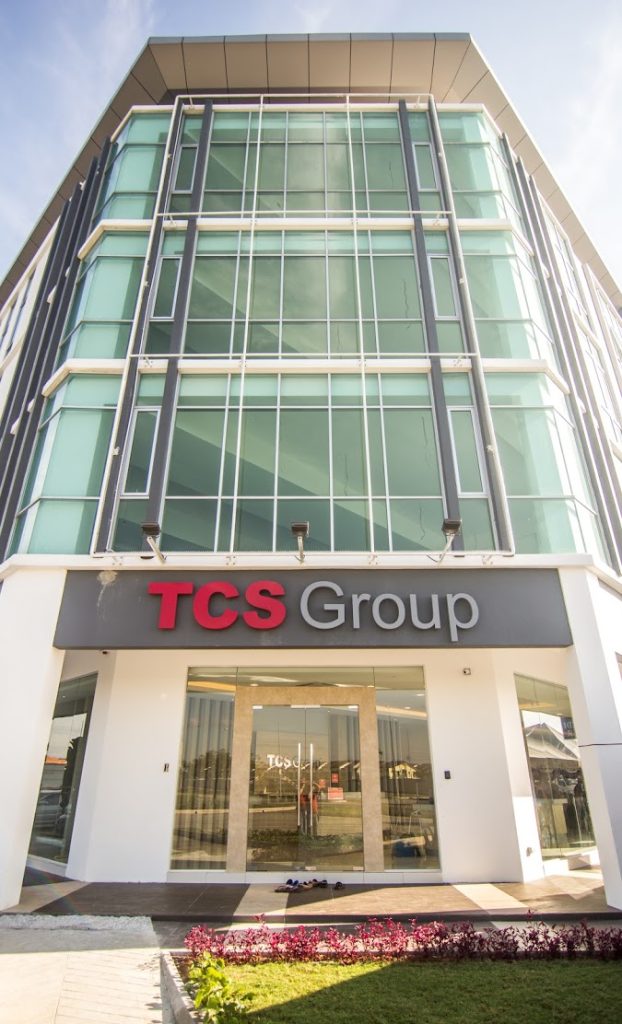
KUALA LUMPUR: Building and infrastructure construction services provider TCS Group Holdings Bhd’s (TGH) wholly-owned subsidiary TCS Construction Sdn Bhd (TCSB) has secured a RM140.27 million contract from KLK Retail Centre Sdn Bhd (KRC), a wholly-owned subsidiary of Kuala Lumpur Kepong Bhd (KLK), for the construction of the main building for the Bandar Seri Coalfields Retail Park commercial complex in Bandar Seri Coalfields, Selangor. TGH managing director Datuk Ir Tee Chai Seng said this contract enhances the company’s outstanding order book and strengthens earnings visibility for the coming financial years. “Looking ahead, the company is positive on the outlook of the construction industry. “This is due to strategic infrastructure, utility projects, and the acceleration of projects under the Twelfth Malaysia Plan, 2021-2025,” he said in a statement. He said TGH sees opportunities and is bidding for residential and commercial buildings, infrastructure projects, and institutional buildings. “At the same time, we are also mindful of the demanding business operating landscape, particularly the elevated raw material costs caused by supply chain disruptions arising from the pandemic’s after effects. “All in all, we continue to be cautiously optimistic on the long-term prospects of the Group premised on the aforementioned factors,” Tee said. The contract is for 19 months, commencing in March 2024, with expected completion by October 2025.

Investment & Market Trends

Prolintas Infra Business Trust Debuts On Bursa Malaysia

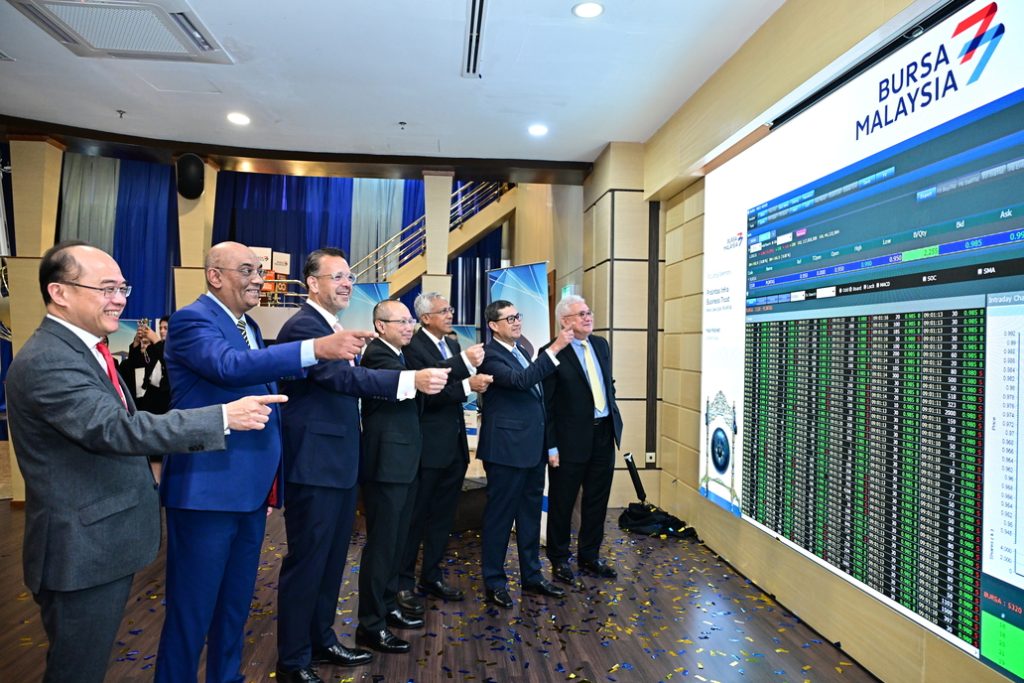
KUALA LUMPUR: Prolintas Infra Business Trust (BT), managed by Prolintas Managers Sdn Bhd (PMSB), made its first listed business trust in Malaysia on the main market of Bursa Malaysia. Based on Prolintas Infra BT’s total issued units of 1.1 billion and the initial public offering (IPO) price of 95 sen per unit, the stock has a market capitalisation of approximately RM1.05 billion. The trading stock of Prolintas Infra BT was up 4.2 per cent and achieved a mid-intraday high of 99 sen, with more than 34.8 million units traded during the first half of the trading session. PMSB chairman Datuk Ikmal Hijaz Hashim said that after years of steadfast dedication, resolute perseverance, and relentless commitment, the company has reached this crucial and remarkable occasion to chart a historic milestone in the highway infrastructure industry. Prolintas Infra BT encompasses four mature and highly resilient highways, including Ampang-Kuala Lumpur Elevated Highway (AKLEH), Guthrie Corridor Expressway (GCE), Lebuhraya Kemuning-Shah Alam (LKSA), and Sistem Lingkaran Lebuhraya Kajang (SILK). These highways generate significant cashflows in toll revenue and have an average remaining concession period of approximately 32 years. These highways are strategically situated across Klang Valley and play a crucial role by providing an alternative route to the highly congested public roads and enhancing the connectivity of urbanised townships. These highways serve almost half a million road users daily, reflecting their importance in promoting the country’s economic and social development. In 2022, the combined traffic volume for the highways under Prolintas Infra BT was approximately 158.2 million, up 44.8 per cent from 109.3 million in 2021. This is attributed to a 15.7 per cent market share by total traffic volume in 2021 for the urban highways in the Klang Valley, excluding the Setiawangsa-Pantai Expressway and the New Klang Valley Expressway. According to PMSB’s distribution policy, the trustee-manager aims to pay out at least 90 per cent of the trust’s distributable income to its unitholders on an annual basis. Specifically, it is targeting to distribute a total of RM70 million for the financial year ending December 31, 2024. “We’re confident that the IPO will enable Prolintas to embark on future strategic infrastructure initiatives. “We look forward to continuing our journey to create a safe, convenient and enriching user experience among all stakeholders,” Ikmal said. AmInvestment Bank Bhd is the IPO’s principal adviser, lead bookrunner, joint bookrunner, managing underwriter and joint underwriter. CIMB Investment Bank Bhd and Maybank Investment Bank Bhd are joint bookrunners and joint underwriters, while RHB Investment Bank Bhd is a joint underwriter for the IPO.

Investment & Market Trends

Bursa Malaysia Celebrates Inaugural Listing of Business Trust

KUALA LUMPUR: Bursa Malaysia Bhd officially welcomed the listing of Business Trusts (BT), an alternative listing structure that facilitates capital raising by listed entities seeking an initial public offering (IPO) on the exchange. This was demonstrated by the debut listing of Prolintas Infra BT on Monday. It was the first BT listed on the exchange’s main market and a Shariah-compliant BT. Introduced under the Securities Commission Malaysia’s (SC) Business Trusts Guidelines (BT Guidelines) 2012, a BT is a hybrid investment structure that blends features of an investment trust and a company. Bursa Malaysia chief executive officer Datuk Muhamad Umar Swift said BTs provide a novel listing structure to raise capital that can facilitate economic development by making infrastructure-type projects more accessible to a broader range of investors, fostering growth and innovation across more capital-intensive sectors. “The listing of Prolintas Business Trust on our exchange exemplifies the successful implementation of the framework by the SC, and we look forward to more BTs following suit,” he said in a statement. Essentially, BTs operate as a unit trust scheme established by a trust deed, wherein a trustee-manager oversees the operation and management of the scheme’s assets. Unitholders in a BT can share in the profits or income generated by these assets through distributions declared by the trustee-manager. BTs undertaking an IPO are destined for the main market, which requires SC’s approval before they are admitted to the exchange for listing. A significant advantage of a BT is that dividend distributions a BT can be made to investors from its operating cash flow without being constrained by conventional accounting profits. Therefore, it is anticipated that a BT will be more attractive for business assets that are capital-intensive but have stable cash flows, such as those in the infrastructure, telecommunications, and energy sectors, supporting key national growth policies and roadmaps. “At Bursa Malaysia, we continue to undertake efforts to make listing on the exchange more appealing. One way to accomplish this is to diversify or expand into new asset classes, which opens up more opportunities. “The introduction of the BT model expands the breadth of Malaysia’s capital market and demonstrates capital market regulators’ earnestness in providing facilitative frameworks and solutions. “This development will augment the ability of the exchange to play its role in facilitating growth plans of listed issuers to benefit our economy at large. “It is also our hope that this will, in turn, enhance the overall competitiveness of the exchange,” Muhamad Umar said.

Investment & Market Trends

KPJ Healthcare Is Set To Post Positive Year-On-Year Earnings Growth, Says RHB Research

KUALA LUMPUR: RHB Research expect KPJ Healthcare Bhd to continue posting positive year-on-year (YoY) earnings growth, underpinned by robust patient traffic growth, improving operating efficiency of hospitals under gestation, and pick-up in foreign patient visits. “Notwithstanding the above, we gather that the company is set to see a better patient-case mix in the first quarter (Q1) 2024 – this could potentially lift revenue intensity higher, in our view,” the bank-backed research firm said in a recent note. The research firm said additionally, the health ministry’s latest move to exempt the post-basic qualification exemption for foreign nurses to work here from October 2023 till September 2024 could potentially address the country’s nursing shortage issue. “We believe a private hospital player like KPJ Healthcare could capitalise on such opportunities to meet its nursing requirements,” RHB Research noted. In addition, RHB Research opined that visa-free entry for foreign tourists, particularly from China and India, is set to have a positive spillover effect on the healthcare tourism (HT) sector here, as the two nations contributed 5 per cent and 3 per cent to Malaysia’s HT revenue, respectively. KPJ Healthcare’s key emphasis in prioritising the strengthening of its presence in Indonesia by setting up representative offices and recruiting agents that can help lead Indonesian patients along their HT route. KPJ Healthcare has set an ambitious RHB Research noted that the target is to achieve 18-20 per cent market share by 2024-2025 from the current 6 per cent. On earnings, RHB Research expect Q1 FY24 net profit to come within an RM67-RM72 million range, representing 26-36 per cent YoY growth, predicated on strategic upscaling initiatives in driving the growth of revenue intensity, improvements in operating efficiency from hospitals under gestation, and pick-up in HT. Based on its channel checks, the research firm also noted that five hospitals under gestation are set to post narrower earnings before interest, taxes, depreciation, and amortization (EBITDA) losses in Q1 FY24, underpinned by gradual improvements in operating efficiency. Notably, Damansara Specialist Hospital 2’s (DSH2) bed occupancy rate in January 2024 was guided to increase to 50 per cent on top of healthy growth in average monthly revenue. Note that DSH2 recently boosted its operating beds to 100. It looks to add 30-50 beds by the end of 2024. “We keep our earnings estimates unchanged but lower our required returns assumption to 9.2 per cent from 9.6 per cent. “Maintain Buy with a higher target price of RM2.12 as we think KPJ Healthcare’s domestic-centric focus should offer it a valuation premium over IHH Healthcare Bhd in the near term. “Key downside risks are lower-than-expected patient visits and higher-than-expected operating costs,” RHB Research said.

Investment & Market Trends

Local Firm Eyes Global Expansion In Booming Alternative Protein Industry

KUALA LUMPUR: Domestic alternative protein firm Ultimeat is eyeing the United States (US), China, Hong Kong, Taiwan, and Indonesian markets. Ultimeat founder and chief executive officer Edwin Lee said there are about seven alternative plant-protein-producing companies locally. The company see strong demand in Malaysia and globally for the alternative protein industry. According to Ernst & Young, the sustainable, alternative protein industry in Malaysia is projected to reach US$17.4 billion in 2027. Another data and analytics company GlobalData, reports that the local meat substitutes market is set to expand at a value compounded annual growth rate (CAGR) of 7.4 per cent throughout 2023 to 2027. Protein products like tofu, obtained from soybeans, registered a global market size of US$2.75 billion in 2022 and expanded at a CAGR of 15.16 per cent to reach US$6.43 billion from the 2023-2030 forecast period. Industry stakeholders have noted a surge in demand for newer alternative protein products in the global and local markets in recent decades. Strikingly evident today are newer varieties of plant-based alternatives made from quinoa and other sources displayed on supermarket shelves. Plant-based nuggets, burgers, and minced meat are the common consumables visible in the cold section as they are readily accessible and affordable to the community. Noting this significant demand for plant-based products, United States entrepreneur Alfred C Cheung, a certified food scientist, has set his foot on this rosy trail with his founder and chief executive officer Edwin Lee. Having set up their own company called Ultimeat, both men are bent on riding the gravy train in this area of food production. Speaking to The Exchange Asia recently, Cheung said that he is aware that the average Malaysian supermarket sells a range of varied plant-based proteins like soy-based tofu or wheat-based seitan, and many of these products are great choices for local consumers. According to him, plant-based protein has a growing middle-class and flexitarian niche market, with consumers always looking for delicious alternative protein sources. “It is here that we saw the opportunity to embark on this ultra-modern food production venture,” said Cheung. Ultimeat, established in 2021, is up and running, rolling out plant-based proteins from soy. The company is transitioning to mycoprotein, derived from fungi, as its main ingredient. “Yes, our feedstock fodder is fungi. We intend to introduce the wonderful world of ‘mycoprotein’, a revolutionary fungi-derived product that is, though a little underrated, economically viable, and an eco-friendly alternative to traditional animal proteins,” he said. Asked if local consumers would take to this plant-based food derived from fungi, he said Malaysians love trying new and interesting foods, and there are still many lesser-known and potentially more suitable alternative proteins out there that can be harnessed to provide protein food choices to the growing local market. “Not only do these products have a lower environmental impact than animal agriculture, but they also make up an essential part of vegetarian and vegan diets, with the necessary amino acids for building and repairing tissues in the body,” said Cheung. According to him, mycoprotein is created through a process known as biomass fermentation. The process uses the high protein content and rapid growth of microorganisms—in this case, fungi—to efficiently make large amounts of protein-rich food. Since fermentation is a natural process, this has the added benefit of being much cheaper than other methods of creating alternative protein products. He said the extrusion method uses moisture, high heat, and mechanical energy to produce meat substitutes in seconds. While the extrusion process is quicker, it is significantly more expensive. In contrast, fermentation uses less energy and utilises carbon and nitrogen sources, which, as a bonus, is better for the environment. According to Edwin Lee, there are about seven alternative plant-protein-producing companies locally. When suggested that the playing field could be crowded with seven players competing for the market share, Lee said Ultimeat is committed to operating alongside the environment, social, and governance practices, offering plant-based food and its soon-to-be-launched mycoprotein alternatives, aiming to reduce environmental impact without sacrificing nutrition and taste. “By leveraging efficient lab-based production to lower carbon footprints and ensuring its products are both healthy and flavourful, we are showcasing our commitment to sustainability, affordability, and quality. These salient factors position Ultimeat products as the preferred choice,” he said. Lee also disclosed that Ultimeat is eyeing the opportunity to reach further horizons by exporting its products to the US, China, Hong Kong, Taiwan, and Indonesia as early as this year. “Our products are supplied to retailers, supermarkets, food service and hotel industries. We are also developing newer products such as meal replacement shakes and ready-to-drink products to complement our existing range of products. “Our base fodder is mycoprotein, which offers an umami flavour, meat-like texture, and a slew of nutritional alignment with our mission to provide healthy, sustainable food options without compromising taste or environmental integrity. “We are committed to pioneering mycoprotein as a key player in the future of our food,” he added. Ultimeat, which started operations with an initial investment capital of US$2.20 million, has a total staff strength of 35 employees. When asked to comment on the expected return on investments (ROI), Lee said the company’s current stance is to shift the focus from traditional ROI metrics to a broader impact on the food system. “Our investment goes beyond financial gains. We aim to improve sustainability and nutrition within the global food industry significantly. “We want to contribute to a more sustainable, healthy, and equitable food future that aligns with the United Nations Sustainable Development Goals,” he said.

Investment & Market Trends

Strong Demand For Dollar Bolstered DXY, Ringgit Remains Weak, Says Kenanga

KUALA LUMPUR: The strong demand for the greenback due to uncertainty about the Fed’s outlook has bolstered the US Dollar Index (DXY) within a 103.4 to 104.0 range, keeping the ringgit weak above RM4.70 per dollar. Kenanga Investment Bank Bhd said that following the Federal Open Committee Meeting (FOMC) meeting, the ringgit recovered some losses, which was helped by Fed chairman Powell’s remarks interpreted as dovish. The research firm said despite the pivotal decision by the Bank of Japan (BoJ) to end its negative interest rate policy and stronger-than-expected China’s industrial production index (IPI) and retail sales data, the ringgit surprisingly did not strengthen. “Also, disappointing domestic export growth has further weighed on the currency,” Kenanga said in a report. Meanwhile, the unexpected 25 bps rate cut by the Swiss National Bank on Thursday has significantly weakened the Swiss franc (CHF). “This, combined with the Bank of England’s dovish shift and robust US manufacturing purchasing managers’ index (PMI) data, has propelled the DXY higher, weakening the ringgit,” Kenanga said. The research firm said next week’s lack of catalysts may tether the ringgit’s movement against the dollar. However, anticipated fund inflows into emerging markets, particularly in Malaysia, due to speculation of a Fed pivot in June and the nation’s relative stability might aid the ringgit’s recovery. Additionally, continuous government and Bank Negara Malaysia (BNM) efforts to boost the ringgit’s value through short- and long-term policy reforms could support its stability. Kenanga said the market attention will be on the US core personal consumption expenditures (PCE) data next Friday.

Scroll to Top

Subscribe
FREE Newsletter