Investment & Market Trends

Investment & Market Trends

US Trade Talks Spark Potential Rise In M&A Interest In Malaysian Banks

KUALA LUMPUR, Ongoing trade negotiations between the United States and Southeast Asia are boosting prospects for renewed foreign interest in Malaysia’s banking sector, with industry players eyeing potential merger and acquisition (M&A) activity. Analysts say Malaysia’s role as a regional financial gateway, coupled with the return of US investment delegations, has reignited long-term investor attention. This comes as local banks look to strengthen their digital capabilities and expand their regional reach. “Malaysia’s banking sector is on the radar of US investors, especially in light of growing regional consolidation,” said a senior analyst at a local investment bank. “If trade discussions progress smoothly, we could see foreign-driven M&A deals or strategic partnerships emerge.” Several trends are supporting this outlook: Supportive Regulatory Framework: Bank Negara Malaysia (BNM) has become more open to foreign participation, as long as proposals align with national goals and maintain financial stability. Robust Sector Performance: Malaysian banks remain financially strong, showing steady profits, healthy capital reserves, and low non-performing loan levels despite global uncertainties. Focus on Digital Transformation: Local banks are actively seeking fintech alliances — an area of strong appeal for US tech-driven investors looking to enter Southeast Asia. While no specific deals have been announced, speculation surrounds mid-sized banks as likely candidates for either consolidation or foreign partnerships, based on historical patterns of strategic acquisitions in the region. Experts caution that any developments will depend on regulatory clearance, political stability, and alignment with Malaysia’s financial roadmap. “With US trade envoys now engaging with policymakers and banking leaders, we expect more exploratory talks in areas like digital finance and green investments,” the analyst added. “Still, any real movement will take time and mutual commitment.” As ASEAN integration deepens, Malaysia could further cement its role as a financial hub — if it successfully navigates trade dynamics, regional competition, and evolving financial regulations.

Investment & Market Trends

Egypt, China’s Asia-Potash Sign Major Phosphate Partnership Deal

Egypt’s Mineral Resources and Mining Industries Authority (MRMIA) has signed a Memorandum of Understanding (MoU) with China’s Asia-Potash International Investment (Guangzhou) Co., Ltd. to enhance collaboration in phosphate exploration and development. The agreement aims to unlock greater value from Egypt’s phosphate reserves. The signing ceremony was witnessed by Karim Badawi, Egypt’s Minister of Petroleum and Mineral Resources. MRMIA Chairman Yasser Ramadan and Asia-Potash Vice President Zeng Yuy signed the MoU. According to the ministry, the agreement aligns with its broader strategy to grow the mining sector’s contribution to GDP from under 1% to between 5% and 6%. The approach includes drawing in major investments, expanding opportunities, and establishing an integrated system to increase the added value of mineral resources. Badawi stressed the importance of taking swift, concrete steps to launch the initiative, along with regular progress reviews to ensure timelines are met. The MoU also includes plans to collaborate on scientific research into phosphate ore reserves, enrichment and processing techniques, and the potential development of a modern phosphate fertilizer plant, in line with Egyptian regulations. This agreement builds on earlier discussions held in January 2025, when Hossam Heiba, CEO of Egypt’s General Authority for Investment and Free Zones, met with Zeng Yuy to explore the creation of a $1.6 billion industrial complex for phosphate fertilizer production in Egypt. The project’s first phase targets the extraction of 2 million tonnes of phosphate annually, all of which would be processed into fertilizer for export to regional markets. Asia-Potash, a publicly listed Chinese firm, operates across sectors including potash mining, fertilizer production, grain trade, international shipping, and logistics.

Investment & Market Trends

MRT3 Approval Seen as a Boost for Construction Sector

PETALING JAYA, The recent approval of the Mass Rapid Transit 3 (MRT3) Circle Line has boosted confidence in the construction industry, offering greater clarity on the project’s progress, according to analysts. RHB Research highlighted that the main winners from MRT3 are likely to be major contractors and their subcontractors. Based on past MRT1 and MRT2 involvement, companies such as Gamuda Bhd, Sunway Construction Group Bhd, IJM Corp Bhd, MRCB, WCT Holdings Bhd, Gadang Holdings Bhd, and Mudajaya Corp are seen as likely lead contractors. Meanwhile, firms like Econpile Holdings Bhd, Gabungan AQRS Bhd, Kimlun Corp Bhd, and TRC Synergy Bhd are expected to secure subcontracting roles. Transport Minister Anthony Loke Transport Minister Anthony Loke recently approved the MRT3 project, following a public review conducted from September to December last year. MRT Corp received over 45,000 written submissions, with 93.3% of the feedback in support of the project. As a result of public input, adjustments were made to the placement of stations and viaducts, and the overall land acquisition footprint was reduced from 1,012 to 690 lots. The final plan includes 32 stations—22 elevated, seven underground, and three provisional—spanning 51km (39km elevated and 12km underground). RHB Research expects more details to emerge during either the tabling of the 13th Malaysia Plan on July 31 or Budget 2026 on October 10, including updates on project funding, revised costs, and possible re-tendering. In Budget 2023, the government signaled intentions to reduce MRT3’s cost below RM45 billion, compared to the earlier RM68 billion estimate in 2018. Top stock picks from RHB in light of the project include Gamuda (TP: RM5.86), Sunway Construction (TP: RM6.80), and Binastra Corp Bhd (TP: RM2.64). MBSB Research anticipates a re-tender exercise by mid-2026, with contracts expected to be awarded between late 2026 and mid-2027. MRT Corp’s earlier tenders have lapsed, suggesting new alignment adjustments and land acquisition changes will be incorporated in the new tender process. While the final railway scheme approval came slightly later than expected (initially targeted for 4QFY24), MBSB sees it as a significant step forward. MRT Corp aims to complete land acquisition by end-2026, enabling construction to commence soon after. Landowners may start receiving eviction notices by Q1 2026, with a six-month window to vacate. MBSB Research remains positive on the construction outlook, identifying Gamuda and MMC Corp Bhd as leading contenders for the largest MRT3 package due to their extensive MRT experience. Other likely bidders include YTL Corp (TP: RM2.84), IJM Corp (TP: RM3.74), MRCB (TP: RM0.56), and Sunway Construction (TP: RM6.44). Malayan Cement Bhd (TP: RM7.49) is also expected to benefit directly from the project.

Investment & Market Trends

Hajiji: Sabah’s Blue Economy Set to Generate RM3.25 Billion Annually from Marine Resources

KOTA KINABALU, Sabah’s Blue Economy is expected to produce 491,000 tonnes of marine products like fish and prawns each year, valued at RM3.25 billion, said Chief Minister Datuk Seri Hajiji Noor. Chief Minister Datuk Seri Hajiji Noor In a speech delivered by State Finance Minister Datuk Seri Masidi Manjun at the International Business Review (IBR) Asean Awards on Saturday (July 19), Hajiji said marine harvesting is just one of 14 areas under the Blue Economy, which also includes ocean renewable energy, blue carbon, tourism, maritime transport, and marine biotechnology. State Finance Minister Datuk Seri Masidi Manjun “There’s much more to the Blue Economy than just deep-sea fishing,” he noted. Hajiji highlighted Ocean Thermal Energy Conversion (OTEC) as a major opportunity. OTEC plants are planned along 500km of Sabah’s coast and are expected to eventually produce 20,000MW of clean energy — a regional gamechanger, he said. The Blue Economy Industrial Park has been established in Kudat, along with two other new parks in Kota Belud and Beaufort, to attract investments. Since September 2020, Sabah has secured RM17.41 billion in approved foreign and domestic investments from 73 companies in the manufacturing sector. Of these, 52 companies have already begun operations with a total investment of RM7.8 billion, creating over 3,600 jobs. From 2022 to 2024, Sabah received additional investment proposals worth RM42.3 billion, which are expected to create nearly 33,000 new jobs. Hajiji also mentioned a landmark agreement with Petronas, giving Sabah greater participation in the oil and gas sector, including stakes in the Samarang oil and gas field, Samur, and a major floating LNG project in Sipitang. To support rising investments, Sabah has launched the Energy Roadmap and Master Plan 2040, aiming to generate 700MW of energy in the near term. The government has also allocated RM679.85 million in 2024 to address urgent water shortages and plans to complete the Ulu Padas hydropower project for long-term supply. At the IBR Asean Awards, nine organisations were recognised for excellence across various sectors. Sabah was named Malaysia’s “Most Outstanding State” for 2024, while Negeri Sembilan was awarded “Most Progressive State.”

Investment & Market Trends

Gulf Air Places Order for 12 Boeing 787 Dreamliners

SAN FRANCISCO – Bahrain’s national carrier, Gulf Air, has signed a multi-billion-dollar agreement with Boeing to purchase 12 787 Dreamliners, with an option for six additional aircraft, as part of its ongoing expansion and fleet modernisation efforts. Once finalised, the order will increase Gulf Air’s confirmed 787 fleet to 14 jets and is expected to support 30,000 jobs across the United States, according to a joint statement by the two companies. Bahrain’s state news agency reported the value of the agreement at US$4.6 billion for 18 aircraft, while the US Commerce Department estimated the deal at around US$7 billion. Gulf Air Group chairman Khalid Taqi said the purchase represents a “transformational step” in the airline’s growth strategy, helping expand its international reach and align with its sustainability goals. He added that the Boeing 787 has been instrumental in the airline’s long-haul operations, citing its efficiency and passenger comfort. This order comes as Boeing reported its strongest second-quarter commercial aircraft deliveries since 2018, with 150 aircraft handed over. Despite recent aviation setbacks, including a June crash involving a Boeing 787 operated by Air India, the US aviation giant continues to secure major deals. The Air India incident remains under investigation, and no action has been requested from Boeing at this stage. The Gulf Air order follows broader momentum for Boeing, including a recent agreement involving the sale of 50 Boeing aircraft to Indonesia as part of a trade pact announced by US President Donald Trump.

Investment & Market Trends

Citi Plans to Increase Investment Banking Staff in Japan by Up to 15%

HONG KONG – Citigroup plans to grow its investment banking workforce in Japan by 10% to 15% over the next year and make additional hires in Australia, as part of its broader strategy to scale up in the Asia Pacific, said its regional investment banking head. The expansion comes on the back of surging interest in cross-border mergers and acquisitions (M&A) in Japan, where Citi’s investment banking fees have jumped 140% to US$92 million as of July 10, compared to the same period last year, according to Dealogic data. “We’re making significant investments in strengthening our regional investment banking team,” said Jan Metzger, Citi’s Asia Pacific head of investment banking. “We’re targeting high-growth markets and aiming to outpace that growth.” Citi did not break down headcount plans by market, but Metzger noted that Japan will be a key focus due to ongoing corporate governance reforms, regulatory encouragement for companies to enhance market value, and a robust pipeline of advanced tech capabilities. The bank recently advised Nippon Steel on its US$14.9 billion acquisition of U.S. Steel, a deal Metzger says has sparked increased client interest. “Our phones have been ringing non-stop from companies looking to navigate complex geopolitical transactions,” he added. Citi has already strengthened its Asia team with senior hires this year, including Akira Kiyota from Nomura in Japan and Philippe Perzi, a former Goldman Sachs banker, in Australia. Globally, Citi saw a 13% rise in investment banking fees in the second quarter of 2025. Deal Momentum Builds in Japan and Australia Japan is leading Asia’s M&A recovery this year, recording US$232 billion in deals in the first half of 2025. Bankers expect the momentum to continue, driven by take-private deals, outbound M&A, and growing private equity activity. In Australia, an uptick in international deal activity is giving global banks an advantage over boutique advisory firms. Metzger said Citi’s full-service banking offering enhances its competitiveness in the Australian market. Another growth area for Citi in Asia is convertible bond issuance. The bank recently helped Alibaba raise HK$12 billion (US$1.5 billion) through an exchangeable bond deal. Investor demand for convertible bonds has risen, particularly from Chinese tech firms, as they provide downside protection amid geopolitical uncertainty, Metzger noted.

Investment & Market Trends

Ambani’s Jio Partners with Allianz to Launch Reinsurance Venture in India

Jio Financial Services Ltd, part of Mukesh Ambani’s business empire, has entered into a 50:50 joint venture with global insurer Allianz SE to establish a reinsurance business in India. The partnership combines Jio’s strong digital presence in India with Allianz’s global expertise in underwriting and reinsurance, the companies said in a joint statement on Friday. In addition, both parties signed a non-binding agreement to explore setting up general and life insurance businesses in the country, also under an equal ownership model. This move marks another step in Ambani’s push into financial services. Jio Financial already operates in digital banking and recently announced an asset management joint venture with BlackRock Inc. The new reinsurance venture will begin operations once it obtains the necessary regulatory approvals. The announcement comes after Allianz exited its earlier partnerships with Bajaj Finserv Ltd in India. With insurance penetration in India still relatively low at around 3.7% of GDP — compared to other Asian markets like Japan and South Korea — the new venture aims to tap into a growing market with significant potential.

Investment & Market Trends

Apollo Secures Bid for Singapore’s US$1 Billion Private Credit Fund

SINGAPORE, Apollo Global Management has been awarded the mandate to manage Singapore’s S$1 billion (US$778.3 million) Private Credit Growth Fund, which targets high-growth local enterprises, according to information published on a government procurement portal. Launched in March by the Ministry of Trade and Industry (MTI) and Enterprise Singapore, the fund aims to provide non-dilutive and customised financing to support the expansion of local enterprises with strong growth potential. Further details about the fund are expected to be announced in the third quarter of this year. First introduced during the national Budget 2024 speech, the Private Credit Growth Fund forms part of Singapore’s broader efforts to strengthen its position in the US$1.7 trillion global private debt market. The fund seeks to address financing gaps for local businesses while fostering a more vibrant and diversified capital market landscape. The move complements other private market initiatives, including the Monetary Authority of Singapore’s (MAS) consultation in March on a proposed regulatory framework aimed at opening private market access to retail investors—subject to adequate investor protection measures. In parallel, Temasek Holdings, Singapore’s sovereign wealth fund, has also deepened its involvement in the asset class. In December, it launched a private credit platform with an initial portfolio of approximately US$10 billion in direct investments and credit funds. Additionally, Temasek’s subsidiary SeaTown Holdings International raised US$1.3 billion last year for its second private credit fund. The appointment of Apollo—renowned for its expertise in alternative investments—signals a major step in advancing Singapore’s ambitions to become a regional hub for private credit and alternative financing.

Investment & Market Trends

CIMB and Pharmaniaga Forge Strategic Alliance to Strengthen Financial Flexibility for Healthcare SMEs

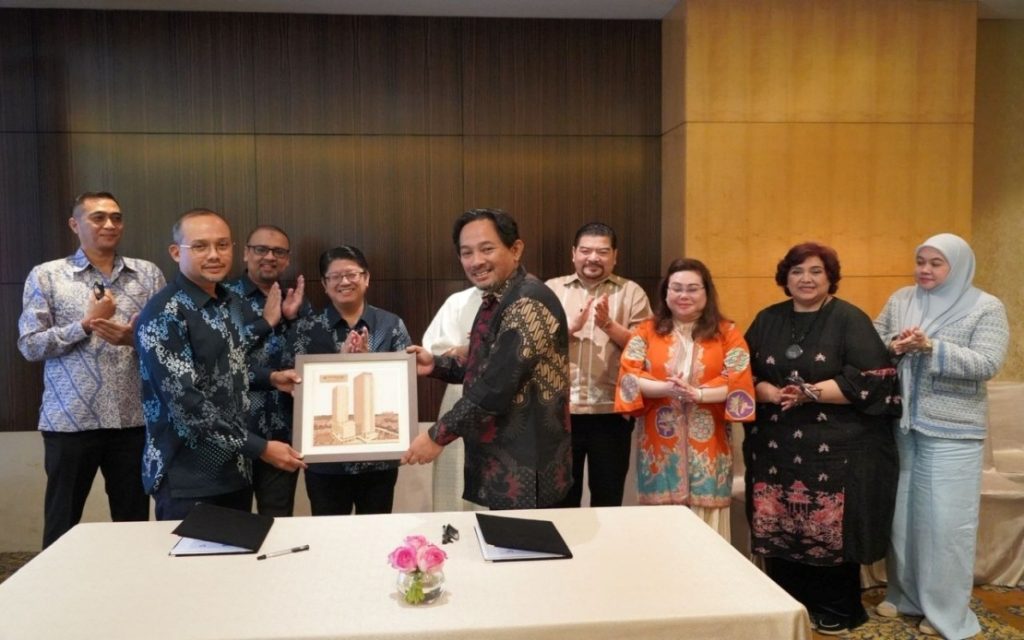
KUALA LUMPUR, CIMB Bank Berhad has entered into a strategic collaboration with Pharmaniaga Logistics Sdn Bhd, a wholly owned subsidiary of Pharmaniaga Berhad, to enhance supply chain financing and improve payment flexibility for small and medium enterprises (SMEs) in the healthcare industry. This partnership is set to benefit clinics, pharmacies, and medical suppliers by offering greater financial agility, CIMB announced in a statement today. (From left) Gurdip Singh Sidhu, Chief Executive Officer, CIMB Malaysia and CIMB Bank Berhad, Lawrence Loh, Co-Chief Executive Officer, Group Commercial and Transaction Banking, CIMB Group, Ahmad Shahredzuan Mohd Shariff, Chief Operating Officer, Pharmaniaga Bernad and Zulkil Jatar, Managing Director, Pharmaniaga Berhad at the Mou signing to enhance supply chain financing and payment flexibility for healthcare SMEs, including clinics, pharmacies and medical buyers. Under the collaboration, CIMB and Pharmaniaga will offer flexible payment solutions to downstream buyers—including private clinics and independent pharmacies—through the CIMB SME BusinessCard. Cardholders will enjoy extended credit terms of up to 50 days on medical supply purchases, alongside an unlimited 0.5% cashback on all transactions made with Pharmaniaga. These benefits aim to optimise working capital and improve cash flow for healthcare providers. Lawrence Loh, Co-CEO of Group Commercial and Transaction Banking at CIMB Group, said the initiative is designed to ease the financial burden faced by healthcare SMEs while enabling them to deliver better patient care. “Through extended credit terms and early settlement incentives, we are supporting clinics, pharmacies, and other healthcare buyers in managing operational costs more effectively,” he said. “This collaboration reflects our commitment to expanding our healthcare SME portfolio by working closely with ecosystem partners and providing tailored, digital-first financing solutions.” Pharmaniaga Managing Director Zulkifli Jafar echoed these sentiments, emphasising the company’s dedication to supporting its partners with practical financial tools. “This partnership underscores our ongoing commitment to strengthening our supply chain ecosystem,” he said. “By offering enhanced payment flexibility and customised financing, we aim to empower our partners to grow sustainably while ensuring consistent access to essential pharmaceutical products.” The collaboration marks a significant step toward improving financial resilience and operational efficiency within Malaysia’s healthcare SME sector.

Investment & Market Trends

Japanese Giant Mitsubishi Invests US$988 Million to Expand Global Salmon Production

Japanese trading giant Mitsubishi has announced a significant expansion of its salmon farming portfolio through the acquisition of businesses in Norway and Canada, underlining its commitment to strengthening its foothold in the global food sector with an emphasis on protein. Amid volatile fossil fuel markets and the pursuit of stable revenue streams, Mitsubishi and other Japanese conglomerates have increasingly diversified into the food industry, anticipating sustained demand driven by global population growth. “Securing food resources has become a critical global challenge in recent years, propelled by population increases,” Mitsubishi stated. The acquisition, valued at 10.2 billion Norwegian crowns (US$988.3 million), involves three companies owned by Norwegian seafood producer Grieg Seafood ASA. The deal was executed through Cermaq Group, Mitsubishi’s salmon farming subsidiary with existing operations in Norway, Canada and Chile. The move is set to raise Cermaq’s annual salmon production from its current level of approximately 200,000 tonnes to an estimated 280,000 tonnes by fiscal 2027, positioning the group as a key player in the industry. Salmon remains one of the most popular sushi ingredients in Japan, yet the majority of supplies are imported from countries such as Norway and Chile. In response, Japan has set a target to increase the proportion of locally sourced seafood it consumes to 94 per cent by 2033, from 54 per cent at present. In a similar development, Marubeni began marketing salmon last October from a farm operated near Mount Fuji in partnership with a Norwegian company, adding to the growing seafood ventures where competitors Mitsubishi and Mitsui are also active. -Reuters

Scroll to Top

Subscribe
FREE Newsletter