Investment & Market Trends

Investment & Market Trends, News

Ringgit Rises Marginally as US Services Index Misses Expectations

The ringgit made slight gains against the US dollar in early Thursday trading, supported by weaker-than-expected US economic data, though it posted mixed results against other major and regional currencies. According to Bank Muamalat Malaysia Bhd chief economist Dr. Mohd Afzanizam Abdul Rashid, the US Dollar Index (DXY) fell by 0.44% to 98.787 points after recent US economic indicators underwhelmed market expectations. He pointed to the US Institute for Supply Management (ISM) services index, which dropped below the key 50-point threshold to 49.9 in May—well below the forecasted 52.0—signaling a contraction in the services sector. “Based on the ISM survey, import tariffs were cited as a key source of uncertainty, pushing up raw material costs. Some suppliers are also holding back on inventory due to the unpredictable tariff environment,” Dr. Afzanizam noted. He added that this uncertainty may prompt investors and traders to reassess the strength of the US economy, potentially benefiting emerging market currencies like the ringgit. “Friday’s Nonfarm Payroll report will be another crucial indicator to watch,” he said. Looking ahead, he highlighted the upcoming US Federal Open Market Committee (FOMC) meeting on June 16–17 as a significant event, where the Federal Reserve is expected to unveil its macroeconomic forecast for the next three years. At 8am on Thursday, the ringgit inched up to 4.2410/2495 against the US dollar from Wednesday’s closing of 4.2435/2490. However, the local currency struggled against several other major currencies. It slipped against: The Japanese yen to 2.9705/9767 (from 2.9444/9486) The euro to 4.8428/8525 (from 4.8300/8362) The British pound to 5.7466/7581 (from 5.7427/7502) In regional trading, the ringgit remained flat against the Philippine peso at 7.60/7.62 but weakened against: The Singapore dollar to 3.2973/3040 (from 3.2906/2951) The Thai baht to 13.0132/0493 (from 12.9679/9911) The Indonesian rupiah to 260.2/260.8 (from 260.4/260.8) Despite Thursday’s modest improvement versus the greenback, market watchers will be closely monitoring upcoming US data and Fed policy moves for further direction on currency trends. -Business Today

Investment & Market Trends, News

Bursa Malaysia Rebounds as FBM KLCI Rises to 1,507.1 After Six-Day Slide

Bursa Malaysia opened on a firmer note on Wednesday, offering investors a degree of relief after enduring six consecutive sessions of decline. The FTSE Bursa Malaysia KLCI (FBM KLCI) advanced by 3.85 points to 1,507.10 at the opening bell, easing immediate concerns over a potential breach of the 1,500-point psychological threshold. The moderate rebound was seen as a response to pent-up bargain-hunting activity, with the index appearing oversold after an extended downtrend. Nonetheless, broader market sentiment remains cautious, weighed down by persistent net foreign outflows and a tepid corporate earnings outlook. TA Securities Research attributed the subdued investor mood to underwhelming first-quarter earnings from local corporates, compounded by weaker-than-expected manufacturing data from China—Malaysia’s largest trading partner. These developments have further clouded the market’s near-term direction and dampened risk appetite. “Immediate index support stays at 1,490, while stronger supports can be found at 1,465 and 1,444. Immediate resistance is kept at 1,564, with subsequent upside hurdles located at the recent high of 1,586, followed by 1,610,” the firm stated in its technical outlook. Wednesday’s early gains were supported by key blue-chip counters. Nestle (Malaysia) Bhd led the rebound, rising 30 sen to RM78.90. Kuala Lumpur Kepong Bhd added 10 sen to RM19.74, while Hong Leong Financial Group Bhd edged up eight sen to RM16.38. Among actively traded stocks, KNM Group Bhd slipped 0.5 sen to three sen, while Avangaad remained unchanged at 28 sen and Sunview Group Bhd held steady at 38 sen. Despite the technical rebound, analysts continue to caution against over-optimism, pointing to external headwinds and structural weaknesses within the domestic market as limiting factors for sustained recovery. -The Star

Investment & Market Trends, News

EPF Reports RM18.31 Billion in Q1 Investment Income as Global Risks Persist

The Employees Provident Fund (EPF) has reported a 13% year-on-year decline in investment income for the first quarter of 2025 (1Q25), recording RM18.31 billion compared to RM20.99 billion in the same period last year. The subdued performance reflects heightened geopolitical risks and economic uncertainty that have weighed heavily on global financial markets. This marks the fund’s weakest first-quarter return since 1Q22, when RM15.85 billion was generated, underscoring the volatility brought on by shifting global trade dynamics. EPF Chief Executive Officer Ahmad Zulqarnain Onn attributed the downturn to early-year disruptions in global markets driven by trade frictions and policy uncertainties, particularly surrounding the United States. “Although the US tariffs were formally announced on 2 April, markets were already pricing in volatility earlier in the quarter, leading to weakened sentiment,” he said in a statement. The timing and pace of monetary easing across regions have also diverged, further dampening investor appetite for risk. Dr Mohd Afzanizam Abdul Rashid, Chief Economist at Bank Muamalat Malaysia Bhd, noted that the pullback in global equity markets was expected, particularly as equity investments accounted for 59% of EPF’s total income during the quarter. “While the Q1 performance was soft, we have seen signs of a rebound in global equities in May, which may continue into June,” he remarked, suggesting a more optimistic outlook for the remainder of the year. Ahmad Zulqarnain emphasised that EPF’s globally diversified portfolio has helped cushion the impact of market volatility, preserving long-term value for members. Afzanizam echoed this, highlighting that 48% of EPF’s asset base remains in fixed income, providing stability and potential capital appreciation as global interest rates ease. Looking ahead, analysts expect improvement in EPF’s returns during the second half of 2025, though uncertainties remain. Afzanizam stressed the importance of US trade policy developments, particularly as the 90-day pause on tariffs concludes in July, noting that elevated geopolitical risks and fiscal concerns in the US may continue to weigh on market sentiment. Vincent Lau, Head of Equity Sales at Rakuten Trade, also anticipates a recovery in global markets as tariff tensions ease. “We expect statements from the White House soon that could provide the clarity markets need. That would bode well for Malaysia’s economic recovery,” he said. Despite some downward revisions in FBM KLCI valuations, Lau pointed to falling bond yields and strong risk appetite as encouraging signs. “Bitcoin reaching all-time highs also signals renewed investor confidence. EPF’s diversified portfolio and past dividend strength put it in a favourable position for a rebound.” Economist Geoffrey Williams noted that the FBM KLCI gained 13% in mid-May following the tariff pause, although these gains were not sustained due to profit-taking and lingering uncertainty. He cautioned that a domestic-centric investment approach may be limiting returns and advocated for more aggressive overseas diversification. In the first quarter, international investments generated RM8 billion, or 44% of EPF’s total investment income. Domestic investments, which make up 62% of total assets, continue to provide consistent income through dividends, interest, and sukuk profits. As of March 2025, EPF’s total investment assets stood at RM1.26 trillion, with 38% of this invested in international markets. Notably, the FBM KLCI has declined approximately 8% year-to-date and has contracted around 14% since its 2018 peak. In contrast, the Dow Jones has regained some ground after falling 16% earlier this year and is now up over 75% since 2018, reflecting the stronger long-term performance of foreign equities. With the International Monetary Fund lowering its global growth forecast for 2025 to 2.8%, and Malaysia’s GDP growth likely to come in below the earlier projection of 4.5%–5.5%, the outlook remains cautious. However, EPF maintains it is well-positioned. “In a more challenging and uncertain market environment, the EPF maintains a dynamic and well-diversified portfolio to help safeguard value and manage downside risks,” said Ahmad Zulqarnain. “We continue to explore opportunities across both domestic and international markets to support sustainable, long-term returns for our members.” Of the total Q1 investment income, RM15.87 billion was attributed to Simpanan Konvensional and RM2.44 billion to Simpanan Syariah. The EPF reaffirmed its commitment to allocating over 70% of its annual investments domestically, aligning with the government’s Ekonomi Madani framework. Additionally, through its GEAR-uP initiative, the fund is actively building investment opportunities in the healthcare sector, further reinforcing its role as a long-term institutional investor. -The Star

Investment & Market Trends, News

Gold Prices Rebound Amid US-China Trade Tensions and Weak Dollar

Gold prices remain subject to sharp fluctuations, with no definitive directional trend emerging as of early June 2025. Renewed geopolitical uncertainty and the escalating trade conflict between the United States and China are proving to be key catalysts for recent volatility in the precious metals market. As investors seek clarity in uncertain times, the outlook for gold remains complex and reactive to global macroeconomic and political developments. After posting a weekly decline of 2.02% for the period ending 30 May, spot gold prices have rebounded sharply at the start of this week, supported by renewed safe-haven demand. The immediate trigger appears to be rising tensions between the US and China, as well as ongoing instability in Eastern Europe. On Monday, Beijing accused Washington of violating the existing US-China trade truce following the imposition of additional US restrictions on chip-related technologies. These include tighter curbs on the export of critical jet engine parts to China, broader regulatory action targeting Chinese subsidiaries, and visa revocations for students linked to the Chinese Communist Party or studying sensitive disciplines. In response, China has reportedly delayed approvals for rare earth exports, a strategic countermeasure affecting US industry. In parallel, the global economic backdrop continues to send mixed signals. US manufacturing data released Monday showed contraction for a third consecutive month. The ISM manufacturing index printed at 48.5—below the forecasted 49.5—while its import component fell to a 16-year low. The export gauge also dropped to a five-year low. Furthermore, construction spending in April declined by 0.4%, defying expectations of a 0.2% increase. European data offered marginally more stability. The Eurozone’s final manufacturing PMI for May came in at 49.4, aligning with estimates. The UK manufacturing PMI surprised to the upside, registering 46.4 versus the projected 45.1. On the investment front, global gold ETF holdings stood at 88.508 million ounces as of 30 May. Significantly, this marked the first weekly inflow after five consecutive weeks of outflows, bringing year-to-date inflows to 6.82%. Market participants are now closely monitoring a series of pivotal economic indicators due later this week. These include the ECB’s monetary policy decision on 5 June, where the central bank is widely expected to implement a 25 basis point rate cut—its eighth reduction since initiating an easing cycle in June 2024. Key US data such as JOLTs job openings, ADP employment change, ISM Services, and non-farm payroll figures are also due. Meanwhile, investors are tracking China’s manufacturing and services PMIs and the Eurozone’s services data for broader global context. On the geopolitical front, developments in the Russia-Ukraine conflict continue to pose systemic risk. On 1 June, Ukraine’s Security Service launched a significant drone strike inside Russian territory, reportedly damaging 41 aircraft. Despite peace talks held in Istanbul on 2 June, the outlook for a lasting resolution remains bleak. Currency markets are responding accordingly. The US Dollar Index has slipped to 98.71, its lowest level since April 2022 excluding the tariff-induced dip in April 2024. Leading institutional investors have been scaling back their bullish forecasts on the greenback, adding further pressure. Concurrently, US 10-year and 30-year Treasury yields rose by 0.90% to 4.44% and 4.9781%, respectively. From a technical perspective, gold may gain further support if it closes above $3,372. Analysts advise adopting a buy-on-dips strategy with stop-loss levels set at $3,325 or $3,300. Should geopolitical risks escalate further and the dollar remain under pressure, gold could test key resistance at $3,400, followed by potential moves towards $3,414 and $3,435. Market watchers are advised to stay alert to ongoing US-China trade dynamics to better manage risk exposure. -Times of India

Investment & Market Trends, News

ICT Zone Debuts Flat on ACE Market Amid Subdued Investor Demand

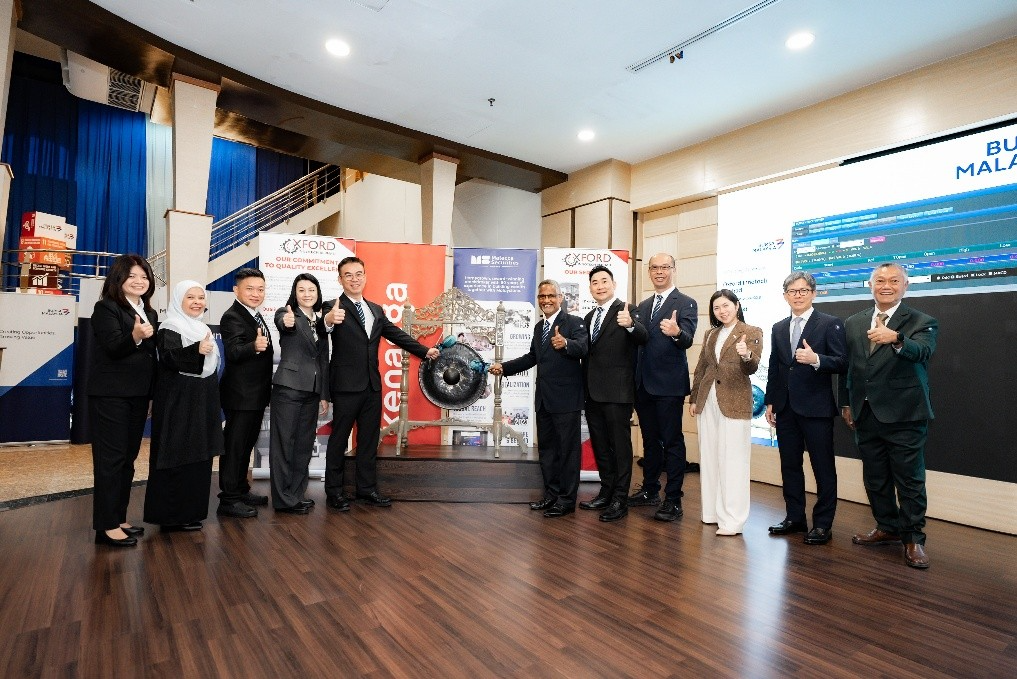
KUALA LUMPUR: ICT Zone Asia Bhd began its maiden trading day on Bursa Malaysia’s ACE Market with a lacklustre performance, opening flat at 20 sen, matching its initial public offering (IPO) price. Investor sentiment remained subdued, with shares trading within a narrow band of 19 sen to 21 sen in early activity. As at 9.25am, the counter registered a slight uptick to 20.5 sen, with over 22 million shares changing hands. The modest reception mirrors the broader cautious mood among investors toward ACE Market listings in recent months. ICT Zone garnered a subscription rate of just 1.89 times from public investors during its IPO exercise — a relatively mild interest level compared to past market trends. The listing environment has been volatile, with global trade uncertainties weighing on investor confidence. Since March, a significant number of new ACE Market listings have posted weak performances on debut. ICT Zone is the second company to transition from the LEAP Market to the ACE Market in 2024, following geotechnical services provider Fibromat (M) Sdn Bhd’s transfer on 8 May. Beyond its trading activities, ICT Zone provides leasing solutions for computer hardware and software, and also offers cloud-based services. The company raised a total of RM30.8 million through its IPO. Of this, RM4.2 million was allocated to selling shareholders, namely ICT Zone Holding Sdn Bhd and co-founder and non-executive chairman Datuk Seri Ng Thien Phing, who collectively maintain a 72.85% stake in the business. Datuk Seri Ng is also the founder of Main Market-listed SkyWorld Development Bhd. The remaining RM26.6 million in gross proceeds will be utilised by ICT Zone to support its technology financing operations, fund sales and marketing initiatives, and cover listing-related expenses. Malacca Securities assumed multiple roles for the IPO, acting as principal adviser, sponsor, joint underwriter, and joint placement agent. Kenanga Investment Bank also served as joint underwriter and placement agent, while SCS Global Advisory (M) Sdn Bhd provided financial advisory support for the market transfer. -The Edge Malaysia

Investment & Market Trends, News

Sarawak Secures US$1.5 Billion in Japanese Investments for High-Tech and Chemical Sectors

Sarawak’s reputation as a leading destination for international investment continues to grow, with two Japanese firms committing a combined investment of US$1.5 billion (approximately RM6.38 billion) in the region’s high-technology and chemical industries. According to a report by TV Sarawak (TVS), Sarawak Deputy Premier and Minister of International Trade, Industry and Investment, Datuk Amar Awang Tengah Ali Hasan, is currently in Osaka, Japan, where detailed discussions are underway regarding these strategic investments. One of the projects will see the construction of a semiconductor-grade polycrystalline silicon production facility, to be developed by Japan’s Tokuyama Corporation in partnership with South Korea’s OCI Company Ltd. The initiative represents an estimated investment of US$435 million and is expected to significantly enhance Sarawak’s global standing in high-performance semiconductor manufacturing. “The project has the potential to position Sarawak among the top five global hubs for advanced semiconductor production technology,” stated the Sarawak Ministry of International Trade, Industry and Investment. In parallel, a consortium of Japanese companies is preparing to invest an estimated US$1 billion in Sarawak’s chemical sector. Feasibility studies and site assessments are currently in progress, with the Sarawak government committed to accelerating the approval process to facilitate swift decision-making. These investments are closely aligned with Sarawak’s Post-COVID-19 Development Strategy 2030, which focuses on driving economic growth, promoting social inclusivity, and ensuring environmental sustainability. “The Sarawak government is unwavering in its support for high-impact investment projects of this nature. We provide a stable, competitive business environment underpinned by modern infrastructure and a highly skilled workforce,” said Awang Tengah. He affirmed the government’s full commitment to ensuring the successful execution of both projects. -Bernama

Investment & Market Trends, News

US-China Trade Tensions Spark 2-Month Low in Hong Kong Equities

Hong Kong’s equity markets suffered their steepest decline in nearly two months on Monday, driven by renewed geopolitical friction between the United States and China and underwhelming property sector data. The downturn highlights mounting investor unease over the fragile state of global trade relations and domestic economic headwinds. The Hang Seng Index dropped 2.2 per cent to 22,778.45 by the midday trading break, marking its largest single-session loss since 7 April. The Hang Seng Tech Index also declined by 2.4 per cent. Mainland Chinese markets remained closed for the Dragon Boat Festival and are scheduled to resume trading on Tuesday. Market breadth was broadly negative, with 78 of the Hang Seng’s 83 constituents recording losses. Notably, electric vehicle manufacturers led the retreat: Li Auto fell 4.2 per cent to HK$107.60, while BYD declined 3.2 per cent to HK$380.20. Kuaishou Technology, a leading short-video platform, dropped 3.7 per cent to HK$51.35, and Anta Sports Products fell 3.5 per cent to HK$92.15. Conversely, casino operators defied the broader market trend. Sands China gained 1.2 per cent to HK$15.60, and Galaxy Entertainment Group rose 0.8 per cent to HK$33.65. Their uptick came after gaming revenue in Macau climbed 5 per cent year-on-year in May, reaching its highest level since January 2020. The sell-off followed comments from former US President Donald Trump, who accused China of breaching a significant portion of the trade tariff agreement, although he provided no specifics. Market sentiment was further dampened by Washington’s escalating measures targeting China, including export controls on AI-related chips and proposed visa restrictions for Chinese students. Beijing responded on Monday, accusing the US of violating prior commitments made during Geneva talks. “If the US insists on acting unilaterally and continues to harm China’s interests, China will resolutely take strong measures to safeguard its legitimate rights,” a spokesperson from China’s Ministry of Commerce stated. Analysts at Nomura, including Jing Wang, noted that the recent escalation could cast a shadow over trade discussions during the current 90-day truce period. They also warned that the ongoing strategic decoupling between the two nations appears to be accelerating. In the property sector, new figures showed that sales among China’s top 100 developers rose 3.5 per cent month-on-month in May, according to data from China Real Estate Information Corporation. Despite the uptick, the performance fell short of expectations, particularly given that May is typically a strong month for property transactions. Elsewhere across the Asia-Pacific region, Japan’s Nikkei 225 declined 1.6 per cent, while South Korea’s Kospi and Australia’s S&P/ASX 200 each registered losses of 0.3 per cent. -South China Morning Post

Investment & Market Trends, News

Apple Faces Further iPhone Shipment Decline in China as Huawei Gains Market Share

Apple Inc. is projected to face yet another year of declining iPhone shipments in China, as mounting competition from domestic brands—particularly Huawei Technologies—continues to erode its market share in the world’s largest smartphone market, according to new data from IDC. The US tech giant’s shipments in China are forecast to fall by 1.9% in 2025, driven by Huawei’s renewed momentum in the premium segment and a broader economic slowdown affecting consumer spending. IDC’s report, published Thursday, also attributes the decline to Apple’s exclusion from a major government subsidy initiative, which favours consumer electronics priced below 6,000 yuan (approx. US$818)—a threshold that disqualifies most iPhone models. By contrast, China’s overall smartphone market is projected to expand by 3% in 2025, buoyed by demand for Android devices that benefit directly from the government’s consumer stimulus policies. The data highlights the intensifying challenges Apple faces in maintaining its foothold in China, its second-largest market after the United States. The competitive landscape has shifted rapidly, particularly with Chinese manufacturers leading the charge in integrating artificial intelligence (AI) capabilities into their devices. Apple, meanwhile, is still awaiting regulatory clearance to introduce its own AI-driven service, Apple Intelligence, in the Chinese market. For the fiscal quarter ending 29 March 2025, Apple reported a 2.25% year-on-year decline in revenue from the Greater China region—which includes mainland China, Hong Kong, and Taiwan. This follows an 8% revenue drop for the fiscal year ending 28 September 2024, and a 2% decline the previous year, further underlining the company’s diminishing momentum in the region. In the first quarter of 2025, iPhone shipments in China plunged 9% year-on-year, making Apple the only brand among the top five vendors to post a decline, according to IDC. In sharp contrast, Xiaomi’s shipments surged 39.9%, and Huawei recorded a 10% increase during the same period. Sales figures echoed the trend. According to Counterpoint Research, iPhone sales declined 7.7% year-on-year in the first quarter, while Huawei saw its handset sales jump 28.5%. Despite these headwinds, there are signs of short-term reprieve. Deep discounts during China’s upcoming 618 shopping festival—the nation’s largest retail event outside of Singles’ Day—may help bolster iPhone sales. Moreover, the anticipated launch of the iPhone 17 series in September, expected to feature substantial hardware upgrades, could provide renewed momentum for Apple in the Chinese market. -South China Morning Post

Investment & Market Trends, News

Suzuki Allocates Over Rp 1 Trillion for Fronx Development in Indonesia

Jakarta: Suzuki, the Japanese automotive giant, has invested more than Rp 1 trillion (approximately $61 million) in the development of its latest vehicle, the Fronx, in Indonesia. This strategic investment signals a robust commitment to local manufacturing and hybrid technology advancement in one of Southeast Asia’s most dynamic automotive markets. The Fronx, which is offered in both petrol and hybrid variants, is being assembled domestically with a local content level of around 60 percent, according to Suzuki Indomobil Motor (SIM), the brand’s manufacturing arm in Indonesia. The new model is available in a range of trims, including the GL, priced at Rp 259 million for the manual version and Rp 271 million for the automatic; the GX at Rp 276 million (MT) and Rp 293.3 million (AT); and the premium GSX variant, offered exclusively in automatic transmission at Rp 319.9 million. SIM Executive Director Shodiq Wicaksono confirmed the significant investment during the Fronx’s official launch in Jakarta, noting that “over Rp 1 trillion has been allocated solely for component procurement,” with overall development costs exceeding that amount. The Cikarang plant in West Java has been designated as the sole global production hub for the Fronx, which is positioned as a strategic global model under Suzuki Motor Corporation. The facility currently operates on a single production shift and manufactures the Ertiga, XL7, and Fronx models, with a maximum annual capacity of 108,000 units. Minoru Amano, President Director of Suzuki Indomobil Sales, emphasised that the investment seeks to elevate the Cikarang facility into a world-class production and export base. Amano noted that by exceeding regulatory local content thresholds for low-emission vehicles, Suzuki aims to bolster its contributions to Indonesia’s national economy and industrial development. He described the Fronx as a cornerstone of Suzuki’s future strategy in Indonesia, targeting monthly sales of 2,000 units. “The Fronx is not just a new model. It represents a new pillar for our business in Indonesia,” Amano stated. Deputy Industry Minister Faisol Riza praised Suzuki’s ongoing commitment and highlighted the Fronx launch as a milestone for Indonesia’s automotive sector. He underscored its relevance in strengthening the country’s role in the global automotive supply chain and advancing sustainable vehicle adoption. “This launch marks Suzuki’s strong commitment to the Indonesian market and demonstrates international confidence in the country’s automotive potential,” Riza commented. The Fronx follows the momentum of Suzuki’s previous hybrid models, including the Ertiga Hybrid and XL7 Hybrid. Government officials expressed optimism that the new model will cater to both domestic and international markets, reinforcing Indonesia’s position as a rising automotive production hub. Last year, Suzuki Indomobil Motor manufactured 73,000 vehicles, securing its place among the top five car manufacturers in Indonesia. -Jakarta Globe

Investment & Market Trends

Japan Expands Strategic Investment in Africa

Japan is intensifying efforts to support its private sector in expanding operations across Africa, a region where the country has traditionally been perceived primarily as a donor. This renewed focus aligns with Japan’s broader strategic intent to diversify its global economic partnerships and reduce reliance on China. Takehiko Matsuo, Vice-Minister for International Affairs at Japan’s Ministry of Economy, Trade and Industry, highlighted this shift during a recent visit to Abidjan, Ivory Coast’s commercial capital. “The mindset of Japanese business leaders has changed dramatically. They are now much more proactive about expanding their business globally,” Matsuo said. “Africa is one of the destinations where we expect Japanese companies to grow their presence.” Japan’s private sector had previously exhibited caution on overseas ventures, constrained by a domestic economy that endured three decades of deflation. However, the economic landscape is evolving. Recent data show that consumer prices have consistently met or exceeded the Bank of Japan’s 2% inflation target for three consecutive years, encouraging greater risk appetite among Japanese corporations. This change is mirrored in Japan’s international investment profile. The country’s net external assets reached a record high in 2024, with the United States and the United Kingdom remaining key destinations for foreign direct investment. However, Africa currently receives only about 0.5% of Japan’s foreign direct investments. The timing of Japan’s renewed engagement is also significant for Africa. With geopolitical shifts, including the return of President Donald Trump to the White House and the subsequent reduction in US aid, mobilising private sector capital has become increasingly critical for the continent. Japan’s efforts could offer mutual benefits. According to research by Goldman Sachs, Africa’s demographic and economic trajectory suggests that by 2050, one in four people globally will be African. By 2075, six of the world’s largest economies may be in the Global South, including Nigeria. Japan is prioritising strategic sectors such as critical minerals, base metals, and rare earths, all essential to reducing its dependence on Chinese imports. “We are pretty much depending on Chinese companies,” Matsuo noted. “I’m not saying that we cannot work with Chinese companies, but only depending on one country may be causing some vulnerability.” Evidence of Japan’s commitment is already emerging. Trading conglomerate Mitsui & Co. was the top bidder for a stake in First Quantum Minerals Ltd.’s Zambian copper mines, according to Bloomberg. In parallel, Japanese firms are exploring opportunities in technology-driven services and green innovation. Fujifilm is developing preventive medical care services suitable for regions with limited health insurance coverage. Toyota Tsusho is investigating automotive recycling systems, while Hitachi Construction Machinery is introducing hybrid dump trucks for environmentally friendly mining operations. Japanese investors are also showing interest in green hydrogen and ammonia, technologies seen as vital to decarbonising industrial sectors. The Japanese government is fostering broader collaboration through new initiatives, including a programme launched this month to link Japanese and African startups and drive innovation. In terms of development aid, Japan remains a major contributor. In 2022, it was the third-largest provider of overseas development assistance to sub-Saharan Africa among OECD members, disbursing $1.68 billion in gross aid. Unlike the US or the UK, Japan has not signalled any reduction in its aid commitments. Matsuo underscored this commitment by highlighting the upcoming Tokyo International Conference on African Development (TICAD), scheduled for August in Yokohama. “This year, we will have the biggest meeting for collaboration between Japan and African countries,” he said. “In that sense, we are rather making efforts to expand our cooperation.” -Japan Times

Scroll to Top

Subscribe
FREE Newsletter