Investment & Market Trends

Investment & Market Trends, News

Fibromat Drops 16% on ACE Market Debut Despite RM31.4m IPO Raise

KUALA LUMPUR: Shares of Fibromat (M) Bhd (KL:FIBRO) slipped 16% in early trading on its first day on Bursa Malaysia’s ACE Market, following its transfer from the LEAP Market, as broader market weakness and cautious investor sentiment continued to weigh on debut listings. The geotechnical services specialist saw its shares open at 46 sen, below the initial public offering (IPO) price of 55 sen per share. The stock touched an intraday low of 41 sen before stabilising, trading at 46.5 sen as at 9.15am, with over 11 million shares changing hands. At the prevailing price, Fibromat’s market capitalisation stood at approximately RM115 million. Fibromat becomes the latest in a string of subdued ACE Market debuts. Since March, all eight new listings on the exchange have closed below their respective IPO prices on their first trading day, reflecting investor caution amid challenging market conditions. Investor appetite for Fibromat’s IPO appeared restrained, with applications only marginally covering the shares on offer. Despite the lacklustre demand, the exercise raised RM31.4 million in total proceeds. Of this, RM17.8 million was channelled to the company, while RM13.6 million was raised via a secondary offering by Managing Director Ng Kian Boon, who pared down his personal stake. Fibromat remains a family-run enterprise, with Ng’s sons, Ng Chun Hou and Ng Chun Yew, holding key positions as Executive Director and Senior Operations Manager, respectively. The company previously raised funds through its LEAP Market listing in May 2019, which have since been fully utilised. Proceeds from the current IPO are earmarked for the acquisition of new machinery — including stitching machines and dust collectors — the establishment of an in-house prefabricated vertical drain installation team, and the purchase of five hydraulic excavators. Additional funds will be allocated for working capital requirements and listing-related expenses. M&A Securities Sdn Bhd acted as the principal adviser, sponsor, underwriter, and placement agent for the IPO. –The Edge Malaysia

Investment & Market Trends

Heineken Malaysia Holds Steady Despite Revenue Dip

Heineken Malaysia Berhad reported steady earnings for the first quarter ended 31 March 2025 (1QFY2025), demonstrating resilience in a dynamic operating environment. The Group maintained its profitability despite a slight revenue contraction, showcasing strong cost control and financial prudence. Revenue: RM764 million, down 3% YoY (1QFY2024: RM789 million) Profit Before Tax: RM161 million (unchanged YoY) Net Profit: RM122 million (unchanged YoY) The marginal decline in revenue was attributed primarily to the timing of Chinese New Year (CNY). This year’s festivities fell in January, resulting in earlier sales activity being recorded in the previous quarter. In contrast, CNY 2024 occurred in February, boosting sales within the first quarter last year. Despite this timing variance, Heineken Malaysia held firm on its bottom line. Managing Director Martijn van Keulen remarked, “Our performance reflects the strength of our financial discipline and the robustness of our EverGreen strategy. We are navigating headwinds with agility and a commitment to long-term growth.” The Group’s EverGreen strategy continues to steer its operations, focusing on: Driving sustainable topline growth Embedding a cost-conscious culture Adapting to evolving consumer behaviours Advancing its sustainability agenda Developing internal talent and connectivity Consumer Engagement & Brand Momentum Heineken Malaysia sustained brand relevance through high-impact campaigns: Heineken®: The Celebrate Boring campaign encouraged digital detox, reclaiming over 1.2 million minutes of screen-free time. Tiger Beer: Its Together We Roar CNY campaign featured Tiger Town, a vibrant experiential activation with performances and games. Guinness: Brought the spirit of Ireland to Malaysian fans with nationwide St. Patrick’s Day celebrations. Looking ahead, van Keulen cautioned that inflationary pressure and geopolitical uncertainties may weigh on consumer confidence. Nonetheless, the Group remains committed to driving commercial growth while protecting margins through operational efficiency. No interim dividend was declared for the quarter. Tax Contribution & Commitment to Responsibility Heineken Malaysia paid RM1.45 billion in taxes in 2024, accounting for 52% of its total revenue, with Malaysia’s excise duties among the highest globally. The company welcomed the government’s decision to maintain beer duties in Budget 2025, warning that any increase could fuel illicit alcohol trade. It reiterated its commitment to curbing illicit trade through collaborative enforcement and public awareness. Sustaining Communities Under its Brew a Better World sustainability platform, the Heineken Cares programme continues to empower underserved communities through partnerships with Sokong and four NGOs, focusing on water access and food security. The initiative has disbursed RM220,000 to date.

Investment & Market Trends, News

Taiwan Dollar Surges Five Percent as Forwards Hit Two Decade High and Exporters Exit Greenback

Taiwan’s currency posted its sharpest gains in decades this week, with market derivatives signalling sustained selling pressure on the US dollar amid heightened speculation of policy shifts and trade-driven currency revaluation. The spread between the Taiwan dollar spot rate and its one-year non-deliverable forwards (NDFs) widened to approximately 3,000 pips on Monday, marking the deepest inversion in at least 20 years, according to Bloomberg data. The sharp divergence reflects intense demand for the local currency, amid expectations that Taiwanese authorities may tolerate further appreciation to support ongoing trade negotiations with the United States. Driven by exporters converting foreign earnings and possible portfolio hedging by insurers, the Taiwan dollar surged as much as 5% on Monday—its strongest intraday move since 1988. The rally had a spillover effect on regional currencies including the Malaysian ringgit and Chinese yuan. Strategists suggest the rally may continue, with limited signs of immediate easing. “The talk is around the rush to sell dollars from the exporter market and the lack of any meaningful central bank response,” said Brad Bechtel, Global Head of FX at Jefferies LLC. He added that the trend “could be the start or a sign of something bigger going on in the currency markets.” Despite an official warning against foreign exchange speculation, NDFs—used widely by Taiwanese insurers for offshore hedging—continued to reflect strong demand for the Taiwan dollar during trading in the US market session. The Taiwan dollar gained a further 0.3% on Tuesday, strengthening to 30.05 per US dollar and extending its rally to a seventh consecutive day. Exporter demand remained robust during the morning session, although appetite from overseas investors and retail players moderated slightly, according to traders familiar with the flows. Three of Taiwan’s largest insurers reassured financial regulators that their risk-based capital ratios remain sound and that they do not currently plan to increase hedging activities, the Taipei-based Economic Daily News reported, citing sources. In a move to stabilise sentiment, Taiwan’s central bank attributed the recent spike in the currency to speculative chatter and reaffirmed its stance against disorderly trading. According to Bank of America, Taiwanese life insurers hedged only around 65% of their foreign currency exposure at the end of 2023. With dollar hedges typically incurring high costs, most firms had previously remained under-hedged to benefit from a stronger greenback—though the recent dollar weakness has raised the risk of portfolio losses and liquidity strain. President Lai Ching-te also weighed in on Monday, attributing Taiwan’s growing trade surplus with the US to high demand for the island’s technology exports, rather than currency manipulation. The Office of Trade Negotiations confirmed the completion of initial tariff-reduction talks with the US, clarifying that currency issues were not on the agenda. Michael Wan, Senior FX Analyst at MUFG Bank Ltd, noted that the current appreciation was likely exacerbated by low market liquidity and a confluence of factors including exporter conversion activity, hoarding of US dollar deposits, and increased hedging demand by insurers. –Bloomberg

Investment & Market Trends

Flash Coffee Secures US$3 Million to Drive Expansion

JAKARTA: Flash Coffee, the Indonesia-based coffee chain, today announced an additional $3 million in funding to fuel its expansion across the country. The round was led by TA Ventures, a global early-stage venture capital firm, and supported by long-term existing investor White Star Capital. Flash Coffee has secured this new round of investment to accelerate its national expansion, following a year of strong performance & profitability. This funding is a direct vote of confidence in the business, driven by a clear demonstration of healthy unit economics and an impressive average store-level EBITDA of 22%, while our new stores are even stronger at 36% EBITDA, which is well above industry benchmarks. The capital will be used to fuel Flash Coffee’s growth trajectory, supporting its goal of surpassing 70 stores across Indonesia in 2025 & launching in two new cities. With revenues per store having doubled in the past year, all stores are now operating profitably, Flash Coffee is well-positioned to scale while continuing to deliver standout, design-forward lifestyle experiences. “The past year has been about discipline. We’ve focused on getting the fundamentals right; profitable stores, stronger teams, better menus, and spaces that reflect the modern Indonesia. We didn’t chase growth; we earned it,” said Jakob Angele, Executive Chairman of Flash Coffee. “This latest investment will help us scale what works: beautifully designed stores, high-performing teams, and a product that speaks to today’s Indonesian consumer.” Flash Coffee’s bold new store design, featuring natural textures, regional materials, and lush greenery, sets a new standard for Indonesia, encouraging customers to stay longer and connect more deeply with the brand. With the introduction of our refreshed logo and the ‘Kebanggaan Indonesia’ (‘Proudly Indonesian’) watermark, Flash Coffee is going back to its Indonesian roots by blending local craft, culture & community into every detail. Designed entirely in-house, this identity isn’t just about aesthetics, it’s a strategic driver of profitability and loyalty, reinforcing Flash Coffee’s deep connection to both customer and country as they expand deeper into existing cities and new locations across Indonesia. “We spent significant time analysing the opportunities of this category in Southeast Asia, as a result we’re excited to join Flash Coffee’s journey,” said Richard Armstrong, Venture Partner & SEA Lead, TA Ventures.  “Today’s Indonesian consumer is cross-generational, seeking experiences that are meaningful and personal.  Flash Coffee has perfectly adapted, responding to this shifting consumer behaviour.”

Investment & Market Trends, News

Japan Eyes Multi-Year Expansion in Malaysia with RM102.02 Billion in FDI

KUALA LUMPUR : Japanese companies are actively exploring investment opportunities across Malaysia’s decarbonisation, healthcare, innovation, and service sectors, according to the Japan External Trade Organisation (JETRO). JETRO Kuala Lumpur managing director Koichi Takano said several Japanese firms have committed to multi-year investment plans beginning in 2025, with a focus on establishing engineering and operational services in industries such as oil and gas, semiconductors, and biotechnology. “Interest in Malaysia’s decarbonisation sector is set to accelerate in the lead-up to the Asia Zero Emission Community (AZEC) Summit, co-hosted by Japan and Malaysia later this year,” he said in an interview with Bernama. Major Japanese players including Mitsui & Co are currently involved in key decarbonisation initiatives in Malaysia, spanning energy efficiency, renewable energy, carbon capture and storage (CCS), and hydrogen technology. Takano noted that the improving diffusion index of Japanese business sentiment reflects renewed confidence in Malaysia’s economic outlook. “This signals increasing trust and expectations for Malaysia’s sustained growth,” he added. However, he also cautioned that global economic uncertainties persist, particularly due to US-imposed tariff measures. In this context, Malaysia’s leadership within ASEAN is becoming increasingly vital. “Malaysia has already taken initiative by engaging in ASEAN-level discussions on tariffs. We hope to see continued leadership that promotes stability and growth across the region,” Takano said. Japan remains one of Malaysia’s leading foreign investors. According to the Department of Statistics Malaysia, Japanese foreign direct investment (FDI) stood at RM102.02 billion in the fourth quarter of 2024, up from RM94.18 billion in the same quarter of 2023. This makes Japan the fourth-largest source of FDI in Malaysia. Takano shared insights from a recent business sentiment survey conducted jointly by JETRO and the Japanese Chamber of Trade and Industry, Malaysia (JACTIM). While sentiment was negative in the second half of 2024 at –11.5 points, it is projected to recover to –4.5 points in 2025. The survey, which gathered responses from 200 companies between 22 January and 21 February 2025, identified high-value manufacturing and decarbonisation as Malaysia’s most promising sectors. In the non-manufacturing segment, firms reported a strong demand for skilled talent in advanced technologies. Respondents also called for clearer guidelines on environment, social and governance (ESG) investments, the enhancement of tax incentives, and timely notifications on regulatory changes. –Bernama

Investment & Market Trends, News

Bursa Nets RM853.8mil Foreign Inflows, First Two-Week Streak Since Sept 2024

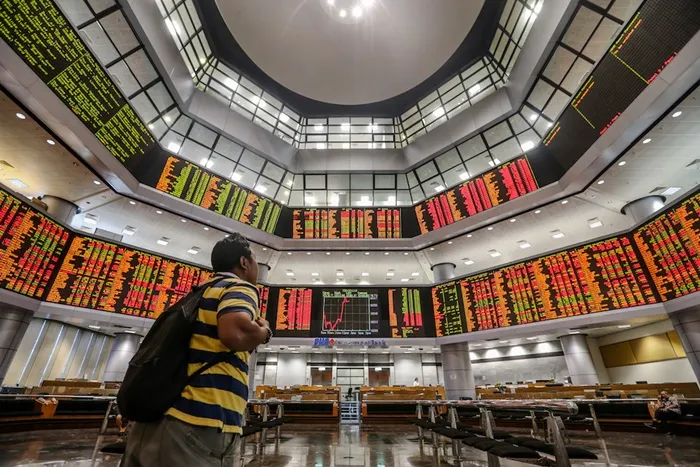
Foreign investors continued to show strengthening confidence in Bursa Malaysia, recording net inflows totalling RM853.8 million for the week ending 2 May. This marks the first consecutive two-week gain in foreign investment since September 2024, according to MIDF Research. The investment research firm reported consistent foreign buying across all five trading days, with daily inflows ranging between RM50.7 million and RM340.8 million. The highest net inflow was registered on Friday at RM340.8 million, followed closely by RM325.2 million on Thursday. Sector analysis revealed strong interest in financial services, which led with a net foreign inflow of RM567.4 million. The healthcare sector followed with RM124.8 million, while industrial products and services recorded RM107.9 million. Only two sectors experienced net outflows, with energy seeing RM31.9 million in withdrawals and plantations recording RM6.0 million in outflows. Local institutional investors extended their net selling trend into a second consecutive week, registering total outflows of RM692.6 million. This represents the first two-week streak of net selling by institutions since August 2024. Retail investors also continued their net selling for a third week, divesting RM161.2 million in equities. This was almost two and a half times greater than the previous week’s outflow. Trading volume rose across all investor categories. The average daily trading volume increased by 8.7 percent for institutional investors and 5.7 percent for retail participants. Foreign investor activity saw a notable rise of 26.0 percent, highlighting growing participation from international market players. MIDF Research concluded that the data reflects a renewed appetite for Malaysian equities among global investors, supported by strong sectoral performance and wider regional market interest. –Business Times

Investment & Market Trends, News

Gold Futures Expected to Remain Cautious Amid Global Market Volatility

KUALA LUMPUR : Gold futures on Bursa Malaysia Derivatives are expected to remain volatile next week, as cautious sentiment continues to dominate amid persistent global uncertainties and a weakening bullish trend in safe-haven assets. In its weekly outlook, RHB Investment Bank Bhd highlighted that traders are likely to maintain a defensive approach, with the recent momentum in gold showing signs of softening. “We maintain a negative trading bias as downward pressure continues to mount,” the bank noted in its report. RHB projected immediate support for gold prices at US$3,200 per troy ounce, while resistance is expected around the US$3,400 level. On a week-on-week basis, the spot month May 2025 contract declined to US$3,274.10 per troy ounce from US$3,316.20 previously. Other active contracts, including June, July, August and October 2025, also recorded losses, settling at US$3,288.10 per troy ounce compared to US$3,332.80 the week before. Trading activity also softened, with total volume contracting to 352 lots from 871 lots in the previous week. Open interest fell to 40 contracts from 88, indicating a more reserved stance among market participants. According to the London Bullion Market Association’s afternoon fix on 1 May, physical gold was valued at US$3,214.75 per troy ounce. –Bernama

Investment & Market Trends, News

Malaysian Rubber Market Eyes Modest Rebound on Chinese Stimulus Hopes

KUALA LUMPUR : The Malaysian rubber market is poised for a modest rebound next week, supported by renewed optimism stemming from potential economic stimulus measures by China, according to the Malaysian Rubber Glove Manufacturers Association (MARGMA).   The Association of Natural Rubber Producing Countries (ANRPC) has forecast a 1.5% increase in global natural rubber (NR) consumption in 2025, reaching approximately 15.6 million tonnes, contributing to the improved market outlook. “A tight supply outlook in key producing countries is likely to provide additional price support,” a MARGMA spokesperson told Bernama. However, the association cautioned that the lack of progress in US-China trade negotiations continues to cast a shadow over global sentiment. “Rubber prices are expected to remain closely aligned with movements in regional rubber futures markets, alongside fluctuations in the ringgit against the US dollar and global crude oil prices,” the spokesperson added. Industry veteran Denis Low noted that ongoing geopolitical uncertainties, particularly those stemming from policies under former US President Donald Trump’s administration, have contributed to volatility in the market. “We are navigating an increasingly fluid and complex global economic landscape. Businesses must continue to remain agile in response to the evolving challenges shaped by international policy shifts,” he said. On a weekly basis, the Malaysian Rubber Board reported that the reference price for Standard Malaysian Rubber 20 (SMR 20) declined by 14.5 sen to 738.0 sen per kilogramme (kg), while latex in bulk dropped 16.5 sen to 609.0 sen per kg. –Bernama

Investment & Market Trends, News

CPO Futures Expected to Remain Subdued Amid Rising Stocks, Weak Demand

KUALA LUMPUR : The crude palm oil (CPO) futures market is likely to maintain a downward bias next week, weighed by expectations of rising domestic stock levels and subdued export demand. According to palm oil trader David Ng, local inventories are anticipated to climb as Malaysia enters its peak harvesting season, a period typically associated with increased production. “Export demand remains soft, especially from major markets like India and China, which are approaching purchases cautiously due to ample global vegetable oil supply and price competitiveness from alternatives such as soybean and sunflower oil,” he said. He added that sentiment in the market is currently cautious, with traders awaiting key export and production figures. “Unless there is a notable shift in demand or new policy developments from key importing nations, the market is expected to remain subdued in the near term,” he said, forecasting that prices may trend within the RM3,750 to RM3,900 per tonne range next week. For the week ended Friday, the spot month May 2025 contract dropped RM219 to RM3,920 per tonne, while June 2025 declined RM150 to RM3,907 and July 2025 eased RM176 to RM3,881. August 2025 was down RM164 at RM3,883, September 2025 declined RM151 to RM3,888, and October 2025 settled RM138 lower at RM3,891. Weekly trading volume contracted to 240,534 lots from 410,686 the previous week, while open interest dipped to 232,901 contracts from 239,139. The physical CPO price for May South fell RM180 to RM4,020 per tonne. –Bernama

Investment & Market Trends

Mitsubishi Projects 26% Profit Drop for FY2025

Mitsubishi Corp expects its net profit for the fiscal year ending March 2026 to fall 26% to ¥700 billion (US$4.82 billion), citing the absence of significant capital gains that boosted earnings in previous years. The Japanese trading giant reported a ¥950.7 billion net profit for the year ended March 2025, down 1.4% year-on-year and slightly below analyst expectations. The new forecast also trails market estimates of ¥747 billion. Despite the dip, interest from major investor Warren Buffett’s Berkshire Hathaway remains strong, with continued investment in Mitsubishi and other Japanese trading houses like Marubeni and Sumitomo.–REUTERS

Scroll to Top

Subscribe
FREE Newsletter