Investment & Market Trends

Investment & Market Trends

Yong Tai Collaborates with Sichuan Tourism Investment Group to Revive Theatre Operations

KUALA LUMPUR: Main Market listed Yong Tai Bhd (YTB) inked a collaboration agreement with Sichuan Tourism Investment Group (STIG) to revive the operations of the Encore Melaka theatre, ensuring its turnaround and long-term success. This partnership marks a significant milestone in YTB’s efforts as STIG is set to resume shows at Encore Melaka in July 2024. YTB chief executive officer and executive director Datuk Wira Boo Kuang Loon said the company’s partnership with STIG would play a crucial role in reviving the operations of Encore Melaka. “With the support of STIG and the favourable visa policies, we are confident in our ability to attract a large audience and deliver an unparalleled cultural experience,” he said in a statement. STIG is a prominent state-owned enterprise from Sichuan Province, China. Established in April 2017, STIG is a flagship enterprise approved by the Sichuan Provincial Government, tasked with transforming Sichuan from a major cultural and tourism province to a tourism powerhouse. STIG has been instrumental in driving the development of the cultural tourism industry in China, with a diverse portfolio that includes hotels, scenic spots, aviation tourism, commercial properties, cultural sports, and wellness. Under this collaboration, YTB will leverage STIG’s extensive experience and expertise to manage and operate the Encore Melaka theatre. Known for its modern design and cultural experiences, Encore Melaka will benefit from STIG’s strategic integration platforms, including cultural tourism industry transformation, resource integration, and investment. This partnership aims to attract significant tourist traffic to the theatre and achieve a 70 per cent occupancy rate within six months of operation. As part of this collaboration, STIG will dispatch a team to oversee the integration and build the organisational framework for Encore Melaka’s operations. They will manage and refine the theatre’s high-performance programs, schedule performances, plan and supervise activities, and provide regular financial performance reports. STIG will also manage publicity, marketing, and promotions, employ key personnel with YTB’s consent, and implement strategies to enhance ticket sales and audience attendance. Additionally, they will maintain the theatre’s assets in good condition and carry out all necessary operations to ensure smooth functioning. “This collaboration addresses the concerns raised by our investors regarding the management and operational challenges we faced in the past. “With STIG’s proven track record and vast experience, we are now better positioned to achieve our goals. “This partnership brings expertise and a robust network that will help drive tourist traffic to our theatre. “We anticipate a successful transformation that will see Encore Melaka thrive as a premier cultural destination,” Boo added. The collaboration comes at an opportune time, as since December 2023, the government has implemented a 30-day visa-free entry for Chinese tourists. This initiative is expected to facilitate a steady flow of tourists from China, further boosting attendance at Encore Melaka and other YTB ventures. The government has also declared 2024 as Visit Melaka Year, aiming to promote the state’s rich cultural heritage and attract more tourists. This initiative underscores the government’s commitment to promoting Malaysia as a premier cultural and tourism destination. “By collaborating with a prestigious artist college to supply performers, we have created a cost-effective model that ties our expenses to ticket sales, making Encore Melaka a financially sustainable project. “We are confident that with STIG’s management and our strategic planning, we will achieve remarkable success,” Boos said.
Investment & Market Trends, News

Malaysia Approved RM114.7 Bil Investments in Data Centres, Cloud Services in 2021-2023

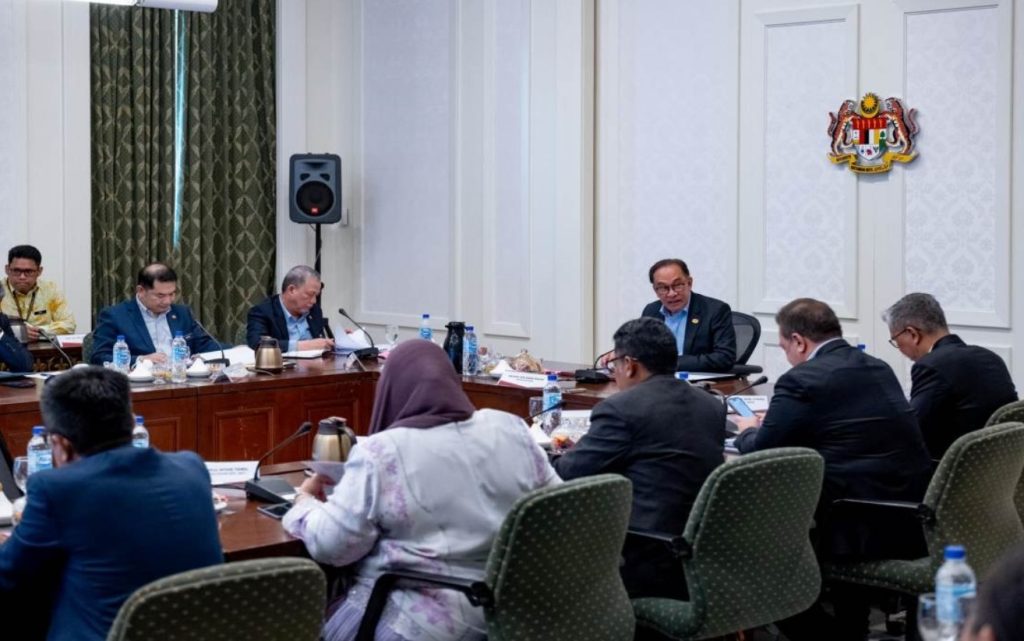
KUALA LUMPUR: Malaysia has approved RM114.7 billion worth of investments in data centres and cloud services between 2021 and 2023, said Prime Minister Datuk Seri Anwar Ibrahim. In a post on X, he said the investments have created 2,325 high-value new jobs in specialised fields such as data scientists, data analysts, data engineers, cybersecurity analysts and network engineers. He said that the MADANI Government is committed to positioning Malaysia as a sustainable artificial intelligence (AI data centre destination in Southeast Asia, as part of its effort to strengthen the country’s position as a leading global investment destination. Earlier, Anwar chaired the 4th National Investment Council (NIC) meeting for the year, where he mentioned that the council had agreed for the Ministry of Investment, Trade and Industry (MITI) to enhance the current incentive framework for AI data centres via the Malaysian Investment Development Authority (MIDA). This includes the mechanism for the usage of energy and water-efficient equipment, as well as collaboration with the Ministry of Energy Transition and Natural Resources to provide sufficient renewable energy for AI data centres. “During the meeting, I emphasised a whole-of-government approach in the ongoing efforts to encourage investment in AI-based data centre sectors, particularly in boosting economic benefits through digitalisation and increasing the economic complexity of various sectors in Malaysia. “The framework will also include matching data centre players with local companies for the development of local vendors, especially small and medium enterprises, as well as fostering industry-academia collaborations to drive innovation in the development of energy-efficient equipment and software,” he added.

Investment & Market Trends

Malaysia’s largest golf platform Deemples raises US$2m from V Ventures to fuel growth and market expansion

KUALA LUMPUR:  Today Deemples announced a USD 2 million (approx. MYR 9.58 million) investment from Singapore based corporate venture capital firm — V Ventures, to drive its growth and enrich user experience. The investment comes at a time of rapid growth for Deemples, which has seen its business double yearly for the past four years in Malaysia. This investment will further facilitate the brand’s plans to expand its presence in Southeast Asia and establish a strong foothold in a new market. “Our core mission is to create the premier golfing experience empowered by tech to allow our community to play anytime, anywhere, with anyone. With this new investment, we have set our eyes on further expanding our ecosystem to be truly regional with our services and to significantly enrich the golfing community,” said David Wong, CEO and founder of Deemples   Founded with the vision of addressing a personal need to find golf buddies, Deemples has grown into a household name in Malaysia growing its number of active golfers by 200% since their last fundraising round. Deemples enables golfers to plan their games effortlessly, whether it’s a spontaneous round, a tournament, a club match or a prearranged outing. With its tech-first philosophy and designed-for-golfers approach, Deemples caters to the diverse needs of golfers, enhancing their overall experience of the sport.   “We will use the funds to build a scalable best-in-class product, with a keen focus on relentless innovation, formula for product market fit, and to ultimately expand into untapped markets. This is important to the mission of providing the best borderless golfing experience for our community, enabling golf enthusiasts to connect, play, and enjoy the game, anywhere. In essence, it solidifies our commitment to empowering golfers everywhere and reinforces our position as a leader in revolutionising the way golf is experienced and enjoyed across borders,” shared Ahmad Daleen, Chief Technology Officer of Deemples.   Propelling the growth of golf in Malaysia and Southeast Asia With a 100% growth observed in the Malaysian Golfing community from 2023 alone, there is excitement surrounding the evident rise in both appreciation for golfing and notable enhancement in skill levels. This reflects a deeper commitment to mastering and enjoying the sport. This growth can be attributed to increased accessibility to golf courses and training facilities. Overall, the future looks promising for the Malaysian golfing community as it continues to expand and evolve.   Deemples has played a significant role in shaping and expanding the golfing community across Malaysia. Operating as the first two-sided marketplace, Deemples prioritises providing value to both customers and golf courses alike. Through its platform,  the brand encourages players to golf more frequently by connecting them with other golfers and establishing a golfing network. This not only benefits users by enhancing their experience but also helps golf courses increase their revenue and attract more players to their facilities.   “Deemples has helped golf courses in Malaysia to provide a new level of service for both new and existing golfers over the last 4 years.  We at The Mines Resort and Golf Club were able to launch on the platform easily and immediately start receiving bookings from their users. Deemples has been a great partner to us and other golf courses. With their best-in-class technology, and growth strategy, it will enable all subscribed golf courses to provide a thrilling golfing experience to our golf fraternity. We are excited to see what our future with Deemples holds for the golf industry in Malaysia.” shared YBHG Admiral Tan Sri Dato Setia Mohd Anwar Mohd Nor (R), President of the Malaysian Golf Association and Executive Chairman of The Mines Resort and Golf Club.   With a steady growth in the Malaysian market from last year, Deemples is set to continue to provide the best golf booking and matching experience in Malaysia. The platform’s established track record serves as a solid foundation for its ongoing expansion efforts. By leveraging its scalable platform and profound understanding of the golfing community, Deemples is dedicated to expanding across Southeast Asia whilst ensuring that Malaysia remains a focal point of its operations.

Energy & Technology, Investment & Market Trends

Foxconn to Build Advanced Computing Centre in Taiwan

TAIPEI: Hon Hai Technology Group (Foxconn) announced its plans to build an advanced computing centre in Kaohsiung, Taiwan, with the NVIDIA Blackwell platform at its core. The collaboration signals a deepening commitment by the world’s largest electronics manufacturing service provider and market leader to make AI servers, alongside its world-class partner, to drive intelligent ecosystems covering AI, electric vehicles, smart factories, robotics, smart cities and other fields. Following the COMPUTEX 2024 event, NVIDIA Founder and CEO, Jensen Huang noted that NVIDIA and Foxconn have worked closely together on various product development, and the proof of the cooperation is clear. This is especially proven with the Blackwell product line-up, where Foxconn has excellent vertical integration capabilities and is a vital partner for the GB200. Meanwhile, Foxconn Chairman and CEO, Young Liu announced that Foxconn will join hands with NVIDIA to build an advanced computing centre in Kaohsiung with the NVIDIA Blackwell platform at its core. The cutting-edge computing centre consists of a total of 64 racks and 4,608 GPUs, is slated for completion by 2026. NVIDIA’s powerful AI technology will drive Foxconn’s three smart platforms, namely smart manufacturing, smart EV and smart city. Both companies will continue to deepen cooperation in AI, electric vehicles, smart factories, robots, smart cities and other fields, and demonstrate the strong competitiveness brought by AI through Foxconn’s huge manufacturing scale. Huang said, “A new era of computing has dawned, fuelled by surging global demand for generative AI data centres. Leveraging on NVIDIA Omniverse and Isaac robotics platforms, Foxconn is harnessing cutting-edge AI and digital twin technologies to construct their advanced computing centre in Kaohsiung.” The two companies will utilise NVIDIA Omniverse and create digital twins to introduce platforms for smart manufacturing, smart electric vehicles, and smart cities. For smart manufacturing platforms, image recognition technology, combined with the group’s autonomous mobile robots (AMR), will lead to changes for optimal capacity utilisation. The production line planning will encompass the existing manufacturing of AI servers and EV assembly plants. Toward that goal, the new Qiaotou automotive manufacturing facilities of Foxtron, a Foxconn subsidiary, will become one of the Group’s benchmark AI factories. Currently under construction, the site will utilise digital twin connected to cloud technologies and achieve collaboration between virtual and physical production lines. Digital real-time monitoring will ensure the manufacturing excellence of an award-winning electric bus, which is currently seeing orders outpacing output capacity. Going forward, the two companies’ collaborative efforts in the EV ADAS platform will be applied to future EV models designed by Foxconn. Presently, Foxconn is negotiating projects with traditional European and American automakers. Moreover, based on NVIDIA’s new generation of chips, Foxconn and NVIDIA jointly plan a ‘cabin-driving-in-one’ smart travel solution, creating a third living space.

Investment & Market Trends, News

BRI Gets ‘Buy’ Call From Analysts as MSMEs Continue to Drive Growth

JAKARTA: Bank Rakyat Indonesia (BRI) remains Indonesia’s leading micro, small and medium enterprise (MSME) financier, with its credit portfolio growing to Rp1,308.65 trillion by March 2024, up 10.89% year-on-year. Over 83% of this, or Rp1,089.41 trillion, was allocated to MSMEs. Supported by an extensive branch network and empowerment initiatives, BRI has achieved an impressive return on equity (ROE) and maintained a net interest margin (NIM) consistently above 7%, exceeding the industry average of around 6%. “Therefore, we expect the ROE to be maintained above 20%, relatively in line with the average of other major banks,” said Edward Lowis from Sucor Securities’ research. BRI’s ultra-micro portfolio through Pengadaian and PNM is on a growth trajectory, with this segment achieving higher margins and outpacing typical bank credit growth. “The total asset contribution of these subsidiaries has reached almost 10% of the total in the first quarter of 2024 (compared to 6% in 2020), while the contribution to net income has also grown to 14% of the total (compared to 10% in 2022),” he wrote. Lowis acknowledges challenges in managing BRI’s asset quality but expects moderate revenue growth of 5% to 10% YoY in 2024 and 2025. He expects BRI to maintain above-average NIM and growth due to its dominance in microloans. “Adequate loan loss coverage and a strong capital position will help the bank weather near-term challenges,” he added. Therefore, Sucor Securities recommends buying BRI shares with a target price of Rp6,400, reflecting a 2.8x PBV for 2024, based on a sustainable ROE of 23% and a cost of equity of 12%. Similarly, Jayden Vantarakis of Macquarie has a target price of Rp7,100 for BRI shares, while Victoria Venny of MNC Securities has a ‘buy’ rating with a target price of Rp6,300. A Bloomberg consensus of 35 analysts sets a 12-month price target of Rp6,175, with 33 analysts unanimously recommending a buy on a bullish outlook. BRI’s Finance Director Viviana Dyah Ayu RK said management’s focus is to ensure the company can grow better and healthier in the long run, even if it requires small corrections in the short run. “For long-term shareholders, the refinements and improvements we are making now should provide greater benefits,” she said.

Energy & Technology, Investment & Market Trends, News

SANY Leads Low-Carbon Development Market Volume of Over US$400 Mil

SHANGHAI: Leading Chinese heavy equipment manufacturer SANY Group has reported that its total revenue of electric products reached CN¥3.146 billion (US$434.78 million) in 2023, with hydrogen energy products achieving CN¥130 million (US$17.97 million) in revenue. Considering the simultaneous transformation period of the fourth industrial revolution and third energy revolution, the global construction machinery industry is now going through an unprecedented window of opportunity for supertechnology development. SANY has taken a head start in the low-carbon sector with its new energy technology committee, established in 2021, overseeing and managing the planning of new energy technology development, patent layout, forward-looking technology R&D and industry incubation. In 2023, SANY launched more than 130 new energy products, including the world’s first fully electric rotary drilling rig, and hydrogen energy mixing truck equipped with its self-developed fuel battery system. The green products and solutions not only meet the clients’ need for their low-carbon transformation, it also creates greater value through innovation that reduces full life cycle operation costs significantly. To further elevate the group’s core competitive advantages in the low-carbon market, SANY has been laying out in five major technology directions through independent and strategic cooperation, including battery cell, electric drive bridge technology, VCU centralised control platform, charging and battery switching station, fuel cell system, and control technology. Last year, SANY obtained 275 low-carbon patents and launched three integrated electric drive bridges for tractors, mixers, and dump trucks covering the loading range of 11.5 to 16 tonnes. Leveraging strong product competitive advantages and innovative R&D capabilities, the sales of SANY’s electric mixer trucks increased by 47% year-on-year in 2023, maintaining the highest market share for three years consecutively, while the sales of electric cranes continue to lead the industry. “Looking ahead, SANY will continue to strengthen our R&D capabilities and the core advantages of our products to promote green and sustainable development comprehensively. “We’re rooted to lower carbon emissions at the source and throughout our operations to build a full-cycle green production chain that will be fueling the high-quality development of the Group, accelerate industry transformation and upgrading, and contribute to reaching carbon peaking and carbon neutrality goals,” said SANY Group Chairman Xiang Wenbo.

Investment & Market Trends, News

Malaysia’s Tax Reforms Help Stimulate Innovation, Advanced Technologies

KUALA LUMPUR: Malaysia’s latest tax reforms, outlined in Budget 2024 to stimulate domestic startups, drive clean energy investment and modernise tax administration, are set to benefit innovative startup businesses, green technology sectors and service-oriented companies. BMI, a Fitch solutions company, said the budget’s sweeping tax reforms aimed to stimulate local industries and channel investment into key sectors, including advanced manufacturing. Among the initiatives are reinvestment allowance (RA), electric vehicles (EVs) tax incentives and global services hub tax incentives. According to BMI, the RA effectively lowers the tax burden on companies that undertake capital investments to modernise machinery, upgrade technology or diversify into higher-value products. Meanwhile, the extended tax incentives until the assessment year 2027 for EVs will reduce operational costs for businesses in the rental sector, which could potentially accelerate fleet upgrades and increase the adoption of green vehicles. “Companies that set up global service centres in Malaysia will benefit from a reduced tax rate under the Global Services Hub Tax Incentive,” it said in a statement. BMI noted that Malaysia’s corporate income tax rate of 24% positions it towards the higher end of the spectrum in the broader Asia region. In contrast, ASEAN neighbours such as Singapore and Thailand offer more competitive rates of 17% and 20% respectively, positioning them as a more favourable investment destination on a tax basis. However, BMI said that introducing targeted incentives can offset the high tax rates. “While Malaysia’s corporate income tax rate is high by regional standards, the introduction of targeted investment incentives is poised to enhance investment appeal in key innovative and sustainable sectors. “This strategy will enhance Malaysia’s attractiveness as an investment hub before the Global Minimum Tax (GMT) comes into effect. Once the GMT is adopted broadly across Asia, the competition edge will shift as low tax rates will no longer be a draw for foreign direct investment, given that the tax floor will be uniform in adopting markets,” it said. Consequently, it said that economies like Malaysia will need to offer additional incentives to enhance their attractiveness to businesses. “Such proactive measures are expected to strengthen Malaysia’s overall value proposition for companies operating within its borders,” it added. Malaysia’s implementation of the GMT as part of the Organisation for Economic Co-operation and Development’s (OECD) Base Erosion Profit Sharing (BEPS) 2.0 project, has been deferred to 2025. This tax will affect multinational enterprises (MNEs) with consolidated revenues exceeding 750 million euros, by instituting a floor of 15% on their tax rates. — BERNAMA

Investment & Market Trends, News

IATA Raises 2024 Net Profit Forecast for Airlines to US$30.5 Bil

KUALA LUMPUR: The International Air Transport Association (IATA) has upgraded its 2024 profitability projections for airlines to US$30.5 billion (RM143.16 billion) in net profit compared to the US$25.7 billion (RM120.63 billion) forecast made in December 2023. It said the improved profitability is also estimated to be higher than 2023’s US$27.4 billion (RM128.61 billion). IATA said North America continues to be the most significant contributor to industry profits, supported by a high passenger load factor, robust yields and strong consumer spending despite cost-of-living pressure. Meanwhile, Asia Pacific is expected to be responsible for half of the world’s revenue passenger kilometres (RPK) growth in 2024, driven largely by recovering domestic markets in China, Japan and Australia. “International travel in the region remains subdued, especially China where it is still below pre-Covid levels. “This indicates that there is still a lot of pent-up demand for cross-border travel in the region, which will likely boost future growth prospects,” IATA said, forecasting revenue in 2024 to hit a new high of US$996 billion (RM4.67 trillion). “Passenger revenues are expected to reach US$744 billion (RM3.49 trillion) in 2024, up 15% from US$646 billion (RM3.03 trillion) in 2023 with RPK growth expected to be 11.6% year-on-year,” it said. In contrast, cargo revenues are expected to fall to US$120 billion (RM563.2 billion) in 2024 from US$138 billion (RM647.7 billion) in 2023. “Despite the strength of demand, cargo yields are expected to fall 17.5% in 2024 while remaining slightly above 2019 levels. “This is normalisation after extraordinary pandemic highs. A key factor in this is the significant belly capacity that entered the market in 2023 in tandem with the recovery of passenger travel,” it stated. Overall, IATA projected total travellers to reach a new record of 4.96 billion this year, while total air cargo volumes are expected to reach 62 million tonnes in 2024. Meanwhile, the operating profits of airlines are expected to reach US$59.9 billion (RM281.1 billion) in 2024, up from an estimated US$52.2 billion (245.02 billion) in 2023. IATA said an aggregate return above the cost of capital, however, continues to elude the global airline industry. It said the return on invested capital in 2024 is expected to be 5.7%, which is about 3.4 percentage points below the average cost of capital. “The airline industry is on the path to sustainable profits, but there is a big gap still to cover. A 5.7% return on invested capital is well below the cost of capital, which is over 9%. “Earning just US$6.14 (RM28.82) per passenger is an indication of just how thin our profits are. It is barely enough for a coffee in many parts of the world,” said IATA Director-General Willie Walsh. On top of that, jet fuel is expected to average US$113.8 (RM534.18) per barrel in 2024, translating into a total fuel bill of US$291 billion (RM1.36 trillion), accounting for 31% of all operating costs. IATA added that high crude oil prices are expected to continue to be further exaggerated for airlines as the crack spread (premium paid to refine crude oil into jet fuel) is expected to average 30% in 2024. — BERNAMA

Investment & Market Trends, News

Sustainable Aviation Fuel Production on Track to Triple in 2024

KUALA LUMPUR: The International Air Transport Association (IATA) announced that its projection for sustainable aviation fuels (SAF) to triple, reaching 1.9 billion litres (1.5 million tonnes) in 2024 is on track. This would account for 0.53% of aviation’s fuel needs this year. Meanwhile, IATA also emphasised the need for several policy measures to accelerate SAF use. “Governments have set clear expectations for aviation to achieve a 5% carbon dioxide emissions reduction through SAF by 2030 and to be net zero carbon emissions by 2050. “They now need to implement policies to ensure that airlines can actually purchase SAF in the required quantities,” said IATA Director-General Willie Walsh. The association said incentives to build more renewable energy facilities, strengthen the feedback supply chain and allocate a greater portion of renewable fuel output to aviation would help to decarbonise aviation. “Governments can also facilitate technical solutions with accelerated approvals for diverse feedstocks and production methodologies as well as co-processing renewable feedstocks in crude oil plants,” said Walsh. IATA said incentives aimed at SAF could help facilitate the renewable diesel-SAF switch, which requires minimal modifications at existing stand-alone renewable fuel facilities. It said that production of all renewable fuels will need to scale up rapidly and among them, the need for a growing share of SAF production will necessitate strong policy support. “One such articulated policy is the US Grand Challenge and the US$3 billion (RM14.1 billion) of investments it supports. “Stable, long-term tax credits would further maximise SAF production capability in both existing and new facilities,” it noted. In a separate statement, IATA announced that it would establish the SAF Registry to accelerate the uptake of SAF by authoritatively accounting for and reporting emissions reductions from SAF. 17 airlines, 1 airline group, 6 national authorities, 3 original equipment manufacturers (OEMs) and 1 fuel producer are already supporting the effort to develop the registry. The registry is expected to launch in the first quarter of 2025. — BERNAMA

Investment & Market Trends, News

TalentCorp Announces Grant for Tokyo-Based M’sian Researchers

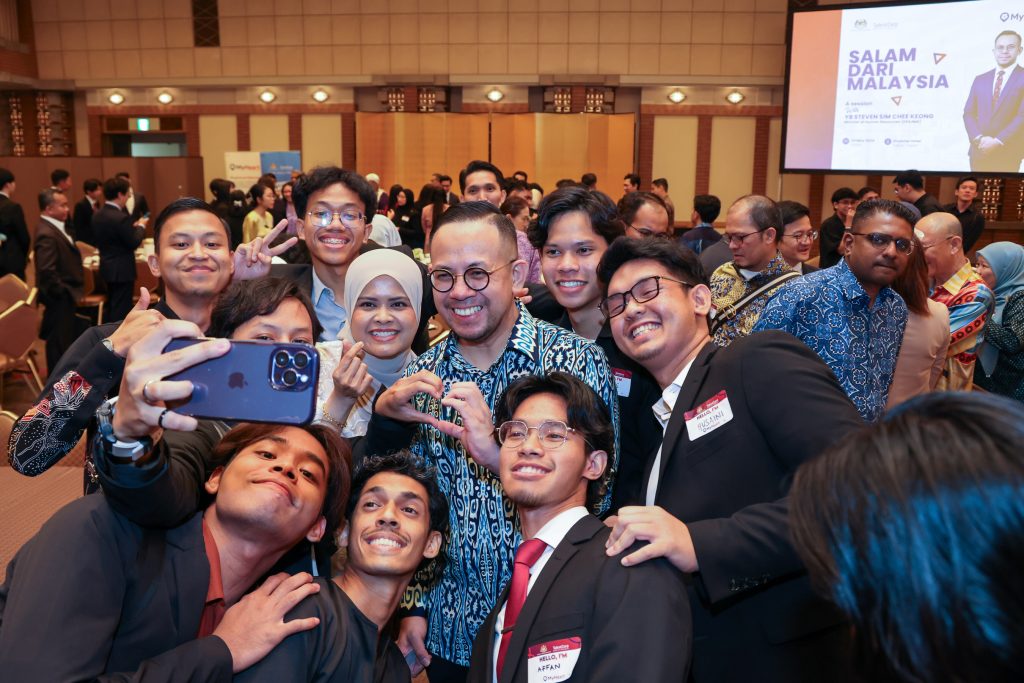
KUALA LUMPUR: Talent Corporation Malaysia Bhd (TalentCorp), an agency under the Ministry of Human Resources (KESUMA), continues its commitment through the Malaysia at Heart (MyHeart) initiative, providing a platform for Malaysians worldwide to contribute to the nation’s development, regardless of their location. During a recent TalentCorp MyHeart ‘Salam Dari Malaysia’ outreach event in Tokyo, which drew over 180 Malaysians residing in Japan, KESUMA Minister Steven Sim Chee Keong, announced that TalentCorp will come on board as a strategic partner for the upcoming Malaysia-Japan Visionaries Conference 2024 (MJVC2024). In this first MyHeart collaboration for Japan, TalentCorp will provide a RM30,000 grant (equivalent to ¥1,000,000) to ensure the conference’s success. Additionally, TalentCorp will allocate a RM50,000 bursary to assist up to 20 Malaysian researchers to participate in the conference in Tokyo. “In today’s global market, the best talents, especially our Malaysians, will excel wherever they are. Through MyHeart, KESUMA is committed to developing Malaysian talents abroad, so they can contribute to the nation’s growth and benefit fellow Malaysians. “Our country’s human capital is a valuable asset, no matter where they reside, and KESUMA is dedicated to nurturing these assets for the greater good,” the minister said. The MJVC2024 is organised by a team of 45 Malaysian and Japanese researchers, led by Amy Poh Ai Ling. A Malaysian hailing from Bukit Mertajam, Penang, with dual PhD credentials, Amy Poh currently resides in Tokyo with her family and is committed to advancing excellence in interdisciplinary research between Malaysia and Japan. “To me, this is what a diaspora programme like MyHeart is about. Each MyHeart session offers more than just a chance to connect with fellow Malaysians abroad, but it is an opportunity to pitch and engage in collaborations to breathe life into your projects. These can create tangible outcomes that directly benefits both Malaysians and Malaysia, transforming into genuine brain gain stories,” Steven Sim emphasised. At the event, TalentCorp Group CEO, Thomas Mathew signed Memoranda of Understanding (MoU) with the Japan Graduates Association of Malaysia (JAGAM) and the Malaysian Students’ Association Japan (MSAJ), which aims to bolster TalentCorp’s initiatives, including MyHeart and Ilham KESUMA Antarabangsa, through increased collaboration with these active Malaysian associations in Japan. Mathew highlighted that previous TalentCorp’s efforts in the diaspora space were mainly on facilitating the return of Malaysians abroad and that the role has since evolved to encompass all Malaysians living abroad, recognising that they can contribute significantly to the circulation of knowledge and expertise. “By coming on board as a strategic partner for meaningful initiatives such as the MJVC2024, we are stating emphatically that we support our Malaysians abroad who drive and are committed to projects that provide opportunities to fellow Malaysians. That is the essence of what MyHeart is,” he commented.

Scroll to Top

Subscribe
FREE Newsletter