Investment & Market Trends

Investment & Market Trends

Nvidia Approaches $4 Trillion Valuation Amid AI Market Leadership

Nvidia briefly touched a market capitalisation of $4 trillion on Wednesday, becoming the first company globally to reach the milestone, underscoring its dominant position in the artificial intelligence sector and reinforcing its status as one of Wall Street’s most sought-after equities. The California-based chipmaker’s shares climbed as much as 2.8% during the session, reaching a record intraday high of $164.42, before closing up 1.80%, valuing the company at approximately $3.97 trillion. The rally continues to reflect surging investor confidence in the future of AI, a sector where Nvidia’s high-performance semiconductors are regarded as foundational infrastructure. “This highlights the reality that capital expenditure across industries is increasingly shifting towards artificial intelligence. It is clearly the direction in which technology is heading,” said Robert Pavlik, Senior Portfolio Manager at Dakota Wealth in New York. Nvidia’s ascent has been rapid. After achieving a $1 trillion market valuation in June 2023, the company has effectively tripled its worth within a year—outpacing the trajectory of both Apple and Microsoft, the only other US-listed firms with valuations exceeding $3 trillion. Microsoft currently holds the position of the second-most valuable company in the United States, with a market capitalisation of $3.74 trillion. Its shares closed 1.4% higher at $503.51. Despite a subdued start to the year, prompted by market concerns over a low-cost AI model developed by China’s DeepSeek, Nvidia has rebounded strongly—up approximately 74% from its April lows. That recovery coincided with renewed optimism around trade negotiations involving the United States, contributing to record highs in the broader S&P 500 Index. Nvidia now comprises 7.3% of the benchmark index, ahead of Apple and Microsoft, which account for approximately 7% and 6%, respectively. Nvidia’s current valuation surpasses the combined worth of all publicly listed companies in both Canada and Mexico, and exceeds the entire UK equities market, according to LSEG data. The company’s 12-month forward price-to-earnings ratio recently stood at 32—below its three-year average of 37—indicating continued appetite from investors despite its substantial growth. However, while Nvidia remains the dominant supplier of AI chips, major clients such as Amazon, Microsoft, and Alphabet are under increasing investor pressure to curtail expenditure on AI infrastructure. Meanwhile, competitors including Advanced Micro Devices are seeking to capture market share through more cost-effective alternatives. Nvidia posted first-quarter revenue of $44.1 billion, representing a 69% year-on-year increase. The company has guided for second-quarter revenue of approximately $45 billion, plus or minus 2%, and will release those figures on 27 August. Year-to-date, Nvidia shares have risen around 22%, outperforming the Philadelphia Semiconductor Index, which is up nearly 15%. -Reuters
Investment & Market Trends

Xiaomi Sets Sights on Home Appliance Market Following EV Momentum

Xiaomi Corporation is expanding its reach into the global home appliances sector, building on the momentum generated from its electric vehicle (EV) debut and longstanding disruption in the smartphone industry. The Beijing-based firm is now targeting a top-three position in the home appliance space within three years, signalling an aggressive new chapter in its diversification strategy. Following the launch of its first electric vehicle in March 2024, Xiaomi surprised many industry observers with a stronger-than-expected market entry. Now, with the EV segment projected to break even this year, the company is focusing on another sector with entrenched incumbents – home appliances. Xiaomi’s ambitions are partly buoyed by Beijing’s extensive consumption stimulus, including increased subsidies aimed at boosting domestic spending. The company’s home appliance growth figures are already gaining attention. In the first quarter of 2025, its large home-appliance segment posted nearly 114 per cent year-on-year growth. Air conditioner and refrigerator shipments surged 65 per cent, while washing machine shipments doubled, according to Xiaomi’s May filing to the Hong Kong stock exchange. Executives are reportedly aiming to secure a top-three ranking in China’s home appliance market by 2027. In 2024, Xiaomi’s large appliance revenue rose over 56 per cent – a significant outperformance compared with Midea’s 9 per cent growth, Haier’s sub-4 per cent rise, and Gree’s more than 4 per cent decline. The scale of the opportunity is considerable. Midea, China’s leading appliance maker, valued the domestic home appliance market at over 854 billion yuan (approximately US$119 billion) in 2023, representing 36.5 per cent of global market share. From 2023 to 2027, China’s market is projected to grow at a compound annual rate exceeding 5 per cent, outpacing both the United States (c.2 per cent) and Europe (1.4 per cent). Xiaomi’s global ambitions are also becoming clearer. In March 2025, the company announced plans to roll out its large home appliances internationally, focusing on connected living ecosystems. Around the same period, it opened its first retail store in Japan, with intentions to introduce refrigerators and washing machines in the second half of the year, according to local media reports. Xiaomi’s push into the sector aligns with broader government policy. Chinese authorities have earmarked 162 billion yuan of a 300 billion yuan stimulus package to subsidise purchases of home appliances, smartphones and EVs – doubling last year’s figure. These measures contributed to retail sales of consumer goods reaching 4.1 trillion yuan in May 2025, a 6.4 per cent year-on-year increase. Home appliance sales alone surged 53 per cent. Nonetheless, concerns remain regarding the sustainability of this growth. Analysts have cautioned that subsidies may be front-loading demand, creating uncertainty about future momentum. HSBC, in a recent note, adopted a “slightly more conservative” outlook for Xiaomi’s Internet-of-Things division in the second half, though it acknowledged the segment’s resilience and flagged potential for further government support. Despite Xiaomi’s rapid ascent, its market scale still trails major incumbents. S&P Global Ratings estimated the company’s large appliance revenue at 20.8 billion yuan in 2024 – less than 10 per cent of Haier’s, under 6 per cent of Midea’s, and below 14 per cent of Gree’s. Historically reliant on online distribution, Xiaomi is actively building a stronger offline presence. As of March 2025, the company operated over 16,000 stores in China, with a target of reaching 20,000 by the end of next year. “Xiaomi is likely to grow its market share over time, but we do not expect it to pose a material threat to incumbents like Midea and Haier, who have a proven track record in premium product development and global expansion,” said Dan Baker, Senior Equity Analyst at Morningstar. S&P’s Cathy Lai noted that Xiaomi is expected to win market share from smaller, low-end rivals with weaker distribution networks. However, she pointed out that the company still lacks key advantages in supply chain depth and in-house manufacturing. Unlike competitors Midea, Haier and Gree – all of which operate integrated manufacturing and research facilities – Xiaomi continues to outsource most of its large appliance production. Still, recent moves suggest change is underway: the company has established its own factory to support future growth and cost efficiency. “Over the long term, if Xiaomi builds out its manufacturing capabilities and sharpens its product differentiation, it could significantly improve its competitiveness,” Lai added. Xiaomi’s brand strength remains a core asset, particularly among younger consumers. Chris Pereira, CEO of Singapore-based brand consultancy iMpact, highlighted the company’s narrative-driven marketing as a differentiator. “Xiaomi has succeeded in positioning home appliances as part of a broader smart living experience,” Pereira said. “While legacy players dominate in supply chain and product credibility, Xiaomi’s storytelling, fast product iteration, and community-driven approach offer it a strong platform to challenge across the consumer electronics landscape.” -SCMP

Investment & Market Trends

iCents IPO Oversubscribed by 2.3 Times Ahead of ACE Market Listing

iCents Group Holdings Bhd has announced a strong response to its initial public offering (IPO), with the exercise oversubscribed by 2.3 times in advance of its scheduled debut on the ACE Market of Bursa Malaysia on 17 July. The cleanroom and facility services provider confirmed that its IPO comprises a public issue of 112.5 million new ordinary shares priced at RM0.24 each. This represents 22.5% of its enlarged issued share capital and is expected to raise gross proceeds of approximately RM27 million. In addition to the public issuance, the IPO also includes an offer for sale of 30 million existing shares, equivalent to 6% of the enlarged issued share capital. These shares are being placed privately with selected investors. iCents disclosed that the 25 million shares allocated to the Malaysian public attracted a total of 1,266 applications for 82.39 million shares. The total value of applications received for this tranche is approximately RM19.77 million. The company’s forthcoming listing reflects investor confidence in its growth strategy and service offerings within the cleanroom and controlled environment support sector. -The Star

Investment & Market Trends

FWD’s Global Share Offering Significantly Over-Subscribed Ahead of HKEX Listing

FWD Group announced on 4 July that its Hong Kong and international share offerings have both been significantly over-subscribed, in a strong show of investor confidence ahead of its listing on the Hong Kong Stock Exchange (HKEX). The Hong Kong public offering attracted 61,689 valid applications, representing demand for approximately 339.2 million shares. This equates to around 37.1 times the 9.1 million shares initially made available under the Hong Kong public tranche. Given that the over-subscription exceeded 15 times but remained below the 50-times threshold, FWD has reallocated 18.3 million shares from the international offering to meet local demand. As a result, the final number of shares under the Hong Kong public offering has increased to 27.4 million, representing 30% of the total shares available under the global offering, prior to any exercise of the over-allotment option. The international tranche was similarly well received, resulting in an over-allocation of 13.7 million shares and attracting participation from 129 placees. Following the reallocation, the total number of international offer shares stands at 63.9 million. Consequently, FWD has granted the over-allotment option to the international underwriters, which allows the joint representatives to purchase up to an additional 13.7 million shares to cover any over-allocation. This option is exercisable at any point from the effective date of the international underwriting agreement until 30 days after the close of applications under the Hong Kong public offering. FWD had previously announced on 26 June its intention to offer 91.3 million shares at an indicative offer price of HK$38 (approximately US$6.16) per share. This followed the company’s re-filing to list on the HKEX in May this year. Should the over-allotment option be fully exercised, FWD is expected to raise gross proceeds of approximately HK$3.99 billion (US$512 million). In the absence of this exercise, the group anticipates gross proceeds of around HK$3.47 billion (US$445 million). FWD shares are scheduled to begin trading on the HKEX on 7 July, with a board lot size of 100 shares. -The Edge

Investment & Market Trends, News

Samsung Projects 39% Q2 Profit Decline as AI Chip Supply to Nvidia Faces Delays

Samsung Electronics is expected to report a 39% year-on-year fall in second-quarter operating profit, as ongoing delays in the supply of advanced memory chips to Nvidia weigh heavily on its performance. According to LSEG SmartEstimate, the South Korean technology conglomerate is projected to post an operating profit of 6.3 trillion won (£3.6 billion) for the April–June period, marking its weakest quarterly result in a year and a half. The anticipated drop reflects growing investor unease regarding Samsung’s ability to keep pace with rivals in the rapidly expanding market for high-bandwidth memory (HBM) chips, which are crucial for artificial intelligence data centres. While competitors such as SK Hynix and Micron have benefitted from strong demand for AI-optimised memory, Samsung’s progress has been hindered by its dependence on the Chinese market, where access to advanced semiconductor technology remains restricted by U.S. export controls. Samsung’s efforts to secure certification for its HBM3E 12-layer chips from Nvidia have also been slower than anticipated. Analysts noted that these chips have yet to make meaningful inroads into Nvidia’s supply chain. “HBM revenue likely remained flat in the second quarter, as China sales restrictions persist and Samsung has yet to begin supplying its HBM3E 12-high chips to Nvidia,” said Ryu Young-ho, Senior Analyst at NH Investment & Securities. He added that shipments to Nvidia are unlikely to be significant within this calendar year. Although Samsung had initially indicated that progress in HBM development could be expected as early as June, it declined to confirm whether its latest chips had passed Nvidia’s qualification tests. However, AMD disclosed in June that it had commenced receiving shipments of Samsung’s HBM3E chips. Despite the softness in its semiconductor division, Samsung’s smartphone segment is expected to deliver stable performance, supported by inventory demand ahead of potential U.S. tariffs on imported devices. Broader uncertainty persists, however, across its core businesses—including semiconductors, smartphones, and consumer electronics—due to evolving U.S. trade policies. The Biden administration is reviewing measures that could revoke export authorisations for chipmakers operating in China, including Samsung, potentially limiting their access to critical U.S. technologies. Additionally, the prospect of a 25% tariff on foreign-manufactured smartphones and a looming 9 July deadline for reciprocal tariffs are contributing to market uncertainty. While Samsung’s share price has risen approximately 19% year-to-date, it continues to lag behind the broader KOSPI index, which has climbed 27.3% over the same period. The company remains the weakest performer among major memory chipmakers in 2025 thus far. -Reuters

Investment & Market Trends

STI Surges to Record High of 4,019.57, Sustains Momentum Above 4,000 Points

The Straits Times Index (STI) climbed to a new peak of 4,019.57 points just before the market closed on 3 July, marking the second consecutive session in which the benchmark set fresh highs. Building on the momentum from 2 July—when it closed above the 4,000-point threshold for the first time at 4,010.77—the STI remained firmly above this psychological level throughout Wednesday’s trading. It reached an intraday low of 4,001.84 around 2pm before rallying further in the late session. The index ended the day at 4,019.57, up 0.22% from its opening level of 4,009.33. Among the 30 constituent stocks, DFI Retail Group led gains with a 4.98% increase. City Developments and Hongkong Land followed, advancing by 2.23% and 1.74% respectively. Conversely, UOL Group—previously the top performer—fell 1.19%. Keppel DC REIT and Singtel also registered declines of 0.86% and 0.77% respectively. The STI began the week at 3,970.09 points on 30 June. The latest milestone surpasses the previous record of 4,005.18 points, which was achieved on 28 March. That day also marked the index’s first historic breach of the 4,000-point level, although it subsequently closed lower at 3,972.43. The STI later faced significant volatility, dropping to a 2025 low of 3,372.38 on 9 April following concerns over former US President Donald Trump’s proposed “Liberation Day” tariffs. Although these tariffs were later deferred by 90 days to 9 July, the announcement initially triggered investor caution. Market sentiment has since rebounded, with analysts forecasting further upside. In remarks made during a media briefing on 27 June, OCBC Investment Research’s Singapore strategist Carmen Lee stated that the STI has a “slightly good chance” of reclaiming the 4,000-point mark in the second half of 2025. Lee has set a 12-month target range of 4,060 to 4,280 for the index. -The Edge

Investment & Market Trends

Vietnam’s Economy Grows 7.52% in H1 2025

Vietnam’s economy recorded robust growth of 7.52% in the first half of 2025, its highest mid-year performance in more than a decade, according to the General Statistics Office (GSO). The announcement comes shortly after Hanoi successfully negotiated a reduction in threatened US tariffs on Vietnamese exports, mitigating potential headwinds to its export-driven economy. The second quarter of 2025 saw a year-on-year GDP expansion of 7.96%, representing the strongest second-quarter growth since 2022, when the figure peaked at 8.56%. The government has set a full-year growth target of no less than 8%. “The country’s socio-economic performance in the second quarter and the first six months of 2025 achieved very positive results, approaching the set target in the context of many uncertainties in the world and regional economy,” the GSO noted in its official release. The latest growth data follows a bilateral trade agreement with the United States announced earlier this week. Under the deal, Vietnam secured a significant reduction in prospective US tariffs, lowering them from a proposed 46% to a minimum rate of 20%, in exchange for expanded market access for American goods. Vietnam currently holds the third-largest trade surplus with the United States, following China and Mexico. The high surplus had placed the country among the primary targets of the US administration’s tariff initiatives. -AFP

Investment & Market Trends

MYStartup Accelerator Invests RM5.5 Million in Malaysian Startups to Fuel Innovation

Cradle Fund Sdn Bhd’s MYStartup Accelerator programme has channelled close to RM5.5 million into local startups across five cohorts, reinforcing its strategic role in nurturing Malaysia’s innovation landscape and supporting the nation’s ambitions to emerge as a regional technology leader. In a recent statement, Cradle confirmed that the initiative, which falls under the Ministry of Science, Technology and Innovation (MOSTI), is jointly managed with NEXEA, a venture capital and startup accelerator firm. Since inception, the programme has focused on accelerating the growth of promising startups, providing both capital and mentorship to early-stage enterprises. “Having completed five cohorts, we have gained meaningful insights into the needs of Malaysian startups. Our next goal is to expand our reach nationwide and ensure startups in all regions have equal access to growth opportunities,” said Cradle’s Group Chief Executive Officer, Norman Matthieu Vanhaecke. During the Cohort 5 Demo Day, startups showcased a range of innovative solutions spanning artificial intelligence (AI), aquaculture, electric vehicle (EV) infrastructure, and smart retail. From a competitive pool of 747 applicants, eight finalists were shortlisted. Of these, five were awarded cash prizes by Cradle, while four secured a combined RM800,000 in investment from NEXEA. Standout participants included Paix Tech, which leverages AI to automate enterprise utility payments; Ocean Rich Resources, a company specialising in scalable oyster farming systems; and Recharge Xolutions, which develops integrated EV charging and green energy solutions. Cradle noted that the MYStartup Accelerator continues to play a critical role in driving a tech-forward future for Malaysia by enabling startups with bold, sustainable, and innovative propositions. NEXEA, recognised for its extensive mentor network comprising accomplished entrepreneurs and C-suite executives, has been instrumental in scaling its portfolio companies—some of which have recorded annual growth of up to 16 times. Cradle, as the government’s key agency for early-stage startups, has supported over 1,100 tech-based ventures to date and maintains the highest commercialisation rate among grant providers in the public sector. -Bernama

Investment & Market Trends

SD Guthrie’s Q2 Earnings Set to Dip 20% Amid Softer CPO Prices

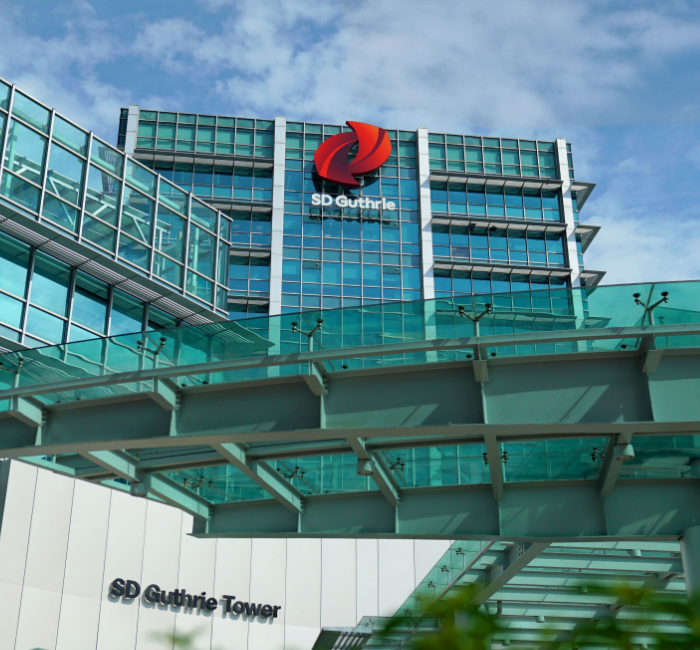
SD Guthrie Bhd is expected to see a decline in core net profit for the second quarter of 2025, as softer crude palm oil (CPO) prices weigh on earnings, according to UOB Kay Hian (UOBKH) Research. The research firm anticipates the group’s profit to fall by approximately 20% quarter-on-quarter, coming in between RM380 million and RM400 million. This anticipated dip follows a decline in average selling prices of CPO after the first quarter of the year. However, UOBKH notes that the impact is likely to be partially offset by stronger production volumes. Fresh fruit bunch (FFB) output for April and May rose by 13% and 4% month-on-month respectively, also registering a year-on-year increase of around 5%. The research house highlighted this trend as a clear sign of improving operational performance, following a period of uneven output influenced by weather-related disruptions. May marked the fourth consecutive month of year-on-year production growth, suggesting that the group is recovering from prior production setbacks driven by the lingering effects of the 2023 El Niño and wet weather experienced in late 2024. In parallel with its core plantation operations, SD Guthrie is actively pursuing growth in its industrial development and renewable energy verticals. Following a memorandum of understanding signed with EcoWorld Development Group Bhd and NS Corp, the group is moving forward with plans to develop a 1,200-acre industrial park in Negeri Sembilan, projected to carry a gross development value (GDV) of RM2.95 billion. Additionally, the company has entered into a joint venture with Sime Darby Property Bhd to develop a 2,000-acre industrial and logistics hub on Carey Island, Selangor. These strategic ventures form part of the group’s diversification into high-potential, long-term sectors. UOBKH Research has revised its earnings forecasts for SD Guthrie for FY25 to FY27 upward by 4% to 5%, largely due to revised assumptions around lower CPO unit costs. These adjustments reflect recent management guidance indicating a more stable cost environment, even in the face of inflationary pressures, including adjustments to the minimum wage. While maintaining a ‘hold’ call on the counter, the research house set a target price of RM4.75. It noted that although SD Guthrie offers compelling medium-term prospects through favourable production growth and diversification into new business verticals, current valuations appear to reflect the near-term softness in CPO pricing. -The Star

Investment & Market Trends

Malaysia Secures RM8.13 Billion in Potential Investments from Italy

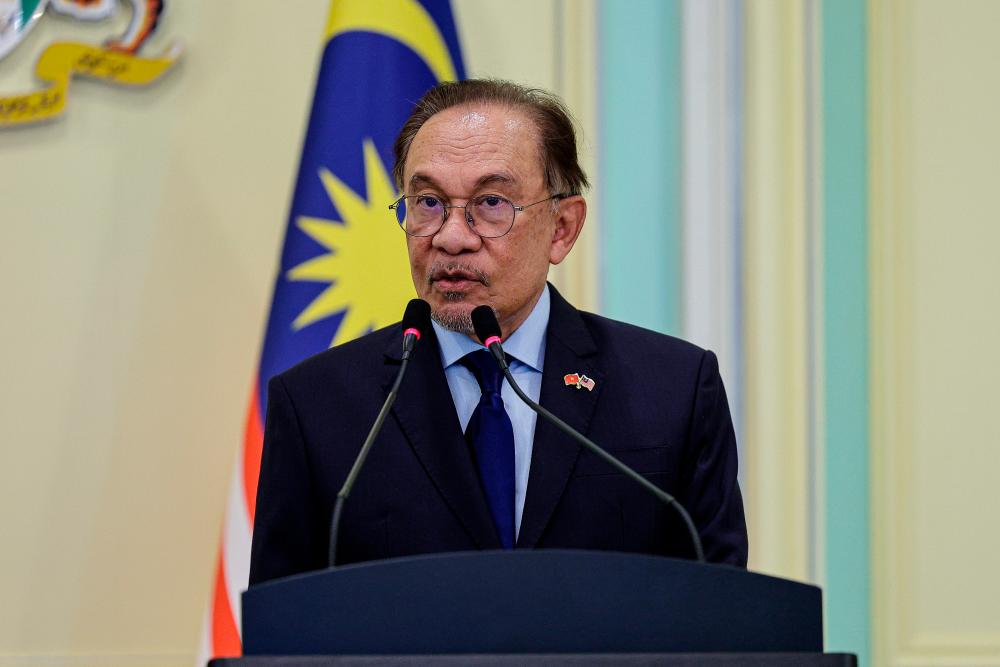
Malaysia has secured potential investments amounting to RM8.13 billion following a series of strategic economic engagements in Italy, Prime Minister Datuk Seri Anwar Ibrahim announced at the conclusion of his official visit to Rome. The investment prospects stemmed from the Malaysia-Italy Economic Cooperation Roundtable and targeted meetings with Italian corporations. The roundtable saw participation from 41 Italian entities, comprising 23 manufacturing companies, nine service providers, two trading firms, five government agencies and two industry organisations. According to the Prime Minister, the projected investments span key sectors including petrochemicals, machinery and equipment, electrical and electronics, as well as oil and gas services and equipment. In addition to investment commitments, the meetings yielded export potential estimated at RM425 million, particularly in oleochemical products, renewable energy, biofuel feedstocks, animal feed additives and food-related products. The roundtable enabled Italian firms to express keen interest in partnering with Malaysian companies, particularly in high-technology manufacturing, renewable energy, the digital economy and sustainable infrastructure. During bilateral talks with his Italian counterpart, Prime Minister Giorgia Meloni, both leaders reaffirmed their commitment to deepening cooperation in the energy sector, notably in solar, geothermal and hydrogen technologies. Significant collaborations were highlighted, including a joint venture between Petronas and Eni SpA in Johor’s Pengerang region to develop sustainable aviation fuel (SAF); strategic cooperation between Perodua and Magna Steyr on electric vehicle battery systems; and Italian interest in supporting the modernisation of Malaysia’s electricity grid infrastructure, including the ASEAN Power Grid (APG) initiative. Anwar also raised the issue of environmental standards during the discussion, formally requesting Italy’s recognition of the Malaysian Sustainable Palm Oil (MSPO) certification and appealing for a more balanced evaluation of the European Union Deforestation-Free Products Regulation (EUDR). Malaysia seeks to be classified under the EU’s low-risk category when the benchmark is revised in 2026. Furthermore, Malaysia has requested Italy’s support in accelerating the conclusion of the Malaysia-European Union Free Trade Agreement (FTA), currently under negotiation. Anwar’s three-day visit to Italy, undertaken at the invitation of Prime Minister Meloni, underscores Malaysia’s continued commitment to strengthening trade and investment ties with key EU economies. He was accompanied by Foreign Minister Datuk Seri Mohamad Hasan, Transport Minister Anthony Loke, Agriculture and Food Security Minister Datuk Seri Mohamad Sabu, Defence Minister Datuk Seri Mohamed Khaled Nordin and Investment, Trade and Industry Minister Tengku Datuk Seri Zafrul Abdul Aziz. Deputy Energy Transition and Water Transformation Minister Akmal Nasrullah Mohd Nasir also joined the delegation. In 2024, total trade between Malaysia and Italy rose by 2% year-on-year to US$3.18 billion (RM14.61 billion). For the January–May 2025 period, bilateral trade continued its upward trajectory, increasing by 3.3% to US$1.48 billion (RM6.5 billion) compared to the corresponding period last year. The Prime Minister has since departed for France for an official visit on 3 and 4 July. -Bernama

Scroll to Top

Subscribe
FREE Newsletter