Investment & Market Trends

Investment & Market Trends, News

PNB Ranked Malaysia’s Top Sovereign Investor and Climbs to 17th Globally

Permodalan Nasional Bhd (PNB) has been named Malaysia’s leading sovereign investor and ranked 17th globally in the 2025 Governance, Sustainability and Resilience (GSR) Scoreboard released by United States-based research firm Global SWF. The GSR Scoreboard is widely regarded as a benchmark for best practices among state-owned investors worldwide, assessing over 200 sovereign wealth funds (SWF) and public pension funds on governance standards, sustainability commitments and institutional resilience. In its statement today, PNB reported an overall score of 84 per cent, achieving a perfect 10 out of 10 in the sustainability category. This accolade reflects recognition for its climate targets, environmental, social and governance (ESG) integration, and transparency in reporting. “This ranking highlights the significant progress PNB has made in strengthening governance, embedding sustainability throughout its investment processes and enhancing long-term institutional resilience,” the fund said. PNB Deputy President and Group Chief Executive Datuk Rick Ramli noted the achievement underscores the organisation’s efforts to embed responsible and sustainable practices across its operations and investment activities. “It is also a strong encouragement for us to continue driving long-term value creation for our unit holders and the broader Malaysian economy, consistent with PNB’s purpose of uplifting the financial lives of Malaysians across generations,” he said. PNB reported notable progress towards its climate goals, including a 98 per cent reduction in Scope 1 and 2 emissions from its 2022 baseline, supporting its ambition to achieve net zero operations by 2025. At the portfolio level, the fund aims to reach a net-zero investment portfolio by 2050 and has already channelled RM5.5 billion into green and transition assets, representing 55 per cent of its RM10 billion target by 2030. Since 2023, PNB has implemented a living wage policy for its employees and is actively encouraging its investee companies to adopt similar practices under the government’s GEARuP initiative. -Bernama

Investment & Market Trends

Hartalega Faces Earnings Pressure as Analysts Slash FY26 Forecast

Hartalega Holdings Bhd is expected to deliver lower earnings for the financial year ending 31 March 2026 (FY26), as analysts revise their forecasts downward in light of margin compression and foreign exchange (forex) headwinds. Kenanga Research has reduced its FY26 net profit projection for Hartalega by 25%, driven primarily by a downward revision in earnings margin assumptions. The research house now anticipates a margin of 12%, down from its previous estimate of 14%, citing conservative assumptions that the company will not immediately pass on forex-related cost pressures to customers. Reflecting this revised outlook, Kenanga has adjusted its target price for the stock from RM4.00 to RM3.20, applying a lower valuation multiple of 2.5 times FY26 book value per share (BVPS), compared with 2.9 times previously. This move accounts for the expected near-term impact of forex movements on the group’s profitability. In its report to clients, Kenanga also noted that Hartalega’s significant exposure to the United States market—where sales comprise between 50% and 60% of total revenue—could be adversely affected if the currently high tariffs imposed on Chinese glove manufacturers are relaxed. The potential easing of these tariffs could diminish any near-term market share gains Hartalega might otherwise realise in the US. Despite these challenges, Kenanga believes Hartalega’s share price is currently trading at a level that aligns with its historical price-to-book valuation range before the imposition of US tariffs on Chinese competitors in September 2024. At that time, the stock traded between 1.8 to 2.0 times PBV. On a two-times FY26 BVPS basis, the stock should be valued at approximately RM2.50 per share. At last close, Hartalega’s shares were trading at RM1.55. The company’s financial performance for FY25 saw a significant rebound, with net profit rising fivefold to RM74.5 million. While this was in line with Kenanga’s expectations, it came in 12% below the consensus forecast. During a recent briefing, management indicated that it anticipates a modest increase in sales volume for the first quarter of FY26, with growth of between 1% and 8% quarter-on-quarter. This translates to a volume range of six billion to 6.6 billion pieces, as customers reportedly remain cautious amid ongoing uncertainty surrounding tariffs and opt to rely on existing inventories rather than initiate restocking. As a case in point, shipments surged to 2.3 billion pieces in May before retreating to two billion pieces in June. However, Hartalega expects inventory replenishment to resume in the second half of FY26, with improved order visibility beginning from June this year. -The Star

Investment & Market Trends

NTT DC REIT’s Tepid SGX Debut Follows Singapore’s Largest IPO Since 2021

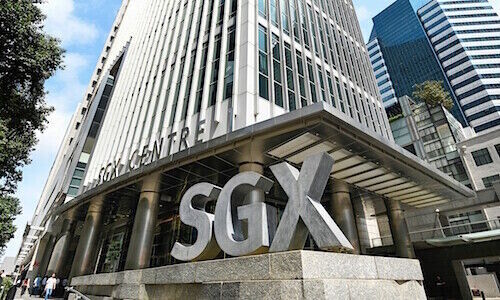
NTT DC REIT, the data centre real estate investment trust backed by Japan’s Nippon Telegraph and Telephone Corporation (NTT), made a subdued debut on the Singapore Exchange (SGX) on Monday, despite raising US$773 million in the city-state’s largest initial public offering (IPO) since 2021. The units opened modestly at US$1.03 within the first 30 minutes of trading, edging just above the offer price of US$1.00. The STI benchmark index was up 0.4 per cent during the same period. NTT DC REIT holds a portfolio of six data centres located in Austria, Singapore and the United States, with a total valuation of approximately US$1.6 billion. The trust’s cornerstone investors include Singapore’s sovereign wealth fund GIC, which holds a 9.8 per cent stake, making it the second-largest stakeholder after NTT Ltd, which retains 25 per cent. The listing highlights increasing global investor appetite for data centre assets across Asia-Pacific, underpinned by accelerating demand for artificial intelligence infrastructure and services. This IPO marks Singapore’s most substantial listing since Digital Core REIT’s US$977 million debut in 2021, according to data from LSEG. It also stands as Southeast Asia’s largest IPO since Thai Life Insurance raised US$942.9 million in 2022. Expanding IPO Pipeline in Singapore The SGX has seen renewed listing activity following the rollout of market-strengthening initiatives in February, including a 20 per cent corporate tax rebate for companies pursuing primary listings. “There is a broad base of potential REIT IPOs on the horizon, including data centre, industrial, logistics, hospitality, commercial and retail assets,” said Art Karoonyavanich, Global Head of Equity Capital Markets at DBS. “This marks the first time we have such a pipeline within a 12-month horizon, and these IPOs could raise anywhere between S$600 million (US$468.27 million) and S$1 billion.” Beyond REITs, China Medical System (CMS), listed in Hong Kong, is set to commence trading on the SGX on Tuesday via a secondary listing. “We believe that upon completion of the proposed secondary listing on the SGX, CMS will be able to attract funds focusing on Asia-Pacific investments and local capital in Southeast Asia, thereby optimising the shareholder structure,” the company said in a statement to Reuters. Other listing candidates in Singapore include Foundation Healthcare and Centurion, which plans to launch a REIT focused on employee dormitory assets. The uptick in listing activity comes amid a buoyant stock market. Singapore’s benchmark index has climbed more than 8 per cent since the beginning of the year and reached record highs in the past nine trading sessions, according to LSEG data. -Reuters

Investment & Market Trends, News

Temasek Deepens Focus on India with Targeted High-Value Investments

Temasek Holdings Pte is refining its investment strategy in India, signalling a shift towards larger, more concentrated bets as it seeks to optimise returns on its expanding US$50 billion (RM212.7 billion) local portfolio. The Singapore-based sovereign wealth fund, a long-term investor in India, is adjusting its approach in response to improving market conditions and greater ease in exiting positions. “The market is getting bigger and bigger, so we need to concentrate,” said Ravi Lambah, head of India operations and strategic initiatives at Temasek. The fund, which has been investing in India for over two decades, recorded a US$13 billion or 35 percent increase in its Indian portfolio this year, driven by capital appreciation and fresh investments. India’s predictable regulatory environment, robust economic growth and strong stock market performance have attracted billions in capital from sovereign wealth and pension funds globally. With the country now the world’s most populous nation and home to a US$5 trillion stock market, international investors have increasingly realised substantial returns. Temasek, which holds a major stake in Bharti Airtel through its affiliate Singapore Telecommunications, is now zeroing in on a few focused themes in a market it considers a top performer over the past decade. Lambah highlighted areas such as consumption, financial services, healthcare, sustainability, transportation and industrials as key investment opportunities. He noted that India’s market now has the scale and liquidity to accommodate billion-dollar equity purchases without major price disruptions. In a move aligned with its long-term outlook, Temasek is also seeking deeper collaborations with India’s family-run enterprises. “When we partner with families, they have longevity of capital,” said Lambah. As Temasek’s funds do not operate on a fixed life cycle, this alignment of investment horizons presents a strategic fit. Recent activity reflects this approach. In March, Temasek acquired a minority stake in Haldiram Snacks Food Pvt Ltd. Its portfolio company Manipal Hospitals also expanded with the acquisition of Sahyadri Hospitals in Western India. Additionally, Temasek-backed Dr Agarwal’s Health Care, a prominent eye care chain, made its market debut in January. Retail participation has surged in India’s equity markets, with inflows into mutual funds reaching a record 272.7 billion rupees last month through systematic investment plans. A strong and liquid market landscape enhances Temasek’s confidence in timely and efficient exits. “When we want to exit, the market will give us opportunity,” Lambah affirmed. -Bloomberg

Investment & Market Trends, News

Corporate Japan Faces Sharper Shareholder Scrutiny Amid Record Activism

Corporate Japan is experiencing a marked shift in investor dynamics, as a record number of shareholder proposals passed at annual general meetings this year. The trend signals growing assertiveness among investors and a waning tolerance for underperformance or complacent governance. According to Mitsubishi UFJ Trust & Banking Corp., seven companies saw shareholder proposals adopted at their AGMs, the highest number since the bank began collecting data nearly 30 years ago. These resolutions included board nominations and governance reforms, highlighting a departure from the historically passive stance of Japan’s shareholder base. The uptick in successful proposals reflects a broader wave of activism sweeping through Japanese boardrooms. Investors, particularly activists, have inundated companies with unprecedented volumes of resolutions, ranging from calls for real estate divestment to strategic realignment and capital returns via share buybacks. While overall shareholder support still leans towards incumbent management, the shift in voting patterns points to a gradual erosion of deference. This development coincides with increasing pressure from the Tokyo Stock Exchange and activist funds to improve capital efficiency and deliver higher shareholder returns. “Shareholder pressure is likely to increase given there is still much room left for improvement,” said Naoki Fujiwara, senior fund manager at Shinkin Asset Management. “The acceptance of activists’ proposals is a significant change from the past.” Alongside the rise in approved shareholder resolutions, there has also been a marked increase in the rejection of management-sponsored motions. According to Sumitomo Mitsui Trust Bank Ltd., 30 company proposals—primarily board director nominations—were voted down this year, a sharp rise from just six the year before. One of the most striking examples occurred at Tokyo Cosmos Electric Co., where all five board nominees put forward by the company were rejected. Shareholders replaced the entire board, including the chief executive officer, with individuals proposed by top investors. Similarly, at Taiyo Holdings Co., the CEO was voted out, reinforcing a trend of growing scrutiny towards executive performance. Data compiled by Goldman Sachs Group Inc. shows a decline in CEO confidence ratings, with the percentage of executives enjoying approval ratings above 80% falling by 1.1 percentage point year-on-year. As traditional cross-shareholding arrangements unwind, the resulting void is being filled by more vocal and independent shareholders, including global asset managers and hedge funds. Still, not every effort by activist investors has been successful. At Fuji Media Holdings Inc., shareholders rejected all 12 director candidates nominated by Dalton Investments. The broadcaster, already under public pressure due to a scandal, retained its management in the face of external challenges. Despite mixed results, the tone of shareholder engagement has undeniably evolved. Hisashi Arakawa, director and head of equities at abrdn Japan Ltd., observed that many firms are increasingly initiating dialogue ahead of AGMs. “We’ve seen companies pro-actively engage with us ahead of shareholder meetings,” he noted. “Whether these proposals pass is a separate matter.” This rising momentum of shareholder empowerment underscores a maturing market in Japan, where investor influence is no longer confined to the sidelines but is now reshaping corporate governance from within. -Bloomberg

Energy & Technology, Investment & Market Trends

SpaceX Commits $2 Billion to Elon Musk’s xAI in Strategic Investment Push

SpaceX has pledged a significant $2 billion investment in xAI, Elon Musk’s artificial intelligence venture, according to a report published by the Wall Street Journal. The funding forms part of a larger $5 billion equity round and signals a deepening alignment between Musk’s various business interests as xAI scales up to rival OpenAI. The development comes shortly after xAI merged with X, the social media platform also owned by Musk. This consolidation places the valuation of the combined entity at $113 billion. The move underscores Musk’s ambition to integrate AI across his portfolio of companies, with the Grok chatbot—developed by xAI—already deployed to support customer services within Starlink, SpaceX’s satellite internet business. Further applications are under consideration, with Grok expected to play a role in Tesla’s Optimus robot project. Despite attracting criticism over some of Grok’s recent responses, Musk has maintained that it is “the smartest AI in the world.” xAI is continuing to invest heavily in the development of its models and supporting infrastructure in pursuit of that claim. Requests for comment sent to both SpaceX and xAI by Reuters have not yet received a response.

Investment & Market Trends, News

AgiBot Targets Swancor Stake in $279 Million Deal, Signalling Possible Market Entry

Tencent-backed humanoid robot maker AgiBot is seeking to acquire a controlling stake in Swancor Advanced Materials, a Shanghai-listed manufacturer, in a move widely seen as a potential precursor to a back-door listing. The start-up, also known as Zhiyuan Robotics, intends to acquire at least 63.62 per cent of Swancor through its affiliates Shanghai Zhiyuan Hengyue Technology Partnership and Shanghai Zhiyuan Xinchuang Technology Equipment Partnership, according to a regulatory disclosure made by Swancor to the Shanghai Stock Exchange on Tuesday. The proposed transaction, valued at approximately 2 billion yuan (US$279 million), would position AgiBot chairman and CEO Deng Taihua as the de facto controller of Swancor. The current controlling shareholders have agreed to relinquish their voting rights, the filing confirmed. Pending approval from Swancor shareholders and the relevant regulatory bodies including the Shanghai Stock Exchange, the deal has triggered considerable market interest. Swancor’s share price surged by the daily limit of 20 per cent to close at 11.21 yuan on Thursday. While AgiBot did not respond to requests for comment, reports from China Securities Journal and Yicai cited the company as denying any intention to pursue a back-door listing through the Swancor deal. Nonetheless, the acquisition underscores the intensifying capital requirements of China’s burgeoning humanoid robotics industry. According to a TrendForce report published in April, six out of 11 domestic humanoid robot firms, including AgiBot, Unitree Robotics, Galbot, Engine AI and Leju Robotics, plan to manufacture over 1,000 units each this year. Following a successful acquisition, AgiBot could raise additional capital and potentially operate under Swancor’s listed ticker. However, AgiBot has pledged not to alter Swancor’s principal business operations or implement major structural reorganisations for at least 12 months, as stated in a separate filing from Swancor on Tuesday. If completed, the deal could enable AgiBot to become the first Chinese humanoid robotics firm to list on the Shanghai market. By comparison, Unitree Robotics is reportedly preparing dual listings in both Shanghai and Hong Kong, while Shenzhen-based UBTech Robotics listed in Hong Kong in 2023. Despite the strategic significance of the Swancor transaction, regulatory challenges remain. AgiBot, established in February 2023, does not currently meet the three-year operational requirement for a reverse initial public offering under Chinese listing rules. The start-up has attracted substantial investment, having completed multiple financing rounds backed by Hillhouse Investment, Tencent, and JD.com. During a funding round in March, AgiBot was valued at over 10 billion yuan. At the time, Yao Maoqing, head of AgiBot’s embodied intelligence division, stated that the company aims to deliver between 3,000 and 5,000 robots in 2025, up from fewer than 1,000 units the previous year. -SCMP

Investment & Market Trends

UK-Malaysia Trade Pact Set to Open Doors for Malaysian SMEs in UK Market

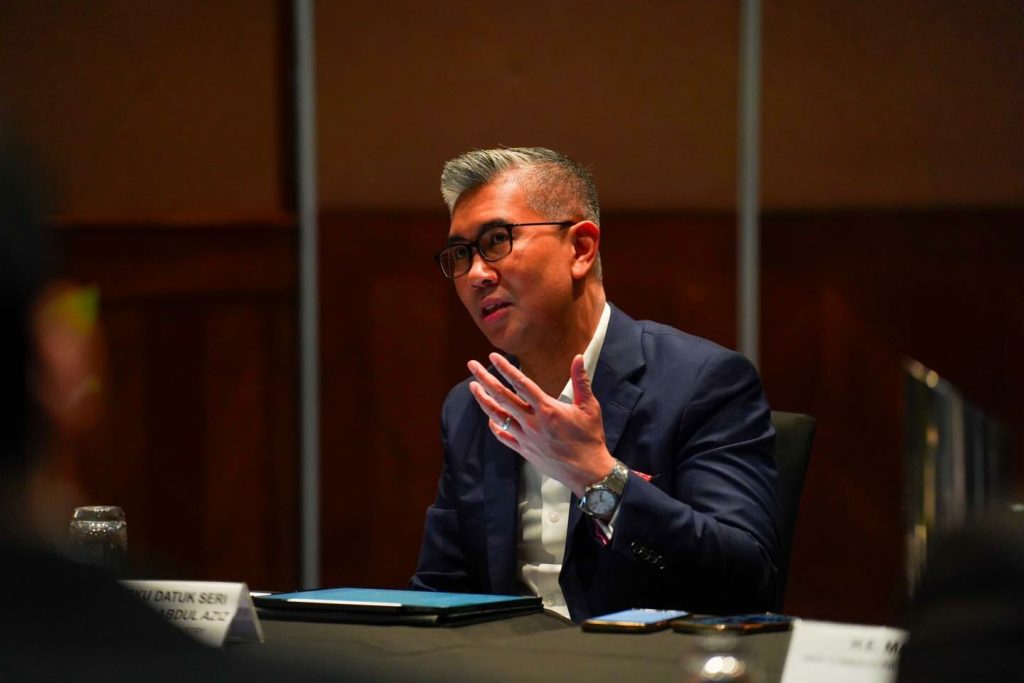
The inaugural implementation of the Comprehensive and Progressive Agreement for Trans-Pacific Partnership (CPTPP) between the United Kingdom and Malaysia is poised to open significant avenues for Malaysian exporters, particularly small and medium-sized enterprises (SMEs), to enter and compete in the UK market. Malaysia’s Minister of Investment, Trade and Industry, Tengku Datuk Seri Zafrul Abdul Aziz, confirmed that the potential economic impact of the agreement was a central topic during recent discussions with UK Secretary of State for Foreign, Commonwealth and Development Affairs, David Lammy. “Together, we could drive economic growth, which is resilient and innovative,” Zafrul stated on the social media platform X on Saturday. The announcement follows a courtesy call on Friday by David Lammy to Prime Minister Datuk Seri Anwar Ibrahim. The visit comes as part of broader efforts to deepen bilateral cooperation, following the elevation of UK-Malaysia ties to a strategic partnership after Anwar’s meeting with UK Prime Minister Keir Starmer in January. In a separate post on X, Prime Minister Anwar welcomed enhanced collaboration between the two nations across multiple sectors, including investment, energy transition, education, climate change, defence, digitalisation and artificial intelligence. -Bernama

Investment & Market Trends

Malaysia Leads Southeast Asia in IPO Market for First Half of 2025, Says Deloitte

Malaysia has secured its position as the top performer in Southeast Asia’s initial public offering (IPO) capital market for the first half of 2025, accounting for 66 per cent of total IPO proceeds raised across the region. According to Deloitte’s Mid-Year IPO Snapshot 2025 report, the country raised US$940 million out of a regional total exceeding US$1.4 billion. Deloitte noted that Malaysia continued its strong IPO momentum from the previous year, outperforming its regional peers in three critical metrics: total funds raised, market capitalisation, and number of IPOs. Among the standout listings was Eco-Shop Marketing Bhd, a household name that debuted on the Main Market of Bursa Malaysia. The discount retail chain led Malaysian IPO fundraising with US$230 million and saw its share price climb six per cent on the first day of trading. This marks the largest IPO in Southeast Asia so far this year. Malaysia recorded 32 IPOs in the first half of 2025, placing six of them among the region’s top 10 listings. Compared to the same period in 2024, the number of listings increased by approximately 48 per cent, while IPO proceeds rose by around 109 per cent. Notably, total IPO market capitalisation surged by roughly 165 per cent. Across Southeast Asia, there were 53 IPOs in the first half of 2025, raising over US$1.4 billion with a combined market capitalisation of US$7.7 billion. This is slightly lower than the 67 IPOs recorded during the same period in 2024, which raised just under US$1.4 billion with total market capitalisation exceeding US$5.8 billion. Commenting on the outlook, Deloitte Malaysia Transactions Accounting Support partner Wong Kar Choon said the IPO market in Malaysia remains positive for the remainder of 2025. As of 30 June 2025, the country has recorded 32 listings, putting Bursa Malaysia on track to meet its full-year target of 60 listings. However, Wong cautioned that external factors could influence the market trajectory. “The recent US trade tariffs and geopolitical tensions have introduced uncertainty, and we foresee there could be an impact on the IPO market,” he said. “This situation may lead to cautious investor sentiment, with investors possibly favouring lower-risk assets in the near term.” Wong also noted that companies, particularly those reliant on exports and vulnerable to supply chain disruptions and rising costs, may opt to delay their IPO plans amid ongoing market uncertainties. -Bernama

Investment & Market Trends

Food Empire Commits US$37 Million to Expand Coffee Manufacturing in India

Food Empire Holdings has announced plans to invest US$37 million to significantly expand its spray-dried soluble coffee manufacturing facility in Andhra Pradesh, India. The development, aimed at increasing production capacity by approximately 60%, is scheduled to commence in the fourth quarter of 2025 and reach completion by the end of 2027. In addition to its existing spray-dried coffee facility, the group operates a freeze-dried soluble coffee manufacturing plant in India. Food Empire has also previously disclosed intentions to establish a new freeze-dried soluble coffee facility in Binh Dinh, Vietnam, which is slated for completion in 2028. These capacity expansion projects are part of the company’s broader vertical integration strategy, designed to enhance control over the entire coffee processing value chain. This initiative supports the long-term growth of Food Empire’s branded consumer business and reinforces the group’s market-leading position in key regions. “Food Empire has enjoyed four consecutive years of record revenue growth driven by the stellar performance of our core branded consumer business,” said Sudeep Nair, Group CEO and Executive Director. “This has given us the confidence to expand our ingredients manufacturing business, which will not only position us strongly as a leading player in soluble coffee in Asia, but more importantly, serve as a vital link to support the growth of our branded consumer business as we continue to invest in brand-building activities across our markets.” Food Empire shares closed at S$1.90 on 9 July, reflecting a 2.15% increase. -The Edge

Scroll to Top

Subscribe
FREE Newsletter