Investment & Market Trends

Energy & Technology, Investment & Market Trends

Khazanah Invests in chargEV to Accelerate EV Adoption

KUALA LUMPUR: Khazanah Nasional Bhd has invested an undisclosed amount in Yinson GreenTech’s (YGT) electric vehicle (EV) charging division, chargEV, to accelerate the expansion of charging stations across Malaysia. YGT, the green technology arm of Yinson Holdings Bhd (KL:YINSON), is working to support the Ministry of Investment, Trade and Industry’s (MITI) goal of installing 10,000 EV charging points nationwide. Khazanah’s investment, made through its Dana Impak initiative, aligns with the government’s push to drive EV adoption in Malaysia. chargEV was initially developed by the Malaysian Green Technology and Climate Change Corporation (MGTC), an agency under the Ministry of Natural Resources and Environmental Sustainability (NRES). According to MGTC, Malaysia had 3,611 charging stations as of early 2025. YGT CEO Lim Chern Yuan said the partnership with Khazanah comes at a pivotal time, as the company experiences significant business growth. “As of December 2024, our pay-per-use revenue has increased fivefold, and charging sessions have doubled compared to the previous year,” Lim said. “We look forward to strengthening Malaysia’s EV ecosystem by providing reliable, convenient, and seamless charging experiences for users nationwide.” On Monday, Yinson’s share price rose 0.44% to RM2.25, giving the company a market capitalisation of RM6.4 billion. Year-to-date, the stock is down 14.39%.

Investment & Market Trends

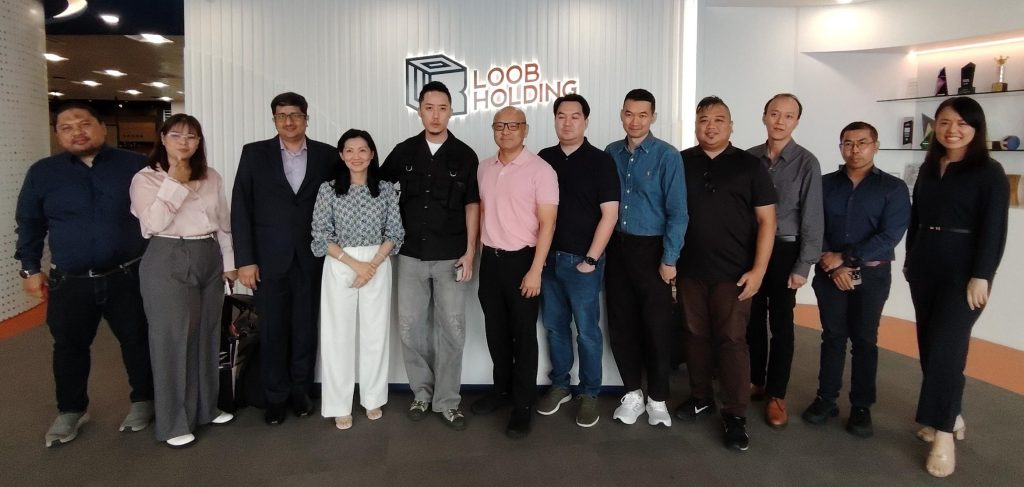
After India, Loob now brings Tealive to Thailand

PETALING JAYA: Fresh from announcing the entry of Tealive into the enormous Indian market three weeks ago, Loob Holding Sdn Bhd revealed plans to open 80 outlets in 10 years in Thailand, another country with an established tea culture. Founder and CEO Bryan Loo said it has chosen a leading local food and beverage player, Restaurants Development Co. Ltd (RD), to be its Master Franchisee. RD currently operates over 300 Kentucky Fried Chicken outlets in Thailand. RD also happens to be a subsidiary of Devyani International Limited (DIL) of India which is the Master Franchisee for Tealive in India. In this breakthrough collaboration with DIL and RD, Loob has made India and Thailand the ninth and tenth overseas markets for Tealive, the top regional lifestyle tea brand and home-grown flagship of Loob. Loo expressed confidence that RD’s extensive network and industry expertise will provide a strong foundation for Tealive’s growth in Thailand. “Tealive, known for always offering more than tea, will introduce its lifestyle tea concept to Thailand, complementing the country’s rich tea culture with additional choices of handcrafted beverages like coffee, premium chocolate and fruit smoothies as well as Tealive’s famous snacks,” he said.   “Our Thai partner is already present in hundreds of locations across the country, and Tealive will leverage this from the start. Actual store locations are still being finalised and, together, we aim for 80 outlets in 10 years.” Reflecting similarly strong confidence in the collaboration, RD CEO Andrew Norton said: “We look forward to work closely with Loob to bring Tealive’s dynamic and contemporary tea experience to Thai consumers. With our deep understanding of the breadth and depth of the local market and Tealive’s innovative product offerings, we believe this partnership will redefine how tea is enjoyed in Thailand.” Adding on, Loo said Tealive’s growth approach was centred on its strategic scalability. “Our priority is to adapt and expand efficiently by working closely with our local partner, ensuring that our brand resonates with Thai consumers while maintaining our commitment to quality and innovation.”   With a strong presence of over 950 outlets in various regions, including Southeast Asia, Mauritius, Canada and soon in the Middle East and India, Tealive is now ready to establish itself in a country with strong local tea culture. Thailand’s vibrant tea market, predominantly shaped by local players, presents an exciting opportunity for Tealive to introduce new and modernised beverage options tailored to evolving consumer tastes.

Investment & Market Trends

Razorpay Targets $180 Billion Market with Singapore Expansion

BENGALURU: Fintech unicorn Razorpay has entered the Singapore market, marking its second foray into Southeast Asia following its expansion into Malaysia. This move aligns with the company’s broader strategy to strengthen its regional presence and support businesses seeking efficient cross-border payment solutions. Razorpay currently employs 50-60 people across Southeast Asia and plans to double its workforce by the 2025-26 financial year. “We will maintain a mix of local hires and internal transfers, but the majority of our team in Singapore will be locals,” said Shashank Kumar, co-founder and managing director of Razorpay, in an interview with The Times of India (TOI). The company’s confidence in scaling its Southeast Asian footprint stems from its success in Malaysia, where it has over a thousand customers and processes nearly $1 billion in gross merchandise value (GMV). “Capturing a 3% market share in Malaysia proved that our solutions deliver real impact. Singapore is the natural next step for us,” Kumar added. Tackling High Transaction Costs in Singapore With a 97% adoption rate in digital payments, Singapore has a highly advanced financial sector, projected to reach $180 billion by 2029. However, businesses still face high cross-border transaction fees of 4%-6%, which limits scalability. Razorpay aims to address this challenge by leveraging its AI-powered payment suite to reduce these costs by 30% to 40%. “Singapore’s payments landscape is highly evolved but remains fragmented when it comes to cross-border transactions,” Kumar explained. “Many businesses here, especially SMEs, operate beyond domestic borders from day one. Our expertise in building cost-efficient, scalable financial infrastructure in India positions us well to create meaningful impact in Singapore as well.” Expanding Beyond Singapore Razorpay’s Southeast Asia expansion does not stop at Singapore. “We are actively exploring Thailand, the Philippines, and Vietnam as our next markets,” Kumar revealed. The company is betting on its international operations to become a major revenue driver. “Looking ahead, we expect our global business to match the scale of our India operations, which currently handle $180 billion in annual payment volumes,” he added. With an ambitious growth strategy and a proven track record in fintech innovation, Razorpay is poised to play a key role in transforming cross-border digital payments across Southeast Asia.–TIMES OF INDIA

Investment & Market Trends

Grab’s Digital Bank Deposits Surpass US$1.2B, Loan Disbursements Hit US$639M

Fourth-quarter financial services revenue grew 38% year-on-year to US$74 million, contributing to an overall 44% annual growth, which brought the segment’s full-year revenue to US$253 million. The company’s lending business expanded significantly, with total loan disbursements reaching US$639 million in Q4, a 44% increase from the previous year. The outstanding loan portfolio grew 64% to US$536 million. Customer deposits in Grab’s digital banking operations in Singapore and Malaysia continued to rise, reaching US$1.2 billion in Q4, up from US$1.1 billion in the previous quarter. Grab operates two digital banks: GXS Bank in Singapore, a joint venture with Singapore-listed telecom giant Singtel, launched to the public in August 2022, and GX Bank in Malaysia, the country’s first digital bank, operational since November 2023. The increase in deposits contributed to higher operating cash flow, which totaled US$852 million for the full year, an improvement of US$766 million from 2023. Adjusted free cash flow was US$136 million, up from negative US$234 million in 2023. GX Bank in Malaysia launched its first retail lending product, GX FlexiCredit, in November, offering flexible repayment terms of up to five years. While financial services revenue grew, the segment’s adjusted EBITDA remained negative at US$27 million in Q4, though this was a 45% year-on-year improvement due to higher revenue and cost efficiencies. For the full year, adjusted EBITDA losses narrowed to US$105 million, an improvement of 38% compared to 2023.–FINTECH NEW SINGAPORE

Investment & Market Trends, News

Qew Group Berhad Poised for Multi-Billion-Ringgit Expansion with Strong 17.9% D/E Ratio

KUALA LUMPUR: Qew Group Berhad (“QGB” or the “Group”) is set for rapid expansion, leveraging its robust financial structure and an formidable 17.9% Debt-to-Equity (D/E) ratio to unlock high-growth opportunities in Malaysia’s infrastructure, telecommunications, and industrial sectors. With a diversified asset base valued at RM2.38 billion, comprising both tangible and intangible assets, QGB presents a compelling investment opportunity for Ultra-Sophisticated Investors (USIs), Ultra High-Net-Worth Individuals (UHNWIs), and institutional investors looking for strong returns in a dynamic and expanding market. A Powerhouse in Strategic Investments QGB’s diversified portfolio spans real estate, telecommunications, healthcare, and natural resources, including: Iron Ore Mining Concession – A strategic foothold in Malaysia’s resource sector. Proprietary Rare Earth Elements (REE) Decontamination Formula – A game-changer in sustainable mining. Licensed Credit Business & Factoring (BNM-regulated) – A financial services arm ensuring liquidity and structured financing solutions. Receivables Portfolio – Strengthening cash flow and reinforcing financial stability.   With equity totalling RM2.38 billion and liabilities of RM426 million, QGB maintains a strong liquidity position, enabling the execution of multi-billion-ringgit mega projects that will be announced in the coming months. Strategic Financial Growth & Investor Collaborations To mobilize these high-value projects, QGB is actively engaging leading banks, financial institutions, and sovereign wealth funds (SWFs), seeking strategic capital injections, structured financing, and institutional partnerships to accelerate growth and enhance investor returns. As part of its expansion strategy, QGB is in the final stages of structuring a SUKUK financial instrument—a Shariah-compliant funding model aimed at attracting long-term, high-value investors while strengthening its access to global capital markets. Exit Plan Execution & Strengthened Liquidity Additionally, QGB has successfully enrolled all RPSI under its exclusive EXIT PLAN Program—a structured initiative designed to ensure swift and efficient resolution of outstanding obligations. Upon completion of its ongoing financial consolidation, QGB will execute the EXIT PLAN in full, further enhancing its liquidity, strengthening its financial position, and reinforcing investor confidence. Qew Group’s Call to Ultra-Sophisticated Investors. “Our disciplined financial management, diversified strategic assets, and strong liquidity position us uniquely for high-value, large-scale projects. With a low 17.9% D/E ratio, we are primed for aggressive expansion. While we acknowledge the financial challenges of the current landscape, our commitment to delivering long-term investor value remains unwavering. Major financial institutions and sovereign wealth funds have already expressed strong interest, and we welcome ultra-sophisticated investors to join us on this exclusive journey,” said Azwah Mohamad Noor, Group Corporate Strategy and Investment Officer (GCSIO) of Qew Group Berhad.   With its strong financial foundation and strategic investment outlook, Qew Group Berhad is charting a bold course toward becoming a dominant force in Malaysia’s evolving economic landscape. Investors can expect scalable assets, high-growth revenue streams, and long-term value creation as the company accelerates its expansion.

Investment & Market Trends

Tune Protect’s RM9.5M 4Q24 Profit Marks Strongest Quarter Yet

KUALA LUMPUR:  Tune Protect Group Berhad (“Tune Protect” or “the Group”; TUNEPRO, 5230) has recorded its highest-ever quarterly profits and improved full-year performance in 4Q24 and FY24. The Group’s strong recovery trend was driven by notable growth in net insurance service results and Profit After Tax (“PAT”) year-on-year (“YoY”). Chief Executive Officer of Tune Protect, How Kim Lian, attributed this solid financial performance to key strategic decisions, including portfolio optimization and enhanced cost efficiency. Travel Segment Leads Growth in Net Insurance Service Results The Group’s financial results in 4Q24 and FY24 were commendable, with a PAT of RM9.5 million for 4Q24 and RM2.7 million for FY24, signaling a strong rebound. The surge in profits was largely led by a substantial 82.8% quarter-on-quarter (“QoQ”) increase in net insurance service results, reaching RM11.1 million in 4Q24. On a YoY basis, the FY24 net insurance service result more than doubled to RM3.0 million. This positive trend was primarily driven by a strong performance in the Travel segment, improved acquisition cost due to a refined portfolio mix, and a lower reinsurance ratio. Although insurance revenue saw a 1.2% decline QoQ to RM99.0 million in 4Q24, the YoY growth remained robust at 14.2% when excluding the RM43.6 million Tenang impairment recorded in 4Q23. “PAT increased by over 100%, supported by topline growth, lower reinsurance premiums, reduced attributable expenses, and lower tax provisions,” said How. Enhanced Cost Efficiency Drives Improved Combined Ratio Another highlight of 4Q24 was the improvement in the Group’s combined ratio, both YoY and QoQ. Even without the impact of the Tenang scheme impairment, the Group achieved a significant 6.8 percentage point YoY improvement, with the 4Q23 combined ratio standing at 95.5% after adjustment. For FY24, insurance revenue increased by 4.0% YoY to RM389.2 million, while net insurance service results reversed from a RM9.0 million loss in FY23 to a RM3.0 million gain in FY24. The Group’s PAT of RM2.7 million was supported by over 100% growth in net insurance service results, despite lower investment income and a negative RM6.6 million share of results from Tune Protect Thailand (“TPT”), which faced impairment due to claims recovery issues. The combined ratio improved by 3.2% YoY, reflecting better cost efficiency and a lower reinsurance ratio. This was achieved through a strategic exit from the large Commercial segment, higher insurance revenue from the Travel segment, and lower management expenses, which helped offset higher Motor and Fire claims in 2024. However, net incurred claims and attributable expenses rose 6.7% YoY, largely due to four major Fire losses and increased Motor claims during the year. One-Off Losses Impacting PBT Expected to Normalize The Group highlighted that key events affecting Profit Before Tax (“PBT”) in FY24 were mostly one-off occurrences. Excluding these events, PBT would have stood at RM16.1 million. “These one-off events included exposure to four large Fire losses, which were higher than in previous years but are expected to normalize going forward,” said How. Additionally, impairment losses in 2Q24 from Tune Protect Ventures (the Group’s digital life insurance entity) contributed to lower PBT. Digital life insurance traction was slower than anticipated, while the health insurance business is now offered via Tune Protect Malaysia (“TPM”), reducing the need for a separate entity. Investment Performance Stabilized Amid Market Volatility Despite market fluctuations caused by a hawkish U.S. Federal Reserve policy and political uncertainties in the U.S., the Group’s investment performance remained stable, posting RM30.0 million in total investment income for FY24. “We continue to maintain a conservative investment approach. In 4Q24, we completed the rebalancing of our portfolio, shifting towards low-risk unit trust funds, which are primarily invested in Malaysian Government Securities, Government Investment Issues, and Government-Guaranteed Corporate Bonds,” How explained. Travel Segment Drives Future Growth Moving into 2025, Tune Protect’s Travel segment remains the key growth driver, focusing on three main pillars: Expanding market presence Establishing a travel centre of excellence Enhancing travel experiences beyond insurance The Group made significant progress in 4Q24, expanding inbound travel coverage to 10 new markets, including Australia, India, Japan, Brunei, and Taiwan. Additionally, Tune Protect aggressively recruited top travel agents in Malaysia, partnered with four online brokers in Thailand, and onboarded four new Online Travel Agencies (“OTAs”) in Thailand and Indonesia to strengthen Travel Insurance distribution. Another major initiative was the Delay Lounge Pass, which provides customers access to airport lounges during flight delays. This service is now available in most Asian markets through the Group’s airline partner, with plans to expand beyond Asia. Optimizing Motor Portfolio and Claims Management Beyond the Travel segment, the Group remains focused on optimizing its Motor insurance portfolio by refining pricing strategies, improving portfolio mix, and tightening claims management. “Our goal is to align our Motor claims ratio with industry standards, and we expect favorable impacts on Motor claims performance in 2025. We are also gradually adjusting our portfolio mix to focus on segments with a better loss ratio,” How added. Future Outlook: Strengthening Global Travel Ecosystem Tune Protect aims to further expand its presence in the global travel ecosystem, enhancing its inbound travel offerings through better product features, pricing strategies, and benefits. The Group is also strengthening airline partnerships by improving airline platform integrations and launching new insurance products with enhanced benefits to increase adoption among airline customers. To deepen its reach, the Group is targeting regional players, including travel agencies, hotel chains, cruises, event organizers, and ticketing platforms. It also plans to roll out Delay Lounge Pass services in new markets and introduce bite-sized Flight Delay Insurance for airline corporate programs. Additionally, Tune Protect is exploring new travel-related value-added services, such as eSIM offerings, to enhance customer experience. “Our strategic focus will remain on expanding travel insurance and other high-margin business segments, while maintaining strict cost and claims management. By leveraging our expertise and innovative approach, we aim to capitalize on emerging opportunities and drive sustainable growth,” How concluded.


Investment & Market Trends

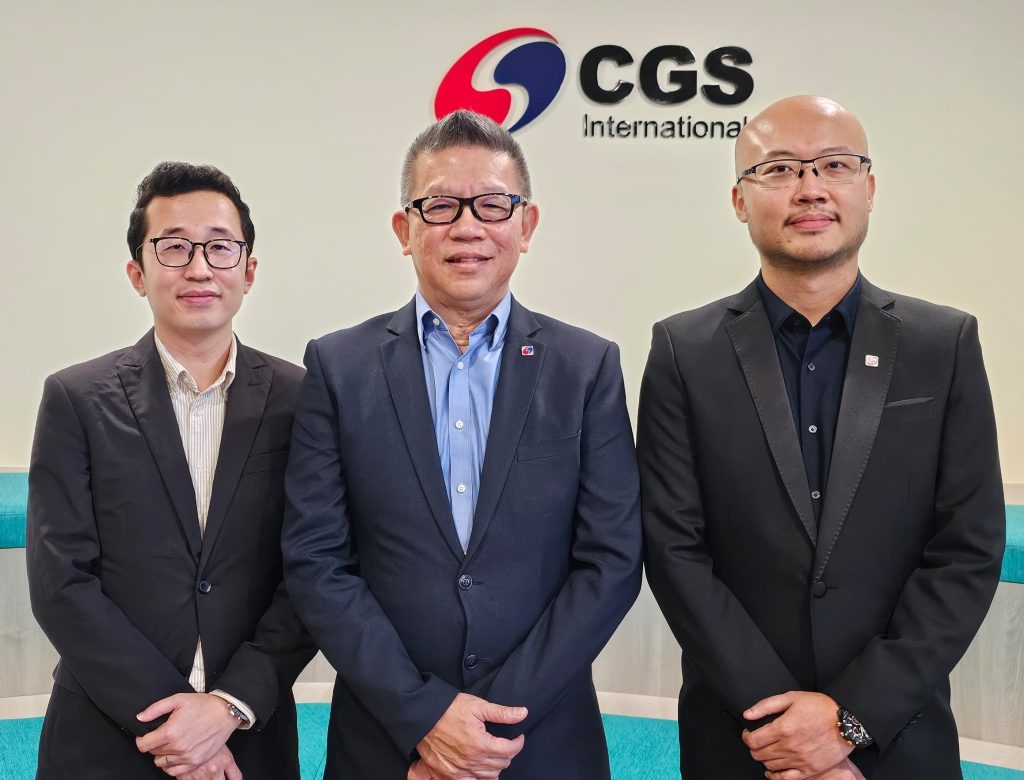
CGS Malaysia Offers Country’s First Publicly Available CME Crypto Futures

KUALA LUMPUR: CGS International Futures Malaysia (“CGS MYF”), the futures broking division of leading integrated financial services company, CGS International Securities Malaysia (“CGS MY”) announced the launch of the first publicly available CME Crypto Futures contracts in Malaysia for the two largest cryptocurrencies by market capitalisation, Bitcoin (“BTC”) and Ethereum (“Ether”). With this, CGS MY also becomes the first licensed derivatives broker in Malaysia to offer local traders and investors access to the potential of crypto futures via global derivatives exchange, CME Group – the world’s leading and most diverse future and options marketplace. Alan Inn Wei Loon, Deputy Chief Executive Officer of CGS MY said, “We are proud to bring this market first as we continue to enhance our product offerings and provide Malaysian traders and investors with access to internationally diverse and globally recognised financial instruments. The introduction of CME Crypto Futures contracts is a natural progression in our efforts to offer access to more complex instruments via a trusted platform such that our audience can capitalise on rapidly evolving market opportunities. Through our network, CGS MY has access to the capabilities, infrastructure, and expertise to support sophisticated traders and investors looking for expo sure to the explosive potential of digital assets but without taking on the full risk or exposure of buying and holding the crypto. The price discovery process adds to the benefits of trading these crypto future contracts within a regulated and trusted environment and at much lower trading fees.” CGS MY continues to expand its suite of trading and investment products, providing a regulated avenue for corporates, institutions, businesses, and retail clients to trade cryptocurrency futures. The launch also comes at a time as institutional interest in digital assets grows, with cryptocurrencies playing an increasing role in diversified investment portfolios despite the current bearish global sentiment. Through CGS MYF investors can trade Bitcoin, Micro Bitcoin, Ethereum, and Micro Ethereum futures contracts in a regulated, cash-settled environment. This approach is an alternative to direct ownership of digital assets. Other benefits are that the contracts allow for greater risk management and portfolio diversification while mitigating the volatility and security concerns associated with spot crypto trading. Maxwell Ong Wai Boon, Head, Securities and Leveraged Products at CGS MYF, added, “The cryptocurrency market is evolving rapidly, and institutional-grade products like CME Crypto Futures provide traders with a structured, transparent, and efficient way to gain exposure to digital assets. These contracts are ideal for experienced traders and investors seeking to hedge risks, capitalise on market movements and volatility, to enhance their portfolios – with a regulated instrument. Together, our robust trading infrastructure and deep market expertise presents an attractive proposition for traders and investors who are looking for the appropriate platform to start trading cryptocurrency-related instruments.” The launch reinforces CGS MYF’s position as a leading derivatives brokerage in Malaysia, providing clients with access to globally competitive trading opportunities. Investors interested in trading CME Crypto Futures with CGS MYF can contact their Futures Broker Representative or visit www.cgsi.com.my for more information.  

Investment & Market Trends

MSC’s 4QFY24 net profit rises three-fold to RM30.2 million

KUALA LUMPUR & SINGAPORE: Tin miner and metal producer, Malaysia Smelting Corporation Berhad (“MSC” or “the Group”) has today announced the financial results for its fourth quarter (“4QFY24”) and the full-year period ended 31 December 2024 (“FY2024”). For 4QFY24, MSC’s revenue rose 10.8% year-on-year (“YoY”) to RM448.5 million versus RM404.6 million in the previous year’s corresponding quarter (“4QFY23”). This performance was supported by higher average tin prices, rising to RM133,700 per metric tonne (“MT”) from RM116,000/MT in the 4QFY23. Fuelled by strong revenue growth, the Group’s net profit attributable to owner of the company (“net profit”) grew three-fold to RM30.2 million in 4QFY24 (4QFY23: RM9.4 million). This improvement led to an expanded net profit margin of 6.7% in 4QFY24 from 2.3% in 4QFY23. Stronger tin prices bolstered the Group’s tin mining segment, driving a 41.6% YoY increase in net profit to RM16.8 million in 4QFY24, compared to RM11.9 million in 4QFY23. The Group’s earnings were further supported by a turnaround in the smelting segment which reported a net profit of RM19.2 million in 4QFY24, against a net loss of RM2.2 million in 4QFY23. The improvement was on the back of higher sales of refined tin derived from the processed tin intermediates during the quarter. For the full year 2024, MSC’s revenue climbed 17.8% YoY to RM1,691.8 million, up from RM1,435.7 million in the previous year (“FY2023”). The growth was mainly due to higher average tin prices of RM138,500/MT (FY2023: RM118,100/MT), and stronger sales volume of refined tin. Driven by higher tin prices, the tin mining segment delivered a 21.8% YoY growth in net profit to RM78.5 million in FY2024, from RM64.4 million in FY2023. In contrast, the smelting segment’s net profit stood at RM23.4 million (FY2023: RM36.0 million), offset by lower incoming feedstock, reduced sales of refined tin derived from processed tin intermediates, as well as foreign exchange fluctuations. Overall, the Group reported a net profit of RM79.4 million in FY2024, from RM85.1 million in the previous year. Commenting on the Group’s performance, Dato’ Dr. Patrick Yong, Group Chief Executive Officer of MSC said, “Our 2024 full-year performance reflects MSC’s resilience in navigating a complex operating landscape.  External pressures, including a shortage of tin ore, volatile foreign exchange fluctuations, and global policy uncertainties, presented challenges that impacted MSC’s smelting yield and overall financial performance in FY2024. Heightened geopolitical tensions and shifting trade policies further contributed to market volatility. Nonetheless, higher tin prices provided a cushion against these pressures, supporting our revenue growth.” “Against this backdrop, we remain focused on strengthening our business competitiveness by enhancing operational efficiencies across our smelting and mining segments.” “With the successful commissioning of our Pulau Indah (“PI”) plant, our near-term priority is the planned closure of our old Butterworth plant this year. This transition is expected to generate approximately 30% cost savings, while benefitting from PI plant’s higher efficiencies, lower operational and manpower costs, and energy-saving initiatives. These efforts will also contribute to a reduced overall carbon footprint, in line with our sustainability objectives.” “Meanwhile, in our tin mining segment, we continue to prioritise increasing daily mining output and overall productivity. This includes expanding mining activities and resources, adopting cost-effective mining methodologies, and participating in new joint ventures to strengthen our long-term growth trajectory. As part of our continuing effort to reduce carbon emissions, we are in the early stages of installing a solar photovoltaic system at our Rahman Hydraulic Tin (”RHT”) mine.” “As for the tin market outlook, tin supply uncertainties are expected to persist, due to the ongoing tin mining ban in Myanmar and export permit delays in Indonesia, both of which are likely to contribute to higher tin prices. At the same time, demand for tin in 2025 is anticipated to remain resilient, underpinned by a projected recovery in global semiconductor sales. This is further reinforced by China’s tightening domestic tin supply and its continued investments in expanding its domestic chip manufacturing industry.” For 4QFY24, the Board has proposed a final single-tier dividend of 7 sen per share, subject to approval at the forthcoming Annual General Meeting. This brings the total dividend per share for FY2024 to 31 sen. 

Investment & Market Trends

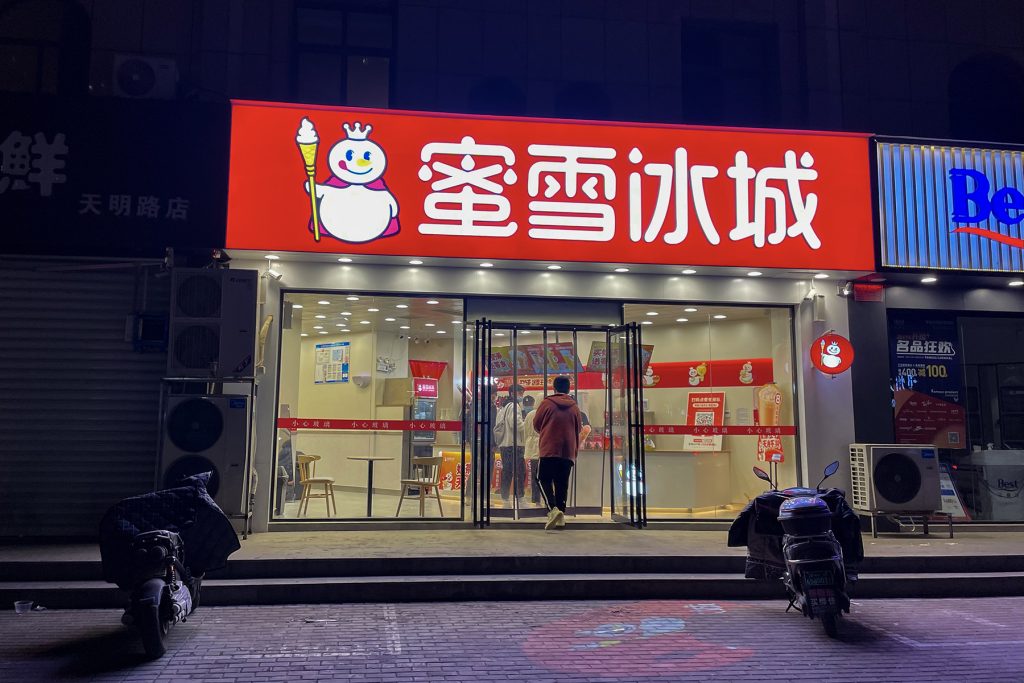
Mixue shares leap 43% in Hong Kong debut

SYDNEY: Shares of China’s largest bubble tea and drinks chain Mixue Group jumped more than 43% on their first day of trading on the Hong Kong Stock Exchange on Monday, as the city records its strongest start to a year for new listings since 2021. Mixue – known for its cheap drinks and red-cloaked Snow King mascot – raised $444 million in an initial public offering by selling 17 million shares in the deal at a fixed price of HK$202.5 each. The shares rose as high as HK$290 in the session after opening at HK$262 each. The gains outpaced a 1% rise in Hong Kong’s Hang Seng Index. Retail investors subscribed for 5,258 times more shares than were on offer in that tranche, according to Mixue’s filings, making it one of Hong Kong’s most popular IPOs. The retail subscription rate was just below Bloks Group whose retail book was 6,000 times oversubscribed, a record, in its January IPO. The institutional tranche of the deal was 35 times covered, the filings showed. There has been $1.44 billion worth of IPOs in Hong Kong year to date, making it the best start to a year since 2021, according to Dealogic data. So far in 2025, IPO debutantes have recorded an 11.7% gain on average on their first day of trade, well up on the 7.6% gain in 2024, the data showed. Mixue’s high profile among Chinese consumers for selling drinks for as cheap as 6 yuan ($0.82) and a lack of IPOs in Hong Kong drove demand for the stock from retail investors, advisors on the deal said. “Many Chinese tea chain stocks had dismal debuts and Mixue’s 30% plus jump is a pleasant surprise to investors,” said George Au, Philipp Securities deputy sales director. “Some clients were so enthusiastic they brought their entire families to open accounts just to participate in this IPO.” Hong Kong’s shortened IPO settlement period has prompted some of the city’s brokerages to offer highly reduced margin loans to buy into new share sales, pushing up retail interest in offerings like Mixue. “The cost for retail investors to subscribe has been reduced to close to zero, which is increasing their incentive to participate,” said Dickie Wong, Kingston Securities executive director. Mixue is often seen as China’s largest chain of iced drinks, milk tea, and ice cream. However, it operates more like a raw-material supplier than a traditional beverage brand. Founded in 1997 as a small ice shop in Zhengzhou, Henan province, Mixue has grown into a franchise giant with over 45,000 stores globally by September 2024, surpassing Starbucks’ 40,576 stores worldwide. Unlike Starbucks, which operates 53% of its stores directly, Mixue relies heavily on franchising, with more than 99% of its stores run by franchisees. This model has proven highly profitable. In the first nine months of 2024, Mixue reported a net profit of 3.49 billion yuan, up from 3.19 billion yuan in the same period of the previous year, according to its IPO filings. The secret lies in its franchise model, which generates revenue by selling food materials, packaging, and equipment to thousands of franchisees, supported by its robust manufacturing capabilities, according to its filings. Mixue has expanded at an astonishing pace, adding 8,582 net new stores in 2023 and another 7,737 in the first nine months of 2024 – averaging 28 new stores daily. In contrast, Starbucks opened just 377 net new stores in the quarter ending December 2024. –Reuters

Investment & Market Trends, News

CIMB Posts Record RM5.04 Billion Dividend Amid Strong FY24 Profits

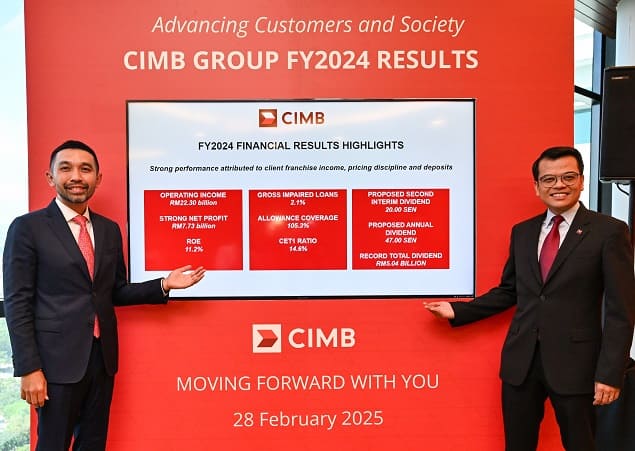
KUALA LUMPUR: CIMB Group Holdings Berhad (“CIMB Group” or “the Group”) delivered a strong financial performance for the financial year ended 31 December 2024 (“FY24”), reporting a net profit of RM7.73 billion, a 10.7% year-on-year (YoY) increase from RM6.98 billion in the previous year. Profit before tax (“PBT”) rose 9.0% YoY to RM10.40 billion, translating to earnings per share (EPS) of 72.3 sen. The Group’s return on average equity (ROE) improved by 50 basis points (bps) to 11.2%.   CIMB Group’s operating income grew by 6.1% YoY to RM22.30 billion, driven by strong growth in both net interest income (“NII”) and non-interest income (“NOII”). NII increased 5.3% YoY to RM15.40 billion, supported by healthy loan growth, while NOII rose 8.1% YoY to RM6.90 billion, led by a robust client franchise business and higher trading income. This improved the NOII ratio to 31.0%, up 60bps YoY. The Group’s strong FY24 results were underpinned by disciplined cost controls, improved asset quality, and a diversified portfolio strategy. Businesses in Malaysia and Singapore outperformed, in line with economic growth, while operations in Thailand stabilised. In Indonesia, the Group remained resilient despite intense market competition. Record Dividend Payout CIMB Group has proposed a second interim dividend of 20.00 sen per share, bringing the total annual dividend to 47.00 sen per share—the highest on record. This translates to a total payout of RM5.04 billion for the year. Strong Growth in Loans, Deposits & Asset Quality On a constant currency basis, total gross loans expanded by 4.8% YoY, aligning with market trends. The Group’s deposit-led strategy drove a 5.2% YoY increase in total deposits, while current account savings account (“CASA”) balances grew 7.7% YoY, raising the CASA ratio to 43.1% as of December 2024. Operational efficiency also improved, with the cost-to-income ratio declining by 20bps to 46.7%. Pre-provisioning operating profit (“PPOP”) grew 6.6% YoY to RM11.88 billion. Asset quality strengthened further, with total provisions declining by 5.5% YoY to RM1.50 billion. The gross impaired loans (“GIL”) ratio improved to 2.1% (-60bps YoY), while allowance coverage reached a record 105.3%, surpassing pre-pandemic levels. CIMB remains well-capitalised, with its Common Equity Tier 1 (“CET1”) ratio at a strong 14.6%, providing financial flexibility for future growth. Resilient Fourth Quarter Performance For 4Q24, CIMB recorded a net profit of RM1.80 billion, up 5.0% YoY. Loan growth was 4.8% higher than December 2023 and 2.4% higher than September 2024 on a constant currency basis. Despite rate cuts in several markets, 4Q24 net interest margin (“NIM”) increased by 2bps to 2.17% YoY, driven by disciplined asset pricing and a deposit-led strategy. NII rose 3.1%, offsetting a weaker NOII. Completion of Forward23+ Strategy FY24 marked the successful conclusion of CIMB’s Forward23+ strategic plan, which transformed the Group’s performance. Over the past four years, ROE improved from 2.1% in 2020 to 11.2%, delivering an annualised total shareholder return of 34.6%. The strategy’s success was driven by portfolio reshaping, a strengthened corporate culture, enhanced asset quality, and operational efficiencies. Commitment to Sustainability & Global Recognition As a purpose-driven organisation, CIMB continues to lead in sustainability, mobilising RM117.0 billion in Green, Social, and Sustainable Impact Products and Services (“GSSIPS”), surpassing its RM100 billion target ahead of schedule. CIMB is also the only Malaysian bank recognised in the S&P Global Sustainability Yearbook 2025, joining 66 leading global banks for excellence in climate action, sustainable finance, financial inclusion, governance, and risk management. Additionally, CIMB ranked first globally among 400 financial institutions in the World Benchmarking Alliance’s 2025 Financial System Benchmark. The Group remains the first Malaysian bank to set and announce decarbonisation targets across six sectors. Outlook for 2025 Novan Amirudin, Group Chief Executive Officer of CIMB Group, commented: “Our strategy of pivoting towards client franchise income, pricing discipline, and deposits has driven a strong FY24 performance. The success of the Forward23+ strategy reflects our focus on portfolio reshaping, efficiency, resilience, and asset quality improvement. Our ambition to be the leading focused ASEAN bank continues to benefit our customers and stakeholders.” “Looking ahead to 2025, we remain cautious given external and geopolitical uncertainties. However, we anticipate continued resilience across our ASEAN markets and expect our core financial performance to stay on a positive trajectory. We will prioritise profitability without compromising investments and long-term sustainability.” “As we embark on our next strategic growth phase, CIMB remains committed to advancing our customers and society across ASEAN. We will focus on optimising capital and resources while driving sustainable growth, making the Group simpler, better, and faster.”

Scroll to Top

Subscribe
FREE Newsletter