Investment & Market Trends

Investment & Market Trends, Property

Pavilion REIT Adds RM480M Iconic KL Hotels to Portfolio

KUALA LUMPUR: Pavilion Real Estate Investment Trust (Pavilion REIT) has announced the proposed acquisitions of two prestigious hospitality assets in Kuala Lumpur, the Banyan Tree Kuala Lumpur (BTKL) and Pavilion Hotel Kuala Lumpur (PHKL), in a landmark deal worth RM480 million. MTrustee Berhad, acting for and on behalf of Pavilion REIT, entered into conditional sale and purchase agreements with Lumayan Indah Sdn Bhd for the acquisition of BTKL at a purchase consideration of RM140 million, and with Harmoni Perkasa Sdn Bhd for the acquisition of PHKL at a purchase consideration of RM340 million.   Both properties are located in the bustling Bukit Bintang area, at the heart of Kuala Lumpur’s Golden Triangle.   Dato’ Philip Ho, Chief Executive Officer of Pavilion REIT Management Sdn Bhd, which is the manager of Pavilion REIT said, “The acquisitions align with Pavilion REIT’s strategy which contributes positively to the overall portfolio and future growth, while also generating stable and sustainable income for unitholders.”   “Acquiring these iconic hospitality assets reinforces our commitment to delivering premium offerings while capitalising on synergistic opportunities with Pavilion Kuala Lumpur Mall”, he added.   The acquisitions will be funded via a combination of debt and/or equity, with Pavilion REIT proposing a private placement of new units to raise gross proceeds between RM264 million and RM552 million. Alternatively, it may issue up to RM246.5 million worth of units to settle part of the purchase consideration.   The transaction is expected to enhance portfolio diversification by reducing Pavilion Kuala Lumpur Mall’s contribution to Pavilion REIT’s total asset value from 61.4% to 58.0% via exposure to the hospitality sector.   BTKL and PHKL are seamlessly connected to Pavilion Kuala Lumpur Mall, one of Malaysia’s premier shopping destinations. The integration enables synergistic marketing and operational strategies, which are anticipated to drive higher revenue per available room for the hotels and further elevate the overall value proposition of the mall. Pavilion REIT’s ownership further enhances this synergy, enabling strategic partnerships that will maximise the long-term value.   The hotels are operated and managed by Banyan Tree Hotels & Resorts Pte Ltd since their openings in 2018. Banyan Tree Hotels & Resorts Pte Ltd is part of Singapore-listed Banyan Tree Holdings Limited, a global hospitality group renowned for its luxury offerings and award-winning services.   BTKL, an award winning five-star hotel within a 59-storey integrated building, features 55 premium suites, a rooftop bar, and the renowned Banyan Tree Spa. PHKL, located above Pavilion Kuala Lumpur Mall, offers 325 well-appointed rooms and extensive event and dining facilities.   BTKL and PHKL have consistently achieved average occupancy rates of 83.0% and 82.2% respectively up to 30 September 2024.   As part of the deal, the hotels will be leased back to the current operator for an initial 10-year term, with the option to renew for up to 20 additional years. The fixed annual rental income will commence at RM33.5 million for the first five years, generating an approximate annual gross yield of 7.0%. This rental income will be subject to incremental adjustments every five years.   This structure provides Pavilion REIT with a yield-accretive, stable and predictable income stream while offering potential upside through variable rental arrangements tied to the hotels’ performance.   These acquisitions come at a time when Malaysia’s tourism and hospitality industry is rebounding strongly. International tourist arrivals in 2024 are projected to reach 27.3 million, a significant increase from 20.1 million in 2023.   Dato’ Philip Ho said, “Within Kuala Lumpur’s Golden Triangle lies what we consider the ‘golden mile,’ Jalan Bukit Bintang. The area’s proximity to world-class attractions, premier retail, and excellent connectivity ensures the hotels and Pavilion Kuala Lumpur Mall are well-positioned to benefit from Malaysia’s ongoing promotion of the tourism sector.”   The proposals are subject to approval by Pavilion REIT’s unitholders and Bursa Malaysia Securities Berhad.   Upon completion, the hotels will represent 5.5% of Pavilion REIT’s enlarged total assets under management, further solidifying its position as a dominant player in Malaysia’s real estate investment trust industry.

Investment & Market Trends

Hong Kong Businesses Eye 2025 Growth

HONG KONG SAR: Hong Kong’s economic outlook and business confidence are set to further improve in 2025, CPA Australia’s latest survey shows. With more than half of respondents predicting their company’s revenue will grow in 2025, companies are becoming more aggressive in their expansion plans and hiring intentions are the highest since 2020. Surveyed executives and accounting professionals show a relatively optimistic outlook for Hong Kong’s economy, with 63 per cent anticipating the local economy will grow next year. Hong Kong’s tax system (31 per cent) ranks as the largest positive contributor to the city’s economic and business environment in 2025, while changes in consumer patterns (26 per cent) and tension in US-China relations (26 per cent) are seen to be the two biggest challenges. 56 per cent of respondents rated Hong Kong’s international competitiveness as high. Mr. Cliff Ip, CPA Australia 2024 Divisional President of Greater China, said, “The survey findings reflect that Hong Kong’s economy and business confidence are expected to steadily improve in the coming year. Recent stimulus measures unveiled by the central government and the Hong Kong government have contributed to this improved sentiment. The start of the rate-cutting cycle has also boosted business confidence. These positive factors should keep this momentum going into 2025 and strengthen Hong Kong’s international competitiveness. “However, external uncertainties still weigh on some sectors such as tourism and retail. Respondents indicate that changing customer behaviour and weak customer demand are some of the key challenges they expect to face in 2025. In response, companies must keep innovating their products and services, and how they deliver them. They also need to frequently engage with customers and potential customers to better understand trends both in Hong Kong and elsewhere.” The outlook for initial public offerings (IPOs) in the city is also optimistic. Some 63 per cent of respondents expect the value of funds raised in Hong Kong through IPOs to increase in 2025. “IPO activity in Hong Kong has shown signs of recovery since Q3 due to some mega-sized IPOs. Policies and regulatory reforms are stimulating capital activities and boosting investor confidence,” Ip explained. The improving economic sentiment is flowing through to revenue projections and business expansion plans in 2025. 51 per cent of respondents predict their company’s revenue will grow next year, with an increase in revenue of between 5 to 20 per cent being the most popular prediction. In response to this improving business environment, respondents are most likely to forecast that their company will increase their investment in advanced technologies (38 per cent), sales and marketing (37 per cent) and expansion outside of Hong Kong (36 per cent). A notably high proportion of respondents to this survey stated that their company has expansions plan in the next three years at home or abroad, with mainland China (40 per cent) again nominated as the most popular destination. Though cost management remains the top strategic focus for many companies, the percentage choosing it has dropped from 39 per cent in 2024 to 27 per cent in 2025. While slightly more are expected to focus on market expansion activities (27 per cent) and innovation and digitalisation (26 per cent). Ip stated, “The more positive business environment is being reflected in an expected shift in corporate strategy away from defensive strategies such as cost management and improving business efficiency towards more expansionary strategies such as market expansion and innovation.” To support growing revenue and expansion plans, companies are keen to add more employees and increase salary to retain talent. 57 of per cent respondents expect that their companies to increase headcount, the highest new hiring intention since 2020. These new hiring intentions are strongest amongst larger companies. Salaries are expected to grow, with 62 per cent expecting to receive a salary increase in 2025. While the economy looks to be on a positive trajectory, predictions for price changes in the property market in 2025 are uncertain, with similar numbers of respondents expecting prices to increase and decrease, however more respondents expect prices to increase than the previous two years. Ip explained, “The city’s property market is recovering, with demand gradually growing. This is due to recent interest rate cuts and changes in government policies such as the relaxation of restrictive measures in the housing market. However, with sectors such as SMEs undergoing a relatively slower recovery due to the weak domestic demand, this is leading to stagnation in the rental market.” The survey data shows nearly all Hong Kong companies have introduced at least some ESG measures into their operations, with only three per cent stating they have not taken any ESG actions. Another 35 per cent expect their company to increase their ESG-related initiatives and activities next year. Respondents were most likely to nominate compliance and increasing compliance costs as the biggest impact ESG is having on their business. CPA Australia collected 568 responses from Hong Kong-based executives, accounting and finance professionals working in various industries in October and November for this Hong Kong Economic and Business Sentiment Survey 2025.

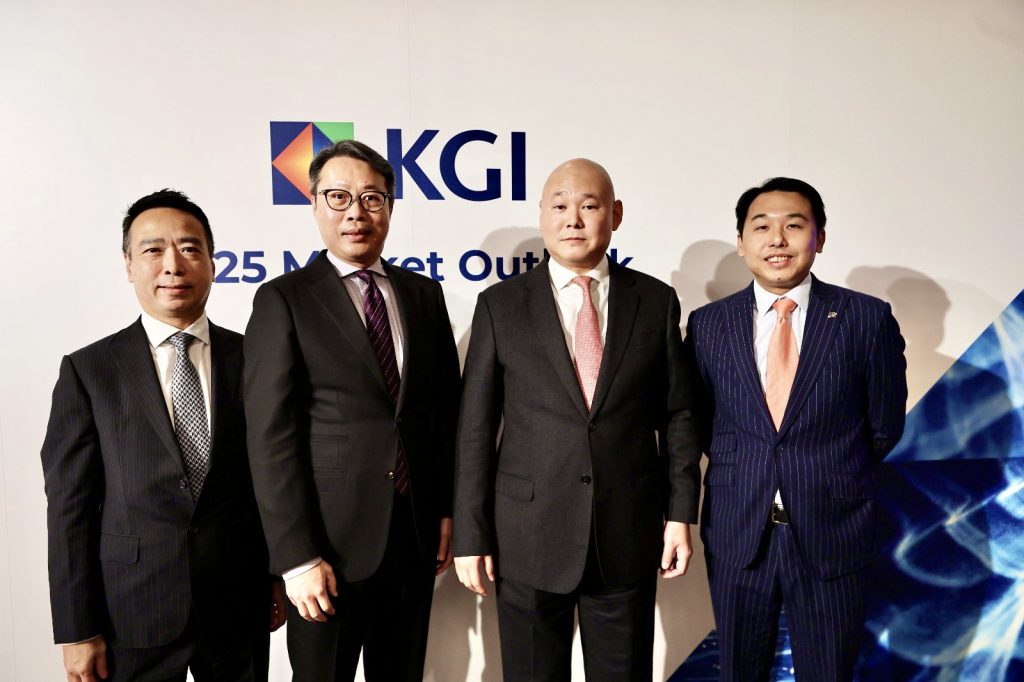
(From left) Cusson Leung, Chief Investment Officer at KGI; James Chu, Chairman at KGI Securities Investment Advisory; James Wey, Head of International Wealth Management at KGI; Kenny Wen, Head of Investment Strategy at KGI
Investment & Market Trends

KGI: 2025 Market Outlook

HONG KONG SAR: KGI has released its 2025 Market Outlook, covering regions including Mainland China, Hong Kong, Taiwan, the U.S., Singapore, and Indonesia. Reflecting on this year, the cooling of inflation and the labor market in the United States has brought the economy to a roughly balanced risk between employment and inflation. With Trump re-entering the White House, his policy propositions are poised to impact global economic development and shape the trend of medium and long-term interest rates. In China, domestic investment confidence remains weak. With the potential risk of the United States significantly increasing tariffs, Chinese exports may be affected. In response, China will introduce relevant measures to address these challenges. Under this backdrop, we recommend the “ACE” strategy for 2025: Alternatives: Gold and cryptocurrencies — assets with lower correlation to traditional stocks and bonds. Credit Selection: Prioritize high-rated bonds, focusing on opportunities in corporate bonds. Elite Stocks: Prefer U.S. and Japanese stocks, maintain a preference for large-cap over small-cap, and pay attention to sector rotation. Kenny Wen, Head of Investment Strategy at KGI, says:  “Regarding asset allocation, based on our assessment of the global economy and geopolitical factors for 2025, investors can consider the ACE strategy: A is for Alternatives, which refers to diversifying into alternative assets to reduce portfolio volatility, with gold being a viable option. C is for Credit Selection, meaning carefully selecting investment-grade bonds to enhance potential income. Lastly, E is for Elite Stocks, where we prefer large-cap stocks, particularly from the U.S. and Japan.” Macro and the U.S. Market Within developed markets, the U.S. economy may slow down more significantly than the current market consensus estimate. In other regions, the recovery in the Eurozone and the UK was weaker than expected, but the trend of year-on-year growth is still improving. It is expected that the overall performance will still lag behind the U.S., but the gap is narrowing. In China, the market is currently focused on whether the Central Economic Work Conference in December can propose effective fiscal “stimulus” policies; otherwise, achieving 5% economic growth in the future remains challenging. In the U.S., the manufacturing recovery has been weak, mainly due to overall weak capital expenditure. On the other hand, for the service sector, has shown unexpectedly strong performance, which has been key to the U.S. economy outperforming other mature markets over the past six months. However, with declining savings rates and increasing financial burdens, credit consumption momentum will weaken, potentially dragging on the U.S. economy in 2025. Trump’s four major policies—tax cuts, increased tariffs, immigration restrictions, and financial deregulation—have an uncertain execution order, which may adversely affect inflation. Starting with restrictions on immigration and the implementation of tariffs, these policies are visible. Therefore, throughout the year, the four policies mentioned above may be announced in the first half, increasing the volatility of financial markets. However, higher economic risk for the United States is still in the second half of the year, and whether there will be improvement in the fourth quarter depends on the policy changes at that time. The U.S. has returned to a roughly balanced dual-risk target of employment and inflation, with core inflation expected to continue declining in 2025. However, Trump’s increased tariffs and anti-immigration policies could lead to a resurgence in goods and services inflation, posing a risk of rising inflation again in 2026. The U.S. has returned to a state of full employment, with the unemployment rate for non-temporary jobs slowly rising, which may negatively affect the consumer spending. In terms of U.S. stock investment, after two consecutive years driven by the AI wave, the overall U.S. stock market is no longer cheap. However, we see opportunities for sector rotation in the future, mainly reflected in estimated earnings improvements, particularly in finance, materials, industrial, and healthcare sectors. From a timing perspective, we believe the positive post-election stance can be maintained in the first quarter, but starting in the second quarter, the risks of Trump’s policies and economic downturn expectations will be reflected; risks will further increase in the second half, with the first half overall better than the second half. As for bond investment, under Republican full control, bond investment may be adversely affected. For example, worsening fiscal deficits will increase bond issuance costs, rising inflation will lead to higher yields on medium- and long-term bonds, and poor fiscal discipline and long-term inflation risks will push up neutral interest rates and bond term premiums. Therefore, medium- and long-term government bonds are less favored in 2025, while some short-term government bonds or high-credit-quality corporate bonds, with relatively higher yields, can provide good interest income. Overall, 2025, with increased inflation risk and potential monetary policy reversal, is not favorable for bond investment. James Chu, Chairman at KGI Securities Investment Advisory, says: “The global economy’s overall growth in 2025 is expected to be similar to that of 2024. Although the U.S. economy is showing a downward trend, it remains relatively strong among developed markets. The biggest variable for economic performance in 2025 remains the implementation of policies following Trump’s return to office; the impact of these policies on the economy might be difficult to assess immediately, but they are certainly unfavorable for inflation. The Federal Reserve is expected to cut interest rates by 75-100 basis points, potentially reaching a low of 3.75-4.0% in 2025, with rate hikes possibly resuming in 2026. In terms of investment, after being driven by the AI wave for two consecutive years, U.S. stocks are no longer cheaply valued, but there are opportunities for sector rotation. It is expected that in 2025, the S&P 500 will still see mid to high single-digit profit growth, with annual returns estimated between 6-12%, which is a decline compared to the previous two years. In terms of timing, we believe the first quarter should maintain the current post-election bullish trend. Starting in the second quarter, the market is expected to reflect the risks associated with Trump’s policies and the anticipated economic downturn, which may lead to market volatility. Risks are expected to increase further

Investment & Market Trends

AS Watson Opens 16,800th Store Globally

HONG KONG SAR: AS Watson announced the grand opening of its 16,800th store worldwide, further consolidating its position as the world’s largest international health and beauty retailer, with a portfolio of 12 brands operating across 29 markets. This store was opened in Rotterdam, marking a remarkable milestone in AS Watson’s ongoing expansion and its commitment to delivering a seamless and exceptional O+O (Offline plus Online) customer experience. Dr. Malina Ngai, Group CEO of AS Watson, expressed her excitement at the store opening ceremony, “The opening of our 16,800th store represents more than our growth as a company – it symbolises our commitment to serving the communities worldwide. With every store we open, we create jobs, foster customer relationships, and build lasting trust.” “16,800 is a number with special meaning in Chinese culture. The number 6 symbolises ‘everything goes smoothly’ while 8 represents ‘good fortune’. We embrace the special meaning of this milestone and look forward to a future of lasting success and prosperity, not only for our business growth but also in extending these best wishes for a brighter future for the world during this festive Christmas season,” Malina added. Commitment to Continuous Growth Ed van de Weerd, CEO of AS Watson Benelux, remarked, “We’re honoured that AS Watson’s 16,800th store worldwide opens in vibrant Rotterdam, demonstrating AS Watson’s steadfast commitment to growth in the Benelux region and globally. As the No. 1 health and beauty retailer in the Netherlands, Kruidvat serves its customers with nearly 1,000 O+O stores and over 24,000 passionate colleagues, and has become an integral part of many Dutch people’s lives.” The brand-new store will serve over 11,000 customers every week. As one of the largest Kruidvat stores, it spans over 770 square meters and is designed to enhance O+O shopping experience with clear in-store navigation. The store offers an extensive assortment of over 36,000 products, making it the largest selection among all Kruidvat stores. The newly upgraded Kruidvat app delivers personalised offers and health advice to customers, enabling them to effortlessly manage their shopping lists and track their points balance, ensuring they always get the best deals. Additionally, the app’s streamlined checkout process enhances convenience with click-and-collect options. Looking ahead, AS Watson remains committed to innovation and excellence in customer experience, and will continue its growth journey with the purpose of putting a smile on the customers’ faces today and tomorrow.

Investment & Market Trends

Johnson Electric Reports H1 Results for FY 2024

KONG KONG SAR: Johnson Electric Holdings Limited (“Johnson Electric”), a global leader in electric motors and motion subsystems, today announced its results for the six months ended 30 September 2024. Total group sales for the first half of the 2024/25 financial year were US$1,854 million, a decrease of 4% compared to the first half of the prior financial year. Net profit attributable to shareholders increased by 8% to US$130 million or 13.92 US cents per share on a fully diluted basis. Underlying net profit increased by 3% to US$133 million. Automotive Products Group The Automotive Products Group (“APG”), which accounted for 84% of total Group sales in the period under review, reported a 3% decline in sales on a constant currency basis – which was in line with the overall reduction in global light vehicle production volumes. On a regional basis, APG’s constant currency sales were lower by 1% in Asia, 3% in Europe, and 5% in the Americas. All major product and subsystem categories felt the effects of weaker OEM demand as the industry worked to reduce excess inventory levels that accumulated during 2023’s post-Covid rebound in production. At the same time, consumer appetite to purchase new cars is being negatively impacted in China by concerns over declining property prices and, in the case of North America and Europe, by high vehicle prices and high interest rates. Current macro-economic conditions notwithstanding, the automotive industry’s structural evolution is continuing at a rapid pace. Most notably, China has emerged as a transformative force in the sector through its position as both the world’s largest market and the most dynamic in terms of its adoption of electric propulsion technology. Sales of all-electric and plug-in hybrid models recently exceeded the rate of one million vehicles per month and these now account for close to half of all passenger vehicles sold. Furthermore, in less than five years, PRC OEMs have become the domestic market leaders by offering high-quality, cost-competitive new energy vehicles that feature integrated software and advanced infotainment systems. APG’s strategy of developing a portfolio of motion subsystems and products that function as key technology enablers of electrification has meant that we have continued to grow our sales across all of the major PRC OEMs. This includes the supply of electric water pumps, coolant valves, and integrated thermal management systems that optimize the performance of battery-powered vehicles, as well as a wide array of motion products that improve the comfort and safety of passengers. The automotive markets in the major western economies are experiencing a period of adjustment which, for a number of reasons, is leading to greater volatility and less visibility on production volumes. In the face of changing consumer preferences, increasing regulatory pressures, and the imperative to reduce production costs, OEMs have been shifting production to different plants in different regions, exiting unprofitable models, and delaying new model launches. The pace of adoption of electric vehicles in some countries has also slowed as the market seeks to progress beyond early adopters to mass market acceptance at a time when consumers remain concerned about high vehicle prices and financing costs, along with persistent anxieties about driving range, charging infrastructure and resale values. Indicative of these concerns, sales of hybrid vehicles in Europe and North America have picked up strength as buyers view these vehicles as an affordable compromise between all-combustion and all-electric. Although the varying speed and dimensions of the structural changes taking place in the automotive industry creates near-term operational challenges for component suppliers, APG remains particularly well positioned to continue to gain market share. We possess a unique global manufacturing footprint that extends across every major geographic market. And our strength in China places us at the forefront of vehicle electrification technology development. Industry Products Group The Industry Products Group (“IPG”), which accounted for 16% of total Group sales, reported a 9% decrease in sales on a constant currency basis. Although the rate of sales contraction compared to a year earlier has slowed, IPG continues to experience challenging operating conditions. In part this reflects the prolonged weakness in demand in the aftermath of the pandemic which has seen consumers generally less willing to spend on discretionary hardware products compared to services. It also reflects delays to a number of contracted new product launches and heightened competition in more commoditized product segments where price rather than functionality and reliability has become the key determinant of purchase. IPG’s management is responding to these difficult conditions by rationalizing and consolidating its production to focus on segments where it can obtain the greatest leverage from highly automated assembly lines and digital processes. At the same time, the division is aggressively pursuing new business in a number of high growth segments where Johnson Electric has innovative solutions to customer problems, including warehouse automation, semiconductor manufacturing equipment, liquid cooling applications, and electric bikes. Gross Margins and Operating Profitability Despite the slowdown in sales in the first half of the year, management has continued to make encouraging progress in implementing its core strategies aimed at reducing operating costs and improving profitability. Gross profit margins increased to 23.6% from 22.2%. The improvement was largely the result of lower raw material costs and gains from foreign currency hedging contracts. Earnings before interest, tax and amortization (“EBITA”) were US$171 million (compared to US$168 million in the first half of the prior year). Adjusted to exclude non-cash foreign exchange rate movements and restructuring charges, EBITA was US$177 million or 9.5% of sales (compared to 9.3% in the first half of the prior year). The increase in EBITA margins reflected the improvement in gross profit, offset by modest increases in freight and staff costs. Net Profit and Financial Condition Net profit attributable to shareholders totalled US$130 million or 13.92 US cents per share on a fully diluted basis. Underlying net profit, adjusted to exclude the non-cash impact of foreign exchange rate movements and restructuring charges, was US$133 million compared to US$130 million in the first half of the prior year. Free

Investment & Market Trends

Atome Financial Raises US$200M for Southeast Asia Inclusion

SINGAPORE: Southeast Asia’s leading digital financial services platform, Atome Financial has secured a syndicated credit facility of up to US$200 million, which is being led and arranged by Hongkong and Shanghai Banking Corporation Limited (HSBC). The new facility is anchored by HSBC through its ASEAN Growth Fund and is also supported by DBS Bank Ltd, Sumitomo Mitsui Banking Corporation (SMBC) Singapore branch and Brunei’s Baiduri Bank. The facility will accelerate the expansion of Atome Financial’s profitable regional portfolio and products such as lending and the Atome (Pay Later Anywhere) Card in key Southeast Asian markets. “As a fast-growing startup with a rapidly growing and profitable business, we are deeply appreciative of this syndicated facility, which underscores the banking community’s trust and confidence in us,” said Andy Tan, Chief Commercial Officer at Atome Financial. “We look forward to HSBC, and our other partners, continuing to support our capital needs and launch of new and innovative personal finance products in key markets like Singapore, Malaysia and the Philippines.” “We are pleased to deepen our support to lead this syndicated facility, along with other lenders. Through this support, Atome Financial will bring about greater financial inclusion by extending access to affordable and responsible personal finance solutions to more consumers from across Southeast Asia,” said Priya Kini, Head of Commercial Banking, HSBC Singapore. Atome Financial’s operating income in FY2023 nearly doubled to US$170 million, marking an impressive jump from the previous year’s US$88 million. With GMV (Gross Merchandise Volume) of nearly US$1.5 billion processed in 2023 – a 40% increase from the preceding year – Atome’s buy-now-pay-later business also turned profitable, thanks to a 130% surge in revenue. In the first quarter of 2024, Atome Financial achieved another significant milestone by turning EBITDA positive. This new syndicated facility of up to US$200 million expands from Atome Financial’s previous arrangement with HSBC, while adding new partners DBS, SMBC and Baiduri Bank. Earlier in June, Atome Financial also announced it had secured a three-year term  facility worth up to USD100 million from EvolutionX Debt Capital and other investors.

Investment & Market Trends

HE Group Records a Net Profit of RM20.3 Mil in 9MFY24

KUALA LUMPUR: Electrical engineering service provider, HE Group Berhad (“HE Group” or the “Company”) has announced its third quarter (“3QFY24”) and nine months financial performance for the financial year ended 31 December 2024 (“9MFY24”). HE Group continues to deliver growth in 9MFY24, reporting a 7.8% year-on-year (“YoY”) rise in revenue to RM172.6 million, from RM160.2 million in the previous corresponding period (“9MFY23”). This growth was primarily attributable to increased contributions from its Electrical Equipment Hook-Up and Retrofitting segment compared to 9MFY23. Also, the Company’s profit after tax (“PAT”) grew by 24.5% to RM10.3 million, compared to RM8.3 million in 9MFY23, resulting in an expanded PAT margin of 6.0% in 9MFY24, up from 5.2% in 9MFY23. HE Group’s overall revenue was primarily contributed by the Power Distribution System segment, generating RM102.1 million, or 59.1% to the overall revenue in 9MFY24 (9MFY23: RM104.6 million). This was followed by the Electrical Equipment Hook-Up and Retrofitting segment which grew substantially, expanding more than fivefold to RM42.3 million, representing 24.5% of total revenue in 9MFY24, compared to RM7.4 million in 9MFY23. Revenue from the Other Building Systems and Works division amounted to RM27.3 million (9MFY23: RM47.7 million), contributing 15.8% to the total revenue. On the other hand, the Trading of Electrical Products contributed RM0.9 million in 9MFY24 (9MFY23: RM0.4 million), representing 0.5% of the total revenue. In 3QFY24, HE Group recorded a softer revenue of RM58.9 million, from RM78.9 million recorded in the previous year’s corresponding quarter (“3QFY23”) due to lower work deliveries from the Power Distribution System, and Other Building Systems and Works segments. PAT increased by 31.0% YoY to RM4.6 million in 3QFY24, from RM3.5 million in 3QFY23. This resulted in a hike in PAT margin to 7.8%, compared to 4.5% in 3QFY23. Managing Director of HE Group, Mr. Haw Chee Seng  said, “Our performance in 9MFY24 was underpinned by the new orders secured throughout the period, valued approximately at RM94.3 million.  As at 31 October 2024, our orderbook is valued at RM114.2 million. While we remain mindful of market conditions, our robust tender book and the increased market activity positions us favourably for continued growth.” “In turn, we strive to secure new contracts and expand our orderbook by capitalising on the strengthening Malaysian economy, supported by the robust performance in the services, manufacturing, and construction sectors. The government’s strategic initiatives, such as the New Industrial Master Plan 2030, New Investment Policy and the National Energy Transition Roadmap, are expected to continue stimulating economic activity and attract increased investments to key industries.” “By leveraging our strong industry expertise and experienced team, we are confident in our ability to navigate future challenges and capitalise on emerging opportunities. We are dedicated to deliver exceptional value to our stakeholders and drive sustainable long-term growth for HE Group.” The Company continues to deliver growth with a recorded 20.5% quarter-on-quarter (“QoQ”) increase in revenue to RM58.9 million in 3QFY24, from RM48.9 million in 2QFY24 due to higher work deliveries for the Electrical Equipment Hook-Up and Retrofitting segment. HE Group’s profitability also expanded by 9.9% QoQ to RM4.6 million in 3QFY24, compared to RM4.2 million in 2QFY24 on the back of a higher revenue base.

Investment & Market Trends

VT Markets Holds Q4 Investment Forum

HONG KONG SAR: Award-winning brokerage VT Markets held its “Pioneering Global Investment” forum in Hong Kong on 2 November. The event tackled some of the most pressing questions on investment strategies and opportunities as the global brokerage heads into the last quarter of the year. The world economy is an ever-changing pulse—moving to the beat of inflation, political tension, and the expectation of recovery. For those looking to get ahead, trading successfully means finding the right opportunities, striking the right balance in asset allocation, and being a bit of a risk manager. To help traders navigate the market’s twists and turns, the forum brought together five top-notch speakers who covered everything from the importance of asset allocation to exploring new investment trends in sectors like gold, ETFs, and Hong Kong stocks. About 400 traders and financial insiders joined to hear insights that were on-point, easy to apply, and steeped in real-world relevance. Gold Futures as a Safe Haven and Prime Investment Opportunity Given its safe-haven status in times of economic fluctuation, gold often emerges as the go-to choice for risk-averse traders. With global monetary policies constantly shifting, the brokerage saw gold once again in the spotlight. VT Markets brought in expert analyst Eyad to break down the history and current appeal of gold futures. He took the audience through the asset’s evolution, tying it all together with actionable advice based on both historical trends and today’s market realities. For those seeking a blend of stability and opportunity, Eyad’s insights made a compelling case for gold futures as an anchor in a diversified portfolio. Taking on Global Markets with Diversified Strategies Wen Kit from KGI and Desmond Law of CSOP Asset Management then shared their perspectives on handling global markets with diversified asset allocations. Wen’s Q4 outlook was straightforward – Hong Kong stocks have been in a second consolidation phase for months, and it’s key to watch for cues from major players like the U.S. and China. He projected a cautiously optimistic view for both Hong Kong and U.S. stocks, while Law stressed the benefits of diversification. When market volatility is high, spreading investments can be a lifesaver, helping to cushion any bumps along the way. A Bridge to Economic Growth For those eyeing regional growth, Lin Jing Lung from Haiya Group highlighted the soon-to-be-completed ShenZhong Link project and its potential boost to Hong Kong and the Greater Bay Area economies. He urged traders to keep an eye on industries along this corridor, as they’re likely to benefit from the project’s completion. Getting in early could mean riding the wave of growth as regional integration ramps up, so there’s plenty of appeal for those looking at sector-specific investments. Strategies for Hong Kong Stocks in Q4 Stock market guru Shum Chun Ying then took the stage to dive into some practical strategies for Hong Kong stocks as the market heads into the final quarter. Yes, the market’s seen its ups and downs, but according to Shum, there’s still solid potential, especially in tech and high-dividend stocks. His advice was clear – keep your risk tolerance in mind, stay agile with your portfolio, and don’t lose sight of policy shifts. In times of turbulence, those who adapt quickly tend to fare best. Overall, the forum brought a mix of thought-provoking insights and down-to-earth strategies that left attendees feeling empowered and prepared. Traders walked away with clear, actionable advice, balancing the depth of academic knowledge with the real-world practicality they can use in their portfolios. The brokerage remains committed to giving traders and investors a platform where they can get the latest in market insights, helping them make smart, informed decisions in a world that’s anything but predictable.

Investment & Market Trends

Arla Foods and Volac Joint Statement on Acquisition Decision

TAIPEI: The UK’s Competition and Markets Authority has approved Arla Foods Ingredients‘ acquisition of Volac‘s Whey Nutrition business. The regulator’s go-ahead follows an evaluation that took place after the two companies signed an acquisition agreement on April 18th 2024. Commenting on the announcement, Luis Cubel, Group Vice President and Managing Director of Arla Foods Ingredients, said: “This is a very welcome decision at a time when demand for high-quality whey ingredients is growing. It means we’re a step closer to a significant acquisition that would consolidate our position as a leader in the whey nutrition space. We will now move forward with the formal process necessary to make Volac’s Whey Nutrition business part of Arla Foods Ingredients. Once that is complete, we will be able to comment further on the many advantages of bringing together these two major manufacturers of whey ingredients – not just for both companies, but also for our customers and the industry as a whole.” Commenting on behalf of the Neville family, James Neville, joint owner of Volac, said: “We were always confident that Arla Foods Ingredients had the necessary expertise and values to take our Whey Nutrition business to the next level, and we are delighted to have reached this important step in the acquisition process. It’s great news for Volac Whey Nutrition, and for the whey ingredients sector, that these two innovative companies have been allowed to join forces.

Investment & Market Trends

VENTENY Reports 86% Revenue Growth in Q3 2024

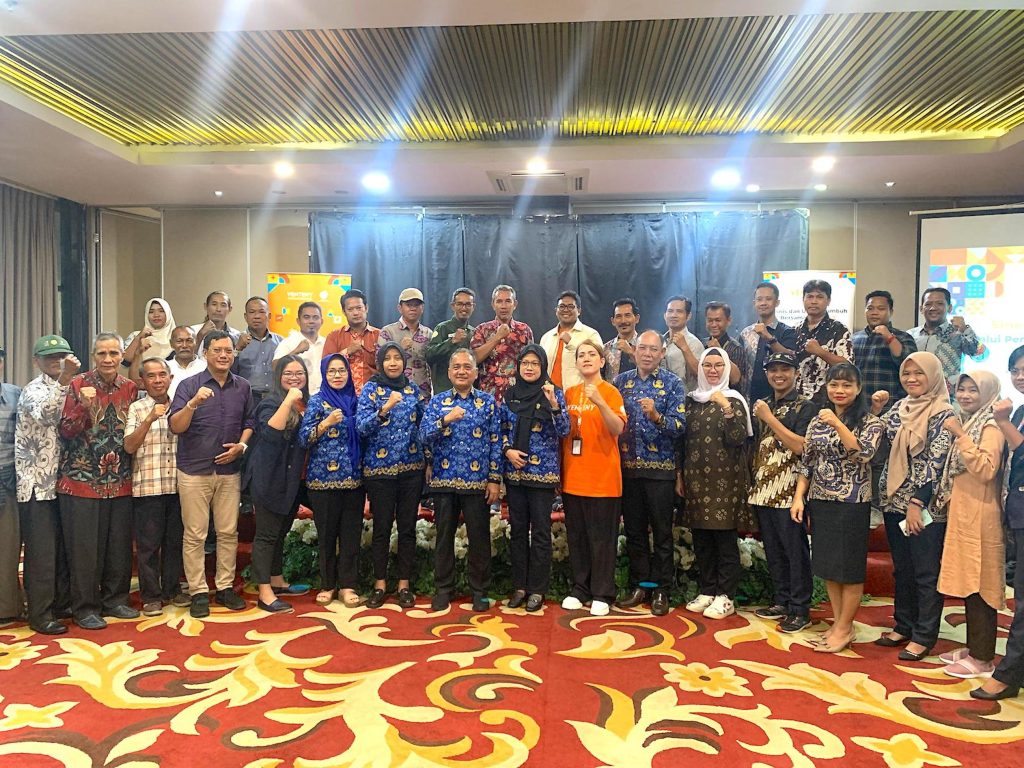
JAKARTA: PT VENTENY Fortuna International Tbk (VTNY) announced consolidated revenue of IDR 186 billion as of September 30, 2024, representing an 86% increase year-on-year. This growth was driven by its diverse business lines, with contributions as follows: B2B Financial Services: 40% or IDR 74.7 billion B2B2E VENTENY Employee Super App: 32% or IDR 58.2 billion Technology Development: 28% or IDR 52.7 billion As of September 30, 2024, the Company achieved an EBITDA of IDR 13.7 billion and reported a net profit of IDR 2.6 billion. Jun Waide, Founder and Group CEO of VENTENY, commented on the company’s performance, stating, “Our results demonstrate the increasing resilience of our portfolio. The ecosystem we’ve built, particularly the B2B2E Employee Super App, has seen significant growth. We are confident that our technology solutions will drive a strong close to 2024.” Strategic Investments and Expansion Efforts in 2024 In 2024, VENTENY focused on bolstering its digital infrastructure, enhancing its organizational structure, forging regional partnerships, and expanding its asset base. These initiatives aim to support VENTENY’s next phase of business growth. Waide added, “Since our start in Indonesia in 2019, we’ve grown exponentially. Our focus now is on building a strong foundation to sustain this momentum and achieve our broader vision across Southeast Asia.” B2B Financial Services and Funding Initiatives VENTENY’s B2B Financial Services, the company’s largest revenue stream, saw a 26% revenue increase year-on-year. By September 2024, VENTENY had disbursed over IDR 1.2 trillion in growth funding to businesses and MSMEs in Indonesia. To support this growth, the company raised JPY 2.2 billion in low-cost funding from Japan, alongside additional funding from Singapore and Indonesian banks, further bolstering its financial services. VENTENY is now poised to scale operations across Indonesia, working closely with local governments to bridge funding gaps for MSMEs. In South Sumatra, VENTENY has partnered with the Department of Cooperatives and SMEs. This network expansion includes partnerships in East Java and Bali, aiming to foster regional development. VENTENY Employee Super App Recognized for Employee Welfare Innovations The VENTENY Employee Super App experienced a 60% year-on-year growth as of September 30, 2024, driven by a surge in corporate clients, including Pertamina, Sompo, Astro, and Waskita Precast. For its contributions to employee welfare, the app was awarded Best Platform Innovation for Employee Welfare at the CNBC Indonesia Awards. Damar Raditya, Group COO of VENTENY, highlighted the app’s ongoing success: “VENTENY remains committed to innovating in support of employee welfare and Indonesia’s economic growth. With strong support from local governments and associations, we envision our ecosystem serving employees, MSMEs, cooperatives, entrepreneurs, and other stakeholders across Indonesia.”

Scroll to Top

Subscribe
FREE Newsletter