Investment & Market Trends

Investment & Market Trends

F&NHB Delivers Steady Revenue and Profit Growth in 1H FY2025

KUALA LUMPUR: Fraser & Neave Holdings Bhd (F&NHB) reported a resilient financial performance for the half-year ended 31 March 2025 (1H FY2025), navigating macroeconomic headwinds and softer trade sentiment with steady revenue and profit growth. Group Financial PerformanceFor 1H FY2025, Group revenue rose 1.4% year-on-year to RM2,723.9 million, supported by broad-based sales growth across business units and stronger export contributions in the first quarter. Group operating profit climbed 4.3% to RM434.8 million, driven by improved margins from higher revenues and lower input costs, particularly in F&B Malaysia and F&B Indochina, helping offset losses related to its dairy farm start-up. In the second quarter (Q2 FY2025), the Group recorded revenue of RM1,334.1 million, a 1.4% decline compared to the same period last year, largely due to softer festive season sales in Malaysia and inventory adjustments in Indochina. Operating profit for the quarter similarly decreased by 7.6%. Profit before tax for 1H FY2025 increased by 4.9% to RM430.1 million, while profit after tax declined 7.6% to RM310.4 million, reflecting the full utilisation of tax incentives under Thailand’s Board of Investment (BOI) scheme last year. Basic earnings per share stood at 84.5 sen compared to 91.8 sen in 1H FY2024. Reflecting its continued confidence, the Board declared an interim single-tier dividend of 30.0 sen per share, amounting to RM110.0 million, payable on 30 May 2025. Financial Highlights 1H FY2025 1H FY2024 Change Revenue (RM million) 2,723.9 2,685.3 +1.4% Operating Profit (RM million) 434.8 416.8 +4.3% Profit Before Tax (RM million) 430.1 409.9 +4.9% Profit After Tax (RM million) 310.4 335.9 -7.6% Basic Earnings Per Share (sen) 84.5 91.8 -7.3 sen Business Unit HighlightsF&B Malaysia maintained first-half revenue levels supported by volume growth in beverages, water products, and exports. However, Q2 festive season sales were softer than expected due to subdued consumer sentiment and flooding in East Malaysia. Meanwhile, F&B Indochina, which encompasses Thailand, Cambodia, and Laos, achieved a 3.4% revenue increase year-on-year in 1H FY2025, driven by intensified marketing campaigns and stronger export sales to Cambodia. However, efforts to manage inventory levels in Thailand impacted Q2 revenue. F&B Indochina continued to be a major profit contributor, registering a 4.5% rise in 1H FY2025 operating profit, while F&B Malaysia improved margins and operational efficiencies, excluding dairy farm start-up costs. Strategic Developments and InvestmentsChief Executive Officer Lim Yew Hoe highlighted significant milestones achieved at F&N AgriValley, a cornerstone of the Group’s strategy to strengthen local dairy supply. Following the arrival of over 2,500 Chilean cattle and the birth of more than 70 calves, milking operations are set to commence in June 2025 under the Magnolia brand. Additionally, the Group’s new dairy manufacturing plant in Cambodia remains on track to begin commercial operations in early 2026. The Penang beverages plant, scheduled for commissioning by August 2025, will enhance service to northern Peninsular Malaysia markets while lowering the Group’s carbon footprint. “Our performance underlines the resilience of our core businesses and validates our investments in future growth,” said Lim. “We are committed to supporting Malaysia’s food security agenda by reducing reliance on imported milk and ensuring supply of quality local fresh milk.” Corporate Social Responsibility InitiativesDuring the Ramadan and Aidilfitri periods, F&NHB deepened its community engagement efforts, partnering with organisations such as Bursa Malaysia, Mydin, Lotus’s, and the National Sports Council (MSN) to provide food aid and festive support to over 100,000 individuals. Chairman YAM Tengku Syed Badarudin Jamalullail reaffirmed F&NHB’s social commitment, noting: “At a time of economic uncertainty, it is more important than ever for businesses to lead with empathy and purpose, standing with the communities we serve.” OutlookLooking ahead, F&NHB remains cautious amid a challenging external environment characterised by global economic uncertainty, evolving regulatory dynamics, and softer consumer demand. The Group will continue to strengthen route-to-market strategies, optimise operational efficiencies, and invest strategically in long-term value creation. While investments such as the integrated dairy farm in Gemas may weigh on margins in the short term, they are expected to underpin sustainable growth over the long term. “Despite ongoing challenges, we are confident in our ability to navigate market volatility and build a stronger, future-ready F&NHB,” Lim concluded.
Investment & Market Trends, News

Foreign Investment Surge on Bursa Malaysia: RM332.3 Million Inflows Recorded

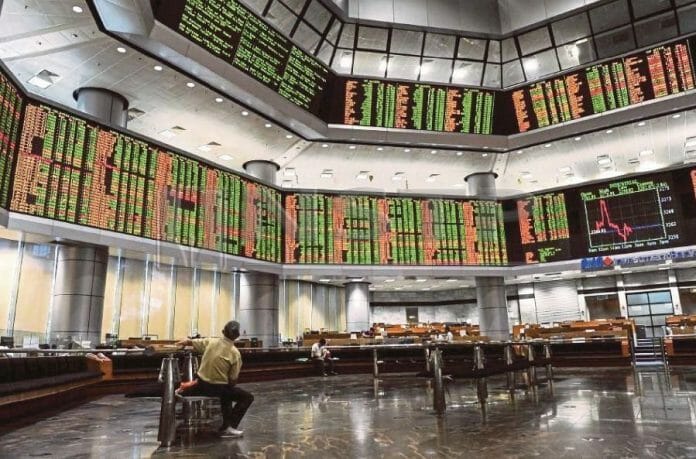
KUALA LUMPUR : Foreign investors have made a strong comeback to Bursa Malaysia, ending a 26-week selling streak with net inflows totalling RM332.3 million — the first week of positive foreign investment since Oct 24. According to MIDF Amanah Investment Bank Bhd’s latest Fund Flow Report for the week ended April 25, foreign investors were net buyers on most trading days, except for Monday and Tuesday, which recorded outflows of RM101.1 million and RM105.4 million, respectively. For the remainder of the week, inflows ranged between RM125.9 million and RM267.2 million. The financial services sector led the gains, attracting RM197.1 million in net foreign inflows, followed by telecommunications and media (RM60.8 million), and industrial products and services (RM48.8 million). Meanwhile, sectors such as energy and plantation both saw net outflows of RM16.0 million, while healthcare registered an outflow of RM13.3 million. MIDF also observed a reversal in local institutional activity, with institutions turning net sellers after 26 consecutive weeks of net buying. Outflows from local institutions stood at RM267.4 million. Local retail investors continued their net selling trend for a second straight week, recording outflows of RM64.9 million — a 2.5-fold increase compared to the previous week. In terms of trading activity, the average daily trading volume (ADTV) rose broadly across the board, except among foreign investors, whose ADTV slipped by 6.9 per cent. Local institutions and retail investors, in contrast, posted gains of 23.8 per cent and 2.2 per cent, respectively. MIDF also highlighted that Malaysia’s headline inflation rate moderated to 1.4 per cent year-on-year in March 2025, offering some relief to policymakers. The easing inflation was seen across various sectors, including accommodation, food services, utilities, and household goods. “Stable inflation, alongside firm labour market conditions — with unemployment steady at 3.1 per cent — points to a resilient domestic economy, even as external challenges begin to emerge,” MIDF said. Across the broader Asian landscape, only Malaysia, India, Taiwan, and Vietnam recorded net foreign inflows, while other regional markets faced outflows, with Thailand bearing the brunt of the selling pressure. –Bernama

Investment & Market Trends, News

MIDA Champions JS-SEZ as Gateway for Investment and Regional Supply Chain Growth

KUALA LUMPUR : Malaysia is positioning itself as Asia’s next investment and supply chain powerhouse with the development of the Johor-Singapore Special Economic Zone (JS-SEZ), led by the Malaysian Investment Development Authority (MIDA). Spearheading this initiative, MIDA is executing a strategic push to attract global investors and reshape regional trade dynamics, signalling a bold transformation of Malaysia’s economic landscape. First proposed in 2023, the JS-SEZ has rapidly gained momentum, driven by growing investor interest and deepening Malaysia-Singapore economic collaboration. The initiative marks a historic milestone in bilateral relations, as the two nations, already each other’s top trading partners within ASEAN, work together to further integrate their economies through the JS-SEZ. JS-SEZ: A Gateway to Global Supply Chains and Smart Manufacturing In an exclusive interview with Bernama, MIDA chief executive officer Datuk Wira Arham Abdul Rahman outlined the transformative potential of the JS-SEZ. “We are witnessing the creation of an economic powerhouse that merges the best capabilities of both countries. This is more than just collaboration — it is strategic integration at an unprecedented level,” he said. Datuk Wira Arham highlighted Singapore’s complementary role, with its established logistics networks and financial infrastructure, enhancing the JS-SEZ’s access to global markets through strong air connectivity and trade facilitation services. “Businesses operating within the JS-SEZ will benefit from proximity to a mature financial ecosystem, supported by institutions in both Malaysia and Singapore, facilitating seamless cross-border transactions and trade. This ecosystem is central to enabling the region’s growth,” he noted. Malaysia’s technological strength adds a crucial dimension to the partnership, with the country commanding a seven per cent share of the global semiconductor market and hosting half of the world’s top semiconductor companies. “Our semiconductor leadership underscores Malaysia’s evolution into an innovation-driven manufacturing hub,” he said. Through the JS-SEZ, businesses will be able to leverage Singapore’s global connectivity and Malaysia’s industrial depth, innovative policies, and manufacturing capabilities. “From semiconductors to specialty chemicals, we are enabling the creation of an integrated, future-ready value chain. The JS-SEZ is not merely a zone — it is a gateway to global supply chains, next-generation manufacturing, and dynamic regional collaboration,” Datuk Wira Arham added. Malaysia’s contribution includes world-class port infrastructure, a robust financial services sector, and a growing base of technology-driven enterprises. Together with Singapore, the JS-SEZ provides a seamless platform for businesses to innovate, scale, and thrive, positioning Malaysia as a key anchor in the global economy. Empowering Local Businesses for Global Integration Malaysia’s ambitions for the JS-SEZ extend beyond attracting foreign investors — they also focus on nurturing local businesses to integrate into regional and global value chains. MIDA plays a pivotal role by supporting key industries through policy alignment, infrastructure enhancement, talent development, and strategic projects such as the JS-SEZ. Programmes include: Vendor Development: Supporting local suppliers’ integration into the global semiconductor value chain through skills training and capability assessments. Supply Chain Networking: Organising events to connect local SMEs with global players, particularly in the digital infrastructure sector. Manufacturing Resilience: Assisting SMEs in adopting smart manufacturing systems, automation, and digital platforms under the Industry4WRD initiative. Talent development remains a cornerstone of this strategy. “Through our Graduate-Industry Matching Programme, we are preparing the next generation of Malaysian tech leaders. We are investing in skills for AI, semiconductor design, mechatronics, and advanced software development, ensuring Malaysia remains at the forefront of technological innovation,” Datuk Wira Arham said. Industry Leaders Eager to Tap into JS-SEZ Opportunities The JS-SEZ has already captured the attention of industry leaders keen to harness its potential as ASEAN’s next investment hub. Lionel Yeo, chief executive officer of ST Telemedia Global Data Centres Southeast Asia, praised the JS-SEZ’s potential to meet the rising demand for data centre services across the Asia-Pacific. “Our focus is on enabling businesses to grow not just locally, but globally. Johor’s strategic location and available resources make it an attractive base for expansion,” he said. Yeo also noted the dramatic growth in Malaysia’s data centre capacity — from 50 megawatts five years ago to 1.5 gigawatts today — attributing the achievement to robust government policies. He sees Johor’s available land and energy capacity as key advantages for future regional data centre expansion, reinforcing Johor and Singapore’s combined strength in meeting the growing digital infrastructure demands. Similarly, Malaysian electronics manufacturing services provider CAPE EMS Bhd sees the JS-SEZ as a launchpad to further expand into the Singaporean market. Managing director Christina Tee praised the government’s initiative, noting that the zone’s free trade benefits would further strengthen local partnerships. “We already collaborate with several Singaporean companies, and with the advantages offered by the JS-SEZ, these partnerships will undoubtedly grow stronger,” she said. –Bernama

Investment & Market Trends

Bursa Malaysia Reports RM68.4 Million Profit for Q1 2025

KUALA LUMPUR: Bursa Malaysia Berhad (Bursa Malaysia) has announced a Profit After Tax, Zakat and Minority Interest (PATAMI) of RM68.4 million for the first quarter of 2025 (1Q2025), representing an 8.8% decline from RM75.0 million in the same period last year. The decrease in PATAMI is primarily attributed to a 1.7% drop in operating revenue, which fell to RM177.7 million from RM180.7 million in 1Q2024. Bursa Malaysia’s operating expenses also increased by 6.7%, rising to RM92.9 million in 1Q2025 from RM87.1 million in 1Q2024, driven by higher technology expenses and subscription costs related to the launch of the Centralised Sustainability Intelligence (CSI) platform in June 2024. Despite these challenges, Dato’ Fad’l Mohamed, Chief Executive Officer of Bursa Malaysia, highlighted the resilience of Malaysia’s capital market. He noted that external factors—such as global market uncertainty—had weighed down performance, but the country’s strong economic fundamentals and government policies remain supportive. Notably, the exchange has seen a strong IPO pipeline, with 16 listings recorded to date, on track to meet its annual target of 60 IPOs. Market Performance Overview The Securities Market saw a decline in trading revenue, with the average daily trading value for On-Market Trades (OMT) and Direct Business Trades (DBT) dropping by 11.9% to RM2.8 billion in 1Q2025, compared to RM3.2 billion in 1Q2024. This decline was exacerbated by a reduction in the number of trading days, which were down by two days compared to the previous year. As a result, trading velocity also fell by 6 percentage points, from 39% to 33%. On a brighter note, the Derivatives Market posted a 13.7% increase in trading revenue, reaching RM28.9 million in 1Q2025, driven by a surge in Average Daily Contracts (ADC) traded for Crude Palm Oil Futures (FCPO). Additionally, the Islamic Market recorded a 23.0% increase in operating revenue, primarily due to higher trading revenue from Bursa Suq Al-Sila’ (BSAS). Looking ahead, Dato’ Fad’l Mohamed stressed that Bursa Malaysia remains committed to strengthening its market resilience through enhanced product offerings and outreach initiatives to attract broader investor participation. These efforts are designed to mitigate the impact of global uncertainties, including geopolitical tensions, monetary policy decisions, and commodity price volatility. The CEO also highlighted the exchange’s focus on sustainability, with ongoing efforts to empower listed companies to improve their sustainability disclosures via the CSI Platform, now enhanced with Artificial Intelligence (AI) capabilities. Additionally, Bursa Malaysia aims to support the country’s transition to a low-carbon economy through the expansion of initiatives like the Bursa Carbon Exchange (BCX) and Bursa Malaysia RAM Capital Sdn. Bhd. (BR Capital). Dato’ Fad’l Mohamed expressed appreciation for the outgoing Chairman, Tan Sri Abdul Wahid Omar, acknowledging his invaluable contributions over the past five years.

Investment & Market Trends, News

Notion VTec Eyes 25–30% EMS Sales Growth Despite Tariff Challenges

PETALING JAYA : Notion VTec Bhd’s sales outlook has weakened, with its key earnings segments expected to face headwinds following the introduction of reciprocal tariffs by the United States. According to Hong Leong Investment Bank Research, Notion’s main revenue contributors — electrical and electronics, hard disk drive (HDD), and automotive — account for 38.9%, 27%, and 23.9% of total sales, respectively. The imposition of tariffs is expected to dampen consumer electronics demand, further impacting the group’s performance. Notion, which derives the bulk of its electronics manufacturing services (EMS) revenue from a single anchor customer, is unlikely to be shielded from the broader slowdown. This customer remains critical to Notion’s growth strategy, with its supply chain heavily reliant on operations in South-East Asia and China. The group’s premium product offerings are particularly vulnerable to pricing pressures and potential demand disruptions under the new tariff environment. Despite these challenges, Notion remains optimistic about its motor casing venture for its key customer, projecting a 25% to 30% increase in EMS sales from this initiative. Nevertheless, the introduction of reciprocal tariffs could dampen growth prospects for the new venture. Hong Leong Investment Bank Research also warned of slower order flows from major HDD manufacturers, with enterprise demand and spending by hyperscale data centre customers likely to soften. As the United States contends with tariff-induced economic volatility and rising recessionary risks, near-term constraints on enterprise information technology investments are anticipated. –The Star

Investment & Market Trends, News

Oasis Home Holding to Raise RM28 Million via ACE Market Listing

KUALA LUMPUR: Omni-channel consumer lifestyle products marketer and seller, Oasis Home Holding Berhad (“Oasis Home Holding” or “Company”), has officially launched its prospectus today in conjunction with its upcoming initial public offering (IPO) and listing on the ACE Market of Bursa Malaysia Securities Berhad. The Group, through its subsidiaries, markets and sells consumer lifestyle products under both in-house and third-party brands. Leveraging a comprehensive omni-channel approach, Oasis Home Holding utilises a combination of online and offline sales channels, including live commerce platforms, its proprietary mobile app, official website, and major e-commerce marketplaces such as Lazada, Shopee, and TikTok Shop. To strengthen its brand presence, the Group integrates digital marketing strategies and operates physical product experience centres in Bukit Jalil and Johor Bahru, complemented by a mobile showroom. “Our prospectus launch today marks a major milestone towards our ACE Market listing, signalling a new chapter of growth for Oasis Home Holding,” said Datuk Teoh Yee Seang (拿督张维城), Chief Executive Officer of Oasis Home Holding. He added, “The proceeds from our IPO will be critical in accelerating our expansion, particularly in strengthening our live commerce presence. We plan to introduce at least five new live commerce channels across Facebook and TikTok, connecting with more consumers through real-time engagement. We will also set up our own fulfilment centre to support this growth, reduce costs, and enhance profit margins.” The IPO is expected to raise RM28.0 million, allocated as follows: Purpose Amount (RM’000) % of Proceeds Expansion of live commerce channels 13,700 48.93% Set-up of own fulfilment centre 3,600 12.86% Working capital 4,300 15.36% Set-up of new headquarters 2,000 7.14% Estimated listing expenses 4,400 15.71% The Group’s IPO comprises a public issuance of 100.00 million new shares and an offer for sale of 50.00 million existing shares. Of the new shares, 25.00 million will be offered to the Malaysian public via balloting, 10.00 million allocated to eligible directors and employees, and the balance placed with Bumiputera investors and selected investors. Priced at RM0.28 per share, Oasis Home Holding’s listing will result in a market capitalisation of RM140.0 million based on its enlarged share capital of 500.00 million shares. Financially, the Group has demonstrated strong growth. Revenue rose from RM40.88 million in FY2022 to RM54.82 million in FY2024, reflecting a two-year compound annual growth rate (CAGR) of 15.80%. Net profit grew at a higher CAGR of 22.93% over the same period, increasing from RM5.34 million to RM8.07 million. For the financial period ended 30 November 2025 (FPE 2025), revenue surged by 68.07% to RM33.43 million, while net profit rose by 58.72% to RM5.19 million compared to the previous corresponding period. Live commerce continues to be a significant driver, contributing 75.65% of total revenue in FY2024. Looking ahead, Datuk Teoh noted the Group’s strategic emphasis on live commerce aligns with regional trends, with Malaysian consumers among the top three in Southeast Asia for livestream viewership. Yang Berbahagia Dato’ Seri Diraja Nur Julie Gwee Ariff, Chief Executive Officer of MIDF Amanah Investment Bank Berhad, the Principal Adviser, Sponsor, Underwriter, and Placement Agent for the IPO, said, “The Group’s strong omni-channel strategy and rapid ascent in live commerce position it well in the evolving consumer landscape. With a clear vision, strong financials, and dynamic leadership, we believe Oasis Home Holding is well-placed to capitalise on future growth opportunities.” Applications for the Public Issue are open from today and will close on 9 May 2025 at 5:00 PM. The Company is scheduled to list on 28 May 2025.

Investment & Market Trends, News

Luno Adds Algorand and NEAR as First SC-Approved Digital Assets of 2025

Luno has further strengthened its digital asset offerings in Malaysia with the addition of Algorand (ALGO) and NEAR Protocol (NEAR), the first Securities Commission Malaysia (SC)-approved cryptocurrencies of 2025. This brings the total number of assets available on the platform to 20. This latest expansion not only broadens access to the cryptocurrency market for Malaysian investors but also offers greater portfolio diversification, particularly with the upcoming launch of NEAR staking, which will offer passive rewards of up to 7% per annum, distributed daily. Both new digital assets are built on scalable, secure blockchain platforms. Algorand is recognised for its fast, low-cost transactions and environmentally sustainable approach, aiming to support a borderless digital economy through decentralised applications. Meanwhile, NEAR Protocol offers a high-throughput, low-fee blockchain infrastructure designed to simplify decentralised app development. In 2024, Luno led the approval of seven digital assets with the SC and now targets to double that figure in 2025, beginning with ALGO and NEAR. The exchange continues to work closely with the regulator to streamline the introduction of new assets. Luno remains the only regulated digital asset exchange in Malaysia offering staking services. Currently, staking is available for Ethereum, Solana, Cardano, and Polkadot, with NEAR set to be included soon. Committed to investor protection and innovation, Luno applies a rigorous screening process for all new listings, considering technical, regulatory, and legal aspects. It also promotes responsible investing through its free educational platform, Luno Discover, which provides resources to help users make informed financial decisions.

Investment & Market Trends, News

SC and Bursa Malaysia Investigate Unauthorised Trades in Online Accounts

The Securities Commission Malaysia (SC) and Bursa Malaysia Bhd have confirmed that a number of brokers have reported incidents involving failed client logins and unauthorised trading activities through a limited number of online trading accounts. In a joint statement issued today, both regulators said they are working closely with the affected brokers to determine the root cause of the security breach. Immediate steps are being taken to strengthen account security and prevent further incidents. “Capital market regulators and brokers are maintaining a high level of vigilance. Investigations are ongoing, and additional measures will be introduced as needed,” the statement said. All brokers have been instructed to promptly notify clients and advise them to reset their passwords and login credentials. They have also been urged to adopt stricter security protocols, including multi-factor authentication and more robust password policies. “These actions are intended to minimise the risk of further unauthorised access or trading,” the statement added. Desplite the incident, both the SC and Bursa Malaysia assured investors that the integrity of the country’s capital market remains unaffected. Trading operations will continue as usual. “We remain fully committed to ensuring that the marketplace operates in a fair, secure, and orderly manner,” the regulators said. The statement comes as a reassurance to investors amidst heightened concerns over digital security in financial systems.

Investment & Market Trends, News

Investors Brace for Malaysian Rate Cut as Trade War Pressure Mounts

KUALA LUMPUR : Investors are increasingly predicting that Malaysia, one of Southeast Asia’s last holdouts against interest rate cuts, will soon ease monetary policy as the economic toll from the global trade war intensifies. Pricing in the ringgit swaps market now reflects expectations of a 30 basis point rate cut by Bank Negara Malaysia (BNM) within the next six months — double the forecast from just a month ago. The sentiment was echoed in a recent auction of a three-year government bond, which saw a bid-to-cover ratio of 3.18 times, the highest since August for short-to-mid-term papers. A reduction in rates is expected to spur borrowing and investment activity, while signalling that BNM is growing increasingly concerned about the country’s growth outlook amid tariff-related uncertainty. “Ringgit rates market has increased dovish bets for BNM,” said Winson Phoon, Head of Fixed Income Research at Maybank Securities Pte Ltd. He added that a rate cut would likely make the three-year benchmark bond outperform other maturities on the yield curve. Maybank, Goldman Sachs, and CIMB Bank all anticipate a potential 25 basis point cut later this year, with Maybank expecting it to materialise by end-2025. Malaysia’s economy expanded 4.4% year-on-year in the first quarter — the slowest pace in a year and below market expectations. Inflation also remains muted, with March headline prices rising only 1.4%, the lowest increase in four years. The International Monetary Fund recently revised Malaysia’s 2025 growth forecast to 4.1%, down from earlier estimates and below the government’s current target of 4.5%-5.5%, which is now under review. Investor anticipation of policy easing could help attract more foreign inflows. In the first quarter, Malaysia recorded US$690 million in foreign investment into its conventional government bonds. By contrast, Thailand’s bond market received US$2.1 billion this month, as dovish sentiment around the Bank of Thailand gained traction. Elsewhere in the region, countries such as Indonesia, Thailand, the Philippines, and Singapore have already moved to ease monetary policy since the latter half of 2024. Although Bank Indonesia held rates steady this week, it signalled further room for easing. BNM’s governor has said that Malaysia has other policy tools to address the impact of US tariffs. Still, investors appear unconvinced, particularly as economic indicators soften and the US continues to tighten its trade stance. Despite US President Donald Trump’s 90-day tariff pause to allow for more negotiations, his broader trade policies still cast a shadow. This week, Washington imposed new solar tariffs on multiple countries, including a 34.4% duty on Malaysian manufacturers. The United States remains Malaysia’s second-largest export destination after China, making the stakes especially high. Trade Minister Tengku Zafrul Aziz is scheduled to meet US Trade Representative Jamieson Greer in Washington today, as Malaysia seeks exemptions or adjustments to the imposed tariffs. Malaysia, along with China, Vietnam, Hungary and Mexico, ranks among the most vulnerable emerging markets to tariff-related economic disruption, according to Goldman Sachs strategists Andrew Tilton and Kamakshya Trivedi.

Investment & Market Trends, News

IMF Revises Malaysia’s 2025 GDP Growth Forecast Down to 4.1%

KUALA LUMPUR: The International Monetary Fund (IMF) has lowered Malaysia’s real gross domestic product (GDP) growth projection for 2025 to 4.1%, down from its earlier forecast of 4.7%, citing broader regional and global economic headwinds. This adjustment, published in the IMF’s April 2025 World Economic Outlook report titled “A Critical Juncture Amid Policy Shifts,” aligns with similar downward revisions across Southeast Asia. The Fund also anticipates Malaysia’s economy will grow by 3.8% in 2026. The revised outlook comes amid a cut in the global GDP growth forecast to 2.8% for 2025—a 0.5 percentage point drop from the IMF’s January estimate—highlighting the fragile state of the global recovery. Regionally, Indonesia’s 2025 growth forecast has been lowered to 4.7% from 5.1%, the Philippines to 5.5% from 6.1%, and Thailand to 1.8% from 2.9%. The IMF attributes the downgrades to heightened policy uncertainty, particularly from escalating trade tensions. “Major policy shifts are reshaping the global trade landscape and reigniting uncertainty,” the IMF said, pointing to the US’s recent tariff escalations. The latest round of widespread tariffs announced on April 2 triggered steep declines in global equity markets and surging bond yields, although partial recoveries followed subsequent policy clarifications. Despite the challenges, the Fund noted that signs of economic stabilisation had begun to emerge through 2024. Inflation has been moderating, labour markets are nearing pre-pandemic levels, and central banks are approaching their inflation targets. In terms of industrial production, the IMF highlighted diverging recovery trajectories. While output has surged in China, smaller EU nations, and ASEAN-5 economies, it remains subdued in Japan and major EU economies. The US, meanwhile, has seen a stronger rebound in its industrial sector compared to other advanced economies. Commodity prices are also expected to shift notably in 2025. Fuel prices are projected to decline by 7.9%, with oil and coal prices falling by 15.5% and 15.8% respectively. However, natural gas prices are expected to jump 22.8% due to colder-than-anticipated weather and disruptions in Russian supply routes. Non-fuel commodity prices are forecast to rise by 4.4%. The IMF concluded that the global economy remains at a critical juncture, as it grapples with the aftershocks of past disruptions and navigates ongoing policy realignments.

Scroll to Top

Subscribe
FREE Newsletter