Investment & Market Trends

Investment & Market Trends, News

China’s Chagee Pushes Ahead with US IPO Amid Market Volatility

Chinese bubble tea chain Chagee Holdings Ltd is moving forward with its plans to go public in the United States, aiming to raise up to US$411 million through an initial public offering (IPO), despite turbulent equity markets driven by renewed trade tensions between the US and China. According to a recent filing with the US Securities and Exchange Commission (SEC), the Shanghai-based company is offering 14.68 million American depositary shares (ADS), priced between US$26 and US$28 apiece. At the upper end of the range, Chagee would be valued at approximately US$3.3 billion. Several institutional investors have expressed interest in the IPO. Entities tied to CDH Investment Management Co, RWC Asset Management, Allianz Global Investors Asia Pacific Ltd, and ORIX Asia Asset Management Ltd have indicated potential commitments totalling US$205 million, signalling confidence in the company’s growth story. The IPO marks a bold move as other firms, including StubHub, Klarna, and eToro, have opted to delay listings amid market uncertainty. Airo Group Holdings Inc, an aerospace and defence firm, also launched its IPO on Thursday, targeting US$80 million. Chagee’s decision to proceed comes as the US-China trade dispute intensifies, with tariffs and geopolitical risks featured prominently among the risk disclosures in its SEC filing. The company highlighted that all of its products are manufactured in China and shipped globally, a model vulnerable to future policy escalations. The listing follows the recent successful IPO of domestic peer Mixue Group in Hong Kong, which became the city’s largest flotation of the year, riding on strong demand for bubble tea stocks. According to Chagee’s filing, the company operated 6,440 tea houses as of December 2024, reflecting an 83% year-on-year growth rate. Founded in 2017 by Junjie Zhang, who will retain 89% of the voting power post-offering, Chagee has rapidly scaled its presence and now positions itself as a major player in the global premium tea market. The IPO is being underwritten by Citigroup Inc, Morgan Stanley, Deutsche Bank AG, and China International Capital Corp (CICC). Chagee plans to list on the Nasdaq Global Select Market under the ticker symbol CHA.

Investment & Market Trends, News

CIMB Securities Maintains ‘Hold’ on Nestlé Malaysia

KUALA LUMPUR: CIMB Securities has reiterated its ‘Hold’ rating on Nestlé (Malaysia) Bhd, maintaining a target price of RM92.00. The valuation is based on a weighted average cost of capital (WACC) of 5.9 per cent and a terminal growth rate of 2.5 per cent. While the stock continues to trade within the RM82.00–RM85.00 range, the research house remains cautiously optimistic. This outlook is supported by recent insights gained during a visit to Nestlé Malaysia’s Maggi manufacturing facility in Batu Tiga, Selangor. CIMB noted that the site visit provided deeper understanding into Nestlé’s local manufacturing capabilities, the strong market leadership of the Maggi brand, and the company’s sustained focus on product innovation. From financial years 2020 to 2024 (FY20–FY24), Nestlé Malaysia has invested RM1.5 billion in capital expenditure. These investments have been channelled towards capacity expansion, efficiency improvements, facility upgrades, and regulatory compliance.–BUSINESS TIMES

Investment & Market Trends, News

Trump Pauses Global Tariffs for 90 Days, Slaps 125% Tariff on China

WASHINGTON: US President Donald Trump has announced a 90-day pause on new tariff hikes for most countries, in an apparent response to recent market volatility. However, he intensified his trade offensive against China, imposing a steep 125% tariff citing a “lack of respect” from Beijing. The surprise move came after a turbulent week on Wall Street, with markets reeling from the president’s earlier announcement of sweeping global tariffs. Following the pause, stocks rebounded dramatically, with the S&P 500 surging 9.5% to close at 5,456.90—snapping a week-long losing streak. Despite the pause for most nations, Trump doubled down on China, saying the country’s leadership “doesn’t quite know how to go about” negotiating a deal. “A deal’s going to be made with China. A deal’s going to be made with every one of them,” Trump said, while hosting motor racing champions at the White House. Responding to criticism that he had backtracked on his aggressive trade stance, Trump insisted he was simply being “flexible.” “People were getting a little yippy, a little afraid,” he said, referring to market jitters. “I saw last night where people were getting a little queasy.” The move follows mounting pressure from investors and global leaders after the US imposed a baseline 10% tariff on all imports last Saturday, with elevated rates for key trading partners—including China and the European Union—taking effect Wednesday. Trump revealed on Truth Social that over 75 countries had reached out to negotiate and refrained from retaliatory action, prompting him to issue the 90-day tariff suspension, though the baseline 10% remains in effect. China, however, struck back earlier Wednesday by raising tariffs on US imports to 84%, retaliating against Trump’s escalation of duties on Chinese goods to 104%. In response to the latest move, Beijing’s finance minister remarked, “The United States simply piles mistakes on top of mistakes.” Meanwhile, the European Union announced retaliatory tariffs targeting over €20 billion worth of US goods—including soybeans, motorcycles, and beauty products. However, the EU has not responded to the separate “Liberation Day” tariffs of 20% that took effect Wednesday. Despite heightened tensions, Trump remains confident that his strategy will revive American manufacturing by compelling companies to relocate operations back to the US. “I’m telling you, these countries are calling us up kissing my ass,” he told fellow Republicans at a private dinner, referring to nations eager to secure favourable trade deals. In addition to economic tensions, diplomatic strains are escalating. China issued a travel advisory warning its citizens to assess risks before visiting the US. Meanwhile, US Defence Secretary Pete Hegseth, speaking from Panama, accused Beijing of issuing “threats” as tensions continue to build around control of the Panama Canal. As Trump presses forward with his trade vision, the world’s two largest economies appear locked in an increasingly hostile standoff. — AFP

Investment & Market Trends, News

Yuan Hits New Lows as US Tariffs on China Take Effect

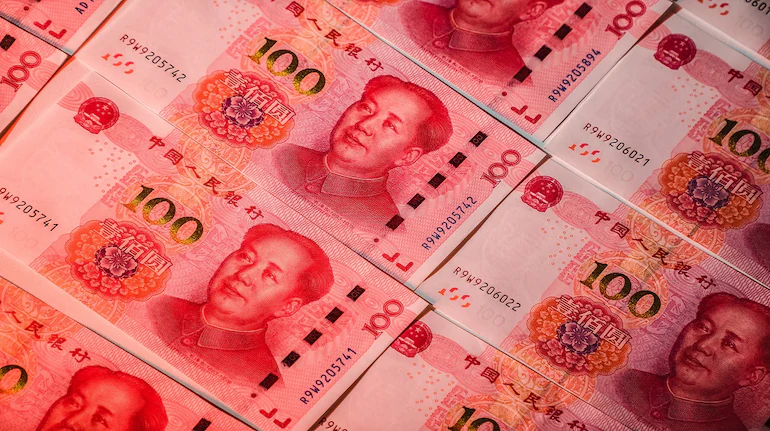
HONG KONG: The Chinese yuan fell to a fresh 19-month low against the US dollar today, following a record-low drop in its offshore counterpart overnight, as tensions from the escalating Sino-US trade war continue to weigh on investor sentiment. In afternoon trading, the yuan weakened by 0.2%, hitting 7.3498 per US dollar, after briefly dipping to 7.3505 earlier, the lowest level since September 2023. Meanwhile, the offshore yuan pared some losses, rising 0.62% to 7.3812 per dollar after dropping over 1% in the previous session and reaching a record low of 7.4288 per dollar. The declines come amid growing concerns as the trade war between the world’s two largest economies intensifies. These concerns were exacerbated by China’s central bank loosening its control over the yuan in an effort to mitigate the negative impact on exports. US President Donald Trump’s “reciprocal” tariffs on numerous countries took effect today, including hefty duties of 104% on Chinese goods, even as the US prepares for further trade negotiations. Carol Kong, a currency strategist at Commonwealth Bank of Australia, noted that the recent shift in the dollar was significant, influenced by the decision to proceed with additional tariffs on Chinese goods. She predicts the offshore yuan could fall to 7.7 per dollar by the end of Q3, though this could happen sooner if further tariff hikes are imposed by both countries. To stabilise the market, China’s central bank set the onshore yuan’s midpoint rate at 7.2066 per dollar, the weakest since September 2023. The yuan is permitted to trade within a 2% band of this rate, with a lower limit of 7.3507, which is just above the September 2023 low. Despite this, the central bank’s fixing was slightly firmer than expected, indicating a reluctance to allow the yuan to depreciate drastically. Chinese state-owned banks were observed selling dollars in the onshore market early this morning to slow the yuan’s decline. Lei Zhu, head of Asian fixed income at Fidelity International in Hong Kong, commented that Chinese regulators are likely focused on stabilising the market, deeming this a priority over sending dramatic signals to the market. Both the onshore and offshore yuan have fallen by more than 1% against the dollar this month, continuing the downward trend since the start of the year, largely due to concerns over the impact of the tariffs. Economists noted that while a weaker yuan could make Chinese exports more competitive and ease pressure on the economy, a sharp decline could also lead to unwanted capital outflows, posing risks to financial stability.

Investment & Market Trends, News

Khazanah Faces Challenges in Exiting Private Assets

KUALA LUMPUR: Khazanah Nasional Bhd, Malaysia’s sovereign wealth fund, has expressed difficulty in exiting private assets as it navigates the uncertainty caused by US President Donald Trump’s sweeping global tariffs. The fund, which oversees over US$30 billion in assets, is currently reviewing its portfolio as global market conditions remain volatile. In an interview with Bloomberg TV’s Avril Hong on the sidelines of the ASEAN Investment Conference 2025, Managing Director Amirul Feisal Wan Zahir highlighted the challenge of exiting and making investments amid shifting global policies. “We are exposed to private assets both internationally and domestically,” said Amirul. “Policy changes, like the ones we’re seeing now, have a significant impact on global markets, making it harder to exit or make new investments. We will have to see how things unfold,” he added. Amirul noted that Khazanah is focusing on diversifying risks internationally, particularly in response to the restructuring of global trade. Domestically, the fund is focused on supporting key sectors crucial to Malaysia’s economy, such as aviation connectivity and energy transition. In addition, Khazanah is exploring investments in startups, venture capital, and semiconductors, he mentioned. The uncertainty surrounding Trump’s tariffs, which have raised concerns about a potential global recession, has caused market turbulence and threatened to impact Khazanah’s investment returns. Last year, however, the fund reported a 22% increase in its net asset value, bolstered by gains in domestic assets. Amirul also acknowledged the challenges posed by a 24% tariff imposed on Malaysian imports by the US, part of broader measures aimed at addressing perceived trade imbalances. Despite this, Malaysia remains committed to engaging with Washington for a fair resolution. While Malaysia’s stock market has faced significant fund outflows in recent weeks, Amirul remains optimistic about the country’s economic prospects. “We are more optimistic about Malaysia’s growth,” he said. “Current rates remain conducive for trade.”–BLOOMBERG

Investment & Market Trends, News

Oil Suffers Worst Five-Day Drop Since 2022

SINGAPORE: Oil prices slumped to their lowest level in over four years today, marking their steepest five-day decline since March 2022, as fears of a global recession deepened amid escalating trade tensions between the United States and China. The sell-off also rippled across commodity markets, dragging down base metals and agricultural goods. The drop follows U.S. President Donald Trump’s announcement on April 2 of sharply higher tariffs on key trading partners, which has wiped nearly 20% off oil prices since. The latest round of tariffs, including a staggering 104% duty on Chinese imports, has rattled financial markets and clouded the global economic outlook. “Crude oil extended losses amid signs of escalation in the trade war,” analysts at ANZ said in a note, highlighting that copper prices have also plunged nearly 10% since the announcement of the new tariffs. The U.S. confirmed that the increased tariffs on Chinese goods will come into effect shortly after midnight, while also initiating talks with other affected trading partners. Market sentiment soured further as China announced retaliatory tariffs of 34% on all U.S. goods, effective April 10. The move severely dims hopes for a quick resolution between the world’s two largest economies. “The aggressive retaliation by China lowers the chances of a swift trade deal and raises the risk of a global economic slowdown,” said Ye Lin, Vice-President of Oil Commodity Markets at Rystad Energy. She warned that China’s projected oil demand growth of up to 100,000 barrels per day could be undermined if the trade war drags on. However, she noted that Beijing’s potential stimulus measures to boost domestic consumption may offset some of the downside. Commodities Under Pressure In China, base metal prices extended losses. Copper futures on the Shanghai Futures Exchange slid to an eight-month low, while iron ore on the Dalian Commodity Exchange dropped 3%. Benchmark copper on the London Metal Exchange declined 1%, recording its largest five-day loss since March 2020. Gold prices also edged lower as U.S. Treasury yields climbed, while nervous investors weighed the intensifying trade conflict. In the agricultural sector, Malaysian palm oil futures fell over 1%, and rubber prices sank to their lowest level in more than a year. Meanwhile, Chicago soybean futures rose for a third consecutive session, rebounding from four-month lows earlier this week, supported by rising prices in Brazil and a softer U.S. dollar.–REUTERS

Investment & Market Trends, News

Malaysian Glove Makers to Benefit from Potential US Tariff Hike on China

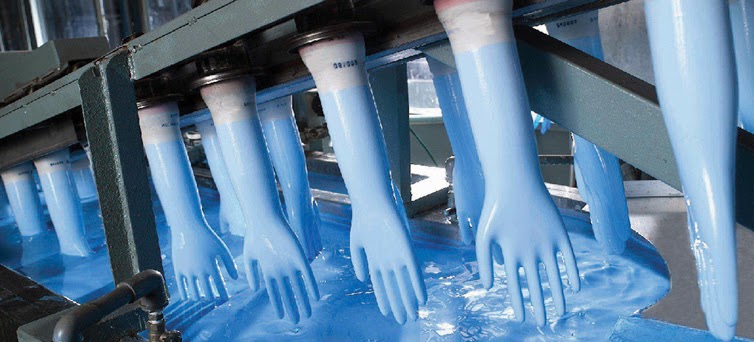
KUALA LUMPUR: Malaysian glove makers are poised to gain if US President Donald Trump follows through on his threat to impose an additional 50% tariff on Chinese goods. CIMB Securities Sdn Bhd stated that the potential tariff hike could enhance Malaysia’s competitive edge in the global glove market, especially in relation to Chinese producers. According to CIMB Securities, Malaysia accounted for 45% of the global glove market in 2024, while China held 28%. The firm highlighted three possible scenarios—bullish, base, and conservative—under the assumption that the Trump administration imposes the tariff. In any of these scenarios, Malaysian glove makers would benefit, as the tariff would make their products more attractive to US buyers compared to those from China. Malaysia currently enjoys the lowest US reciprocal tariff rate of 24% among major glove-producing countries, compared to China’s 34%, Vietnam’s 46%, Thailand’s 36%, Indonesia’s 32%, and Cambodia’s 49%, CIMB said. However, the firm also warned that while higher tariffs on Chinese gloves could drive US demand toward Malaysian products, this advantage may be offset by Chinese manufacturers shifting their focus to non-US markets, increasing competition in those regions. Furthermore, the uncertainty around policies and cost volatility could lead US buyers to adopt a more cautious approach, resulting in softer demand and reduced purchase volumes. CIMB Securities has maintained a “neutral” rating on the rubber glove sector due to the weak near-term outlook and the ongoing uncertainties in the operating environment. The firm’s top picks for the sector are Kossan Rubber Industries Bhd and Supermax Corporation Bhd, both rated “buy.”

Investment & Market Trends, News

BYD Forecasts Record Q1 Net Profit

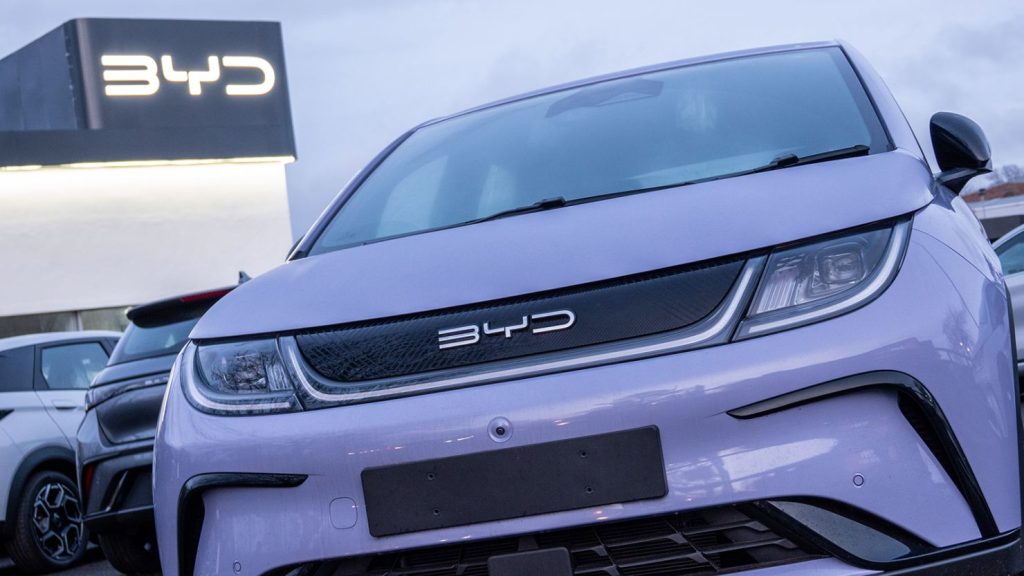
BEIJING: Chinese electric vehicle (EV) giant BYD is forecasting record net profit for the first quarter of 2025, driven by robust sales growth that saw the company ship more than one million vehicles between January and March. According to preliminary results released today, the Shenzhen-based automaker expects net profit to come in between ¥8.5 billion (US$1.2 billion) and ¥10 billion – nearly doubling from ¥4.6 billion in the same period last year. This marks a year-on-year growth of between 86% and 119%. “The company achieved record new energy vehicle (NEV) sales for Q1,” BYD stated in a filing to the Hong Kong Stock Exchange. In the first quarter alone, sales of pure electric passenger vehicles surged by 39% to 416,388 units. BYD had earlier announced that its total vehicle sales during this period had surpassed the one million mark for the first time. The company, whose slogan is “Build Your Dreams”, has experienced a strong sales trajectory in recent months. Its annual revenue in 2024 climbed to ¥777.1 billion, surpassing that of US rival Tesla. In addition to domestic success, BYD noted “substantial growth” in international NEV sales. However, geopolitical headwinds could challenge the company’s global ambitions. The escalating China-US trade tensions and broader friction between Beijing and Western capitals pose significant risks. Former US President Donald Trump has imposed 25% tariffs on all imported vehicles, alongside sweeping levies on Chinese goods. These come on top of earlier measures by predecessor Joe Biden, which restrict the use of Chinese technology in smart vehicles. In Europe, BYD faces scrutiny as well. The European Union is reportedly investigating whether the Chinese government provided unfair subsidies for BYD’s upcoming factory in Hungary, which is set to begin electric car production later this year.-AFP

Investment & Market Trends, News

Foreign Investors Pull RM31.68b from Asian Markets Amid US Tariff

KUALA LUMPUR: Foreign investors turned net sellers across eight Asian markets last week, recording a significant outflow of US$7.12 billion (RM31.68 billion), reversing the prior week’s inflow streak, according to MIDF Amanah Investment Bank Bhd. South Korea saw the heaviest withdrawals, with a net outflow of US$4.44 billion — nearly 20 times the previous week — driven by political instability following President Yoon Suk Yeol’s impeachment and newly announced US tariffs of up to 26%. India followed with US$1.21 billion in outflows, after US President Donald Trump’s announcement on April 2 of a 10% baseline tariff and a 27% tariff specifically targeting Indian goods, effective April 9. Taiwan experienced its sixth straight week of outflows at US$814.6 million, amid concerns over a 32% reciprocal tariff on Taiwanese imports to the US. Other notable outflows included: Vietnam: US$345 million (9th consecutive week), impacted by a 46% tariff Thailand: US$202.4 million (6th week), impacted by a 36% tariff Philippines: US$14.9 million (2nd week) Indonesia: No fund flows recorded due to Hari Raya market closures On Bursa Malaysia, foreign investors marked their 24th straight week of net selling with an outflow of RM426.6 million, although this was lower than the previous week’s RM1.15 billion due to two days of market closure for Hari Raya. Local institutions continued to absorb the outflows with RM369.1 million in net buying, while retail investors returned as net buyers with RM57.5 million in inflows. Participation levels declined across the board, with foreign and institutional trading volumes down 11.7% and 28.8%, respectively. Local retail activity saw a marginal increase of 2.2%. — BERNAMA

Investment & Market Trends, News

Bursa Malaysia Suffers Worst Opening Since 2020

Bursa Malaysia opened to a sharp downturn on Monday as heightened global trade tensions triggered widespread panic selling, with over 700 counters in the red and the benchmark FBM KLCI plunging 3% in early trade. The FBM KLCI dropped nearly 30 points at the opening bell to 1,475.31, marking its steepest fall at the start of a trading day since the Covid-19 market crash in March 2020. By 9.12am, the index had extended losses to 1,441.29—down 63 points—breaking through key technical support levels at 1,500 and 1,450. The index is now at its lowest point in 17 months, last seen in November 2023. Broad-based selling pressure gripped the market, with no sector spared. Heavyweights led the decline: Maybank fell 31 sen to RM9.93, Tenaga Nasional slid 42 sen to RM13.06, and Nestlé tumbled RM2.26 to RM70.74. The sell-off follows escalating global trade tensions after China announced retaliatory tariffs in response to former US President Donald Trump’s latest reciprocal trade measures. The move has stoked fears of a renewed trade war with wide-ranging repercussions on global growth and supply chains. Analysts are warning of a challenging road ahead. “The risk of a full-blown trade war could potentially push the global economy towards recession,” noted one analyst. Despite the bearish outlook, TA Securities suggested there may be a window for recovery if diplomatic channels open. “The possibility for bilateral negotiations ahead with the Trump administration could mitigate the adverse market sentiment,” it said in its market commentary. Meanwhile, US markets are also bracing for further declines. Futures on the S&P 500 were down 3% at the time of writing, while Dow Jones futures pointed to a 2.5% drop—signalling another volatile session ahead for global markets.

Scroll to Top

Subscribe
FREE Newsletter