Investment & Market Trends

Investment & Market Trends

Luxury Evermore Celebrates Third Anniversary with Plans for Expansion and Digital Innovation

SINGAPORE: Luxury Evermore, Singapore’s pre-owned luxury handbag reseller, marks its third anniversary, reflecting on a period of growth and setting sights on future developments. Since its inception in 2021, the company has established itself as a trusted source for authenticated luxury handbags from brands such as Chanel, Dior, and Louis Vuitton. Strategic Expansion Across Southeast Asia Looking ahead, Luxury Evermore plans to enhance its sourcing network throughout Southeast Asia. By strengthening connections with customers interested in selling their items and fostering relationships with local supply partners, the company aims to expand its collection. This initiative will provide customers with a broader selection of designs and styles from top luxury brands. “Our goal is to offer an even wider range of luxury handbags to our customers,” said Company Director Carmen Ho. “By improving our sourcing capabilities, we can meet the growing demand and provide more options for those seeking timeless pieces.” Enhancing Customer Experience Through Digital Platforms In an effort to improve the customer experience, Luxury Evermore is upgrading its digital platforms. Planned enhancements include technical updates and seamless integration between the company’s website and its Telegram community – Luxury Evermore @ Marina Bay. The company is also developing a professional local courier team to offer secure same-day delivery to local customers. Additionally, the customer support team has expanded to provide 24-hour assistance, ensuring prompt responses to inquiries. “We recognize the importance of convenience and accessibility in today’s market,” Carmen commented. “By investing in our digital infrastructure and customer service, we aim to make the shopping experience as seamless as possible.” Commitment to Sustainability and Authenticity Luxury Evermore remains dedicated to promoting sustainable luxury by supporting the circular economy. Offering pre-owned handbags allows customers to invest in high-quality pieces while reducing waste. Each item undergoes rigorous authentication and condition checks by in-house specialists, ensuring the originality and quality of every product. “Sustainability and authenticity are core values for us,” said Carmen. “We believe that luxury should not come at the expense of environmental responsibility, and we are committed to providing genuine products that our customers can trust.” Vision for the Future With ambitions to become a major player in the luxury resale market across Southeast Asia, Luxury Evermore is poised for continued growth. The company’s focus on expanding its collection, enhancing digital platforms, and improving customer service reflects its commitment to meeting the evolving needs of luxury consumers. “Our vision is to lead the luxury resale industry in the region,” Carmen stated. “We are excited about the future and will continue to adapt and innovate to serve our customers better.”

Investment & Market Trends

China, Mongolia Boost Cooperation, Exchanges to Benefit More People

HOHHOT:  As “China Travel” continues to gain momentum worldwide, the arrival lobby of Erenhot Port is bustling with eager travelers waiting to clear customs and embark on their adventures across country. Erenhot, in north China’s Inner Mongolia Autonomous Region, is the largest land port on the China-Mongolia border. Among the crowd, Batmunkh, wearing a backpack, stood on his tiptoes, his eyes sparkling with excitement as he looked around eagerly. Booming Tourism “‘China Travel’ is a real hit in Mongolia. I’ve already traveled to multiple cities in China, including Hangzhou and Xi’an,” said Batmunkh, from Ulaanbaatar, the capital of Mongolia. He added that like him, many tourists in Mongolia are drawn to China because of convenience in traveling and reasonable vacation cost. Meanwhile, many Chinese tourists chose to travel to Mongolia to enjoy the landscape and folk customs of the neighboring country. Hao Xiaoming, a 34-year-old resident in Wuhan, capital city of central China’s Hubei Province, just concluded a five-day trip to Ulaanbaatar by train. “I enjoyed the grasslands and characteristic residential houses in Mongolia,” said Hao, adding that the trip was partly motivated by a Mongolian song which can be translated as “The Night of Ulaanbaatar.” The song is popular among Chinese people and its lyrics had been translated into Chinese. According to data from the port’s entry-exit border inspection station, from the beginning of this year to Sept. 5, Erenhot highway and railway ports recorded over 1.75 million inbound and outbound trips, up 95 percent year on year, and 442,000 transport vehicles, nearly double its growth year on year. The readings speak volumes for China-Mongolia ties. In recent years, China and Mongolia, as close neighbors with great cultural affinity, have expanded collaboration in tourism, education, medical care and trade to enhance the well-being and mutual learning of the two peoples. Educational, Medical Opportunities In a classroom at No. 1 Middle School of Erenhot, 40 Mongolian high school students were taking Chinese language lessons. “I enjoy Chinese and physical education. I often play basketball with my Chinese friends,” said Midmererdeni, a 17-year-old boy from Khentii Province, Mongolia. Midmererdeni’s sister used to study in China. When she returned to Mongolia, she found a job related to trade with China. “I want to master Chinese like my sister did,” he said. Bao Xiuhua, vice principal of the school, said that it has welcomed more than 2,000 Mongolian students since 2006, most of whom went on to study at various Chinese universities. Apart from receiving education, Mongolian residents came to China for medical services. Grelqiqig, a 65-year-old resident of Ulaanbaatar, received medical treatment at the Erenhot Hospital of Traditional Mongolian and Chinese Medicine for her severe joint pains. This is her first time visiting China for medical services. Her pain was significantly alleviated after receiving daily treatments including acupuncture and cupping for about 10 days. Another patient who had her illness cured in China, Suyalt, a resident of Ulaanbaatar who had her cataracts removed in China, found a job after returning to Mongolia. In past years, this would have been beyond her wildest dreams. Over the past five years, Chinese medical personnel have performed free sight-restoring surgeries for more than 1,000 Mongolian cataract patients. Mongolian Goods in Town Numerous shop signs on streets and alleys in Erenhot are displayed in three languages: Chinese characters, traditional Mongolian used in China’s Inner Mongolia Autonomous Region, and Cyrillic Mongolian commonly used in Mongolia. In an import commodity exhibition area of a warehouse store in Erenhot, there is a wide range of imported Mongolian goods on the shelves, ranging from honey, wheat flour, beef jerky, milk tea powder and camel wool to cashmere. Gu Xiaojing, an Erenhot local, is a frequent shopper at Yaojin import supermarket. As the weather has been getting cold recently, she bought Mongolian wool knee pads and sheepskin gloves from the store. “We like Mongolian honey and wheat flour,” she said. Li Wei, manager of the supermarket, said that Mongolian goods were very popular in the store, which also offer commodities imported from Japan, France and Germany. The popularity of Mongolian goods has also prompted Mongolian enterprises to expand their business in China. For instance, renowned cashmere brand GOBI Cashmere has flagship stores in both Erenhot and Xilinhot in Inner Mongolia Autonomous Region. Bilateral Trade Working in Erenhot, 28-year-old Tuxig from Ulaanbaatar speaks fluent Chinese. She first came to work in Erenhot in June 2018, and returned to Mongolia in early 2020 to get married and start a family. She came back to Erenhot last year with her husband and children to continue working in trade, specializing in the procurement of Chinese machinery, equipment and parts for an agricultural processing company in Ulaanbaatar. In Erenhot, there are many Mongolian expats like Tuxig. Among them, Bideryaa’s case is special, as the 38-year-old driver of a refrigerated truck constantly shuttles across the border, delivering Chinese fruits and vegetables to Ulaanbaatar. “Chinese vegetables have enriched the dinner table of Mongolians,” said the driver, adding that trade in vegetables had changed his eating habit as a “meat eater,” making him healthier. In the area of Erenhot bordering with Zamyn-Uud in Mongolia, an economic cooperation zone is under construction, which is expected to become China’s third cross-border economic cooperation zone with neighboring countries. With a planned area of 18.03 square kilometers, the China-Mongolia Erenhot-Zamyn-Uud Economic Cooperation Zone is expected to support China’s goals of developing international trade, logistics and cross-border tourism while helping Mongolia realize its targets of developing bulk commodity logistics, processing, international commerce and cultural tourism. Not far from the construction site is a China-Mongolia barter trade market, where Mongolians sell cashmere while Chinese textile companies use it to develop exquisite cashmere products. In 2020, Erenhot was designated by the Chinese government as one of the first group of 13 pilot barter trade areas for the processing of imported goods in the country. In the first seven months of this year, the barter trade volume in Erenhot exceeded 400 million yuan (about 56 million U.S.


Investment & Market Trends

RHB Maintain Overweight on the Property Sector and Selected Mah Sing as Top Pick with TP of RM2.26

KUALA LUMPUR: The Malaysian property sector has garnered significant attention, as RHB Investment Bank maintains its Overweight recommendation for real estate amidst key macroeconomic shifts and impending policy decisions. This positioning reflects optimism surrounding the economic landscape and the opportunities it presents, particularly with the prospect of rate cuts by the US Federal Reserve. RHB’s latest report outlines the factors contributing to a promising outlook for developers, institutional investors, and property buyers alike. Impact of Interest Rate Cuts on Real Estate As the US Federal Reserve enters a rate-cutting cycle, regional institutional funds are expected to channel more capital into real estate, marking Malaysia as a prime destination for such investments. Falling interest rates generally bode well for property markets, offering attractive borrowing costs for developers and buyers. The stabilizing Malaysian Ringgit (MYR) and interest rates further amplify this appeal. As institutional investors regain confidence, the local market may see a surge in demand for high-growth properties and strategic locations. Malaysia’s property sector has seen renewed interest, with particular focus on data center (DC) investments, as the country’s strategic location makes it a hub for such assets. Recent high-profile sales, such as the sale of AirTrunk, the largest DC group in the Asia-Pacific, for AUD24 billion (USD16 billion), showcase the global demand for digital infrastructure, bolstering investor confidence in Malaysia’s burgeoning DC sector. Local developers, such as Sime Darby Property (SDPR) and Mah Sing, stand to benefit from this global trend . Potential Growth in REITs Falling interest rates are not only favourable for traditional property investments but also for Real Estate Investment Trusts (REITs). As more developers contemplate REIT listings, particularly those with significant portfolios of investment properties, the sector’s dynamics could shift toward greater monetization of assets. Companies such as IOI Properties and SP Setia have already considered this route, and SDPR is emerging as a prime candidate given its expanding portfolio, which includes KL East Mall, Senada Mall, and Elmina Lakeside Mall. With the completion of Google’s data center in 2026 expected to add MYR1.5–2 billion to its portfolio, SDPR could witness substantial valuation growth . Iskandar Malaysia: A Key Market Driver The Iskandar Malaysia region remains a significant driver of property demand, with several catalysts fueling this growth. The upcoming Rapid Transit System linking Johor Bahru and Singapore, alongside potential investments through the Johor-Singapore Special Economic Zone (JS-SEZ), positions Iskandar as a hotbed for both foreign and local investors. This renewed interest is already visible, as developers such as UEM Sunrise and Sunway report strong demand for their launches in the region . For instance, UEM Sunrise’s recent soft launch of Direka Square shop lots and Sunway’s Maple homes saw 3–4 times oversubscription for pre-launched units. Additionally, buyers from Singapore accounted for 20% of the pre-sales for Sunway’s projects, underscoring the region’s attractiveness to cross-border investors . Key Projects on the Horizon Looking ahead, several major developments are poised to shape Malaysia’s property landscape: Budget 2025: Scheduled for next month, it is expected to introduce measures that may further stimulate the property sector, particularly with favorable policies for industrial developments and affordable housing. Kuala Lumpur-Singapore High-Speed Rail (HSR): The potential revival of this ambitious project could reignite demand for properties along the route, benefiting developers with exposure in these areas, such as UEM Sunrise and Sunway . Special Economic Zone (SEZ): The Johor-Singapore SEZ, with its influx of foreign direct investments (FDIs), is anticipated to spur further real estate transactions in the Iskandar region. Developer Recommendations and Valuations In light of these favorable conditions, RHB Investment Bank has identified its top picks in the property sector: Sime Darby Property (Target Price: MYR2.00, 33.9% upside) Mah Sing (Target Price: MYR2.26, 32.7% upside) UEM Sunrise (Target Price: MYR1.60, 63.7% upside) Sunway (Target Price: MYR5.00, 14.1% upside) These developers, with their exposure to both residential and industrial real estate, are well-positioned to capture the opportunities emerging from Malaysia’s evolving property market. The overall sector trades at a 48% discount to Realizable Net Asset Value (RNAV), presenting attractive entry points for investors . Conclusion: An Optimistic Outlook As Malaysia transitions into a lower interest rate environment, its real estate sector is set for robust growth. Developers, institutional investors, and individual buyers are likely to benefit from favorable macroeconomic conditions, renewed investor interest, and strategic government policies. With key projects on the horizon, including the revival of the HSR and the development of the JS-SEZ, the property sector offers substantial potential for both local and international players. The Overweight rating by RHB underscores this optimism, reinforcing Malaysia’s position as a prime destination for property investments in the region.

Investment & Market Trends

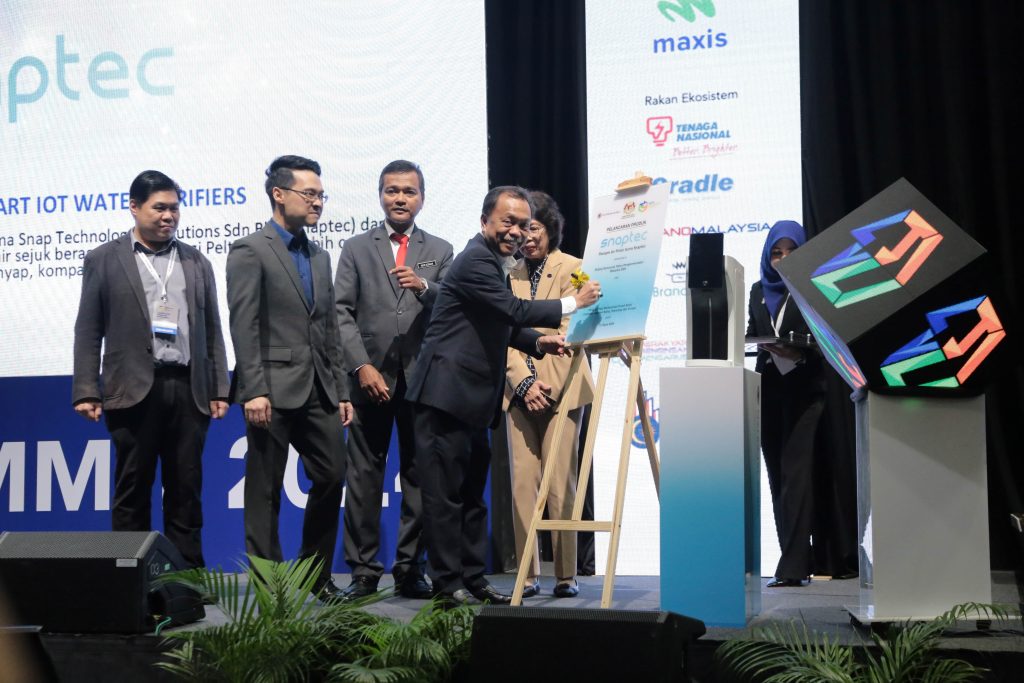
NanoMalaysia Berhad and Snap Technology & Solutions Sdn Bhd Unveil Innovative Aurra Smart Water Purifiers for a Healthier Tomorrow

KUALA LUMPUR: NanoMalaysia Berhad (NMB), a Company Limited By Guarantee (CLBG) under the Ministry of Science, Technology and Innovation (MOSTI), and Snap Technology & Solutions Sdn Bhd (Snaptec), a leader in smart water purifiers, are thrilled to announce their latest innovations, namely “Aurra Pro V2” and “Aurra Plus V2,” at Malaysia Commercialisation Year Summit 2024 (MCY 2024), Kuala Lumpur Convention Centre (KLCC). Under the NMB’s Venture Builder Model, NMB and Snaptec jointly invested in producing these new Aurra models. The Aurra smart water purifiers leverage cold-water modules based on Peltier technology, a thermoelectric semiconductor device operating on the Peltier effect, which can convert electric current into either absorbing or releasing heat depending on the direction of the current flow, making it useful for advanced cooling and heating systems. Unlike conventional water purifiers in the market today, which rely on energy-hungry compressors or semi-tankless technology that still requires compressors, Snaptec’s cutting-edge technology for cooling water requires significantly reduced power. Peltier technology also offers other benefits: it is lightweight, silent, compact, low maintenance, and environmentally friendly because it emits no toxic gases.   Designed to revolutionise the way we ensure access to clean, safe and energy-efficient drinking water, this Aurra smart water purifier integrates Carbon Nanotube (CNT) based heat conducting paste developed by Serdang Paste Tech Sdn Bhd, also a NanoMalaysia’s project partner further to enhance the Peltier module’s heat removal capacity. This CNT paste, possessing high thermal conductivity, removes the heat from the water to effectively reduce the temperature by approximately 12-15 °C from ambient temperature (~27 °C) while maintaining a high flow rate of 500-550 millilitres of water dispensed per minute. Thanks to this cutting-edge technology, consumers can save between 40-50% on energy consumption with Snaptec’s water purifiers.   This groundbreaking innovation first gained its recognition at Malaysia Technology Expo (MTE) 2024, where it was awarded a Gold Award with the innovation entitled “Aurra Smart Water Purifier with Nano-Enhanced Cooling System” highlighting the effectiveness of CNT thermal paste, Peltier technology and remarkable features of Aurra including 5 stage disruptor filtration, custom temperature, UV-C water sterilisation, interactive 7” Android touchscreen, infinite tankless hot water and others. Besides, these Aurra models have obtained certifications from SIRIM QAS International, NANOVerified, the National Sanitation Foundation (NSF) and a Halal certification from JAKIM. NMB’s Chief Executive Officer, Dr Rezal Khairi Ahmad, said: “This collaboration with Snaptec offers accessible, clean and energy-efficient based on the convergence of two technologies developed by NMB’s partners. Creating the landing platform for the CNT paste from Serdang Paste in Snaptec’s Peltier cooler is another example of orchestrating the nanotechnology commercialization value chain through our unique Venture Builder Investment Model. Through this innovative water purifier, NMB plays a huge role in providing clean and safe drinking water, eliminating harmful bacteria that cause diseases such as cholera, typhoid, diarrhoea and cancer.”   The “Aurra Pro V2” is a smart device with an interactive and user-friendly interface of a 7-inch Android touchscreen that connects with smartphones for real-time monitoring, hydration tracking, maintenance scheduling, a loyalty rewards program, and access to the Snaptec Care Control system. This aligns with the Fourth Industrial Revolution (IR 4.0) by incorporating Internet of Things (IoT) functions with nanotechnology, making water purifiers desirable in local and international markets. Snaptec Founder Neal Wong said: “Aurra represents our commitment to advancing home health technology. We provide solutions that meet the highest clean and healthy water standards and enhance the user experience through smart IoT technology.”   The market potential within Malaysia is expected to be RM 3.5B for the water purifier industry, with a very % year-over-year (YOY) growth of 30%. Meanwhile, the global market is expected to grow from $30.62B to $50.66B by 2029 at a CAGR of 7.5%. The target markets for these water purifiers include households with infants, young children, elderly members, pregnant women, athletes, and individuals with compromised immune systems. They are also suitable for residents in areas with hard water, high fluoride levels, poor water quality, or anyone seeking to improve the taste of their water. The Aurra smart water purifiers are available through Snaptec’s website and e-commerce platforms like Shopee and Lazada. Both models offer tankless hot water and a compact 1-litre tank for cold water.   This project supports the United Nations Sustainable Development Goals (SDGs) 3: Ensure healthy lives and promote well-being for all at all ages, SDG 6: Ensure the availability and management of water and sanitation for all, and SDG 17: Partnerships for the goals.   The “Aurra Pro V2” and “Aurra Plus V2“ water purifiers align with PRECISE, an initiative recently introduced by the Ministry of Science, Technology, and Innovation (MOSTI) to develop the nation’s Science, Technology, and Innovation (STI) industries. PRECISE focuses on People-centric approaches, Research and Development, Enculturation, Capacity building, Investment, and the Startup Ecosystem.

Investment & Market Trends

Every pip matters: Octa broker’s guide to market spreads

KUALA LUMPUR: No matter what tradable instruments a trader prefers, understanding the spreads is instrumental in successfully navigating the financial markets. The experts at Octa, a globally recognised broker since 2011, summarise the key points every trader should know about spreads. The annoying ubiquity of spreads Any trader, regardless of the asset classes in their portfolio, deals with transaction costs in one way or another, paying a bid-ask price with each trade. A spread is the difference between an asset’s buying and selling prices. Since no broker offers zero spreads, the question traders face is not how to avoid this fee altogether but rather how to find a broker with lower spreads and what value difference to expect from it. Two types of spreads Traders always pay the higher price when they buy and the lower price when they sell, with the broker taking the difference. There are two types of spreads, each having its pros and cons: fixed and variable. Variable spreads change according to market conditions and instrument volatility. More volatile assets have wider spread variations. Even though variable spreads do not allow traders to predict the exact spread value, the average spread size can easily be calculated at the end of the session. With fixed spreads, on the other hand, traders always know where they are when they start trading, and the end result never comes as a surprise, regardless of asset volatility. Little by little, a little becomes a lot How important is it to have favourable spreads? Let’s illustrate the significance of lower spreads by an example. If broker A has a bid-ask spread of 1 pip for a major currency pair, and broker B has a 3 pip spread, a broker A’s client will get 2 pips more of a profit for each positive outcome than a broker B’s client—and 2 pips less of a loss for each negative. Over a long time, these slight differences can amount to a hefty sum. For example, a day trader can make up to a few hundred trades daily, depending on the strategy and how frequently attractive opportunities appear. Now, suppose a pip value for the EUR/USD pair is 0.1 USD, and the trader buys or sells one lot per order. With 100 trades per session, the 2 pips spread difference will amount to 20 USD to be deducted from the trader’s financial result at the end of the day. Considering that in Forex, individual gains are mostly marginal, and each pip counts, having lower spreads in the first place is a significant advantage. The more the merrier Since spreads are imposed on a per-trade basis and do not depend on the order amount, spread difference becomes more important as the number of trades per session increases. Therefore, the trading style that profits from low spreads the most is scalping, which involves a maximum number of trades compared to other strategy types. The size and type of spreads often become a primary factor in choosing a broker, and traders decide on their preferences based on their strategy and style. For example, many scalpers prefer variable spread offers because it enables them to access the cheapest spreads available on the market at any given time. Spreads may seem insignificant when considered on a per-order basis, but at the end of the sessions, these minor differences accrue and can tilt the odds of success in the trader’s favour.

Investment & Market Trends

FGV Strengthens Support for Local Livelihoods, Boosting Income for Independent Smallholders and FELDA Settlers

KUALA LUMPUR: FGV Holdings Berhad (FGV), a leading agribusiness and one of the world’s top producers of crude palm oil, reaffirms its commitment to sustainability and human rights by enhancing the livelihoods of smallholders, including FELDA settlers and independent smallholders, through comprehensive support programmes aimed at increasing income and promoting sustainable practices. FELDA settlers and independent smallholders often face challenges such as lower incomes, limited access to resources and training, and difficulties in meeting sustainability standards. Recognizing these challenges, FGV engages with smallholders through targeted awareness campaigns, extensive outreach programmes, and technical advice on agronomy and industry training. These efforts aim to equip smallholders and settlers to meet sustainability-related requirements and thrive in the evolving palm oil industry and global market. As part of its sustainability efforts, FGV fully supports the Malaysian Sustainable Palm Oil (MSPO) certification scheme. All of FGV’s palm oil mills and estates are MSPO certified, and all suppliers, including smallholders working with the company, are required to comply with relevant sustainability certification schemes. As an active member of the Roundtable on Sustainable Palm Oil (RSPO), FGV is encouraged by FELDA’s commitment to RSPO certification and supports this initiative by offering technical advice and awareness-raising programmes. Achieving certification allows smallholders to access premium markets, enhance their income potential, and promote sustainable agricultural practices. “FGV significantly contributes to the economic well-being of FELDA settlers by purchasing a substantial amount of Fresh Fruit Bunches (FFB) from them. FGV owns 66 mills across Malaysia, processing over 18 million metric tonnes of FFB annually, 72% of which is sourced from FELDA settlers and independent smallholders, among others,” said Nurul Hasanah Ahamed Hassain Malim, FGV’s Group Chief Sustainability Officer. She added that facilitating the certification of smallholders under sustainability schemes benefits not only the participants but the industry as a whole. Being certified offers several benefits, including improved marketability, as certified products are preferred by sustainability-conscious buyers and can fetch premium prices. Certification also requires strict adherence to environmental standards, ensuring the long-term resilience of agricultural practices while preserving the environment. Additionally, certification schemes often include social criteria that promote fair labour practices, improved working conditions, and the well-being of the community. Dato’ Mohd Banuri Aris, FELDA’s Deputy Director General (Community Development), emphasized the collaborative efforts between FELDA and FGV through various programmes aimed at enhancing smallholders’ livelihoods. These include training sessions and technical support to help settlers meet sustainability standards and improve their agricultural practices. The collaboration also extends to broader community support projects, such as improving plantation infrastructure and providing educational opportunities. “The collaboration between FELDA and FGV has led to increased productivity, better market access, and improved sustainability practices among settlers, contributing to their economic and social upliftment. FELDA has ensured that all our schemes are MSPO certified, allowing us to access extensive markets for our CPO, which in turn translates into stable income for our settlers,” said Dato’ Mohd Banuri. He added that FELDA operates with a dual focus: empowering and supporting settlers through its social arm, while generating income through its commercial arm. This structure enables FELDA to fulfil its objectives of sustainable development and stakeholder well-being. In conjunction with the upcoming 67th Merdeka and Malaysia Day celebrations, FGV has launched its “Teruskan Meneroka” campaign, paying tribute to the unsung heroes who have contributed to Malaysia’s progress, including the FELDA settlers and smallholders. The “Teruskan Meneroka” campaign is featured across FGV Holdings’ social media platforms such as Facebook, Instagram, TikTok, LinkedIn, and YouTube, as well as on the company’s website at www.fgvholdings.com.

Investment & Market Trends, News

Malaysia is Set for Transformative Economic Renewal, Says Economist

KUALA LUMPUR: Malaysia is set to undergo a transformative economic renewal, promising substantial impacts across various sectors. SPI Asset Management Managing Partner, Stephen Innes said that the RM120 billion domestic Direct Investments initiative unveiled by the Finance Ministry via 6 government-linked investment companies in the next 5 years represents a significant milestone in the nation’s economic strategy. Known as GEAR-uP, the ambitious plan led by Prime Minister Datuk Seri Anwar Ibrahim, who is also the Finance Minister, targets critical areas such as green technology, infrastructure and the Johor-Singapore Special Economic Zone (SEZ), These strategic investments are designed to catalyse job creation, stimulate sectoral growth and attract foreign direct investment (FDI). At the sectoral level, he said the emphasis on green and technology sectors positions Malaysia to assume leadership industries within ASEAN. The expected outcomes include the development of new expertise, the emergence of new industries, and the diversification of Malaysia’s economic portfolio well beyond its traditional reliance on natural resources. “Investments in infrastructure are pivotal and render Malaysia an increasingly attractive destination for investments. “Over the next decade, these investments are anticipated to yield tangible benefits such as a robust infrastructure, a fortified high-tech sector, and enhanced economic indicators, propelling Malaysia toward a diversified and resilient economy,” said Innes. The 6 GLICs involved in the first phase of GEAR-UP are Khazanah Nasional Bhd, the Employees Provident Fund (EPF), Kumpulan Wang Persaraan (Diperbadankan), Permodalan Nasional Bhd, Lembaga Tabung Haji, and Lembaga Tabung Angkatan Tentera. He said the timing of these investments is opportune and aligns with global movements toward sustainability and advanced technology from a macroeconomic perspective. These developments ‘safeguard’ Malaysia against economic downturns while enhancing its competitive edge internationally. On the microeconomic level, he stressed that the projected growth is expected to permeate various economic strata. Small and medium enterprises (SMEs), in particular, would benefit from heightened demand and new opportunities spawned by these expansive projects, fostering local business innovations and entrepreneurship within the targeted sectors. The journey ahead, nonetheless, is fraught with challenges, He said the consensus among economists and investors – both domestic and international – is one of cautious optimism. “They acknowledge the significant potential of these investments but are also mindful of possible impediments such as implementation delays, funding challenges and the pressing need for a skilled workforce. “The ultimate success of this programme will depend on its efficient and transparent management, ensuring that the investments are well-integrated with Malaysia’s broader economic goals and global market dynamics,” he said. Overall, he opined that Malaysia’s focus on sustainability and technological innovation, supported by inclusive societal values, is poised to substantially refine its socio-economic landscape, heralding a new era of prosperity and resilience under Anwar’s adept leadership via strategic capital investments. — BERNAMA

Investment & Market Trends

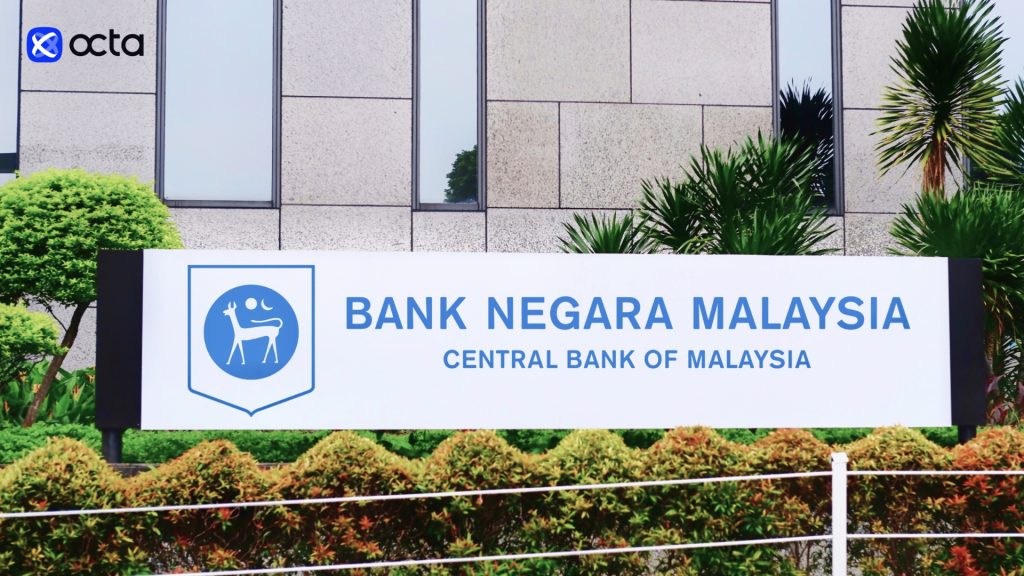
BNM has left its base rate unchanged: Octa broker analyses the decision

KUALA LUMPUR: The Malaysian economy is growing faster than expected, and the local currency has appreciated quite noticeably. However, the central bank has maintained the interest rate at 3.00%, in accordance with the economists’ expectations. Still, Octa analysts expect that the BNM may soon lower the rates. Bank Negara Malaysia (BNM), Malaysia’s central bank, announced its policy rate decision on Thursday, 5 September. Like most central banks worldwide, BNM strives to balance low inflation and sustainable economic growth. Its key monetary policy instrument is the Overnight Policy Rate (OPR). By adjusting the OPR, BNM influences interest rates throughout the Malaysian economy, impacting borrowing costs for businesses and consumers and ultimately influencing economic activity and inflation. It was a difficult decision for the central bank to maintain the interest rate at its current level. The bank is trying to strike a delicate balance between a strong economy and potentially incendiary inflation on the one hand and a dovish Federal Reserve (Fed) and appreciating ringgit on the other. According to the latest data published on 16 August, the annual growth rate of the gross domestic product (GDP) accelerated to 5.9% in Q2 2024, its fastest pace in 18 months. Economic growth for 2024 is expected to exceed the central bank’s forecast of 4-5%, driven by a continued increase in consumer spending and a recovery in exports. ‘Lowering borrowing costs when the economy is expanding risks spurring inflation, especially given that the government continues to gradually phase out subsidies programs,’ says Kar Yong Ang, a financial market analyst at Octa broker. However, inflation seems to have stabilised lately. Malaysia’s consumer price index (CPI) rose 2.0% in July from a year earlier, matching the increases of the previous two months. Furthermore, the rise was slightly less than the 2.1% increase forecast in a Reuters poll. Meanwhile, the Malaysian ringgit has strengthened against the US dollar, significantly reducing import prices. Indeed, Octa analysts expect Malaysian inflation to remain low in Q4 due to strong ringgit. At the same time, many countries are gradually reducing or have already reduced interest rates. The BNM’s decision to keep the rates unchanged is somewhat controversial. ‘It was a tough decision to make,’ argues Kar Yong Ang. ‘BNM is probably thinking about how and when to cut the rate so that it does not fall far behind other central banks––especially the Fed. However, the BNM did not choose to lower rates ahead of the Fed. A sharp fall in USDMYR supports the case for a rate cut later this year as inflation risks seem to be well-anchored at this point.’ Still, a recent Reuters poll of economists expects the BNM to maintain interest rates at their current levels until the end of 2026. ‘As we expected, BNM held the rates unchanged, but the likelihood of a reduction in the near term has increased,’ says Kar Yong Ang, adding that future decisions will largely depend on what the Fed does and on the overall economic conditions in the global market. In particular, the appreciation of the domestic currency, which is currently taking place, has a negative impact on exports but also helps push inflation down. There is also a trend towards lower interest rates, followed by other countries in the region––notably, the Reserve Bank of New Zealand (RBNZ) and the Central Bank of the Philippines have lowered rates in recent weeks. ‘We anticipate a decrease in the interest rate either this year or in Q1,’ said Kar Yong Ang. Octa analysts expect USDMYR to drop below 4.250 in the near term.

Investment & Market Trends

JF Tech: Forging Towards Brighter Times Ahead

KOTA DAMANSARA: JF Technology Berhad (“JF Tech” or the “Group”), a leading innovator and manufacturer of high-performance test contacting solutions for global integrated circuit (“IC”) makers, announced its fourth quarter (“4QFY24”) and full year financial results today for the period ended 30 June 2024 (“FY24”). Managing Director of JF Technology Berhad, Dato’ Foong Wei Kuong, commented on the results, stating, “FY24 has been a challenging year for us on the back of the slowdown in the semiconductor sector and global uncertainties. Nevertheless, we continue to be positive on the long-term prospects of the Group especially with the positive signs for the industry. The World Semiconductor Trade Statistics (“WSTS”) is forecasting a 16.0% growth for global semiconductor sales in 2024 and 12.5% in 2025. Based on the growth projections, global semiconductor sales would reach $611.2 billion and $687.4 billion respectively for 2024 and 2025, which would be the highest-ever annual sales in total.” He further added, “Moving forward, our focus remains on gaining further traction for our 6 growth drivers. The Group made a breakthrough in August 2024, as we entered into a cross-distribution agreement with Ironwood Electronics, Inc. (“Ironwood Electronics”). Together, we will be leveraging on each other’s strong expertise and established network to further expand our geographical presence.” “Meanwhile, for our joint venture (“JV”) with Shenzhen HFC Co., Ltd. (“Shenzhen HFC”) to design and manufacture electromagnetic interference shielding materials, thermal interface materials, absorbing materials, etc., machine installation is ongoing and production will commence thereafter. On the other hand, the demand outlook for China remains encouraging, with utilization at our China facility continuing to increase. All in all, the long-term outlook of the Group continues to be bright supported by the aforementioned factors. Barring unforeseen circumstances, the Board expects the FY2025 financial performance to be satisfactory,” Dato’ Foong concluded in his comments.  Revenue for FY24 was RM41.6 million, down from RM45.4 million in the previous year, mainly due to softer demand for test contacting sockets. However, contributions from the test interface products division and Kunshan manufacturing facility partially offset these effects.  Revenue from China increased by 10.6% year-on-year (“YoY”) to RM15.0 million from RM13.6 million in FY23. Profit before tax (“PBT”) for FY24 was RM6.3 million, with a profit after tax and non-controlling interest (“PATNCI” or “net profit”) of RM5.8 million, compared to RM11.7 million and RM12.2 million respectively in the prior year. This was primarily due to shifts in product mix, share of loss of an associate, and impairment of intangible assets. JF Tech declared a final dividend of 0.25 sen per share for FY24 amounting to RM2.3 million, reflecting a dividend payout of 39.5% based on a net profit of RM5.8 million.  

Investment & Market Trends

MSC Reports Higher Revenue of RM410.8 Mil in Q2FY24

KUALA LUMPUR & SINGAPORE: Malaysia Smelting Corporation Berhad (“MSC” or “the Group”), a prominent tin miner and metal producer, has released its financial results for the second quarter (“2QFY24”) and first half ended June 30, 2024 (“1HFY24”). In 2QFY24, MSC reported a 25.6% year-on-year increase in revenue to RM410.8 million, up from RM327.0 million in 2QFY23, driven by higher average tin prices. However, net profit attributable to owners declined to RM16.7 million from RM28.4 million in the same period last year. The tin smelting segment’s profit after tax fell to RM4.7 million compared to RM16.3 million in 2QFY23 due to scheduled maintenance of the Top Submerged Lance (“TSL”) furnace from mid-May to mid-July 2024, impacting production and revenue. Conversely, the tin mining business saw a 45.2% increase in profit after tax to RM24.9 million in 2QFY24, buoyed by favourable tin prices of RM153,400 per metric tonne compared to RM116,500/MT in 2QFY23. For the first half of FY24, MSC’s revenue grew 15.9% year-on-year to RM773.3 million, supported by higher average tin prices of RM139,100/MT compared to RM116,300/MT in 1HFY23. Net profit for 1HFY24 amounted to RM35.0 million, down from RM63.9 million in the prior year. Dato’ Dr. Patrick Yong, Group Chief Executive Officer of MSC, commented, “In the first half of 2024, we benefited from favourable tin prices driving top-line growth. However, our profitability was impacted by planned maintenance of the TSL furnace, reducing tin output and smelting income.” Looking ahead, Yong emphasized MSC’s commitment to enhancing operational efficiencies, including the phased closure of the Butterworth smelting facility by 2025 and consolidation at the Pulau Indah smelter in Port Klang. The Pulau Indah facility features a 1.26 megawatt-peak (“MWp”) solar photovoltaic system to lower carbon footprint and energy costs. “In tin mining, we aim to increase daily output and productivity through technology upgrades, expanded mining operations, and strategic partnerships,” Yong added. “These initiatives are integral to securing MSC’s sustainable growth, positioning us to tackle future challenges and seize opportunities in the tin industry.”  

Scroll to Top

Subscribe
FREE Newsletter