Investment & Market Trends

Investment & Market Trends, News

Over RM11.52 Bil Total Funds Transferred Into Flexible Accounts as of 24 June

KUALA LUMPUR: A total of 3.61 million (27.8%) of the total 13.01 million Employees Provident Fund (EPF) members under the age of 55 have chosen to have the initial amount in their Flexible Accounts and have transferred a total of RM11.52 billion as of 24 June 2024. Meanwhile, the Ministry of Finance reported that a total of RM5.12 billion has been transferred to the Retirement Account. The MoF said this initiative is a proactive step to help people cope with the changing employment landscape, ageing population as well as changing needs according to the life cycle of EPF members. “Among members who chose to have an initial amount, a total of 41,000 members who before the transfer had not achieved the basic savings level according to age have now reached the basic savings level according to age following the transfer of part of their Sejahtera Account savings to the Retirement Account,” it said. The MoF said the EPF will remain committed to continue to provide competitive returns to contributors in an effort to increase their retirement savings balance and prevent contributors from falling into the crisis of old age poverty. “Members’ savings balance depends on their trend of contributions and withdrawals,” it said. Consistent contributions and withdrawals that are only made for reasonable purposes will help members build their retirement savings, it added. — BERNAMA

Investment & Market Trends, News

Asian Development Bank Revises 2024 Growth Forecast for Developing Asia

KUALA LUMPUR: The Asian Development Bank (ADB) has revised its economic growth forecast for developing Asia to 5% from a previous projection of 4.9% in April and maintained the 2025 growth projection at the same percentage. In its Asia Development Outlook for July 2024 recently released, ADB said resilient domestic demand, along with improved exports and manufacturing, will support growth this year. The region’s 2024 growth forecast was marginally adjusted upwards in tandem with those of the Caucasus, Central Asia and East Asia. ADB Said the headline inflation in developing Asia is forecast to ease further to 2.9% this year from 3.3% last year and stabilise at 3% in 2025. “Inflation continued to moderate toward pre-pandemic levels, mainly due to the lagged effects of monetary policy tightening and a slight easing of global food prices. “Meanwhile, growth projections remain broadly unchanged with downside risks persisting, including heightened geopolitical tensions, trade fragmentation and uncertainties related to elections in major economies,” it noted. For Southeast Asia, the growth forecast is maintained at 4.6% this year and 4.7% in 2025, while for the Pacific, it remains at 3.3% in 2024 and 4% in 2025. The ADB also pointed out that interest rates in the United States (US) and other advanced economies continue to shape the outlook, subject to several downside risks. “Uncertainties on the US election outcome, elevated geopolitical tensions and trade fragmentation, property market fragility in China, as well as weather-related events could hurt growth. “Meanwhile, the La Niñna is an upside risk due to expected higher rainfall and cooler temperatures,” it added. As for Malaysia, the ADB maintained its forecasts of a 4.5% growth for 2024 and 4.6% for 2025. It noted that Malaysia’s GDP grew by 4.2% in the first quarter of 2024, supported by strong private consumption (+4.7%) and continued improvements in employment and wages. It said investments also posted strong growth, underpinned by solid infrastructure investment (11.9%) and spending on machinery and equipment (8.9%). Tourism arrivals continued to rebound (32%), along with growth in accommodation, transport, real estate, and construction. The bank added that manufactured exports posted a modest recovery (2.4%), supported by strong export growth from liquid natural gas (4.2%) and crude petroleum products (13.3%). — BERNAMA

Investment & Market Trends

ASEAN Exchanges Commit to Advance ASEAN as an Attractive Region at the 37 th ASEAN Exchanges CEOs Meeting hosted by Bursa Malaysia

PENANG: Bursa Malaysia Berhad hosted the 37th ASEAN Exchanges CEOs Meeting on July 12, 2024, convening CEOs from the region’s six major exchanges. The meeting focused on enhancing regional competitiveness, with particular emphasis on bolstering sustainability efforts and strengthening market connectivity across ASEAN. CEOs and Presidents from Bursa Malaysia, Indonesia Stock Exchange (IDX), The Philippine Stock Exchange (PSE), Singapore Exchange (SGX Group), The Stock Exchange of Thailand (SET), and the Deputy CEO of Vietnam Exchange attended the meeting. Representatives from Cambodia Securities Exchange and Lao Securities Exchange also participated as observers. This year’s meeting built upon the initiatives discussed during the previous year’s gathering hosted by SET in Chiang Mai. In a bid to enhance regional market connectivity, ASEAN Exchanges collectively agreed to pursue initiatives such as offering Depository Receipts (DRs) across their platforms. This move aims to provide domestic investors with increased access to investment opportunities in neighbouring countries, following the successful DR linkage established between SGX Group and SET. Regarding sustainability, significant progress was noted in the past year, marked by intensified information sharing among ASEAN exchanges and the adoption of Common ESG metrics. The CEOs committed to several Proof-of-Concepts (POCs) over the next three years, including establishing an ASEAN Data Infrastructure, developing a standardised ASEAN ESG curriculum for listed issuers, promoting transition financing for corporate suppliers, and instituting ASEAN ESG Awards to recognise exemplary performance. The ASEAN-Interconnected Sustainability Ecosystem (ASEAN-ISE) initiative, initially involving Bursa Malaysia, IDX, and SET, has expanded to include SGX Group and recently PSE. This expansion underscores ASEAN’s dedication to implementing Common ESG Metrics, which enhances transparency and promotes exemplary ESG practices across the region. Datuk Muhamad Umar Swift, CEO of Bursa Malaysia, emphasised the significance of PSE’s inclusion in ASEAN-ISE, highlighting the collective commitment of ASEAN Exchange members towards sustainable development. Ramon S. Monzon, President and CEO of PSE, expressed enthusiasm about contributing to ESG initiatives in ASEAN markets through collaborative efforts with peer exchanges. The ASEAN Exchanges website, recently updated, now serves as a comprehensive resource for global investors interested in exploring opportunities within ASEAN economies, offering insights into market developments and information. For more details, visit www.aseanexchanges.org.

Investment & Market Trends, News

India and Russia Aim to Grow Annual Trade by 54% within 6 Years

NEW DELHI: India and Russia aim to grow their annual trade by almost 54% within 6 years as the 2 countries focus on expanding their economic relations. During his visit to Russia, Indian Prime Minister Narendra Modi had wide-ranging discussions with President Vladimir Putin on boosting cooperation in various fields. With Russia being India’s top crude oil supplier, the energy sector figured prominently in their talks. They agreed on more cooperation in nuclear energy, oil refining, petrochemicals and energy investments, according to a joint statement. The two sides aim to raise the volume of trade in agricultural products, food and fertilisers, with a target of US$100 billion in overall annual trade by 2030. Bilateral trade reached US$65 billion in the financial year ending March 2024, with Russian exports to India totalling US$60 billion. Russia and India agreed to continue discussions on removing trade barriers, including the possibility of a free trade agreement between India and the Eurasian Economic Union (EAEU). “We have had one round of discussion between the two countries and it is expected that this would be expedited in months ahead,” Indian Foreign Secretary Vinay Mohan Kwatra said at a press conference about the prospects for an FTA. The two countries also agreed to grow interaction in the fields of infrastructure development, transport engineering, automobile production, shipbuilding, space and other industrial sectors. They will also facilitate the entry of companies into each other’s markets by creating subsidiaries and industrial clusters. Another joint statement stated that the Russia-India partnership in the military sector is ‘reorienting presently to joint research and development, co-development and joint production’ of arms and equipment. “Both sides agreed to encourage joint manufacturing in India of spare parts, components, aggregates and other products for maintenance of Russian origin arms and defence equipment,” it said. In the nuclear sector, they noted the progress achieved in the construction of the remaining nuclear power units at Kudankulam in the southern state of Tamil Nadu. The Kudankulam Nuclear Power Plant developed in collaboration with Russian state nuclear firm Rosatom is India’s largest such facility. It will have 6 units of 1,000MW capacity each and units 1 and 2 are operational. Russia and India are discussing another site for building more nuclear power plants. — BERNAMA

Investment & Market Trends, News

HRD Corp Should Use PAC Findings to Beef Up Governance of Funds

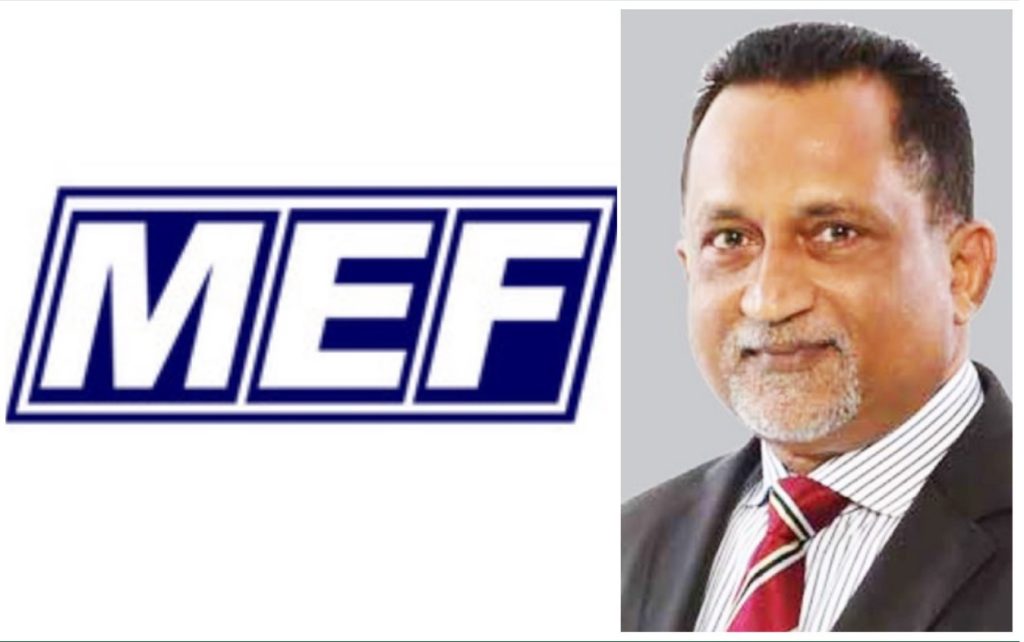
KUALA LUMPUR: The Human Resource Development Corporation (HRD Corp) should take into account audit findings from the Public Accounts Committee (PAC) to beef up governance of its funds, said Malaysian Employers Federation (MEF) President Datuk Dr Syed Hussain Syed Husman. “We hope these audit findings will strengthen HRD Corp’s governance of the fund. We need better quality people in management, technology and better processes,” he explained. Syed Hussain was commenting on the PAC’s findings of weakness in HRD Corp management due to dubious real estate deals and high-risk investments. According to reports, the PAC also said there was no Bank Negara Malaysia representative in the investment panel, which is against the Human Resources Development Fund Act 2001. “As the funds are getting bigger, we need more competent investment-related people in the committee,” he said, adding that HRD Corp’s act allows them to set up an investment committee. Syed Hussain said that with better management and a better focus on training and development, HRD Corp will be one of its kind in the world. “As a member of the International Labour Organisation (ILO), we have not found any country that has set up such a fund. Malaysia is a leader in this area of talent development. “Hence, HRD Corp can only get better and become a role model for Human Resources development,” he added. Syed Hussain also noted that despite the ongoing investigation by the Malaysian Anti-Corruption Commission (MACC) following the PAC findings, credit should be given to HRD Corp for achieving a stable financial position, as acknowledged in the PAC Report 2/2024. HRD has recorded a cumulative profit of RM389.95 million as of 31 December 2022. Syed Hussain said that HRD Corp’s financial stability would help strengthen its human capital training programmes, which are needed by companies operating in Malaysia. — BERNAMA

Investment & Market Trends, News

Banking Industry Well-Positioned to Progress with Steady Domestic Fundamentals

KUALA LUMPUR: Alliance Bank Malaysia Bhd is optimistic that the banking industry is well-positioned to progress and navigate the potential headwinds with steady domestic fundamentals and an outlook that remains conducive to sustainable economic growth. In a joint statement by Chairman Ahmad Mohd Don and Group Chief Executive Officer Kellee Kam, Alliance Bank will continue delivering on commitments to putting the customers first with greater value propositions and innovative digital transformation, while remaining adaptable to the changes within the operating environment to fulfil growth ambitions under Acceler8 strategy. “Through the Acceler8 strategy, we diversified our portfolio, gaining access to new markets and consumer segments. “In the financial year 2024 (FY24), we successfully grew the overall bank loan market share from 2.41% in FY23 to 2.58% in FY24, driven by higher loan volumes in the small and medium enterprises (SME), consumer and corporate segments,” they said in the bank’s annual report 2024. They also said the bank focused on efforts to tap into new market segments and business verticals, regional expansion, championing sustainability, as well as driving synergies and value creation through digital innovations and partnerships. On becoming the regional champion, they noted that the bank focused on strengthening its market presence and reach across the country, particularly in key economic growth corridors such as Penang and Sarawak in FY2024. “By becoming the preferred ‘Bank for Life’ to consumers, businesses and local communities that we serve, we recorded strong growth of 48% year-on-year (YoY) in deposits and 18% YoY in loans across these states,” they said. They also said Alliance Bank will continue reinforcing its core business segments in these geographies, with Johor being added as one of the key focus areas in FY25. “Our regional expansion plans have been progressing successfully with the opening of new branches in Saradise, Kuching and soon at Jalan Kelawai, Penang.” they said. They said the bank will in FY25 continue to outfit and energise its branch network with the bank’s refreshed brand outlook to fortify the Alliance Bank’s positioning. — BERNAMA

Investment & Market Trends

Manulife Malaysia Reports Double Digit Growth in 2023

Manulife Holdings Berhad (Manulife Malaysia) has reported its audited financial results for 2023, showcasing impressive growth with an 11 percent increase in operating revenue. This growth is largely attributed to higher insurance service revenues, driven by increased contractual service margin amortization and risk adjustment releases, reflecting the expansion of its in-force insurance business. Additionally, improved performance in equity investments and increased fee income from higher assets under management contributed to these positive results. Manulife Insurance Berhad (MIB), the insurance arm of Manulife Holdings Berhad, reported an annual premium equivalent (APE) of RM185 million for 2023, marking a 10 percent year-on-year growth. As of December 31, 2023, MIB’s product mix shifted positively with a focus on higher-margin Investment-Linked Policies (ILP), resulting in an 11 percent year-on-year growth. MIB’s agency force achieved RM124 million in new business, with a notable increase in the ILP mix from 61 percent to 76 percent, highlighting their focus on leveraging opportunities for recruitment and new business. The bancassurance channel also saw significant sales growth and a stronger market presence, with new business sales reaching RM57 million in 2023, a 29 percent year-on-year growth, exceeding the 2023 Business Plan by 16 percent. This growth was bolstered by the extension of MIB’s partnership with Alliance Bank for another 15 years in July 2023. Reflecting its commitment to customer protection, MIB’s claims payouts increased by 24 percent to RM193 million in 2023, benefiting over 30,000 customers. This underscores Manulife’s dedication to making decisions easier and lives better for their customers. “The success of Manulife Malaysia relies on our collective effort as a winning team, dedicated to executing our ‘Scale Up’ growth strategy. This was evident in 2023 with increased revenue and a notable rise in our net profit after tax. We remain committed to being the most trusted and preferred financial services provider in Malaysia,” said Vibha Coburn, Group CEO of Manulife Holdings Berhad. Manulife Investment Management (Malaysia) Berhad (MIM), the asset management arm, continued its strong growth momentum with assets under management (AUM) increasing by 11 percent, from RM13.2 billion in 2022 to RM14.6 billion in 2023. This growth outpaced the industry average for equity and fixed income funds, resulting in increased retail market share. MIM received significant recognition in 2023, winning three group awards and twelve fund awards at the 2024 LSEG Lipper Fund Awards, including the biggest group award for the second consecutive year. MIM was also acknowledged as a leader in Shariah-compliant investment solutions at the LSEG Lipper Fund Awards Global Islamic 2024. In November 2023, RAM Ratings upgraded Manulife Malaysia’s corporate credit ratings to AA2/Stable/P1, reflecting the company’s commitment to responsible and transparent financial practices, contributing to a more sustainable and resilient economy. The double-digit growth achieved in Manulife Malaysia’s 2023 financials highlights its dedication, resilience, and strategic vision. Manulife Malaysia remains optimistic about future opportunities, focusing on innovation and strengthening its commitment to Malaysian customers and families.

Investment & Market Trends, News, Property

Holistic Approach to Public Transport Needed, Consultant Says

KUALA LUMPUR: All public transportation stakeholders have a collective responsibility to increase passenger numbers, industry experts said. The Auditor-General’s report on MRT1 and MRT2 recently highlighted the need for a holistic approach, strategic policy alignment and genuine commitment from all stakeholders to transform the MRT into a reliable and attractive transport option, transport consultant Wan Agyl Wan Hassan said. “Without reliable and convenient access – buses, walking, cycling and other modes of transport – potential passengers are left stranded. “This fundamental flaw in the current transport ecosystem severely limits the MRT’S potential to attract and retain users,” Wan Agyl said, adding that the ongoing struggle with first- and last-mile connectivity reveals a deep-seated misunderstanding or neglect of passenger needs. “Even if first-mile solutions are marginally addressed, the last-mile connectivity often remains a nightmare. “It is a collective failure involving local authorities and the ministries of housing and local government, works and transport. This fragmented responsibility leads to a lack of coherent solutions,” he said. Meanwhile, an industry source familiar with the MRT project said it is unfair to assign blame wholly to MRT Corp. He said other unexpected factors have Contributed to missed passenger targets for the MRT system – which is designed with increasing demands over the next 30 years in mind – primarily Covid-19 and delays in parallel developments that were outside their control. “The ridership targets that were established took into account an increase in commuters arising from real estate developments along the alignment such as Kwasa Land, TRX city, Bandar Malaysia, Merdeka 118 and others. “The delay or postponement of these developments alongside other public amenities such as bus stops and pedestrian walkways have inevitably contributed to the non-achievement of the target,” said the source. Meanwhile, Wan Agyl pointed to Malaysia’s car culture, with public transport failing to provide a reliable alternative. “The overcrowded and uncomfortable conditions during peak hours deter potential users. “Without a nuanced policy that balances car usage with the benefits of public transport, passenger numbers will continue to stagnate,” he said, adding that feeder services for rail transport are ‘woefully inadequate’. “Passengers face unreliable bus schedules, traffic congestion, and a complete lack of real-time tracking, which makes planning a journey an exercise in frustration,” he said. Wan Agyl said government policy contradictions are “glaring” with the national transport plan pushing public transport use, while the national automotive policy promotes car production and ownership. “This incoherent policy framework undermines efforts to boost passenger numbers. Moreover, the lack of supportive parking policies further disincentivise public transport use, leaving the entire system at odds with its stated goals.” Wan Agyl described the government’s approach to public transport as a commercial enterprise – in contrast to an investment that delivers significant social and economic benefits – as ‘fundamentally flawed’. “This shortsighted perspective hampers the development of a robust and effective public transport system,” he said. Wan Agyl pointed out that the MRT System remains incomplete, with the MRT3 section still under construction. As such, he said, neither MRT1 nor MRT2 has reached its full potential. Meanwhile, the source said steps to reach passenger targets, such as government pro-public transport policies, are critical to ensure that push-and-pull consumption factors can be successful. “Targeted fuel subsidies, congestion charges according to zones and entry times, private vehicle parking rates in the capital area are increased, and so on. On Thursday, the 2024 auditor-general’s report revealed that MRT1 and MRT2 had failed to meet their targets in terms of daily passengers, number of trains in operation and frequency during peak hours. The report said that for MRT1, the average daily passenger percentage against the projected targets ranged from 10.8% to 37.4% between 2017, when the service became fully operational, and 2023. — BERNAMA

Investment & Market Trends, News

Analysts Bullish on Banking Sector Amid Economic Optimism

KUALA LUMPUR: Kenanga Investment Bank Bhd has maintained its ‘overweight’ call on the banking sector, buoyed by improved economic prospects driven by infrastructure projects and investments. In a note, the investment bank said market tailwinds such as ongoing loan growth, gross domestic product improvement and better margin retention, are expected to continue overshadowing industry headwinds like inflationary pressures and a weaker ringgit. “We believe this will likely result in fewer challenges to the sector’s resilience. The sector remains appealing due to attractive dividend yields of six to seven per cent on most stocks, coupled with lower inherent sector volatility compared to other industries,” it said. Kenangas top picks for the third quarter of 2024 include CIMB Group, which has achieved a return on equity of approximately 11% and aims to sustain this growth long-term with a strengthened presence in both local and regional markets. Additionally, the research firm said CIMB boasts a dividend yield nearing mid-6% levels, the highest among its top peers. RHB Bank is also favoured for its expected leading dividends of 7% to 8% and the potential public entry of its associate, Boost Bank, which could attract significant interest in the near term. For small-cap banks, Alliance Bank Malaysia remains a favourite due to its solid fundamentals comparable to larger peers. Meanwhile, MIDF Amanah Investment Bank maintains a ‘buy’ call on Public Bank with an unchanged target price (TP) of RM4.78 as of 28 June 2024 when the stock price stood at RM4.02. The firm cites improving dividend payouts, anticipated major writebacks in the financial year 2024, as well as SMEs’ loan growth as supporting factors. Similarly, MIDF Research maintains a ‘buy’ call on Hong Leong Bank with an unchanged TP of RM21.38, with the stock priced at RM19.20 on 28 June 2024 noting its strong cost-to-income ratio and robust asset quality. Although HL Bank’s associate, Bank of Chengdu (BoCD) is expected to see moderated earnings, it remains a solid growth driver, MIDF said. Meanwhile, Maybank Investment Bank Bhd (Maybank IB) said the industry loan growth moderated to 5.8% in May 2024 from 6.1% year-on-year in April 2024, aligning closely with their full-year forecast of 5.5%. Maybank IB maintains a ‘positive’ outlook on the sector and recommends buying shares of AMMB Holdings, CIMB Group, Alliance Bank, Public Bank, Hong Leong Bank and Hong Leong Financial Group, in that order of preference. — BERNAMA

Investment & Market Trends

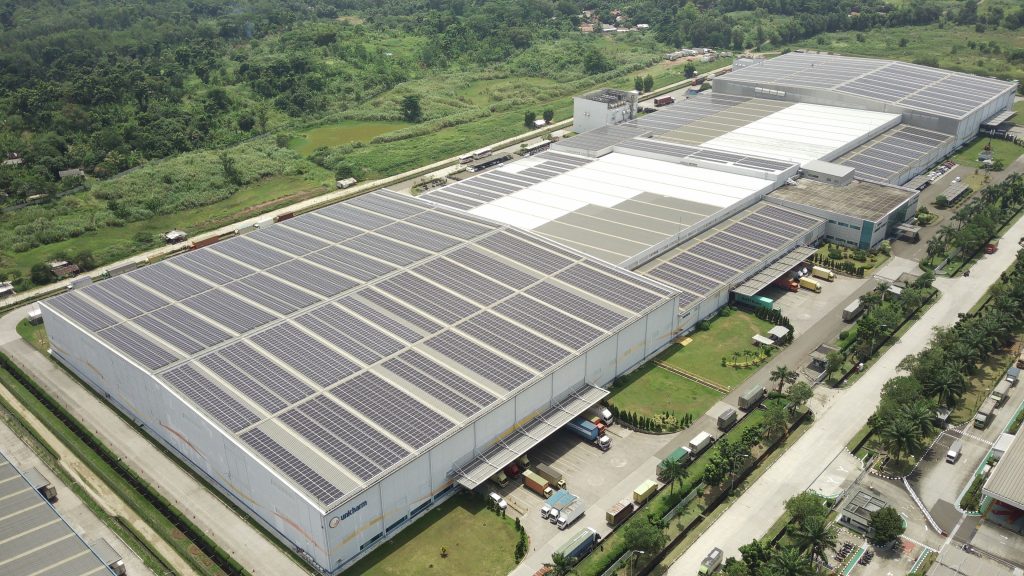
AC Ventures joins Xurya’s US$55M funding round with global institutions

KUALA LUMPUR: Xurya, a leading renewable energy company in Indonesia specializing in rooftop solar rentals with no upfront costs, has announced a significant investment of US$55 million. This funding round was spearheaded by the Norwegian Climate Investment Fund, managed by Norfund, with participation from Swedfund, Clime Capital (manager of SEACEF II), British International Investment (BII), and AC Ventures. With this latest infusion, Xurya has secured over US$90 million in total investments to date. This investment marks the first direct funding from the Norwegian Climate Investment Fund and Swedfund, Sweden’s Development Finance Institution (DFI), into an Indonesian renewable energy company. Additionally, it represents BII’s inaugural equity investment in Indonesia under its 2022-2026 investment strategy. Clime Capital and AC Ventures are returning investors. Since its inception in 2018, Xurya has led the way in Indonesia’s rooftop solar sector, pioneering the first no-cost rental model and advancing IoT and machine learning integration in solar operations. Xurya’s efforts have driven significant growth in rooftop solar adoption, particularly in the commercial and industrial sectors. Eka Himawan, Xurya’s Managing Director, highlighted that the new funding will enhance the company’s global competitiveness. “With support from these esteemed investors, we are not only committed to continuing our innovations for a sustainable energy transition but also to evolving into a world-class company in the coming years,” said Eka. Indonesia, as the world’s largest archipelago, faces significant climate change risks. The Indonesian government’s roadmap aims to achieve net-zero emissions by 2060, with a focus on increasing renewable energy sources like solar power. Norfund’s Senior Vice President of Renewable Energy, Anders Blom, expressed enthusiasm about leading the investment, noting it aligns with the Climate Investment Fund’s mission to reduce greenhouse gas emissions in emerging markets. Swedfund’s Investment Director of Energy and Climate, Gunilla Nilsson, emphasized their pride in partnering with Xurya to tackle climate change in a high-emission country and contribute to measurable impact. Clime Capital’s CEO, Mason Wallick, praised Xurya’s growth and the effectiveness of their early-stage risk capital model. BII’s Managing Director for Asia, Srini Nagarajan, highlighted their support for Xurya as a testament to their commitment to sustainable development and strengthening UK-Indonesia relations. AC Ventures’ Managing Partner, Helen Wong, commended Xurya’s leadership in Indonesia’s commercial and industrial solar market. Eka Himawan expressed gratitude for the investors’ trust and reaffirmed Xurya’s commitment to achieving Indonesia’s ambitious net-zero goal through collaborative efforts. Xurya’s rooftop solar rental model addresses the barrier of high initial costs, facilitating the adoption of renewable energy for businesses. In 2022, Xurya raised US$33 million from East Ventures, Mitsui & Co., Saratoga, PT Surya Semesta Internusa Tbk, Schneider Electric, and New Energy Nexus, with early investments from GoTo Ventures. To date, Xurya has executed over 170 solar projects across Indonesia, avoiding 152,000 tons of CO2 emissions annually and generating over 1,600 green jobs. With the new capital, the company aims to further reduce CO2 emissions by 370,000 tons per year. Xurya is also an active member of the Indonesian Solar Energy Association and has earned B Corp Certification in 2024 for its adherence to ESG principles.

Scroll to Top

Subscribe
FREE Newsletter