Investment & Market Trends

Investment & Market Trends, News, Property

EcoWorld Malaysia 2Q Net Profit Rises as Demand Increases

KUALA LUMPUR: Eco World Development Group Bhd (EcoWorld Malaysia) posted a higher net profit of RM70.05 million in the second quarter ended 30 April 2024 (2Q24) from RM62.69 million in the same quarter last year. Revenue rose 32.1% to RM555.76 million from RM420.82 million due to higher contributions from active and newly launched phases of its property projects. EcoWorld Malaysia noted that Eco Botanic, Eco Spring, Eco Tropics, Eco Business Park I and Eco Sanctuary in the Klang Valley were among the projects that contributed to revenue and gross profit in 2Q24. Its President and Chief Executive Officer Datuk Chang Kim Wah said the group achieved RM2.18 billion in sales in 7 months of the 2024 financial year (FY), fuelled by robust demand for its projects in Iskandar Malaysia which contributed 61% of the group’s total year-to-date sales. “From a segmental perspective, all four of the group’s revenue pillars, including Eco Townships, Eco Rise, Eco Hubs and Eco Business Parks performed strongly. “Sales of residential homes under our Eco Townships pillar remain the largest segment with RM855 million recorded, of which 90% comprised upgrader homes priced above RM650,000,” he said. Chang also noted that as its projects mature, backed by consistently strong sales, its ability to generate cash grows. “In the first half of FY2024, the group generated RM470 million cash from operating activities, more than 3 times our net profit for the same period. “As a result, our cash balance including deposits and short-term funds rose to RM1.44 billion – its highest level to date – reducing our net gearing ratio to 0.24 times,” he added. According to EcoWorld, it is well-placed to acquire more land and is seeking, particularly under its Eco Townships, Eco Business Parks and Eco Rise pillars. It also aims to broaden its market share under every property market segment and to sustain growth. — BERNAMA

Investment & Market Trends, News

Global Security Leaders Struggle to Keep Up With Cyberthreats

KUALA LUMPUR: Gigamon, a leader in deep observability has revealed vulnerabilities in organisations’ preparedness to defend against increasingly sophisticated cyberthreats and attacks in its newly published 2024 Hybrid Cloud Security Report. Compared to last year’s report, the annual survey of over 1,000 security and information technology (IT) leaders across Australia, France, Germany, Singapore, the United Kingdom and the United States showed a decline in detection and response capabilities year-on-year. According to a statement, the research found 1 in 3 organisations were unable to detect a breach in the last 12 months with just 25% able to respond in real-time, revealing a cybersecurity preparedness gap. As hybrid cloud environments two in complexity and threat actors launch a barrage of concealed attacks, 65% of respondents believed their existing security tooling cloud not effectively detect breaches. Security and IT leaders are at a crucial juncture. The spectre of AI-powered cyber attacks looms globally, with 82% of respondents predicting that AI will increase the global ransomware threat. Despite global information security spending projected to reach US$215 billion (RM1.01 trillion) in 2024, only half (54%) of organisations feel ‘strongly prepared’ to respond to unauthorised access to their hybrid cloud environments. The research also delves into the insights of 234 chief information security officers (CISOs) globally, with the results highlighting that CISOs continue to bear the burden of regulatory and technological pressures, with 69% reporting they struggle to detect encrypted threats, compared to 59% of the total respondents. Furthermore, an alarming 70% of CISOs believed their tools were not as effective as they could be in detecting breaches and as a result, 59% say they would be most empowered by cyber risk becoming a boardroom priority. — BERNAMA

Investment & Market Trends, News

Thai Prime Minister Unveils US$102 Bil Budget

BANGKOK: Thai Prime Minister Srettha Thavisin unveiled a 3.75 trillion baht (RM480.52 billion) budget bill for the fiscal year 2025 to parliament. The proposed budget aims to build on the previous fiscal year’s efforts, focusing on maximising Thailand’s economic potential by positioning the country as a hub for key industries, Srettha told the House of Representatives. The Thai economy is expected to grow between 2.5% and 3.5% in 2025, driven by a continued recovery in exports, domestic consumption, private investment and tourism. Headline inflation is projected to range between 0.7% and 1.7%. Srettha noted the deficit budget that would exceed expected revenues by 856.7 billion baht is crucial to stimulating the sluggish economy, ensuring continuous money flow into the private sector and spurring demand and economic activities. Investment expenditures mark the highest proportion in 17 years, accounting for nearly a quarter of total expenditures, Srettha said. A significant economic boost is anticipated from the 500 billion baht handout scheme, set to reach 50 million Thais via a digital wallet by the end 2024, driving nationwide spending and job creation that will become tax revenues for the government, the prime minister told the Thai parliament. — BERNAMA

Investment & Market Trends, News

Gen Z Purchasing Power to Grow US$12 Trillion by 2030

KUALA LUMPUR: The first-of-its-kind comprehensive generational spending report on Gen Z – which makes up 25% (2 billion) of the world’s population, revealed that their global spending power is projected to reach US$12 trillion (RM56.53 trillion) by 2030. This potentially makes them the wealthiest generation in every region of the world and are set to be the youngest generation to overtake Boomer spending by then and are expected to contribute over US$9 trillion (RM42.39 trillion) in global spending by 2034, more than any other generation. According to a statement, the ‘Spend Z’ report uncovers precisely what companies seeking to secure pathways to growth need to urgently and intimately understand about Gen Z, including their preferences, spending habits, values, priorities as well as how and where they shop. The takeaways from the report also unveiled that Gen Z demands authenticity as they are more interested in authentic relationships with influencers and brands. ‘Being true to yourself’ is the number one ranked description of success for the generation, globally. In addition, their in-store purchases make up almost 50% of their share of dollars and is higher than every generation before them, even though Gen Z begins their shopping journey online, ranks online reviews from other shoppers as the most important factor when shopping and is heavily influenced by social media. Gen Z will become the highest consumer spending class in many regions and 30% of the global workforce in 2030, whereby North America, Europe and Asia Pacific (APAC) will continue to dominate the majority of spending with APAC becoming increasingly important. Additionally, the report finds that overall Gen Z is health conscious and sustainable and responding to that, NIQ also expects NIQ Better For, a classification leveraging the company’s proprietary algorithm to identify brands through produce characteristics, positioning, sales and distribution, products to continue to grow faster than conventional products. This category includes products that are ‘better for’ the consumer, the environment and society currently small brands are younger generations driving 62% of the growth in this category. — BERNAMA

Investment & Market Trends, News

FGV Holdings Bhd Maintained Profitability Amid Market Volatility

KUALA LUMPUR: FGV Holdings Berhad (FGV) had concluded its 16th Annual General Meeting (AGM) on a triumphant note, marking it as a resounding success. The virtual gathering, under the leadership of FGV Chairman, Tan Sri Rastam Mohd Isa saw the participation of 1,853 shareholders and proxies, all of whom unequivocally endorsed the nine resolutions presented, signifying a unified commitment to FGV’s strategic direction. During the AGM, the audited financial statement was received for the financial year ending 31 December 2023, along with the reports of the directors and auditors. The decision to distribute a significant dividend of RM109.44 million, translating to 3 sen per share, exemplifies FGV’s balanced approach to capital allocation, ensuring that shareholders are duly rewarded while retaining sufficient internal resources to fuel the Group’s ambitious growth trajectory. Reflecting on FGV’s accomplishments in the past year, Tan Sri Rastam said, “FGV demonstrated resilience and determination, navigating challenges while forging a strategic direction. FGV’s commitment to sustainability and ethical growth has benefited FELDA settlers and independent smallholders, vital to their fresh fruit bunch (FFB) supply chain. “Beyond business goals, FGV’s initiatives aim to empower communities and integrate sustainability into operations. We persist in aligning business practices with social innovation, ensuring ongoing progress, growth, and sustainability.” Meanwhile, its Group Chief Executive Officer, Dato’ Nazrul Mansor added, “FGV sustained profitability amidst market challenges, capitalising on new prospects for sustainable growth. By intensifying the execution of our strategic thrusts, we aimed to achieve business objectives, enhance efficiency, and fortify our growth potential. “Progressing into the second stage of FGV’s Sustainability Strategy, we focused on integrating sustainability practices at the operational level. Additionally, governance initiatives were implemented to bolster transparency, accountability, and operational efficiency.” Such efforts, he emphasised, are integral to FGV’s overarching mission of fostering sustainable growth while simultaneously creating enduring value for all stakeholders. As FGV charts a course towards a future defined by sustainability, innovation, and inclusive growth, its steadfast commitment to excellence and ethical leadership serves as a beacon of inspiration for industries far and wide.

Investment & Market Trends, News

Malaysia Expected to Benefit From Electronics Sector Recovery in 2H24

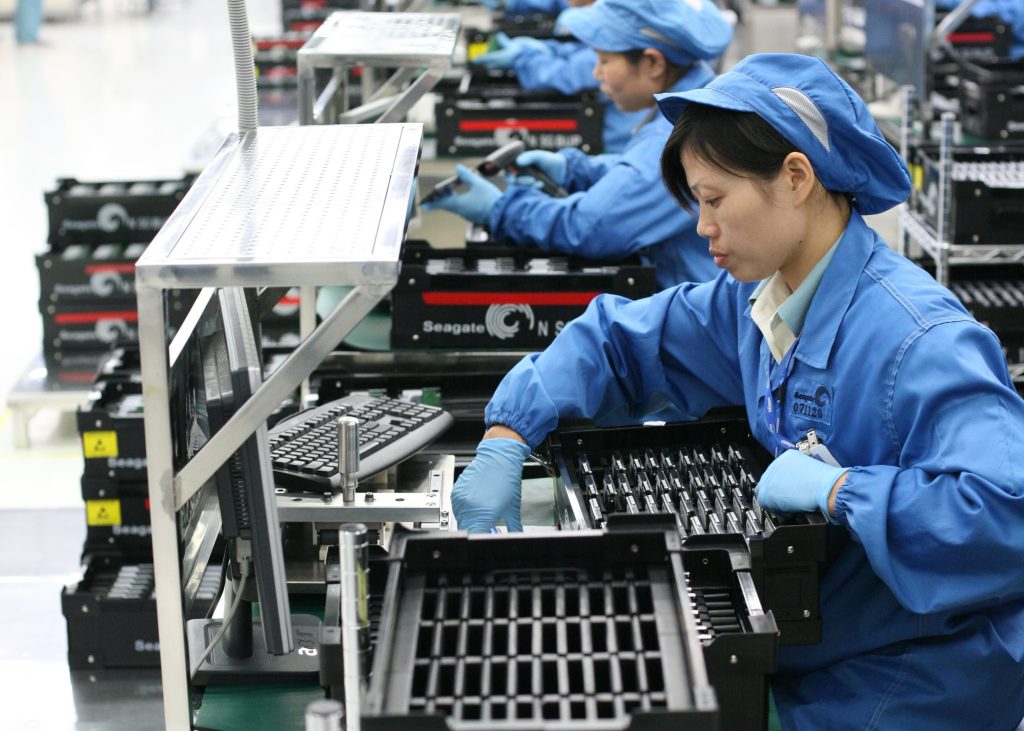
KUALA LUMPUR: Malaysia is expected to benefit from the electronics sector recovery in the second half of the year (2H24), given its position further down the electronics value chain. The Institute of Chartered Accountants in England and Wales (ICAEW) said in a statement that the electronics sector is a bright spot for Southeast Asia’s economy, with the region projected to grow by 4% in 2024 and 2025. “However, this is below the pre-pandemic average of 5% in the 5 years prior, largely due to expected challenges in domestic consumption as interest rates remain higher for longer,” it noted. The association said electronics-focused exporters in Southeast Asia gained a better foothold in the first quarter of this year (1Q24), in large part due to the bottoming out of the electronics sector. “The recovery in global semiconductor sales, which saw a 15.3% year-on-year (YoY) increase in 1Q24 has particularly benefited Vietnam, where export growth soared to an estimated 16.8% YoY. “On a seasonally adjusted basis, Singapore also saw a rebound in non-oil domestic exports in April with an estimated 9.4% month-on-month (MoM) growth, marking a positive turn after 2 consecutive months of decline,” it said. Meanwhile, on domestic consumption in the region, ICAEW said domestic consumption in Southeast Asia was more resilient than expected in 1Q24, but it is unlikely to drive growth in the coming quarter as tight monetary policy in the region is expected to restrain consumer spending. “The persistent weakness in local currencies against the US dollar is likely to limit monetary easing options for Southeast Asian central banks. “The strong US dollar, driven by the US Federal Reserve (Fed) high interest rates prevents local central banks from cutting rates without risking further currency depreciation,” it added. The association noted that in 1Q24, Bank Indonesia was even forced to raise rates to arrest the rupiah’s decline. “The ongoing tight monetary policy means that debt servicing and borrowing costs will remain high, likely constraining private consumption. “Additionally, many consumers and businesses are continuing to consolidate as they are still recovering from the pandemic and are likely to focus on rebuilding savings or repairing their balance sheets in the short term,” it said. On the ringgit, ICAEW noted that the Malaysian ringgit encountered significant challenges in 1Q24, largely attributed to the substantial discount of the Bank Negara Malaysia’s (BNM) policy rate to the US Federal Funds rate. It opined that despite inflation remaining relatively low, hovering below 2% for the past 6 months and showing little indication of a significant increase, the currency weakness poses an obstacle to BNM’s ability to ease policy to support the economy. “This challenge persists until the Fed initiates rate cuts, anticipated to occur in the 3Q, alleviating pressure on the ringgit and potentially enabling policy rate adjustments,” it added. — BERNAMA

Investment & Market Trends, News

Malaysia-China Signed 14 MoUs/MoAs, Enhancing Economic and Trade Cooperation

PUTRAJAYA: A total of 14 Memoranda of Understandings, Agreements (MoUs/MoAs), protocols and joint statements involving 9 ministries have been exchanged between Malaysia and China, witnessed Prime Minister Datuk Seri Anwar Ibrahim and China Premier Li Qiang. The documents were exchanged during Li’s official visit to Malaysia, marking his first visit to the country as premier, in conjunction with the 50th anniversary of diplomatic relations between Malaysia and China. The 9 ministries involved are the Ministry of Investment, Trade and Industry (MITI); Finance (MOF); Agriculture and Food Security; Housing and Local Development; Home Affairs; Science, Technology and Innovation (MOSTI); Higher Education (MOHE); Tourism, Arts and Culture; as well as Communications. Apart from the MoUs, Malaysia and China also inked the second cycle of the Malaysia-China 5-year programme for economic and trade cooperation to deepen further linkages between industries in priority sectors like high-level manufacturing and digital economy. The programme, which will from 2024 to 2028, aims to deepen cooperation in robotics, entrepreneur development, innovation and startup, along with research and development in agriculture and primary industries. According to MITI, the second cycle will also focus on existing areas such as trade and investment, manufacturing, the digital economy, logistics and the development of small and medium enterprises. On this, MITI Minister Tengku Datuk Seri Zafrul Abdul Aziz and China’s Minister of Commerce Wang Wentao signed and exchanged 3 key documents – the first document related to the initial Malaysia-China 5-Year Programme for Economic and Trade Cooperation, while the other 2 were new MoUs aimed at increasing high-quality investment in the digital and green economies. More specifically, both countries aim to explore cooperation in digital infrastructure, including communication networks, smart infrastructure and smart cities, enabled by technologies such as AI and 5G connectivity in sectors like manufacturing, transportation, business, finance, education and healthcare. The MoU on green development seeks to explore cooperation in clean energy, new energy vehicles, green finance, sustainable infrastructure construction and green technology. This includes research and development (R&D) and the establishment of scientific and technological innovation platforms to accelerate the green transformation journey of both countries. MITI also welcomes the Malaysia-China cooperation on establishing a single window system to facilitate cross-border trade by streamlining trade regulatory processes and simplifying documentation. The system will enable the seamless digital exchange of trade-related information between customs authorities in both countries, which would utilize leading-edge technologies including AI and blockchain to ensure real-time and accurate exchange of data. “The single window trade initiative is a strategic step towards enhancing Malaysia’s trade facilitation capabilities and is expected to significantly expedite the movement of goods while reducing the administrative burden for businesses. “This will not only support bilateral trade growth, but also nurture economic resilience between the two countries,” Tengku Zafrul said. China has been Malaysia’s largest trading partner for 15 consecutive years since 2009. Last year, total trade with China was valued at RM450.84 billion (US$98.80 billion), contributing 17.1% of Malaysia’s global trade.

Investment & Market Trends

Yi-Lai Industry Launches New Product Range To Capture Wider Market

KUALA LUMPUR: Tiles manufacturer Yi-Lai Industry Bhd (YLI), a subsidiary of Bursa Malaysia’s main market-listed YB Ventures Bhd (YBV), continues to make greater market strides for its Alpha Tiles and Talos Living Tiles brands in Malaysia. The company noted that the brands’ technological properties have achieved higher sales and continue to garner new inquiries across industries in the country. “We aim to transform tiles from mere functional items to integral elements of stylish and modern living spaces,” YBV chairman Datuk Sri Tajudin Md Isa said in a statement. Celebrating its 37 years in the business, the company’s Alpha Tiles and Talos Living Tiles brands, marketing arm Yi-Lai Marketing Sdn Bhd, continues to see new inquiries. YLI has already secured interest from significant projects, including the Sheraton Hotel in Johor Bahru. YLI’s Alpha brand has evolved from a local tile manufacturer to a market pioneer known for its diverse range of small-sized ceramic and homogenous tiles. Today, Alpha Tiles introduces large-format tiles with various designs and surfaces to meet modern consumers’ needs. The new product line, known as the Infinity Collection, combines the strengths of Alpha Tiles and Talos Living Tiles to create infinite design possibilities for customers. The new tiles are crafted using a revolutionary material called shape ink, which enhances the tile surface with ink and glaze. This innovation saves time and eliminates the need to change moulds, streamlining the production process. “We are proud to incorporate this cutting-edge technology, which allows us to offer superior quality and variety to our customers,” Tajudin said. The new tile series addresses common challenges consumers face, such as matching tiles in different areas with varying sizes and surfaces. The Infinity Collection offers a variety of surfaces and sizes, enabling easy coordination and reducing decision fatigue. This flexibility makes the collection ideal for both residential and commercial use. YBV executive director Datuk Au Yee Boon said the new products are designed for tech-savvy, daring, and art-oriented buyers who appreciate unique and innovative items. “Our comprehensive range, complete with multiple sizes and stock availability, sets us apart from competitors,” he said. The new tiles’ innovative production process ensures high quality and durability, contributing to longer-lasting installations and reduced replacement needs. The launch of the Infinity Collection marks a significant milestone for Alpha Tiles, positioning the brand to the upper-middle market. Talos Living Tiles continues to expand its high-end offerings, catering to discerning customers seeking premium products. “This is just the beginning of our journey with these new products, and we are excited about the potential collaborations and market expansion,” stated Datuk Au Yee Boon. YLI was among the first in Malaysia to produce Slate Effect Homogeneous Tiles and achieved a significant technology breakthrough with the Rustico Embossed Slate Effect Tile (RESET) in 1996. The company has been recognised for contributing to major residential and commercial projects, including developments in Subang Jaya and several key public facilities in Malaysia. The tile industry continues to evolve, with increasing demand for innovative and high-quality products. YLI’s commitment to technological advancements and design innovation positions it well to capitalise on these trends. The introduction of large-format tiles and advanced materials like shape ink demonstrates the company’s dedication to meeting and exceeding market expectations.

Investment & Market Trends

FTSE4Good Bursa Malaysia June Semi-Annual Review

KUALA LUMPUR: Bursa Malaysia Berhad (“Bursa Malaysia” or the “Exchange”) announced today the addition of 12 companies to the FTSE4Good Bursa Malaysia (“F4GBM”) Index and 9 companies to the FTSE4Good Bursa Malaysia Shariah (“F4GBMS”) Index. The F4GBM Index evaluates the performance of public listed companies (PLCs) with good liquidity that demonstrate strong Environmental, Social, and Governance (ESG) practices. Constituents are selected from the FTSE Bursa Malaysia EMAS Index, encompassing small, medium, and large market capitalization segments. The F4GBMS Index, a subset of the F4GBM, tracks Shariah-compliant constituents according to the Shariah Advisory Council (SAC) screening methodology. Both indices undergo semi-annual reviews in June and December based on international criteria. In the latest review period for June 2024, the F4GBM Index has increased its total number of constituents to 120 with the addition of 12 new companies, marking a 400% increase since its inception in December 2014, when it started with 24 constituents. The F4GBMS Index will see 9 additions and 1 deletion, bringing its total to 95 constituents. All changes will take effect on 24 June 2024 (Monday). Details of the changes are as follows: FTSE4Good Bursa Malaysia Index Inclusions: 1. Bank Islam Malaysia – Now meets FTSE4Good criteria 2. Carimin Petroleum – Now meets FTSE4Good criteria 3. Harbour-Link Group – Now meets FTSE4Good criteria 4. Icon Offshore – Now meets FTSE4Good criteria 5. Pecca Group – Now meets FTSE4Good criteria 6. Petron Malaysia Refining & Marketing – Now meets FTSE4Good criteria 7. QL Resources – Now meets FTSE4Good criteria 8. Shangri-La Hotels (Malaysia) – Now meets FTSE4Good criteria 9. Sports Toto – Now meets FTSE4Good criteria 10. Sunway – Now meets FTSE4Good criteria 11. Wasco – Now meets FTSE4Good criteria 12. YTL Power International – Now meets FTSE4Good criteria FTSE4Good Bursa Malaysia Shariah Index Inclusions: 1. Bank Islam Malaysia – Meets FTSE4GBMS criteria 2. Carimin Petroleum – Meets FTSE4GBMS criteria 3. Icon Offshore – Meets FTSE4GBMS criteria 4. Pecca Group – Meets FTSE4GBMS criteria 5. Petron Malaysia Refining & Marketing – Meets FTSE4GBMS criteria 6. QL Resources – Meets FTSE4GBMS criteria 7. Shangri-La Hotels (Malaysia) – Meets FTSE4GBMS criteria 8. Sunway – Meets FTSE4GBMS criteria 9. Wasco – Meets FTSE4GBMS criteria Exclusion: 1. Eco World International – Did not meet SAC criteria Bursa Malaysia has been working with financial institutions and institutional investors to encourage PLCs to improve their ESG practices. The increasing number of index constituents reflects the success of these initiatives and the growing adoption of ESG practices by PLCs. The updated lists of F4GBM Index and F4GBMS Index constituents, effective 24 June 2024, are detailed in Appendix 1. The ESG ratings (Grading Band) for both indices will be available on the Bursa Malaysia website after 24 June 2024 at the following link: Bursa Malaysia – FTSE4Good Bursa Malaysia Index

Investment & Market Trends, News

Positive View on DRB-Hicom Remains Due to Proton’s Growth

KUALA LUMPUR: Hong Leong Investment Bank (HLIB) remained positive on DRB-HICOM Bhd’s long-term outlook on potential growth driven by Proton subsidiaries amid increasing market competition. In a research note, HLIB said that Proton is targeting to achieve 2024 sales of 160,000 units against 151,000 units in 2023, through new models introduced and attractive promotional campaigns. “Proton has recently launched the updated X50 RC with good discounts and is expected to launch another X70 facelift soon, along with introducing a new electric vehicle (EV) model by the end of the year in line with management’s target of one new model launch per annum,” it said. HLIB said the DRB-Hicom management brushed aside the potential market competition from Zeekr’s entry into the Malaysian market, given the different market segment, where Zeekr would be positioned as a higher premium segment than Proton’s e.MAS EV. Zeeker is a publicly listed Chinese automobile company and the brand is owned by Geely Automobile Holdings. HLIB also said that Bank Muamalat and CTRM would continue supporting DRB-Hicom 2024’s performance. “We reiterate our ‘buy’ rating with an unchanged target price (TP) of RM1.65 based on a 20% discount to sum-of-parts (SOP) RM2.04,” said the research firm. Additionally, Kenanga Research also maintained its ‘market perform’ call on DRB-Hicom with a SOP-derived TP of RM1.40. The research house said it likes the company for being the second largest player in the local automotive sector, second only to Perodua, with a market share of about 30% and its strong Proton and Honda franchises as well as its improving banking franchise under Bank Muamalat. “However, DRB-Hicom’s outlook has weakened with Rival Perodua turning up the heat with aggressive new launches, coupled with earnings drags from certain non-performing units,” it said. Kenanga Research said the risks to its call include consumers cutting back on discretionary spending amidst high inflation and persistent disruptions in the global supply chain. “Other risks also include a slowdown in capital market activities and a global recession hurting the demand for transport and aviation services,” it added. — BERNAMA

Scroll to Top

Subscribe
FREE Newsletter