News

News

Japan Display Inc. to Cut 1,500 Jobs Amid Continued Losses

Japan Display Inc. (JDI) has announced plans to reduce its workforce by approximately 1,500 jobs in Japan, accounting for nearly 60% of its domestic employees. The move follows 11 consecutive years of financial losses, with the company reporting a consolidated net loss of ¥78.2 billion ($538.7 million) for the fiscal year 2024, significantly higher than the previous year’s loss of ¥44.3 billion. Chief Executive Officer Scott Callon is set to resign on 1 June, assuming responsibility for the ongoing financial challenges. He will continue to support his successor as non-executive chairman following approval at the general shareholders meeting on 21 June, though he will forgo compensation. Jun Akema, the current head of JDI’s procurement division, will succeed Callon, also taking on the role of president. During a news conference, Callon expressed regret over the company’s performance, offering apologies to shareholders, client companies and employees for the inconvenience caused by the deteriorating business results. The job cuts will primarily be managed through a voluntary redundancy programme running from 26 June to 25 August. This initiative aligns with JDI’s decision to cease liquid crystal display (LCD) panel production at its Mobara plant in Chiba Prefecture by March next year. The company also plans to implement job reductions at its overseas locations. JDI’s financial performance for the year ending March showed a 21.4% drop in sales compared to the previous year, totalling ¥188 billion. Its operating loss increased to ¥37.0 billion from ¥34.1 billion. Due to ongoing restructuring efforts, the company has not released an earnings forecast for fiscal year 2025. Formed in 2012 through the merger of LCD panel operations of Hitachi, Toshiba and Sony Corp., JDI’s domestic production will be consolidated at its remaining facility in Kawakita, Ishikawa Prefecture, once the Mobara plant ceases operations. -Japan Times

News

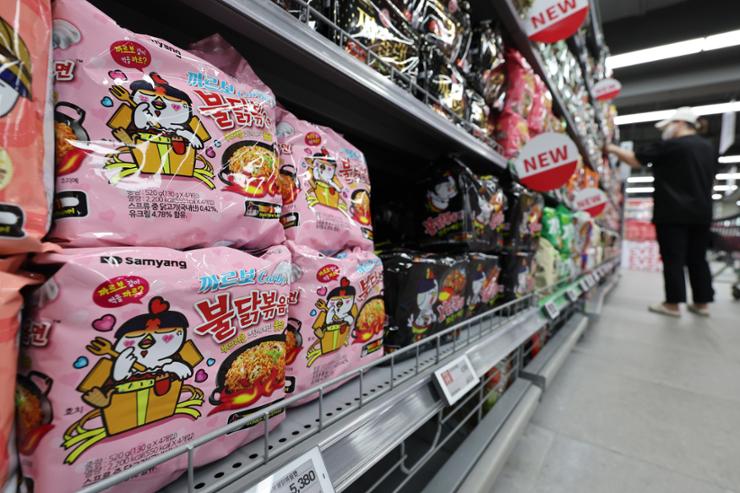
Buldak Ramyeon Maker Sees 20 Percent Surge in Share Price

Samyang Foods Inc., the South Korean company renowned for its globally popular Buldak spicy ramyeon, has experienced a significant rise in its share value following a robust first-quarter earnings report. As of 2:30 p.m. on May 16, the company’s shares were trading 20 percent higher at 1.19 million won (US$855), considerably outperforming the broader Korea Stock Price Index (KOSPI), which saw a modest increase of 0.2 percent. The surge in share value came after Samyang Foods reported a 49 percent year-on-year increase in net profit for the January to March period. Operating profit climbed 67 percent compared to the previous year, reaching an all-time high of 133.99 billion won. The company also recorded a 37 percent rise in sales, hitting a record high of 529.01 billion won. These financial results highlight the company’s strong performance in overseas markets, which accounted for more than 80 percent of its total revenue. The company’s export performance has been particularly impressive, with last year marking the first time exports exceeded the 1 trillion-won mark. This achievement was driven by robust sales of the Buldak ramyeon series, particularly in the United States and China. Looking ahead, Samyang Foods aims to surpass the 1 trillion-won mark in overseas sales again this year, supported by plans to expand its production capacity. To meet growing global demand, the company currently operates three domestic production plants and plans to open a fourth in the first half of this year. Additionally, Samyang Foods intends to construct its first overseas manufacturing facility in China, with work expected to commence in July. The company already has established business operations in China, Japan, Indonesia, the Netherlands, and the United States. Samyang Foods’ Buldak Bokkeummyeon, widely known as “fire ramyeon,” continues to be a significant driver of the company’s success. Since its launch in 2012, the hot chicken-flavored instant noodles have sold more than 7 billion units, generating over 4 trillion won in revenue. Approximately 1 billion units are sold annually across 100 countries. The product gained substantial international attention following a viral food-eating challenge in 2014, cementing its status as a global phenomenon. The company’s strategic expansion and sustained product popularity have positioned Samyang Foods as a prominent player in the global instant noodle market, as evidenced by its strong financial performance and positive market response. -Yonhap

News

Alibaba Reports 6% Revenue Growth Despite Economic Hurdles

Alibaba has reported a 6% rise in annual revenue, offering a positive indication for China’s technology sector despite ongoing economic uncertainties, including subdued spending and concerns over trade relations. The Hangzhou-based tech giant, one of China’s largest companies with operations in retail, digital payments, artificial intelligence, and entertainment, recorded revenue of ¥996.3 billion (US$138.2 billion) for the fiscal year ending March 31. This marks a 6% increase from the previous year. Net income attributable to ordinary shareholders rose by 62% to ¥129.5 billion, according to a statement released on the Hong Kong Stock Exchange. In the final quarter alone, the company reported revenue of ¥236.5 billion, slightly below a Bloomberg forecast, while net income attributable to ordinary shareholders surged by 279% to ¥12.4 billion compared to ¥3.3 billion in the same period the previous year. CEO Eddie Wu stated that the company’s results reflect the effectiveness of Alibaba’s “user first, AI-driven” strategy, with core business growth continuing to accelerate. This growth arrives amid a renewed investor interest in China’s technology sector, sparked earlier this year by the release of the advanced AI chatbot DeepSeek. Alibaba’s share price has been highly volatile, influenced by fluctuating investor enthusiasm regarding Chinese AI advancements. A surge of optimism in January was followed by a significant decline last month after US President Donald Trump imposed a series of global tariffs. As competition intensifies, Alibaba, alongside tech giants Tencent and Baidu, is channeling substantial investments into developing and integrating advanced AI applications. This renewed focus comes at a time when China’s economy faces challenges from sluggish consumer spending and strained trade relations with the United States. Despite recent improvements, including announcements by Beijing and Washington to reduce tariffs, economic forecasts remain cautious. Economists suggest that China may find it difficult to meet the government’s growth target of approximately 5% for the year. Earlier this week, Alibaba’s industry counterparts Tencent and JD.com also reported moderate revenue growth in the first quarter, indicating a potential recovery in consumer spending. However, official figures released last Saturday revealed continued deflationary pressure, with consumer prices remaining low. In recent years, Alibaba has faced increased regulatory scrutiny as part of China’s crackdown on large domestic tech companies. Jack Ma, Alibaba’s co-founder, who was notably critical of China’s financial regulations, kept a low profile during this period. However, his public appearance alongside President Xi Jinping in February signaled a potential shift in the government’s stance, leading to a rise in Alibaba’s share price. Although Ma is no longer actively involved in the company’s management, he is believed to retain a significant ownership stake. -AFP

News

AMMB Maintains Minimal Trade Loan Exposure at 4.7 Percent

AMMB Holdings Bhd has revealed that loans directly tied to the trade segment constitute a mere 4.7 percent of its total loan portfolio, reflecting minimal exposure. This assessment is aligned with similar trends observed across other banking institutions, according to CIMB Securities. CIMB Securities noted that while the direct exposure to the trade segment remains low, the market’s primary concern lies with the potential second-order knock-on effects, which most banks are finding challenging to quantify at present. The financial group highlighted that AMMB’s exposure to sectors directly related to US trade amounts to RM6.4 billion, equating to 4.7 percent of its overall loans and involving 143 customers. The total loan commitment approved for these trade-related loans stands at RM9.3 billion. AMMB has categorised the 143 customers with a cumulative exposure of RM6.4 billion into three groups based on the level of revenue impact. The first group, with a high direct impact where more than 50 percent of revenue is affected, represents RM140 million. The second group, experiencing a moderate impact with 25 to 50 percent of revenue affected, accounts for approximately RM680 million. The remaining amount, representing RM6.4 billion, is attributed to low-impact customers, where less than 25 percent of revenue is affected. CIMB Securities pointed out that most of these customers are classified as high-grade, typically possessing robust balance sheets. The report also indicated that loans related to the electrical and electronics sector total RM935 million, representing 0.7 percent of AMMB’s total loans, with RM1.1 billion in approved loans spread across 95 customers. In the furniture segment, loans amount to RM600 million, making up 0.4 percent of total loans, involving 220 customers. Maintaining a neutral stance, CIMB Securities reiterated its ‘Hold’ rating on AMMB and kept the target price unchanged at RM5.70 for the financial year 2026. This valuation is based on an anticipated return on equity of 8.6 percent for the calendar year 2026 and a fair price-to-book ratio of 0.9 times. -Business Times

News

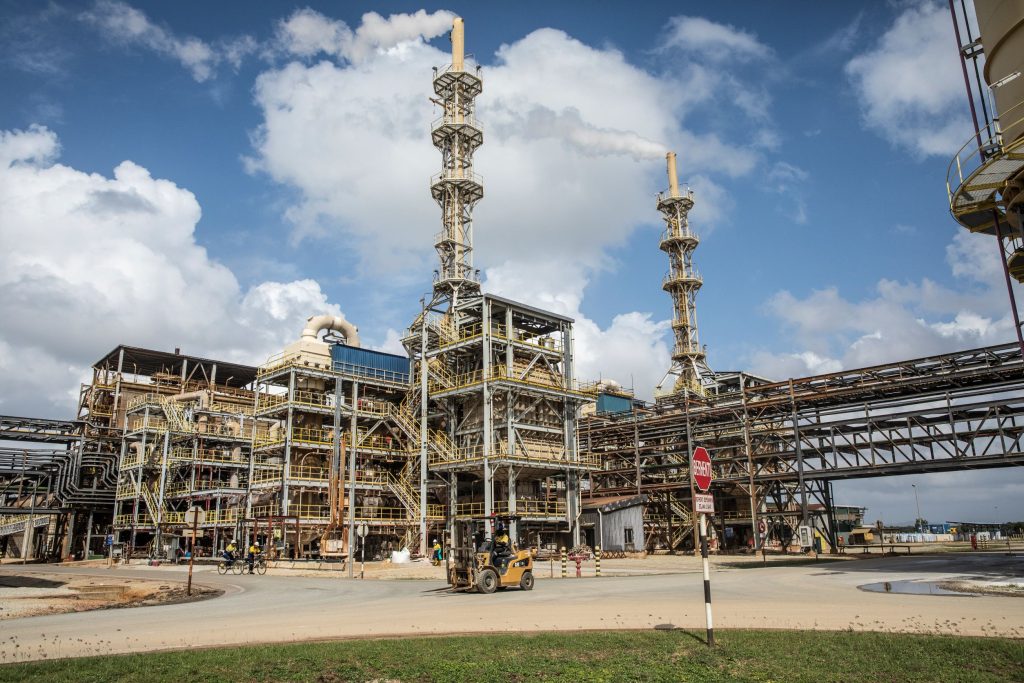
Lynas Malaysia Commences Production of Separated Heavy Rare Earths at Kuantan Facility

Lynas Rare Earths Malaysia has officially commenced the production of separated heavy rare earths at its advanced facility in Kuantan. The milestone marks a significant achievement for the company, which now operates the only commercial facility outside China producing these essential materials. In a statement, Lynas highlighted that the facility’s new heavy rare earths production line, commissioned earlier this year, has successfully produced dysprosium oxide (Dy). The plant is also set to begin production of terbium (Tb) in June. Both materials are critical components in the manufacturing of high-performance rare earth magnets, widely utilised in electric vehicles and advanced electronics, including micro-capacitors. According to Lynas, the successful establishment of the heavy rare earths separation circuit demonstrates the advanced skills and expertise of its workforce. Chief Executive Officer and Managing Director Amanda Lacaze expressed pride in the team’s accomplishment, noting that the production of Dy represents a strategic development in the company’s operations. Lacaze further emphasised that the addition of separated heavy rare earths enhances Lynas’ position as a global supplier of essential materials for modern manufacturing. Located within the Gebeng Industrial Estate, a prominent petrochemical zone near Kuantan on the east coast of Peninsular Malaysia, the Lynas Malaysia plant occupies a 100-hectare site. Since its inception in 2012, the facility has supplied separated rare earth materials to markets in East Asia, the United States, and Europe. The plant processes Mt Weld concentrate and mixed rare earth carbonate through three primary stages: cracking and leaching, solvent extraction, and product finishing. The separated materials produced at the site play an essential role in a range of high-tech applications, including electronics, wind turbines, and hybrid and electric vehicles. Lynas Malaysia’s latest advancement underscores the country’s growing involvement in the global rare earth supply chain, positioning both the company and Malaysia as key players in meeting the increasing demand for advanced manufacturing materials. -The Edge Malaysia

News

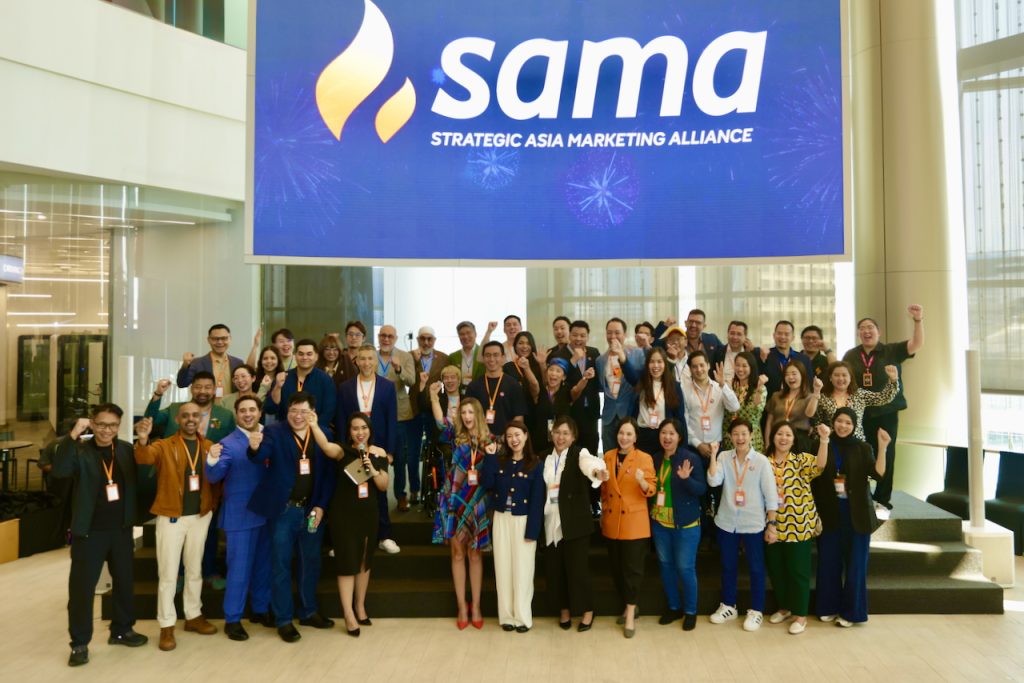
SAMA and MISSION Hubs Forge Strategic Alliance for Borderless Creativity

KUALA LUMPUR: In an industry-defining collaboration, SAMA (Southeast Asia Marketing Alliance) and MISSION Hubs, the international partner network ecosystem of the UK-based MISSION Group plc (TMG.L), have formalised a Memorandum of Understanding (MoU) that brings together two of the most dynamic agency ecosystems in the world. This agreement paves the way for seamless cross-border execution, allowing brands and agencies to move with agility between Asia and the West. This marks one of the first alliances of its kind – a deliberate convergence of independent agency networks designed not just to share resources, but to grow together. With this agreement, both networks signal a strong commitment to redefining how creative, digital, and strategic work can be delivered internationally, without losing the local context that makes it resonate. Recent industry forecasts anticipate global advertising revenue to reach USD 1 trillion by 2026, with the Asia Pacific region accounting for a substantial share of that growth1. “As business seeks to adjust to an increasingly dynamic, changing global trading environment, the need for agencies to adapt ahead of their client’s requirements is ever more important. This environment highlights a shift and rising demand for trusted, agile partners with deep local insight – exactly the kind of solution this SAMA–MISSION Hubs collaboration is poised to deliver”, shares Paul Squirrell, Managing Director, MISSION Hubs Network. He also adds that “As marketers, we know that creativity is most powerful when it’s culturally relevant. This collaboration allows us to tap into the authenticity and local understanding that SAMA brings to the table – while giving their members access to the global thinking and frameworks that our clients expect. It’s a win–win for agencies, and even more so for the brands they serve.” SAMA represents a growing regional alliance of independent agencies from Malaysia, Singapore, Indonesia, Thailand, Vietnam, and Hong Kong, with capabilities spanning over 16 marketing and communications disciplines. MISSION Hubs, is an independent partner agency ecosystem supported by MISSION Group, a holding company of 13 award-winning agencies across creative, digital, PR, performance marketing, data, and AI. This affiliation will see both networks exchanging client leads, co-developing projects, and sharing tools, resources, and learnings. SAMA members will gain access to MISSION’s advanced MarTech platforms and international pitch materials, while MISSION Hubs agencies can lean into the hyperlocal expertise and on-the-ground execution that SAMA members offer across the region. “This isn’t just about working together. It’s about rising together,” said Chan Leong Teng, Founder and Regional President of SAMA. “Independent agencies often compete with global networks on flexibility and creativity, but partnerships like this give us the infrastructure to deliver at scale – across markets, cultures, and time zones – with the same heart and hustle we’re known for.” For MISSION Hubs, the alliance facilitates the growth of their global footprint and opens a direct path into Asia’s most exciting growth markets – without needing to invest in bricks-and-mortar presence. It also enables their agency partners to offer clients a streamlined path to Southeast Asia market entry and activation. The first activation will take place in May 2025 through a virtual conference that brings together agency leaders from both networks. Attendees will be introduced to the partnership roadmap, explore co-pitching opportunities, and participate in workshops designed to accelerate collaboration. With over 50 cross-referral opportunities expected in the first year, and plans underway for co-branded webinars, whitepapers, and learning sessions, the SAMA–MISSION Hubs partnership is set to become a blueprint for how independent agencies can compete – and thrive – on the global stage.

News, Property

WORQ and Sunway Property Strengthen Partnership with New Workspace at Sunway Velocity TWO

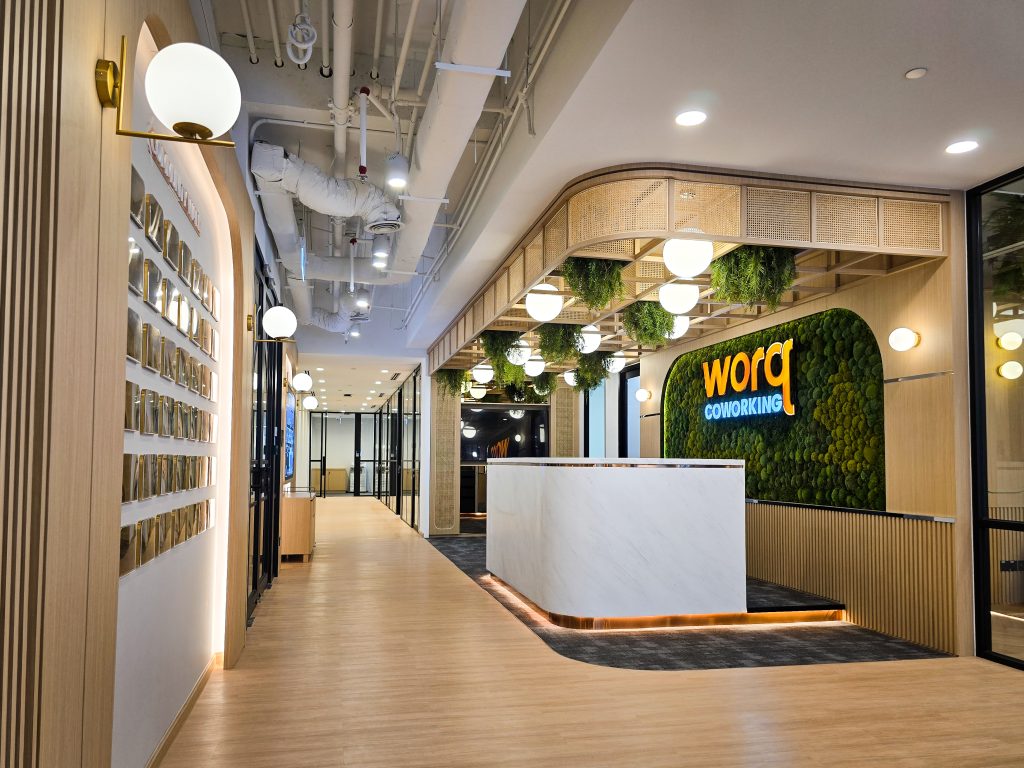
KUALA LUMPUR: WORQ, Malaysia’s leading coworking and flexible workspace provider, in partnership with master community developer Sunway Property, is proud to announce the launch of WORQ Sunway Velocity at Sunway V2 Tower, located within Sunway Velocity TWO. This partnership reflects the strong role of Sunway Property and WORQ as key enablers in developing a vibrant business hub as a leading MSC Cybercentre. By introducing a coworking community that supports entrepreneurs, startups, and remote professionals, WORQ strengthens Sunway Property’s vision of building a future-ready, dynamic business hub in Cheras and acts as a catalyst for innovation and collaboration. This is WORQ’s second outlet in a Sunway Property development following the success of WORQ Sunway Putra in Sunway Putra Mall, Kuala Lumpur. The first outlet in Sunway Putra achieved full occupancy within one month, surpassing industry standards of up to twelve months. Chong Sau Min, Chief Executive Officer of Sunway Property shared “We extend our heartfelt congratulations to WORQ on the launch of their 10th outlet – a remarkable milestone that we’re honoured to be part of. As the Master Community Developer, we’re proud to continue our partnership with WORQ again, after the continuing success of the Sunway Velocity location. This partnership reflects our Build-Own-Operate model – where we not only build and invest in our townships, but actively curate the right components to ensure long-term vibrancy and value creation. WORQ fits perfectly into this broader vision as the ‘Work’ pillar within our ‘Live, Learn, Work, Play’ ecosystem at Sunway Velocity TWO, delivering flexible workspaces that support today’s evolving workforce. This is the perfect location for WORQ’s 10th outlet, as it functions as a hub where you have public transport, medical centres, a shopping mall, and more — providing a holistic environment for those at work. This is a partnership that combines two companies that share the same goals of creating amazing spaces that serve the needs of those who occupy them.” The partnership between WORQ and Sunway Property is the beginning of a larger mission to cultivate an ecosystem where businesses can grow and integrate work-life balance seamlessly into the surrounding community. With WORQ, Sunway Velocity TWO aims to become a more dynamic, accessible, and innovation-driven business hub, in line with Sunway Property’s long-term vision of creating future-ready urban ecosystems. Creating an inclusive and sustainable hub  Sunway Property has transformed a once-dilapidated area into Sunway Velocity, a sustainable township in Cheras where people live, learn, work, and play within a safe and connected ecosystem. Designed as a 15-minute city, it offers easy access to public transport, green spaces, healthcare, retail, and business hubs. Sunway Velocity TWO builds on this vision with a 65:35 mix of residential and commercial spaces, seamlessly linked to the main township, reflecting Sunway’s mission to elevate urban living through sustainable, people-focused design. The latest WORQ outlet at Sunway Velocity TWO redefines the modern workplace by seamlessly blending retail therapy, hospitality comforts, and accessible healthcare into one dynamic destination. This holistic approach to urban planning elevates the needs of today’s workforce, offering a convenient, well-rounded environment that supports both professional productivity and well-being. With its integrated amenities, Sunway Velocity TWO fosters a balanced, efficient, and vibrant lifestyle for its community. Implementing the flex work lifestyle  As the modern workforce continues to evolve, flexibility has become more than just a perk, it’s a necessity. The latest location at Sunway Velocity TWO fits in seamlessly with WORQ’s expansive network of cloud offices that offer professional-grade workspaces, all conveniently located closer to home. This decentralised model helps reduce the strain of long, stressful commutes, making it easier for professionals to attend meetings, team meet-ups, or work gatherings without sacrificing time, energy, or productivity. With over 10 outlets linked to the train transit lines, WORQ’s transit-oriented development (TOD)-integrated model aims to make commuting easier for everyone and to take advantage of the extensive public transport network available. Around 50% of WORQ’s members use trains as part of their daily commute, supporting a shift toward more sustainable transportation and contributing meaningfully to ESG goals by reducing reliance on cars. “We are glad to extend our successful partnership with Sunway Property with the launch of our 10th outlet at Sunway V2 Tower in Sunway Velocity TWO. Together, we are creating what will be a thriving hub where people don’t just work, but collaborate and build something together beyond work. Like all of our locations, the latest one is right in the heart of the city centre, within walking distance, with access to MRT and LRT stations. We are redefining what it means to work in Malaysia, and collaborating with partners like Sunway is helping us reach our goal of improving the work-life experience for millions of Malaysians,” expressed Stephanie Ping, co-founder and CEO of WORQ. WORQ targets 1 million sq ft of managed space by 2030, with its expansion already underway and its next hub set to launch in Bandar Utama in Q2 2025. This latest outlet further strengthens WORQ’s cloud office infrastructure, empowering members of the WORQ community with greater freedom to work from anywhere, offering seamless mobility across all locations. As more young Malaysians join the workforce and companies look for ways to adopt flexible work arrangements, businesses that prioritise flexibility will attract and retain top talent, with coworking spaces like WORQ supporting this shift. The launch of WORQ Sunway Velocity encourages Malaysia’s workforce to step into a new era where work-life balance is not a luxury but a fundamental part of the professional journey.

Energy & Technology, News

Equinix Unveils Its First AI-Ready Data Center with Dense Ecosystem in Jakarta

HONG KONG: Equinix, Inc. (Nasdaq: EQIX), the world’s digital infrastructure company®, unlocks Indonesia’s burgeoning digital opportunities by inaugurating its first International Business Exchange™ (IBX®) data center in Jakarta under the joint venture with PT Astra International Tbk (“Astra”). This high-performance data center, called JK1, provides access to more than 50 global and local network service providers and internet exchanges, forming a robust ecosystem to support businesses expanding in Indonesia. With its digital economy projected to reach US$130 billion by 20251, Indonesia needs foundational digital infrastructure to bolster connectivity and support emerging technologies like AI. By leveraging Equinix’s cloud-dense and highly secure platform, businesses in Indonesia can deploy data networks and services rapidly and at scale with a global footprint and extensive digital ecosystem, Equinix is well poised to empower local and global enterprises with a robust digital foundation to grow, innovate and interconnect. Meutya Hafid, Minister of Communication and Digital Affairs (KOMDIGI), Republic of Indonesia, said: “As Equinix’s first data center in Indonesia, Equinix JK1 is expected to serve as a strategic gateway for global technology companies and startups to expand their investments. Indonesia has the advantage of sufficient water supply and competitive energy access, including the great potential of green energy, which is a key factor in the operational efficiency of data centers. The presence of Equinix JK1 also opens up opportunities for collaboration with national businesses, from large corporations to SMEs, in strengthening the globally connected digital ecosystem.” Ricky Kusmayadi, Deputy Minister for Investment Information Technology, Ministry of Investment / Indonesia Investment Coordinating Board (BKPM), stated: “The launch of Equinix’s first data center in Indonesia underscores our nation’s growing attractiveness for long-term digital investment. This collaboration between global and local partners supports our vision of positioning Indonesia as a regional digital hub. We invite more investors to explore opportunities in Indonesia’s data center industry and take part in building a strong, sustainable digital infrastructure. We also welcome those committed to developing a robust and inclusive data center ecosystem that brings lasting value to businesses and society at large.” Cyrus Adaggra, President of Asia-Pacific, Equinix, commented: “Southeast Asia is a strategic market for Equinix, and our global customers as demonstrated by the impressive lineup of customers already committed to JK1 at its inauguration. Over the past few years, Equinix has been dedicated to expanding our footprint across this vibrant region to serve the rising digital needs of our customers. With our inaugural data center in Indonesia, we’re thrilled to enhance our support for businesses looking to grow in the region, as well as empower local companies eager to make their mark on the global stage.” Haris Izmee, Managing Director of Equinix, Indonesia, said: “E-commerce remains Indonesia’s largest sector in the digital economy, with the industry potentially reaching US$120 billion in 2025. This growth is further accelerated by a remarkable surge in cloud adoption, driving the demand for robust connectivity and scalable, high-performance digital infrastructure. Furthermore, as the nation gears for Indonesia Emas 2045 vision, establishing itself as a key digital hub in Asia will be crucial for long-term economic transformation. The inauguration of JK1 serves as a major milestone for Equinix, and we remain committed to support Indonesia’s broader ambitions for sustained economic growth.” Santosa, Director of Astra, said: “Astra continues to focus on developing digitalization to optimize the reach and quality of digital services that can be accessed by customers and the community without limitations of place and time. The combination of Equinix’s expertise in digital infrastructure and Astra’s extensive experience in the Indonesian market is expected to make JK1, the International Business Exchange (IBX) data center, which was inaugurated today, capable of providing comprehensive solutions to meet the needs of businesses in Indonesia both locally and internationally.” Highlight/Key Facts Equinix JK1 is located in Jakarta’s Central Business District, in close proximity to major internet exchanges in the region, enabling Indonesian businesses to access the rich network of highly connected International Business Exchanges globally. JK1 is an eight-story facility that offers 550 cabinets in the first phase, with a total capacity of 1,600 cabinets and colocation space of 5,300 square meters when fully built. The facility will provide interconnection services, including Equinix Fabric® and Equinix Internet Access®, enabling businesses in Indonesia build their own ecosystems and capitalize on digital opportunities. JK1 incorporates sustainability into its design, leveraging innovative technologies such as Cooling Array and liquid cooling technology, ensuring efficient heat management for high-density and high-performance computer workloads such as AI.  JK1 is designed to achieve an average Power Usage Effectiveness (PUE) of 1.41 at full load. The facility will be operated efficiently within the globally accepted boundaries of the A1A standards from the American Society of Heating, Refrigerating and Air-Conditioning Engineers (ASHRAE). Equinix’s data center in Indonesia is 100% covered by renewables2 through the purchase of renewable energy credits (RECs). Globally, Equinix achieved 96% renewables coverage in 2024. Equinix continues to focus on decarbonizing its global operations and optimizing efficiency across its portfolio. Equinix data centers boast an industry-leading, high average uptime track record of >99.999% globally. Today, the global footprint of Platform Equinix spans 270 data centers across 75 metros and 35 countries. In Asia-Pacific, Equinix currently operates 60 data centers in 16 key metros across Australia, China*, Hong Kong, India, Indonesia, Japan, Korea, Malaysia and Singapore. The company also announced its market entry into the Philippines and Thailand last year. *Equinix operates five data centers in Shanghai through a strategic partnership.

ESG, News

UOB Malaysia and Bursa Malaysia Collaborate to Support SMEs on Decarbonisation Journey

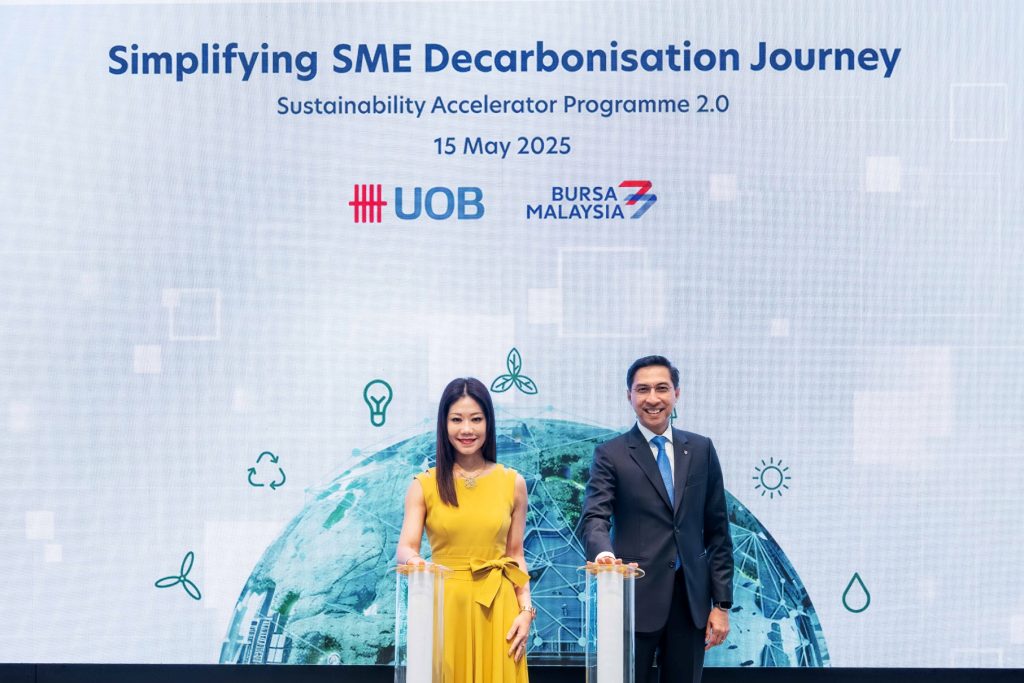
KUALA LUMPUR: UOB Malaysia today announced a collaboration with Bursa Malaysia Berhad (Bursa Malaysia or the Exchange) to facilitate Small and Medium-sized Enterprises (SMEs) in adopting sustainability practices and advancing their decarbonisation journey. This collaboration is central to the Bank’s newly expanded Sustainability Accelerator Programme 2.0 (SAP 2.0). First launched in October 2023, SAP 1.0 was designed to equip SMEs with foundational knowledge to kick-start their ESG journey, enabled through UOB’s Sustainability Compass tool (co-developed with PWC) and customised financing solutions such as the U-Series (comprising U-Energy, U-Solar and U-Drive). Building on the success of the initial phase, SAP 2.0 takes the Bank’s commitment further by providing its SME clients with access to Bursa Malaysia’s Centralised Sustainability Intelligence (CSI) Solution, reducing complexities of emissions calculation and facilitating uptake of relevant decarbonisation solutions. Speaking at the launch held at UOB Plaza 1 Kuala Lumpur attended by senior representatives of both organisations, industry stakeholders and the bank’s SME clients, Ms Ng Wei Wei, Chief Executive Officer of UOB Malaysia, said, “We are honoured to be the first bank to partner with Bursa Malaysia. Under UOB’s SAP 2.0 Programme, in addition to our enhanced suites of SME-centric solutions, the Bank will also fund Bursa’s CSI Solution’s subscription fees for our SME clients. Greenhouse gas (GHG) emissions reporting can be a daunting aspect of the decarbonisation journey, and by lowering this barrier and helping them calculate and report their GHG emissions more effectively, we hope to empower more SMEs to transition. I truly believe that strong public-private collaboration is essential to help businesses to decarbonise”. Dato’ Fad’l Mohamed, Chief Executive Officer of Bursa Malaysia, said “This collaboration with UOB Malaysia marks a significant step forward in expanding our CSI ecosystem to benefit a wider group of companies. Just as our CSI Solution has empowered public listed companies (PLCs) to meet disclosure obligations and guide their decarbonisation, we are now extending the same capabilities to SMEs, enabling them to progress confidently on their sustainability journey. We applaud UOB Malaysia for taking proactive steps in encouraging sustainable business practices among SMEs, particularly through the use of the CSI Solution. We look forward to seeing other financial institutions follow suit. These collective efforts will accelerate Malaysia’s transition to a low-carbon economy”. The CSI Platform serves as the Exchange’s designated sustainability reporting channel for all PLCs. As part of this designation, the platform supports the ISSB IFRS S1 and S2 disclosure requirements adopted under the National Sustainability Reporting Framework (NSRF). With the Scope 3 emissions disclosure requirement commencing in phases, starting 2027, SMEs within the PLCs’ supply chains will need to be prepared to meet these reporting obligations. The UOB-Bursa Malaysia collaboration aims to better equip participating SMEs to meet growing sustainability demands from stakeholders, including large customers like multinational corporations (MNCs) and public-listed companies (PLCs), for GHG emissions data for their Scope 3 supply chain emissions reporting. Besides Bursa Malaysia, UOB Malaysia has also joined forces with Control Union and DHL Express Malaysia to offer a suite of solutions in the areas of emissions data assurance, green certifications, green logistics, energy efficiency and renewable energy initiatives. UOB Malaysia’s pioneering initiative under the SAP 2.0 programme reflects the Bank’s steadfast commitment to promoting sustainable practices among SMEs, contributing to the broader goal of an inclusive and sustainable future.

News

Duopharma Biotech Records 36.2% Revenue Growth and 67.8% Profit Improvement in Q1 FY2025

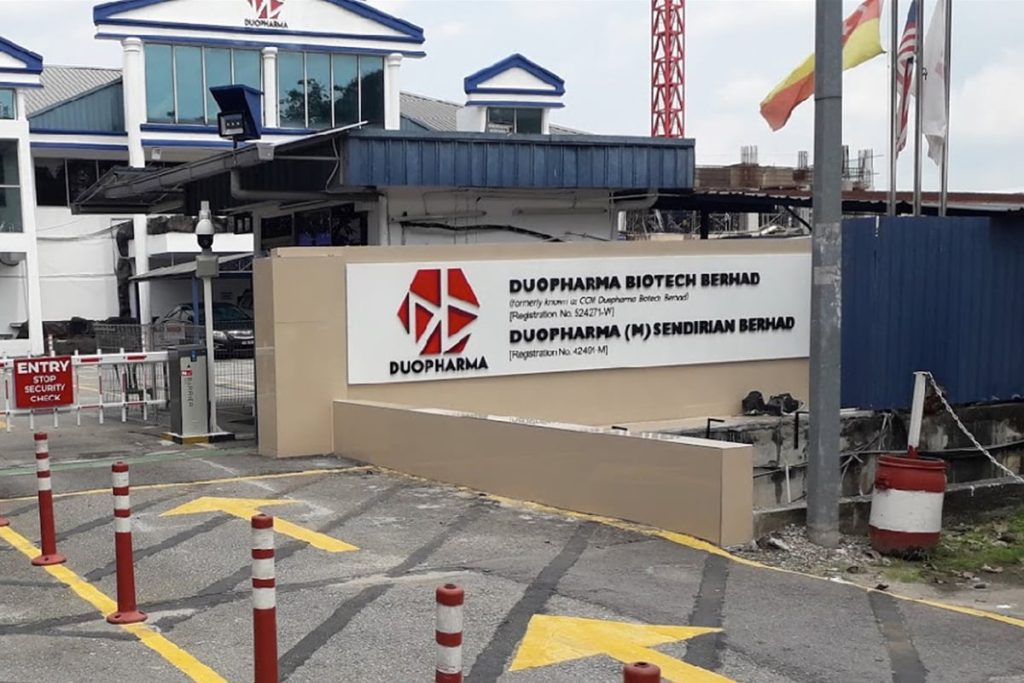
KUALA LUMPUR: Duopharma Biotech Berhad (“Duopharma Biotech” or “the Company”) recorded strong revenue and profit growth in the first quarter ended 31 March 2025, with revenue rising 36.2% to RM262.74 million compared to RM192.97 million in the same period last year. The revenue growth was driven by good performance across all business sectors, with a notable surge in the supply of insulin as supply regularised to fulfill all outstanding orders coupled with enhanced sales to the public sector. At the same time, industry-wide normalisation of Active Pharmaceutical Ingredient (API) prices to a pre-pandemic level also contributed to profit growth. The profit before tax (PBT) and profit after tax (PAT) for Q1 FY2025, recorded at RM33.74 million and RM25.64 million respectively, both improved by 67.8% year-on- year. Similarly, the Company achieved robust quarter-on-quarter performance, with Q1 FY2025 revenue growing 35.7% compared to Q4 FY2024, while PBT and PAT rose by 93.4% and 70.0% respectively in the same period. Leonard Ariff Abdul Shatar, Group Managing Director of Duopharma Biotech Berhad, commented, “The Group is off to a strong start in the first quarter of 2025, driven by sustained growth momentum and operational resilience. We see a favourable domestic market, and are pleased to continue contributing towards strengthening Malaysian healthcare capabilities and community wellness with our comprehensive portfolio of effective and innovative products. Meanwhile, in light of global economic uncertainties, we are vigilant in monitoring for potential impact, while remaining focused on enhancing operational efficiencies, optimising cost management strategies, and adapting to evolving market conditions, to remain competitive in the face of rising costs.” In April 2025, Duopharma HAPI Sdn Bhd, a wholly-owned subsidiary of the Company, received and accepted one Letter of Offer (LOO), and Duopharma Manufacturing (Bangi) Sdn Bhd, a wholly-owned subsidiary of the Company, received one additional LOO from Pharmaniaga Logistics Sdn Bhd for the supply of pharmaceutical and non- pharmaceutical products under the Ministry of Health Malaysia’s Approved Products Purchase List (APPL) to healthcare facilities operated by the Malaysian Government. With these additional LOOs plus the other LOOs received by the Group earlier, the Group is now contracted to supply a total of 100 products with a combined estimated value of approximately RM684.15 million, until 31 December 2026. During Q1 FY2025, the Group paid a second interim dividend of 2.0 sen per share (2024 corresponding quarter: 1.8 sen) equivalent to RM 19.24 million (2023 corresponding quarter: RM17.32 million) in respect of financial year ended 31 December 2024.

Scroll to Top

Subscribe
FREE Newsletter