News

News

Majority of Malaysian Accountants Eye Entrepreneurship, ACCA Global Survey Reveals

KUALA LUMPUR: Nearly half of Malaysia’s accountancy and finance professionals are positioning themselves for entrepreneurial ventures, with a significant number considering career moves in the near term. These are among the key findings of the ACCA (Association of Chartered Certified Accountants) Global Talent Trends Survey 2025, the world’s largest annual talent survey for the accountancy profession. Now in its third edition, the report draws on insights from over 10,000 respondents across 175 countries, offering a comprehensive perspective on career outlooks, evolving workplace expectations and future aspirations within the global finance sector — including Malaysia. According to the latest data, 46% of Malaysian finance professionals view their qualifications as a launchpad for entrepreneurship. This reflects a broader regional trend of professionals leveraging accountancy as a strategic foundation for business leadership, innovation and commercial ventures. The appetite for roles aligned with environmental and social governance is also gaining momentum, with 71% of Malaysian respondents expressing strong interest in sustainability-focused careers — one of the highest levels globally. As green finance continues to take centre stage, this enthusiasm signals a readiness to contribute meaningfully to sustainable business practices. However, retention remains a key concern for employers, as 64% of Malaysian professionals anticipate changing roles within the next two years, with 62% indicating that their next opportunity is likely to be outside their current organisation. This sentiment underscores a critical challenge in workforce stability. Workplace flexibility also remains high on the agenda. While 80% of respondents prefer hybrid working models, 59% are still required to work fully on-site, pointing to a clear misalignment between employee preferences and organisational policies. On diversity and inclusion, nearly half (49%) of Malaysian participants believe that certain dimensions of diversity — such as recognising the contributions of older employees — are overlooked within their organisations. Meanwhile, cost-of-living concerns continue to weigh heavily, with 40% expecting a salary increase of at least 11% to manage rising expenses, mirroring a broader sentiment across the Asia Pacific region. The issue of future-readiness also emerged strongly in the findings. 63% of Malaysian respondents expressed concern about lacking the skills required for the evolving workplace. Despite growing interest in digital transformation, only 25% report being given opportunities to learn artificial intelligence-related skills, suggesting a gap in training provision and digital preparedness. Mental health remains a critical issue, with 59% acknowledging that their mental wellbeing is compromised by workplace pressures. This figure signals the urgent need for employers to foster healthier, more supportive environments. In a further sign of evolving professional dynamics, 35% of respondents in Malaysia are engaged in side projects or secondary income-generating activities alongside their main roles. This trend may reflect deeper concerns around income sufficiency, job satisfaction and work–life balance. On the global stage, international mobility continues to appeal strongly to younger professionals. A notable 73% of Gen Z and 47% of Gen Y Malaysian respondents express interest in pursuing careers abroad, affirming the global value of the ACCA qualification. Commenting on the findings, Jamie Lyon FCCA, Global Head of Skills, Sectors, and Technology at ACCA, said: “Our 2025 data continue to show a workplace in transition, but one of the exciting themes emerging this year is how accountancy training can be a brilliant early career pathway for building entrepreneurial skills. There’s no doubt this in part reflects how career ambitions continue to transform at work.” Andrew Lim, ACCA Portfolio Head of Maritime Southeast Asia, added: “Malaysia’s finance professionals are sending a strong signal — they want purpose-driven careers that allow them to innovate, lead and make a difference. The rise in entrepreneurial ambition, interest in sustainability roles and demand for hybrid work reflects a bold and future-ready mindset. As Malaysia steers the ASEAN chair this year, this survey underscores the importance of investing in talent strategies that empower professionals to thrive, not just locally but regionally and globally. Employers must now act decisively to build inclusive cultures, prioritise wellbeing and accelerate digital upskilling to retain and attract the best talent.”

Lifestyle, News

Mastercard Travel Trends 2025: APAC Dominates Top Travel Destinations

KUALA LUMPUR: Asia-Pacific is home to eight of the world’s top 15 trending summer travel destinations, according to Travel trends 2025, the annual Mastercard Economics Institute (MEI) report on consumer spending in the travel economy. While exchange rates and geopolitical dynamics can influence behavior, the report highlights that passions and purpose-driven motivations remain strong drivers shaping the travel industry. Drawing on a unique analysis of aggregated and anonymized transaction data and third-party data sources, the report uncovers what is shaping travel choices today.    Amid this regional momentum, Malaysia is stepping up its efforts to strengthen its tourism sector. Through the upcoming Visit Malaysia 2026 campaign, the country aims to welcome 35.6 million international visitors1 and to achieve RM147.1 billion in foreign tourism receipts in 2026, underscoring the sector’s vital role in Malaysia’s broader growth agenda.   Japan leads the pack—with Vietnam’s Nha Trang rising fast:  Tokyo and Osaka are the world’s #1 and #2 top trending destinations for summer travel (June-September 2025), with the two largest increases in tourism demand relative to previous levels2.   In 2024, Japan’s capital city climbed from the number two spot that it held in 2023 to lead global travel demand heading into the peak summer season, reflecting its continued appeal. Meanwhile, Nha Trang in Vietnam made a surprise entry into the list, climbing in popularity thanks to its beautiful beaches, enviable coastline and vibrant nightlife.    China and India—still Asia’s travel titans: The Chinese Mainland retained its position as the world’s largest outbound travel market in 2024. Chinese travelers are increasingly prioritizing value and visa-friendly destinations including Japan, Malaysia, and Singapore. Interest in Central Asian destinations such as Kazakhstan, Uzbekistan, and Kyrgyzstan is also increasing.  India again posted the country’s highest number of outbound travelers on record in 2024. Indian tourists are exploring a broad mix of destinations—the top three being Abu Dhabi, Hanoi, and Bali—with growth supported by expanded direct flight connections and a rapidly growing middle class that is eager to travel. Together, the two markets continue to play an outsized role in shaping global travel flows.   Experiences over itineraries: Across Asia-Pacific, travelers are prioritizing dining, nature, and wellness as key motivators for travel, seeking meaningful moments over traditional sightseeing. Adventure tourism is surging, with Malaysia, alongside Japan and New Zealand, featuring as popular destinations for hiking and eco-travel in Asia Pacific. Additionally, destinations like Gianyar in Bali, Indonesia, known for its iconic Babi Guling spit-roasted pork, and Queenstown in New Zealand—where restaurants welcomed tourists from 44 countries in 2024—are standing out as globalized culinary hotspots. According to MEI’s Wellness Trend Index3 (WTI), Thailand is among the destinations leading the way in relaxation experiences and self-care, where visitors can reconnect with nature in immersive eco lodges or find calm in meditation retreats. At the same time, the rising WTI score for New Zealand suggests a growing effort to be part of this popular movement. Overall, the trend toward purpose-driven travel reflects people’s broader desire for experiences that nourish both body and spirit.  Sports fandom fuels travel: The rise of sports tourism continues, with major events like the Australian Open tennis tournament and Baseball World Series in Los Angeles drawing significant international spend. Shohei Ohtani’s World Series debut saw spending by Japanese visitors surge by 91%, six times the broader cross-border boost, highlighting how sporting events are proving to be powerful travel catalysts for fans.   David Mann, Chief Economist, Asia Pacific, Mastercard, said: “The Asia-Pacific region continues to set the pace for global travel, with buzzing destinations like Tokyo, Shanghai, Seoul, and Singapore capturing the imagination of travelers around the world. Even as economic uncertainty persists, travel remains a bright spot—driven by people seeking meaningful, value-driven experiences. From exchange rates to regional accessibility, travelers are making smarter, more intentional choices about where they go and why, with a clear shift toward more personal, purposeful journeys.”  Travelers from Asia-Pacific tend to be more sensitive to exchange rate shifts. A weaker yen throughout much of 2024 played a significant role in boosting Japan’s inbound tourism, making the country a compelling destination for visitors in search of value. Notably, a 1% depreciation of the JPY against the RMB is associated with a 1.5% increase in tourists from the Chinese Mainland. However, visitors from New Zealand and the U.S. rose only around 0.2% in response to the same degree of depreciation relative to their currencies. In 2024, the number of Singaporean visitors to Japan hit record highs — thanks to a 40% rise in the Singapore Dollar (SGD) vs. Japanese Yen (JPY), even as airfare and hotels got pricier.  Turning to the U.S., MEI’s analysis shows that tourists from India, Singapore, South Korea, and Taiwan are particularly sensitive to exchange rate fluctuations, after accounting for other factors. Specifically, a 1% depreciation of the United States Dollar (USD) against their local currencies corresponds to an approximate 0.6–0.8% increase in the number of tourists traveling to the U.S. These findings, consistent with our earlier analysis of tourism to Japan, suggest that these travelers are more responsive to exchange rate movements when selecting outbound destinations.  The shifting sands of business travel: Corporates today are limiting global travel in favor of regional trips. And while people are taking fewer business trips overall, the average duration is longer, suggesting efforts to stretch travel budgets. For example, U.S.-based travelers’ trips to Asia-Pacific increased from 8.8 days4 to 10.2 days5.    Travel fraud demands a safer, smarter travel ecosystem. According to MEI, fraud in popular tourist destinations spikes up to 28% during peak seasons. Common scams include inflated charges in restaurants and taxis, fake tour companies, and fraudulent property listings. To combat these, Mastercard employs advanced fraud prevention technologies, including digital wallets and AI-driven systems, to protect travelers. This ensures that travelers can focus on their journeys without worrying about security threats.  “This report is designed to offer a clearer view of how consumer behaviors are evolving—and what that means for tourism growth,” added Mann. “By turning data into actionable insights, the Mastercard Economics Institute aims

News

Bank Negara Likely to Cut OPR by 25bps in July as Growth Slows, Says Standard Chartered

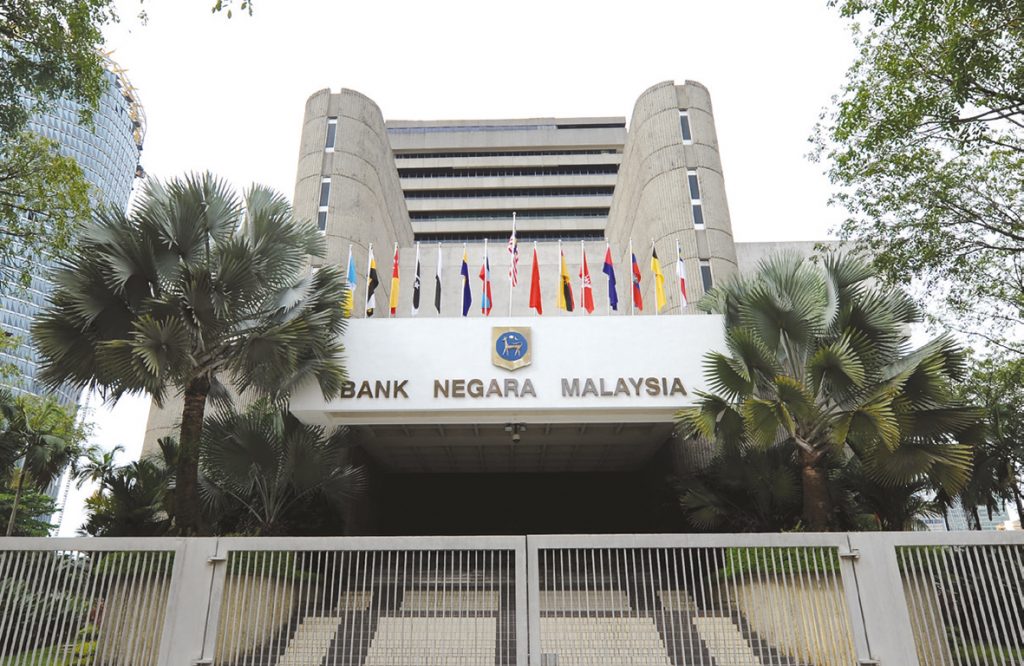
KUALA LUMPUR: Bank Negara Malaysia is anticipated to reduce its overnight policy rate (OPR) by 25 basis points in July, according to a research note from Standard Chartered. The expected move comes in response to a moderation in economic growth and subdued inflationary pressures. In its assessment, Standard Chartered noted that Bank Negara had highlighted a softer growth trajectory in its first-quarter (Q1) gross domestic product (GDP) report, with expansion in 2025 now likely to fall slightly below the official 4.5–5.5% target range. The research house observed that downside risks to the growth outlook remain prominent. “GDP running below potential should help suppress core inflation in the near term,” the report stated. The bank maintained its projection for a 25bps rate cut in July, with the possibility of further reductions in 2025 should macroeconomic conditions weaken more significantly than expected. Malaysia’s economy grew 4.4% year-on-year in Q1, moderating from 4.9% in the previous quarter. This deceleration was attributed primarily to weaker goods exports, particularly due to lower oil and gas shipments. In response to the softer Q1 data and ongoing trade-related uncertainties, Standard Chartered revised its 2025 GDP forecast downward to 4.2%, from 5.0% previously. The firm cited reciprocal tariffs—24% and 10%—as factors that could subtract approximately 0.7 and 0.4 percentage points from GDP, respectively, assuming 30% of Malaysia’s exports are exempt and applying a U.S. import elasticity rate of 0.5 times. Additionally, the bank revised its 2025 consumer price index (CPI) inflation forecast to 1.8% from 2.2%, citing lower-than-expected inflation data and declining oil prices. While weaker external demand is expected to weigh on Malaysia’s economic performance in 2025, Standard Chartered noted that domestic consumption and investment are likely to remain the key drivers of growth. -Business Times

News

Australia Seeks Halal Export Growth Through Malaysia Trade Partnership Deal

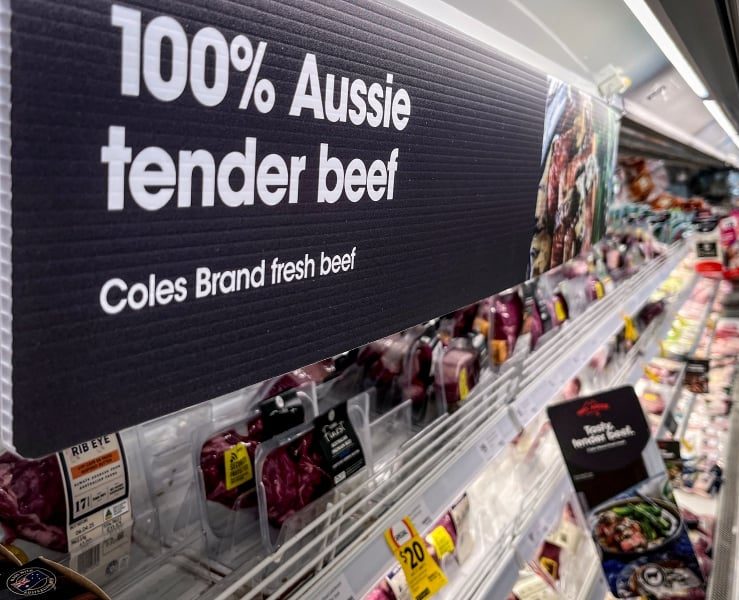
Australia is currently in negotiations with Malaysia to establish a strategic partnership aimed at expanding its halal meat export industry. The move is expected to bolster economic ties between the two nations and unlock significant opportunities in both agricultural trade and technology collaboration. Speaking in Kuala Lumpur following Bernama TV’s “The Nation: Diplomatic Dispatch” programme, Australian High Commissioner to Malaysia, Danielle Heinecke, highlighted the importance of the ongoing discussions. She noted that the outcome will not only reinforce Australia’s comparative strength in agriculture but will also support Malaysia’s ambitions to further develop its halal industry, particularly through agricultural technology. “There are lots of opportunities, and we hope to finalise the partnership via negotiations that we have been working on for a little while with Malaysia,” said Heinecke. She confirmed that 17 Australian meat exporters are currently certified by Malaysia’s Department of Islamic Development (JAKIM), meeting its rigorous halal standards and actively exporting to the Malaysian market. In 2023, Australia exported 38,220 tonnes of halal sheep meat and 13,511 tonnes of halal beef and veal to Malaysia. These exports were valued at US$249.26 million and US$120.83 million respectively (US$1 = RM2.75), according to data from the Australian High Commission. Malaysia now stands as Australia’s second-largest red meat export destination in Southeast Asia, trailing only Indonesia in volume. Further market insights from Meat and Livestock Australia reveal that Malaysians consume the highest amount of beef per capita in ASEAN, with an estimated 8.8kg per person in 2024. This consumption trend underpins the commercial potential of a deepened halal trade relationship. Heinecke underlined the role of the Malaysia-Australia Free Trade Agreement (MAFTA) in enhancing bilateral trade flows, encompassing goods, services, and investments. Total trade between the two countries reached US$33 billion in the 2023–2024 financial year, solidifying Malaysia’s position as Australia’s second-largest trading partner in ASEAN and 10th-largest globally. Australia’s economic partnership with Malaysia is described as “mature, comprehensive and complementary,” with longstanding cooperation underpinned by major retail brands such as Aesop, Arnott’s, Blackmores, Boost Juice, Cotton On, Harvey Norman, and King Living operating across Malaysian markets. During the programme, Heinecke also reiterated Canberra’s commitment to deepening regional economic engagement through targeted trade and investment missions. She confirmed that Australia would be sending a mission to Malaysia aligned with the Energy Asia initiative and examining opportunities within the Johor–Singapore Special Economic Zone. Australia’s role as the fourth-largest digital technology investor in Malaysia was also highlighted, alongside successful bilateral ventures such as Gentari’s renewable energy developments and Gamuda’s involvement in high-tech transport infrastructure projects in Australia. Beyond MAFTA, both nations are also active participants in broader multilateral trade frameworks, including the ASEAN–Australia–New Zealand Free Trade Agreement (AANZFTA), the Regional Comprehensive Economic Partnership (RCEP), and the Comprehensive and Progressive Agreement for Trans-Pacific Partnership (CPTPP). -Bernama

News

Malaysia–Japan MoU Signals New Chapter in Arbitration and Legal Reform Cooperation

TOKYO: In a significant step toward strengthening regional legal frameworks, the Asian International Arbitration Centre (AIAC) and the Japan Commercial Arbitration Association (JCAA) have formalised a legal cooperation agreement aimed at advancing arbitration and dispute resolution initiatives. The Memorandum of Understanding (MoU) was signed during an official visit by Malaysia’s Minister in the Prime Minister’s Department (Law and Institutional Reform), Datuk Seri Azalina Othman Said, held from 15 to 17 May. The MoU establishes a structured collaboration between the two arbitration bodies in areas such as commercial arbitration, institutional capacity building, and joint training initiatives. This strategic alignment is expected to culminate in further ministerial-level cooperation during the forthcoming Special Malaysia-Japan Dialogue on Legal Cooperation scheduled for August. “This dialogue brings together government-recognised arbitration institutions from both nations with the aim of converting shared vision into actionable frameworks,” noted the Legal Affairs Division of the Prime Minister’s Department (BHEUU) in an official statement. Datuk Seri Azalina underscored the importance of transitioning from dialogue to implementation, stating that “real success in legal cooperation is measured by action.” She reiterated Malaysia’s commitment to fostering a robust regional legal ecosystem that not only supports the commercial sector but also enhances investor confidence and drives sustainable regional development. The MoU also highlights the growing bilateral rapport between Malaysia and Japan in the legal sector. With Malaysia preparing to assume the ASEAN Chairmanship in 2025, the visit reinforces the country’s strategic direction in consolidating regional legal institutions to support sustainable development and integration efforts. Further demonstrating international confidence in Malaysia’s reform agenda, Azalina presented Malaysia’s comprehensive legal transformation strategy during the visit. Japanese stakeholders expressed strong interest in initiatives such as the Drafting of the Online Safety Act (2024), proposed amendments to the Arbitration Act (2024) and Mediation Act 2012, and the Ratification of the Singapore Convention on Mediation. She also highlighted Malaysia’s legislative agenda, including the reinstatement of the Parliamentary Services Act (2025) and the adoption of the UNCITRAL Model Law on Cross-Border Insolvency. The discussions also explored the establishment of a Special Mediation Task Force under the MADANI Government framework, positioning mediation as a cornerstone of dispute resolution. The initiative aims to improve access to justice, streamline litigation burdens, and offer cost-effective alternatives for conflict resolution. Strategic engagements included discussions with the Japan International Mediation Center (JIMC) in Kyoto and a visit to Doshisha University’s Faculty of Law, which further underpinned Malaysia’s commitment to collaborative capacity building. In addition to institutional dialogues, Azalina conducted a bilateral meeting with Japanese Minister of Justice Keisuke Suzuki, addressing shared legal reform priorities, digitalisation of justice systems, and the enhancement of alternative dispute resolution mechanisms. The mission represents a continuation of Malaysia’s regional legal diplomacy efforts, building on earlier engagements across ASEAN, including Indonesia, Thailand, Cambodia, and Vietnam. It also reflects Malaysia’s vision for a resilient, future-ready legal infrastructure that supports both national priorities and broader regional aspirations. “This initiative not only deepens mutual trust but also sets the groundwork for a robust legal architecture capable of meeting the complex challenges of cross-border commerce and regional governance,” the BHEUU concluded. -Bernama

News

AFFIN Group Reports RM178.2 Million PBT in Q1 2025

AFFIN Group has posted a robust start to the financial year, recording a profit before tax (PBT) after zakat of RM178.2 million for the first quarter ended 31 March 2025. This reflects a significant year-on-year increase of 23.7%, or RM34.1 million, compared to RM144.0 million in the same period last year. The growth in profitability was driven by a RM39.4 million boost in net income. Total gross loans and financing rose by 7.1% year-on-year to RM72.9 billion from RM68.0 billion, while customer deposits grew by 5.2% to RM75.5 billion. The Group’s Current Account and Savings Account (CASA) ratio saw a marked improvement, increasing to 32.2% from 24.9% a year earlier. President and Group Chief Executive Officer of AFFIN Group, Datuk Wan Razly Abdullah, attributed the performance to consistent delivery under the AFFIN Axelerate 2028 (AX28) strategic plan. “Our first quarter performance reflects continued execution of our AX28 plan, with PBT rising 23.7% year-on-year to RM178.2 million. This was underpinned by higher net interest income, improved funding mix, and stronger contributions from associates,” he said. Despite ongoing global macroeconomic uncertainty and a tight monetary environment, the Group maintained rigorous cost and credit discipline. Datuk Wan Razly noted that AFFIN remains cautiously optimistic in the face of market volatility, supported by a well-diversified balance sheet, solid asset quality, and disciplined strategy execution. The Group also received an A3 international credit rating from Moody’s Ratings during the quarter. “This milestone enhances our credit profile and global standing, allowing us to access more cost-efficient USD funding, broaden our investor base, and unlock strategic cross-border financing opportunities,” he added. As part of its digital transformation agenda, AFFIN successfully launched its next-generation mobile banking platform, AffinAlwaysX, to 5,700 employees ahead of its public release on 22 May 2025. The application features enhanced user interface and experience (UI/UX), upgraded security protocols, and new functionalities designed to accelerate user growth to a projected 1.3 million by year-end. The Group expects this initiative to strengthen CASA retention and support its targeted payroll acquisition strategy. For the first quarter, the Group’s net interest income stood at RM206.0 million, reflecting a 6.4% increase from RM193.7 million in the previous quarter. Non-interest income registered a marginal decline of 1.7% to RM140.1 million. AFFIN Islamic Bank Berhad posted a PBT of RM87.1 million, down from RM98.6 million a year ago, impacted by increased operating expenses and higher impairment allowances totalling RM28.6 million. The Group’s asset quality remained resilient, with the gross impaired loan (GIL) ratio improving to 1.84% from 1.94% as of 31 December 2024. Loan loss coverage (LLC) and loan loss reserve (LLR) stood at 81.29% and 125.76% respectively, underscoring AFFIN’s prudent credit risk management. Operating expenses marginally increased to RM379.1 million from RM378.9 million in the prior year. The cost-to-income ratio improved significantly to 69.7%, down from 75.1% in the corresponding period. AFFIN continued to deliver strong momentum in its lending portfolio, with loans, advances, and financing up 7.1% year-on-year. Growth was primarily driven by a 10.3% increase in the Community Banking segment and a 10.8% rise in the Enterprise Banking segment, while Corporate Banking saw a 1.7% decline. Housing loans increased by 6.8%, and Auto Finance by 6.0%. Customer deposits rose to RM75.5 billion, supported by a 36.2% year-on-year increase in CASA balances to RM24.3 billion. The CASA ratio improved to 32.2%, exceeding the FY2025 target of 31%. AFFIN remains well-capitalised, with its Total Capital Ratio at 17.4%, Tier 1 Capital Ratio at 15.0%, and Common Equity Tier 1 (CET1) Ratio at 13.5%. Liquidity also remained strong, with a 12-month average Liquidity Coverage Ratio of 167.73%, comfortably above the 100% regulatory requirement. Further cementing its market leadership, AFFIN played a lead advisory and financing role in the recent acquisition of Cold Storage Singapore by Macrovalue, with more high-profile deals in the pipeline. In addition, the Group’s partnership with MUFG Bank (Malaysia) Berhad – Asia’s fifth largest bank – will enhance its capabilities in Islamic Finance, Green Finance, and Digital Transformation, and support cross-border trade and investment.

News

South Korea to Invest ₩182.4 Billion in Solid-State Battery Commercialisation

SEOUL: The South Korean government has announced a strategic investment of ₩182.4 billion (approximately US$130.4 million) to accelerate the development and commercialisation of next-generation solid-state battery technologies. This initiative is aimed at bolstering the country’s competitive position in the global battery market, particularly in the sectors of wearable mobile devices and electric vehicles (EVs), according to the Ministry of Trade, Industry and Energy. Under the programme, ₩35.8 billion will be allocated through to 2028 for the development of solid-state batteries tailored for small information technology (IT) devices, including smartwatches, virtual reality headsets, and wireless earphones. In parallel, ₩29.4 billion will be invested by 2026 in the advancement of ultra-compact multilayer ceramic solid-state batteries, which are intended for use in auxiliary power systems. The largest portion of the investment—₩117.2 billion—will be directed toward the development of next-generation rechargeable batteries for EVs. This includes support for solid-state, lithium-metal, and lithium-sulphur battery technologies, with funding scheduled through to 2028. Solid-state batteries are regarded as a cornerstone of future energy storage solutions. Unlike conventional lithium-ion batteries, which utilise liquid electrolytes, solid-state batteries employ solid electrolytes, offering enhanced fire safety and greater energy density—features that are increasingly in demand in both consumer electronics and automotive industries. A Ministry official stated, “Once these three promising solid-state battery technologies reach full development, they will play a pivotal role in securing South Korea’s technological leadership in the battery sector while expanding its industrial portfolio.” -Yonhap

News

Data Breach at SK Telecom Raises Alarm Over Potential IMSI Leak

SEOUL: A joint investigation by government and private sector authorities has revealed that a cyberattack targeting SK Telecom Co. may have resulted in the exposure of sensitive user information, including universal subscriber identity module (USIM) data. According to interim findings released Monday, the breach is believed to have originated on 15 June 2022, when unknown perpetrators infiltrated the company’s servers by installing malicious software. A total of 23 servers were affected, all of which store four types of USIM data, including international mobile subscriber identity (IMSI) details. The IMSI is a unique code used to identify individual users within a network and is considered critical due to its potential use in financial transactions. The possible compromise of such information has raised serious concerns among data security experts and financial institutions. Further investigation revealed that two of the 23 compromised servers had also been used as temporary storage for personal customer information, including names, dates of birth, mobile numbers and email addresses. Authorities are currently working to verify the exact nature and volume of personal data held on these two servers. SK Telecom only discovered the breach on 18 April, nearly two years after the initial intrusion. Investigations remain ongoing to assess the full extent of the damage and determine whether any data has been misused or leaked externally. -Yonhap

News

Stagwell (STGW) Appoints Connie Chan as Chief Growth Officer for Asia Pacific

SINGAPORE: Stagwell (STGW), the challenger network built to transform marketing, today announced the appointment of Connie Chan as Chief Growth Officer, Asia Pacific, effective July 2025. Based in Singapore, Chan will be responsible for leading Stagwell’s growth strategy and operations across APAC markets, with a focus on accelerating transformation, scaling integrated capabilities, and deepening relationships in local markets.   This appointment builds on Stagwell’s growth momentum across APAC on the heels of acquiring ADK GLOBAL earlier this year. Stagwell APAC now encompasses 2,500 employees across 34 APAC offices. Chan will report to Ryan Linder, EVP, Global Chief Marketing Officer. “As the global marketing landscape continues to shift, Asia Pacific stands out as a region of extraordinary opportunity. Connie’s leadership will be instrumental as we build a network that not only responds to the complexity of today, but sets the pace for what’s next,” said Linder. “Connie doesn’t just drive growth. She builds momentum that breaks the sound barrier,” said Randy Duax, Stagwell’s Managing Director, Asia Pacific. “We’ve spent the last three years building the kind of platform the holding companies said couldn’t be done—media, creative, strategy and PR moving as one, built for speed, wired for scale. Connie isn’t here to learn the playbook. She’s here to call the next play.” Chan brings a track record of transformative leadership spanning decades in media, marketing, and strategic communications. Most recently, she served as CEO of OMD China, where she oversaw the agency’s operations in Shanghai, Beijing, and Guangzhou, with a focus on driving growth and creativity, and inspiring teams with a strong focus on culture. Prior to that, Chan held leadership roles at WPP, including Executive Director of the Government & Public Sector Practice in Singapore, and Chief Client Officer for APAC at MEC (now Wavemaker), focusing on strategic client partnerships. Upon her appointment, Chan reflected, “I’ve always believed in the power of strategic clarity and bold ideas. At Stagwell, we have the talent, the ambition, and the platform to build work that matters – and impact that endures.” -Stagwell Inc.

News

ZUS Coffee Expands to Indonesia with Kapal Api & RM250 Mil Support

ZUS Coffee, the Malaysian specialty coffee chain backed by Indonesia’s Kapal Api Group, is accelerating its regional expansion strategy with plans to enter the Indonesian and Thai markets in 2025. In a recent interview with Bloomberg, Chief Operating Officer Venon Tiann outlined the brand’s next phase of international growth, which builds on its recent forays into Brunei, the Philippines, and Singapore. The move signals the company’s ambition to deepen its footprint across Southeast Asia. The expansion plans follow a substantial investment round in 2023, during which ZUS Coffee secured RM250 million (approximately IDR 970 billion) in funding. The round was led by KV Asia Capital and KWAP (Kumpulan Wang Persaraan), with strategic backing from the Kapal Api Group—Indonesia’s FMCG giant and parent of Excelso coffee shops. The brand aims to open at least 200 outlets across the region, capitalising on the rising demand for accessible, high-quality coffee experiences. In parallel with its expansion, ZUS Coffee recently unveiled ZUS Signature, a premium product line designed to position the brand in direct competition with high-end coffee retailers. With a focus on exclusivity and craftsmanship, ZUS Signature represents the company’s intent to capture market share in the premium segment while maintaining its mass appeal. -Bloomberg

Scroll to Top

Subscribe
FREE Newsletter