News

ESG, News

reNIKOLA and Sumitomo Sign MOU to Drive Bioenergy Transition in Southeast Asia

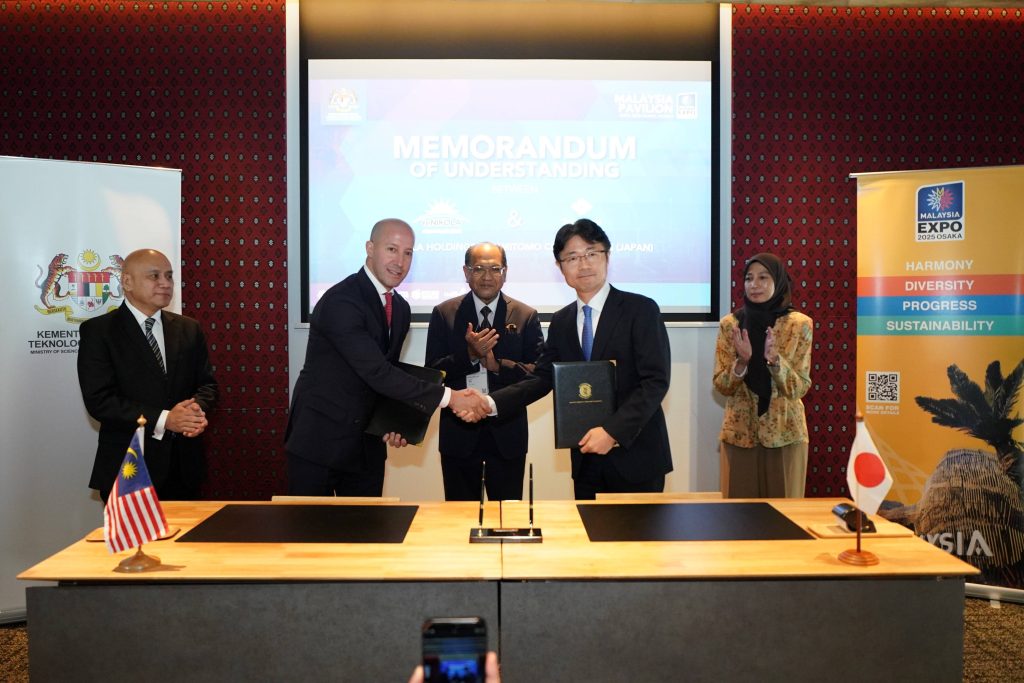
OSAKA: reNIKOLA Holdings Sdn BHD (“reNIKOLA”) and Sumitomo Corporation have entered into a Memorandum of Understanding (“MOU”) on 12 May 2025 to jointly develop a portfolio of large-scale bioenergy projects in Malaysia and Indonesia. The strategic partnership signed at the Malaysia Pavilion at Expo 2025 Osaka, Kansai, Japan marks a significant step forward in advancing the region’s clean energy transition. The MOU was signed by Mr. Boumhidi Abdelali, Managing Director of reNIKOLA, and Mr. Takechi Muramatsu, Head of Indonesia Energy Solution Unit No.2 of Sumitomo Corporation. The ceremony was witnessed by YBhg. Datuk Seri Hj. Hasnol Zam Zam bin Hj. Ahmad, the Secretary General of Malaysian Ministry of Science and Technology (MOSTI). The collaboration will focus on converting palm oil production residues into advanced renewable fuels, targeting the development of biomethane and low-carbon derivatives such as but not limited to liquefied biomethane (LBM) and biomethanol. This initiative aims to fortify the region’s energy resilience with the conversion of palm oil wastes into sustainable fuel, whilst spearheading the decarbonization of the palm oil sector. This collaboration is set to accelerate the transformation of Malaysia and Indonesia, the world’s largest palm oil producers into low carbon economies. The sustainable development driven by this partnership is expected to build a next-generation business that contributes to a carbon-neutral society by establishing a sustainable energy cycle and advancing global decarbonization. “This collaboration with Sumitomo Corporation represents a significant milestone in propelling the growth of bioenergy across the region. reNIKOLA is honoured to be at the forefront of this initiative, and we are grateful for our partners and stakeholders who share the commitment and passion in realising this,” said Boumhidi Abdelali (“Adel”), Managing Director of reNIKOLA. “We are confident that this partnership will be the bedrock of a cleaner and more sustainable future in both Malaysia and Indonesia, while raising the benchmark for sustainability within the palm oil industry.” Adel added, “We are also thankful to Bioeconomy Corporation for their unwavering support and recognition for our technology and expertise. To date, we have registered our company in Bioeconomy Corporation’s Bio-based Accelerator Program, which is aimed to infuse science, technology, and strategic investments into our bioenergy business. We are also in the process of obtaining Bio-Nexus Status for reNIKOLA.” “We are delighted to partner with reNIKOLA, a company that shares our dedication to sustainable growth and energy transition,” said Takechi Muramatsu of Sumitomo Corporation. “By combining our expertise and resources, we aim to set new standards for innovation, environmental responsibility, and low-carbon energy solutions in the region, whilst driving Asia’s clean energy transition.” reNIKOLA, with its strategic shareholder B.Grimm Power, is scaling its renewable energy portfolio, targeting the development of more than 40 projects over the next three years, with primary focus on sustainable fuels. Group President of B.Grimm Power, Dr. Harald Link said, “This MOU marks a pivotal entry point for the Group into the bioenergy sector — a bold step aligned with our commitment to sustainability and innovation. It reflects our vision of Empowering the World Compassionately, by creating cleaner energy solutions for a better tomorrow.”
News

Fisher Phillips Enters Asia Market with Office in Tokyo

TOKYO: Fisher Phillips, an international labor and employment law firm representing employers, announces the continuation of its global expansion with the launch of a Tokyo office. The new office gives Fisher Phillips a foothold in the region to respond to increasing client demand from American and multinational companies doing business in Japan and from Japanese companies doing business in the Americas. The new office location comes in response to Japan solidifying its position as a leading foreign investor in the U.S. – a trend that is expected to continue. As Japanese companies increasingly invest and operate within the U.S., their need to navigate and adhere to the complexities of the American legal system has grown significantly. This necessitates a deeper understanding and robust compliance strategies concerning U.S. laws and regulations to ensure smooth operations and mitigate potential legal risks. “The dynamic shifts in both the U.S. and Japanese employment regulations, coupled with the increasing globalization of business and the strategic importance of the Japanese market, have driven a substantial rise in demand for thoughtful and regionally available services tailored to the specific legal and cultural nuances of Japan and the broader Asia-Pacific,” said John Polson, Chairman and Managing Partner of Fisher Phillips. “Through our 45 offices across the U.S., Mexico and Japan, we can provide seamless coordination for global clients facing complex cross-border employment issues, ensuring consistent and effective legal counsel across multiple jurisdictions.” William Wright is Fisher Phillips’ Head of Global Strategies and has been behind the firm’s successful international expansion. Having focused almost exclusively on international employment issues for over 30 years, Bill noted that “this new office isn’t just an expansion; it’s a strategic alignment, creating powerful synergies with our existing work and client base. Tokyo represents yet another crucial international platform upon which we can seamlessly serve clients with increasingly complex multinational operations around the world.” With the opening in Tokyo, Fisher Phillips’ global consulting firm, Fisher Worldwide, also expands its services in Asia. Fisher Worldwide provides multinational companies with an international network of legal and HR consultants who can provide centralized critical support in talent management, compensation, compliance and operations, union relations, employee engagement and start-up/exit strategies. The Tokyo office will be led by Nan Sato, who also serves as Co-Chair of the firm’s International Practice Group with Bill Wright. As a U.S. lawyer and a Foreign Legal Counsel registered with Japanese Ministry of Justice, Nan will split her time between her U.S.-based practice and developing the firm’s Asia presence. She has extensive experience representing U.S. companies operating in Asia as well as Asian companies looking to expand into the U.S. market. As a global business partner, Nan helps multi-national corporations establish new international operations, M&A-related employment and data privacy issues, termination processes, international labor relations, global pay equity audits, as well as cross-border employment disputes. Joining Nan will be six legal professionals and consultants who can help multinational companies on employment issues, corporate transactions, and regulatory compliance in Asia, as well as structuring and negotiating cross-border transactions, and advising on labor and employment issues in global mobility scenarios. The team offers a unique advantage in providing fast and reliable support to the firm’s Japanese clients, communicating in their language and during their business hours. To learn more about Fisher Phillips’ Tokyo office, click here. -PR Newswire

ESG, News

KT&G to Plant 10000 Trees in Mongolia as Part of Climate Initiative

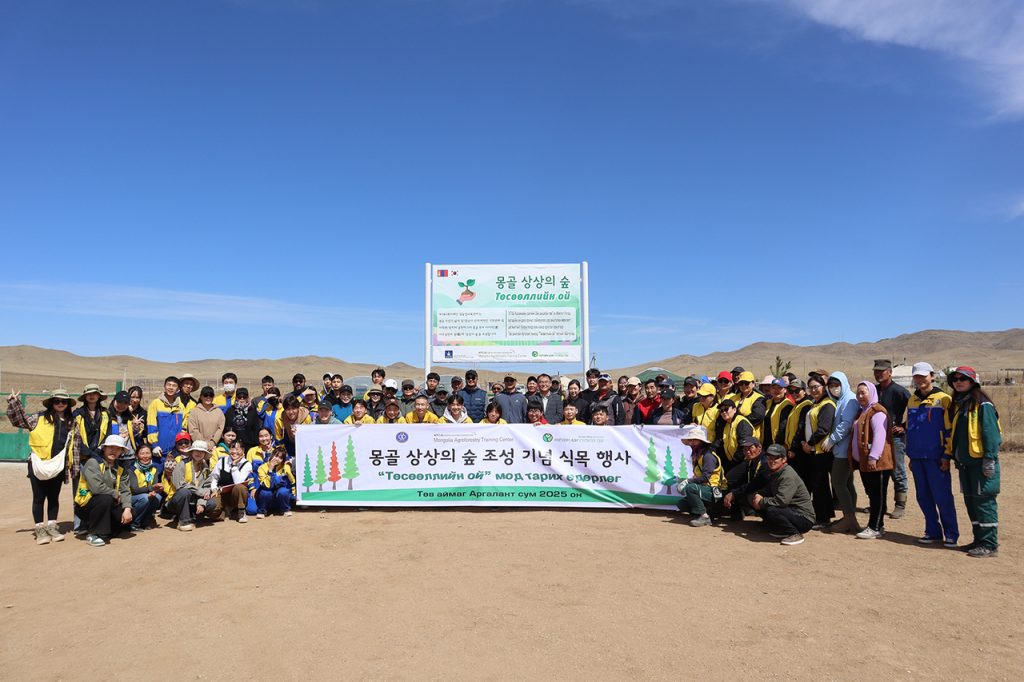
South Korean tobacco company KT&G has announced plans to extend its environmental initiative, the “Forest of Imagination,” to Argalant, Mongolia. Building on previous afforestation projects in Ulaanbaatar, the company aims to plant 10,000 Ulmus pumila trees, known for their adaptability to harsh climates. The project, managed through the Mongolian Agricultural Education Center under the KT&G Welfare Foundation, will also establish an irrigation system to support sustainable forest development. Local residents will be trained and employed for tree planting and maintenance, fostering long-term environmental management and community participation. Funding for the project comes from KT&G’s “Imagination Fund,” a matching grant initiative where employees contribute a portion of their salaries, with the company matching the amount. This approach reflects KT&G’s commitment to global citizenship and social responsibility. A KT&G Welfare Foundation representative stated that the project aligns with the company’s commitment to addressing climate change and supporting local ecosystems. As part of its broader sustainability strategy, KT&G has also signed a memorandum of understanding with the Asian Forest Cooperation Organization to support forest conservation across Asia. In addition to the Mongolian project, the partnership will focus on reforestation efforts in Kazakhstan’s fire-affected Abai region and mangrove restoration initiatives in Indonesia, further emphasizing KT&G’s dedication to environmental stewardship in the region. -Korea Herald

News

Sharp plans to sell Kameyama LCD plant to Hon Hai by August 2026

Sharp Corporation has announced its decision to sell its small and midsize liquid crystal display (LCD) panel plant in Kameyama, Mie Prefecture, to its Taiwanese parent company, Hon Hai Precision Industry. The transaction, set to be completed by August 2026, marks a significant step in Sharp’s strategic plan to streamline its business operations. The decision to sell the Kameyama No. 2 plant comes as Sharp seeks to concentrate its resources on more competitive and profitable sectors. The LCD panel business, which has struggled financially in recent years, is being downsized as part of a broader restructuring effort. Despite the transfer, Sharp assured that the plant would continue to fulfil existing client orders. Sharp President Masahiro Okitsu, speaking at an online news conference, confirmed that the company would maintain production of automotive LCD panels at its Kameyama No. 1 plant, as this segment remains a key profit driver. In another move reflecting its strategic realignment, Sharp plans to relocate its headquarters from Sakai to Osaka City within Osaka Prefecture. Financially, the company has reported a consolidated net profit of ¥36 billion for the fiscal year ending March 2024, marking a substantial recovery from the previous year’s net loss of ¥149.9 billion. This turnaround, the first profit recorded in three years, was attributed to successful restructuring measures and gains from asset sales. However, Sharp’s overall sales fell by 7.0% year-on-year to ¥2.16 trillion. Despite the decline, the company reported an operating profit of ¥27.3 billion, a notable improvement from the previous year’s loss of ¥20.3 billion. Looking ahead, Sharp projects sales of ¥1.85 trillion for fiscal 2025, representing a 14.4% decrease, and anticipates a net profit of ¥10 billion, a decline of 72.3%. The restructuring follows a period of financial difficulties, which led to the suspension of operations at Sharp’s television LCD panel factory in Sakai in August of the previous year. As part of its ongoing efforts to optimise operations, the company also sold part of the factory’s land and buildings to SoftBank. By offloading non-core assets and focusing on high-value production, Sharp aims to strengthen its long-term financial stability while continuing to serve its core customer base through strategic partnerships and targeted product offerings. -Japan Times

News

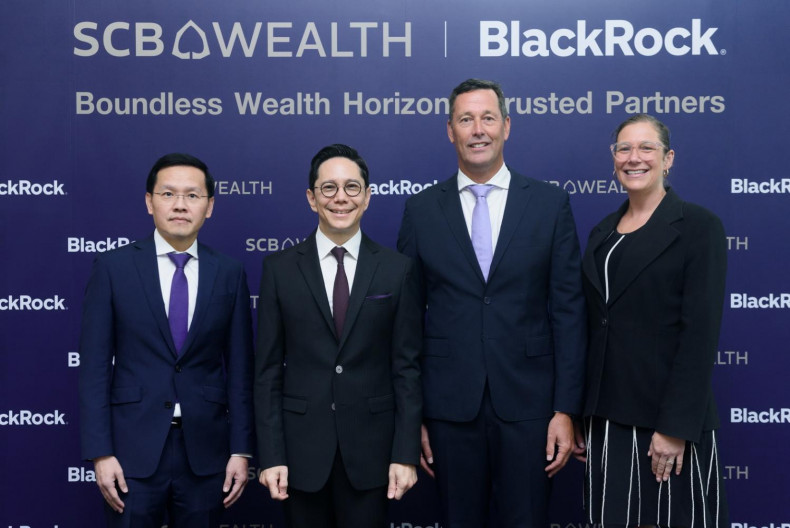
SCB and BlackRock strengthen partnership to boost Thai wealth management

Siam Commercial Bank (SCB) has entered into a strategic partnership with BlackRock, the world’s largest asset management firm, to expand investment opportunities for Thai clients. This collaboration is part of SCB’s commitment to advancing the wealth of Thais and providing access to world-class financial solutions. Through its SCB Wealth division, the bank aims to position itself as Thailand’s leading wealth management institution. SCB Wealth clients will now benefit from privileged access to exclusive investment products, comprehensive research, and strategic insights drawn from BlackRock’s global network. Kris Chantanotoke, SCB’s chief executive, emphasised that the partnership, which took about a year to finalise, was designed to distinguish itself from previous alliances by significantly enhancing wealth management capabilities. The collaboration focuses on three key areas: investment products, research and technology, and human resources. SCB Wealth will combine its understanding of local investors’ needs with BlackRock’s global expertise, creating customised investment strategies that align with clients’ financial goals. A joint committee has been established to evaluate and curate exclusive offerings for SCB’s wealth clients. As part of this initiative, SCB has launched the SCB Wealth Academy to upskill its relationship managers (RMs), equipping them with the knowledge and tools to meet evolving client needs. The academy aims to support SCB’s core wealth segments, including SCB Private, SCB First, and SCB Prime, while also catering to emerging affluent individuals interested in personal and retirement financial planning. The partnership is also leveraging digital innovation to enhance accessibility. SCB is committed to using digital channels to broaden its wealth management services, supported by BlackRock’s advanced technological capabilities. One such initiative is the integration of BlackRock’s Aladdin Academy, a digital learning platform offering tailored content and certifications for investment professionals, including portfolio managers and risk analysts. Andrew Landman, deputy head of Asia-Pacific and head of Southeast Asia and Oceania at BlackRock, highlighted that digital tools will help expand customer access to wealth management services. He noted that the Aladdin Academy will enhance the skills of financial professionals, supporting a broad spectrum of roles within the investment lifecycle. Landman also stressed the importance of co-research, given the current global economic volatility and geopolitical risks. BlackRock’s research-driven approach aims to provide credible, high-value insights, allowing clients to make informed investment decisions amid an increasingly complex financial landscape. By prioritising long-term investment strategies, SCB and BlackRock are working to help clients secure sustainable growth and reliable returns. Landman underlined the importance of filtering reliable information from unreliable sources, particularly given the proliferation of data from social media. Through this partnership, SCB is reinforcing its ambition to become Thailand’s foremost wealth management provider while empowering clients to build long-term financial security. -Bangkok Post

Investment & Market Trends, News

Asian Markets Rally as US China Trade Pause Lifts Investor Sentiment

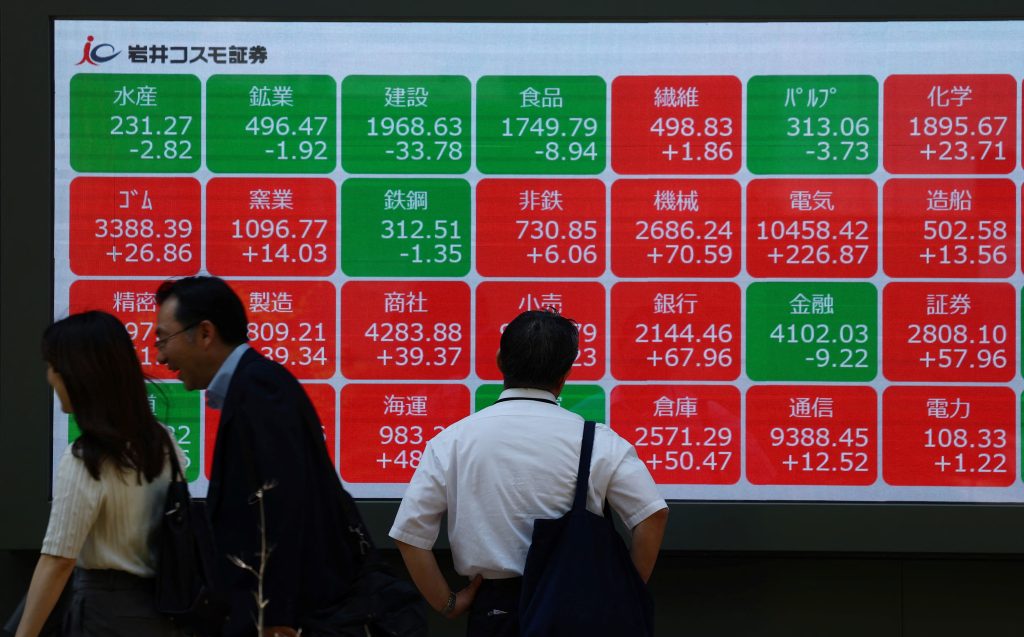
Asian markets rallied on Tuesday as a temporary pause in the US-China trade war boosted investor sentiment, easing fears of a global recession. The positive market response followed an agreement between the two economic giants to reduce tariffs for at least 90 days, prompting a shift in tone from recent confrontational rhetoric to one of “mutual respect” and “dignity”. Japan’s Nikkei surged 2%, reaching its highest level since 25 February, while Taiwan’s tech-heavy index also rose by 2%. Chinese stocks saw moderate gains in early trading. Singapore’s Straits Times Index climbed more than 1.5% in morning trade, pushing the MSCI’s broadest index of Asia-Pacific shares outside Japan to a six-month peak. In the US, the S&P 500 advanced over 3%, while the Nasdaq jumped 4.3%. The US agreed to cut tariffs on Chinese imports from 145% to 30%, while China reduced duties on US goods from 125% to 10%. This easing of trade tensions bolstered risk appetite across global markets. The US dollar, which had initially surged against the yen, euro, and Swiss franc, held on to most of its gains on Tuesday, although it weakened slightly as the trading session progressed. Despite the positive momentum, analysts remained cautious. Christopher Hodge, chief US economist at Natixis, noted that while de-escalation was expected, tariffs would still be significantly higher, continuing to impact US economic growth. Fitch Ratings reported that the effective US tariff rate had dropped to 13.1% from 22.8% prior to the agreement, although it remained historically elevated. Attention is now shifting to US inflation data, set to be released later on Tuesday. Soft consumer price index (CPI) figures could refocus market sentiment on Federal Reserve policy, potentially reducing expectations of further rate cuts. Traders are currently pricing in 57 basis points of cuts this year, down from over 100 basis points during the peak of tariff-related concerns in mid-April. US Treasury yields reached a one-month high on Monday and remained near that level on Tuesday, with the two-year yield at 3.99% and the benchmark 10-year yield at 4.45%. Oil prices slightly declined after hitting a two-week high, driven by trade deal optimism, while gold prices remained stable after falling 2% on Monday as some investors moved away from safe-haven assets. In the cryptocurrency market, bitcoin slipped 0.5% to $102,146, remaining above the key $100,000 mark it breached last week. Investors remain watchful as they assess the long-term impact of the trade truce and upcoming economic data. -Reuters

News

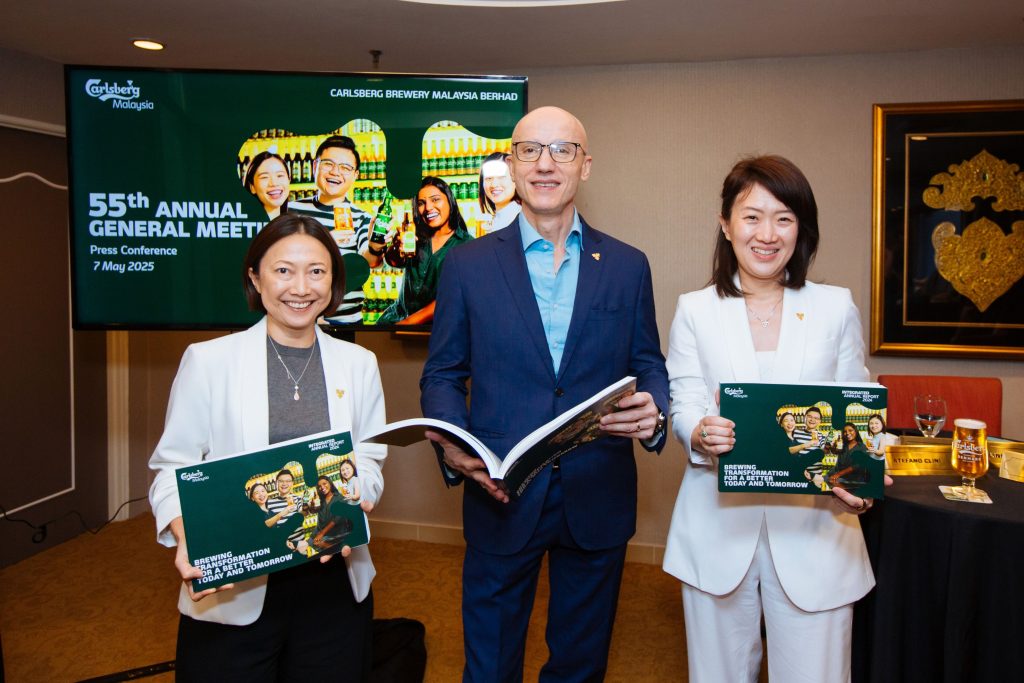
Carlsberg Malaysia Declares Record 100 Sen Dividend Amid Strong FY24 Performance

SUBANG JAYA: Carlsberg Brewery Malaysia Berhad (“the Group”) has declared a record-high total dividend of 100 sen per ordinary share for the financial year ended 31 December 2024 (FY24), marking a payout of 91% of its net profit. The announcement was made during its 55th Annual General Meeting (AGM), where all five proposed resolutions were duly approved by shareholders. The final single-tier dividend of 35 sen per share complements the previously declared interim dividends, underscoring the Group’s robust financial performance and commitment to delivering shareholder value. At the AGM, attended by approximately 1,393 shareholders and proxies, Independent Non-Executive Chairman Tan Sri Dato’ Seri Chor Chee Heung and Managing Director Stefano Clini led discussions on the Group’s strategic direction, achievements, and forward-looking priorities. Clini highlighted that the Group’s performance was anchored by two strategic pillars: a major RM200 million brewery transformation and a focused drive on premiumisation and innovation. These initiatives are part of Carlsberg Malaysia’s overarching Accelerate SAIL corporate strategy, designed to enhance resilience and competitiveness amid global geopolitical and macroeconomic challenges. “Our brewery transformation is not merely an infrastructure upgrade. It represents a strategic leap towards a more sustainable, agile, and innovation-driven future. With cutting-edge brewing technologies now in place, we are better positioned to scale, improve operational efficiency, and uphold our Brewing Excellence commitment,” Clini stated during the post-AGM press briefing. The Group’s FY24 Integrated Annual Report (IAR), published on 28 March 2025, marked a significant shift in sustainability reporting. Transitioning from the Task Force on Climate-related Financial Disclosures (TCFD) to the International Financial Reporting Standards (IFRS) S2 framework, the report provided enhanced disclosures on climate-related risks and opportunities, including their financial implications. The IAR also featured value creation narratives, clear sustainability metrics, and an internal assurance statement on non-financial performance. These reporting enhancements reflect Carlsberg Malaysia’s efforts to align with evolving global standards and investor expectations. Reflecting this progress, the Group’s MSCI ESG rating improved to 6.3/10 in December 2024, with notable gains in Corporate Governance scoring at 6.8/10. Additionally, Carlsberg Malaysia advanced its percentile rank within the FTSE4Good Index from 66 to 52 among peers in the Food and Beverage sector, while maintaining its FTSE4Good Bursa Malaysia score of 3.6/5. Looking ahead, Clini acknowledged the challenging macroeconomic environment, citing inflationary pressures, elevated interest rates, exchange rate volatility, and geopolitical uncertainties, including recent US trade tariffs. Domestically, he noted a shorter Chinese New Year trading period and intensifying pricing competition across retail channels. “To navigate these headwinds, we will continue our ‘Funding Our Journey’ initiatives by reinvesting efficiency gains into innovation, premiumisation, and digital transformation,” he said. “By remaining focused on our strategic priorities under the Accelerate SAIL framework, we are confident in our ability to deliver sustainable value for all stakeholders in 2025.”

News

Malaysia, South Korea Resume FTA Talks to Strengthen Bilateral Trade

SEOUL: Malaysia and South Korea have commenced the ninth round of negotiations for a bilateral free trade agreement (FTA), aimed at deepening economic cooperation and enhancing market access between the two countries. The three-day discussions, held in Kuala Lumpur, involve approximately 70 trade officials and focus on eight key areas, including trade in goods and services, investment, and broader economic collaboration, according to South Korea’s Ministry of Trade, Industry and Energy. Talks resumed in March 2024 following a five-year pause, as both countries work to accelerate progress towards a comprehensive trade deal. While South Korea currently benefits from a multilateral FTA with ASEAN, it is increasingly seeking bilateral arrangements with individual ASEAN members to tailor economic engagement and better address country-specific trade objectives. “A bilateral FTA with Malaysia, a key emerging market within ASEAN, will significantly enhance the global competitiveness of South Korean companies, especially amid rising global protectionism and ongoing trade tensions with the United States,” said Kwon Hye Jin, Director-General for FTA Negotiations at the ministry. She added that the South Korean government remains committed to concluding the agreement at the earliest opportunity and will continue to engage actively with Malaysian counterparts to achieve this objective. The prospective FTA is expected to open new channels for investment and trade in high-value sectors, strengthening bilateral economic resilience and delivering mutual benefits to both nations. -Bernama

Investment & Market Trends, News

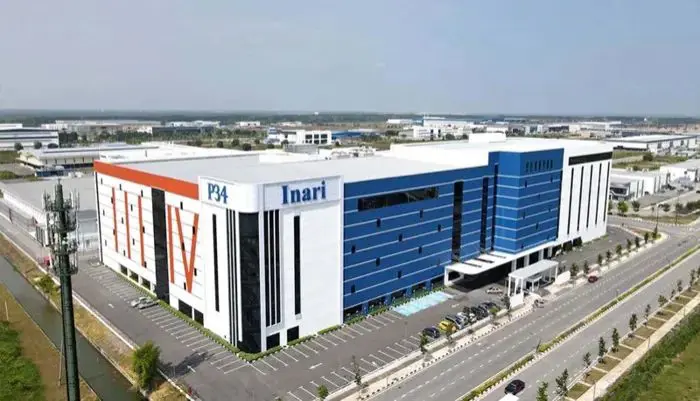
Inari Amertron Shares Soar on Semiconductor Recovery, US Policy Optimism

KUALA LUMPUR: Shares of Inari Amertron Bhd surged to their highest level in nearly three months in early trading on Tuesday, buoyed by optimism surrounding a continued global semiconductor recovery and the potential easing of US export controls on advanced chips — developments expected to benefit Malaysia’s tech sector. By 9:30am, the counter had soared 33 sen or 17% to RM2.27, lifting the group’s market capitalisation to approximately RM8.6 billion. Trading volume exceeded 22.2 million shares, more than double its average daily volume, making it the most actively traded stock on Bursa Malaysia in the morning session. Investor sentiment was supported by recent data from the Semiconductor Industry Association, which reported that global semiconductor sales reached US$55.9 billion (RM242.4 billion) in March 2025 — representing an 18.8% year-on-year increase and a 1.8% rise month-on-month. This marks the 17th consecutive month of annual growth for the sector. Additionally, industry body SEMI noted that global semiconductor materials revenue rose 3.8% year-on-year to US$67.5 billion in 2024, fuelled by strong demand for advanced materials driven by high-performance computing and AI-related applications. TA Securities reiterated its ‘overweight’ stance on the semiconductor sector in a research note issued Tuesday, citing positive tailwinds from both macroeconomic factors and policy developments. However, it cautioned that risks remain, particularly with regard to potential geopolitical and regulatory uncertainties stemming from US policy shifts. The research house views favourably reports that the Trump administration is considering revisions to the Biden-era restrictions on the export of advanced artificial intelligence (AI) chips. “Overall, we view this development positively, as it could provide Malaysia with greater access to advanced technologies, particularly in strategic industries such as data centres,” the note stated. “The potential relaxation of export controls may also stimulate foreign direct investment and collaborative opportunities, further enhancing Malaysia’s position in the global semiconductor supply chain.” TA Securities also welcomed the recent announcement by the Malaysian government outlining the eligibility criteria for local companies to participate in the advanced chip design initiative, in collaboration with UK-based Arm Holdings plc. “This development marks an important step forward in enabling Malaysian firms to move up the value chain within the global semiconductor ecosystem,” it added. Inari Amertron remains among TA Securities’ top picks in the sector, with a target price of RM3.10. Other ‘buy’ calls include Unisem (M) Bhd (TP: RM2.35), Malaysian Pacific Industries Bhd (TP: RM29.30), and Elsoft Research Bhd (TP: 52 sen). -The Edge Malaysia

Investment & Market Trends, News

Foreign Investors Maintain Buying Streak on Bursa Malaysia With RM422.6 Million Inflows

Kuala Lumpur: Foreign investors continued to demonstrate confidence in Malaysian equities, extending their net buying streak on Bursa Malaysia for a third consecutive week. Net inflows totalled RM422.6 million for the week ended 9 May, according to MIDF Amanah Investment Bank Bhd’s latest Fund Flow Report. While the inflow marked a slowdown from the RM853.3 million recorded the previous week, foreign investors remained net buyers on three out of five trading days. The largest net inflow occurred on Wednesday at RM364.8 million, followed by Friday with RM135.1 million. Net outflows were recorded on Monday and Thursday, at RM92.4 million and RM42.4 million, respectively. Sector-wise, utilities led with the highest foreign net inflow at RM253.3 million, followed by telecommunications and media (RM53.3 million), and financial services (RM51.1 million). In contrast, the energy and technology sectors experienced net outflows of RM57.5 million and RM56 million, respectively. Meanwhile, local institutional investors sustained their net selling trend for the third consecutive week, posting outflows of RM397.8 million. Local retail investors also continued to pare down holdings, although the pace of outflows moderated to RM24.8 million, compared to RM161.2 million in the preceding week. Market participation rose across all investor segments. Average daily trading volumes increased 8.6% for local institutions, 2.9% for retail investors, and 6.1% for foreign investors, signalling growing interest and momentum across Bursa Malaysia. -Bernama

Scroll to Top

Subscribe
FREE Newsletter