News

News, Property

Sunway Malls Strengthens Retail Expansion with New Developments and RM3 Billion Johor Project

KUALA LUMPUR : Sunway Malls, Malaysia’s largest mall owner-operator by total retail space and number of properties, is accelerating its retail expansion with two new upcoming developments: Sunway Pier in Port Klang, Selangor, and Sunway Ipoh Mall in Sunway City Ipoh, Perak. Both malls are slated for completion by 2027. Sunway Pier will offer approximately 400,000 square feet of retail space, while Sunway Ipoh Mall is poised to be one of the group’s largest assets, featuring a net lettable area (NLA) of 1.2 million square feet. Further enhancing its portfolio, parent company Sunway Group has announced plans for a RM3 billion mixed-use development adjacent to the Bukit Chagar Rapid Transit System (RTS) Link station in Johor Bahru. Scheduled for completion by 2028, the development will feature a 400,000-square-foot retail component, reinforcing Sunway’s strategic footprint in key urban centres. With these new projects, Sunway Malls—the retail division of Sunway Group—is expected to expand its portfolio to 13 malls, collectively offering 8.2 million square feet of NLA. Future asset injections into Sunway REIT are anticipated to strengthen the group’s integrated property and investment platform, according to Sunway Malls Chief Executive Officer, Chan Hoi Choy. Despite recent downward revisions to Malaysia’s gross domestic product (GDP) growth forecasts by the International Monetary Fund (IMF) and the World Bank, Chan remains confident in Sunway Malls’ growth trajectory. The group aims to maintain the 5 per cent growth achieved in 2024. “Our retail business is closely correlated with national GDP growth, underpinned by millions of transactions recorded annually. Whether customers spend RM5 or RM5,000, the aggregated data provides a clear reflection of prevailing consumption trends,” Chan stated during the unveiling of the group’s 10th mall at Sunway City, Kuala Lumpur. He added that historically, Sunway Malls has consistently outpaced national GDP growth and expects this trend to continue. In 2024, Sunway Malls recorded 5 per cent year-on-year growth, with December sales increasing by 5.6 per cent year-on-year despite a shorter school holiday period. This positive momentum has been sustained into the first quarter of 2025, bolstered by festive spending during Chinese New Year and the school holidays. The Klang Valley continues to be the group’s dominant market, contributing 67.2 per cent of total NLA, followed by the Southern region at 15.8 per cent and the Northern region at 17 per cent. Sunway Square Mall, due to open in September, will span 300,000 square feet of NLA across four floors, accommodating over 150 retail outlets and offering 3,000 parking bays. Chan noted that 95 per cent of the mall’s retail space has already been successfully leased, with the remaining 5 per cent strategically reserved for tenants capable of delivering high-impact, experiential retail offerings. “Our commitment to enhancing consumer engagement and maintaining a dynamic tenant mix remains central to our growth strategy,” Chan concluded. –Business Times

News

Nestlé Malaysia Delivers Encouraging Start to 2025 with Strong First-Quarter Results

PETALING JAYA : Nestlé (Malaysia) Bhd has reported a positive start to the year, posting encouraging results for the first quarter ended 31 March 2025 (1Q25). The company recorded a turnover of RM1.77 billion during the quarter under review, maintaining the strong sales performance achieved in 1Q24 and marking a 20.1% increase compared to the fourth quarter of 2024 (4Q24). Nestlé Malaysia attributed the broad-based sales momentum to successful planning and execution of its Chinese New Year and Ramadhan/Hari Raya campaigns across its portfolio of brands. The company’s export business also registered growth, recording a 2.6% increase, driven by the competitiveness of its industrial infrastructure and its position as the largest halal manufacturing hub within the global Nestlé network. For 1Q25, Nestlé Malaysia reported a profit before tax of RM213 million and a profit after tax of RM161.3 million, more than tripling the profits achieved in the preceding quarter, reflecting the company’s steady progress towards profit normalisation following a challenging 2024. “This performance demonstrates our ability to navigate a complex operating environment, characterised by ongoing pressures on commodity prices,” the company stated. “Focused efficiency measures, cost optimisation initiatives, and sustained investments in brand equity have underpinned the solid results.” While the first-quarter profit remained strong, the company noted a moderate contraction compared to the high baseline set in 1Q24. This was attributed to an earlier phasing of marketing investments compared to the previous year, alongside a prudent pricing strategy aimed at cushioning consumers against surging commodity prices. Nestlé Malaysia’s Chief Executive Officer, Juan Aranols, said the first-quarter performance marked a significant step in the group’s journey towards restoring healthy growth levels and sustainable profitability. “Amid continued market volatility and intense competition, we are executing solid brand plans effectively across both online and offline channels,” he said. “Our campaigns during the Chinese New Year and Ramadhan/Hari Raya periods have delivered robust results across all business segments.” Looking ahead, Aranols emphasised that Nestlé Malaysia remains alert to the ongoing global market uncertainties that could impact business conditions. Nevertheless, the company remains committed to delivering high-quality, nutritious, and great-tasting halal products tailored to meet the diverse needs of Malaysians at every life stage. He further highlighted that automation and digitalisation are central to Nestlé Malaysia’s strategy, enabling greater agility in decision-making and operational efficiencies that fund continued investments in brand building and innovation. “This virtuous circle of profitable, sustainable growth is anchored firmly on a deep understanding of the evolving value expectations of Malaysian consumers,” Aranols said. Despite the challenging operating environment, Nestlé Malaysia is encouraged by signs of improving consumer sentiment. The group remains confident in its guidance of returning to healthy growth levels by the first half of 2025 and consolidating a sustainable, profitable growth trajectory. “We will continue investing in product innovation and in strengthening our capabilities across manufacturing, logistics, and commercial operations,” Aranols added. Celebrating its 113th year of presence in Malaysia, Nestlé remains committed to contributing positively to the nation’s development, while remaining vigilant to global geopolitical and market developments that could influence broader economic conditions. –The Star

News

Vietnam Airlines expands partnership with Adyen

SINGAPORE: Adyen, the global financial technology platform for leading businesses, today announced an expanded partnership with Vietnam Airlines, the country’s national flag carrier. Building on a collaboration that began in 2017 with Adyen’s gateway solution, Vietnam Airlines has now extended the partnership to include Adyen’s global acquiring capabilities, enabling seamless and efficient payment experiences across key markets such as Japan, Australia, the United States, and Europe. Through a single integration with Adyen, Vietnam Airlines can now process transactions faster and more reliably across both major credit cards and selected local payment methods, including Alipay and WeChat Pay. Adyen’s direct acquiring connections to global card networks like Visa and Mastercard enable businesses to benefit from local market conditions, leading to higher authorization rates and reduced transaction fees. Since the partnership expansion, Vietnam Airlines has recorded up to a 5% uplift in authorization rates. “Our strengthened partnership with Adyen represents a significant step forward in Vietnam Airlines’ digital transformation,” said Bui Tran Cuong, Deputy Director of Finance and Accounting at Vietnam Airlines. “With Adyen’s global reach and advanced payment solutions, we can offer travelers worldwide a smooth, secure, and flexible payment experience—supporting major card networks and emerging payment methods alike. This collaboration enables us to elevate the passenger journey while boosting operational efficiency and fostering innovation.” Warren Hayashi, President, Asia-Pacific at Adyen, added, “We’re honored to deepen our longstanding collaboration with Vietnam Airlines as their trusted payments partner. Our work together highlights how the right payment solutions can empower businesses to scale and serve a global customer base with ease.” Vietnam Airlines’ expanded partnership with Adyen marks a pivotal move to support its growth ambitions and commitment to delivering best-in-class service for travellers across the globe.

Events, News

GamBit Group Launches Hybrid Asset Trust (H.A.T) at Malaysia 50+ Expo 2025

KUALA LUMPUR: GamBit Group today unveiled its pioneering Hybrid Asset Trust (H.A.T) at the Malaysia 50+ Expo 2025, marking a significant leap forward in the evolution of estate planning and wealth management for Malaysians across all generations. H.A.T is Malaysia’s first estate planning solution that seamlessly integrates traditional assets — such as property and equities — with digital assets, including cryptocurrencies, NFTs, and tokenised holdings. This innovative platform enables Malaysians to manage and safeguard their entire portfolios with greater ease and security, reflecting the country’s increasingly digital financial landscape. At the launch ceremony, Datuk Clifford Hii, Group Chief Executive Officer of GamBit Group, highlighted the vision behind H.A.T: “At GamBit, we believe that everyone deserves access to comprehensive, future-ready wealth management tools. With H.A.T, we are bridging the gap between conventional and digital assets, making estate planning relevant and accessible for today’s investors and future generations.” The Hybrid Asset Trust is supported by the GamBit Consortium, which includes Digital Trustees Berhad and a Securities Commission Malaysia-licensed digital asset custody service. This collaboration ensures H.A.T operates within a robust regulatory framework, offering clients confidence and peace of mind. Making Comprehensive Wealth Management Accessible With a low minimum entry point of RM10,000, H.A.T is designed to make estate planning accessible to a broader demographic, particularly younger, tech-savvy Malaysians who are increasingly active in digital investments. According to industry projections, Malaysia’s digital asset market is expected to reach US$296.7 million in revenue by 2025, with surveys revealing that 64% of retail investors currently hold digital assets and 69% plan to increase their exposure. In contrast to traditional wealth management solutions that often overlook digital asset planning, H.A.T provides a fully integrated platform, addressing growing concerns over digital asset security and inheritance. It ensures that wealth across both asset classes can be effectively managed, protected, and passed on to future generations. Addressing Critical Gaps in the Market Many Malaysians have historically lacked access to secure, comprehensive tools that encompass both traditional and digital assets. As a result, families are often left grappling with inaccessible or lost digital wealth following the demise of an asset holder. H.A.T addresses this critical gap by offering a regulated solution that ensures asset continuity and legacy protection in today’s dynamic financial environment. Supporting Holistic Aging at Malaysia 50+ Expo 2025 The launch of H.A.T at the Malaysia 50+ Expo 2025, themed “re:imaging aging, Embrace the Future,” reinforces GamBit Group’s commitment to empowering individuals to embrace aging with confidence. The Expo, dedicated to promoting healthy, independent, and fulfilling lives for seniors and future retirees, provided a fitting platform to introduce H.A.T’s inclusive wealth management solutions to a wide audience. GamBit Group intends to continuously enhance H.A.T by introducing new features, building strategic partnerships, and expanding its reach to ensure all Malaysians have access to modern, secure, and inclusive estate planning services. To learn more about H.A.T or explore GamBit Group’s full range of services, visitors are encouraged to visit the Group’s booth at the Malaysia 50+ Expo 2025 or reach out for a personalised consultation via https://www.gambit.com.my/.

News

Fiuu Sets Two National Records in Malaysia

KUALA LUMPUR: Fiuu, the leading fintech platform in Southeast Asia, has achieved two national records in the Malaysia Book of Records for its performance in 2024: the Highest Payment Gateway Sales Value and the Largest Payment Gateway Transactions in a year. Processing over RM 35.6 billion (US$ 7.9 billion) in total payment volume and surpassing 500 million online transactions within Malaysia, these milestones highlight Fiuu’s pivotal role in driving the digital economy in ASEAN. These achievements reflect Fiuu’s strategic investment in developing the “digital rails” that power cashless commerce and promote financial inclusion across Southeast Asia. The company focuses on creating scalable, interoperable, and secure systems that are accessible to underserved businesses and communities. “We are honoured by the trust placed in us by our partners, merchants, and institutions,” said Eng Sheng Guan, CEO of Fiuu. “This recognition highlights the importance of our infrastructure in enabling fast-growing economies to thrive and adapt. Our efforts are directed towards supporting today’s economy while laying the foundation for future growth.” Fiuu operates across eight key Asian markets, including Malaysia, Singapore, Thailand, Indonesia, the Philippines, Vietnam, Taiwan, and Hong Kong. It simplifies domestic and cross-border payments for over 70,000 merchants across sectors such as retail, logistics, healthcare, and government services. The platform integrates over 110 payment methods and has direct acquiring partnerships with Visa and Mastercard in Malaysia, Singapore, and the Philippines. In 2024, Fiuu processed over 1.8 million transactions daily and handled more than RM 44 billion (US$ 9.8 billion) in annual transaction volume across Southeast Asia. The company saw a 208% surge in Visa and Mastercard transactions, with projections for over 300% growth in 2025. Fiuu’s cloud-based infrastructure supports features such as Buy Now Pay Later (BNPL) and Visa Instalment Solutions, and the company continues to enhance its platform with features like tokenization, IoT payments, biometric authentication, and Apple Pay. Looking ahead, Fiuu is focused on advancing cross-border capabilities, improving fraud prevention with AI, and expanding its acquiring relationships across ASEAN markets. “As the digital economy grows, Fiuu will continue to build quietly but purposefully, ensuring businesses can move forward confidently,” Eng added.

News

Curlec by Razorpay Appoints Kevin Lee as New Country Head and CEO

Kevin Lee has been appointed the new Country Head and CEO of Curlec by Razorpay, the Malaysian payment solutions company owned by India-based Razorpay. Lee brings over 18 years of experience in the payments and fintech sectors to the role, following his recent departure from GHL Systems, where he had been CEO for nearly 16 years. Lee’s leadership experience spans across ASEAN, the Middle East, and Africa, where he played a key role in developing e-payment infrastructures. As Country Head, he will focus on expanding Curlec’s digital payment solutions for businesses in Malaysia, enhancing the Curlec Payment platform, and supporting financial inclusion initiatives. Shashank Kumar, Co-Founder & Managing Director of Razorpay India, expressed confidence in Lee’s ability to drive digital payment innovation, building on Curlec’s commitment to redefining how businesses and consumers interact with payments. Lee, in his new role, highlighted the potential for innovation in Malaysia’s digital payments landscape and expressed enthusiasm for collaborating with Curlec’s team to drive growth and accessibility for businesses of all sizes. This leadership change comes after Zac Liew stepped down as CEO earlier this month, marking the end of his seven-year tenure.–FINTECH NEWS

Investment & Market Trends, News

Foreign Investment Surge on Bursa Malaysia: RM332.3 Million Inflows Recorded

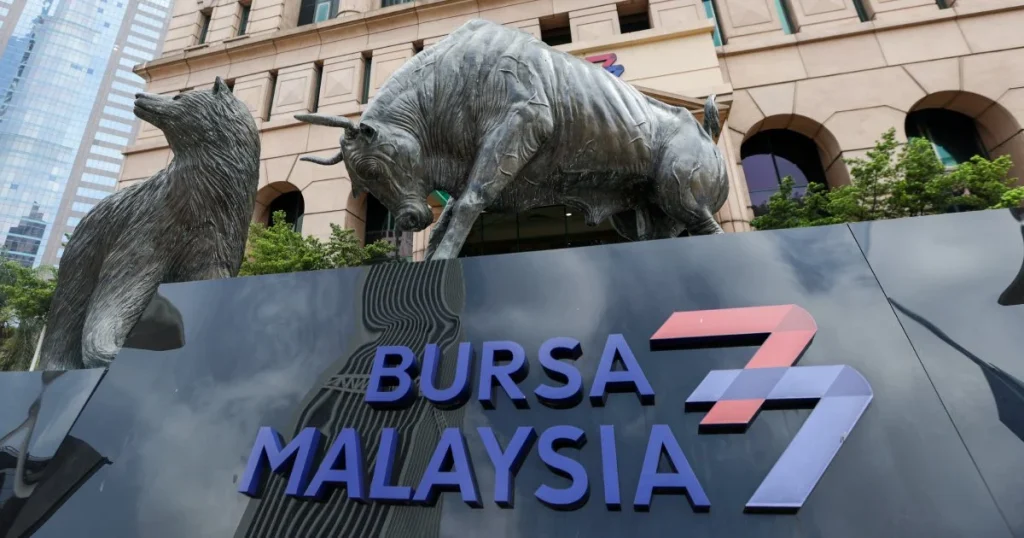
KUALA LUMPUR : Foreign investors have made a strong comeback to Bursa Malaysia, ending a 26-week selling streak with net inflows totalling RM332.3 million — the first week of positive foreign investment since Oct 24. According to MIDF Amanah Investment Bank Bhd’s latest Fund Flow Report for the week ended April 25, foreign investors were net buyers on most trading days, except for Monday and Tuesday, which recorded outflows of RM101.1 million and RM105.4 million, respectively. For the remainder of the week, inflows ranged between RM125.9 million and RM267.2 million. The financial services sector led the gains, attracting RM197.1 million in net foreign inflows, followed by telecommunications and media (RM60.8 million), and industrial products and services (RM48.8 million). Meanwhile, sectors such as energy and plantation both saw net outflows of RM16.0 million, while healthcare registered an outflow of RM13.3 million. MIDF also observed a reversal in local institutional activity, with institutions turning net sellers after 26 consecutive weeks of net buying. Outflows from local institutions stood at RM267.4 million. Local retail investors continued their net selling trend for a second straight week, recording outflows of RM64.9 million — a 2.5-fold increase compared to the previous week. In terms of trading activity, the average daily trading volume (ADTV) rose broadly across the board, except among foreign investors, whose ADTV slipped by 6.9 per cent. Local institutions and retail investors, in contrast, posted gains of 23.8 per cent and 2.2 per cent, respectively. MIDF also highlighted that Malaysia’s headline inflation rate moderated to 1.4 per cent year-on-year in March 2025, offering some relief to policymakers. The easing inflation was seen across various sectors, including accommodation, food services, utilities, and household goods. “Stable inflation, alongside firm labour market conditions — with unemployment steady at 3.1 per cent — points to a resilient domestic economy, even as external challenges begin to emerge,” MIDF said. Across the broader Asian landscape, only Malaysia, India, Taiwan, and Vietnam recorded net foreign inflows, while other regional markets faced outflows, with Thailand bearing the brunt of the selling pressure. –Bernama

Investment & Market Trends, News

MIDA Champions JS-SEZ as Gateway for Investment and Regional Supply Chain Growth

KUALA LUMPUR : Malaysia is positioning itself as Asia’s next investment and supply chain powerhouse with the development of the Johor-Singapore Special Economic Zone (JS-SEZ), led by the Malaysian Investment Development Authority (MIDA). Spearheading this initiative, MIDA is executing a strategic push to attract global investors and reshape regional trade dynamics, signalling a bold transformation of Malaysia’s economic landscape. First proposed in 2023, the JS-SEZ has rapidly gained momentum, driven by growing investor interest and deepening Malaysia-Singapore economic collaboration. The initiative marks a historic milestone in bilateral relations, as the two nations, already each other’s top trading partners within ASEAN, work together to further integrate their economies through the JS-SEZ. JS-SEZ: A Gateway to Global Supply Chains and Smart Manufacturing In an exclusive interview with Bernama, MIDA chief executive officer Datuk Wira Arham Abdul Rahman outlined the transformative potential of the JS-SEZ. “We are witnessing the creation of an economic powerhouse that merges the best capabilities of both countries. This is more than just collaboration — it is strategic integration at an unprecedented level,” he said. Datuk Wira Arham highlighted Singapore’s complementary role, with its established logistics networks and financial infrastructure, enhancing the JS-SEZ’s access to global markets through strong air connectivity and trade facilitation services. “Businesses operating within the JS-SEZ will benefit from proximity to a mature financial ecosystem, supported by institutions in both Malaysia and Singapore, facilitating seamless cross-border transactions and trade. This ecosystem is central to enabling the region’s growth,” he noted. Malaysia’s technological strength adds a crucial dimension to the partnership, with the country commanding a seven per cent share of the global semiconductor market and hosting half of the world’s top semiconductor companies. “Our semiconductor leadership underscores Malaysia’s evolution into an innovation-driven manufacturing hub,” he said. Through the JS-SEZ, businesses will be able to leverage Singapore’s global connectivity and Malaysia’s industrial depth, innovative policies, and manufacturing capabilities. “From semiconductors to specialty chemicals, we are enabling the creation of an integrated, future-ready value chain. The JS-SEZ is not merely a zone — it is a gateway to global supply chains, next-generation manufacturing, and dynamic regional collaboration,” Datuk Wira Arham added. Malaysia’s contribution includes world-class port infrastructure, a robust financial services sector, and a growing base of technology-driven enterprises. Together with Singapore, the JS-SEZ provides a seamless platform for businesses to innovate, scale, and thrive, positioning Malaysia as a key anchor in the global economy. Empowering Local Businesses for Global Integration Malaysia’s ambitions for the JS-SEZ extend beyond attracting foreign investors — they also focus on nurturing local businesses to integrate into regional and global value chains. MIDA plays a pivotal role by supporting key industries through policy alignment, infrastructure enhancement, talent development, and strategic projects such as the JS-SEZ. Programmes include: Vendor Development: Supporting local suppliers’ integration into the global semiconductor value chain through skills training and capability assessments. Supply Chain Networking: Organising events to connect local SMEs with global players, particularly in the digital infrastructure sector. Manufacturing Resilience: Assisting SMEs in adopting smart manufacturing systems, automation, and digital platforms under the Industry4WRD initiative. Talent development remains a cornerstone of this strategy. “Through our Graduate-Industry Matching Programme, we are preparing the next generation of Malaysian tech leaders. We are investing in skills for AI, semiconductor design, mechatronics, and advanced software development, ensuring Malaysia remains at the forefront of technological innovation,” Datuk Wira Arham said. Industry Leaders Eager to Tap into JS-SEZ Opportunities The JS-SEZ has already captured the attention of industry leaders keen to harness its potential as ASEAN’s next investment hub. Lionel Yeo, chief executive officer of ST Telemedia Global Data Centres Southeast Asia, praised the JS-SEZ’s potential to meet the rising demand for data centre services across the Asia-Pacific. “Our focus is on enabling businesses to grow not just locally, but globally. Johor’s strategic location and available resources make it an attractive base for expansion,” he said. Yeo also noted the dramatic growth in Malaysia’s data centre capacity — from 50 megawatts five years ago to 1.5 gigawatts today — attributing the achievement to robust government policies. He sees Johor’s available land and energy capacity as key advantages for future regional data centre expansion, reinforcing Johor and Singapore’s combined strength in meeting the growing digital infrastructure demands. Similarly, Malaysian electronics manufacturing services provider CAPE EMS Bhd sees the JS-SEZ as a launchpad to further expand into the Singaporean market. Managing director Christina Tee praised the government’s initiative, noting that the zone’s free trade benefits would further strengthen local partnerships. “We already collaborate with several Singaporean companies, and with the advantages offered by the JS-SEZ, these partnerships will undoubtedly grow stronger,” she said. –Bernama

News

US Tariffs Will Backfire on American Economy

KUALA LUMPUR : Former prime minister Tun Dr Mahathir Mohamad has cautioned that the United States’ wide-ranging tariff measures are likely to backfire, inflicting greater harm on its own economy than on its trading partners. “We often focus on the impact these tariffs have on Malaysia and other trading partners. But the real question is, what happens to the United States?” Dr. Mahathir remarked. He further pointed out that these higher costs would likely lead to American workers demanding higher wages, which could erode their global competitiveness. “All goods in the U.S. will become more expensive, leading to higher living costs. Consequently, American workers will demand higher wages, eroding their competitiveness globally,” Dr. Mahathir explained. The former Prime Minister also highlighted the U.S.’s heavy reliance on global supply chains, particularly for critical components such as microchips, which are largely sourced from countries like South Korea, Taiwan, and Malaysia. Dr. Mahathir warned that the tariffs would increase production costs, making U.S. products less competitive on the world stage. Aviation Industry at Risk Dr. Mahathir cited the aviation sector as a prime example of how tariffs could harm the U.S. economy. He suggested that countries like Malaysia could shift their purchases from American-made Boeing aircraft to European Airbus jets in response to the higher costs caused by the tariffs. “For instance, if we choose to buy 30 Airbus planes instead of Boeing, and each Boeing aircraft costs nearly half a billion ringgit, that would translate into a significant loss for the U.S. economy,” he said. The broader aviation industry has already begun to feel the strain of tariffs, with Boeing facing rising costs and growing competition from Airbus, particularly in markets where U.S. products have historically held a dominant position. U.S. Economic Impact and Potential Reversal Dr. Mahathir also predicted that the U.S. would likely pause its tariff policy in the next few months, acknowledging that the tariffs were inflicting more damage on the U.S. economy than on its trade partners. He stated that this situation had become increasingly untenable for the U.S., as the negative consequences began to outweigh the intended benefits. Recently, the U.S. announced a 24% tariff on most Malaysian goods, along with a 10% tariff on imports from around 60 countries. However, these measures have been temporarily suspended for 90 days to facilitate further trade negotiations. Criticism of American Worldview In addition to his economic concerns, Dr. Mahathir also took aim at the American worldview. He suggested that many Americans, including the U.S. President, often perceive their country as “the world” and remain largely unaware of the complexities of global relations. This ignorance, according to Dr. Mahathir, is partly responsible for the U.S.’s frequent diplomatic conflicts with other nations. “Even the U.S. President seems unaware of the rest of the world. That’s why he ends up quarrelling with other countries,” Dr. Mahathir remarked. His comments came in the wake of a controversy involving conservative U.S. commentator Bill O’Reilly, who claimed that Malaysians could not afford to purchase Chinese products. Following a rebuttal by Malaysian Prime Minister Datuk Seri Anwar Ibrahim — in which Anwar described O’Reilly as a “colonialist” — O’Reilly stood by his comments, citing Malaysia’s per capita income of US$5,731, compared to the U.S. figure of US$42,220. Communications Minister Fahmi Fadzil, however, countered O’Reilly’s assertion, pointing to World Bank figures that show Malaysia’s GDP per capita at US$11,379 in 2023, or US$36,416 when adjusted for purchasing power parity. This firmly places Malaysia in the upper middle-income bracket, contrary to O’Reilly’s claims. Global Economic Disruption The debate surrounding U.S. tariffs and global trade dynamics has been a point of concern for economists. Many have warned that these tariffs could lead to higher consumer prices, not just in the U.S., but around the world. The cost of goods such as electronics, clothing, and food could rise, which would disproportionately affect lower-income households in the U.S. (americanprogress.org). Experts also point out that the U.S. economy’s reliance on international supply chains, especially in high-tech sectors like microchips, makes it vulnerable to disruptions caused by tariffs. Economists believe that increased production costs will negatively impact U.S. businesses’ ability to compete on the global stage, particularly in industries where innovation and efficiency are paramount (ismworld.org). As Dr. Mahathir suggested, the long-term impact of such trade policies may ultimately prompt the U.S. to reconsider its tariff strategy, especially as the negative economic effects become more apparent. –Free Malaysia Today

News, Property

IGB-REIT’s Rental Rates Climb 7.5% at Mid Valley Megamall Post-Revamp

PETALING JAYA :  IGB Real Estate Investment Trust (IGB-REIT), owner of Mid Valley Megamall and The Gardens Mall, is poised to deliver resilient occupancy rates and sustained rental growth following recent asset reconfigurations. According to CGS International (CGSI) Research, IGB-REIT maintained an impressive average occupancy rate of nearly 100% for the first quarter ended 31 March 2025 (1Q25), supported by steady footfall and growth in tenant sales. The gross monthly rental rate at Mid Valley Megamall rose from RM18.10 per sq ft in the financial year 2024 (FY24) to RM19.45 per sq ft in 1Q25, aided by the completion of the South Court reconfiguration in September 2024. The project saw the conversion of a large net lettable area (NLA) previously occupied by anchor tenant Metrojaya into multiple smaller, higher-yielding tenants. For The Gardens Mall, the gross monthly rental rate also improved, rising from RM14.94 per sq ft in FY24 to RM16.63 per sq ft in 1Q25. CGSI Research noted that IGB-REIT’s 1Q25 core net profit of RM110.6 million was in line with expectations, representing 27%–28% of both its and Bloomberg consensus full-year forecasts. Management reiterated its rental reversion guidance of mid-single digits for FY25 and expressed confidence in achieving a high renewal rate for leases expiring this year. As at 31 March 2025, 17.4% of Mid Valley Megamall’s NLA and 51.5% of The Gardens Mall’s NLA are scheduled for renewal in FY25, including several key anchor tenants. While management flagged potential softer results in the second quarter due to seasonally weaker tenant sales, it expects FY25 earnings growth to be underpinned by full-year contributions from the South Court reconfiguration, continued rental rate increases, and potential gains from gross turnover rent. CGSI Research maintained its “Hold” rating on IGB-REIT, with a target price of RM2.21. Meanwhile, Kenanga Research reported that overall tenant sales at Mid Valley Megamall and The Gardens Mall remained stable in 1Q25, even as some rival malls saw declines. Following a recent site visit, Kenanga expressed optimism that the new higher-yielding tenants occupying the reconfigured Metrojaya space would continue supporting rental and sales growth throughout FY25. Kenanga also maintained its earnings forecasts, RM2.20 target price, and “Market Perform” rating. The revitalisation of the malls saw the introduction of around 20 new tenants, including brands such as Urban Revivo and Love, Bonito in the fourth quarter of 2024. With approximately 10% of the total NLA now fully occupied by these higher-yielding tenants since November 2024, the reconfiguration is expected to be a key earnings driver in the coming year. Kenanga Research added that the potential injection of Mid Valley Southkey into IGB-REIT remains a medium-term catalyst. At the time of writing, shares of IGB-REIT were trading at RM2.29. –The Star

Scroll to Top

Subscribe
FREE Newsletter