News

News

Indonesia Detains Top Judge in Bribery Probe Linked to Palm Oil Corruption Case Linked to Palm Oil Corruption Case

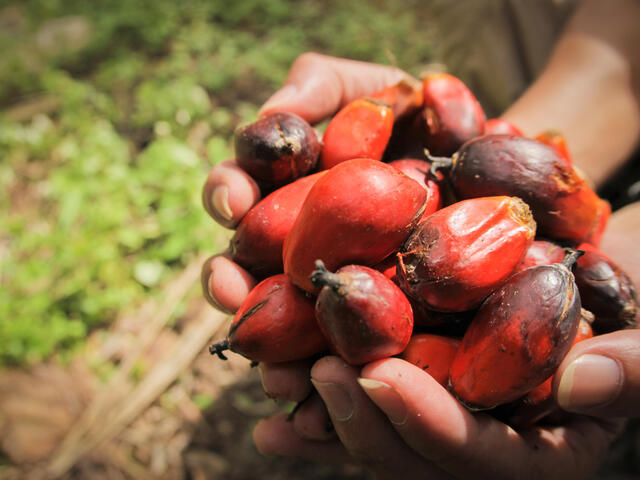
Indonesia has detained the chief judge of the South Jakarta District Court along with three others in connection with an alleged bribery scheme related to a high-profile 2022 palm oil export corruption case that involved a unit of Singapore-listed Wilmar International Ltd. In a statement on Saturday (April 12), the Attorney General’s Office (AGO) identified the judge by the initials MAN, along with a court employee (WG) and two lawyers (MS and AR), as suspects in the case. Prosecutors allege the lawyers paid the judge 60 billion rupiah (approximately US$3.57 million or RM15.79 million) in bribes to influence the outcome of the trial. The bribery was allegedly intended to secure a favourable ruling in a March 2025 verdict, where a panel of judges determined that Wilmar Group, Musim Mas Group, and Permata Hijau Group had not committed any criminal offence in the palm oil export scandal. AGO spokesperson Harli Siregar confirmed that the suspects would be detained for the next 20 days pending further investigation. As part of the probe, prosecutors raided five locations in Jakarta on Friday and seized large sums of cash in multiple currencies—including Chinese yuan, Singapore dollars, US dollars, Indonesian rupiah, and Malaysian ringgit. Authorities also confiscated luxury vehicles, including a Mercedes-Benz and a Ferrari, as part of the evidence haul. The original 2022 corruption case implicated officials from Indonesia’s trade ministry and centred around the issuance of export permits that did not meet regulatory requirements. The scandal was compounded by failures in meeting domestic palm oil distribution obligations, contributing to a surge in cooking oil prices and public outcry. The latest development signals a renewed commitment by Indonesian authorities to crack down on judicial corruption and ensure accountability in one of the country’s most lucrative industries.–BLOOMBERG

News

Malaysia at Risk from US-China Trade Tensions, Warns Anwar

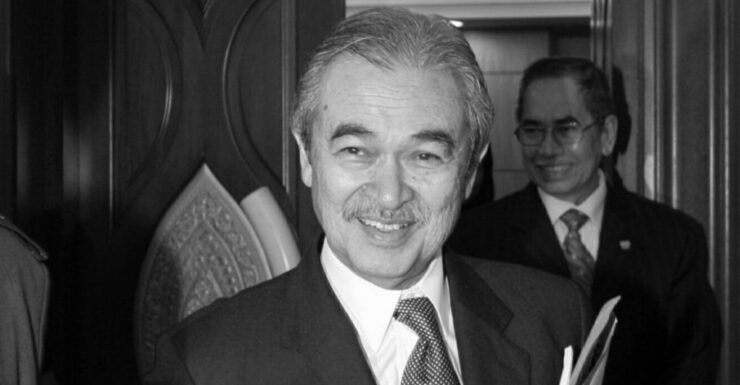
Prime Minister Datuk Seri Anwar Ibrahim has warned that escalating trade tensions between the United States and China could disrupt Malaysia’s export-driven economy and strain its critical trade and investment relationship with Beijing. Speaking at the Kelantan state-level Aidilfitri Madani 2025 celebration at Pantai Irama on Friday, Anwar said the US move to impose steep retaliatory tariffs on several countries—including a now-suspended 24% levy on Malaysian imports—signals broader volatility that may destabilise Asia’s trade ecosystem. “This situation not only affects China’s economy, but also has repercussions for Malaysia,” Anwar said. “When high tariffs are imposed on China, our trade and investment ties with the country are inevitably affected.” He acknowledged that while Malaysia has temporarily been exempted from the latest US tariff wave, the larger implications of the trade war—particularly on China, Malaysia’s largest trading partner—cannot be ignored. “As a trading and exporting nation, we are highly vulnerable to global trade disruptions. If China’s export and investment outlook weakens, the ripple effects will reach our shores too,” he added. US President Donald Trump recently announced a 90-day suspension of higher tariffs on selected countries, including several ASEAN nations such as Malaysia. However, China remains a primary target, with a sweeping 125% tariff still in place. Previously, Malaysia was hit with a 24% reciprocal tariff, which has now been put on hold. Still, a 10% baseline global tariff continues to apply to all nations, except for China, which faces steeper penalties. Anwar emphasised that Malaysia must remain vigilant in navigating the shifting trade landscape, especially as it seeks to balance strong diplomatic ties with both superpowers. “The suspension is welcome, but the underlying threat remains. We must prepare for long-term volatility,” he said. As the US-China tariff standoff intensifies, analysts expect further fragmentation in global supply chains—posing new challenges for Southeast Asian economies that sit at the crossroads of major trade routes.

News

US Backs Off Tariffs on Phones, Chips, Displays

US President Donald Trump’s administration has temporarily exempted smartphones, computers, and other key electronics from its sweeping “reciprocal tariffs” — offering major relief not only to US tech giants like Apple Inc and Nvidia Corp, but also to critical players across Asia’s electronics supply chain, particularly in China, Taiwan, South Korea and Japan. The exclusions, published Friday by US Customs and Border Protection, carve out a significant list of consumer tech products — including smartphones, laptops, processors, and flat-panel displays — from the baseline 10% global tariff and the steep 125% levy targeting Chinese imports. This development, although possibly short-lived, marks the first notable easing in Washington’s intensifying trade confrontation with China. The exemptions are backdated to April 5 and cover approximately US$390 billion in US imports, including more than US$101 billion from China, according to US trade data analysed by Gerard DiPippo of the Rand China Research Center. Asia’s Supply Chains Still at Risk While the tariff reprieve is welcome news for global tech firms, Asian exporters remain wary. China alone accounts for over US$41 billion of the US’s smartphone imports and more than US$36 billion in computers — much of it produced through deeply intertwined regional supply networks involving Taiwan, South Korea, Japan, and Southeast Asia. “This is a large hole in the US tariff wall that will spare key firms like Apple and consumers of laptops and phones from sticker shock,” DiPippo said. “But many other Chinese-made consumer, intermediate, and capital goods remain exposed to prohibitively high US tariffs.” Although the move provides breathing room for firms like Foxconn, TSMC, Samsung, and Pegatron — which manufacture and assemble components across China, Taiwan and Southeast Asia — many analysts warn the exemptions may simply pave the way for new sector-specific tariffs, particularly targeting semiconductors. China: Both Target and Backbone While Trump’s administration says the US can no longer rely on China to produce “critical technologies,” the reality of Asia’s manufacturing dominance tells a different story. The exemptions notably include semiconductor manufacturing tools — essential for chip production — from firms like ASML (Netherlands) and Tokyo Electron (Japan). These tools support multibillion-dollar factory builds by TSMC, Samsung, and Intel under the 2022 Chips and Science Act. Also excluded are AI infrastructure products, such as GPUs and servers — largely assembled in Taiwan and Mexico — used by Nvidia and other firms. However, these firms still rely heavily on Chinese supply chains for key components and final assembly. While Apple and Nvidia may breathe easier for now, China remains central to global tech production, and the pressure on companies to “reshore” manufacturing to the US is already proving unrealistic. Industry sources note the deep-rooted nature of Asia’s electronics ecosystem, which cannot be replicated overnight. Uncertainty Lingers Despite resistance from within Trump’s White House, the tech sector’s lobbying power seems to have influenced the exemptions. Yet, this relief is widely seen as temporary — laying the groundwork for new targeted tariffs on semiconductors and high-tech components. A forthcoming investigation into semiconductor imports is expected to precede another round of sectoral tariffs. These could hit both chips and end-products containing them, raising stakes for companies across Asia and global supply chains. While the current exemptions do not extend to Trump’s separate 20% fentanyl-related tariff on Chinese goods, nor to legacy levies from his previous term, the message is clear: the US-China tech decoupling is accelerating, and Asia’s role in the global tech economy is under increasing scrutiny. Representatives from Nvidia and ASML declined to comment, while spokespeople from Tokyo Electron and the US Trade bodies did not immediately respond.

News

Asean to Act as One on US Tariffs — PM Anwar

BUTTERWORTH: Prime Minister Datuk Seri Anwar Ibrahim has reaffirmed Malaysia’s commitment to working with regional and global partners in response to the United States’ newly announced retaliatory import tariffs. Speaking at the Aidilfitri Madani 2025 celebration in Penang, Anwar said Malaysia would leverage its strong diplomatic and economic relationships with the US, Europe, China, and Asean to find a solution. He noted that Asean member states have agreed to take a collective approach to addressing the issue. “This is important because we are not acting solely as Malaysia, but as a united Asean bloc,” he said. “We hope that through discussions and negotiations, both on behalf of Malaysia and Asean, we can resolve the tariff issue as effectively as possible.” The event was held at the Picca Convention Centre @ Arena Butterworth and also attended by Penang Chief Minister Chow Kon Yeow, Education Minister Fadhlina Sidek, Human Resources Minister Steven Sim Chee Keong, and other state leaders. As Asean 2025 chair, Anwar stressed that the region would not merely complain or concede. Instead, it would mobilise efforts to navigate this challenge and emerge stronger. “The test of any crisis is whether we complain, give in, or mobilise our efforts to find a new path. According to Joseph Schumpeter’s theory, a desperate situation finds a way to rise again,” he remarked. Highlighting Malaysia’s export profile, Anwar pointed out that the country, particularly Penang, is a critical global player in semiconductor exports — with total exports reaching RM200 billion, 65% of which were shipped to the US. He called for internal reforms to improve Malaysia’s competitiveness, including eliminating inefficiencies, delays, and corruption, and promoting higher productivity. “We must eliminate bad practices, laziness, delays in approvals, and corruption,” he said. “A stable economy, clear policies, and a diligent populace are essential to our progress.” On April 2, US President Donald Trump announced a basic 10% import tariff across all countries, with higher duties of 24% on several nations, including Malaysia. However, on April 10, the US announced a 90-day pause on the higher tariff rates to allow room for negotiations. Penang-based companies contributed RM76 billion — or 17% — of Malaysia’s total RM161 billion in exports to the US in 2023, with the electrical and electronics sector being the primary driver.

News

Penang Diversifying Exports to Offset Impact of US Tariffs

BUTTERWORTH: Penang is actively working to diversify and expand its export markets in response to the challenges posed by the US’s new retaliatory import tariffs. This strategic move aims to protect the sustainability of both the state’s economy and its broader contribution to Malaysia’s economic stability. Penang’s Chief Minister, Chow Kon Yeow, emphasised the importance of these efforts amid global economic uncertainty, with particular concern over the recent tariffs imposed by the US. These tariffs have already started to affect Penang’s export trade, which has been significantly tied to the US market. “During times like these, we must take more aggressive steps to empower local enterprises and ensure a resilient and sustainable supply chain,” said Chow during his speech at the Penang Aidilfitri Madani 2025 Celebration Ceremony held at the Picca Convention Centre in Arena Butterworth on Saturday. The event was attended by various key figures, including Prime Minister Datuk Seri Anwar Ibrahim. Chow highlighted that the US was Penang’s second-largest export destination in 2023, with a trade value of RM76 billion, or 17% of the state’s total exports. Despite these challenges, Penang continues to enjoy a trade surplus with the US, which stood at RM57.7 billion last year. “Although Penang was the nation’s top export contributor in February 2025, with a total export value of RM9.3 billion, the newly imposed tariffs are expected to have a significant impact,” Chow said. To address this, Penang has established the Penang Tariff Monitoring Task Force. This task force will act as a central platform to coordinate trade responses and engage with sectors impacted by the tariffs. Chow reiterated his commitment to fulfilling his role as Chief Minister by taking proactive and relevant measures to align with the state’s current needs, ensuring the continued development of Penang’s economy and social progress.–BERNAMA

News

Japan Will Not Use US Treasury Holdings as Leverage in Tariff Talks

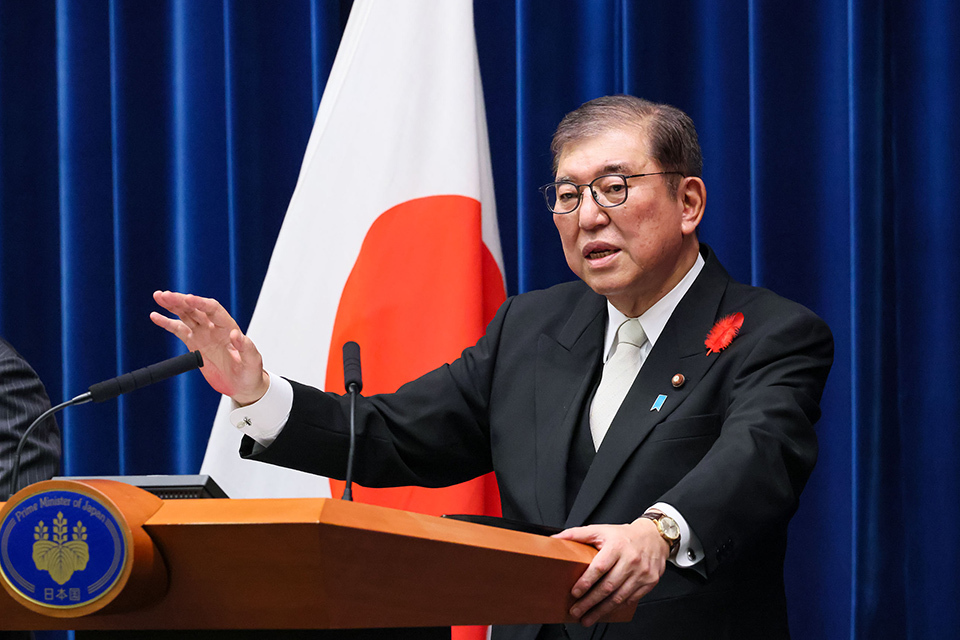
TOKYO: Japan has stated that it will not use its holdings of US Treasury bonds as a bargaining chip in upcoming trade talks with the United States, scheduled for April 17. This follows concerns regarding Japan’s potential role in leveraging its bond holdings to counter the tariffs imposed by the US. Itsunori Onodera, policy chief of Japan’s ruling Liberal Democratic Party, reassured the public during an interview on NHK on Sunday, stating, “As an ally, we would not intentionally take action against US government bonds, and causing market disruption is certainly not a good idea.” Last week, a significant pullback from US Treasuries contributed to a sharp rise in long-term yields, marking the largest increase since the pandemic in 2020. This sparked speculation among investors that global reserve managers, including China, might reconsider their positions in US government debt, influenced by the US’s trade policies under President Donald Trump. The timing of these concerns is critical, as Japan is seeking an exemption from the reciprocal tariffs that went into effect on April 9. At the same time, the US is pushing for concessions on agricultural products and liquefied natural gas (LNG). Japan, historically a close ally of the US, is facing a 24% tariff, with its auto industry – a key sector in its economy – being subject to a 25% tariff. Onodera indicated that Japan would address the issue of US tariffs at the World Trade Organization (WTO) and emphasized Japan’s commitment to strengthening cooperation with regional neighbours, particularly those affected by the high tariffs. Japan plans to enhance its role in the Association of Southeast Asian Nations (ASEAN) to strengthen regional ties.–BLOOMBERG

News

Cahya Mata Sarawak Plans Expansion with Second Clinker Line

KUCHING: Cahya Mata Cement Sdn Bhd, a key subsidiary of Cahya Mata Sarawak Bhd (KL:CMSB), is pushing forward with plans to significantly boost its cement production capabilities in Sarawak. The company has announced its intention to construct Clinker Line 2 in Mambong, pending approval from the Sarawak government. According to CMSB group general counsel Izzam Ibrahim, the project aims to solidify the company’s position as the largest clinker producer in Borneo. “We are in the process of securing regulatory approvals and are closely collaborating with the state government to greenlight the construction commencement,” Ibrahim stated during a press conference held at the CMSB Raya Open House. Clinker Line 2 is slated for completion by March 2027 and is expected to double Cahya Mata Cement’s annual production capacity from 900,000 to 1.92 million tonnes. This expansion is set to cater to Sarawak’s burgeoning infrastructure demands over the next 15 years. The development project will be executed in partnership with Sinoma Industry Engineering (M) Sdn Bhd, following a technical consulting agreement inked in November 2023. The collaboration encompasses the design, construction, and optimization of the clinker line, alongside enhancements to the existing production facility. Key features of the new facility include a waste heat recovery system capable of generating six megawatts of power, advanced dust filtration systems to slash emissions by 50%, and energy-efficient equipment designed to minimize carbon footprint. In parallel with its growth ambitions, CMSB remains resilient amidst ongoing legal proceedings. Ibrahim affirmed that despite these challenges, the company has continued to achieve notable improvements in operational efficiency. “Our management’s steadfast commitment ensures business continuity and sustains stakeholder confidence,” Ibrahim asserted. Furthermore, CMSB is enhancing its commitment to sustainability by embarking on comprehensive Environmental, Social, and Governance (ESG) reporting, aligning with Bursa Malaysia’s mandatory guidelines. “This marks a significant step in our sustainability journey, underlining our dedication to responsible corporate practices,” Ibrahim added. Despite recent legal turbulence, including actions initiated by CMSB’s deputy chairman and director Datuk Seri Mahmud Abu Bekir Taib, Ibrahim emphasized the company’s focus on moving forward responsibly. “We are dedicated to accurate and transparent reporting, reflecting our unwavering commitment amidst external distractions,” he concluded.–BERNAMA

News

Growing Calls for International Airport in Sandakan

KOTA KINABALU: Tourism advocates are pushing for Sandakan to be designated as Sabah’s second international airport, citing its potential to unlock economic opportunities and broaden tourist appeal beyond Kota Kinabalu. Teo Chee Kim, President of the Sandakan Tourism Association, emphasized the strategic importance of developing Sandakan into an international gateway amidst challenges facing Sabah’s current air connectivity. “The recent suspension of seven AirAsia routes from Kota Kinabalu International Airport (KKIA) underscores vulnerabilities in our tourism infrastructure,” Teo remarked in a statement on Friday. “Losing over 70,000 seats is a wake-up call. Relying solely on one international airport is no longer viable.” Teo highlighted the inconvenience faced by travelers who often need to backtrack to KKIA for international flights, leading to increased costs and travel times. “Direct connections from Sandakan to major hubs like Singapore, Hong Kong, or Guangzhou would offer seamless travel experiences across Sabah without the need for detours,” he explained. Improved connectivity, Teo argued, would not only boost tourism but also stimulate trade, business, and rural tourism along Sabah’s east coast. “A second international airport in Sandakan would revolutionize our tourism landscape, reducing costs, minimizing wait times, and positioning Sabah as a highly accessible destination,” Teo asserted. He cautioned that Sabah risks falling behind neighboring regions unless decisive steps are taken to enhance connectivity and attract international tourists. “As our neighbors ramp up their connectivity efforts, Sabah must act swiftly to maintain its competitive edge,” Teo concluded.–THE STAR

News

China’s Trade Minister Warns US Tariffs Could Trigger Humanitarian Crisis

 Chinese Trade Minister Wang Wentao has warned that the United States’ ongoing tariff measures could inflict significant damage on developing nations, potentially triggering a humanitarian crisis. In a video call with Ngozi Okonjo-Iweala, the Director-General of the World Trade Organization (WTO), Wang said that the continued introduction of tariffs by the US poses severe risks to the global economy, particularly affecting the least developed countries (LDCs). He argued that these nations stand to face the worst consequences from such protectionist measures. Wang emphasised China’s determination to take “decisive countermeasures” to protect its legitimate rights and interests, while upholding fairness and justice within the international community. He also reiterated China’s stance against unilateralism and protectionism, calling on WTO members to come together in promoting open cooperation and multilateralism. During a separate call with Brazil’s Minister of Development, Industry, Foreign Trade, and Services, Geraldo Alckmin, Wang discussed strengthening economic and trade ties between China and Brazil in light of the tariffs imposed by the US. Both sides explored ways to mitigate the effects of these tariffs and enhance their collaboration to ensure mutual benefit. China’s concerns over the US tariff policies have grown amidst rising global economic tensions, with the trade war between the two superpowers showing no signs of abating. The US tariffs have affected a wide range of industries and goods, and China’s calls for multilateral cooperation reflect a desire to maintain global economic stability amid escalating trade disputes. As the trade landscape shifts, China is determined to leverage its position and resources to counter the adverse effects of protectionism and strengthen international partnerships.–BLOOMBERG

News

Malaysia, Brazil & AWS Unite to Revolutionise Chip Design

KUALA LUMPUR:  The Malaysia Semiconductor IC Design Park has inked strategic partnerships with Brazilian semiconductor design firm Chipinventor and Amazon Web Services (AWS), marking a new chapter in international collaboration within the semiconductor industry. The partnership, supported by the Brazilian Embassy in Malaysia and Brazil’s Ministry of Science, Technology, and Innovation under the Innovation Diplomacy Programme, aims to strengthen ties between Malaysia and Brazil in the fields of integrated circuit (IC) design and manufacturing. The initiative is set to drive joint investments, facilitate technology transfers, and further position Malaysia as a regional hub for semiconductor innovation. Chipinventor Expands into Asia via Selangor Chipinventor—a spin-off from Brazil’s renowned Wernher von Braun Center for Advanced Research—has chosen the Malaysia Semiconductor IC Design Park in Selangor as its base for Asian expansion. “This decision reflects the confidence global players have in Malaysia’s infrastructure, skilled talent pool, and strategic ASEAN location,” said Selangor Investment, Trade and Mobility Committee chairman, Ng Sze Han, during the Brazil x Malaysia Bilateral Semiconductor Industry Development Programme. He highlighted that Chipinventor’s cloud-based semiconductor design platform, powered by artificial intelligence and hosted on AWS Malaysia’s infrastructure, enables even non-engineers to design chips through an intuitive no-code interface. Local Startups Prove Capability Malaysian tech startup Alphaswift Industries, winner of the 7th Selangor Accelerator Programme (SAP) by the Selangor Information Technology and Digital Economy Corporation (Sidec), successfully designed and prototyped a silicon chip using Chipinventor’s platform. The chip is now ready for fabrication at Silterra, Malaysia’s leading semiconductor foundry—underscoring the potential of homegrown innovation. Developing a Semiconductor-Ready Workforce To cultivate local talent, the Advanced Semiconductor Academy of Malaysia (ASEM) is collaborating with Chipinventor to deliver industry-relevant training. Programmes like the National Semiconductor Excellence Programme (NSEP) and Global Semiconductor Exchange Programme (GSEP) will provide Malaysian students and professionals with hands-on skills in chip design, testing, and verification. The Malaysia Semiconductor IC Design Park said this partnership will not only enhance Malaysia’s digital ecosystem but also promote the adoption of cloud-based chip design platforms globally.

Scroll to Top

Subscribe
FREE Newsletter