News

News

Malaysia Secures Record RM378 Billion in Investments for 2024

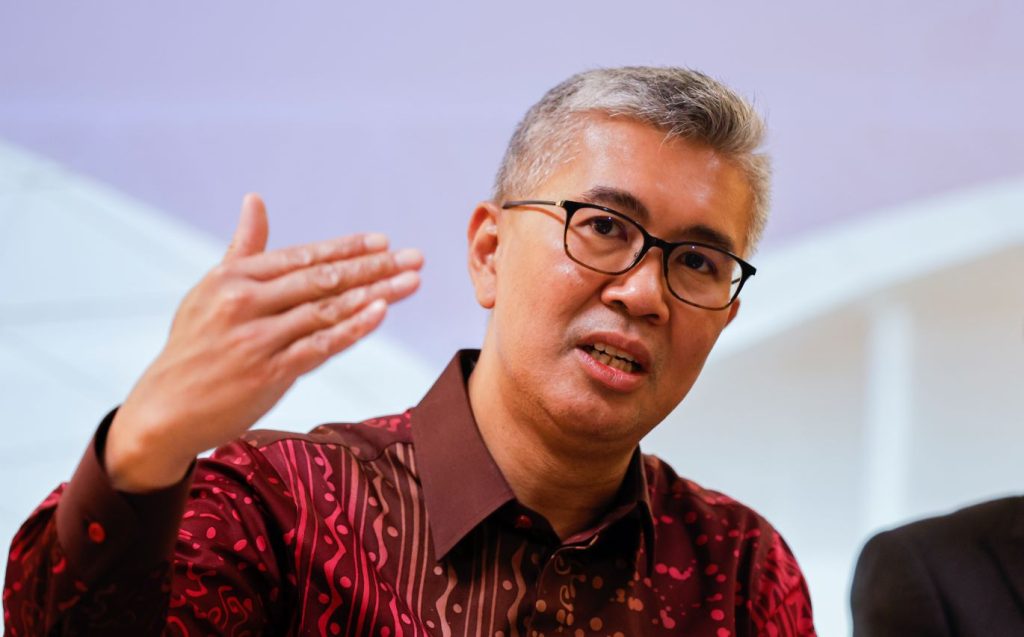
KUALA LUMPUR: Malaysia secured record investments of RM378.5 billion last year, an increase of 14.9% from the approved investments in 2023, investment, trade and industry minister Tengku Zafrul Aziz said. Tengku Zafrul said last year’s investments involved 6,700 projects and led to the creation of 207,241 new jobs. “The services sector contributed RM252.7 billion while the manufacturing and primary sector contributed RM120.5 billion and RM5.3 billion respectively,” he said in his announcement at the Malaysian Investment Development Authority office at KL Sentral. He said domestic investments stood at RM208.1 billion and foreign investments at RM170.4 billion. Tengku Zafrul said the government projected a 5% growth this year from 2024’s performance, with geopolitical uncertainty expected to be the main challenge. However, he said some sectors, notably the electrical and electronic sector, were expected to continue thriving. Tengku Zafrul said Malaysia would be securing investments from countries like Brazil in the aerospace and semiconductor sector, as well as Turkey in the automotive sector. Separately, Tengku Zafrul said he and digital minister Gobind Singh Deo would co-chair the newly established data centre task force. “There are some concerns about the data centres that we need to address and mitigate. We will come back and report the decisions,” he said without going into further detail.

News

SingPost to seek shareholder approval for sale of Australia business

SINGAPORE: Singapore Post will move forward with the sale of its Australia business by holding an extraordinary general meeting on Mar 13 to seek shareholders’ approval for the divestment. The company earlier announced on Dec 2, 2024, that it had entered an agreement to sell Freight Management Holdings (FMH) to Australia-headquartered Pacific Equity Partners (PEP). The proposed sale at an enterprise value of A$1.02 billion (S$867 million) reflects the intrinsic value of the business, SingPost said in a Singapore Exchange filing on Wednesday (Feb 26). It comes amid a strategic review of the national postal operator that started in July 2023. After the proposed sale, SingPost will consist mainly of its Singapore and international business units providing postal and logistics services in Asia-Pacific. “Given the materiality of the sale of the Australian business, the board has stated that the SingPost group will need to reset its strategy after the completion of the proposed disposal,” the company said. The board of directors will consider progressively divesting the group’s non-core assets to pay down debt and create a pool of funds to reinvest, subject to its strategy reset, or to return to shareholders. “In the interim, the group will consider investing in completing the transformation of the Singapore postal and logistics business into a sustainable business by supporting the growth of e-commerce logistics.” SingPost expects to receive about S$659.5 million gross proceeds in cash from the sale. This is about S$274.8 million more than the net asset value of the Australia business, according to the company. The transaction is expected to generate gain on disposal of about S$289.5 million. “The levered return on equity is approximately four times the SingPost Group’s A$93.6 million equity investment in FMH over the last four years,” the company said. SingPost intends to use some of the proceeds to repay borrowings, in particular A$362.1 million in debt undertaken to acquire FMH. The board will also consider a special dividend payment. Board chairman Simon Israel said in a statement that the proposed sale delivers a strong return on the company’s investment in Australia and “crystallises the unrealised value of the business”. FMH is counted among the top five logistics players in Australia by revenue, according to SingPost. The Australia business contributed S$30.4 million to SingPost’s total operating profit of S$51.2 million for the first half of financial year 2024/2025 ending in September. The proposed divestment continues amid SingPost’s recent sacking of three senior executives over their alleged mishandling of a whistleblower’s report related to its international business. The group is also set to lay off 45 employees in a restructuring exercise, although it has said that the lay-offs were “not correlated with any previous incidents or whistleblowing reports”. SingPost’s third-quarter operating profit fell 23.8 per cent year-on-year to reach S$21.1 million, according to financial results posted on Feb 20. The decline was due to “ongoing macroeconomic pressures, including higher inflation, supply chain disruptions and a highly competitive environment”. Year-on-year revenue growth of 12.1 per cent in the third quarter was attributed to growth in SingPost’s Australia business and property leasing outweighing lower contributions from its Singapore and international businesses.–CNA 

News

Indonesia, Apple agree on terms to lift iPhone 16 ban: Report

Indonesia and Apple have agreed on terms to lift the country’s ban on iPhone 16s and could sign a deal as early as this week, Bloomberg News reported on Tuesday (Feb 25), citing people familiar with the matter. Indonesia banned the iPhone 16 in October 2024 after Apple failed to meet requirements that smartphones sold domestically should comprise at least 35 per cent locally-made parts. Since then, Indonesia’s investment minister has said Apple plans to invest US$1 billion in a manufacturing plant that produces components for smartphones and other products. Besides this investment, Apple will commit to training locals in research and development on its products and this will be done through programs other than existing Apple academies, the report said. However, Apple has no immediate plans to start making iPhones in the country, the report said. Apple and Indonesia’s Ministry for Industry, which was tasked with enforcing the ban, did not immediately respond to Reuters’ requests for comment. They did not respond to Bloomberg either.–REUTERS

News

Gulf Oil Appoints Nirvik Singh As Independent Director

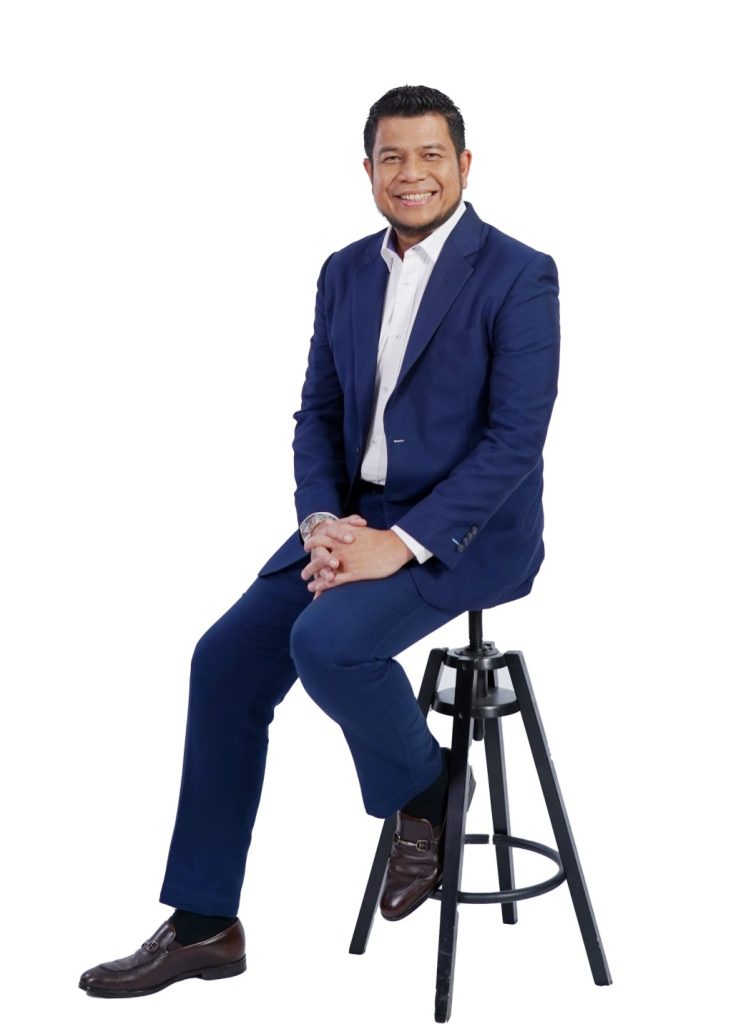
Nirvik Singh has been appointed as an Independent Director on the Board of Gulf Oil for a five-year term, from 6 February 2025 to 5 February 2030. His appointment, announced on 6 February 2025 is subject to shareholder approval. The Board of Directors highlighted Singh’s vast expertise in marketing, corporate governance, risk management and compliance, making him a strategic addition to the company. With over 35 years in advertising and marketing, he has been instrumental in shaping global brands and driving business transformation. Singh previously served as Global Chief Operating Officer and President of International Markets at Grey Group, overseeing business operations across Europe, Latin America, the Middle East, Africa and Asia-Pacific. He also spearheaded multiple acquisitions in China, India, South Korea, the UAE, the UK and South Africa, expanding into ecommerce, data analytics and marketing technology. He began his career at Lipton India, a Unilever company, before moving into advertising. At 33, he became CEO of Grey Group India, leading its expansion across South Asia. His career then took him to Singapore, where he was named Chairman and CEO of Grey Asia-Pacific in 2010 before advancing to a global leadership role in 2019. Gulf Oil’s Board believes Singh’s strategic expertise and independent perspective will be instrumental in guiding the company’s growth and adaptability in a rapidly evolving market.

News

9 EPF subsidiaries suffer losses for 3rd consecutive year

KUALA LUMPUR: Nine EPF subsidiaries have suffered losses for three consecutive years since 2021, with total losses in 2023 amounting to RM224.21 million. The Auditor-General’s Report 1/2025 stated that the nine subsidiaries suffered losses of RM76.51 million in 2022 and RM49.76 million in 2021. Kwasa Europe Sà rl recorded the highest loss of RM158.42 million in 2023, followed by Ameen Direct Equity I, LP (RM25.61 million), Kwasa Europe-I Sà rl (RM14.40 million), Naungan Sentosa Sdn Bhd (RM11.88 million), Kwasa Utama Sdn Bhd (RM8.61 million), YTR Harta Sdn Bhd (RM2.70 million), Kwasa Singapore Duo Pte Ltd (RM1.36 million), PPNK-Harta Sdn Bhd (RM840,000) and Common Icon Sdn Bhd (RM390,000). The report said three of the subsidiaries – Kwasa Europe, Kwasa Europe-I and Naungan Sentosa – suffered losses because of the capital structure of the subsidiaries, which was largely in the form of shareholder loans. “EPF, as the sole shareholder of the companies, gets a return in the form of income interest, which is used to pay dividends to contributors. “Meanwhile, Ameen Direct Equity I is a newly established fund (set up in 2021), with a long-term investment focus and has not yet generated enough income to cover operating expenses,” it  said. According to the A-G’s report, EPF was audited without reprimands, but it recommended that federal agencies strengthen revenue generation efforts to continue operations based on continuous efforts and reduce reliance on government grants. The report also recommended that federal agencies review the direction and business plans of subsidiary companies that have suffered losses for three consecutive years and have not provided proper returns. EPF owns 55 subsidiaries, 34 of which recorded profits in 2023.–BERNAMA

Investment & Market Trends, News

99 Speed Mart’s net profit rises 23% to RM490mil in FY2024

PETALING JAYA:  99 Speed Mart Retail Holdings Bhd’s (99 Holdings) net profit increased by 22.5% to RM490.26 million in the financial year ended Dec 31, 2024 (FY2024), from RM400.22 million in FY2023, in tandem with higher revenue and other operating income. “Revenue expanded by 8.3% to RM9.98 billion against RM9.21 billion previously,” the home-grown minimarket chain retailer said in a filing with Bursa Malaysia today. It said 99 Holdings had opened 252 more outlets in FY2024, bringing the total outlet count as at Dec 31, 2024 to 2,778, representing a 10% year-on-year growth, which positively contributed to the group’s revenue. “Apart from that, the bulk sales e-commerce platform also contributed approximately RM23.1 million in incremental revenue to the group in FY2024,” it added. “The group reported a 12.6% increase in total sales transactions to 465.5 million transactions in FY2024, partly offset by a 3.8% decrease in average basket size to RM21.40, driven by more customers opting for smaller, frequent purchases due to the convenience provided by 99 Holdings,” it said. The minimarket chain operator said other operating income rose 22.4% to RM814.8 million in FY2024, driven by higher distribution centre (DC) fees from suppliers due to an increase in DC fee rates, as well as higher product display fees following outlet expansion. “Other income increased by 43% to RM30.4 million mainly attributed to the interest income earned from the deposits placement using the initial public offering (IPO) proceeds as well as the sale income of recycled packaging waste,” it said. In a separate filing, 99 Holdings founder and CEO Lee Thiam Wah said 2024 has been a milestone year for the group, not only did the company successfully list, but it also exceeded its target by opening 252 outlets, surpassing the goal of 250 new outlets. “Our expansion continues as we enter Sarawak, a new and promising market for the company, with our Miri distribution centre and outlets set to open in March 2025. “Looking ahead, we remain focussed on our strategic goals, including reaching 3,000 outlets by the end of 2025 and further expanding our bulk sales e-commerce platform, which has shown encouraging growth across multiple regions,” he said. He added that with the proceeds from the IPO, 99 Holdings is well poised to accelerate its expansion and meet growing demand.–FMT

Yasunori Ogawa (left), Chairman and Director, Seiko Epson Corporation and Junkichi Yoshida (right), President and Representative Director, Chief Executive Officer, Seiko Epson Corporation.
News

Epson Appoints Junkichi Yoshida as President

SUBANG JAYA: Epson has announced a significant leadership transition with the appointment of Junkichi Yoshida as the new President and Representative Director, Chief Executive Officer, effective April 1, 2025. The decision, approved by Epson’s Board of Directors, marks a strategic move aimed at driving the company’s next phase of growth and innovation. Leadership Changes at Epson Yasunori Ogawa, who previously served as President and Representative Director, Chief Executive Officer, will take on the role of Chairman and Director. Junkichi Yoshida, formerly Director, Executive Officer, and Chief Operating Officer of the Printing Solutions Division, will step into the position of President and Representative Director, Chief Executive Officer. Junkichi Yoshida brings over three decades of experience with Epson, having joined the company in 1988. A graduate of Keio University’s Faculty of Economics, Yoshida has held several key positions, including General Manager of Printer Strategic Planning, Deputy General Administrative Manager of the DX Division, and Chief Operating Officer of the Printing Solutions Division. Most recently, he served as a Director and Executive Officer. Strategic Vision Behind the Leadership Change Epson’s leadership transition aligns with its Epson 25 Renewed corporate vision, which emphasizes sustainability, innovation, and enriching communities. The 2025 fiscal year marks the final stage of this vision and a critical period for formulating Epson’s next strategic roadmap. As the company aims to develop pioneering products and technologies, the new leadership team, headed by Yoshida, will be tasked with executing forward-looking strategies and establishing a strong management foundation. The transition was deliberated by the Director Nomination Committee and approved by the Board of Directors as part of Epson’s commitment to long-term corporate value enhancement. With Yoshida at the helm, Epson is set to continue its focus on innovation in both growth and emerging business areas. The company aims to strengthen its position in the market through sustainable solutions and cutting-edge technology, ensuring long-term success in a rapidly evolving industry. The official leadership transition will take effect on April 1, 2025.  

News

DGK Becomes First Malaysian Law Firm to Expand to China

KUALA LUMPUR: Malaysian law firm David Gurupatham & Koay (DGK) has officially launched its newest office in Jinan, Shandong Province, China with the aim to serve Malaysian companies seeking business opportunities in China, as well as catering to Chinese companies with the interest to invest in Malaysia. Strategically located in the Lixia District of Jinan, the 1,500-sq. ft. office, situated on the 11th floor of the China Life Insurance Building, is now fully operational following its licensing by the Chinese Judicial Department in May 2024. The DGK Jinan opening ceremony, held on 18 February 2025, coincided with the Legal & Cross-Border Business Exchange Forum, drawing industry leaders and legal professionals from both countries. DGK’s founding partner and managing director, Dato’ David Gurupatham, emphasised the enduring trade and cultural ties between Malaysia and China, with bilateral trade reaching USD 190.24 billion. He expressed optimism about future growth in high-tech manufacturing, digital economy initiatives, green development, and tourism. Graced by dignitaries that included Lam Yook Choi, the Minister Counselor of the Embassy of Malaysia in China, Dato Seri Dr. KK Chai, President of the Malaysia Chinese Assembly Hall, Wei Shanshan, Secretary-General and legal representative of Shandong International Chamber of Commerce and Huo Jianping, Chairman of the Partners’ Board of Shandong Bohanyuan Law Firm & Vice President of Shandong International Chamber of Commerce, the historic occasion saw the active participation of legal professionals and industry leaders from Shandong and Kuala Lumpur engaged in cross border dialogue and the exploration of new business opportunities in China and Malaysia. “We would like to express our heartfelt gratitude to the dignitaries present for the opening ceremony, particularly to the Minister Counselor of the Embassy of Malaysia in China, Lam Yook Choi. DGK Jinan is the first Malaysian law firm to be established in mainland China (excluding special economic zones), it represents a major milestone for a home-grown legal firm founded more than 20 years ago. Suffice to say, we are looking forward to serve our clients in China,” added Koay Eng Hooi Senior Partner of DGK. The scope of legal services offered by DGK Jinan include Corporate & Commercial law, Banking & Finance, Construction & Real Estate, Intellectual Property, Dispute Resolution, International Arbitration, Employment Law and Family Law. DGK Jinan is open from 9.00am to 5.00pm, Monday to Friday, its address and contact information are as below: DGK Jinan 11th Floor, South Building China Life Insurance Building No. 11001 Jingshi Road, Lixia District, Jinan City Shandong Province, China Tel: +86-18053135428 E-mail: [email protected]

News

Chery to build smart auto park in Hulu Selangor

SHAH ALAM: Legenda Beringin Holding Sdn Bhd and Chery Corporate Malaysia Sdn Bhd signed an agreement to develop the Chery Smart Auto Industrial Park at Beringin High Tech Auto (Beringin HTA) Valley, Hulu Selangor, yesterday. Selangor Mentri Besar Datuk Seri Amirudin Shari said the industrial park, targeted for completion in 2026, anchors the first phase of development of the 324ha (800 acres) Beringin HTA Valley ecosystem, bringing world-class automotive manufacturing and cutting-edge technologies to Hulu Selangor. He said the Chery Smart Auto Industrial Park will be developed with an investment of RM2.2bil over five years. “The progress we celebrate today is a testament to what can be achieved through strong partnerships and relationships. The investment by Chery Malaysia in Hulu Selangor and the development by Legenda Beringin highlight this. “I commend Invest Selangor initiatives in driving foreign investments, and working with Legenda Beringin and Chery Malaysia to bring the Beringin HTA Valley and Chery Smart Auto Industrial Park to fruition,” he said. Amirudin’s speech was read by state Investment, Trade and Mobility committee chairman Ng Sze Han at Chery Smart Auto Industrial Park’s signing and groundbreaking ceremony at the Setia Alam Convention Centre here yesterday. Legenda Beringin chairman Chia Song Kooi and Chery International president Zhang Guibing were signatories to the agreement, witnessed by Raja Muda Selangor Tengku Amir Shah Sultan Sharafuddin Idris Shah and Chery Automobile Co Ltd chairman Yin Tongyue. Meanwhile, Zhang said the 81ha Chery Smart Auto Industrial Park is projected to have an initial production capacity of 100,000 vehicles per annum, scalable to 300,000 vehicles per annum from internal combustion engine models to the latest plug-in hybrid, battery electric and energy-efficient vehicle technologies. “We are confident that once completed it will create high-value job opportunities, house a cutting-edge research and development centre, expand vehicle exports to neighbouring countries, strengthen Selangor’s role through a robust supply chain, and solidify Malaysia’s position as a leading automotive hub in Asean,” he said. — Bernama

Investment & Market Trends, News

Berkshire Hathaway to boost investments in Japanese trading houses

NEW YORK: Warren Buffett says that his conglomerate Berkshire Hathaway will likely increase its ownership in the five Japanese trading houses it holds. In his annual letter to Berkshire shareholders, the billionaire investor said Itochu, Marubeni, Mitsubishi, Mitsui and Sumitomo agreed to “moderately relax” limits that capped Berkshire’s ownership stakes below 10%. Berkshire’s investments in the companies totalled US$23.5bil at the end of 2024. “Over time, you will likely see Berkshire’s ownership of all five increase somewhat,” Buffett wrote. The 94-year-old Buffett also said he and Berkshire vice-chairman Greg Abel, his designated successor as chief executive, are investing for the “very long term.” “I expect that Greg and his eventual successors will be holding this Japanese position for many decades and that Berkshire will find other ways to work productively with the five companies,” Buffett wrote. “Both of us like their capital deployment, their managements and their attitude in respect to their investors,” Buffett added. Known as “sogo shosha,” Japanese trading houses trade in a wide variety of materials, products and food, often serving as intermediaries, and provide logistical support. They are also deeply involved in the real economy in such areas as commodities, shipping and steel. Berkshire began investing in the trading houses in 2019, drawn by their finances compared to their low stock prices, and revealed 5% ownership stakes on Buffett’s 90th birthday in August 2020. Buffett prefers to avoid businesses he says he does not understand. He told Nikkei in 2023 that the trading houses are “really so much similar to Berkshire,” the Omaha, Nebraska-based conglomerate he has led since 1965. Berkshire spent US$13.8bil on its current holdings and expects US$812mil of dividend income in 2025, Buffett said in the shareholder letter. “This was a good value investment when others may have looked at them as value traps,” said Cathy Seifert, an analyst at CFRA Research who rates Berkshire a “hold.” — Reuters

Scroll to Top

Subscribe
FREE Newsletter