News

News

Thailand Aiming to Have Six New Airports

BANGKOK: Deputy Transport Minister Manaporn Charoensri has again pointed to the need for six new airports if Thailand is to become a regional transport hub. Her comments came on the heels of the 59th Asia and Pacific Directors General of Civil Aviation Conference, held from Oct 14-18 in the Philippines. The conference, which was attended by representatives from 48 countries and international aviation organisations including Thailand’s Department of Airports (DoA), discussed critical areas in civil aviation on the theme “Shaping the Future of Air Transport: Sustainable, Resilient, and Inclusive”. A doubling of global passenger numbers within the next 20 years was projected during the meeting, emphasising the need for significant infrastructure investment, particularly in the Asia-Pacific region. Following the conference, the ministry outlined a vision for the future of air transport, anticipating passenger volume growth, infrastructure development, and travel facilitation. It also encouraged the DoA to consider sustainable and inclusive airport infrastructure investments nationwide, including capacity enhancement projects and the construction of six new airports in Mukdahan, Bueng Kan, Satun, Phayao, Kalasin, and Phatthalung. “The importance of safety by designing secure airports and integrating advanced security equipment to improve screening processes, along with the concept of universal design for facilities cannot be emphasised enough,” Manaporn said. The ministry also prioritised accessibility for people with disabilities, promoting equal travel access. In terms of environmental goals, the DoA was urged to expand on its achievements after winning the 2024 Environmental Impact Assessment Monitoring Awards, aiming for carbon neutrality and achieving Level 5 Airport Carbon Accreditation. — THE NATION/ANN


News

Mah Sing and Bridge Data Centres Form 2nd JV to Expand Southville City DC Hub to 300MW, Operations by 2026

KUALA LUMPUR: Mah Sing Group Berhad (Mah Sing) has signed a second collaboration agreement with Bridge Data Centres (BDC), backed by Bain Capital, to expand the development at Mah Sing DC Hub@Southville City. The site is approximately 36 acres and is poised to offer a 200Mega Watt (MW) of power capacity, further solidifying the hub’s role as a key player in Malaysia’s digital infrastructure. This latest partnership builds on the initial agreement signed in May 2024 and together, these agreements increase the total planned power capacity to 300MW. The entire hub can support a 500MW power capacity, establishing Southville City as a modern data centre hub. The data centre’s first phase is anticipated to be operational by 2026. Joint Venture Agreement and Strategic Progress As part of this collaboration, BDC will provide a forfeitable deposit as both companies work towards finalising the Joint Venture Agreement (JVA). This will include forming a joint venture company, defining share ratios, and executing the Sale and Purchase Agreement (SPA) for the land. Securing Hyperscale and AI Commitments for Future Growth BDC is actively working to secure hyperscale and AI data centre customers with robust financial backing. BDC will lead the design, construction, and infrastructure development to meet the specialised requirements of these high-capacity clients, ensuring that the project is fully aligned with the demands of the digital economy. Strategic Land Valuation and Development The 36 acres land for this 200MW power capacity project has been valued at approximately RM311million. Supporting Malaysia’s Digital and AI Ambitions This agreement is perfectly timed, aligning with Malaysia’s 2025 Budget focus on accelerating digitalisation and AI development. Mah Sing DC Hub@Southville City is set to play a pivotal role in advancing Malaysia’s ambitions to become a leading regional hub for data management and digital infrastructure. Strategically located within 20km of major data centre hubs in Cyberjaya and Bukit Jalil, Southville City offers access to key resources and infrastructure. With Mah Sing’s 30-year track record of swift execution and the availability of power, water, and high-speed connectivity, the hub is positioned to quickly meet market demand Expected Operations and Future Expansion The data centre’s first phase is anticipated to be operational by 2026. Additionally, Mah Sing has 42 acres of land at its Meridin East township in Johor Bahru, capable of supporting 300MW of future power capacity, offering significant opportunities for further growth and value creation. Commitment to Malaysia’s Digital Future Malaysia has successfully secured investment totalling USD16.9billion from global technology giants such as AWS, Microsoft, Google and Oracle and the timing of this collaboration is particularly advantageous, given the growing global demand for data centres driven by the rise of AI and cloud computing. The presence of an established player like BDC within the Mah Sing DC Hub@Southville City is expected to attract more data centre operators or offtakers to the remaining parcels. This influx of industry leaders will further cement the hub’s status as a leading data centre destination in the region. Mah Sing’s Founder and Group Managing Director, Tan Sri Dato’ Sri Leong Hoy Kum expressed confidence in the continued partnership with BDC, stating “This collaboration underscores Mah Sing’s commitment to building cutting-edge digital infrastructure. Our 30-year track record of rapid project execution makes us the ideal partner for data centre players seeking speed to market and scalability. This is just the beginning of many opportunities for Mah Sing to shape Malaysia’s digital future. “We are excited to expand our collaboration with Mah Sing, which significantly boosts BDC’s capacity resources in Malaysia. This partnership reinforces BDC’s commitment to investing in Malaysia’s digital infrastructure as a leading data centre provider in the region, while consistently delivering exceptional service to our clients,” said Eric Fan, CEO of Bridge Data Centres.

News

FedEx Appoints New Vice President for Southeast Asia

SINGAPORE: Federal Express Corporation, one of the world’s largest express transportation companies, has appointed Bianca Wong as the new Regional Vice President for Southeast Asia. Bianca, previously Vice President of Human Resources for Asia Pacific, will now helm the operational strategies in one of the company’s fastest-growing markets. She succeeds Audrey Cheong, who assumed the role of Vice President for FedEx China in September 2024. With over 22 years of extensive experience in human resources and business partnership roles across different industries, Bianca has demonstrated a strong track record of strategic leadership and operational excellence. In her new role, Bianca will lead the overall planning and implementation of corporate strategies and operations to drive business transformation and will manage a team of more than 4,000 team members across markets and territories in the region. “I am honoured to take on this new challenge and to continue transforming FedEx for what’s next by driving our growth and commercial success,” said Bianca Wong, Vice President, Southeast Asia Operations. “Southeast Asia is a vibrant region with immense growth potential. Together with our strong and talented team, we will continue to deliver service excellence to meet the evolving needs of our customers while continuing our mission of connecting people and possibilities in this dynamic business environment.” Bianca’s appointment is a reflection of the company’s commitment to its People-First philosophy by nurturing leadership from within, and ensuring the talent is capable of steering the company through the evolving logistics landscape as FedEx strives to create smarter supply chains for all.

News

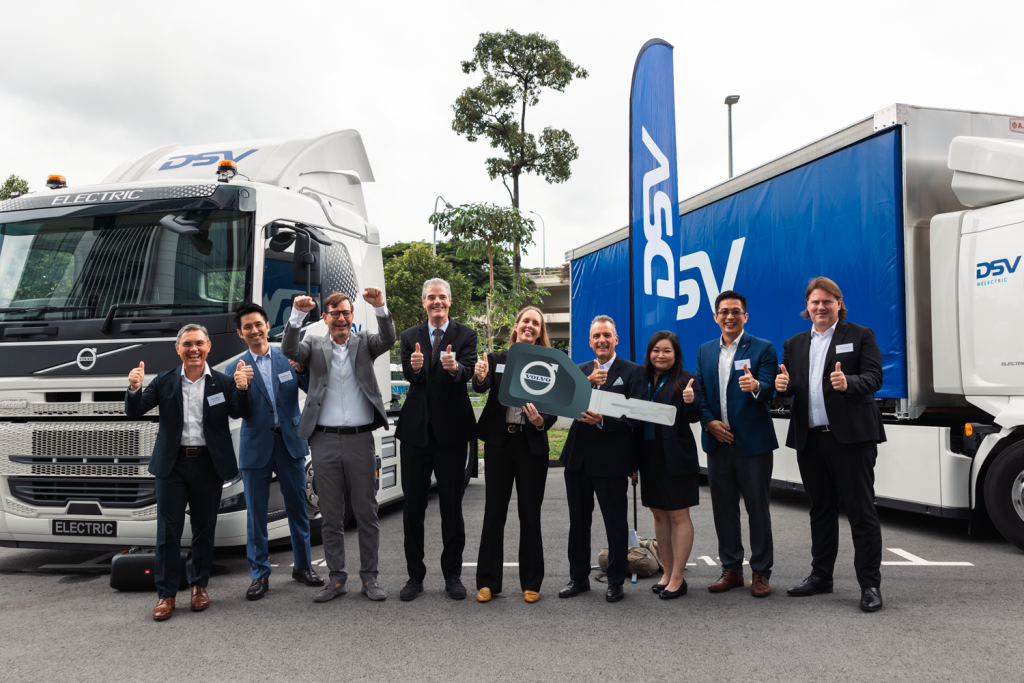
Global Logistics Giant Acquires Volvo Electric Trucks in Singapore

SINGAPORE: Volvo is at the forefront of the movement towards electrifying transportation, mobility, and equipment industries, significantly aiding customers in reducing their carbon emissions. We aim to address our customers’ sustainability challenges from both a customer and societal point of view. Likewise, the Singapore Green Plan 2030 is a comprehensive effort involving the entire nation to push forward Singapore’s goals for sustainable development. Having two key sustainable stakeholders within one country could potentially pave the way for a sustainable future in the near future.   Gino Marzola, Managing Director of DSV Air & Sea Singapore & Malaysia said:   “Launching our new electric fleet marks a pivotal moment for DSV in Singapore. It’s not just about adopting new technology; it’s about leading the way toward a greener, more sustainable future. We are thrilled by the positive feedback from clients and are confident that this initiative will bring us closer to achieving our long-term sustainability goals.”   Innovation in Transportation Volvo Trucks is one of the world’s largest manufacturers and a market leader in electromobility with 4,200 electric trucks operating in 46 countries. DSV, the world’s largest global transport and logistics company, is one of the largest purchasers of electric models from Volvo Trucks and earlier this year signed a huge deal for 300 new models for its European operation. In Singapore, the models are a Volvo FL Electric and a Volvo FM Electric. These two units represent the very latest cutting-edge truck technology, providing efficient, zero-emission transport solutions. The Volvo FL Electric is optimised for urban distribution, with a compact design and nimble turning radius. It’s ideal for navigating Singapore’s tightly packed urban centre, and last-mile deliveries. The Volvo FM Electric is larger, and offers a greater payload capacity and advanced technology for long-haul operations. It’s tailored for longer journeys while still offering the same high-performance, zero-emissions operation.     Both models feature an all-electric drivetrain, enabling quieter operations and reducing noise pollution. They also deliver cost-efficient operation, and maintenance expenses than traditional diesel vehicles. The Volvo FL and FM Electric trucks have been customised to DSV’s local operational needs in Singapore, including modifications for optimal cargo capacity. The FL is equipped with 3 batteries, while the FM boasts 5 batteries, enabling longer-range and versatile performance.   Volvo Trucks is set to expand the electrification of heavy trucks globally with the upcoming launch of a long-range version of its FH Electric truck in 2025. This model will have the ability to travel up to 600 km on a single charge, allowing customers to use electric trucks on longer routes without the need for frequent recharging. The enhanced range is made possible by Volvo’s innovative e-axle technology, which allows for increased battery capacity, along with improvements in battery efficiency, management systems, and overall powertrain performance.   Anna Engblom, Managing Director, Volvo Trucks, Southeast Asia & Japan said: “Long-lasting partnerships and a dedicated determination to truly make an impact are crucial for achieving substantial CO2 reductions in practice. During the past few years, we have experienced change towards a sustainable future across most of our markets. As a manufacturer, we need to be prepared to manage changes that can occur without much warning. We will always be able to sell trucks, but we need to develop business models and make sure that we can adapt our size to match new conditions. We also need to continue to deliver high-quality products and help our customers achieve profitability with their Volvo trucks.”   Support and After-Sales Services To ensure seamless integration of Volvo’s electric trucks into DSV’s operations in Singapore, the company is providing comprehensive support through a 7-year Gold Service Agreement, which covers all service and repairs. Additionally, UD Trucks Singapore provided driver training before the handover, ensuring DSV’s team is well-prepared to operate the vehicles efficiently.   Joseph Heng, General Manager of UD Trucks Singapore, said:   “We are excited to be part of this green transition alongside DSV and Volvo Trucks. Providing comprehensive training and after-sales support to ensure these electric trucks deliver on their promise is at the heart of our commitment to helping Singapore achieve its sustainability goals. With the combination of innovative technology and strong customer support, we are confident that DSV will see excellent operational performance and long-term value from these vehicles.”   DSV’s Alignment with Global and Local Sustainability Goals DSV is committed to driving sustainable practices across its operations, with a global target of achieving net-zero emissions by 2050. DSV’s adoption of the Volvo FL and FM Electric trucks in Singapore is part of a broader strategy to expand its electric vehicle fleet. In Singapore, DSV already operates electric vans, 10ft and 14ft e-trucks for some of their last-mile deliveries. The introduction of these larger electric models signals DSV’s readiness to scale up as demand for sustainable logistics solutions grows.   As part of its bold vision to lead the global logistics industry, DSV recently signed a landmark agreement to acquire DB Schenker, one of the largest and most strategic moves in its history. This acquisition not only enhances DSV’s logistics capabilities but also aligns with its mission to drive sustainable solutions worldwide. While the global focus sharpens, DSV’s Singapore operation continues to push forward with innovative green initiatives, exemplified by its latest electric vehicle partnership with Volvo Trucks. DSV has received encouraging feedback from clients interested in adopting electric vehicles for their operations. While enthusiasm is high, adoption will depend on specific operational requirements, and the company is actively engaging with potential customers to assess how electric trucks can enhance their supply chains.

News

Lower Volatility in Bond Market Draws Interest

PETALING JAYA: The lower volatility in the Malaysian bond market compared to regional bond markets, has set the stage for stronger demand for ringgit bonds in the short term amid rising tensions in the Middle East. Principal Asset Management chief investment officer for Asean fixed income, Jesse Liew, told StarBiz the Malaysian bond market has attracted interests from both institutional and retail investors, owing to its lower volatility compared with counterparts, notably United States treasuries. He said this stability is underpinned by the reduced volatility in ringgit interest rate movements, meaning investors have been less impacted by fluctuations in bond prices. “With capital repatriation from local firms and rising foreign interest in Malaysian risk assets, coupled with developed markets reducing their policy rates at a quicker pace than Malaysia, the local bond market is becoming increasingly attractive,” Liew added. The combination of a lower budget 2025 deficit and strong gross domestic product (GDP) growth, which broadly translates into increased demand for financial assets, is expected to sustain demand for bonds, thus supporting higher bond prices in the future, he noted. As fiscal consolidation continues, Budget 2025 has outlined a lower budget deficit to GDP ratio of 3.8% compared with an estimation of 4.3% in 2024. He said the performance of bond markets is partly influenced by portfolio yields, as well as the monetary policy cycle which can lead to either higher or lower bond prices. “Our short-term outlook for the fourth quarter of 2024 (4Q24) and in 1Q25 for Malaysia’s fundamentals points to robust economic growth, alongside a stable inflation and employment landscape, supported by a broadly balanced monetary policy stance. “With monetary policy expected to remain steady, we anticipate that returns in the Malaysian fixed income market will likely align closely with the yield of a bond benchmark, generally ranging between 4% and 5%,” Liew said. Bond analysts expect the narrowing interest rate differentials between the US fed funds rate and Malaysia’s overnight policy rate (OPR) to be a boon for the ringgit bonds, as foreign funds seek to invest in local bonds due to its attractive yields. Signals are that more US rate cuts would be in the pipeline. The Federal Open Market Committee in September lowered its key overnight borrowing rate by a half a percentage point, or 50 basis points, amid signs that inflation was moderating and the labour market was weakening. The OPR has been maintained at 3% by Bank Negara to date. Meanwhile, RAM Rating Services Bhd cautioned that should tensions in the Middle East remain high and investors retain risk-off sentiments, foreign investor demand for Malaysian bonds may be slightly muted in the near term. The net foreign inflow into the local bond market in September this year moderated to RM1bil from RM9bil the previous month, largely due to a small RM0.7bil outflow of Malaysian government securities (August 2024: net inflow stood at RM6.2 bil). The RM2bil inflow of Malaysian Treasury Bills (MTB) and Malaysian Islamic Treasury Bills (MITB) and RM0.3bil of Government Investment Issues helped keep the overall foreign bond flow in positive territory in September. MTB and MITB are short-term government securities. Commenting on the Asian bond market, Liew said the market in Asia has shown a strong performance recently. With tight credit spreads for investment-grade (IG) bonds, high-yield (HY) bonds are becoming increasingly compelling as spreads are generally still elevated when compared to long-term historical averages. IG bonds are corporate and government debt that bond rating agencies deem are very likely to be paid back with interest. HY bonds are debt securities, also known as junk bonds, that are issued by corporations. They can provide a higher yield than investment-grade bonds, but they are also riskier investments. “The HY bond market, having faced significant challenges in 2021 and 2022, has since stabilised, as evidenced by lower credit spreads. Although HY spreads have begun to revert to their long-term averages, they remain above pre-Covid-19 pandemic levels, offering compelling value. “With the Chinese government adding fiscal support for its economy on top of the easing monetary policy, the HY sector could continue to outperform in the near term, supported by improved fundamentals. “A key challenge for all fixed income markets will be if markets adjust expectations for Federal Researve rate cuts to be lower than anticipated, which could impact valuations. “In this environment, the HY market may present greater opportunities due to its shorter duration compared to IG bonds and its potential through higher yield pickup,” Liew added. As of July 2024, Principal Financial Group’s global assets under management stood at over US$699bil assets under management worldwide. In Malaysia, Principal Asset Management Bhd is a joint venture between Principal Financial Group and CIMB Group Holdings Bhd.–THE STAR

News

DNB appoints Azman Ismail as CEO

KUALA LUMPUR: Digital Nasional Bhd (DNB) has appointed Datuk Azman Ismail as its new CEO, effective Oct 23, 2024. Azman was formerly managing director and CEO of PLUS Malaysia Bhd. Prior to that, he was managing director of Shell Malaysia Trading Sdn Bhd and, concurrently, the general manager of its retail business, overseeing Shell’s petroleum retailing in Malaysia and Brunei. “As Datuk Azman takes on his new role at DNB, the company is confident that his extensive experience and astute leadership will drive DNB’s efforts in its next phase of development as the company continues to advance Malaysia’s 5G adoption across consumers, enterprises and public services, and support the nation’s digital transformation,” said DNB in a statement.

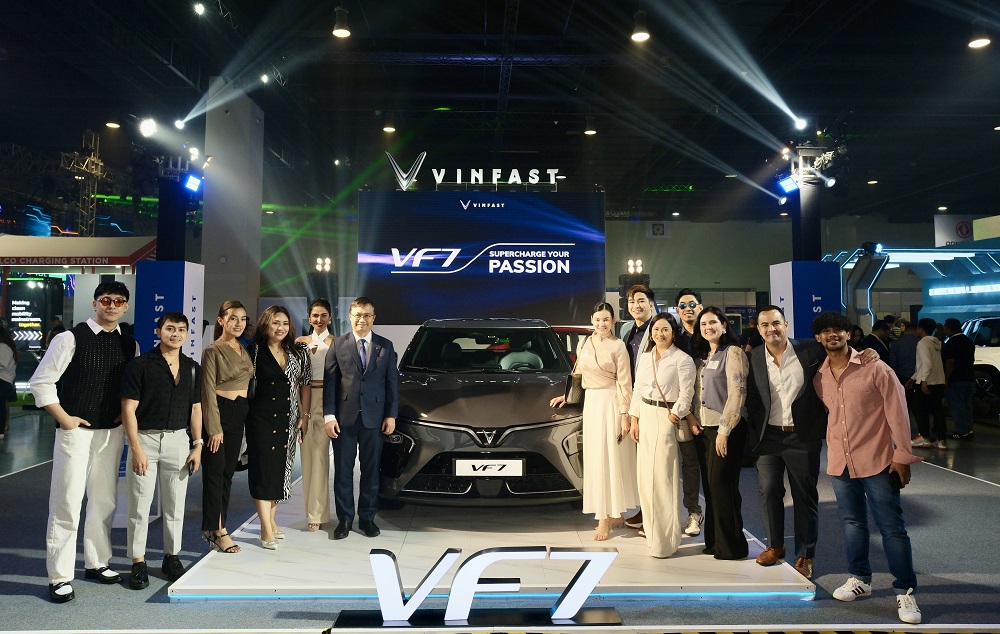
VinFast has announced pricing and opened reservations for its five-seater VF 7 electric SUV during the 12th PEVS.
News

VinFast Officially Launches VF 7 For Sale in the Philippines

MANILA: VinFast has officially announced pricing and opened reservations for its five-seater VF 7 electric SUV during the 12th Philippines Electric Vehicle Summit (PEVS), marking the third VinFast vehicle available in the Philippine market after the VF 5 and VF 3 models. This launch also underscores VinFast’s commitment to advancing green transportation in the Philippines and expanding its diveIn the Philippines, the VF 7 will be available in two versions: Base and Plus, offering a variety of options tailored to meet the needs of different customers. Prices range from 1,470,000 pesos (battery subscription) to 1,760,000 pesos (battery included) for the Base version, and from 1,730,000 pesos (battery subscription) to 2,380,000 pesos (battery included) for the Plus version. The battery subscription plans start at just 6,300 pesos per month, allowing for cost optimization based on travel needs. Monthly Travel Distance Monthly Battery Subscription Fee < 1,500 km 6,300 pesos 1,500–2,500 km 9,000 pesos > 2,500 km 15,000 pesos Starting from October 24, customers can place a deposit of 5,000 pesos per vehicle through VinFast’s official website or authorized dealerships (refundable under VinFast’s terms). Additionally, those who reserve their VF 7 before November 24 will be eligible for discounts of up to 53,000 pesos and receive attractive gifts valued at up to 57,000 pesos. Mr. Cao Ngoc Nguyen Duy, CEO of VinFast Philippines, shared: “The VF 7 is one of the boldest and most innovative models in VinFast’s extensive electric vehicle lineup. Our goal is more than just launching a new vehicle. We are inspiring a way of life centered around sustainability, promoting environmentally conscious and energy-efficient habits. By offering our products, we hope to partner with the Philippines in advancing a shared vision of a sustainable future and playing an active role in the global mission to cut carbon emissions.” The VF 7 Plus is equipped with dual electric motors, delivering a combined power output of 348.6 horsepower and 500 Nm of torque, and features all-wheel drive. The battery pack has a capacity of 75.3 kWh, providing a maximum driving range of approximately 496 km on a full charge (based on NEDC standards). The VF 7 Base features a single electric motor with 174 horsepower and 250 Nm of torque. Its battery capacity is 59.6 kWh, offering a maximum range of 430 km per full charge (based on NEDC standards). Both versions come equipped with essential safety features such as electronic stability control, traction control, hill-start assist, and anti-roll control. The Plus version also includes the Advanced Driver Assistance System (ADAS), which offers features like adaptive cruise control, lane departure warning, forward collision warning, rear cross-traffic alert, blind-spot monitoring, door-opening alert, automatic emergency braking, and a 360-degree camera system. Beyond its impressive performance, the VF 7 features a highly aesthetic design. The car was designed by the renowned Torino Design studio in Italy, embodying four key elements: a unique overall design, distinct recognition details, refined finishes, and functional performance. In addition to a wide array of pricing incentives and unique battery subscription plans, VinFast also offers a comprehensive after-sales service program, providing peace of mind for customers transitioning to green mobility. The VF 7 comes with a 10-year/200,000 km vehicle warranty, an 10-year unlimited mileage battery warranty (for battery purchases), and free maintenance, with battery replacement available if capacity falls below 70% (for battery subscription).rse electric vehicle offerings across Southeast Asia.

News

A Boost for Consumption from Budget 2025

PETALING JAYA: The consumer sector is a clear winner of Budget 2025, which has comprehensive measures strategically positioned to bolster household income and sustain consumer spending, says MIDF Research. The key initiatives include an increase in cash assistance through the Sumbangan Tunai Rahmah (STR) programme, a hike in the minimum wage to RM1,700 starting February 2025 and targeted subsidies for RON95 petrol to ensure price stability for about 85% of Malaysians. “Overall, we remain optimistic for the consumer sector,” MIDF Research said in a report yesterday. Some of the key supporting factors include a stable labour market that continues to drive domestic consumption, sustained growth in consumer spending, buoyed by favourable private consumption and gross domestic product growth, the research house added. In addition to strong domestic consumption bolstered by various incentives introduced in Budget 2025, food and beverage producers are forecast to see improved margins based on declining global commodity prices and a stronger ringgit, the research house added. MIDF Research maintained a positive rating on the sector, with Fraser & Neave Holdings Bhd (F&N) as one of its top buy picks at a target price of RM37 per share. “F&N is well positioned to capitalise on the growing trend of out-of-home consumption, with its strategic entry into integrated dairy farming expected to diversify and enhance its revenue streams,” the research house said. However, it downgraded QL Resources Bhd to a “neutral” from a “buy”, while maintaining the stock’s target price at RM4.83. “The recent rally in its share price indicates that the positives have mostly been priced in,” MIDF Research added. Elaborating on Budget 2025 measures, the research house said a pivotal aspect of the new budget is the notable increase in STR allocations, with funds raised by 30%, to RM13bil. The substantial increase aims to provide critical financial assistance to lower-income households, particularly the B40 demographic, which has been disproportionately affected by rising living costs. The enhanced cash handouts are anticipated to significantly augment household income, effectively mitigating inflationary pressures and encouraging sustained spending on essential goods – items that typically exhibit inelastic demand during economic downturns. MIDF Research said: “Companies like QL Resources and F&N, known for their production of essential consumer products, are well positioned to capitalise on this trend. “Moreover, the spillover effects of increased disposable income are expected to bolster demand for mid-tier retailers. “Mid-tier brands, such as Padini Holdings Bhd, which cater to price-conscious consumers seeking quality goods at affordable prices, will likely witness heightened foot traffic and sales volumes, the research house added. “The cash assistance will play a pivotal role in invigorating both segments of the consumer market, enhancing overall performance. “Also, the increase in the minimum wage will see retailers catering to the mass market stand to gain from the increased financial flexibility that consumers will enjoy for non-essential purchases. “This encompasses a wide range of products, including clothing, home furnishings, and other discretionary items. “The anticipated rise in demand for such non-essential goods, combined with already stable demand for essential items, paints a decidedly positive outlook for the retail sector, particularly within the discretionary segment. “For producers of consumer staples such as Nestle (M) Bhd, Leong Hup International Bhd and QL Resources, the wage hike is anticipated to have minimal impact due to high levels of automation and the relatively low contribution of labour costs to their total operating expenses. “Another key factor is the delay in RON95 subsidy rationalisation, which is expected to lift consumer sentiment. “The postponement of RON95 subsidy rationalisation to mid-2025 is anticipated to alleviate consumer concerns regarding potential fuel price hikes that were initially expected to take effect by late 2024. “Previously, uncertainties surrounding RON95 subsidy cuts, first mentioned in Budget 2024, had led to a slowdown in consumer spending. On the sugar tax increase, MIDF Research said, “The impact on costs for beverage companies due to the rise in the excise duty on sugary drinks remains limited.” “Since the initial levy, beverage manufacturers such as Nestle Malaysia and F&N have undertaken significant product reformulations across most of their ready-to-drink products to ensure compliance with the sugar tax threshold. “This proactive approach has allowed them to mitigate the tax impact and align their products with evolving consumer preferences for healthier options,” said MIDF Research.–THE STAR

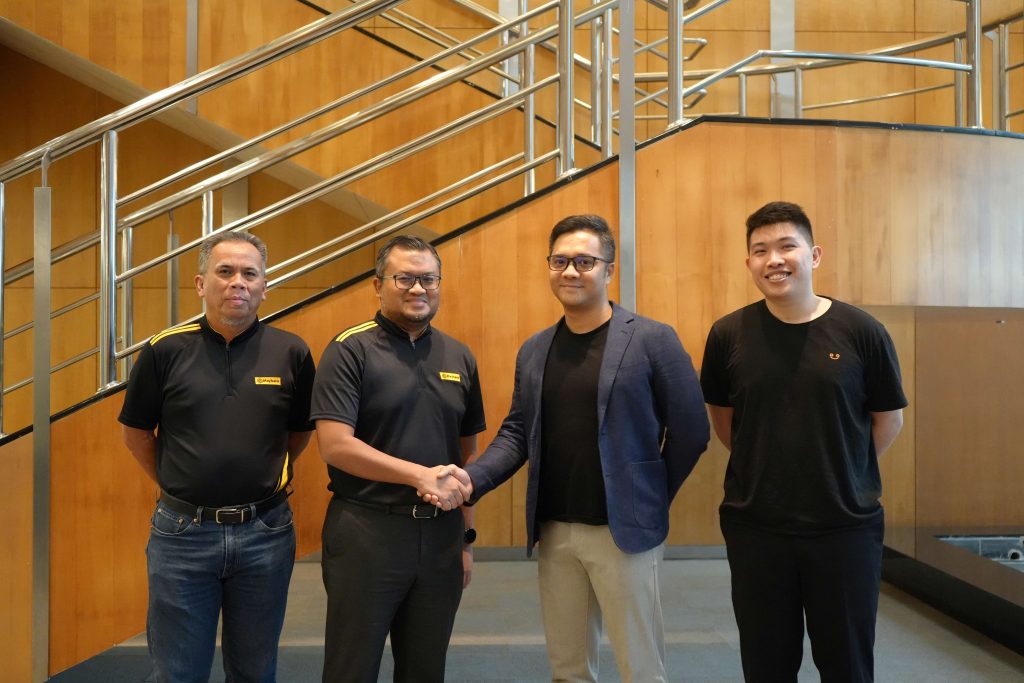
En Adnan Sharif, Head, Halal Ecosystem, Maybank Islamic; 2. Dr. Muhd Ramadhan Fitri Ellias, Strategic Programme Director, Maybank Islamic; 3. Aizat Rahim, Managing Director & Co-founder, Borong; 4. Ervin Chai, Product Marketing Lead, Borong.
News

Borong Joins Forces With Maybank Islamic For Malaysia’s First B2B Halal Marketplace

KUALA LUMPUR: Borong — Malaysia’s leading wholesale business-to-business (B2B) e-commerce and marketplace solution provider — has launched Salaam Market, the country’s first digital retail platform of its kind, in collaboration with Maybank Islamic, marking a significant step forward in positioning Malaysia as a leader in the international Halal industry. Salaam Market is designed to empower local SMEs by integrating Halal certification support and financial services, paving the way for these businesses to navigate the complex Halal market and expand their reach internationally.  This concept offers a seamless digital solution for sourcing Halal-certified products at competitive prices, directly connecting SMEs with suppliers. Fundamentally, the platform helps SMEs in Malaysia, Indonesia, Cambodia, and Singapore to facilitate Halal transactions. With no minimum order requirements and direct access to certified Halal ingredients, the marketplace aims to reduce costs and increase convenience for SMEs.  The global Halal market is set to grow to US$5 trillion by 2030, with domestic growth estimated to reach US$113.2 billion. Yet, SMEs entering the space face challenges like high ingredient costs, complex certification, and limited access to working capital, slowing their growth.  “For us, this initiative represents a significant step in modernising the Halal market,” said Aizat Rahim, managing director and co-founder of Borong. “Not only Salaam Market aligns with the country’s goal to become a global leader in Halal compliance, we also worked hard to ensure it addressed the key challenges for SMEs, which are affordability, financing, and certification, through the support of Maybank Islamic’s financing solutions while also being supported by JAKIM’s Halal certification.”  The partnership with Maybank Islamic will connect Borong’s SME businesses to tailored Islamic financial solutions, alongside in-house Halal facilitation guidance, coupled with digital document management tools, facilitating easier access to Halal markets both locally and internationally. “Salaam Market will connect buyers and sellers in an e-commerce platform to make online transactions seamless. Each product sold on the platform has been verified of its Halal authenticity to give assurance to buyers. This is one of Maybank Islamic’s Halal beyond banking solutions to serve the needs of our customers and we will continue to strengthen our Halal ecosystem propositions to support the national agenda of growing the Halal domestic market to an estimated USD113.2 billion by 2030,”   said Maybank Islamic Strategic Programme Director, Dr. Muhd Ramadhan Fitri Ellias.

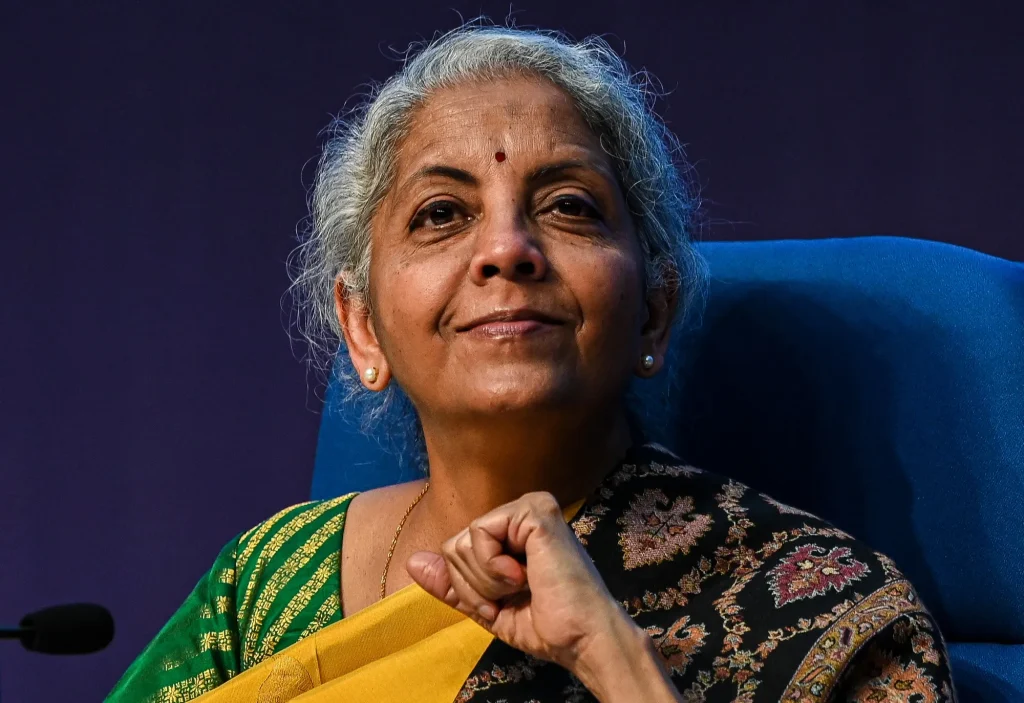
India finance minister Nirmala Sitharaman
News

India to Retain Restrictions on Border Nations

NEW DELHI: India will retain curbs on investment from nations with which it shares a land border, the Finance Minister says days after the South Asian country struck a pact with China on patrolling their disputed Himalayan frontier. The deal paves the way to end a four-year military stand-off and improve political and business ties between the Asian giants strained since a deadly border clash in 2020 that slowed exchanges of capital, technology and talent. “I cannot blindly receive foreign direct investment because I want money for investment, forgetful or unmindful of where it is coming from,” told a gathering at the Wharton business school in the United States on Tuesday. The dispute led to stagnation in ties between the world’s two most populous countries at a time of exploding demand for electric vehicles, semiconductors and artificial intelligence, key growth areas offering opportunities for greater co-operation. In 2020, India stepped up vetting and security clearances in its scrutiny of investments from companies based in neighbouring countries, but did not specifically mention any nations. — REUTERS

Scroll to Top

Subscribe
FREE Newsletter