News

News

Japan exports fall most since 2021 amid slowdown

TOKYO: Japan’s exports last month declined by the most since February 2021, sapping momentum from the nation’s economic recovery as global demand weakened. Exports declined 1.7 percent from a year earlier led by automobiles, mineral fuels and construction machinery, and slipping to negative growth for the first time since November last year, the Japanese Ministry of Finance reported yesterday. The reading missed economists’ forecast of a 0.9 percent gain. Imports rose 2.1 percent, led by electronic calculators and semiconductor parts, and slightly missed the consensus estimate of a 2.8 percent gain, while the trade deficit narrowed to ¥294.3 billion (US$1.97 billion). The results indicate that Japan’s economy likely received limited support from external demand in the third quarter amid a global slowdown. “It’s a weak result,” Mizuho Research & Technologies Ltd senior economist Yayoi Sakanaka said, adding that net exports would likely be a drag on the third quarter. “Looking ahead, though the yen is slightly weaker again, I don’t think it will be a tailwind for exporters” given that other stronger factors are at play, such as China’s strengthening of its own exports which would likely muscle out Japanese shipments, Sakanaka said. The weaker exports reflect sluggish global growth amid growing uncertainty about the outlook in major economies. Shipments to China sank 7.3 percent last month, reversing gains of 5.2 percent the month before, while those to the US and Europe fell 2.4 percent and 9 percent respectively, the ministry’s data showed. The central bank is closely monitoring global trends, Bank of Japan (BOJ) Deputy Governor Ryozo Himino said last week. “While a weak overseas economy is one hurdle for the BOJ to raise interest rates, I believe the bank is more focused on domestic prices and exchange rate levels,” Sakanaka said. Japan’s currency remains another source of uncertainty, with the yen approaching the ¥150 level to the US dollar.–BLOOMBERG

[from left to right]: Datin Azalina Adham, Managing Director of the Securities Commission Malaysia (SC) Dato’ Mohammad Faiz Azmi, Chairman of the SC Dato’ Amirul Feisal Wan Zahir, Managing Director of Khazanah Nasional Berhad Bryan Lim, Executive Director, Investments of Khazanah Nasional Berhad
Investment & Market Trends, News

SC and Khazanah Sign MoU to Catalyse MTC Access to the Capital Market

KUALA LUMPUR: The Securities Commission Malaysia (SC) signed a Memorandum of Understanding (MoU) with Khazanah Nasional Berhad (Khazanah) through the Dana Impak Fund to enhance funding access for Malaysian mid-tier companies (MTCs) and promote their participation in capital markets, further driving their growth and expansion. This collaboration aligns with the SC’s Catalysing MSME and MTC Access to the Capital Market: 5-Year Roadmap (2024-2028) (“MSME and MTC Roadmap”). Strategic Partnership for Inclusive Growth SC Chairman Dato’ Mohammad Faiz Azmi praised Khazanah’s commitment, saying: “We appreciate Khazanah’s support of the MSME and MTC Roadmap and our goal of fostering a more inclusive and holistic capital market fundraising ecosystem.” He further emphasized that MTCs, despite being essential contributors to the economy, often struggle to access growth financing. “MTCs are significant domestic employers and economic contributors, but they face challenges as the ‘missing middle’ in accessing financing. This MoU aims to address these issues to ensure sustainable growth and resilience,” he added. MTCs: Key Economic Drivers Though MTCs constitute less than 2% of firms in Malaysia, they contribute 36% of the country’s GDP and 16% of employment, underscoring their economic importance and potential for capital market involvement. Empowering Companies Through Dana Impak Khazanah’s Managing Director, Dato’ Amirul Feisal Wan Zahir, reiterated Khazanah’s commitment to supporting Malaysian companies and MTCs: “Through Dana Impak, a key pillar under our Advancing Malaysia strategy, we have earmarked RM500 million to fund high-potential MTCs via private markets—whether through private equity or private credit funds—ensuring improved access to capital.” He highlighted the importance of developing future-ready industries and fostering innovation. “One of the key pillars in Khazanah’s ‘A Nation that Creates’ framework is transforming firms of all sizes to generate greater value creation while improving national productivity and global competitiveness. Our collaboration with the SC will position MTCs to contribute substantially to Malaysia’s economy,” he added. Key Focus Areas and Initiatives The MoU will focus on several strategic initiatives to propel MTC growth: Fundraising incubation for 60–100 MTCs to enhance their readiness for capital markets. Specialised capacity-building programmes to increase competitiveness and innovation. MTC-focused investments to stimulate growth and economic impact. Khazanah, in collaboration with the SC, will also implement capacity-building programmes to unlock new business, innovation, and funding opportunities, including market-based financing solutions. Building Capital Market-Ready MTCs A core objective is to create a pipeline of capital market-ready MTCs. This includes upskilling selected companies on fundraising requirements through the SC affiliate Capital Markets Malaysia’s Elevate programme, along with initiatives to strengthen growth and innovation capabilities. These efforts align with the ambitions of the MSME and MTC Roadmap and the GEAR-uP programme, fostering long-term growth, innovation, and economic resilience.

News

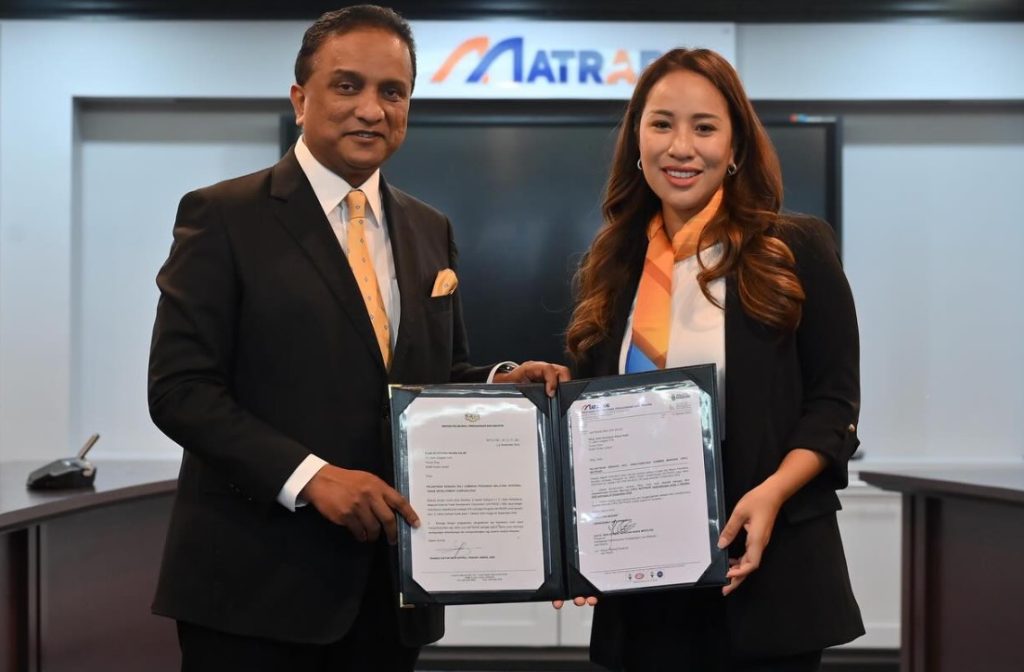
Matrade appoints Najib’s daughter Nooryana Najwa as director

KUALA LUMPUR: The Malaysia External Trade Development Corporation (Matrade) has appointed Nooryana Najwa Najib, daughter of former prime minister Datuk Seri Najib Razak, as its new member of the board of directors (BOD). Alongside Nooryana, the national trade promotion agency, which falls under the Ministry of Investment, Trade, and Industry (Miti), also appointed Miti secretary general Datuk Hairil Yahri Yaacob and Ministry of Finance fiscal and economics division undersecretary Dr Mastura Abdul Karim as new members of the board, according to its chairman Datuk Seri Reezal Merican Naina Merican. “Before the meeting began, I handed over the letter of appointment [to] the new member of Matrade’s BOD, Nooryana Najwa Najib; and witnessed her taking the oath [to be] corruption-free, along with two other BOD members, Datuk Hairil Yahri Yaacob and Dr Mastura Abdul Karim,” he said in a Facebook post, after chairing the board’s meeting on Tuesday (Oct 15). “Congratulations to Nooryana Najwa for being appointed as a member of the BOD of Matrade,” Reezal added. At press time, Matrade has not responded to The Edge’s enquiry over the appointment. Nooryana, 36, is an executive committee member of Umno’s women’s youth wing, Umno Puteri. In 2020, the then government, via the Inland Revenue Board (IRB), sued Nooryana for alleged failure to submit her individual income tax return forms to the tax agency for the years of assessment 2011 to 2017. The IRB contended that Nooryana had not paid the amount of income tax owed, including increases, totalling RM10.3 million. The High Court dismissed the government’s application for a summary judgement to be entered against Nooryana. The IRB had later in 2022, withdrew its appeal at the Court of Appeal against the dismissal of the application for the summary judgement. Meanwhile, Reezal, a former minister during the Perikatan Nasional administration under former prime minister Tan Sri Muhyiddin Yassin, and the Barisan Nasional administration under former prime minister Datuk Seri Ismail Sabri Yaakob, is an Umno Supreme Council member. He was appointed as Matrade chairman in May 2023. He lost his Kepala Batas parliamentary seat during the 2022 Malaysian general election, after representing the constituency for two terms prior. –THE EDGE

News

Unlocking Southeast Asia: Traveloka’s B2B Platform to be Showcased at ITB Asia

KUALA LUMPUR: Traveloka, Southeast Asia’s leading travel platform, will showcase its business-to-business (B2B) platform at ITB Asia from October 23 to 25 at Marina Bay Sands Convention Centre, Singapore. During the event, global travel partners will have the opportunity to explore how the Traveloka Partners Network can serve as their gateway to Southeast Asia’s vast travel market, providing access to a wide range of airlines, accommodations, and travel activities. The Traveloka Partners Network is designed specifically to support B2B partnerships and meet the diverse needs of the travel ecosystem. The platform offers flexible Application Programming Interfaces (APIs), advanced technical tools, and a powerful search engine, ensuring seamless access to a comprehensive range of travel services. Leveraging Traveloka’s trusted experience in the region, the platform unlocks the immense potential of Southeast Asia’s travel market for its partners.   “Collaboration is the cornerstone of the Traveloka Partners Network,” said Caesar Indra, President, Traveloka. “By understanding our partners’ unique needs, we provide solutions that drive mutual success. Our commitment to advanced technology, comprehensive booking management tools, and dedicated customer support ensures that our partners and their customers benefit from a seamless, integrated travel experience.”   The Traveloka Partners Network offers robust, customizable solutions that empower businesses to integrate Traveloka’s services, such as flight bookings and hotel reservations, directly into their platforms. The B2B API is fast, reliable, and easy to implement, giving travel agencies and businesses access to Southeast Asia’s growing tourism market. Additionally, the Redirection and MiniApp Service allow partners to embed Traveloka booking features via a simple link, minimizing development costs while ensuring a smooth user experience. These solutions enable Traveloka’s partners to expand their reach and enhance their offerings effortlessly.   PKFARE (a DerbySoft Company), an innovative global travel product aggregator and a valued partner of the Traveloka Partners Network, has experienced remarkable success, achieving triple-digit growth since the resumption of travel post-pandemic. By leveraging Traveloka’s extensive reach and competitive direct contract inventory, PKFARE has expanded its customer base and optimized its operational efficiency, marking a pivotal milestone in its growth journey. This partnership exemplifies how collaboration with the Traveloka Partners Network can drive tangible results and foster sustained business growth.   Founded in 2012, Traveloka has grown rapidly to serve millions of customers across Indonesia, Thailand, Singapore, Vietnam, Malaysia, the Philippines, and Australia. With over 20 product lines and over 40 payment methods available, Traveloka has become the region’s leading travel platform, achieving nearly 50 million monthly active users (MAU) and nearly 140 million app downloads across Southeast Asia.

Investment & Market Trends, News

Malaysia Hosts 27th BIMP-EAGA Ministerial Meeting: A Focus on Regional Cooperation and Economic Growth

KOTA KINABALU: Malaysia played host to the 27th Brunei-Indonesia-Malaysia-Philippines East ASEAN Growth Area (BIMP-EAGA) Ministerial Meeting, a significant gathering aimed at enhancing regional cooperation and driving economic growth among the member countries. The meeting, chaired by Rafizi Ramli, Malaysia’s Minister of Economy, brought together high-ranking officials from Brunei, Indonesia, and the Philippines, along with representatives from the ASEAN Secretariat and the Asian Development Bank (ADB). Strengthening Local Governance The ministerial meeting coincided with the 6th BIMP-EAGA Chief Ministers, Governors, and Local Governments Forum, chaired by Dr. Joachim Gunsalam, the Deputy Chief Minister of Sabah. This forum aimed to bolster cooperation at the local government level, facilitating discussions among representatives from various states and provinces. During the ministerial meeting, delegates reviewed critical reports from BIMP-EAGA Senior Officials. Discussions centered on essential economic indicators, the progress of projects under the BIMP-EAGA Vision 2025, and the status of collaboration with development partners. Notably, the ADB presented an update on the review of BIMP-EAGA economic corridors and highlighted ongoing technical assistance to enhance subregional cooperation. Legalization of the BIMP Facilitation Centre A significant agenda item was Malaysia’s proposal to resolve the longstanding issue of legalizing the BIMP Facilitation Centre (BIMP-FC), which has been under discussion since 2008. The proposal includes: Increasing staffing levels and allocating operational funding for three years. Establishing a joint funding arrangement among member countries, contingent upon the BIMP-FC office remaining in Kota Kinabalu, Sabah. This initiative aims to strengthen the operational capacity of the BIMP-FC, enhancing its ability to facilitate cooperation and development across the region. Joint Statement and Future Outlook The meeting concluded with a commitment to advancing collaboration in various sectors, with a full Joint Statement detailing the outcomes and initiatives discussed. This gathering reflects Malaysia’s leadership in fostering regional integration and highlights the collective effort of BIMP-EAGA member countries to drive economic growth, enhance connectivity, and promote sustainable development. As BIMP-EAGA prepares for its future, the focus remains on leveraging existing partnerships and exploring new opportunities to foster innovation and economic resilience within the region.

Investment & Market Trends, News

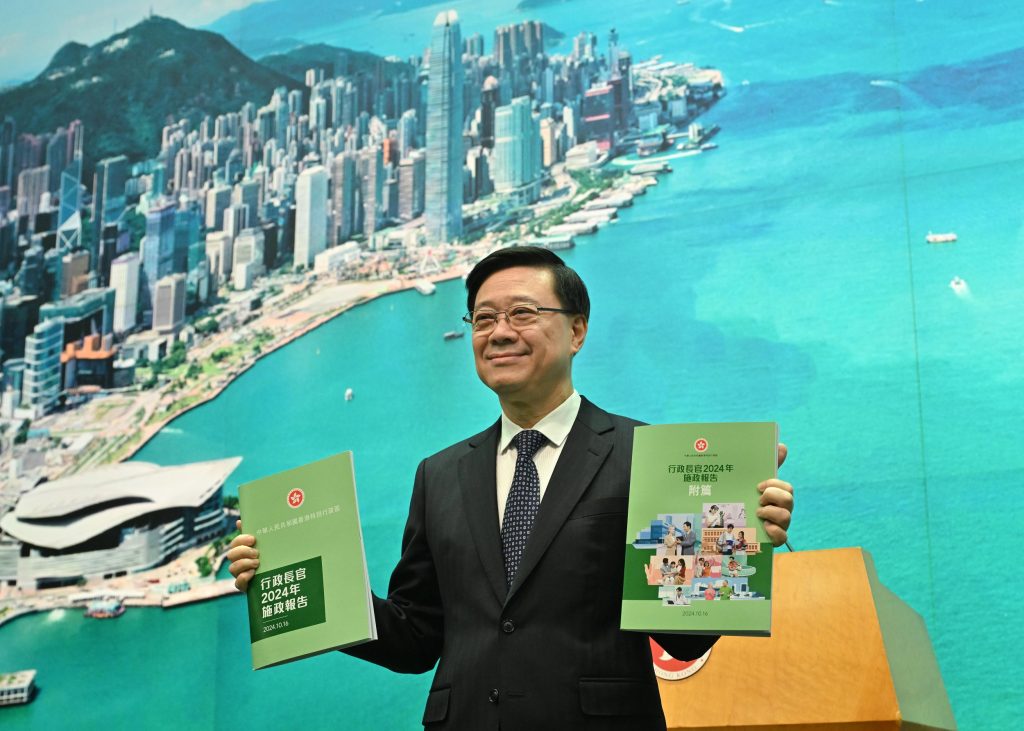
Policy Address by Hong Kong SAR’s Chief Executive John Lee: Reform for Enhancing Development and Building Our Future Together

HONG KONG: Chief Executive John Lee presented his third Policy Address, themed “Reform for Enhancing Development and Building Our Future Together.” The address outlines initiatives focused on economic development, improving livelihoods, and enhancing residents’ quality of life. Building Economic Synergy Across Finance, Shipping, and Trade Hong Kong aims to consolidate its position as a global financial, shipping, and trade hub through strategic reforms. Key measures include enhancing the offshore Renminbi business hub, developing an international gold trading market with state-of-the-art storage facilities, and expanding asset and securities markets. On the shipping front, the Hong Kong Maritime and Port Board will be restructured to strengthen research, increase international outreach, and promote sustainable development. Tax incentives and accredited warehouses will facilitate international commodity trade, with a focus on non-ferrous metals. The Government will also establish a high-value-added supply chain service centre and leverage new opportunities under the CEPA agreement to attract mainland and overseas enterprises. Liquor import duties will be reduced to boost trade and foster high-value industries. Accelerating Innovation and Technology (I&T) Growth To transform Hong Kong into a global I&T hub, the Government will launch a $10 billion Industry-Oriented Fund, targeting emerging sectors such as life sciences and artificial intelligence. An I&T Accelerator Pilot Scheme will support the growth of startups through professional services and strategic partnerships. Further initiatives include developing a low-altitude economy, promoting green energy solutions, and enhancing the approval processes for medical devices. Hong Kong will partner with Shenzhen to establish the GBA Clinical Trial Collaboration Platform, advancing the city as an international health innovation hub. Attracting Global Talent through Education and Technology Integration To strengthen Hong Kong’s talent pipeline, a new Committee on Education, Technology and Talents will oversee integrated development in these areas. The Government aims to brand Hong Kong as an education hub, attract international students, and create a Northern Metropolis University Town to foster talent development. Promoting Tourism, Sports, and Cultural Integration The Government will enhance the West Kowloon Cultural District as a creative industry hub and develop the Kai Tak Sports Park as a sports landmark. The upcoming Development Blueprint for Hong Kong’s Tourism Industry 2.0 will focus on culture, ecology, and mega-events to reinvigorate tourism. A dedicated working group will coordinate the development of tourist hotspots across districts. Supporting SMEs and Developing the Silver Economy To assist SMEs, the Government will relaunch the principal moratorium to improve cash flow management and inject $1 billion into the BUD Fund for business upgrades. A new Incentive Scheme for Recurrent Exhibitions 2.0 will support tourism and service industries. Additionally, a working group will explore opportunities in the silver economy, focusing on elderly consumption and industry productivity. Driving Northern Metropolis Growth and GBA Collaboration A pilot industrial park will be established in the Northern Metropolis to drive economic development. Collaboration with Shenzhen will continue through the Hong Kong-Shenzhen I&T Park, aligning efforts to develop the Hetao Cooperation Zone into a leading innovation center. Enhancing Livelihoods and Healthcare The Policy Address introduces new housing regulations to tackle the issue of subdivided units and expands the public healthcare system, including plans for a third medical school. The Government will provide targeted poverty alleviation and increase support for community care services. In his closing remarks, John Lee emphasized the importance of reform, stating: “This Policy Address deepens our efforts to strengthen the economy and improve the lives of our people. United by innovation and ambition, Hong Kong will continue to thrive.” A detailed supplement covering all policy measures is available at www.policyaddress.gov.hk.

News

Genting Malaysia to defend against lawsuit

PETALING JAYA: The lawsuit filed against Genting Malaysia Bhd by its joint-venture partner in the Bahamas may affect the former’s bid for a casino licence in New York. In addition to the lawsuit, which was filed by RAV Bahamas Ltd against Genting Americas Inc (GAI), CGS International (CGSI) Research also raised concerns about the Nevada gaming regulator’s complaints against Resorts World Las Vegas. Resorts World Las Vegas is run by Genting Malaysia’s parent company Genting Bhd. Both complaints, however, would not affect Genting Malaysia’s valuation as determined by CGSI Research. “This is because we have not factored in any potential upside from its New York casino bid. We only include Genting Malaysia’s land at book value in our sum-of-parts valuation,” stated CGSI Research. On Oct 14, Genting Malaysia announced that its indirect wholly-owned subsidiary GAI has been named in a complaint filed by RAV on Oct 7 before the US District Court Southern District of Florida, which involved the operations of Resorts World Bimini (RW Bimini) in the Bahamas. RAV sought damages in excess of US$600mil, following its allegations that the Genting group has dumped nearly a billion dollars of debt on RW Bimini. RW Bimini is owned and operated by BB Entertainment Ltd (BBE), in which Genting Malaysia indirectly holds 78% interest while RAV holds the remaining 22% interest. GAI is an affiliate company of BBE. Genting Malaysia said the complaint was baseless and without merit, and that it would vigorously defend against the complaint. “While we do not wish to speculate on the outcome of this case, in the worst case scenario where GAI is found guilty, the US$600mil claim would be equivalent to 46 sen per Genting Malaysia share, based on Genting Malaysia’s share base of 5.67 billion shares,” said CGSI Research. Despite the latest development, the research house has retained its “add” call. “We see a robust three-year earnings per share compound annual growth rate of 42% in the financial years of 2023 to 2026, supported by the recovery in tourism and growth in Resorts World Genting’s revenue.“Genting Malaysia currently trades at a 12.7 times price-to-earnings (PE) ratio for 2025, two standard deviations below its historical pre-Covid-19 mean PE of 18 times,” it added.–THE STAR

News

S.E. Asia emerges as global data centre hot spot

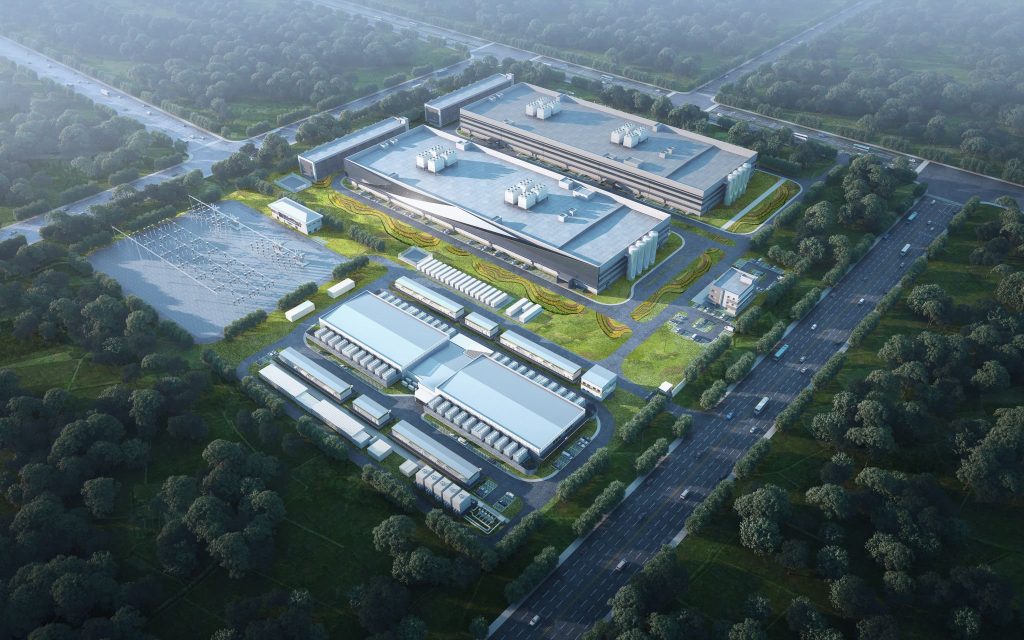
SINGAPORE: The world’s largest technology firms are flocking to South-East Asia to build data centres at a time when demand for infrastructure and computing power to enable artificial intelligence (AI) is rapidly rising. The new investments are expected to contribute to the region’s economies by creating skilled jobs in data centre construction, engineering and maintenance, while also developing specialised talent in AI, cyber security, and data science and management. The investments will also improve the region’s digital infrastructure, allowing small businesses and large institutions to store their data locally, significantly reducing downtime while increasing data sovereignty. With AI-supported innovations such as searches on ChatGPT now requiring at least four to five times more processing capacity compared with traditional Internet searches, data centre demand is expected to grow at around 20% a year for the next five to seven years, analysts at Maybank Singapore Ltd noted in an October report. Data centres are large facilities built to accommodate servers, data storage systems and networking equipment that support better Internet services and telecommunications. This, in turn, enables popular online activities such as gaming, live-streaming and investing, as well as more advanced technologies like cloud computing and AI. Thanks to its lower costs, power availability and geopolitical neutrality, South-East Asia is emerging as an ideal region for tech operators to establish a data centre base, with the top five countries being Singapore, Malaysia, Thailand, Indonesia and Vietnam. While Singapore is the preferred destination for hosting data centres due to its superior infrastructure and stable regulatory regime, the republic imposed a three-year halt on data centre construction between 2019 and 2022 to assess its impact on the environment. Malaysia seized the bulk of new data centre investments entering the region during that period and now expects facilities with around one gigawatt (GW) of power capacity to come online over the next two years. That is double the existing data centre capacity it currently has. Another 3GW has also been announced and, if approved, will be gradually rolled out in the next three to five years, RHB Bank said. In comparison, Singapore’s data centre capacity currently stands at around 1.4GW. Among those channelling capital into Malaysia are tech titans like Microsoft, which said in May that it will invest US$2.2bil over the next four years to build cloud and AI infrastructure in the country. Amazon Web Services (AWS) in August announced plans to invest an estimated US$6.2bil to set up a data centre and cloud region in Malaysia. The cloud-service provider is also developing a similar region in Thailand. It revealed plans in 2024 to invest US$5bil in data centres in the country over the next few years, making Thailand its fourth AWS region in Asean after Singapore, Indonesia and Malaysia. In September, Google said it would invest US$1bil to build a data centre and cloud region in Thailand, which has so far seen around US$9bil committed by operators, according to analysts at Morgan Stanley. By 2028, RHB Bank expects Malaysia to account for over half the data centre processing power across the top five South-East Asian markets, with data centres in Johor making up the bulk of inventories at over 2.3GW. That could put the Malaysian state in close competition with Singapore as a data centre hub for the region. After partially lifting its moratorium in 2022, Singapore awarded around 80MW of new capacity to Equinix, GDS, Microsoft and an AirTrunk-ByteDance consortium in July 2023. In May, the government announced that at least 300MW of data centre capacity may soon be provided. Still, the republic has signalled that it will be more selective when awarding new capacity moving forward. Speaking at a conference in May, then Senior Minister of State for Communications and Information Janil Puthucheary said data centres are collectively Singapore’s biggest indirect carbon emitter. He added that existing data centres currently contribute to 82% of the information and communications sector’s carbon emissions and 7% of the country’s total electricity consumption. However, Janil said Singapore may still award an additional 200MW of capacity to operators that can tap green sources of energy to run the facilities and will provide schemes and incentives to support such investments. Dedi Iskandar, head of data centre solutions at property investment adviser CBRE, asked that the authorities provide more clarity on this front. “The industry does not have a clear picture of what’s next after the additional capacity was announced in May, or when we can bid or how. We haven’t seen this information coming, and that has created uncertainty,” he said. “When data centre operators have no line of sight, they cannot make plans to invest in Singapore.” Dedi said that while Singapore is still the preferred destination for hosting mission-critical computing applications, Johor, which still struggles with issues like talent and water shortages, is improving quickly. The highest risk for Singapore arises when the price gap for building and operating a data centre compared with Johor becomes too significant, and when the quality of data centre services between the two markets narrows, he said. CBRE data showed the average construction cost for a data centre in Singapore now stands at around US$11.40 per watt, the highest among nine cities in Asia, while in Johor, the average cost is around US$8.40 per watt. Energy and land costs in Johor are also among the lowest in the region. “This will naturally spur more enterprises to move their data centre operations from Singapore to Johor,” Dedi said. When asked for updates and views, the Economic Development Board and Infocomm Media Development Authority declined to comment. — The Straits Times/ANN


News

Malaysia’s ESG Reporting Gets a Boost with New SC-World Bank Assessment

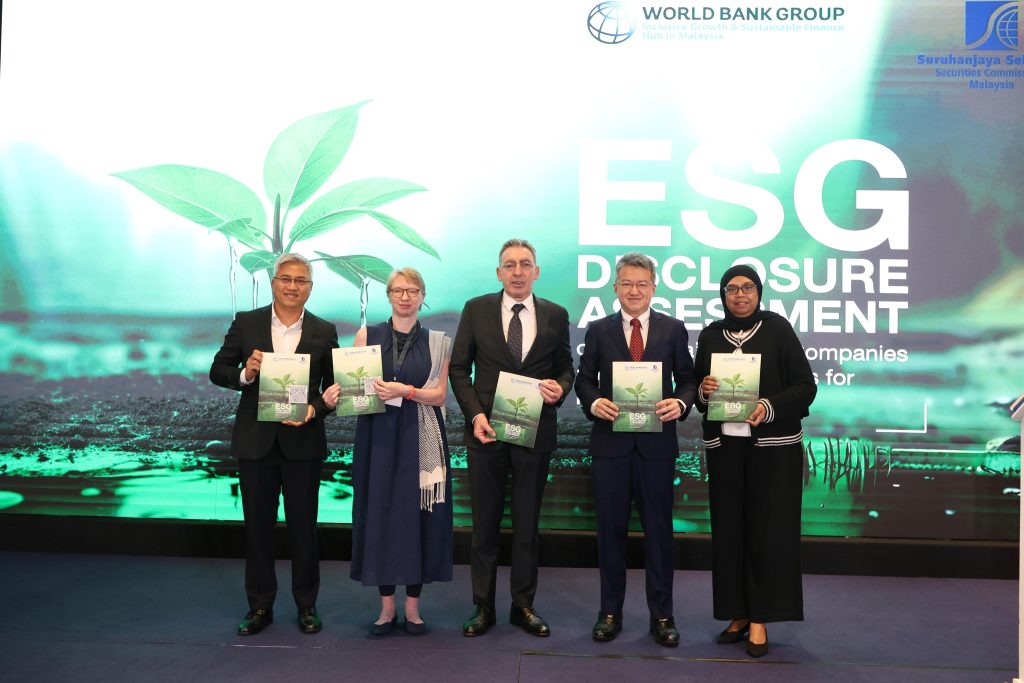
KUALA LUMPUR: The Securities Commission Malaysia (SC) and the World Bank have jointly launched a groundbreaking report, titled “ESG Disclosure Assessment of Malaysia’s Listed Companies and Recommendations for Policy Development,” at the SC-World Bank Conference 2024. This assessment provides a detailed look into Malaysia’s environmental, social, and governance (ESG) reporting landscape and lays the groundwork for policy improvement to align with international standards. Key Findings from the Report The report evaluates the current state of ESG disclosures among 90 companies listed on Bursa Malaysia, along with practices by several major institutional investors. As Malaysia’s economy embraces sustainability trends, the report sheds light on the progress and gaps in corporate ESG practices. Larger Firms Lead the Way Companies with higher market capitalisation displayed stronger ESG disclosure efforts compared to smaller entities, indicating that size plays a role in reporting quality. Regulatory Compliance as a Key Driver Many companies cited compliance with regulatory requirements as their primary motivation for ESG disclosures, demonstrating the importance of clear guidelines and mandates in the industry. Limited ESG Transparency Among Institutional Investors While some of Malaysia’s largest asset owners have initiated ESG efforts internally, these developments are not fully reflected in their public disclosures. This signals a need for greater transparency to align investors’ practices with public expectations. Gaps in Environmental Metrics Despite progress in governance and social reporting, companies fell short in areas such as climate change and biodiversity—topics increasingly scrutinized by global stakeholders. Policy Recommendations The report outlines several strategies to boost Malaysia’s ESG framework, especially following the launch of the National Sustainability Reporting Framework (NSRF). Key recommendations include: Encouraging Adoption of Bursa Malaysia’s Guidelines: The report urges broader implementation of sustainability reporting frameworks to enhance corporate compliance. Strengthening Domestic Investor Practices: To attract greater interest in ESG disclosures, domestic investors need support to develop more comprehensive sustainability initiatives. Continuous Monitoring and Consultation: Ongoing stakeholder engagement and monitoring will ensure the proper implementation and refinement of ESG practices over time. Conference Highlights The SC-World Bank Conference, now in its fifth year, focused on synergizing efforts between the conventional and Islamic capital markets to support small and medium enterprises (MSMEs) and mid-tier companies (MTCs). Deputy Minister of Investment, Trade, and Industry, YB Liew Chin Tong, officiated the event, underscoring the government’s commitment to sustainability. Speaking on the report’s significance, SC Executive Director of Islamic Capital Market Sharifatul Hanizah Said Ali stressed that “improved ESG disclosure practices will not only build investor confidence but also ensure Malaysia’s competitiveness in global markets.” The conference also spotlighted initiatives under the SC’s five-year roadmap (2024–2028) aimed at bridging financing gaps for MSMEs and MTCs, paving the way for a resilient, sustainable financial ecosystem. World Bank Country Director for the Philippines, Malaysia, and Brunei Darussalam, Dr. Zafer Mustafaoğlu, highlighted the importance of collaboration, stating, “By leveraging the World Bank’s expertise, we aim to support effective policy design to address MSME and climate financing gaps.” The Way Forward The ESG Disclosure Assessment report is a timely initiative, providing a much-needed baseline for Malaysia’s corporate sector. With over 200 industry stakeholders attending the conference—including entrepreneurs, government agencies, financial institutions, and private equity firms—the momentum toward improved sustainability practices is clear. For Malaysia to remain relevant in the evolving global market, companies and investors alike must embrace the recommendations outlined in the report. The road ahead requires commitment, collaboration, and proactive implementation, ensuring that ESG principles become integral to the nation’s economic growth.

News

Worldwide Stainless Acquires Bahru Stainless for USD 95 Million

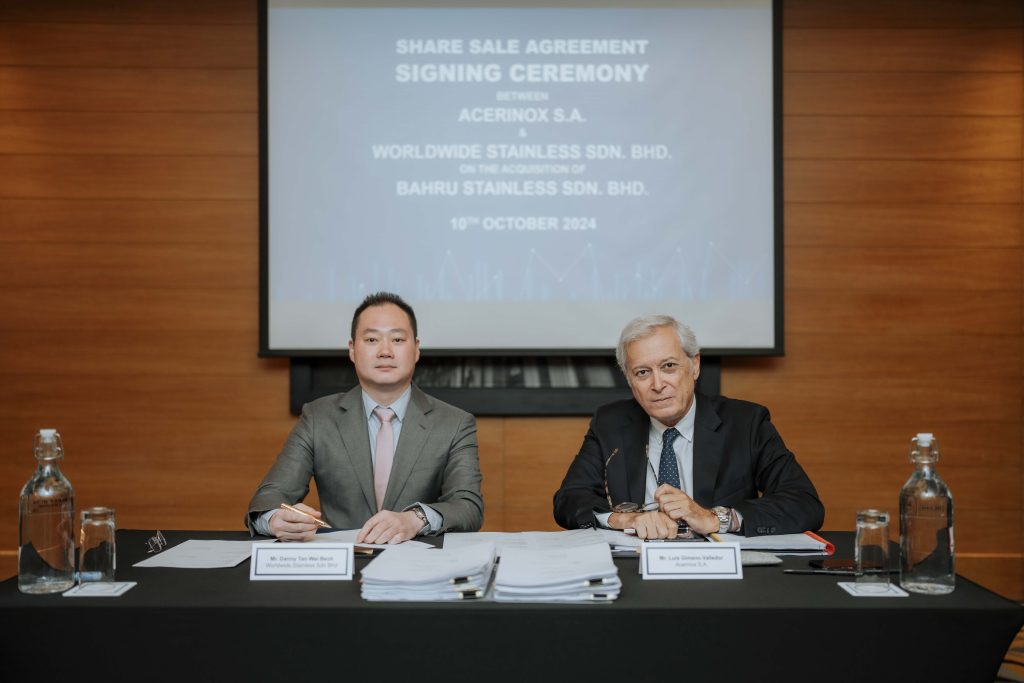
KUALA LUMPUR: Worldwide Stainless Sdn. Bhd. has reached an agreement to acquire Bahru Stainless Sdn. Bhd. from Spain-based stainless steel leader Acerinox S.A. for a total consideration of USD 95 million. This acquisition marks a significant step in strengthening Malaysia’s position within the global stainless steel industry, with the transaction expected to close by the end of November 2024. Bahru Stainless Sdn. Bhd., Malaysia’s sole producer of cold-rolled stainless steel, ceased operations in May 2024. Seeing the strategic importance of reviving this key asset, Worldwide Stainless seized the opportunity. Under the leadership of CEO Danny Tan Wei Beoh, the Company plans to restart operations and rehire nearly 90% of Bahru Stainless’s retrenched workforce, restoring the expertise that built the plant’s solid reputation. Following the acquisition, Bahru Stainless Sdn. Bhd. will continue to operate under its current name.   Danny Tan emphasised the importance of this acquisition: “This acquisition is a commitment to the future of Malaysia’s stainless steel industry. We are dedicated to breathing new life into Bahru Stainless, tapping into its untapped potential, and reinstating Malaysia as a key player in the global supply of cold-rolled stainless steel. Our plan to rehire close to 90% of the previous employees reflects our belief in the workforce’s expertise and the future success of this operation.”   Shaping the Future of Stainless Steel in Malaysia   Worldwide Stainless was formed with a strategic vision by a team of seasoned industry leaders, including Danny Tan, Chung Shan Tat, Datuk Tan Kak Seng, Ta Wee Dher, and Lee Seng Yong. Together, this dynamic team brings decades of experience and expertise, creating a formidable force ready to propel Bahru Stainless into a new era of success.   Backed by AmBank (M) Berhad, which is financing 80% of the deal, Worldwide Stainless is poised to restore Bahru Stainless and accelerate its global expansion. The company’s clear vision is to rebuild, innovate, and supply high-quality stainless steel to both local and international markets.   Bernardo Velázquez, CEO of Acerinox S.A., remarked: “This strategic decision safeguards the interests of our employees, customers, and the local community. Bahru Stainless has played an important role in our Group’s history, and we are confident that under the ownership of Worldwide Stainless, it will continue to thrive and contribute to the industry. We thank all those who have been part of this journey.”   Danny Tan further added: “This acquisition is a defining moment for Malaysia’s industrial landscape. The focus is on restoring Bahru Stainless’s operations and cementing Malaysia’s role as a key player in the global stainless steel industry. With the support of our shareholders and partners, we are committed to achieving this vision and creating lasting value for domestic and global markets.”

Scroll to Top

Subscribe
FREE Newsletter