News

Investment & Market Trends, News

Malaysia Achieves 3.6% GDP Growth in 2023 Amid Global Challenges

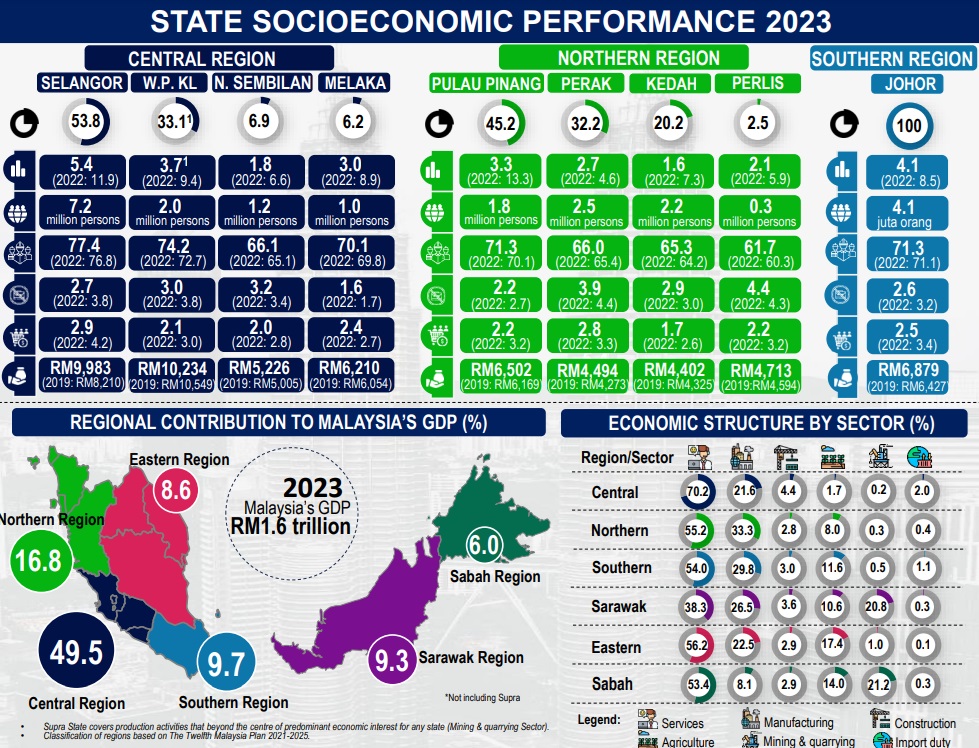
PUTRAJAYA: Malaysia demonstrated commendable economic resilience by achieving a gross domestic product (GDP) growth of 3.6% in 2023. According to the Department of Statistics Malaysia (DOSM), the achievement was recorded amidst the challenging global economic environment, which includes geopolitical tensions impacting global markets, rising cost of living and commodity price fluctuations. “The services sector notably contributed to the growth with a robust performance of 5.1%, counterbalancing the manufacturing sector’s modest growth of 0.7% due to global economic challenges, including supply chain disruptions and fluctuating commodity prices,” said DOSM Chief Statistician Daruk Seri Dr Mohd Uzir Mahidin. He said that Malaysia experienced a notable influx of tourist arrivals in 2023, indicating a substantial recovery to 20.1 million tourists compared to 10.1 million tourists in 2022 when global travel restrictions were more stringent due to the pandemic. “Domestic tourism also improved, recording 213.7 million visitors, an increase of 24.6% against 2022 (171.6 million),” he said. Mohd Uzir noted that Malaysia will continue positioning itself as a resilient and attractive destination for global investors in 2023, based on its robust investment performance. “The influx of capital not only strengthened Malaysia’s economic resilience but also elevated its competitiveness in the global market. “The Malaysian Investment Development Authority (MIDA) reported that Malaysia secured approved investments of RM329.5 billion in 2023, a 23% increase compared to the previous year’s RM267.8 billion,” he said. Mohd Uzir added that despite facing a challenging global economic environment, Malaysia’s trade surpassed RM2 trillion for the third consecutive year, reaching RM2.64 trillion in 2023, with a trade surplus of RM214.1 billion. He said Pulau Pinang, Johor, and Selangor continued to lead as Malaysia’s top exporting states, contributing 31.4%, 20.3%, and 17.7%, respectively, to national exports. He said Malaysia’s inflation in 2023 eased to 2.5% from 3.3% in 2022. This was in tandem with the decline in most global commodity prices, the easing of supply disruptions, price controls and the provision of subsidies for selected goods. Additionally, Malaysia’s population in 2023 is estimated at 33.4 million, increasing 2.1% from 32.7 million recorded in 2022. “5 states, namely Selangor, Johor, Sabah, Perak, and Sarawak, registered a total population of 19.9 million people, contributing 59.8% to the total population. “The Labour Force Participation Rate (LFPR) increased by 0.7 percentage points to 70% in 2023, up from 69.3% in 2022. This increase was observed across all states compared to the previous year,” he added. — BERNAMA

ESG, News, Property

BDB, Seterra Collaborates to Develop Elder Care Project in Langkawi

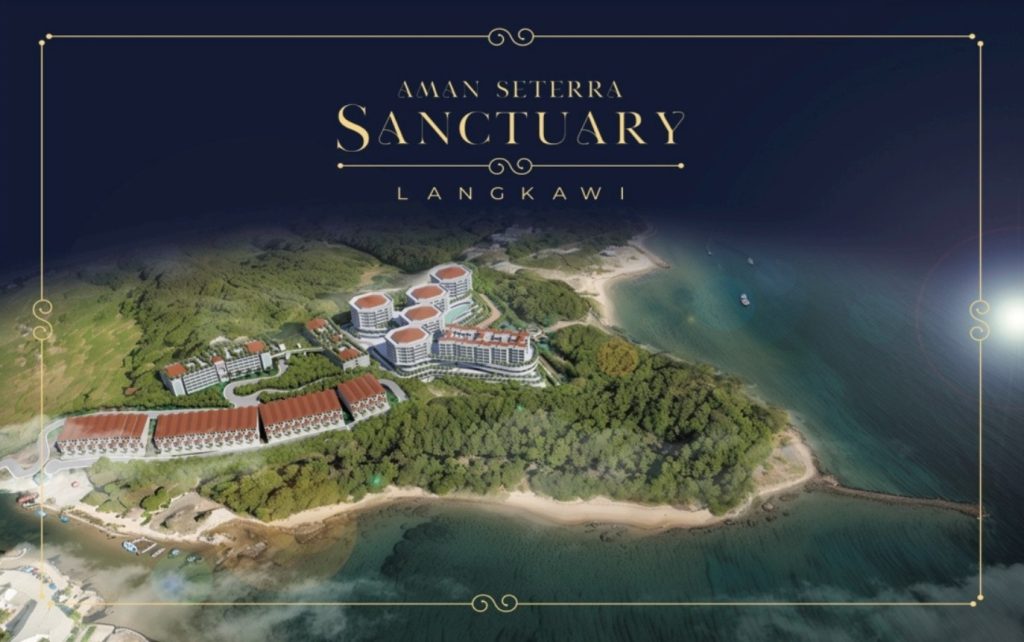
KUALA LUMPUR: Property developer Bina Darulaman Bhd (BDB) has embarked on a new business venture in partnership with the Seterra group to meet the increasing demand for elder care services in Malaysia. BDB Executive Director, Raja Shahreen Raja Othman announced that the initiative, dubbed Aman Seterra Sanctuary is set to launch in 2 years in Langkawi. The 5.36-hectare development will be located in Kuala Temoyong, Langkawi. He said BDB had previously explored opportunities in the hospitality sector such as hotels and resorts in Langkawi. “However, we realised that our partner, the Seterra group, is more focused on elderly care services. “After reassessing, we decided to shift our focus. We considered whether Langkawi could offer something more aligned with elderly care concepts,” he said. Raja Shahreen noted that Langkawi’s demographic includes many foreigners from Europe, the Middle East, Russia, Japan, and other countries who stay for extended periods to escape harsh climates. “Langkawi offers a unique appeal for such visitors, and we wanted to capitalise on this. So, we analysed the market and developed a concept catering to these international visitors who want to stay longer in Langkawi. “For the international market, we are focusing on the Japanese and European markets as they tend to live longer and have the budget to spend. Thus, there is a market for this in the elder care segment. However, our overall target market will include both local and international clients,” he said. He said BDB is close to launching the initiative near the navy base in Langkawi. “If everything goes as planned, we intend to have a soft launch in May 2025 during the Langkawi International Maritime and Aerospace Exhibition 2025 (LIMA 2025). “This venture with the Seterra group is about offering a unique blend of ageing care and lifestyle services, catering to those who seek relaxation and care in a tropical setting. “We aim to provide not only elderly care but also tailored experiences that suit the preferences of long-term visitors, such as gardening or golfing,” Raja Shahreen added. Regarding investment, he said BDB has significant land assets in Langkawi and plans to develop and utilise these properties further. “We are also evaluating how to balance insurance, medical care and other essential services for our target market. “In the future, we hope to collaborate with various agencies and partners to ensure a comprehensive care model. We are keen on working with insurance providers and exploring partnerships to address the needs of our clients effectively,” he said. Raja Shahreen noted that the ageing care sector in Malaysia is evolving with a growing demand for such specialised services. “We believe that our approach will fill a niche in the market and contribute positively to the company’s revenue stream,” he added. — BERNAMA

Investment & Market Trends, News

FGV Reinforces Sustainability Commitment With First EUDR-Compliant CPKO Production

KUALA LUMPUR: FGV Holdings Bhd has reinforced its commitment to sustainable practices with the first production of its European Union Deforestation Regulation (EUDR)-compliant crude palm kernel oil (CPKO). This achievement marks another significant milestone for FGV as one of the first Malaysian companies to produce EUDR-compliant CPKO, the company said in a statement. Primarily used in food and personal care products, including non-dairy ice cream, margarine, chocolate, confectionery, soap and detergent, CPKO is now produced in compliance with stringent EUDR standards. The EUDR is a legislative framework aimed at ensuring products imported into the European Union are free from deforestation and forest degradation activities. FGV’s ability to produce EUDR-compliant CPKO for clients worldwide showcases its dedication to upholding global sustainability standards and regulatory compliance. Group Chief Executive Officer Datuk Nazrul Mansor said FGV understand the critical role that businesses must play in addressing the pressing environmental and social challenges. “Our production of EUDR-compliant CPKO marks a major advancement for our operations and underscores our dedication to meeting stringent global environmental and social standards. “This achievement will positively impact our bottom line over time and reflects our proactive approach to environmental stewardship and our commitment to sustainable palm oil production,” he said. FGV has focused on sourcing its fresh fruit bunches from 3 key sources: its estates, the Federal Land Development Authority’s (FELDA) settlers, and independent smallholders who are already in line with EUDR, Malaysian Sustainable Palm Oil Certification (MSPO) or Roundtable on Sustainable Palm Oil (RSPO) traceability requirements. “We aim to expand the network of our business partners from among the smallholders, which in turn will generate better economic opportunities for them, and further enhance collective sustainability efforts of the Malaysian palm oil industry,” Nazrul said. Earlier in July, FGV launched its enhanced Sustainability Framework, advancing its commitment to the environmental, social and governance (ESG) goals. — BERNAMA

News

reNIKOLA to invest RM1bil in Indonesia

SINGAPORE: The renewable energy company says that Malaysia’s reNIKOLA Holdings plans to invest over US$240mil (RM1.05bil) to develop 40 compressed biomethane gas projects in Indonesia. The Kuala Lumpur-headquartered company said its subsidiary PT reNIKOLA Primer Energi planned to develop the projects with PT Perkebunan Nusantara IV, a division of Indonesia’s state-owned agricultural enterprise Perkebunan Nusantara. reNIKOLA also announced it signed an agreement with Perkebunan Nusantara IV to build, own, operate and transfer a compressed biomethane gas project in North Sumatra. reNIKOLA owns and operates solar plants across Malaysia and Indonesia with a combined generating capacity of 220 megawatts and aims to expand its capacity to one gigawatt-peak, according to its statement. The company said it would collaborate further with Indonesian state-owned companies like Perusahaan Gas Negara and Perusahaan Listrik Negara to support Indonesia’s goal of achieving a 26% renewable energy mix by 2030. — Reuters

Investment & Market Trends, News

Reduce Dependency on Foreign Vessels in New Shipping Policy, Says Expert

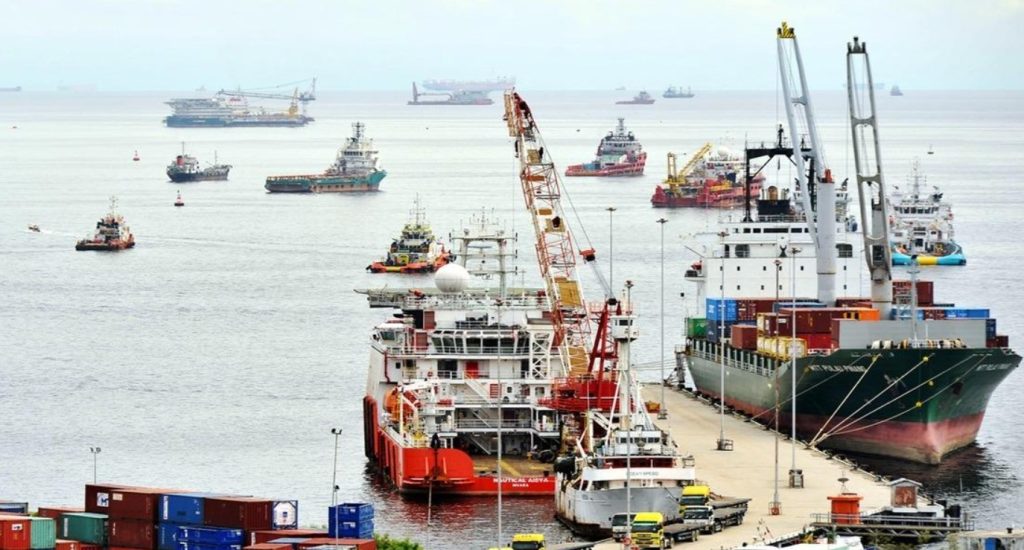
KUALA LUMPUR: Malaysia’s new national shipping policy must not only encourage the development of a robust domestic fleet to reduce dependency on foreign vessels but also provide more funding to modernise and accelerate the transition to green shipping. Industry players said the policy should prepare Malaysian shippers to navigate the shifting dynamics of global trade and a volatile environment due to unforeseen circumstances such as regional conflicts. They also hope that the new policy, which is expected to be presented to the cabinet by year-end, will focus on increasing Malaysian tonnage and reducing reliance on foreign vessels. On 4 July, Transport Minister Anthony Loke announced that a national shipping policy would be introduced to guide the local shipping sector in exports and imports and create new job opportunities. This was a timely announcement as the Malaysian Shipping Masterplan (MSMP) 2017-2022 was launched 5 years ago and is due for a review as the industry is still falling short of its targets. Strategic Maritime Position Undermined by Reliance on Foreign Tonnage Given its strategic location in the busy Straits of Malacca and part of the South China Sea waterways, Malaysia has long aspired to become a major maritime hub in Southeast Asia. However, it relies heavily on foreign tonnage, leading to a transport services deficit of RM7.80 billion in the first quarter of 2024. Against such a backdrop, the Malaysia Shipping Association Chairman Ooi Lean Hin emphasised that the nation must strategise and boost domestic shipping in the revised policy, which, he said, is the proper thing to do as Malaysia relies heavily on foreign vessels for maritime trade. He cited the Red Sea crisis where Yemen’s Houthis attacked mainly Israeli-linked vessels as a good example of how escalating geopolitical tensions affect Malaysian shipping, as it led to a surge in shipping demand and prices. For context, about 15% of the world’s shipping traffic, including 30% of global container trade, passes through the Suez Canal to and from the Red Sea. The wave of disruptions has led major shipping companies like Hapag Lloyd, CMA-CGM, Cosco-OOCL, MSC, and Maersk to reroute vessels to avoid the Red Sea and Suez Canal. Initially suspending their services in the Red Sea, they are now considering alternative waterways, resulting in soaring shipping costs, with ocean freight rates between various regions rising substantially. The rising tension has caused about 95% of vessels to reroute around the Cape of Good Hope, adding nearly 4,000-5,000 nautical miles and 15-20 days to their journeys. As of 18 January 2024, 158 vessels have rerouted away from the Red Sea, carrying over 2.1 million cargo containers. “Mainline operators would change their service route to service these now highly profitable alternative routes to ports near the conflict areas, and those servicing our domestic route would change or terminate their service to serve these routes,” said Ooi. Subsequently, local shippers complained that foreign shippers do not prioritise Malaysian goods, posing a significant threat to the national supply chain. “However, Malaysia can navigate this situation by building up the national tonnage, thus supporting the domestic economy,” he said. Given these challenges, Ooi called on the government to play a pivotal role by outlining clear policies that encourage and incentivise exporters and importers to prefer Malaysian tonnage when shipping their goods. Remove Financing Barriers and Introduce Malaysia’s Own Fleet Ooi believes that the government should remove barriers for ship owners to secure offshore financing, which would enable owners to tap financing options offshore since local banks generally shy away from vessel financing. Echoing the sentiment, Malaysia Shipowners’ Association (MASA) chairman Mohamed Safwan Othman said that MASA has also presented an alternative funding mechanism to the National Shipping and Port Council and should be able to finalise the details by the end of the year. However, he said he was unable to disclose further information on the funding mechanism. Additionally, both Ooi and Mohanmed Safwan proposed for Malaysia to establish its own fleet. “By having our own fleet, Malaysia can mitigate disruptions by maintaining trade routes and supply lines,” said Ooi. Mohamed Safwan noted that most of the strategic cargoes, such as petroleum products, palm oil, and coal are being transported by foreign vessels. “We are recommending to have the right policies to use our own Malaysian fleets. Apart from that, the support by the Malaysian local banks is vital,” he said. To recap, there is no specific fund allocated for the maritime industry in Budget 2024. Under the 2023 budget, a RM1 billion Maritime and Logistics Scheme was announced which boosted the maritime industry’s growth and accelerated the industry’s transition to green shipping. — BERNAMA

News

eCloudvalley Appoints Sandy Woo As Malaysia Country Director

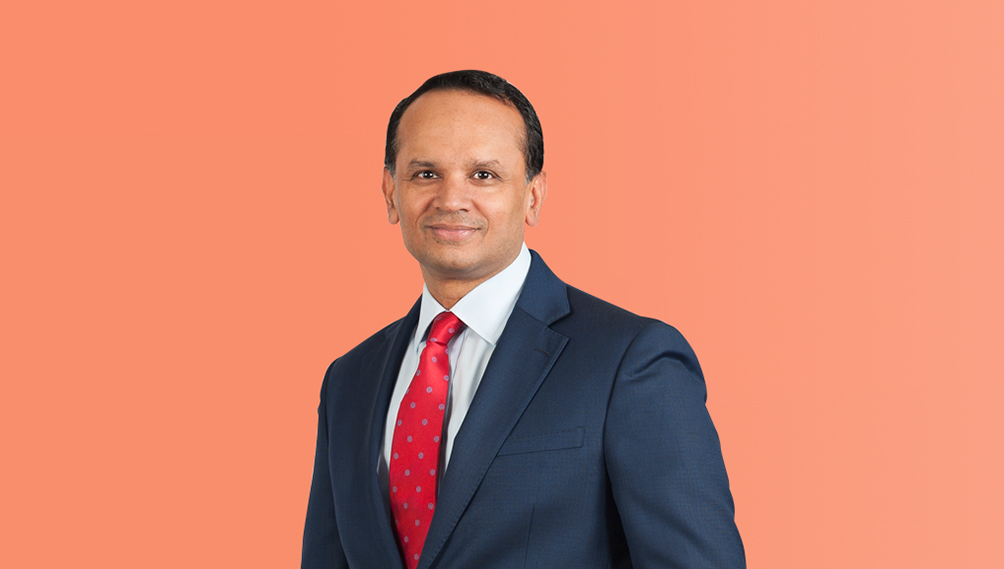
KUALA LUMPUR: eCloudvalley Digital Technology, a fast-growing cloud solutions provider and premier Amazon Web Services (AWS) partner,  announced the appointment of Sandy Woo as Country Director for its Malaysia operations on the 15th of August 2024. This strategic move underscores eCloudvalley’s commitment to accelerating cloud adoption and digital transformation across Malaysian businesses.  A trailblazer with over 20 years of experience in the technology industry, Sandy is set to drive eCloudvalley’s mission of simplifying the cloud and making advanced technologies more accessible for enterprises across diverse sectors. Her appointment comes at a crucial time as Malaysia continues to push forward with its Digital Economy Blueprint, aiming to transform the country into a digitally driven, high-income nation.  “This is an incredibly exciting time to be joining eCloudvalley alongside a team of expert cloud professionals serving an expanding portfolio of customers. The rapid digital transformation and infrastructure growth, notably Amazon Web Services plans to launch a new AWS Region here, is preparing Malaysia for accelerated cloud adoption and innovation. With our focused strategy and proven expertise, we are driven to assist and empower businesses to fully realize the transformative potential of the cloud and advanced technologies like generative AI, machine learning, big data, IoT and more,” said Sandy.   Before eCloudvalley, Sandy led the Malaysian market for Veritas Technologies, a leader in enterprise data management services. She played a pivotal role in expanding the company’s market footprint while embodying her competitive nature to produce data-driven results. Sandy also held leadership roles with renowned technology companies, including Cisco Systems, CA Technologies, and NTT (Dimension Data).   “At eCloudvalley, our success is built on our ability to deliver advanced and tailored cloud solutions that drive real business value for our client. Sandy’s appointment demonstrates our commitment to building a skilled team that can address the specific needs of Malaysia’s evolving market. Her keen insights into customer business needs and experience with evolving industry trends make her the ideal leader for our Malaysian operations. She is the right candidate not only to drive eCloudvalley’s next phase of growth but also to help our customers innovate, scale and achieve their business goals,” said Regional Director Jonathan Que.  eCloudvalley established its Malaysia presence in 2020 during a period of significant disruption and has since grown to house a total of 60 cloud professionals today. The company has played a pivotal role in helping numerous enterprises, startups and SMBs navigate the evolving business landscape. By delivering world-class cloud services to clients such as ZUS Coffee, Aerodyne, Sapura Energy and more, eCloudvalley has become a trusted partner for businesses seeking to adapt and thrive. 

Investment & Market Trends, News

PM Says Govt Committed to Reducing National Debt, Fiscal Deficit

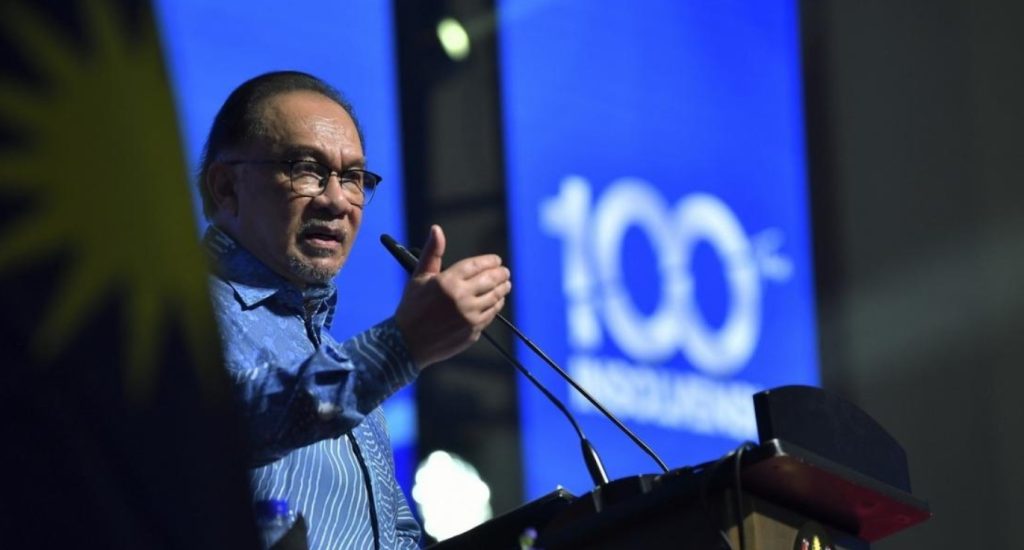
KUALA LUMPUR: Prime Minister Datuk Seri Anwar Ibrahim has refuted claims that the monetary, fiscal and budget policies have not been successful in achieving the government’s promise of debt and fiscal deficit reduction. He stressed that the government is committed to lowering the national debt, which is currently being done. Anwar said there have been some hue and cry in the past few weeks suggesting that the government was not telling the truth and has reneged on its promise. “We have been attacked on social media, but the information given is false,” he said in a video posted on X, adding that some of the claims are unfounded and irresponsible political swipes. Previously, Anwar announced that the government targets to reduce annual borrowing to RM86 billion this year from RM93 billion in 2023 and RM100 billion in 2022. He noted that the present government had inherited debts topping RM1 trillion and the figure even reached RM1.5 trillion. Anwar explained that at the same time, the government could not simply eliminate all debts as this would affect projects that are meant to help the people as well as obligations to repay old debts, among others. “The debt level is high and now stands at 64% of gross domestic product (GDP). Our target is to reduce it in stages to at least 60%,” he said. According to Anwar, the national fiscal deficit has been lowered to 5% of GDP in 2023 from 5.6% in 2022 and this year it is projected to be reduced to 4.3% “I present these figures, which are being defended as being truthful. The Finance Ministry, along with the Department of Statistics Malaysia, release such data from time to time,” he added. — BERNAMA

News

MBSB appoints Rafe Haneef as CEO of MBSB Bank

KUALA LUMPUR: MBSB Bhd has appointed Mohamed Rafe Mohamed Haneef as the chief executive officer of MBSB Bank Bhd, effective Aug 19, 2024. In the filing with Bursa Malaysia, the group said Mohamed Rafe is the group chief executive officer of MBSB. He holds a Bachelor’s degree in law from the International Islamic University Malaysia and a Master’s degree in International Finance and Securities Law from the Harvard Law School, USA. Mohamed Rafe is also a member of the Malaysian Bar and the New York State Bar, as well as an SFA-registered Securities Representative of the UK. Datuk Nor Azam M. Taib stepped down from the role on June 30, 2024.

Investment & Market Trends, News

Malaysia Set to Outdo Singapore in Data Centre Investment with Newly Launched Guidelines

Malaysia has been in focus when it comes to data centre investments, with areas like Johor Bahru, Cyberjaya and Kulim being the busiest. Earlier in June, an international news portal reported that Malaysia is emerging as a data centre powerhouse in Southeast Asia and the continent more broadly as demand surges for cloud computing and artificial intelligence. Over the past few years, the country has attracted billions of dollars in data centre investments, including from tech giants like Google, Nvidia and Microsoft. According to DC Byte Managing Director of APAC James Murphy, Johor alone might overtake Singapore by becoming the largest market in Southeast Asia within a couple of years. In light of this, the Malaysian government plans to announce guidelines for data centre power usage effectiveness (PUE) and water usage effectiveness (WUE) by the third quarter of the year to boost investments. On this, Investment, Trade and Industry Minister Tengku Datuk Seri Zafrul Tengku Abdul Aziz said the guidelines would ensure data centres built in Malaysia meet the minimum sustainability requirements to achieve net-zero emissions by 2050. “As data centres consume a lot of power and water, we want to ensure that the data centres built here (in Malaysia) meet the minimum requirements set by global institutions. “SIRIM and the Department of Standards Malaysia are in the midst of finalising (the guidelines), and we will announce them by the third quarter of this year,” he said after the groundbreaking ceremony for Vantage Data Centres’ second campus (KUL2) in August. Tengku Zafrul said the Ministry of Investment, Trade and Industry Ministry (MITI) will work closely with the Digital Ministry and Malaysia Digital Economy Corporation (MDEC) to incorporate the improvements into the data centre ecosystem. Meanwhile, Digital Minister Gobind Singh Deo said the two main challenges for data centre investments are power and water, hence the guidelines being developed will ensure that the country has a sufficient and sustainable supply of both resources for the next five to ten years to attract more investments. Gobind also said the Digital Ministry and MITI are working together to address concerns about sufficient water and electricity supply due to significant demand from industry players. “We need to push ahead to ensure we can develop Malaysia as the hub for data centres in this region, particularly as we move towards the country’s ASEAN 2025 chairmanship. “We want to project Malaysia as a country with clear policies that are attractive not just to data centres but all investments in that ecosystem as well,” he said. Vantage’s KUL2 is located adjacent to its existing campus in Cyberjaya. It will have 10 facilities across 256,000 square metres. The US$3 billion KUL2 data centre campus will deliver 256MW of information technology (IT) capacity to meet the growing demand for hyperscale data centre services. Cyberjaya Increases Attractiveness for Hyperscale Data Centres Cyberjaya, as the preferred tech (technology) investment location, remains attractive to hyperscale data centres, with a few more operators coming on board soon, said Cyberview Sdn Bhd Chief Executive Officer, Kamarul Ariffin Abdul Samad. He said that to date, the city is home to 15 data centres, which consist of commercial and captive data centres, including hyperscalers, among the operators of which are Equinix, Bridge Data Centre, EdgeConnex, Microsoft and NTT. “We still have good enquiries from more data centres and it shows that Cyberjaya is the preferred location for data centre operators. I cannot reveal it now because it is still being negotiated. We will make the announcement at the right time,” he said. Kamarul Ariffin said that with growing interconnectedness, automation, and massive data processing, data centres, which are the very backbone of the digital economy, first and foremost contribute directly to enhancing the overall digital infrastructure. He said in ensuring that investors are well-supported, Cyberview puts in place the required elements which include enhancing and optimising its infrastructure. “Some data centres that are going to open in Cyberjaya are already artificial intelligence (AI)-ready. Some of the centres being constructed here are building Al data centres so it can convert from hyperscale to Al when the need arises,” he said.

News

Alliance Islamic Bank Eyes IPO Growth

ALLIANCE Islamic Bank Berhad (AIS) is aiming to serve as advisor for at least 10% of Bursa Malaysia Bhd’s target of 42 initial public offerings (IPOs) in 2024, capitalising on the positive market outlook. Alliance Bank Malaysia Berhad, having transferred its capital markets business to its subsidiary AIS in April 2022 following the disposal of Alliance Investment Bank Berhad stockbroking businesses, perceives the capital market space as vibrant due to positive sentiments among investors. While the bank surrendered its investment banking licence to Bank Negara in December 2023, AIS chief executive officer Rizal IL-Ehzan Fadil Azim stresses that the group has not exited its capital market business but delivers its capabilities under the umbrella of AIS. Under the Capital Markets & Services Act 2007 (CMSA), AIS is a “registered person” by virtue of it being a licensed Islamic bank under the Islamic Financial Services Act 2013, which allows it to carry out regulated activities set out in CMSA such as advising on corporate finance. Further, AIS has been recognised by Securities Commission (SC) as a recognised principal adviser, enabling AIS to submit specific corporate advisory proposals to the SC. AIS is one of the few local Islamic banks with a full suite of in-house capabilities, including comprehensive corporate and capital markets solutions to serve business clients. By integrating expertise in both areas, AIS delivers a holistic financial strategy that encompasses tailored financial solutions, strategic advisory services and innovative capital market products. These solutions are designed to not only meet the financial needs of clients but also to help them achieve their long-term business goals, optimise growth opportunities, manage financial risks and ensure syariah compliance throughout their business journey.“We see opportunities in the capital market space. We feel it has connections with the large base of small and medium enterprises (SME) and commercial customers that we have. So, we kept it, and we housed it under AIS.” In fact, Rizal takes pride in the group’s achievement of having advised four companies on the IPO project over the past two years, since the capital business market came under their purview. Looking ahead, he says the bank is on track to list a couple more companies and targets to contribute at least four IPOs for the local bourse this year. He notes that there is continuous robust demand in the IPO market, mainly driven by strong market sentiment, with a focus on the SME space as most of their clients are in this sector. “It’s the mid-market space, an area we’re comfortable with because it taps into the SME market base. It’s an extension of what we offer on the commercial banking side,” he adds. Rizal notes the electrical and electronics sector is showing vibrancy, particularly in solar-based or engineering, procurement, construction and commissioning projects. “The folks who are serving the semiconductor industry are really looking to expand and they’re turning to the capital markets to fund their capacity expansion.” In contrast, Rizal said sectors facing challenges include property construction and real estate, where sentiment remains relatively soft. However, he acknowledges the potential for a turnaround, citing developments like the special economic zone in Johor, which could stimulate growth and generate interest in the property and real estate space.Transitioning to technology adoption, Rizal admits the manual nature of the IPO process owing to the personalised approach, but unveils plans for automation of some of the back-end processes. “We have figured out a model where we can help these folks –IPO seekers – through a structured process, assisting them in identifying and preparing for the essential aspects of their IPO journey.”Rizal points to the variable timeline for IPO readiness, ranging from four to five months for well-prepared entities to potentially years for those lacking essential infrastructure, controls, governance or a suitable track record. He says that the bank collaborates with partners to assist SMEs in developing the necessary prerequisites for a successful IPO, ensuring comprehensive preparation.Additionally, Rizal underscores the importance of a careful approach to pricing and valuations for IPOs to avoid discouraging potential investors. He suggests a level that allows everyone to perceive an opportunity for favourable valuations. “The valuation part is the science, the pricing or setting of the IPO price, that is more of an art.” Shifting focus to the bank’s sukuk advisory services, Rizal expects a potential uptick in sukuk and bond activity amid the anticipated decline in interest rates. To date, AIS has listed four companies on Bursa Malaysia, raising funds of RM144.5mil, of which two companies saw an over-subscription of above 63 times on their respective debuts. In this financial year, Islamic Capital Markets contributed 29% of AIS’ other operating income. Looking forward, Rizal anticipates a more vibrant sukuk market with expected decreases in interest rates. He says corporations are also poised to refinance high-priced bonds, capitalising on reduced finance costs. Additionally, he notes a potential surge in environmental, social and governance (ESG) oriented sukuk globally. “In the global stage, there’s much more focus on ESG and on ensuring that businesses who participate in certain markets need to do it in the proper way with the right kind of impact, not just the economy but also the people and the environment as well. Rizal emphasises the focus on assisting customers through the entire ESG adoption journey and for those venturing into sukuk for the first time. “We want to position ourselves more in the mid-market space. For people who are doing sukuk for the very first time, we want to help them set up their sukuk frameworks or their bond frameworks and help do their median issuances,” he notes. Incidentally, AIS has been appointed as the joint principal adviser, joint lead arranger, and joint lead manager for Avaland Bhd’s proposed sukuk programme of up to RM1bil (Sukuk Murabahah Programme) with an inaugural issuance of RM300mil Sustainability Sukuk Murabahah. Despite a vibrant corporate finance business, Rizal acknowledges talent shortages and wage inflation in this challenging market. “What we try to do with our talent is to keep them on board

Scroll to Top

Subscribe
FREE Newsletter