News

News

CIMB Group Reports Robust 1Q24 Performance with RM2.57 Bil PBT

KUALA LUMPUR: CIMB Group Holdings Berhad (“CIMB Group” or “the Group”) today announced robust growth for the first quarter ended 31 March 2024 (“1Q24”), with profit before tax (“PBT”) rising 15.1% YoY to RM2.57 billion. Net profit also saw a significant increase of 17.7% YoY to RM1.94 billion, driven by strong operating income and managed costs and provisions. This resulted in an annualised return on equity (“ROE”) of 11.4%, up from 10.3% in 1Q23, and earnings per share (“EPS”) of 18.2 sen. Operating income for 1Q24 grew by 12.6% YoY to RM5.63 billion, with net interest income (“NII”) up 7.7% YoY to RM3.79 billion due to strong loan growth and net interest margin (NIM) recovery. Non-interest income (“NOII”) increased by 24.5% YoY to RM1.84 billion, driven by capital markets, investment-related income, and gains from the sale of non-performing loans. Total gross loans increased by 7.0% YoY, particularly in Singapore, which saw a 13.1% YoY rise. Deposits grew by 8.2% YoY, propelled by a 16.8% increase in CASA deposits, improving the CASA ratio to 40.8% in March 2024 from 37.9% in March 2023. The Group’s cost-to-income ratio improved to 45.3%, benefiting from the strong operating income growth which offset an 8.9% YoY rise in operating expenses due to inflationary pressures and technology investments. Provisions were contained at RM503 million, with a credit cost of 35 basis points (bps) compared to 37 bps in 1Q23. On a quarter-on-quarter (QoQ) basis, PBT and net profit improved by 10.4% and 12.9% respectively, driven by a 4.7% increase in operating income and a 2.8% reduction in operating costs, though partially offset by a 26.1% increase in provisions due to the absence of overlay writebacks from the previous quarter. CIMB Group’s capital position remained strong, with a CET1 ratio of 15.0% as at end-March 2024, up from 14.3% a year earlier and 14.5% at the end of December 2023.Dato’ Abdul Rahman Ahmad, Group Chief Executive Officer of CIMB Group, stated, “Our strong performance in the first quarter reflects a positive start to the financial year amidst challenging global conditions. Our revenue growth, coupled with managed costs and provisions, underscores the effectiveness of our ASEAN diversification strategy.” Consumer Banking: Operating income grew 9.6% YoY with NII up 9.4% and NOII up 9.9%. PBT fell 10.3% due to higher expenses and provisions. Commercial Banking: Operating income increased by 1.7% YoY, with a 3.3% NII growth. PBT rose 9.1% YoY due to lower provisions. Wholesale Banking: Operating income grew 15.0% YoY, driven by a 43.3% increase in NOII. PBT expanded by 40.2% YoY. Digital Assets & Group Funding: Operating income rose 42.4% YoY, with PBT up 25.5% YoY, supported by strong growth in CIMB’s digital businesses. CIMB Islamic:*Operating income increased 15.1% YoY, with PBT up 46.8% YoY due to a recovery in Islamic finance. Dato’ Abdul Rahman expressed cautious optimism for the year, noting the challenges posed by global economic headwinds but highlighting the Group’s resilience and strong performance in key markets. He emphasized CIMB’s commitment to its Forward23+ strategic plan and ESG goals, aiming to achieve a cumulative RM100 billion in sustainable finance by FY24. The Group is poised to continue its focus on strengthening its deposit and CASA franchise, managing NIM, expanding NOII, and enhancing technology and operational resilience to drive sustained growth and deliver on its FY24 targets.

News

SD Guthrie Eyes Expanding RE Exposure with Solar Projects

KUALA LUMPUR: SD Guthrie is set to expand its renewable energy (RE) portfolio under Malaysia’s fifth large-scale solar (LSS5) programme. Group Managing Director Datuk Mohamad Helmy Othman Basha emphasized the company’s strategic move to capitalize on opportunities in the RE sector, particularly in solar projects that require extensive land. He highlighted that, instead of merely leasing land to industry players, SD Guthrie aims to take a more proactive role in the government’s energy transition by investing directly in solar farms. “This initiative will not only help us reduce our carbon footprint but also optimize our land assets, even though it may seem unrelated to the plantation sector,” he said. SD Guthrie has been involved in the solar business since the LSS1 programme in 2018, initially leasing land for a 20MW project. For LSS4, the company has leased 12 plots of land, supporting projects with a combined capacity of 336MW, which represents 40% of the scheme’s quota. Despite the current minimal contribution from RE projects, Mohamad Helmy revealed ambitious plans for the future. “In the next two to three years, we aim to generate one gigawatt (GW) of power,” he stated. He explained that an investment of RM2.5 million is required for 1MW of power generation, translating to a RM2.5 billion investment for the 1GW target. “We anticipate a high-single-digit return on investment, around eight to nine percent on a project basis,” he added.

Investment & Market Trends, News

Malaysia to Prevent Leakages From Targeted Diesel Subsidy Via New System

PUTRAJAYA: The government will implement a floating diesel price mechanism alongside targeted diesel subsidies to curb fuel subsidy leakages, which have been increasingly prevalent. Finance Minister II Datuk Seri Amir Hamzah Azizan said the diesel subsidy amounting to RM1.4 billion in 2019, surged tenfold to RM14.3 billion last year due to several factors. He highlighted that the consumption of subsidised diesel rose from 6.1 billion litres in 2019 to 10.8 billion litres last year, marking an approximate 70% increase. “From the perspectives of economic development and the rise in diesel vehicles, I cannot account for the 70% increase. We believe this surge is due to significant leakages,” he said during a recent briefing to senior editors at the Ministry of Finance. He noted the disparity between the retail price of diesel at RM2.15 per litre and the market price of approximately RM3.50 per litre, which some parties exploit for profit. Additionally, the fuel price differences, with neighbouring countries, such as Thailand (RM4.12 per litre), Indonesia (RM4.73) and Singapore (RM8.87), create opportunities for fuel smuggling from Malaysia. “To reduce leakages, the most logical solution is to float the price. When the government floats the price of diesel, the gap between retail and commercial prices is eliminated,” Amir Hamzah said. He added that reducing the gap between retail and commercial prices would prevent parties from profiting off subsidised diesel. When asked about the implementation timeline for the diesel subsidy mechanism, he suggested it could be ‘this year’ but did not provide specifics. Regarding the targeted diesel subsidies, Amir Hamzah said the government employs a ‘whole of government approach’, involving close cooperation among all ministries and agencies to ensure successful subsidy targeting. This includes enhanced enforcement to prevent leakages and profiteering. Additionally, Amir Hamzah mentioned that apart from enforcement, creative measures are necessary to reduce border leakages. “For instance, Singapore requires vehicles (with Singapore registration plates), entering Malaysia to have their fuel tanks at least three-quarters full and Malaysia could implement a similar reverse check,” he said, emphasising that targeted subsidies will be limited to qualified diesel vehicle owners and shift away from bulk subsidies. — BERNAMA

News

Google Invests RM9.4 Billion in Malaysian Data Centre and Cloud Region

KUALA LUMPUR: The investment is expected to support 26,500 jobs across various sectors and generate an economic impact of approximately RM15.04 billion, according to the Ministry of Investment, Trade, and Industry (MITI). This project, Google’s largest planned investment in Malaysia, will be situated in Sime Darby Property’s Elmina Business Park in Greater Kuala Lumpur. MITI states that the Google data centre will support popular digital services such as Search, Maps, and Workspace. It will also be instrumental in enabling Google to deliver the benefits of AI to users throughout the country. “This investment is not just about infrastructure; it’s about unlocking new possibilities for businesses, educators, and every Malaysian,” said Farhan S Qureshi, country director for Google Malaysia, in a blog post on Thursday. Qureshi highlighted that the Google data centre would support services like Google Search and Google Maps, and “pave the way for delivering the transformative power of AI to users and customers across the country.” Additionally, he noted that the Google Cloud region would provide high-performance, low-latency cloud services to enterprises, startups, and public sector organisations, along with key controls to ensure the highest security and compliance standards. MITI asserts that Google’s commitment is a significant step toward the government’s goal of attracting more digital investors to build a robust and secure digital economy. “The investment in Google’s first data centre in Malaysia and the development of the Google Cloud region demonstrates that the government’s clear planning, combined with the country’s economic strength and resources, is appealing to both existing and new investors,” said Prime Minister Datuk Seri Anwar Ibrahim in a post on X. “This undoubtedly positions Malaysia as one of the leading countries in the use and support of digital technology-based services,” he added.

Investment & Market Trends, News

Global Air Cargo Demand Records Stronger Growth in April

KUALA LUMPUR: The global air cargo market recorded a total of 21.7 billion cargo tonne-kilometres (CTKs) in April, representing an 11.1% year-on-year expansion, marking the fifth consecutive month of double-digit annual growth, according to the International Air Transport Association (IATA). Based on a statement yesterday, IATA said the global international traffic also rose by 11.6% in the month compared to April 2023, supported by all regions and major trade lanes. It said the largest contributors to this strong traffic performance were carriers from Asia Pacific and Europe, which together contributed two-thirds to the annual increase. “This contrasts with the preceding seven months, where the bulk of the annual rise had stemmed from airlines registered in Asia Pacific and the Middle East, even though the latter is one of the smaller regions by traffic volume (ranked fourth out of six regions),” it said. The association said that the solid upward trend in industry CTKs was driven by traffic on international routes, likely supported by booming e-commerce and capacity constraints in global maritime shipping. IATA Director-General Willie Walsh said that while many economic uncertainties remained, it appeared that the roots of air cargo’s strong performance were deepening. “In recent months, air cargo demand grew even when the purchasing managers index (PMI) was indicating the potential for contraction. “With the PMI now indicating growth, the prospects for continued strong demand are even more robust,” he added. — BERNAMA

Investment & Market Trends, News

Govt Plans to Implement Six International Trade Missions This Year

KUALA LUMPUR: The government – in collaboration with the Malaysian Franchise Association (MFA), plans to organise 6 international trade missions this year to foster and encourage more franchise exports abroad. Minister of Entrepreneur Development and Cooperatives Datuk Ewon Benedick said the trade missions that were already carried out were in Abu Dhabi and Taiwan and will continue to Thailand, the UK, Indonesia and the Philippines until the end of this year. “In 2023, a total of 8 international programmes and trade missions were held which generated RM864 million in potential investments compared with RM689 million in 2022. We hope that the recorded potential investments can be realised successfully,” he said. To date, Ewon said the number of franchise businesses registered with the Registrar of Franchises in the Ministry of Entrepreneur Development and Cooperatives (KUSKOP) amounted to 1,274 companies. “Such achievements are important for enhancing the scale and competitiveness of franchise businesses comprising micro, small and medium enterprises (MSMEs),” he added. Malaysian Trade Industry on the Rise In April, the Department of Statistics (DOSM) revealed that the country’s total trade experienced a 5% increase from March 2023, which amounted to RM244.5 billion with exports and imports recorded RM128.6 billion and RM115.8 billion, respectively. Pulau Pinang remained as the top exporting state with a 32% share, followed by Johor (20%), Selangor (16.9%), Sarawak (8.1%) and WP Kuala Lumpur (4.5%). Meanwhile, imports also had an increase of 12.5%, amounting to RM12.9 billion, with some of the highest performing states being Johor (+RM8.2 billion), Melaka (+RM1.6 billion), Negeri Sembilan (+RM1.2 billion), WP Kuala Lumpur (+RM1 billion), Selangor (+RM996.7 million), Kedah (+RM419.7 million), Pahang (+RM152.6 million), Terengganu (+RM92.1 million), Kelantan (+RM71 million), Sabah (+RM55.5 million) and WP Labuan (+RM30.3 million). However, imports decreased in Pulau Pinang by RM521.9 million, Perak (-RM393.8 million), Sarawak (-RM115.9 million) and Perlis (-RM6.8 million). Johor dominates Malaysia’s imports with a share of 27.9%, followed by Selangor (23.6%), Pulau Pinang (19.2%), WP Kuala Lumpur (7.5%) and Kedah (5%). — BERNAMA

News

Capital A Revenue More Than Doubles

PETALING JAYA: Capital A Bhd anticipates stabilizing demand as it enters the second quarter of 2024 (2Q24). In 1Q24, ending March 31, 2024, the aviation group reported its highest-ever quarterly revenue. Despite this, Capital A incurred a net loss of RM91.6 million, a sharp contrast to the RM57 million profit in 1Q23. This loss translates to 2.20 sen per share. The current quarter’s performance was significantly impacted by a foreign exchange loss of RM370.9 million due to local currency depreciation against the US dollar. Nevertheless, the group’s revenue more than doubled to RM5.2 billion in 1Q24, up from RM2.5 billion in the previous year, driven by a robust recovery in both domestic and international travel demand. According to a Bursa Malaysia filing, 89% of this revenue came from the aviation segment, with the remaining 11% from logistics, digital, and other businesses. Capital A is nearing completion of its aircraft reactivation program, with only 19 planes left to be reinstated in the second half of 2024 (2H24). The goal is to have 202 operational aircraft by year-end to meet the growing demand across its expanding network. In 1Q24, about 20% of its fleet was non-operational. Furthermore, Capital A plans to launch six international routes, capitalizing on the expected demand growth from China’s and India’s visa-free programs in the next two quarters. “We are also committed to enhancing our ancillary offerings, building on the momentum from achieving RM878 million in ancillary income in the first quarter,” the group noted. The launch of AirAsia Cambodia in May marks the group’s fifth short-haul airline, expected to scale up to three aircraft this year. Capital A also foresees robust growth for its companies like Capital A Aviation Services (Capas), Teleport, Move Digital, and Capital A International. Capas, through its engineering arm Asia Digital Engineering (ADE), is progressing on schedule with its new hangar at Kuala Lumpur International Airport, maintaining operational readiness for the first six lines in 3Q24 and an additional eight lines in the last quarter. In 1Q24, Capas reported a total revenue of RM250.9 million, primarily from ADE and its inflight catering business, Santan. ADE has expanded its line maintenance services to Cambodia, aligning with the launch of AirAsia Cambodia, and plans to begin operations in the Philippines and Indonesia by 2Q24 and 2H24, respectively. Santan will continue to benefit from the increase in AirAsia’s passenger traffic. Earlier this month, Capital A and its advisers announced they are developing a regularization plan to address the group’s financial condition. Listed under Bursa Malaysia’s PN17 category for financially distressed entities since January 2022, the group has been granted an extension until June 30 to submit this plan.

News

Penang Govt, MRT Corp Exploring Low- to Medium-Capacity LRT System

GEORGE TOWN: The Penang government, together with Mass Rapid Transit Corp Sdn Bhd (MRT Corp) are exploring a ‘low- to medium-capacity’ system for the Penang Mutiara Line Light Rail Transit (LRT) project. State Infrastructure, Transport and Digital Committee chairman Zairil Khir Johari said the procurement board of the Ministry of Transport will choose the type under the LRT system based on passenger projections and the state’s needs. “When we talk about LRT, many people imagine an LRT line like the Kelana Jaya LRT Line, which is a high-capacity medium which can accommodate 15,000 to 30,000 passengers per hour one way but this system is not suitable for Penang,” he said. “Such a line is too high-capacity for Penang. We will choose a scalable system where we can start with a frequency of approximately 2-car trains so that when we want to add in the future, we can put 3- or 4-car trains,” he added. Zairil said the selection of the appropriate mode of transport would be decided in line with the projected needs of passengers and the cost of development and operation in proportion to financial ability. In order to optimise infrastructure development costs, he also mentioned that the government is considering modular construction taking into account current and future needs. According to Zairil, the detailed design for the construction of the LRT takes into account the use of sufficient electricity resources with each station being connected to a Traction Power Substation (TPSS) which will supply electricity to the train system later. The LRT project, comprising an estimated length of 29km, with 20 stations includes 2 interchange stations at Komtar Station and Penang Sentral Station, is expected to start in September or October this year. With regard to the implementation of the National Information Dissemination Centre (NADI), Zairil said that so far, 3 NADIs have been operating in Penang namely in Sungai Pinang, Tasek Gelugor and Taman Prestij while another 11 have been completed in Permatang Pasir, Seberang Jaya, Perai, Bukit Tengah, Machang Bubuk, Berapit, Sungai Bakap, Pengkalan Kota, Komtar, Pulau Betong and Bertam. He said that 10 NADIs are expected to be completed on May 31 in Bagan Dalam, Bagan Jermal, Pinang Tunggal, Sungai Dua, Sungai Acheh, Air Putih, Ait Itam, Bayan Lepas, Pulau Tikus and Batu Maung. — BERNAMA

News

Meta Bright Teams Up with Shenzhen-listed ChemPartner to Establish Pharmaceutical and Biotech Hub in Malaysia

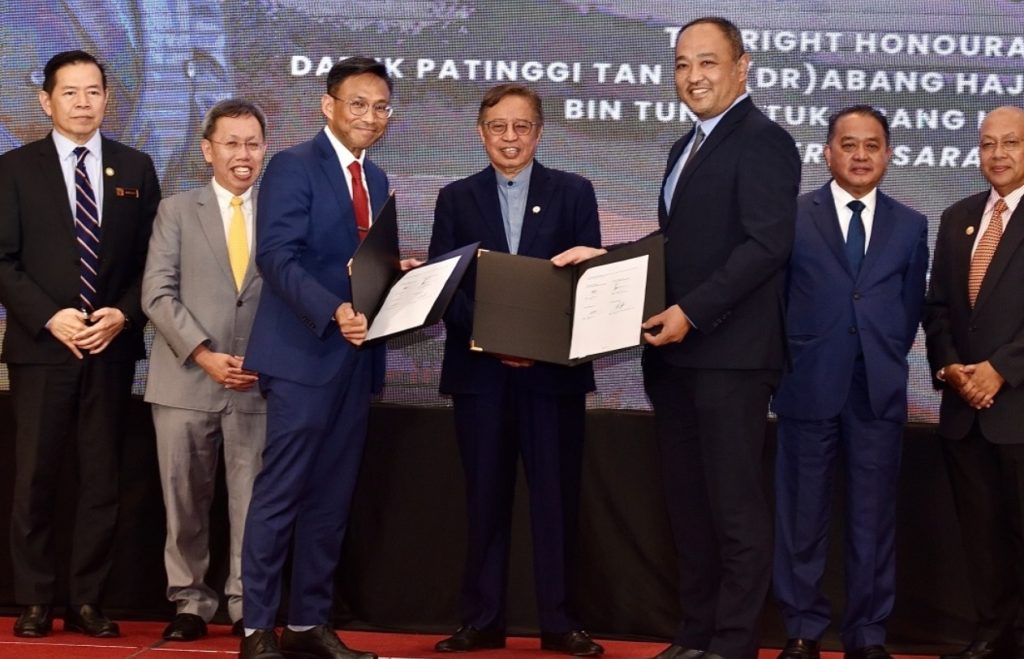
KUALA LUMPUR: Meta Bright Group Bhd (MBG) signed a memorandum of understanding (MoU) with ChemPartner Pharmatech Co Ltd (CP) to develop pharmaceutical and biotechnology hub in Malaysia, marking a significant milestone in MBG’s expansion into these sectors. This collaboration leverages CP’s extensive expertise and global standing to elevate MBG’s capabilities in the pharmaceutical and biotech arenas. The collaboration aims to develop a pharmaceutical and biotechnology hub in Malaysia, focusing on research and development, manufacturing, and commercialising pharmaceutical products and biotechnological advancements. This initiative represents a pioneering collaboration with a leading Chinese-listed company to establish such a hub in Malaysia. The signing ceremony was held in Shanghai, China, and was witnessed by deputy prime minister Datuk Seri Dr Ahmad Zahid Hamidi. CP, a company listed on the Shenzhen Stock Exchange with a market cap of approximately 2.4 billion renminbi (around RM1.6 billion), is renowned for offering comprehensive integrated services. These services include discovery chemistry, biology, pharmacology, drug metabolism and pharmacokinetics (DMPK) and toxicology. As a leading contract development and manufacturing organisation (CDMO), CP specialises in biologics discovery, development, and manufacturing. MBG managing director Lee Chee Kiang said this collaboration marks an exciting new chapter for the company. “This project differentiates us from typical developments as it involves creating a niche market with a leader in the pharmaceutical and biotech sectors. “Moving beyond traditional development projects, we have positioned ourselves to take on sophisticated projects. We are confident that this venture will solidify our position as a leading player in the market and contribute to the broader economic development of Malaysia. “Both MBG and CP share the same vision of strengthening bilateral relationships to contribute to Malaysia’s economy. “By leveraging CP’s expertise in pharmaceuticals and MBG’s strength in property development, we are set to create a groundbreaking hub that will benefit both our nations,” Lee said in a statement. CP chairman Datuk Woo Swee Lian said this cross-border collaboration with MBG will not only enhance the company’s global reach but also bring significant benefits to both China and Malaysia, fostering innovation and economic growth in the region. A filing with Bursa Malaysia shows that under the MoU, MBG will identify a strategic site for establishing the hub and oversee the construction and development of laboratories, manufacturing facilities, office and retail spaces. Additionally, MBG is committed to implementing environmentally sustainable practices to minimise ecological impact and promote green initiatives. CP, on the other hand, will seek and facilitate investment opportunities to support the hub’s growth and development. The company will engage with China-based pharmaceutical and biotech companies, academic institutions, and research organisations to foster collaboration within the hub. Besides that, the hub is anticipated to increase demand for renewable energy and energy efficiency solutions, operating leasing services for machinery and equipment, and building materials such as concrete. This will consequently strengthen MBG’s energy, leasing, and building materials businesses. MBG executive director of corporate and strategic planning Derek Phang Kiew Lim said the development of this pharmaceutical and biotechnology hub is a strategic move to diversify the company’s portfolio and a step towards contributing to Malaysia’s growing reputation as a centre for scientific research and development. ‘We are excited about this hub’s potential for fostering innovation and creating new opportunities in all the relevant sectors,” he said. The collaboration marks a new chapter for MBG, with the potential to bring substantial advancements and drive the company to new heights in the pharmaceutical and biotechnology sectors. The partnership with CP is expected to propel MBG into a new era of growth and success, solidifying its position as a leading player in the market.

News

Powerwell Holdings Secures RM57.61Mil Orders from Global Tech Giants

KUALA LUMPUR: Leading innovator in electrical solutions Powerwell Holdings Bhd (PHB) has secured purchase orders totalling RM57.61 million from a renowned multinational technology corporation. The purchase orders, dated May 24, 2024, encompass the supply, installation, and commissioning of low-voltage switchboards and remote power panels for a high-profile data centre project in Selangor. This initiative is set to significantly contribute to PHB’s consolidated earnings and net assets for the financial year ending March 31, 2025 (FY25). This monumental deal, secured by its wholly-owned subsidiary, Powerwell International Sdn Bhd (PISB), underscores PHB’s pivotal role in the rising data centre sector in Malaysia and Southeast Asia. PHB executive director Catherine Wong said this agreement reflects the trust and reliability that major tech players place in the company and positions it at the forefront of Asia’s fast-expanding data centre market. “We are committed to delivering excellence and innovation, ensuring the successful execution of this project within the stipulated timeline,” she said in a statement today. The data centre market in Malaysia is experiencing exponential growth, driven by escalating demands for cloud services and digital transformation across Asia. The country’s strategic location, robust infrastructure, and government support make it an increasingly attractive destination for data centre investments. Recent developments in the region, including substantial investments by global tech giants, reinforce Malaysia’s potential to transform into a leading data centre hub in Asia. The country received RM76 billion (US$16 billion) worth of investments from its data centres between 2021 and March 2023, and its data centre market is expected to attract investments of US$2.25 billion by 2028. Some of the recent developments include the announcement by NVIDIA Corporation at the end of last year to collaborate with a local entity to develop a US$4.3 billion artificial intelligence (AI) cloud and supercomputer infrastructure. Microsoft has recently committed to a US$2.2 billion investment over the next four years, the largest in its 32-year history in Malaysia, focusing on establishing a robust cloud and AI infrastructure to support Malaysia’s digital ecosystem. “These investments by global tech giants enhance the technological landscape in which PHB operates and create a ripple effect of opportunities for local suppliers and service providers in the tech sector. “As Malaysia strides towards becoming an advanced digital economy, PHB is strategically positioned to contribute significantly to this growth, leveraging cutting-edge technology and comprehensive expertise in electrical solutions for data centres,” Wong added.

Scroll to Top

Subscribe
FREE Newsletter