News

News

Robocore Secures US$30 Million Investment From Foxconn Unit

A subsidiary of Foxconn Technology Group, the world’s largest electronics manufacturer, is investing US$30 million in Hong Kong-based Robocore Technology, marking the Taiwanese giant’s entry into the smart robotics market. The deal was made through Foxconn Technology, a Taipei-listed company partly owned by Apple and Nvidia supplier Hon Hai Precision Industry. The investment formed part of Robocore’s Series D funding round, completed recently at its base in the Hong Kong Science Park. “This isn’t just capital support – it’s a strong vote of confidence in our future,” said Roy Lim Long-hei, founder and CEO of Robocore. He added that Foxconn’s supply chain and manufacturing expertise would help the startup grow faster, expand into new markets, and prepare for a possible US IPO within five years. The move also reflects Foxconn’s broader strategy to diversify beyond smartphones into AI servers, robotics, and cloud technologies. A range of smart, programmable service robots designed and developed by Robocore Technology.  Robocore develops programmable service robots for healthcare, education, consumer use, and smart facility management. Its Israel-based unit, RoboTemi Global, created the temi AI-powered personal assistant robot. Under the investment plan, Foxconn will first inject US$10 million for a 6.6% stake in RoboTemi Global, followed by two additional tranches of US$10 million each over the next two years. Proceeds from the funding round will mainly support telemedicine expansion in the US, Europe, and Japan, alongside new consumer product launches in China and global sales growth. Robocore founder and CEO Roy Lim Long-hei. Robocore said production is currently split between Dongguan and Taiwan, with the latter ramping up to serve the US healthcare market due to tariff advantages. With Foxconn’s backing, the company expects to triple its revenue within three years and grow fivefold by 2028. Today, Robocore has robots deployed at nearly 20,000 sites worldwide, including 5,000 in the US across hospitals, elderly care homes, retail chains, and households. In Hong Kong alone, 720 robots are in use at 38 public hospitals, while in New York State, over 200 elderly homes use the temi robot for remote medical diagnoses. “We’re focused on scaling globally, using Hong Kong as a reference case,” Lim said.
News

King Power Closes Outlets, Reduces Staff

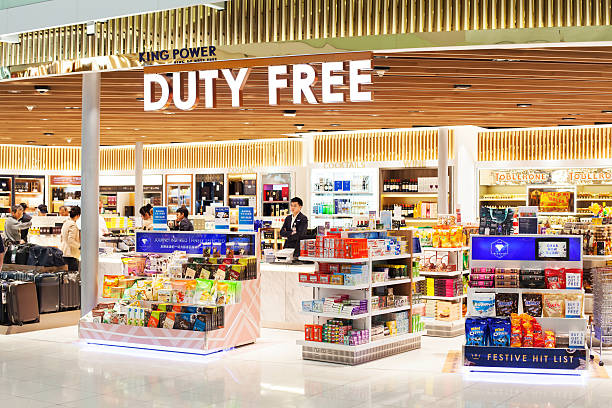
King Power Corporation is downsizing its duty-free business by closing three downtown branches in Bangkok and Pattaya and introducing a voluntary redundancy programme for employees, chief executive Nitinai Sirismatthakarn said. The closures — King Power Mahanakhon, King Power Srivaree, and King Power Pattaya — come as revenue from group tours declines, with more tourists now travelling independently. Airport duty-free outlets, however, remain stable as they rely on individual passengers. The company’s affiliate, King Power Duty Free Co, is also negotiating contract adjustments with Airports of Thailand Plc (AoT) for operations at five airports. Falling foreign tourist arrivals, down 5% this year and led by a 33% drop in Chinese visitors, have pressured both King Power’s revenues and AoT’s share price, which has plunged 35.6% in 2025. Mr. Nitinai, a former AoT president who became CEO of King Power in June, said the cost-cutting move is part of wider adjustments businesses must make in changing market conditions. Employees opting for voluntary redundancy will receive compensation under labour laws, while staff from the closed outlets may be reassigned to other locations. Founded in 1989, King Power remains Thailand’s largest duty-free operator. Last month, AoT approved extended payment terms for three contracts covering five airports, while earlier this year King Power sought to exit those contracts, citing the downturn in tourist arrivals.

News

Volkswagen Malaysia Teams Up With PKT Logistics To Boost Supply Chain Efficiency

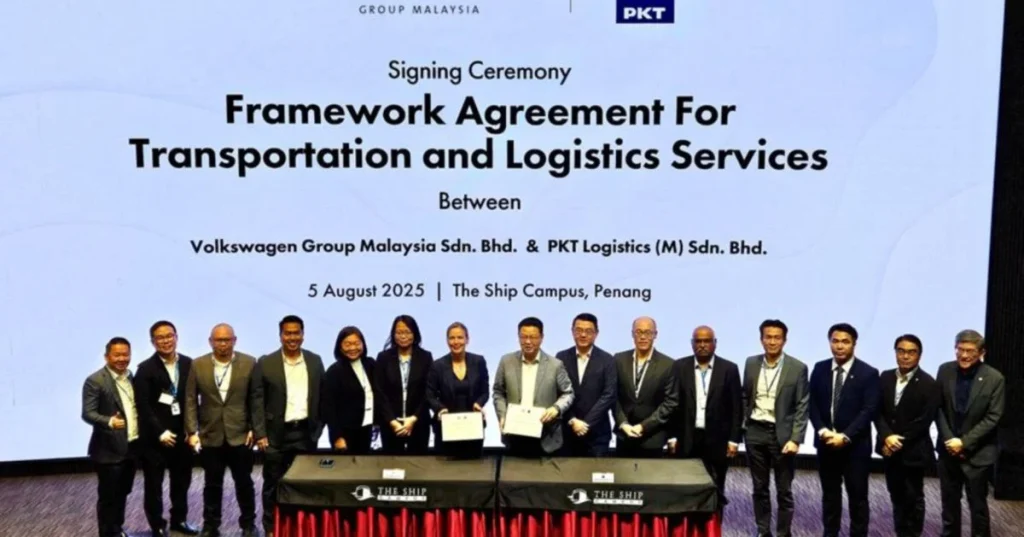
KUALA LUMPUR, Volkswagen Group Malaysia (VGM) has entered into a strategic partnership with PKT Logistics (M) Sdn Bhd to strengthen its logistics operations in the country. The framework agreement for transportation and logistics services was signed on Aug 5, 2025, at PKT’s “The Ship” campus in Batu Kawan, Penang. “This agreement is more than a contract – it marks an important milestone in Volkswagen Group Malaysia’s growth journey,” said VGM managing director Dr Susanne Lehmann. PKT group chief executive and managing director Datuk Seri Dr Michael Tio said the company’s priority is to ensure smooth, efficient, and reliable logistics to support Volkswagen’s regional supply chain. He added that PKT, with decades of automotive logistics experience and global brand partnerships, remains committed to sustainability and ESG-driven practices. The partnership is expected to enhance both inbound and outbound logistics efficiency for VGM, while also supporting Malaysia’s ambition to become a regional logistics hub. With PKT’s expertise, VGM aims to build a more agile and resilient supply chain to support its future growth.

News

Malaysia’s Youngest Tech Co-Founders Break Ground At AI Summit

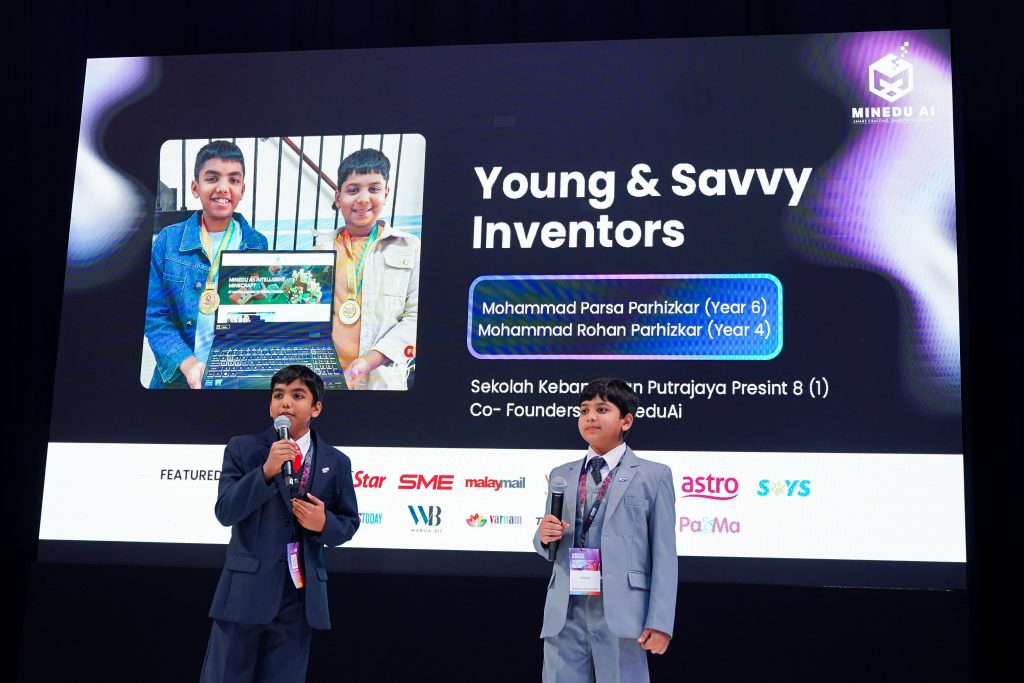
KUALA LUMPUR, Two Malaysian brothers, Mohammad Parsa (12) and Mohammad Rohan (9), recognized as among the youngest tech company founders in the nation, made history as the youngest-ever speakers at the recent ASEAN AI Malaysia Summit 2025. They captivated the industry leaders with their groundbreaking creation, MineduAI, an AI-powered learning platform built inside Minecraft. Mohammad Parsa (12) and Mohammad Rohan (9) founders of MineduAI MineduAI transforms Minecraft into a hands-on learning experience, with a built-in intelligent virtual tutor guiding students through subjects like math and science. It merges the thrill of gaming with the power of education, making learning both fun and effective. Harnessing generative AI, real-time progress tracking, and personalized feedback, the platform addresses one of Malaysia’s biggest education challenges: keeping students engaged and motivated in a digital-first world. As the youngest speakers at the summit, they had the honour of meeting Malaysia’s Prime Minister, Datuk Seri Anwar Ibrahim, recognizing the impact of their work.  Captivating industry leaders with their groundbreaking creation, MineduAI, an AI-powered learning platform built inside Minecraft. “We wanted to make learning as fun and exciting as gaming but with real educational value. MineduAI lets students explore, build, and learn with an AI companion that guides them step-by-step,’ said Parsa during his speech at the event, held from 12–13 August 2025 at the Malaysia International Trade and Exhibition Centre (MITEC), Kuala Lumpur. At the summit, educators and industry experts highlighted the platform’s potential to improve student engagement, particularly in Science, Technology, Engineering, and Mathematics and other core subjects. The experts also emphasized that MineduAI has the ability to provide affordable and scalable tutoring to rural and underserved communities, as well as embed 21st-century skills, such as coding, collaboration, and problem-solving, into daily learning. Meeting Prime Minister, Datuk Seri Anwar Ibrahim at the summit. The brothers’ story isn’t just about technology. Both are also national-level athletes in Brazilian jiu-jitsu and wrestling, managing the demands of competitive sports alongside their studies, all while still in primary school. Their journey is a powerful reminder that innovation doesn’t need to wait for adulthood. MineduAI is now preparing for a wider roll-out, with plans to collaborate with schools, education NGOs, and global technology partners to bring its AI-driven Minecraft learning experience to classrooms across Malaysia and Southeast Asia. The invention is set to redefine how students learn. For more information on MineduAI and partnership opportunities, visit www.minedu.ai.

News

Pelita Air Launches First International Route Between Jakarta And Singapore

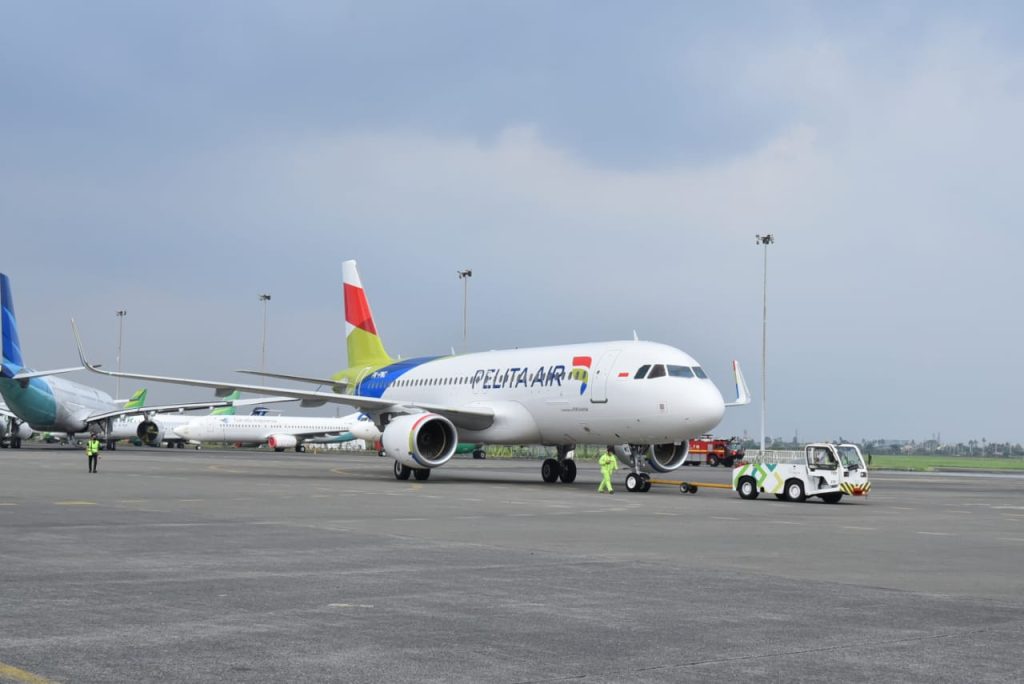
Pelita Air officially inaugurated its first international flight from Jakarta to Singapore on 18 August 2025, touching down smoothly at Changi Airport’s Terminal 4. The milestone was celebrated with a ceremony attended by the Indonesian Ambassador to Singapore, along with the Deputy Ambassador and other diplomatic officials. The new route marks more than just an airline expansion — it reflects Indonesia’s commitment to strengthening regional air connectivity and deepening ties with Singapore. Operating daily, the Jakarta–Singapore service connects seamlessly to 17 cities across Indonesia via Pelita Air’s domestic network. The route is designed to benefit both leisure travellers and business communities by improving access to Indonesia’s cultural and economic hubs. “This is a major achievement for Pelita Air and Indonesia’s aviation sector,” said a company representative. “Linking two key ASEAN capitals helps foster tourism, trade, and long-term economic growth.” Singapore, a central gateway to Southeast Asia, now welcomes Pelita Air, reinforcing regional integration under ASEAN’s vision. The airline’s expansion is expected to support sustainable economic development while advancing Indonesia’s ambitions in the regional aviation market. As global travel continues to recover, Pelita Air’s international debut offers passengers more choices, better connectivity, and renewed momentum for cross-border collaboration.

News

KNM Group Targets PN17 Exit Through Recovery Plan

PETALING JAYA, KNM Group Bhd has unveiled its proposed regularisation plan aimed at exiting Practice Note 17 (PN17) status. A central element of the plan involves the disposal of its German unit, Deutsche KNM GmbH (DKNM), for €270 million (approximately RM1.3 billion). The group also plans to reduce and consolidate its shares from 4.05 billion to 1.01 billion, a move intended to eliminate accumulated losses. Upon completion, KNM expects to operate with minimal debt, retained reserves of RM240 million, and a net asset base of RM284 million, up from RM273 million previously. The regularisation plan is tied to a creditor-approved scheme of arrangement, which seeks to restructure RM1.188 billion in debt and waive RM320 million in interest and penalties. KNM slipped into PN17 status in October 2022 after its external auditor raised uncertainties over the company’s ability to continue operating. In addition, KNM will secure an RM100 million loan from existing creditors and RM204 million in bonds to fund working capital and settle remaining obligations. KNM slipped into PN17 status in October 2022 after its auditor flagged significant uncertainties over the group’s ability to continue as a going concern. Chairman Tunku Yaacob Khyra said the plan reinforces KNM’s financial foundation and sets the stage for long-term sustainability. Chief executive officer Ravindrasingham Balasingham added that the disposal of DKNM and the successful execution of the plan are critical for the company’s turnaround. “With continued support from creditors and shareholders, we are confident of restoring KNM to profitability and long-term growth. The RM100 million in working capital will be essential in reigniting operations,” he said. Approval for the disposal of DKNM and the regularisation plan will be sought at an upcoming extraordinary general meeting.

News

MOF: LHDN Returns RM9.35 Billion In Tax Refunds To 3 Million Taxpayers

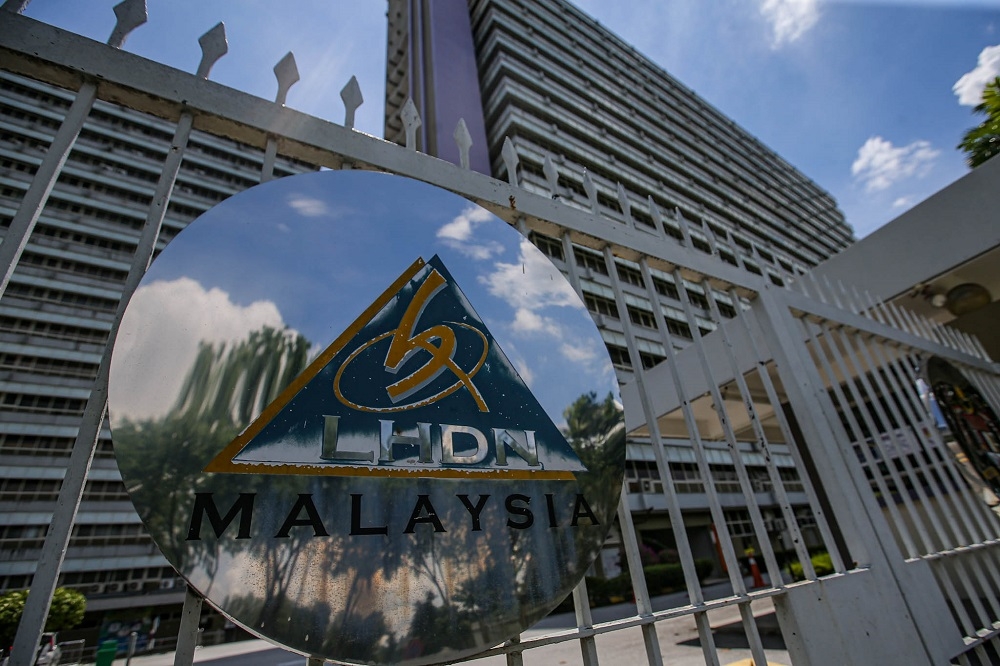
KUALA LUMPUR,  The Inland Revenue Board (LHDN) has refunded a total of RM9.35 billion in excess taxes to more than three million taxpayers as of June 30, 2025, according to the Ministry of Finance (MOF). In a written parliamentary reply on Tuesday, the ministry said that of the total taxpayers involved, 1.07 million have received full refunds amounting to RM2.73 billion. The statement was in response to Chong Chieng Jen (PH-Stampin), who had asked about the total outstanding refund amount, reasons for delays, and the timeline for repayment. The MOF explained that corporate tax refunds, which usually involve larger sums, are prioritised based on the length of delay, with older cases handled first. “This ensures that all eligible taxpayers receive at least a partial refund within the year, while the remainder will be disbursed either in the same year or the following year, depending on the government’s financial position,” the ministry said. On another matter, the MOF clarified that the sales tax on low-value goods (LVG) has been in effect since Jan 1, 2024, and is not part of the current sales tax review. The LVG tax applies to imported goods worth below RM500 that are sold online or through registered marketplaces, while locally manufactured goods are exempt. The ministry was responding to Tan Sri Muhyiddin Yassin (PN-Pagoh), who had asked about the government’s strategy to ease the cost of living and reduce operational burdens for micro, small, and medium enterprises (MSMEs). The MOF stressed that the LVG tax only affects imported items purchased online, ensuring no additional burden is placed on local products or businesses.

News

Foodpanda Just Launched ‘pandasafe’ & It Might Change Malaysia’s Gig Economy Forever

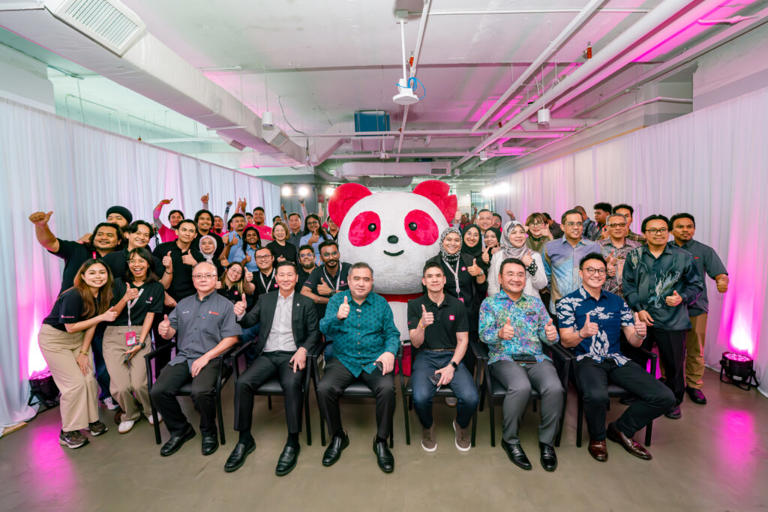
Foodpanda Malaysia has unveiled pandasafe, a pioneering rider safety and wellbeing programme developed in collaboration with leading public and private partners including Allianz Malaysia, Hong Leong Bank, PERKESO, and Hong Leong Yamaha Motor. Foodpanda Just Launched ‘pandasafe’ & It Might Change Malaysia’s Gig Economy Forever. The launch, officiated by Transport Minister Anthony Loke at foodpanda’s headquarters, marks a significant milestone for Malaysia’s gig economy. “The safety of our delivery partners must be treated as a national priority. I applaud foodpanda and its partners for stepping up with a structured programme that goes beyond awareness. pandasafe sets a new benchmark for how companies can take responsibility in making our roads safer for gig workers,” said Loke. Unlike traditional awareness campaigns, pandasafe introduces a permanent, data-driven ecosystem that combines education, technology, behavioural science, and financial literacy to foster a sustainable culture of road safety. Tan Ming Luk, Managing Director of foodpanda Malaysia, stressed that pandasafe reflects a long-term commitment: “Our delivery partners are the heart of foodpanda. Every safely completed order and every rider who gets home safely is a success. pandasafe isn’t seasonal — it’s a permanent shift in how we operate, ensuring the wellbeing of our riders, their families, and the communities we serve.” Key features of pandasafe include: Structured rider training on safe riding practices and defensive techniques. Telematics tools to monitor and improve rider habits. Road safety and first aid modules, with Allianz Malaysia delivering First Response and CPR training. Social protection and safety induction programmes with PERKESO, strengthening riders’ access to Malaysia’s safety net framework. Defensive riding and braking skills training in partnership with Hong Leong Yamaha Motor. Financial literacy initiatives by Hong Leong Bank to support income management and long-term financial wellbeing. These elements work together to create a holistic rider safety framework — reducing risks on the road while improving long-term welfare across Malaysia’s delivery community. “Safety is not just a policy — it’s a culture. pandasafe is about building that culture through the right partnerships and a shared responsibility to ensure riders return home safely,” Tan added. With pandasafe, foodpanda Malaysia is setting a new industry standard, moving beyond short-term campaigns to establish a culture of protection, empowerment, and accountability in the gig economy.

News

Tabung Haji Denies Spending RM20m On Rebranding

KUALA LUMPUR, Lembaga Tabung Haji (TH) has dismissed as false and defamatory claims that it spent RM20 million on a rebranding exercise. In a statement, TH clarified that the brand rejuvenation initiative cost RM2 million annually over a three-year period. “Brand strengthening efforts have been carried out periodically as a strategic investment to shift mindsets and encourage Muslims to save systematically in preparation for performing the haj,” it said. According to TH, the rebranding process also included market research and engagement with depositors to better understand their needs, while taking into account demographic changes within Malaysia’s Muslim community. “The claim that Tabung Haji does not need to enhance its brand after 60 years of operation is inaccurate,” the statement added. Currently, TH has 9.6 million depositors — representing about half of Malaysia’s Muslim population. However, over 53% of depositors hold less than RM1,300 in savings, far below the estimated RM15,000 required in 2025 for pilgrims from the bottom 40% (B40) income group to perform the haj. The statement further highlighted that more than 80% of TH transactions are conducted online. To encourage stronger savings habits, TH plans to launch a campaign urging Muslims to save early, consistently, and systematically, while ensuring sustainable investments to maintain the institution’s long-term strength. The board of directors has also decided to review TH’s strategies to remain competitive, provide improved services, and attract younger Muslims to become depositors. The issue of rebranding costs was raised in Parliament last week by Pengkalan Chepa MP Datuk Dr Ahmad Marzuk Shaary during the debate on the 13th Malaysia Plan. Meanwhile, Minister in the Prime Minister’s Department (Religious Affairs) Datuk Dr Mohd Na’im Mokhtar said in a Facebook post that he will address the matter during the winding-up session in the Dewan Rakyat on Monday.

News

Popular Malaysian Massage Chain Halts Operations, Cancels All Appointments Indefinitely

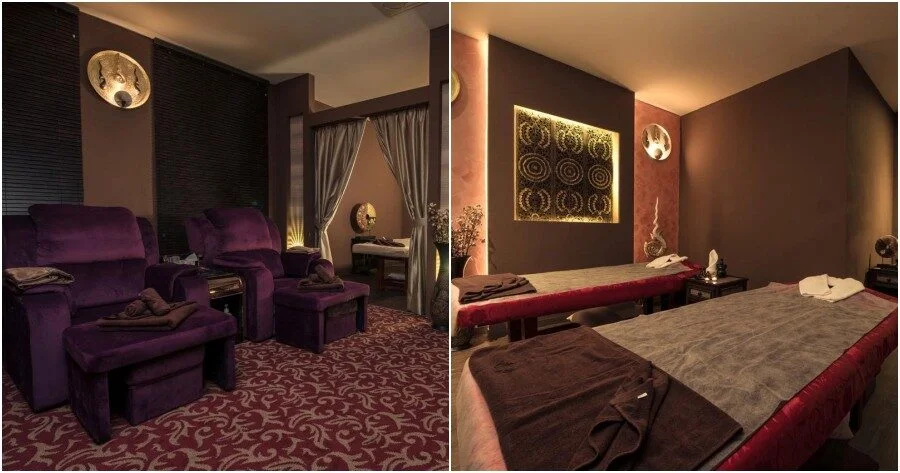
This morning (August 16), well-known Malaysian family wellness chain Healthland announced the indefinite closure of several of its outlets, effective immediately. The sudden move has left many regular customers surprised, especially as the centre confirmed that all existing appointments have been cancelled without exception. Customers who had made advance reservations for massages or other treatments will not be able to proceed with their sessions until further notice. In its official statement, Healthland explained that the closures were necessary due to legal compliance requirements, though the company did not elaborate further on the specific issues. The announcement also noted that the measure had to be implemented immediately, which is why the notice came without prior warning. At present, Healthland has not provided a timeline for when the affected outlets will reopen. However, the group assured clients that updates will be regularly posted on its social media channels. Customers with cancelled bookings will also be personally informed once operations resume. Founded in late 2013, My Healthland Group of Companies (“Healthland”) has since grown into one of Malaysia’s most popular family wellness centres, with a reputation for offering affordable massage and wellness services in a comfortable, family-friendly setting. Its sudden closure, even if temporary, marks a significant disruption for its loyal customer base.

Scroll to Top

Subscribe
FREE Newsletter