News

News

Tanco Signs Additional Agreement With MBINS For Port Dickson Free Zone Development Project

KUALA LUMPUR, Tanco Holdings Bhd, via its indirect subsidiary Tanco Land Sdn Bhd, has signed a supplemental agreement with Menteri Besar Incorporation Negeri Sembilan (MBINS), further reinforcing their joint venture for the Port Dickson Free Zone (PDFZ) project. This new agreement builds upon the original JV framework between both parties, following the incorporation of their joint venture entity, PDFZ Sdn Bhd, and recent media coverage regarding MBINS’s acquisition of the initial 121.41 hectares of land for the development. “This supplemental agreement strengthens and clarifies the partnership structure and outlines the land acquisition process for the strategically significant PDFZ initiative,” Tanco said in a statement today. As part of the agreement, MBINS will directly acquire the first 121.41-hectare parcel in Mukim Pasir Panjang, Port Dickson, for RM88.5 million on behalf of the JV. The purchase is being financed through advances provided by Tanco. Tanco added, “This collaborative arrangement exemplifies strong public-private synergy and marks a major milestone in pushing forward the project’s implementation. It also sets a clear foundation for future expansion.” MBINS is currently in negotiations to secure a second parcel of the same size and is committed to acquiring the remaining land needed for the development. It also intends to appoint the JV as the sole developer of the entire PDFZ. Tanco group managing director, Datuk Seri Andrew Tan Jun Suan, said the agreement further strengthens the company’s strategic alliance with the Negeri Sembilan state government. “With well-defined roles and a streamlined land acquisition process, we are now well-positioned to proceed with Phase 1 of the 574.65-hectare PDFZ project, in line with the National Physical Plan (NPP),” he said. He also noted that the PDFZ will serve as a vital component of the Malaysian Vision Valley 2.0 initiative and complement Tanco’s Smart AI Container Port (MIDPORT), reinforcing Negeri Sembilan’s role as a key hub for logistics, manufacturing, and high-value industries.

News

Malaysia’s Trade With BRICS Reaches RM818 Billion In 2024, Says MITI

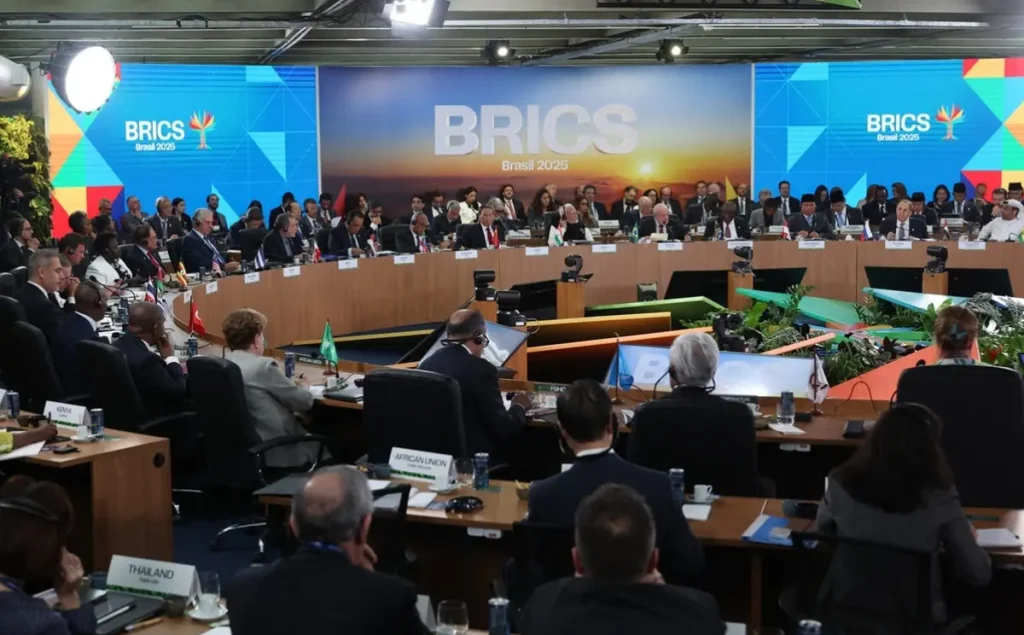
KUALA LUMPUR, Malaysia’s trade with BRICS nations climbed to RM818 billion in 2024, making up 35.2% of the country’s total global trade, according to the Ministry of Investment, Trade and Industry (MITI). In a written reply published on the Dewan Rakyat portal, the ministry said RM104.9 billion in investments from BRICS countries had been realised in Malaysia as of the end of last year. MITI noted that although Malaysia has not joined BRICS as a full member, it has already seen economic gains through its strategic engagement with the group, which allows the country to explore new market access, attract foreign investments, and assess broader implications before considering full membership. “Malaysia’s economic ties with BRICS members have already proven beneficial, as many are long-standing trade and investment partners,” said MITI. “This partnership also allows BRICS to assess Malaysia’s commitment to the bloc’s priorities.” The ministry’s response came following a parliamentary question from Datuk Seri Dr Ahmad Samsuri Mokhtar (PN–Kemaman) regarding the tangible outcomes of Malaysia’s cooperation with BRICS in promoting economic development and sustainability. MITI also highlighted Prime Minister Datuk Seri Anwar Ibrahim’s reaffirmation of Malaysia’s commitment to inclusive multilateralism and BRICS values during the 17th BRICS Leaders’ Summit held in Rio de Janeiro, Brazil from July 6–7, 2025. “As a partner country, Malaysia can leverage BRICS cooperation to deepen regional supply chain links, diversify export markets, and unlock new investment opportunities,” the ministry said. This collaboration, MITI added, supports Malaysia’s aim to promote an inclusive and rules-based global trading system while boosting its economic resilience against growing protectionist trends. The ministry also stressed the importance of stronger cooperation between BRICS and ASEAN, citing mutual benefits through partnerships in trade, clean energy, sustainable development, and advanced technologies. As the ASEAN Chair in 2025, Malaysia will lead various regional efforts, including the “Declaration on the Establishment of an ASEAN AI Safety Network,” the ASEAN AI Malaysia Summit (August 11–13, 2025), and the Smart City Expo Kuala Lumpur (September 17, 2025). These initiatives are expected to involve ASEAN dialogue partners such as China, India, and Russia — all BRICS member countries. BRICS currently comprises 10 nations: Brazil, China, Egypt, Ethiopia, India, Indonesia, Iran, Russia, South Africa, and the United Arab Emirates.

News

Indomie Maker Posts Rp5.5 Trillion Profit In H1 2025, Marking 56% Yearly Growth

JAKARTA, Indofood CBP Sukses Makmur (ICBP), the maker of the iconic Indomie noodles, recorded a net profit of Rp5.54 trillion ($335.6 million) for the first half of 2025, marking a 56% increase year-on-year. The surge was mainly attributed to reduced foreign exchange losses and stronger financial stability. Despite a slight 5% dip in earnings before interest and tax (EBIT) to Rp8.48 trillion from Rp8.89 trillion, operating margins remained solid at 22.5%, said President Director and CEO Anthoni Salim in a filing on Thursday. As one of Indonesia’s biggest consumer goods companies, Indofood CBP offers a wide range of products — from instant noodles and snacks to dairy, beverages, and seasonings — under more than 30 brands. It also runs its own packaging division. Indomie, its flagship brand, has seen global success with over 60 factories across Indonesia and 20 more overseas in Malaysia, the Middle East, Africa, and Southeastern Europe. The brand is currently exported to over 100 countries. Looking ahead, Salim said the company remains cautious amid global uncertainty. “Our priorities are ensuring product accessibility, driving innovation, and improving efficiency to support long-term sustainable growth,” he added.

News

Premium Strategy Lifts Malaysia Airlines Back On Track

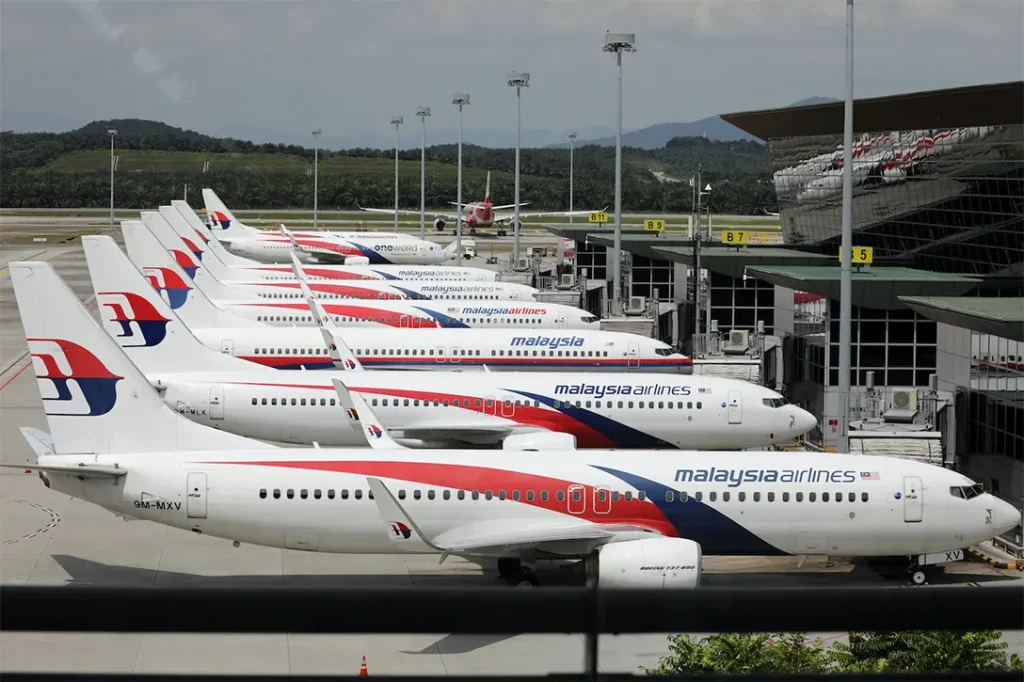
PETALING JAYA, A strategic pivot to premium services, modern fleet renewal, and stronger international partnerships have propelled Malaysia Airlines’ comeback, marking a significant turnaround for the national carrier. According to Captain Izham Ismail, group managing director of parent company Malaysia Aviation Group (MAG), the airline’s revival began in 2019 when it reevaluated its market strategy. “For years, we were locked in fare wars with low-cost carriers, which made no sense given our higher operating costs,” he told FMT. “It became clear we were targeting the wrong segment.” MAG subsequently repositioned Malaysia Airlines as a premium full-service carrier. Moving away from point-to-point budget routes, the airline adopted a hub-and-spoke model centered on Kuala Lumpur International Airport (KLIA), facilitating long-haul connectivity between destinations like Europe and Australia. By late 2019, signs of recovery began to show. The airline returned to operating profit in 2022, and by 2023, MAG recorded a net profit of RM766 million — a sharp reversal after years of losses. Tackling an aging fleet One of MAG’s biggest challenges was its aging fleet, with aircraft averaging 14 years — above the global norm of 11 years. The situation led to capacity cuts of 18% in late 2024, with 6,300 flights canceled and nearly a million passengers affected. To address this, MAG launched a major fleet renewal programme. Deliveries of new-generation aircraft, including Airbus A330neos and Boeing 737-8s, are well underway. Four of the 20 A330neos and 12 of the first 25 Boeing 737-8s have been delivered. Additional orders, including Boeing 737-10s, are expected through 2028, with a second phase of deliveries from 2029. Expanding reach through alliances As a mid-sized airline, Malaysia Airlines leaned on strategic partnerships to extend its network. Through code-sharing agreements with over 20 global carriers, the airline now offers access to nearly 900 destinations worldwide. “A moderate-sized airline with a limited fleet needs strong partners to compete globally,” said Izham. MAG also leveraged Malaysia’s rich cultural appeal — such as hospitality and cuisine — to differentiate itself in the premium segment. One initiative, the Bonus Side Trip (BST), allows transiting international passengers at KLIA to visit a second Malaysian city at no extra cost. “BST highlights our commitment to positioning Malaysia as a leading Asian destination while supporting local economies and businesses,” he said. Recognition and momentum Malaysia Airlines’ transformation has gained global recognition. It was named the world’s fastest-growing airline brand in Brand Finance’s 2025 Airlines 50 report, with brand value surging 209% to US$607 million. At the 2025 Skytrax World Airline Awards, it ranked in the top 10 in several categories, including: 6th for World’s Best Airport Services 8th for World’s Best Cabin Crew 7th for Best Airline Staff in Asia 9th for Best Airlines in Asia 10th for Best Economy Class Seats “This isn’t just a recovery story — it’s about building a future-ready airline,” said Izham. “We’re laying the foundation for long-term resilience over the next 5, 10, or even 15 years.”

News

China Galaxy, CICC Plan Over US$1bil Investment Funds In Southeast Asia

SINGAPORE, Chinese state-backed investment banks China International Capital Corp (CICC) and China Galaxy Securities are planning to roll out investment funds worth over US$1 billion in Southeast Asia, marking a strategic shift towards international markets amid ongoing US-China trade tensions. Traditionally focused on domestic investments, both institutions are now aligning with Beijing’s broader push to boost outbound investment and strengthen economic ties across the region. Carol Fong, chief executive of CGS International, a unit of China Galaxy Securities. According to sources familiar with the matter, subsidiaries of CICC and China Galaxy aim to launch the funds over the next 12 to 18 months. “As the tariff war continues and Chinese companies adopt a ‘China plus N’ strategy, they’re increasingly looking for local expertise in Southeast Asia,” said Carol Fong, CEO of CGS International, a unit under China Galaxy Securities. This regional knowledge, she added, will support Chinese firms in areas like supply chain expansion and distribution. The ‘China plus N’ strategy involves diversifying supply chains and operations beyond China to mitigate geopolitical risks. CGS International is preparing to launch a private equity fund of up to US$1 billion in 2026 to drive capital flows between China and Southeast Asia. The fund will focus on high-growth industries such as healthcare, artificial intelligence, advanced manufacturing, renewable energy, and consumer sectors. The move also reflects China’s broader efforts to enhance regional integration in response to US trade measures introduced since 2018. Despite a partial tariff pause agreed in May, Southeast Asia—home to over 650 million people—continues to attract growing interest from Chinese companies seeking expansion. “Southeast Asia’s size and growth potential offer major opportunities for Chinese firms,” said Fong. In addition, CICC Capital, the private equity arm of CICC, is partnering with Malaysia Digital Economy Corporation (MDEC) to launch a US$100 million fund targeting Malaysia’s gaming industry, a digital ministry official told Reuters. Separately, CGS International is collaborating with Fullgoal Asset Management Hong Kong and Bursa Malaysia to facilitate the listing of foreign-underlying ETFs in Malaysia, especially those offering China market exposure. The first listings are expected in 12 to 18 months, pending regulatory approval. China remains Southeast Asia’s largest trading partner, with bilateral trade growing 12% year-on-year to reach US$982 billion in 2024, according to Chinese customs data. Earlier this week, Malaysia’s digital ministry confirmed RM2.97 billion (US$702 million) in investments from major Chinese tech firms. These funds will support AI development, next-gen digital infrastructure, and the creation of 6,800 skilled digital jobs.

News

CAB Cakaran To Acquire Cargill Malaysia’s Feed Business For RM231 Million

KUALA LUMPUR, CAB Cakaran Corp Bhd (KL:CAB), a poultry producer, plans to acquire animal feed manufacturer Cargill Feed Sdn Bhd (CFSB) for RM231 million in cash. The acquisition will allow CAB Cakaran to produce its own animal feed, supporting more than 100 broiler and breeder farms across Peninsular Malaysia and strengthening its integrated poultry operations. CAB Cakaran Corp Bhd is set to acquire the animal feed business of Cargill Malaysia for RM231 million, marking a major move to expand its vertically integrated poultry operations. The proposed acquisition will be carried out through CAB Cakaran’s 51%-owned subsidiary, CAB Nutrition Sdn Bhd, which will purchase 100% equity interest in Cargill Feed and Nutrition (Malaysia) Sdn Bhd. In a filing with Bursa Malaysia, the company said the acquisition includes two feed mills — in Pulau Indah, Selangor, and in Butterworth, Penang — along with machinery, equipment, customer contracts, and intellectual property rights. CAB said the acquisition will allow the group to strengthen its position across the poultry value chain, enhance production capacity, and improve cost efficiency through economies of scale. The deal is expected to be completed by the first quarter of 2026, subject to regulatory approvals and conditions.

News

Shahril Ridza Appointed As Chairman Of Standard Chartered Malaysia

KUALA LUMPUR, Standard Chartered Bank Malaysia Bhd (SCBMB) and Standard Chartered Saadiq Bhd (Saadiq) have appointed Tan Sri Shahril Ridza Ridzuan as their new chairman, effective Aug 2, 2025. He will take over from Datuk Yvonne Chia, who is stepping down on Aug 1 after completing her nine-year tenure. Shahril currently chairs several prominent organisations including Axiata Group Bhd, Iskandar Waterfront Holdings Sdn Bhd, Ekuiti Nasional Bhd, Battersea Project Holding Company Ltd, and Paradigm REIT Management Sdn Bhd. He is also a board member of CGS International Securities Malaysia Sdn Bhd and Kuala Lumpur Kepong Bhd. Previously, he served as managing director of Khazanah Nasional Bhd and as CEO of the Employees Provident Fund (EPF). “We are pleased to welcome Shahril as our new chairman. His strong leadership, integrity, and vision will be instrumental in guiding both SCBMB and Saadiq forward,” said Standard Chartered Malaysia CEO Mak Joon Nien in a statement.

News

ASEAN Construction’s $375K Wake-Up Call — The True Cost of (Non) Compliance

In the ASEAN construction sector, compliance is no longer just a buzzword – it’s a foundational requirement of doing business. ASEAN Sectoral Mutual Recognition Arrangement for Building and Construction Materials and the global push towards Net Zero 2050 means companies are facing intensifying pressure to demonstrate a compliant culture, with strict adherence to regulations. Yet despite the looming threats of debilitating fines and operational disruptions, many still view compliance as an arduous task that shackles productivity. Avtandil Mekudishvili, Regional Lead at PlanRadar ASEAN However widespread this perspective might be, it’s one that is dangerously short-sighted. If you think compliance is expensive and burdensome, then try non-compliance. Or rather, don’t; the potential costs, aggravation and damages of non-compliance are increasingly incapacitating to businesses that fall foul of the regulations. Already this year, between February and April 2025, Singapore’s Ministry of Manpower (MOM) conducted inspections at approximately 550 worksites, uncovering over 1,330 safety violations. These led to 13 Stop Work Orders and fines totaling more than S$375,000. Now the consequences extend far beyond straightforward financial penalties, encompassing severe reputational damage and even possible criminal charges. It’s time for the construction industry to wake up to the challenges, but also to see the benefits that a culture shift can bring, concerning compliance. The four pitfalls of (non)compliance Without wishing to be unduly alarmist, yet still being level-headed; let’s look at the four critical areas where non-compliance can wreak havoc on construction firms:  Health & Safety Act violations – In recent years, penalties have gone stratospheric. Effective June 2024, Malaysia’s Occupational Safety and Health Act has significantly increased penalties for safety breaches. Employers now face fines up to RM500,000 (~US$106,000) and/or imprisonment for up to two years for non-compliance. A stark reminder of the serious consequences of cutting corners where worker safety is at stake. Building Regulations failures – As of Q1 2024, Vietnam had nearly 430 green-certified building projects, with expectations to rise to 582 by 2030. The government is actively promoting green building development to achieve a 9%-27% reduction in greenhouse gas emissions by 2030 and net-zero emissions by 2050. Environmental breaches – There are no longer any upper limits to the potential penalties that can be imposed. Beyond immediate fines, companies face increased insurance premiums, reputational damage and lost business opportunities. In Indonesia, fines of up to IDR3 billion (~US$190,000) could be imposed or up to 5% of the investment value for companies operating without both an Environmental Approval and a Business License. Fire safety non-compliance – Perhaps the most sobering risks stem from fire safety infractions. In Singapore, The Workplace Safety and Health (WSH) Act amendments in 2024 increased maximum fines from S$20,000 to S$50,000 for breaches leading to serious harm. Additionally, mandatory video surveillance systems are now required at construction sites with contracts of S$5 million and above. While the human cost and reputational damage associated with fire safety failures remain incalculable. Bridging the compliance gap with digital solutions Despite these risks, compliance gaps continue throughout the industry. The root cause? A persistent reluctance to adopt digital technologies and data-driven solutions. This hesitancy creates an entirely unnecessary and potentially dangerous vulnerability in a heavily regulated landscape. The good news is that there are digital solutions, when integrated in conjunction with well thought out compliance strategy, that can help: Adopting a culture of safety advocacy Forward-thinking companies are changing the game by using digital platforms to empower their workforce from being passive rule-followers to becoming active safety promoters. This cultural shift not only reduces the likelihood of accidents and violations; it also strengthens the case for lowering regulatory barriers. According to recent data from the PlanRadar Global Housebuilders’ Survey, which surveyed 669 housebuilders across 17 countries, nearly 75% of respondents desire fewer regulatory obstacles to boost housing stock7; however, without a consistently safe and compliant workforce, these obstacles are likely to persist. By adopting digital tools to track safety efforts, companies can demonstrate a measurable commitment to compliance, supporting their push for regulatory reform. Channelling the power of data According to FMI Corp, the construction industry generates an enormous amount of data, approximately 2.5 quintillion bytes daily. Yet, nearly 95.5% of this data remains unused.8 By implementing robust data analytics practices, companies can proactively identify risks, monitor compliance in real-time, and predict potential problems – before they escalate into costly violations. Benefits of data-driven compliance Data-driven solutions enable construction firms to take a fundamentally different approach to compliance. Rather than reacting to violations after they occur, companies can prevent fines through early risk identification. Instead of treating safety as separate from operations, predictive analytics creates an integrated approach that enhances safety and efficiency. The streamlined processes of digital compliance solutions remove redundant paperwork, creating robust documentation that satisfies the strictest regulatory requirements. Integration of compliance across the project lifecycle Compliance should not be a one-off checklist but embedded throughout a construction project. Digital solutions enable continuous tracking and verification of regulatory requirements, from planning through to completion. They also promote collaboration among teams and enable transparency around readiness and reporting. Reframing compliance as best practice It’s time to shift our perspective on compliance from being a hurried afterthought or being viewed as ‘a necessary evil’ – to being part of an aspiration for excellence. Safety regulations exist not just to protect individuals but also to safeguard businesses. As technology evolves, so should our attitudes toward compliance. By embracing effective digital solutions, we can start to make a true culture shift and alter compliance from a box-ticking action into a sound cornerstone of our industry, paving the way for a future where compliance is synonymous with best practice and flawless service.

News

UEM Sunrise Successfully Issues RM500 Million In Islamic Medium-Term Notes

KUALA LUMPUR, UEM Sunrise Bhd has completed the issuance of RM500 million worth of Islamic medium-term notes (IMTNs) under its existing sukuk programme. In a filing with Bursa Malaysia, the company said the IMTN programme, along with its Islamic commercial papers programme, has a combined limit of up to RM4 billion. Both are structured based on the Shariah principle of murabahah via a tawarruq arrangement. The RM500 million was issued in two tranches — RM200 million with a 10-year maturity due on July 30, 2035, and RM300 million with a 12-year maturity due on July 30, 2037. Proceeds from the issuance will be used for Shariah-compliant general corporate purposes across UEM Sunrise and its subsidiaries. These include land and company acquisitions, investments, project and infrastructure development, capital expenditures, and refinancing of existing Islamic financing or loan facilities.

News

BNM Fines Three Banks For Compliance Lapses

KUALA LUMPUR, Bank Negara Malaysia (BNM) has imposed a total of RM3.445 million in administrative monetary penalties (AMPs) on Bank Islam Malaysia Bhd (BIMB) for breaches of the Islamic Financial Services Act 2013 (IFSA) and related regulatory requirements. In a statement today, the central bank said the penalties relate to non-compliance with its Risk Management in Technology Policy Document (RMiT PD) and the Anti-Money Laundering, Countering the Financing of Terrorism, and Targeted Financial Sanctions Policy Document (AML/CFT and TFS for FIs PD). BIMB paid: RM1.70 million on May 29, 2025, for breaches in sanctions screening compliance, and RM1.745 million on June 30, 2025, for prolonged service disruptions. Separately, BNM imposed a RM2.85 million penalty on Bank Kerjasama Rakyat Malaysia Bhd (BKRM) for non-compliance with the Development Financial Institutions Act 2002 (DFIA) and the RMiT PD. BKRM paid the full amount on June 26, 2025. Bank Simpanan Nasional (BSN) was also fined RM995,000 for similar breaches under the DFIA and the RMiT PD. BSN settled the penalty on June 25, 2025.

Scroll to Top

Subscribe
FREE Newsletter