News

News

Microsoft Joins The $4 Trillion Club

Microsoft has officially joined the $4 trillion valuation club, becoming the second company in history to reach the milestone. Its shares surged nearly 4.5% on Thursday following a strong quarterly earnings report the night before, pushing its intraday market cap to $4.01 trillion. The tech giant’s stock has climbed about 28% since the beginning of the year. The milestone comes just 18 months after Microsoft hit a $3 trillion valuation, and just over five years since crossing the $1 trillion mark in April 2019. Microsoft now follows chipmaker Nvidia, which became the first company to reach a $4 trillion market cap earlier in July. Apple, another major tech rival, currently holds a valuation of $3.12 trillion. Microsoft hit a $4 trillion valuation Thursday. Microsoft’s rally was fueled by strong performance in its Azure cloud computing segment and robust growth in its enterprise software business, driven in part by demand for its Copilot AI tools embedded in Microsoft 365. The company also announced a record $30 billion in capital expenditures for the current fiscal first quarter, highlighting its aggressive investment in AI. Unlike Nvidia’s rapid rise—tripling its valuation in about a year—Microsoft’s climb to the $4 trillion mark has been more gradual. However, its strategic AI push, particularly its multibillion-dollar partnership with OpenAI, has been transformative. By integrating OpenAI’s models into Azure and the Microsoft Office Suite, the company has strengthened its competitive edge against Amazon Web Services and Google Cloud. Investor confidence has soared as Microsoft posted record revenues quarter after quarter since September 2022. Its stock has also rebounded sharply—rising nearly 50% from its April 2025 low when markets were shaken by former President Donald Trump’s tariff threats. Despite global economic uncertainties, including new US tariffs, Microsoft’s financials remain strong. The company has continued to streamline operations, most recently announcing layoffs of around 9,000 employees in July—roughly 4% of its workforce—following a 6,000-worker reduction in May. A spokesperson attributed the cuts in part to productivity gains from new technologies, including AI. CEO Satya Nadella has stated that AI is now responsible for generating up to 30% of Microsoft’s code, underlining the company’s commitment to embedding AI across all facets of its business. With billions flowing into AI infrastructure and increasing reliance on automation, Microsoft is reinforcing its position at the forefront of the tech industry’s next major evolution.

News

Daryl Ng Takes Over Leadership Of US$16.3 Billion Sino Group As Third-Generation Successor

Daryl Ng Win Kong, 47, the eldest son of Robert Ng Chee Siong, will officially take over as chairman of the HK$127.7 billion (US$16.3 billion) Sino Group on August 31, according to filings made to the Hong Kong stock exchange on Friday. He will helm Sino Land, Tsim Sha Tsui Properties, and Sino Hotels, marking a new era of third-generation leadership for the property group. His father, Robert Ng, 72, is stepping down after more than three decades at the top. He assumed leadership in 1991 following the passing of his father and company founder, Ng Teng Fong. Robert Ng has six children, including Nikki Ng Mien Hua, the eldest daughter, who serves as a non-executive director. The family’s real estate legacy began in 1934, when the late Ng Teng Fong migrated from China to Singapore. He founded the Far East Organization in the 1960s and later built Sino Land into one of Hong Kong’s major property developers. Daryl Ng has been an executive director at Sino Group since April 2005 and deputy chairman since November 2017. Sino Land posted a net profit of HK$1.82 billion for the six months ending December 2024, down from HK$2.6 billion a year earlier. Despite the drop, the company remains in a strong cash position—an exception in a sector where many rivals are burdened with heavy debt.

News

Qantas To Shut Down Jetstar Asia, Cutting 500 Jobs

Qantas has announced it will shut down Jetstar Asia, its budget airline based in Singapore, citing rising operational costs and intense competition in the region. Jetstar Asia will officially cease operations on July 31, ending more than 20 years of service. Until then, it will operate on a gradually reduced schedule, Qantas said in a statement on Wednesday. “Despite Jetstar Asia’s strong performance in customer service and reliability, increasing supplier costs, high airport charges, and stiff competition have made the business unsustainable,” Qantas stated. Jetstar Asia currently operates 16 routes from Singapore to destinations across Malaysia, Thailand, Indonesia, Japan, China, the Philippines, Sri Lanka, and Australia. The closure will not impact Jetstar services in Australia, New Zealand, or Japan. Customers with affected bookings will be fully refunded, and Qantas will seek to rebook them with other airlines where possible. More than 500 jobs in Singapore will be lost as a result of the shutdown. Qantas says affected employees will receive severance packages and job placement support, including potential roles within Qantas or other airlines. As part of the exit, Jetstar Asia’s fleet of 13 Airbus A320s will be gradually redeployed to Qantas operations in Australia and New Zealand. Aviation law expert Prof. Alan Tan from the National University of Singapore said the move marks a major loss for Southeast Asian travelers, calling the region’s low-cost carrier landscape “brutally competitive.” Virgin Australia Eyes Stock Market Debut On the same day, Virgin Australia revealed plans to go public on the Australian Stock Exchange on June 24, pricing its shares at A$2.90. The IPO is expected to raise A$685 million, valuing the airline at A$2.3 billion. The listing will allow key investors—including Bain Capital, Qatar Airways Group, and the Virgin Group—to partially cash out their stakes, while new investors are projected to hold around 30% of shares. Virgin Australia, which flies 20 million passengers annually across 76 aircraft, operates both domestic and short-haul international routes. It will soon launch long-haul services to Doha through a partnership with Qatar Airways, which owns 25% of the airline. Criticism of Budget Airlines Model Meanwhile, United Airlines CEO Scott Kirby recently criticized the low-cost airline model, saying it was based on tricking customers with hidden fees. Speaking at the “Future of Everything” summit, Kirby said, “The model was: screw the customer… then charge them a bunch of fees they weren’t expecting.” He suggested budget carriers struggle because they don’t generate loyalty. Ironically, United announced a partnership with JetBlue—often considered a budget airline—on the same day.

News

Pek Lian Guan To Return As CEO Of Tiong Seng

Tiong Seng Holdings has announced the reappointment of Pek Lian Guan as its Executive Director and Chief Executive Officer, effective August 5. Pek previously stepped down from the role on July 31, 2020, after being charged in a corruption case. He was later acquitted of two counts of abetting a conspiracy to corruptly lend money to former Land Transport Authority (LTA) deputy group director, Henry Foo Yung Thye. Foo, who was found guilty of receiving a total of $1.24 million in bribes from various contractors, was sentenced to five-and-a-half years in prison in 2021. Pek was cleared of all charges on October 11, 2024, although the prosecution has filed an appeal, with the outcome still pending. Welcoming Pek back, Tiong Seng chairman Teo Ho Pin said, “His strategic vision, deep industry experience, and strong ties with stakeholders make him the right person to lead Tiong Seng into its next phase of growth.” The announcement comes as Tiong Seng warned of a net loss for the first half of FY2025, due to cost overruns from pre-pandemic projects. Rising material and labour costs have affected margins across the construction industry. In contrast, the company posted a profit of $5 million in the first half of FY2024 and ended that year with a net profit of $2.8 million, rebounding from a full-year loss of $13.6 million in FY2023. As of December 31, 2024, Tiong Seng reported an order book of around $600 million. Pek, who joined Tiong Seng in 1990 and led the company through its public listing in 2010, said, “Tiong Seng has always been close to my heart. I’m excited to work with our team to strengthen our finances, innovate, and mentor the next generation of leaders.” Current CEO Pay Sim Tee, who is Pek’s cousin, will remain on the board as an executive director. Pek’s son, Pek Zhi Kai, also continues to serve as an executive director. Tiong Seng shares last traded at 10 cents, up 11.11% year-to-date.

News

Maybank Appoints Malique Firdauz As Officer-In-Charge Of Maybank Islamic

KUALA LUMPUR, Maybank has appointed its current Chief Financial Officer, Malique Firdauz Ahmad Sidique, as the new Officer-in-Charge (OIC) for Group CEO, Islamic Banking, and CEO of Maybank Islamic Bhd (MIB), effective today. He takes over from Nor Shahrizan Sulaiman, who has decided to leave the group to pursue other career opportunities. Nor Shahrizan previously served as OIC while also holding the roles of Deputy CEO of MIB and Head of Community Banking. Maybank President and Group CEO, Datuk Seri Khairussaleh Ramli, expressed the group’s appreciation for Nor Shahrizan’s 16 years of dedicated service, acknowledging his leadership across multiple roles. “Malique Firdauz will oversee the day-to-day operations of Maybank Islamic alongside his current responsibilities until a new CEO is officially appointed,” the bank said in a statement.

News

SkyGate Solutions Partners With Singapore Firm For Precision Manufacturing In Penang

KUALA LUMPUR, SkyGate Solutions Bhd, formerly known as Ewein Bhd, has partnered with Singapore-based New Jin Hai Pte Ltd (NJH) to launch a high-precision manufacturing venture in George Town, Penang. In a filing with Bursa Malaysia on Friday, the precision engineering and industrial property group said the joint venture will operate under a newly established company, SkyGate NHJ Technology Sdn Bhd (NHJ Tech). SkyGate’s wholly-owned subsidiary, SkyGate NHJ Sdn Bhd (SNHJ), will hold a 51% stake, while NJH will hold the remaining 49%. NJH is fully owned by Suzhou New Hongji Precision Part Co Ltd and functions mainly as an investment arm. SkyGate Solutions, based in Penang, will invest RM19.55 million—representing its 51% share of the total RM38.34 million capital commitment. The funds will go toward building the factory, training workers, and providing operational capital. The joint venture will focus on producing metal forming machinery and machine tools, with an eye on Malaysia’s growing semiconductor industry. It will also benefit from NJH’s advanced, fully digitalised production technology. While the JV is not expected to have a major impact on earnings for the financial year ending Dec 31, 2025, SkyGate anticipates a positive contribution in the years to follow. SkyGate Solutions’ shares closed three sen higher at 69 sen on Friday, giving the company a market value of RM220.5 million.

News

Tanco Signs Additional Agreement With MBINS For Port Dickson Free Zone Development Project

KUALA LUMPUR, Tanco Holdings Bhd, via its indirect subsidiary Tanco Land Sdn Bhd, has signed a supplemental agreement with Menteri Besar Incorporation Negeri Sembilan (MBINS), further reinforcing their joint venture for the Port Dickson Free Zone (PDFZ) project. This new agreement builds upon the original JV framework between both parties, following the incorporation of their joint venture entity, PDFZ Sdn Bhd, and recent media coverage regarding MBINS’s acquisition of the initial 121.41 hectares of land for the development. “This supplemental agreement strengthens and clarifies the partnership structure and outlines the land acquisition process for the strategically significant PDFZ initiative,” Tanco said in a statement today. As part of the agreement, MBINS will directly acquire the first 121.41-hectare parcel in Mukim Pasir Panjang, Port Dickson, for RM88.5 million on behalf of the JV. The purchase is being financed through advances provided by Tanco. Tanco added, “This collaborative arrangement exemplifies strong public-private synergy and marks a major milestone in pushing forward the project’s implementation. It also sets a clear foundation for future expansion.” MBINS is currently in negotiations to secure a second parcel of the same size and is committed to acquiring the remaining land needed for the development. It also intends to appoint the JV as the sole developer of the entire PDFZ. Tanco group managing director, Datuk Seri Andrew Tan Jun Suan, said the agreement further strengthens the company’s strategic alliance with the Negeri Sembilan state government. “With well-defined roles and a streamlined land acquisition process, we are now well-positioned to proceed with Phase 1 of the 574.65-hectare PDFZ project, in line with the National Physical Plan (NPP),” he said. He also noted that the PDFZ will serve as a vital component of the Malaysian Vision Valley 2.0 initiative and complement Tanco’s Smart AI Container Port (MIDPORT), reinforcing Negeri Sembilan’s role as a key hub for logistics, manufacturing, and high-value industries.

News

Malaysia’s Trade With BRICS Reaches RM818 Billion In 2024, Says MITI

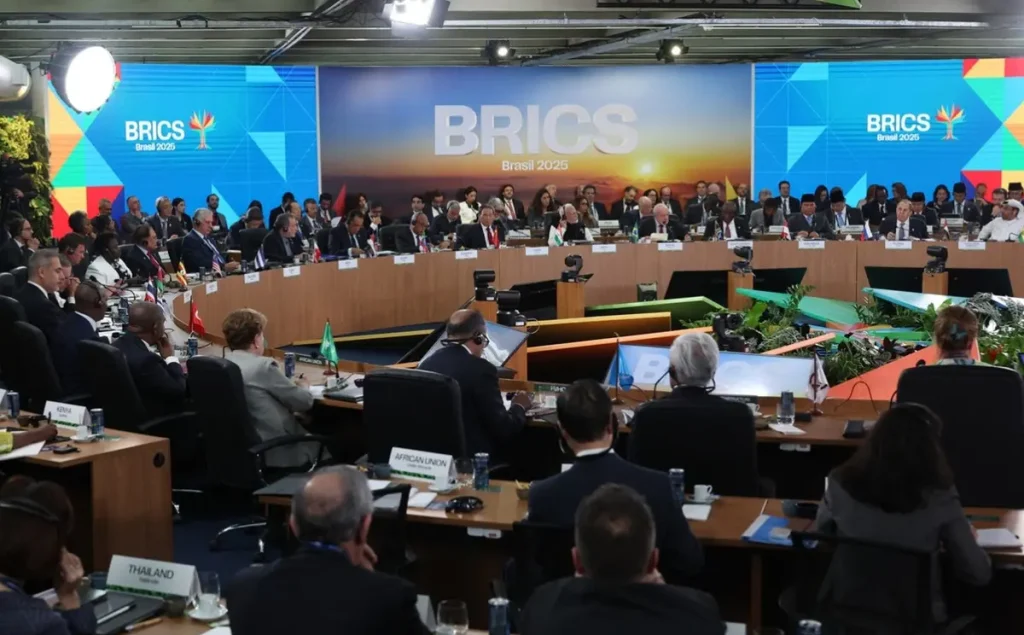
KUALA LUMPUR, Malaysia’s trade with BRICS nations climbed to RM818 billion in 2024, making up 35.2% of the country’s total global trade, according to the Ministry of Investment, Trade and Industry (MITI). In a written reply published on the Dewan Rakyat portal, the ministry said RM104.9 billion in investments from BRICS countries had been realised in Malaysia as of the end of last year. MITI noted that although Malaysia has not joined BRICS as a full member, it has already seen economic gains through its strategic engagement with the group, which allows the country to explore new market access, attract foreign investments, and assess broader implications before considering full membership. “Malaysia’s economic ties with BRICS members have already proven beneficial, as many are long-standing trade and investment partners,” said MITI. “This partnership also allows BRICS to assess Malaysia’s commitment to the bloc’s priorities.” The ministry’s response came following a parliamentary question from Datuk Seri Dr Ahmad Samsuri Mokhtar (PN–Kemaman) regarding the tangible outcomes of Malaysia’s cooperation with BRICS in promoting economic development and sustainability. MITI also highlighted Prime Minister Datuk Seri Anwar Ibrahim’s reaffirmation of Malaysia’s commitment to inclusive multilateralism and BRICS values during the 17th BRICS Leaders’ Summit held in Rio de Janeiro, Brazil from July 6–7, 2025. “As a partner country, Malaysia can leverage BRICS cooperation to deepen regional supply chain links, diversify export markets, and unlock new investment opportunities,” the ministry said. This collaboration, MITI added, supports Malaysia’s aim to promote an inclusive and rules-based global trading system while boosting its economic resilience against growing protectionist trends. The ministry also stressed the importance of stronger cooperation between BRICS and ASEAN, citing mutual benefits through partnerships in trade, clean energy, sustainable development, and advanced technologies. As the ASEAN Chair in 2025, Malaysia will lead various regional efforts, including the “Declaration on the Establishment of an ASEAN AI Safety Network,” the ASEAN AI Malaysia Summit (August 11–13, 2025), and the Smart City Expo Kuala Lumpur (September 17, 2025). These initiatives are expected to involve ASEAN dialogue partners such as China, India, and Russia — all BRICS member countries. BRICS currently comprises 10 nations: Brazil, China, Egypt, Ethiopia, India, Indonesia, Iran, Russia, South Africa, and the United Arab Emirates.

News

Indomie Maker Posts Rp5.5 Trillion Profit In H1 2025, Marking 56% Yearly Growth

JAKARTA, Indofood CBP Sukses Makmur (ICBP), the maker of the iconic Indomie noodles, recorded a net profit of Rp5.54 trillion ($335.6 million) for the first half of 2025, marking a 56% increase year-on-year. The surge was mainly attributed to reduced foreign exchange losses and stronger financial stability. Despite a slight 5% dip in earnings before interest and tax (EBIT) to Rp8.48 trillion from Rp8.89 trillion, operating margins remained solid at 22.5%, said President Director and CEO Anthoni Salim in a filing on Thursday. As one of Indonesia’s biggest consumer goods companies, Indofood CBP offers a wide range of products — from instant noodles and snacks to dairy, beverages, and seasonings — under more than 30 brands. It also runs its own packaging division. Indomie, its flagship brand, has seen global success with over 60 factories across Indonesia and 20 more overseas in Malaysia, the Middle East, Africa, and Southeastern Europe. The brand is currently exported to over 100 countries. Looking ahead, Salim said the company remains cautious amid global uncertainty. “Our priorities are ensuring product accessibility, driving innovation, and improving efficiency to support long-term sustainable growth,” he added.

News

Premium Strategy Lifts Malaysia Airlines Back On Track

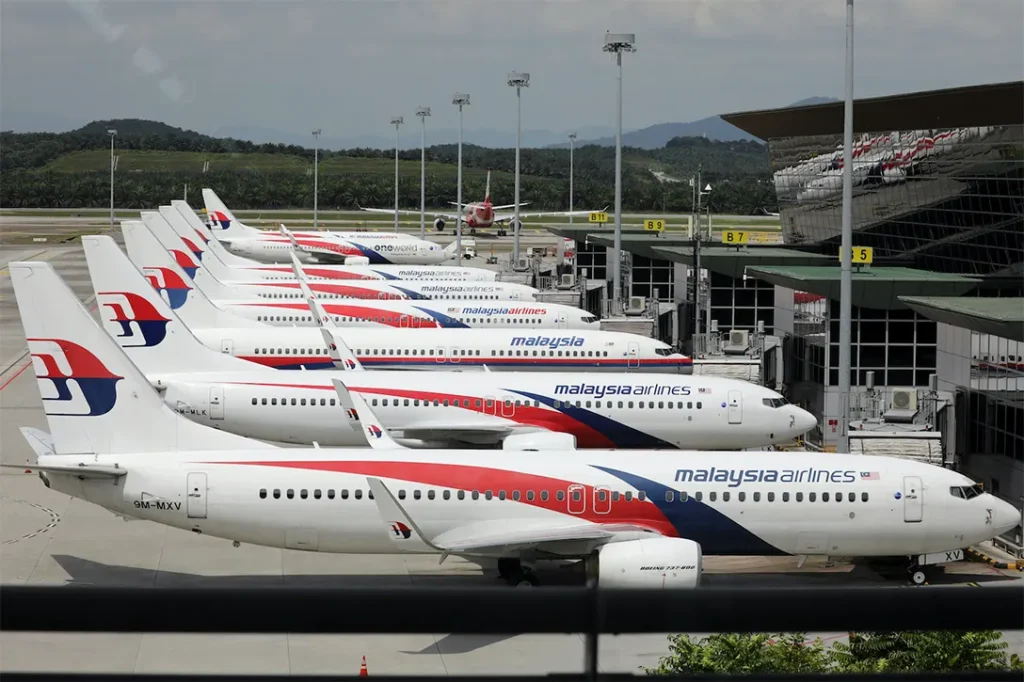
PETALING JAYA, A strategic pivot to premium services, modern fleet renewal, and stronger international partnerships have propelled Malaysia Airlines’ comeback, marking a significant turnaround for the national carrier. According to Captain Izham Ismail, group managing director of parent company Malaysia Aviation Group (MAG), the airline’s revival began in 2019 when it reevaluated its market strategy. “For years, we were locked in fare wars with low-cost carriers, which made no sense given our higher operating costs,” he told FMT. “It became clear we were targeting the wrong segment.” MAG subsequently repositioned Malaysia Airlines as a premium full-service carrier. Moving away from point-to-point budget routes, the airline adopted a hub-and-spoke model centered on Kuala Lumpur International Airport (KLIA), facilitating long-haul connectivity between destinations like Europe and Australia. By late 2019, signs of recovery began to show. The airline returned to operating profit in 2022, and by 2023, MAG recorded a net profit of RM766 million — a sharp reversal after years of losses. Tackling an aging fleet One of MAG’s biggest challenges was its aging fleet, with aircraft averaging 14 years — above the global norm of 11 years. The situation led to capacity cuts of 18% in late 2024, with 6,300 flights canceled and nearly a million passengers affected. To address this, MAG launched a major fleet renewal programme. Deliveries of new-generation aircraft, including Airbus A330neos and Boeing 737-8s, are well underway. Four of the 20 A330neos and 12 of the first 25 Boeing 737-8s have been delivered. Additional orders, including Boeing 737-10s, are expected through 2028, with a second phase of deliveries from 2029. Expanding reach through alliances As a mid-sized airline, Malaysia Airlines leaned on strategic partnerships to extend its network. Through code-sharing agreements with over 20 global carriers, the airline now offers access to nearly 900 destinations worldwide. “A moderate-sized airline with a limited fleet needs strong partners to compete globally,” said Izham. MAG also leveraged Malaysia’s rich cultural appeal — such as hospitality and cuisine — to differentiate itself in the premium segment. One initiative, the Bonus Side Trip (BST), allows transiting international passengers at KLIA to visit a second Malaysian city at no extra cost. “BST highlights our commitment to positioning Malaysia as a leading Asian destination while supporting local economies and businesses,” he said. Recognition and momentum Malaysia Airlines’ transformation has gained global recognition. It was named the world’s fastest-growing airline brand in Brand Finance’s 2025 Airlines 50 report, with brand value surging 209% to US$607 million. At the 2025 Skytrax World Airline Awards, it ranked in the top 10 in several categories, including: 6th for World’s Best Airport Services 8th for World’s Best Cabin Crew 7th for Best Airline Staff in Asia 9th for Best Airlines in Asia 10th for Best Economy Class Seats “This isn’t just a recovery story — it’s about building a future-ready airline,” said Izham. “We’re laying the foundation for long-term resilience over the next 5, 10, or even 15 years.”

Scroll to Top

Subscribe
FREE Newsletter