News

News

Nissan in Talks to Manufacture Vehicles for Honda in the US, Reports Nikkei

Nissan Motor Co. is reportedly in advanced discussions to manufacture vehicles for Honda Motor Co. in the United States, according to the Nikkei, as the carmaker seeks to optimise operations at its under-utilised production facility in Mississippi. The Canton plant, located in Mississippi and currently responsible for models such as the Nissan Frontier, is being considered for the production of Honda pickup trucks, the report stated. The potential collaboration marks a shift in strategic direction for the two Japanese automakers, particularly following the collapse of earlier merger talks aimed at creating the world’s third-largest car manufacturer. Despite the breakdown of merger discussions earlier this year, both companies have reiterated their commitment to continuing cooperation in key areas, including electric vehicle (EV) development. In a brief statement issued on Friday, Nissan confirmed that it had no further updates at this time but emphasised that joint projects with Honda remain ongoing. The company declined to comment on what it characterised as market speculation. Honda representatives were not immediately available for comment. Nissan’s drive to streamline its global operations comes amid significant financial challenges. The company reported a net loss of US$4.5 billion for the financial year ending in March. With declining sales and an ageing product portfolio, Nissan faces mounting pressures, including a maturing debt portfolio of approximately ¥700 billion (US$4.8 billion) due this year. Its credit ratings have been downgraded to junk status by all three major agencies. Under the leadership of newly appointed CEO Ivan Espinosa, Nissan has initiated a comprehensive restructuring plan that includes the closure of seven manufacturing plants and a 15% reduction in its global workforce. The proposed manufacturing agreement with Honda, if finalised, could provide much-needed operational efficiency for Nissan while giving Honda added production capacity in the US market. Both companies continue to contend with growing competition from Chinese manufacturers and trade uncertainties surrounding US-Japan negotiations on automotive tariffs. -Reuters

News

Volkswagen Ceases Production at Chinese Facility

Volkswagen Group has confirmed the closure of one of its manufacturing plants in China, underscoring its accelerating shift towards electric mobility in the world’s largest automotive market. A spokesperson for the German automaker said production had ceased at a facility in Nanjing, operated jointly with Chinese partner SAIC. The decision, initially reported by Handelsblatt, reflects both the declining demand for internal combustion engine vehicles and broader strategic objectives tied to electrification. “Volkswagen Group and its joint venture partners are accelerating the transformation towards electric, intelligent, connected vehicles,” the spokesperson said. “Many SAIC Volkswagen sites are currently being converted or have already been converted for electric vehicle production.” According to a company source, the Nanjing plant’s location within a dense urban setting complicated the retrofitting process for electric vehicle production and limited potential expansion opportunities. Electric vehicle sales continue to gain traction across China, placing mounting pressure on traditional European manufacturers. Volkswagen, long dominant in the Chinese market with its petrol and diesel offerings, has seen its position challenged in recent years by agile local competitors such as BYD. As part of its “In China, for China” initiative, Volkswagen is leaning more heavily on domestic expertise to realign its operations with local market demands. The company confirmed that its production network is undergoing optimisation in line with this renewed strategic focus. Volkswagen also disclosed a 2.1% decline in vehicle deliveries in China for the first half of 2025. While the drop reflects ongoing competitive pressures, it marks an improvement over the 7.4% year-on-year fall reported during the same period in 2024. -AFP

News

OCBC Appoints Tan Teck Long as CEO Following Helen Wong’s Surprise Departure

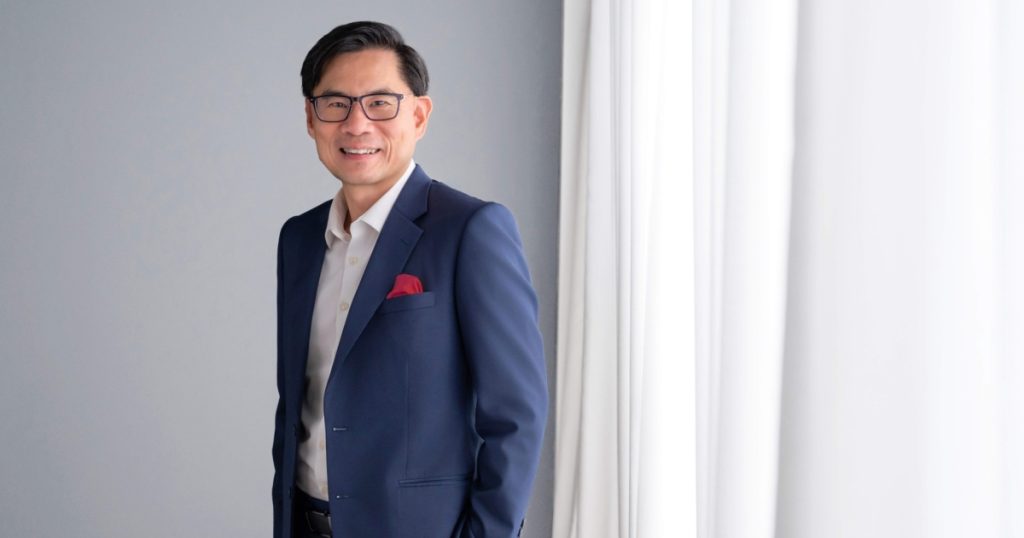
Oversea-Chinese Banking Corporation (OCBC) has announced that Chief Executive Officer Helen Wong will step down at the end of December, concluding a four-year tenure that marked a period of record profitability for Singapore’s second-largest lender. The bank confirmed on Friday that Tan Teck Long, currently Head of Global Wholesale Banking, will succeed Wong from January. Tan, a Singaporean national, joined OCBC in 2022 from DBS Group Holdings, where he held the role of Chief Risk Officer. Under his leadership, OCBC’s wholesale banking division has delivered a compound annual growth rate of approximately 25% in profit over the past three years, according to the bank’s statement. Wong, 64, made history in April 2021 as the first woman to lead a major Singaporean bank. Her tenure was characterised by a strong financial performance, with OCBC reporting record profits for three consecutive years. In February this year, she announced the bank’s largest capital return programme to date, amounting to S$2.5 billion (approximately US$1.95 billion or RM8.3 billion) through special dividends and share buybacks over two years. OCBC Chairman Andrew Lee noted that Tan’s appointment followed a “rigorous global search” and was unanimously approved by the board. Tan, 55, is expected to bring continued strategic leadership to the group, particularly given his track record in wholesale banking and risk management. Wong’s retirement was announced in the same week that OCBC’s longstanding effort to take full control of regional insurer Great Eastern Holdings fell short. Despite owning nearly 94% of the company, OCBC failed to secure sufficient shareholder support for a delisting proposal. Wong later stated via LinkedIn that the bank had entered the meeting “already satisfied” with its existing stake and does not intend to make another offer for Great Eastern “in the foreseeable future.” Throughout Wong’s tenure, OCBC’s shares rose by 43%, outperforming the 29% gain in the benchmark Straits Times Index. However, the bank’s stock performance has trailed that of DBS, which also underwent a leadership change earlier this year. Wong, a seasoned banker originally from Hong Kong, spent 27 years at HSBC Holdings, most recently overseeing its Greater China operations. She joined OCBC shortly before the onset of the COVID-19 pandemic, having initially been appointed to lead its global wholesale banking business. Despite calls from analysts during her leadership to pursue strategic acquisitions and deploy excess capital, OCBC was perceived as more conservative in expansion compared to rivals DBS and United Overseas Bank, both of which have been more active in regional asset growth. -Bloomberg

News

Bank Muamalat Launches ArRahnu BIZ with Up to RM5 Million Gold-Backed Financing

Bank Muamalat Malaysia Berhad has officially launched ArRahnu BIZ, a new Shariah-compliant financing solution tailored for registered companies—including Sdn Bhd entities and sole proprietorships—offering access to capital of up to RM5 million, secured by gold collateral. In a statement, the bank described ArRahnu BIZ as a strategic addition to its suite of financial services, aimed at empowering local entrepreneurs through flexible, ethical, and secure financing aligned with Islamic principles. “This initiative reflects our commitment to expanding financial literacy, supporting the continuity of community-based businesses, and advancing our mission to build a better life together,” Bank Muamalat stated. The bank also hosted a prize-giving ceremony at its Sungai Petani branch in Kedah to celebrate the main winners of its Gadai Emas Menang Emas 2.0 (GEME 2.0) campaign. The campaign, which ran from 1 March to 31 December 2024, generated revenue exceeding RM40 million and recorded total financing of RM811 million—a figure underscoring strong consumer trust in the bank’s Ar-Rahnu offerings. Three grand prize winners were awarded a combined RM200,000 worth of gold jewellery. The awards were presented by Bank Muamalat’s Director of Retail Banking, Mohammad Zalman Jalil. “GEME 2.0 demonstrates that Ar-Rahnu is more than a financial facility—it is a practical, ethical, and immediate form of financial empowerment,” said Mohammad Zalman. Following the campaign’s positive reception, Bank Muamalat has announced the launch of GEME 3.0, running from 1 March to 31 December 2025. This latest edition will offer RM320,000 worth of gold prizes. Further information on ArRahnu BIZ and the GEME 3.0 campaign is available via the bank’s official website at www.muamalat.com.my or through its customer service centre at 03-2600 5500. -Bernama

News

MIDF Amanah Maintains Positive Manufacturing Outlook Amid Tariff Concerns

MIDF Amanah Investment Bank Bhd anticipates Malaysia’s manufacturing sector will sustain its recovery momentum, supported by improving factory output and steady domestic demand, even as external risks such as tariff hikes pose ongoing challenges. This outlook is underpinned by the latest S&P Global Manufacturing Purchasing Managers’ Index (PMI), which rose to 49.3 in June 2025 — its highest level since October 2022. The uptick signals stronger production activity and a more moderate decline in new orders, reflecting renewed operational resilience within the sector. In a research note, the investment bank said it expects Malaysia’s Industrial Production Index (IPI) to gain traction, driven by manufacturing output recovery and a temporary boost from external trade. “Sentiment in financial markets indicates that expectations are beginning to move past tariff-related uncertainties,” the firm noted. However, it warned that continued weakness in mining output could dampen overall IPI performance in the months ahead. In related data, the Department of Statistics Malaysia (DOSM) reported that manufacturing sales rose 2.4% year-on-year to RM158.7 billion in May 2025, although this marked a slowdown from the 4.7% growth recorded in April. Chief Statistician Datuk Seri Dr Mohd Uzir Mahidin attributed the May performance primarily to the food, beverages, and tobacco sub-sector, which recorded a robust 13.0% year-on-year increase, following a 10.8% gain in April. Looking ahead, MIDF Amanah expects short-term manufacturing sales to remain firm, buoyed by a temporary lift from the current pause in tariff increases before the implementation of new US tariffs scheduled for 1 August 2025. While the firm acknowledged that upcoming US tariff measures could weigh on production in export-driven segments, it remains optimistic that robust domestic consumption and ongoing construction activity will continue to support production in domestically focused industries. Given the current trajectory, MIDF Amanah maintains its projection that Malaysia’s IPI growth will moderate to 2.0% for 2025. It also cautioned that extended external uncertainties — particularly those stemming from higher tariffs and a potential drop in final demand — could prompt export-oriented manufacturers to scale back operations, especially as the impact of front-loading activities fades once the new US trade measures take effect. Nonetheless, the investment bank remains confident that the IPI will stay in expansionary territory, bolstered by higher output in domestic-facing industries. This outlook is supported by resilient household spending, favourable labour market conditions, and rising income levels. -Bernama

News

Econpile Secures RM98.2 Million Contract for Industrial Project in Klang

Econpile Holdings Berhad has announced the award of a RM98.2 million contract from Eastmont Sdn Bhd for the execution of bored piling and associated works in Klang, Selangor. In a statement to Bursa Malaysia, the company confirmed that its wholly owned subsidiary, Econpile (M) Sdn Bhd, received the letter of award on 10 July 2025. The scope of works comprises bored piling for Blocks C and D, the construction of a basement for Block C, and pile cap works for Block D, as part of a proposed industrial development located in Sungai Kapar Indah. The project is scheduled to commence on 30 July 2025 and is expected to be completed within a 13-month timeframe. Econpile stated that the contract is anticipated to contribute positively to the Group’s revenue and earnings for the financial year ending 30 June 2026 and beyond. -The Star

News

MRCB Launches RM6.25 Billion Ipoh Sentral Project via Joint Venture

Malaysian Resources Corporation Berhad (MRCB), through its wholly owned subsidiary Country Annexe Sdn Bhd (CASB), has signed a joint venture development agreement with Ipoh Sentral Sdn Bhd (ISSB) for the development of the Ipoh Sentral project in Perak. The agreement, announced via a filing with Bursa Malaysia, establishes the partnership for a proposed mixed-use project structured around a transit-oriented development (TOD) model. The development is set to be located on two parcels of leasehold land with a combined area of 296,727 square metres, currently being transferred from Railway Assets Corporation to its wholly owned unit, Railway Assets Holding Sdn Bhd. Under the terms of the agreement, CASB will act as the master developer, responsible for initiating the planning and design phases, including the submission of the development’s masterplan to the relevant authorities. The project, excluding a designated cultural zone, has an estimated gross development value (GDV) of RM6.25 billion and a gross development cost (GDC) of RM5.62 billion. As part of the arrangement, CASB will make a consideration payment to ISSB of up to RM348 million, comprising a guaranteed minimum payment of RM198 million. The payment will be made over the course of the 20-year development through a combination of cash and in-kind assets. MRCB stated that the venture aligns with its long-term strategy to expand its land bank and strengthen its leadership in the TOD segment. The company highlighted that the Ipoh Sentral development is expected to generate recurring income throughout its duration and further demonstrate MRCB’s expertise in property development, engineering and construction. The group noted that both the commencement and completion timelines of the development remain undetermined, pending submission and approval of the full development plan by the relevant authorities. -The Star

Energy & Technology, News

Huawei Pursues AI Chip Exports to Middle East and Asia

Huawei Technologies Co is attempting to expand its artificial intelligence (AI) chip business beyond China, targeting prospective customers in the Middle East and Southeast Asia despite facing significant manufacturing constraints. According to individuals familiar with the matter, the Chinese technology giant has approached potential buyers in the United Arab Emirates, Saudi Arabia and Thailand to promote its Ascend 910B processors — a previous-generation chip — in limited volumes. These efforts reflect Huawei’s ambition to compete in AI hardware markets where US-based Nvidia Corporation currently holds a dominant position. Sources indicate that Huawei is offering shipments of the 910B chip in the low thousands, although the precise figures for each proposal remain unclear. In tandem, the company is seeking to attract interest by providing remote access to CloudMatrix 384, a China-based AI system built using the more advanced Ascend 910C chip. However, Huawei is not offering to export the 910C due to supply limitations and has instead prioritised Chinese clients who lack access to high-end US semiconductors. Despite these efforts, Huawei has yet to secure any firm deals. Its overtures are part of a broader strategy to increase international awareness of its AI capabilities while attempting to scale up domestic production. Nvidia, which has referred to Huawei as a formidable rival, continues to lead the global AI chip market by at least one generation, according to both US officials and Huawei’s own internal assessments. Among the potential clients, the Mohamed bin Zayed University of Artificial Intelligence in the UAE has reportedly shown no interest. The status of Huawei’s discussions in Thailand remains uncertain, while Malaysian negotiations over a proposed delivery of approximately 3,000 Ascend chips, previously reported by Bloomberg News, appear to be unresolved. In Saudi Arabia, however, conversations are understood to be at a more advanced stage, involving entities such as the Saudi Data & AI Authority (SDAIA). A spokesperson for SDAIA stated that the matter currently falls outside the organisation’s scope, and the Saudi government did not respond to requests for comment. Huawei’s AI chip output is severely constrained. A former Trump administration official noted that the firm is only capable of manufacturing approximately 200,000 AI chips this year, most of which will be distributed within China to meet domestic demand that exceeds one million units. This figure excludes a reserve of 2.9 million Ascend 910B dies previously sourced from Taiwan Semiconductor Manufacturing Co. The US government is closely monitoring AI infrastructure developments in regions including the Gulf and Southeast Asia, citing concerns about China’s expanding technological footprint. While many governments in these areas are seeking to maintain a neutral stance in the escalating US-China tech competition, Washington has exerted growing pressure. This includes encouraging AI projects to adopt US-made chips while discouraging the use of Huawei hardware. Despite a May policy shift under President Donald Trump to tighten controls, US officials remain divided on the national security implications of selling Nvidia and AMD chips to nations such as the UAE and Saudi Arabia. A draft rule from the Department of Commerce proposes extending licensing requirements to Malaysia and Thailand, though this has yet to be finalised and does not fully replace the earlier Biden-era framework. As of now, approvals for chip shipments tied to multi-billion-dollar AI deals announced during President Trump’s May visit to the Gulf remain pending. Exports of AI processors to Gulf states have required US government licences since 2023. Neither Nvidia nor AMD commented on the current situation, and the Department of Commerce declined to respond. Officials aligned with the Trump administration argue that swift action is needed to prevent Huawei from securing long-term customers, which could lead to larger-scale exports in the future. Others caution that expanding US chip exports may ultimately benefit Beijing and believe Washington’s leverage over Nvidia should be used to enforce stricter safeguards on overseas data infrastructure. In Saudi Arabia, where a state-backed AI investment fund has previously stated its willingness to divest from Chinese technology if requested by the US, the government has maintained long-standing AI collaborations with Huawei. It remains unclear, however, whether SDAIA will move forward with any deal involving the Ascend 910B or how Washington might respond. Earlier this year, the Department of Commerce declared that using Huawei’s Ascend chips anywhere globally could breach US trade controls, given the American technology embedded in their production. Following criticism from Beijing, the department revised this guidance, removing references to global applicability. Nonetheless, the current rules continue to warn that unauthorised use of the Ascend 910B, 910C or the forthcoming 910D model could trigger US penalties. Huawei declined to comment on this article, which is based on interviews with individuals close to the matter who requested anonymity due to the sensitivity of the discussions. The company previously stated that it had not shipped any Ascend chips to Malaysia, a claim echoed by the Malaysian government, which distanced itself from that project. -Bloomberg

News

TSMC Half-Year Revenue Jumps 40% on Soaring AI Demand

Taiwan Semiconductor Manufacturing Company (TSMC) has reported a 40% increase in revenue for the first half of the year, driven by strong global demand for artificial intelligence technologies. The world’s leading contract chip manufacturer recorded NT$1.77 trillion in revenue, compared to the same period last year, underscoring its strategic position in the rapidly evolving semiconductor market. The company, whose clientele includes global technology leaders such as Nvidia and Apple, attributed the robust performance to sustained momentum in AI-driven innovation. Chairman and Chief Executive Officer CC Wei recently stated that TSMC anticipates record earnings for the full year, citing continued strength in AI-related demand. TSMC has also benefited from a recent acceleration in sales, a trend partly attributed to geopolitical trade tensions. Specifically, former US President Donald Trump’s tariff measures prompted many firms to increase inventory levels amid concerns over potential future levies. During a shareholder meeting in June, Wei acknowledged that escalating tariffs could influence pricing and downstream demand, but reaffirmed confidence in the company’s outlook, stating, “Our business will still be very good.” Meanwhile, Taiwan’s government has confirmed it has not yet received official communication regarding US tariff measures, as discussions remain ongoing in Washington. In contrast, neighbouring countries including Japan and South Korea are among over 20 nations that have been formally notified of potential “reciprocal” tariffs set to take effect from 1 August. In an effort to mitigate potential trade impacts, Taipei has sought to strengthen its economic and strategic ties with the United States. This includes commitments to increased investment in US markets, greater purchases of American energy, and enhanced defence spending. -AFP

News

Fast Retailing Warns of Tariff Impact, Confirms Plans to Raise Prices

Fast Retailing, the Japanese parent company of global apparel brand Uniqlo, has warned that higher US tariffs will significantly affect its American operations from later this year. In response, the company plans to implement selective price increases to offset rising import costs. Concerns over a resurgence in inflation and broader economic instability have been heightened by US President Donald Trump’s unpredictable tariff measures. These actions have already dampened consumer sentiment across major retail markets, including the United States. Earlier this week, President Trump announced a new deadline of 1 August for the implementation of “reciprocal” tariff rates, which are expected to apply broadly to nearly all US trading partners. “It is unavoidable that we will be significantly affected from autumn and winter,” said Takeshi Okazaki, Chief Financial Officer of Fast Retailing, during the company’s quarterly earnings briefing. “It will be difficult to absorb all costs. Our approach will be to raise prices where possible and not where it isn’t possible, while ultimately focusing on creating a sustainable business that securely generates profits.” A large proportion of Uniqlo’s US inventory is sourced from manufacturing hubs in Southeast and South Asia. In a formal notification on Wednesday, President Trump confirmed that Sri Lanka—an important apparel exporter to the US—would face a 30 per cent tariff beginning 1 August. Vietnam, another key supplier, will be subject to a 20 per cent tariff, although products trans-shipped through Vietnam from third countries will be subject to a steeper 40 per cent levy. For the current financial year ending August, Fast Retailing maintained its operating profit forecast at ¥545 billion, citing the benefit of early product shipments to the US market. “FY2025 impact likely to be limited, whatever the tariff rate,” the company stated in its earnings release, noting that a substantial portion of merchandise had already been delivered to the United States. In the three months to 31 May, operating profit rose 1.4 per cent to ¥146.7 billion (approximately US$1.0 billion), falling short of the ¥153.8 billion consensus estimate from five analysts polled by LSEG. Founded with a single store in Hiroshima four decades ago, Uniqlo has expanded to more than 2,500 locations worldwide. Its business model—selling affordable fleece and cotton garments primarily made in China and other Asian markets—has come under pressure from shifting geopolitical trade dynamics and weakening consumer demand in key regions. Sales in China, Uniqlo’s largest overseas market with over 900 stores, have declined amid broader economic uncertainty. The company anticipates lower revenue and profits in China for the fourth quarter, citing subdued demand for apparel. With growth slowing in China, Fast Retailing has shifted focus towards expansion in North America and Europe. However, shares in the company have struggled, falling approximately 8 per cent in the first half of 2025—ranking it the fourth-worst performer among Asia-Pacific large-cap stocks, according to LSEG data. Shares closed down 0.9 per cent ahead of the earnings release.

Scroll to Top

Subscribe
FREE Newsletter