News

News

Garuda Indonesia Expands Boeing Aircraft Order to 79 Units

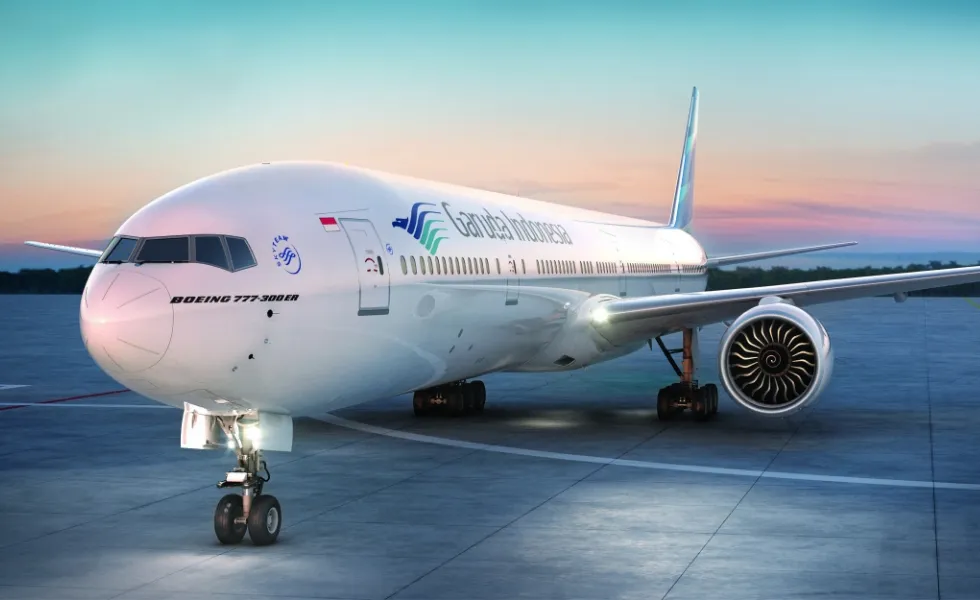
Indonesia’s national carrier, Garuda Indonesia, will increase its planned aircraft order from Boeing to 79 planes, according to State-Owned Enterprises Minister Erick Thohir. The announcement forms part of a broader trade strategy involving ongoing negotiations with the United States over impending import tariffs. Speaking at the legislative complex in Senayan, South Jakarta, on Tuesday, Minister Thohir stated the new agreement replaces a previously cancelled deal that was annulled during Garuda’s court-supervised debt restructuring process (PKPU). “The new total is 79 aircraft,” he said, as reported by Kumparan. The revised order marginally exceeds earlier projections of 50 to 75 planes, which had been disclosed by Garuda Indonesia’s President Director, Wamildan Tsani Pandjaitan, earlier this month. While discussions with Boeing remain at a preliminary stage, Wamildan noted that the airline is likely to acquire the 737 Max and 787 Max models. The agreement is part of Indonesia’s wider diplomatic effort to respond to a 32% import tariff imposed by the US on Indonesian goods. Although US President Donald Trump has delayed implementation, he warned President Prabowo Subianto in a recent letter that the tariff would take effect from 1 August unless a new agreement is reached. Minister Thohir underscored that the aircraft deal aligns with the government’s broader objectives of reducing trade imbalances and boosting energy security. He noted that both Garuda Indonesia and state-owned energy firm Pertamina are supporting the trade discussions with Washington. “This is also about strengthening our energy self-sufficiency through overseas investment via Danantara, and addressing our aircraft shortage,” he said. As part of Indonesia’s counter-proposal, the government has committed to up to US$34 billion in US imports, focusing largely on crude oil and aircraft. Pertamina is expected to be the major contributor to this import figure. Garuda Indonesia is also set to receive 6.65 trillion rupiah in funding from the state asset management agency Danantara. A substantial portion of this capital will be directed towards its low-cost subsidiary, Citilink Indonesia. The Ministry of Energy and Mineral Resources has confirmed that plans are progressing to import oil and gas from the United States. Deputy Energy Minister Yuliot Tanjung stated that the government awaits the outcome of negotiations led by Coordinating Minister for Economic Affairs Airlangga Hartarto, who is currently in Washington. “We’ve achieved a trade balance of around US$15 billion on the energy side. We will wait for Pak Airlangga to conclude negotiations with the United States,” said Yuliot, during an oil and gas forum on Tuesday, as reported by Bloomberg Technoz. Indonesia has proposed a series of concessions in the ongoing bilateral talks aimed at averting the tariff. However, analysts have warned that a comprehensive agreement may prove challenging to secure. “The government will maximise all available opportunities to safeguard national interests,” said Haryo Limanseto, spokesperson for the Ministry of Energy and Mineral Resources. -The Jakarta Post

News

Dr Mahathir Urges Malaysia to Broaden Global Trade Ties Amid US Tariff Pressure

Malaysia should intensify its trade relationships with nations beyond the United States, including China, to cushion the impact of tariffs imposed by the US government, former prime minister Tun Dr Mahathir Mohamad has said. In an interview with Bloomberg, Dr Mahathir criticised the protectionist tariff measures implemented by the Trump administration, stating that such policies would ultimately cause greater harm to the United States than to its trading partners. “The rest of the world will suffer, but America will suffer more because all those industries which were set up by Americans outside of America to take advantage of low costs,” he remarked. Responding to suggestions that any move to negotiate a reduction in tariffs might be construed by Washington as an admission of vulnerability, Dr Mahathir clarified that the brunt of the impact would be borne primarily by countries with significant export exposure to the United States. He emphasised that most of the international community was not implementing similar high tariff measures. “As such, we should increase our trade with the rest of the world. With China, for example. To a certain extent, we can mitigate the effect of Trump’s high tariffs by avoiding America,” he noted. Earlier this week, US President Donald Trump announced a 25% tariff on Malaysian exports, raising it from an initial 24% following a 90-day postponement. In April, Dr Mahathir had told Free Malaysia Today that the wide-ranging US tariffs—ranging from 10% to 49% and affecting approximately 60 countries—were likely to backfire. He warned that the measures would result in higher prices for goods within the US, thereby increasing the cost of living for American consumers. ‘We Cannot Hold the Past Against Japan’ Separately, Dr Mahathir addressed Japan’s wartime history, urging Malaysia to move forward from the atrocities committed by Japanese forces during World War II. Reflecting on his own experience during the Japanese occupation at the age of 16, he acknowledged the suffering endured but stressed that Japan had since transformed profoundly. “We cannot hold their past against them,” he said, adding that Japan’s rapid post-war recovery and economic ascendancy served as a valuable model for developing nations. “At one time, they were number two in the world. We thought that we should learn from them, we should emulate them, and we should aim to achieve what they achieved,” he added. -FMT

Energy & Technology, News

Malaysia and United States Formalise Strategic Civil Nuclear Partnership

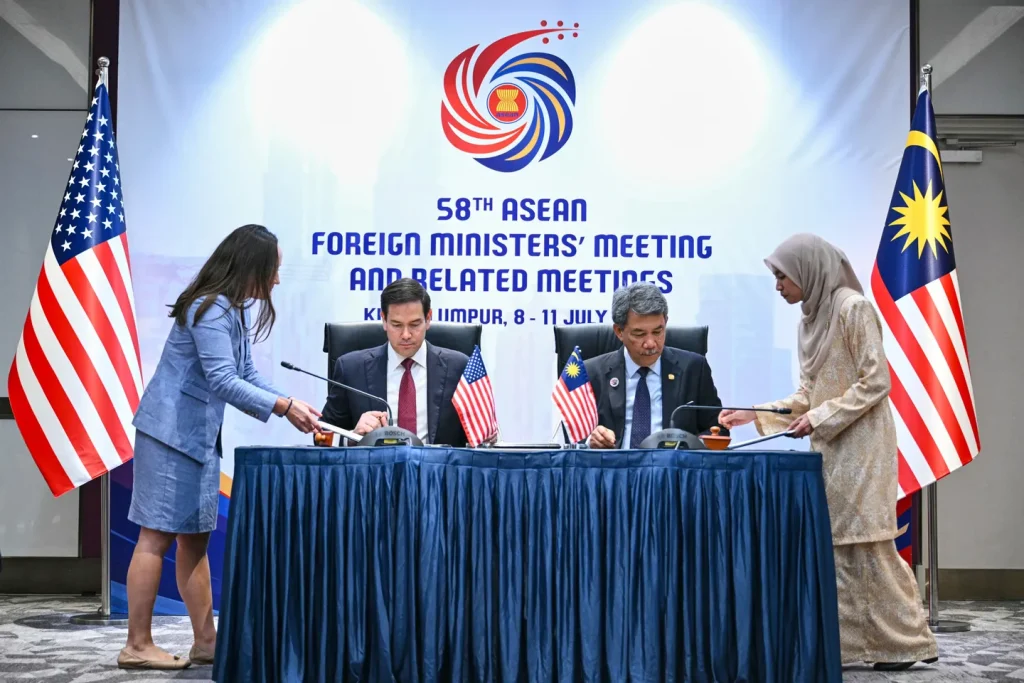
Malaysia and the United States have advanced their strategic bilateral relations with the signing of a Memorandum of Understanding (MOU) on civil nuclear cooperation. The agreement was formalised on the sidelines of the 58th ASEAN Foreign Ministers’ Meeting in Kuala Lumpur, signalling a shared commitment to energy security and sustainable development. Malaysia’s Foreign Minister, Datuk Seri Mohamad Hasan, hailed the agreement as a pivotal moment in the nations’ comprehensive partnership. He described the MOU as a “significant milestone” that opens a new chapter in Malaysia–US cooperation, particularly within the realm of civil nuclear energy. “This MOU represents a crucial step in our shared journey to further strengthen the Malaysia–US comprehensive partnership,” said Mohamad. He added that Malaysia considers nuclear energy an integral element of its long-term energy strategy — a strategy focused on security, economic growth, and building national capabilities in a safe, secure and responsible manner. Mohamad also announced Malaysia’s readiness to begin negotiations on the 123 Agreement, a legal prerequisite under US law for any nuclear collaboration involving the transfer of nuclear materials, equipment or technology. “In your distinguished presence, Mr Secretary, I am pleased to inform you of Malaysia’s readiness to commence negotiations on the 123 Agreement,” he stated during the signing ceremony attended by US Secretary of State Marco Rubio. Rubio welcomed the MOU, characterising it as a model for civil nuclear cooperation between trusted partners that maintain the highest standards of safety, security and non-proliferation. “We are very excited about this memorandum, which, first and foremost, is a signal to the world that civil nuclear cooperation is not only possible but available — and we are proud to do this with such a close partner,” said Rubio. He emphasised the broader geopolitical relevance of the agreement, positioning it as a positive example amid global interest in nuclear programmes. He reaffirmed the United States’ commitment to progressing the 123 Agreement with Malaysia, calling it the logical next step with a country poised for a promising future. “An incredible opportunity for your country, an incredible opportunity to strengthen our partnership, and an incredible example to the world. It is my honour to be a part of this,” he added. In a further statement, Mohamad underscored Malaysia’s commitment to maritime law and environmental responsibility, revealing that the government is currently drafting new regulations aimed at curbing illegal ship-to-ship transfers within Malaysian waters. These measures are expected to come into force by the end of the month. Rubio’s visit to Malaysia marks his first official trip to Asia since assuming the role of Secretary of State. He expressed his appreciation for Malaysia being his first stop and acknowledged the importance of the 58th ASEAN Foreign Ministers’ Meeting as his inaugural engagement in the region. The 58th AMM, held under Malaysia’s ASEAN Chairmanship for 2025, carries the theme “Inclusivity and Sustainability.” The event has attracted over 1,500 delegates and includes 24 ministerial-level meetings over four days, with participation from ASEAN member states and external partners. -The Edge

News

Mah Sing Successfully Completes RM250 Million Sukuk Murabahah Issuance

Mah Sing Group Bhd has announced the successful completion of its RM250 million sukuk murabahah issuance under its existing sukuk murabahah programme. This latest exercise underscores the group’s continued efforts to strengthen its financial position and support future growth through syariah-compliant financing instruments. In a filing with Bursa Malaysia, the property developer confirmed that the sukuk carries a five-year tenure and offers a fixed profit rate of 4.25% per annum, payable on a semi-annual basis. The sukuk is secured by assets owned by Mah Sing’s subsidiaries along with designated accounts, providing a level of assurance to investors. According to the group, the proceeds from this issuance will be used strictly for syariah-compliant purposes. These may include land acquisition, capital expenditure, strategic investments, and general working capital requirements across Mah Sing and its subsidiaries, as well as associate companies. The successful completion of this sukuk issuance reflects investor confidence in Mah Sing’s long-term strategy and its disciplined approach to financial management. -The Star

News

Malaysia’s Aerospace Sector Poised for 25% Revenue Surge in 2025

Malaysia’s aerospace industry is expected to record robust growth this year, with revenue projected to increase by up to 25% from RM25.1 billion in 2024, according to Minister of Investment, Trade and Industry Tengku Datuk Seri Zafrul Abdul Aziz. Speaking at a Malaysia Aerospace Industry Association (MAIA) event, Tengku Zafrul highlighted the nation’s continued progress in strengthening its position within the global aerospace landscape. Malaysia has already secured RM1.5 billion in approved investments this year and recorded aerospace exports totalling RM8.17 billion—figures he said underscore rising international confidence in Malaysia’s technical capabilities, resilience, and skilled workforce. “Our 30,000-strong aerospace workforce continues to excel across the value chain, from aircraft structure manufacturing and engine components to avionics, maintenance, repair and overhaul (MRO), and systems integration,” Tengku Zafrul said. “These milestones are made possible by the collaborative efforts between the government, academia, and industry leaders working in synergy to elevate Malaysia’s aerospace sector.” Tengku Zafrul also highlighted recent commitments from major Malaysian carriers, signalling strong momentum in fleet modernisation and strategic expansion. Malaysia Airlines has doubled its order of Airbus A330neo aircraft, exercising options for an additional 20 units and raising its total commitment to 40 aircraft. Meanwhile, AirAsia has inked an agreement to acquire 50 Airbus A321XLR aircraft, with an option for 20 more. These long-range, fuel-efficient aircraft are expected to support the airline’s ambition to penetrate long-haul, low-cost markets, particularly in Europe and North America. “These fleet expansion strategies are more than just investments in hardware,” he said. “They reflect broader confidence in Malaysia’s growing role as a regional hub for MRO services, parts supply, and aerospace talent.” -FMT

News

Selangor Surpasses RM400 Billion GDP Milestone for Second Consecutive Year

Selangor has once again demonstrated its position as Malaysia’s economic powerhouse by recording a gross domestic product (GDP) of RM432.1 billion in 2024, an increase from RM406.1 billion in 2023. This achievement marks the second consecutive year the state has exceeded the RM400 billion GDP threshold, solidifying its leadership in national economic performance. According to a statement by Invest Selangor Berhad, the state’s economic output accounted for 26.2% of Malaysia’s total GDP in 2024, rising from 25.9% the previous year. As the state government’s one-stop agency for investment promotion, Invest Selangor plays a key role in driving strategic economic initiatives and industrial development. Selangor also posted a GDP growth rate of 6.3%, outpacing the national average of 5.1%. The state contributed 32.9% to the country’s total manufacturing output and led the services sector with a 26.9% share of national performance in the segment. The services sector remained Selangor’s primary growth engine, contributing 61.1% to the state’s GDP, equivalent to RM263.9 billion, with a year-on-year growth of 6.3%. This expansion was underpinned by strong performance in wholesale and retail trade, food and beverage services, accommodation, utilities, transport and storage, information and communications, finance and insurance, real estate and business services. Manufacturing was the second-largest contributor, representing 29.1% of the state’s GDP and registering a 5.1% increase. This was driven by key sub-sectors such as electrical and electronics, food processing, vegetable and animal oils and fats, beverages and transport equipment. Selangor Menteri Besar Datuk Seri Amirudin Shari attributed the sustained economic momentum to the collective commitment across public and private sectors, civil society, and the wider community. He noted that the integration of modern infrastructure, a skilled talent pool and strong investor confidence continue to position Selangor as a premier investment destination. “Our continued progress is a reflection of the collective commitment and hard work of all stakeholders from the public and private sectors to civil society and the rakyat. Together, we have built a thriving ecosystem that not only attracts investment, but also creates quality jobs and uplifts communities,” said Amirudin. Invest Selangor chief executive officer Datuk Hasan Azhari Idris reaffirmed the agency’s focus on strengthening regional economic leadership. He highlighted the upcoming Selangor International Business Summit (SIBS) 2025 as a key platform to facilitate trade, investment, and global business connectivity across Southeast Asia. -The Star

News

ABP Group Invests in Malaysia to Strengthen Regional Cyber Defense and Talent Development

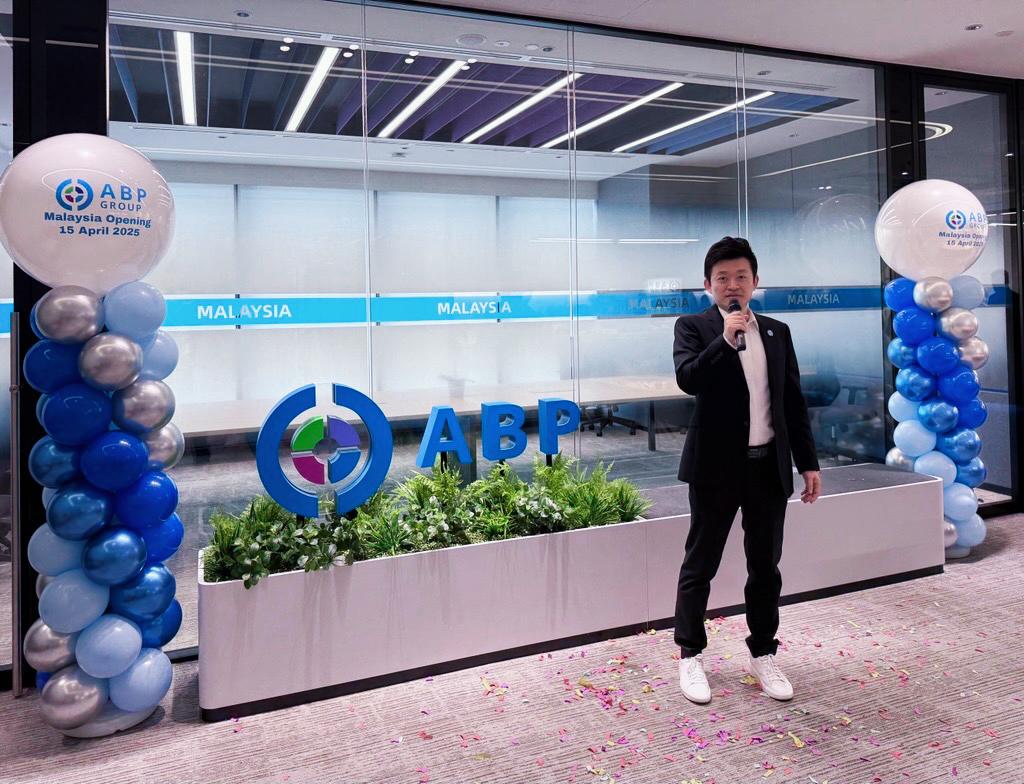
ABP Group, Asia’s leading cybersecurity provider, has strengthened its presence in Malaysia with the launch of a new office in KL Eco City, strategically located opposite Mid Valley City. This milestone builds on six years of established operations in the country and supports the Group’s long-term strategy to expand its capabilities across Southeast Asia. The newly launched Kuala Lumpur office features a modern and spacious environment designed to support a growing team of cybersecurity experts. It includes infrastructure upgrades to support regional delivery, technical collaboration, and talent development. “This expansion allows us to build greater delivery capacity, deepen client engagement, and respond more quickly to emerging threats in the region. As demand for cybersecurity solutions increases, our presence in Malaysia ensures we remain close to our clients and equipped to support their needs,” said Sun Yi, Group Chief Executive Officer of ABP Group. The Malaysian expansion complements ABP Group’s regional footprint, with the new office serving as a base for project execution, technical support, and training initiatives. Malaysia plays a central role in ABP Group’s broader regional roadmap for Southeast Asia. ABP Group’s continued investment reflects a deep belief in Malaysia’s emergence as a cybersecurity leader for the region.  “This expansion brings us closer to a more unified cybersecurity ecosystem across Southeast Asia, starting with Singapore and Malaysia, working in sync through shared infrastructure, shared talent, and a common standard of resilience,” Sun explained. Cybersecurity risks in Southeast Asia have intensified as digital adoption accelerates. According to Kaspersky Cybersecurity Report for Malaysia (1H2024), Malaysia recorded 19.62 million web-based attacks in the first half of 2024, the highest in the region.  ABP Group’s capability is delivered through three specialised business units to offer end-to-end cybersecurity coverage across Southeast Asia. The first pillar, Sunnic, leads technology innovation and research and development (R&D), while ABP Cyber provides tailored cybersecurity solutions, and ABP Securite drives value-added distribution through its growing partner ecosystem. These units work together to deliver regional impact with local precision. The KL Eco City office will serve as ABP Group’s hub for client engagement, technical collaboration and local talent development. “This is more than a physical expansion. It is about reinforcing the infrastructure needed to deliver cybersecurity at scale. As Malaysia moves deeper into a digital-first future, the need for trusted cybersecurity partners will only grow. ABP Group sees this as a long game, one that demands not just technical capability but long-term thinking, shared responsibility, and local leadership,” Sun added. For more information about ABP Group and its cybersecurity solutions, please visit https://www.abpgroup.com/.

News

Cathay Cineplexes Hit with Fresh S$7.6 Million Demand Amid Widening Debt Crisis

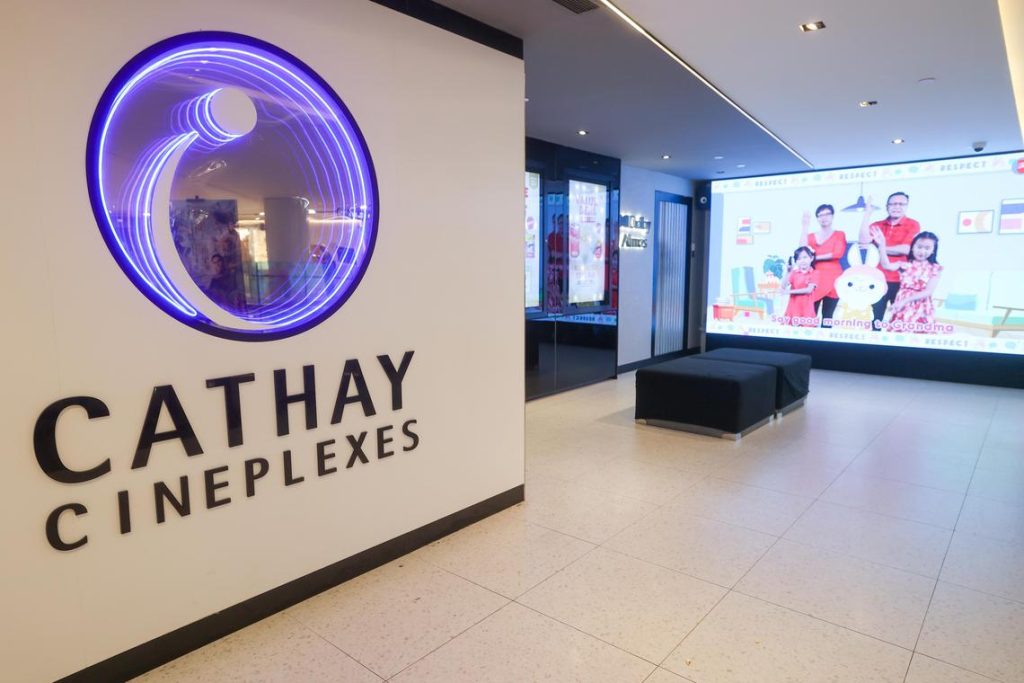
The financial challenges engulfing Cathay Cineplexes continue to intensify, as a new statutory demand has surfaced for a payment of approximately S$7.56 million by the end of July. This latest demand adds to a string of debt-related pressures confronting the cinema operator and its parent company, mm2 Asia Ltd. In a regulatory filing on Wednesday, mm2 Asia—listed on the Singapore Exchange’s Mainboard—disclosed that it had received a statutory demand from legal representatives of Linkwasha Holdings. The creditor is a related entity of Cathay Organisation, which previously sold Cathay Cineplexes to mm2 Asia. The demand stems from a S$30 million loan extended by Linkwasha in 2017 to partially finance mm2 Asia’s S$230 million acquisition of Cathay Cineplexes. Despite facing significant disruptions in its cinema operations due to the pandemic, mm2 Asia said it has been servicing the debt, and has since repaid the majority of the loan. As of 7 July, the outstanding balance stood at S$7,550,500, inclusive of interest. Linkwasha, formerly known as Orchard Bowling and Cathay Bowl, has required repayment of the full amount by 28 July. Failing that, mm2 Asia must either secure or compound the debt to Linkwasha’s reasonable satisfaction by the same date. Non-compliance may result in the company being deemed unable to meet its financial obligations under Singapore’s insolvency framework. The entertainment group has indicated that it is seeking legal counsel and plans to engage with Linkwasha to explore available options while continuing its ongoing fund-raising efforts. The demand from Linkwasha comes amid a cascade of other repayment deadlines confronting the company this month. Lendlease Global Commercial REIT, the landlord of Cathay Cineplexes’ shuttered Jem outlet, is seeking S$3.45 million in rental arrears by 22 July. These developments follow earlier revelations in February, when mm2 Asia disclosed that landlords of its Century Square and Causeway Point outlets had issued letters of demand for approximately S$2.7 million in unpaid rent and associated costs. At the time, Executive Chairman Melvin Ang said discussions regarding repayment arrangements were underway. He also conveyed optimism about the sector’s recovery, pointing to a promising pipeline of Hollywood releases. Nevertheless, the financial strain has forced Cathay Cineplexes to reduce its footprint. In late February, the operator closed its West Mall outlet upon lease expiry. Its Jem location was also shuttered on 27 March following a termination notice issued by the landlord. These closures and persistent cash flow difficulties have weighed heavily on mm2 Asia’s financial health. On 19 May, the company sought and was subsequently granted an extension to file its FY2025 financial statements and accompanying disclosures. The group cited intense resource pressure caused by creditor demands, which affected its ability to finalise its accounts and audit processes. It also highlighted difficulties in meeting audit fee obligations due to unexpected cash demands arising from landlord claims on bank guarantees, amounting to approximately S$2 million. As at May, mm2 Asia reported total arrears to landlords of about S$10.26 million, of which approximately S$3.07 million was backed by corporate guarantees. The group attributed these liabilities to the closure of underperforming locations during the post-pandemic recovery and continued liquidity constraints within its cinema operations. In a bid to reinforce its balance sheet, mm2 Asia announced a proposed placement of 1.875 billion new shares on 4 July at a minimum issue price of 0.8 Singapore cent per share. If fully subscribed, the placement is expected to yield S$14 million in net proceeds—S$7.5 million of which will be allocated to debt repayments, with the remaining S$6.5 million designated for working capital purposes. Shares of mm2 Asia closed flat at S$0.007 on Wednesday. -CNA

News

ShopBack Secures Major Payment Institution Licence from MAS

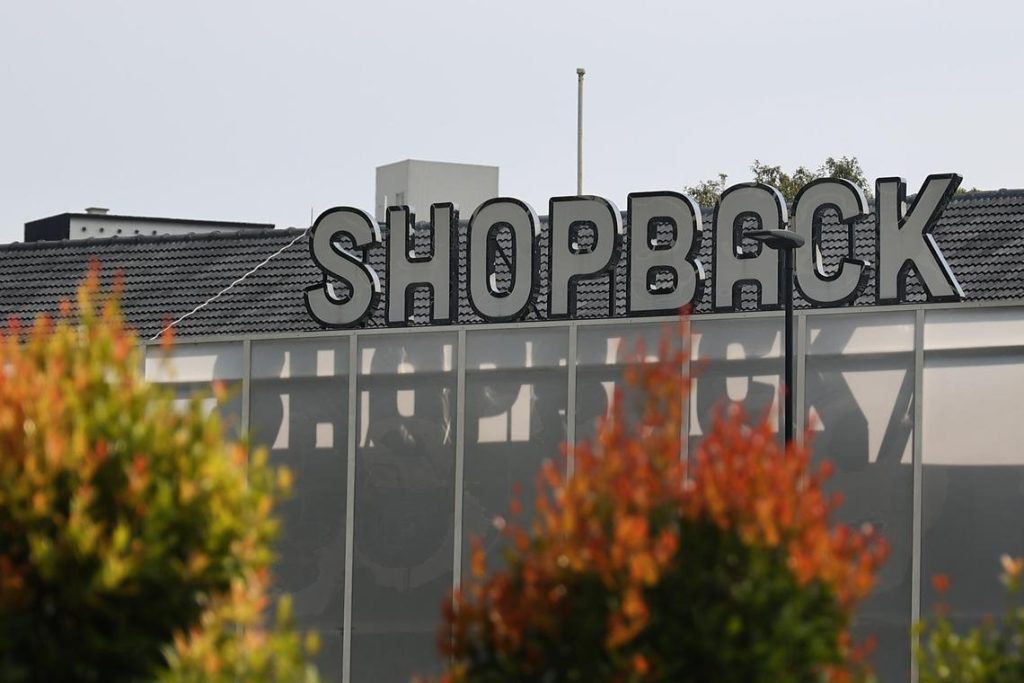
ShopBack, a leading loyalty and rewards platform headquartered in Singapore, has been granted a Major Payment Institution (MPI) licence by the Monetary Authority of Singapore (MAS). The regulatory milestone enables the company to significantly enhance its payment capabilities and expand its merchant network, both locally and across regional markets. The MPI licence allows ShopBack to operate a broader range of payment services without being subject to transaction volume limits. These services include account issuance, domestic money transfers and merchant acquisition. The formal oversight also reinforces trust in the platform’s ability to deliver secure and compliant financial solutions. ShopBack has facilitated over 500,000 transactions daily, capitalising on rising demand from cost-conscious consumers seeking cashback rewards for online and in-store purchases. Since launching ShopBack Pay in 2022, the company has extended its capabilities to support seamless payments at both digital and physical merchants. With its MPI status, ShopBack will enable merchants to accept direct payments from users, thereby streamlining settlement processes and strengthening merchant relationships. The company also aims to leverage the licence to accelerate the integration of emerging payment technologies. “This major payment institution licence marks a foundational milestone for ShopBack,” said Huang Huanmin, Acting Chief Financial Officer and Chief of Staff. “It reflects MAS’ trust in our ability to operate responsibly and gives us the infrastructure to scale ShopBack Pay in a way that’s smarter, faster and more secure.” ShopBack joins other MPI-licensed operators such as GrabPay, ShopeePay and the Singapore branch of OKX, a global crypto exchange. The company, co-founded in 2014 by Henry Chan and Joel Leong during their time at the National University of Singapore, continues to evolve its payments ecosystem as it grows across Asia Pacific. -The Strait Times

News

Cathay Pacific Expands Malaysian Operations with HK Express Subang Launch on 1 August

Cathay Pacific is reinforcing its confidence in Malaysia’s aviation sector as its budget subsidiary, HK Express Airways, prepares to commence daily operations to Sultan Abdul Aziz Shah Airport (Subang Airport) beginning 1 August. This expansion marks a strategic extension of the carrier’s footprint in Malaysia, as it capitalises on the country’s growing demand for both passenger and cargo services. Robbie Blackwood, Area Head for Malaysia and Brunei at Cathay Pacific, expressed a positive outlook for the sector, citing resilient performance, particularly in Penang. “We’ve seen strong resilience in the Penang market, especially on the cargo side, which performed very well in the first half of this year. Agility is key. We’re constantly monitoring new route opportunities, and we have a really good team here who can identify that,” he told Business Times following the launch of the “Traverse with Paramount” campaign, a collaboration with Malaysian developer Paramount Property. Blackwood highlighted that Cathay Pacific’s network reach and operational agility enable it to effectively serve emerging markets and evolving cargo demands. “Passenger performance has also been encouraging, with leisure travel remaining strong. This year, corporate travel is making a notable comeback, and we expect customer demand to continue rising, although our capacity plans are still being finalised,” he added. Cathay Pacific acquired HK Express in 2019 and has since been expanding its regional operations, with Malaysia positioned as a key growth market. The introduction of Subang as HK Express’s second destination in Malaysia follows the launch of daily flights between Penang and Hong Kong in November 2023. The group is currently evaluating further expansion opportunities at other Malaysian airports, particularly in prominent tourist destinations, although specific plans remain undisclosed. “Malaysia is a key growth market for us as we expand across the region,” Blackwood said. At present, Cathay Pacific operates seven passenger flights and three freighter services weekly from Penang, supporting the state’s robust electronics export industry. HK Express also maintains a daily passenger route from Penang. In Kuala Lumpur, Cathay Pacific runs three daily passenger flights from Kuala Lumpur International Airport (KLIA). Subang’s proximity to central Kuala Lumpur and availability of evening departure slots offers a differentiated market opportunity, aligning with HK Express’s low-cost model. The route will be operated using narrow-body aircraft, likely from the Airbus A320 family, including the A321neo, although aircraft deployment has not yet been finalised. “Subang serves a slightly different market for us. Its proximity to the city centre is a major advantage, and the evening departure slots cater well to passengers wanting to fly after work,” Blackwood noted. “Currently, Cathay Pacific operates morning, early afternoon, and mid-afternoon departures from KLIA. Subang’s evening flight adds more flexibility for travellers.” In a separate initiative aimed at deepening local engagement, Cathay Pacific has partnered with Paramount Property for the ‘Traverse with Paramount’ campaign, marking its first collaboration with a Malaysian property developer. Blackwood described the partnership as a values-driven alignment. “Paramount focuses on what they can offer customers beyond handing over the keys to a home. We approach travel the same way, through exceptional service in flight, at the airport, during check-in, and in our lounges. From a values perspective, the partnership is a natural fit,” he said. The campaign will reward property buyers with 10,000 to 40,000 Asia Miles for purchases across eight participating Paramount Property developments. -The Strait Times

Scroll to Top

Subscribe
FREE Newsletter