News

News

Lim Wee Kiat Appointed CEO of Ho Wah Genting Bhd

Ho Wah Genting Bhd has announced the redesignation of Lim Wee Kiat as its Chief Executive Officer, effective 7 July. Previously serving as Executive Director, Lim takes the helm of the group with a strong background in information technology and a legacy connection to the company’s founding leadership. In a filing to Bursa Malaysia, the group stated that Lim holds a Bachelor of Science (Honours) in Computing and Information Systems from the University of Nottingham, United Kingdom. He brings more than nine years of professional experience in the IT industry, most recently in the role of systems engineer. Lim Wee Kiat is the son of Datuk Lim Hui Boon, the founder and current Group President of Ho Wah Genting, who established the company in 1979. Lim is also a substantial shareholder, holding 250,000 shares directly and an additional 21.9 million shares indirectly through Ho Wah Genting Holding Sdn Bhd. This appointment marks a significant milestone in the group’s leadership transition as it continues to position itself for future growth under the next generation of leadership. -The Star

News

PETRONAS Launches First LNG Shipment from Canada to Japan

Petroliam Nasional Berhad (PETRONAS) has marked a major milestone in its international expansion with the successful export of its first liquefied natural gas (LNG) cargo from the newly operational LNG Canada facility, located in Kitimat, British Columbia. The inaugural shipment, transported aboard the 174,000 cubic metre LNG vessel Puteri Sejinjang, departed for Japan yesterday. This development signifies a key achievement in PETRONAS’ Canadian investment and further solidifies the company’s reputation as a reliable global LNG supplier. In a statement released yesterday, PETRONAS underscored the strategic importance of the facility to its global LNG portfolio. “This milestone reinforces PETRONAS’ position as a reliable LNG supplier, with LNG Canada serving as a strategic addition to its growing global network of supply nodes,” it stated. LNG Canada sets a new benchmark in sustainable energy infrastructure, with greenhouse gas intensity levels approximately 35% lower than the best-performing LNG facilities worldwide and 60% below the global average. The facility incorporates cutting-edge technologies including energy-efficient gas turbines, advanced methane-leak detection and mitigation systems, and operates using electricity primarily derived from British Columbia’s hydroelectric-powered grid. PETRONAS holds a 25% equity stake in the LNG Canada project through its wholly owned entity, North Montney LNG Limited Partnership. The company views LNG Canada as a critical component of its broader global LNG strategy, which aims to diversify supply sources and enhance market responsiveness. -Bernama

News

AEON Credit Reports Higher Revenue Despite Lower Earnings in First Quarter FY26

AEON Credit Service (M) Bhd has reported a 15% year-on-year increase in revenue to RM599.92 million for the first quarter ended 31 May 2025 (1Q FY26), driven by stronger loan and financing growth. However, the company posted a 27% year-on-year decline in net profit to RM77.5 million, equivalent to an earnings per share of 15.19 sen. The decline in earnings was primarily attributed to higher operating and interest expenses, lower other income, and increased losses from an associate. AEON Credit noted that the group continues to adopt a cautious business stance in light of persistent global trade and tariff policy uncertainties, ongoing geopolitical tensions, inflationary pressures and continued volatility in global financial markets. During the quarter under review, the non-performing loan (NPL) ratio rose to 2.57% from 2.46% a year earlier. The group has initiated corrective measures to address the increase in credit risk. AEON Credit reaffirmed its commitment to prudent financial management and risk controls amid a challenging macroeconomic backdrop. -The Star

News

HSBC, Manulife and BOC Life Lead Push into Hong Kong’s Expanding Silver Economy

Major financial institutions including HSBC, Manulife and BOC Life are increasingly targeting Hong Kong’s ageing population with specialised retirement investment solutions designed to deliver consistent income streams. This trend aligns with the government’s broader strategy to capitalise on the expanding opportunities within the so-called silver economy. HSBC, the city’s largest bank, recently launched five post-retirement funds offering a non-guaranteed target dividend payout rate of 6 per cent annually—substantially higher than its current time deposit rates, which range between 2 and 3 per cent depending on tenure. The bank plans to expand its retirement-focused offerings further in the second half of 2025. Sami Abouzahr, Head of Wealth and Premier Solutions at HSBC Hong Kong, highlighted the rationale behind the initiative. “In light of the growing importance of addressing longevity risk in Hong Kong, we have developed a specialised suite of post-retirement funds designed to provide customers with a predictable monthly income stream while safeguarding the long-term value of their retirement assets,” he said. He added that the newly launched funds are aligned with the government’s silver economy initiative, aimed at helping the elderly better plan their financial future. These products feature competitive management fees of 1 per cent, although the fund manager retains discretion to adjust the dividend payout or utilise part of the principal for distributions. Hong Kong’s demographic trajectory underscores the urgency for such offerings. Government data indicates that residents aged 65 and above accounted for 22 per cent of the city’s 7.5 million population in 2023, with that proportion projected to rise to 31 per cent by 2036. Manulife, the city’s largest pension provider, also offers retirement-oriented products. Its annuity plan enables policyholders to receive monthly payments for 25 years, with additional benefits for those diagnosed with dementia. BOC Life, a subsidiary of Bank of China (Hong Kong), provides another suite of retirement solutions, including a plan that pays a non-guaranteed lifelong monthly income after just two years of premium payments. The company’s RetireCation programme, launched late last year, allows customers to live and travel in 18 mainland Chinese cities—including nine within the Greater Bay Area—while enjoying retirement income benefits. Wilson Tang, Chief Executive Officer of BOC Life, reported that the initiative has had a significant impact. “Since the launch of the new product, the annualised premium of the new product has exceeded HK$1.4 billion, becoming our new growth driver in 2025,” he said. Deputy Chief Secretary for Administration Warner Cheuk Wing-hing, who heads a dedicated task force on the silver economy, highlighted the sector’s considerable economic significance. In 2024, residents aged 60 and above were responsible for approximately HK$342 billion in spending, equating to around 11 per cent of Hong Kong’s GDP. This figure is projected to rise to HK$496 billion by 2034, according to government estimates. The shift has prompted increasing engagement from the financial services sector. “As Hong Kong develops the silver economy, an increasing number of financial firms have been racing to offer retirement solutions for people to have a regular income after retirement,” said Kenrick Chung, Chief Corporate Solutions Officer at Bay Insurance Brokers. However, Chung cautioned investors to carefully evaluate the terms of such products. “Many of these retirement funds do not have a guaranteed rate, and investors may eventually lose money if the market does not perform well,” he said. He recommended that retirees seeking stability consider products with guaranteed payouts, such as annuity plans offered by the Hong Kong Mortgage Corporation (HKMC). HKMC’s government-backed annuity scheme, launched in 2018, provides lifelong monthly payments with an internal rate of return of around 4 per cent. Since inception, approximately 40,000 residents over 60 have invested HK$23 billion in the programme. -SCMP

News

Singapore Government to Disburse S$1.5 Billion in GST Vouchers to Over 1.5 Million Citizens

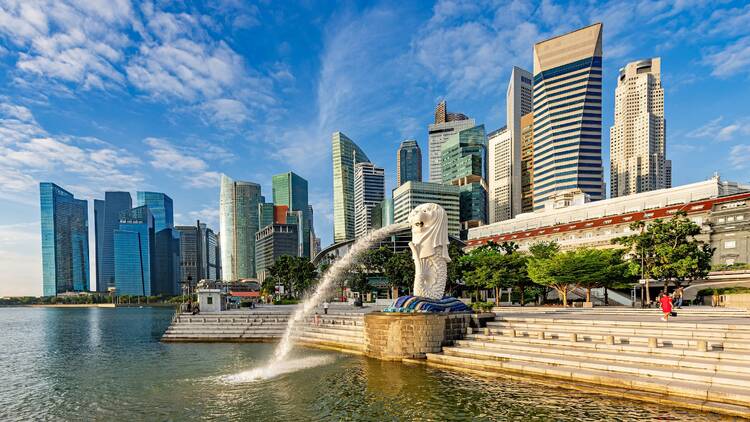
More than 1.5 million Singaporeans are set to receive cash payouts of up to S$850 in August under the Government’s Goods and Services Tax Voucher (GSTV) scheme, according to an announcement by the Ministry of Finance (MOF) on Monday, 7 July. In a move aimed at preserving the inclusivity of the scheme, the assessable income threshold for GSTV – Cash has been raised from S$34,000 to S$39,000. This adjustment reflects the improved earnings of lower- and middle-income Singaporeans, while ensuring continued access to the financial support programme. Singaporeans aged 21 and above with assessable incomes of up to S$39,000 and residing in properties with an annual value of up to S$21,000 will receive S$850 in cash. Those living in homes with annual values between S$21,000 and S$31,000 will receive S$450. Additionally, approximately 690,000 eligible Singaporean seniors will benefit from GSTV – MediSave, receiving top-ups ranging from S$150 to S$450 to their MediSave accounts. Eligible individuals who have previously enrolled in the GSTV – Cash and GSTV – MediSave schemes will receive their benefits automatically from 6 August. Notifications confirming the disbursement will be sent via SMS or letter. Singaporeans may verify their eligibility through the official govbenefits website. The total amount to be disbursed in this year’s GSTV exercise is expected to reach S$1.5 billion, reinforcing the Government’s commitment to supporting households amidst the evolving economic landscape. -CNA

News

SoftBank-Backed Ola Struggles to Recover

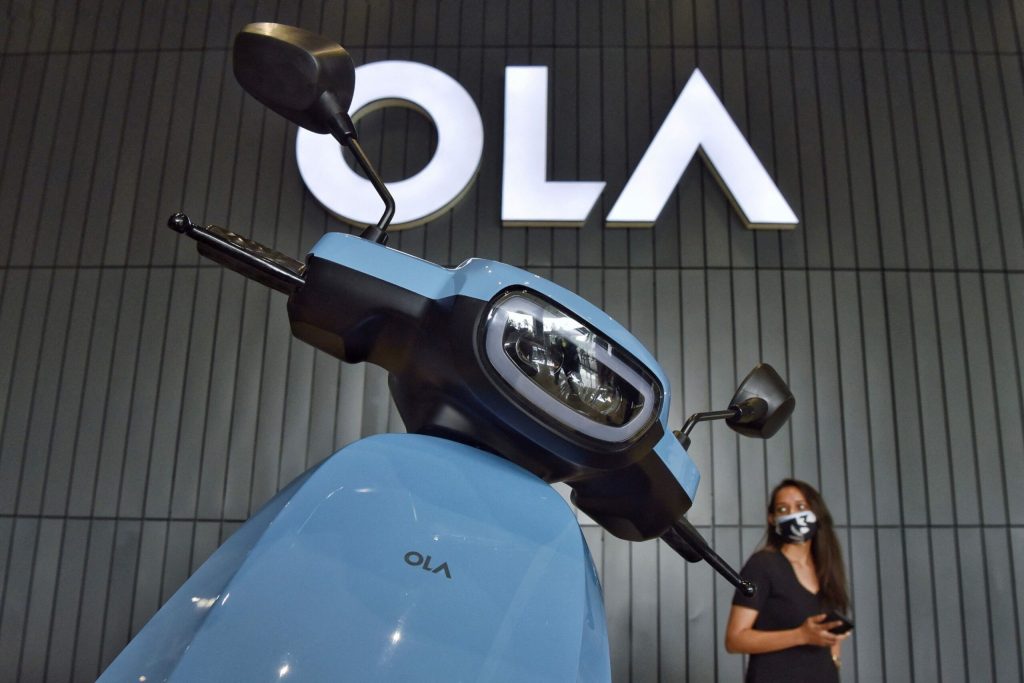
Three years ago, Ola Electric Mobility Ltd. was riding a wave of optimism as its electric scooters gained traction across India’s extensive two-wheeler market. At the centre of this surge was co-founder Bhavish Aggarwal, a billionaire entrepreneur who, at the time, was dividing his schedule between India and the United Kingdom. In Coventry, the historic automotive hub of the UK, Aggarwal launched an R&D facility staffed with designers formerly associated with high-end marques such as Jaguar and Aston Martin. The vision was bold: to develop a homegrown electric car and solidify Ola’s ambition to become the Tesla of India. That vehicle never materialised. Instead, the spotlight turned to Ola’s scooters, which began appearing in viral social media posts—some engulfed in flames, others with critical parts malfunctioning. Over the past three years, those early technical failures have cascaded into widening financial losses, increasing regulatory pressure and a shrinking market footprint. The company, backed by Japan’s SoftBank Group Corp., has come to exemplify the risks of overcapitalisation and speed-to-market strategies that outpace product readiness. Less than 12 months after its high-profile listing, Ola has emerged as 2025’s worst-performing stock on India’s BSE 500 and NIFTY Midcap 100 indices. Shares have dropped nearly 52% this year, prompting the 39-year-old CEO into urgent damage-control efforts. “Building in India takes patience, focus and constant iteration—especially when you’re trying to create a new category,” remarked Kunal Khattar, founder of early-stage investment firm AdvantEdge. “Too much capital before product-market fit can do more harm than good.” Ola declined to comment for this article. Post-IPO Reckoning for India’s Startups Ola’s current predicament is indicative of broader challenges facing India’s once-lauded startup ecosystem. Many companies that thrived during the funding boom until early 2022 have since seen their valuations slashed or business models falter. Byju’s, the prominent edtech firm, is now engulfed in legal disputes and a liquidity crisis. PharmEasy has suffered a near-90% drop in valuation, and Oyo’s long-anticipated IPO has encountered repeated delays. Meanwhile, BluSmart—India’s largest EV-only ride-hailing service—halted operations abruptly earlier this year. Six years ago, a $250 million seed investment from SoftBank transformed Ola into India’s first EV unicorn, despite having no commercial product at the time. Matrix Partners India and Tiger Global were among the early backers, encouraged by Aggarwal’s prior success with Ola Cabs. Ola Electric promised one million EVs on Indian roads by 2022 and the construction of a gigafactory with an annual production capacity of 10 million e-scooters. In 2020, Aggarwal acquired Dutch startup Etergo BV for €3.75 million to access its AppScooter blueprint—though it had never been commercially deployed. Initial deliveries of the reworked model, the Ola S1, commenced just over a year later. However, the product was launched at scale without full adaptation to India’s infrastructure and climate, leading to widespread quality issues. Engineering Shortfalls and Quality Concerns According to multiple sources familiar with the matter, Ola’s early scooters were hastily modified from Etergo’s designs, originally intended for European city usage at modest speeds. Ola doubled their performance specifications, added heavier batteries and overhauled software—without adequate durability testing. The flaws became evident by mid-2022, with reports of battery fires and substandard parts surfacing across Indian media. Internally, cost-cutting and makeshift fixes were preferred over long-term solutions, say former employees. At its peak last year, Ola was managing 80,000 customer complaints per month and facing extensive warranty-related losses. Production issues plagued the launch of the S1 Air model in 2023, with reports of structural defects, ill-fitted frames and inconsistent finish quality. Aggarwal spent weeks on the manufacturing floor in Krishnagiri—drawing parallels to Tesla’s so-called “production hell” in 2017—in an attempt to stabilise output. Although a second generation of scooters was launched, cost-driven engineering changes introduced new problems. Cheaper hub motors, for example, have proven vulnerable during India’s monsoon season. Ola’s market share has plummeted from 46% in June 2024 to below 20% in mid-2025, according to government registration data. Mounting Financial and Reputational Pressures The company’s losses for the year ending 31 March surged 43% to ₹22.5 billion, according to Kotak Institutional Equities. Ola’s standing as an Original Equipment Manufacturer (OEM) has been further damaged by regulatory scrutiny, including showroom raids and show-cause notices for non-compliance with Indian transportation norms. Aggarwal’s social media presence has also been counterproductive. Public exchanges, including one with a local comedian and premature declarations of showroom expansions, have drawn the ire of regulators. Investors have responded accordingly. In June, Hyundai Motor Co. and Kia Corp. offloaded a combined 136 million Ola shares, while Matrix Partners and SoftBank have trimmed their stakes since the company’s August listing. In an effort to strengthen the balance sheet, Ola’s board approved a ₹17 billion loan in May. However, Aggarwal has reportedly paid ₹200 million to cover a collateral top-up after the stock slump impacted his pledged shares—8% of his stake is currently encumbered. Internally, cost-cutting measures have intensified. Over 1,000 employees and contractors were let go earlier this year, with further undisclosed layoffs and attrition following. Entire departments, such as product planning, have been eliminated. Vendor payments and bonuses are reportedly months overdue. Pivot to the Ola Roadster and New AI Venture Hoping to revive growth, Ola has launched a premium electric motorcycle, the Roadster. Deliveries began in May, though only a small number have reached customers. As of February, the order count remained under 2,000. Production has been hampered by tooling delays and a charging system flaw, according to internal sources. While Ola Electric battles declining investor confidence, Aggarwal is simultaneously investing in a new artificial intelligence venture, Krutrim, which reached a $1 billion valuation in 2024 following a funding round involving Matrix Partners. In a February post, he announced ₹20 billion in capital raised, with plans to secure ₹100 billion more by 2026. Promising to build an indigenous AI computing stack for India, Aggarwal claimed Krutrim would “innovate alongside the world” and compete with global leaders in the sector. For Ola, however, the urgency to restore credibility and turn a profit remains critical. Time is no

News

Bank Negara Malaysia’s International Reserves Increase to US$120.6 Billion

Bank Negara Malaysia (BNM) reported an increase in its international reserves to US$120.6 billion as at 30 June 2025, up from US$119.9 billion recorded on 13 June 2025. According to a statement released by the central bank, the current reserves position is sufficient to finance 4.8 months of imports of goods and services and represents 0.9 times the total short-term external debt. This continued strengthening of reserves underscores BNM’s prudent management of the country’s external assets amidst ongoing global economic uncertainties. The composition of the international reserves includes foreign currency reserves of US$107.0 billion, an International Monetary Fund (IMF) reserve position of US$1.3 billion, special drawing rights (SDRs) totalling US$5.9 billion, gold reserves of US$4.1 billion, and other reserve assets amounting to US$2.3 billion. Total assets stood at RM607.31 billion as of end-June, comprising gold and foreign exchange reserves including SDRs (RM510.06 billion), Malaysian government papers (RM13.27 billion), deposits with financial institutions (RM6.83 million), loans and advances (RM27.26 billion), land and buildings (RM4.58 billion), and other assets (RM45.31 billion). BNM also confirmed that total capital and liabilities matched the asset base at RM607.31 billion. These included paid-up capital of RM100 million, reserves of RM189.55 billion, currency in circulation amounting to RM171.82 billion, deposits by financial institutions at RM122.23 billion, federal government deposits of RM7.07 billion, other deposits of RM75.78 billion, Bank Negara papers (RM10.06 billion), allocation of SDRs (RM27.78 billion), and other liabilities (RM2.92 billion).

News

Ahmad’s Fried Chicken Targets 66 Outlets by 2025

KUALA LUMPUR : In response to the downturn in their online bakery business during the COVID-19 pandemic, entrepreneurs Lailatul Sarahjana Mohd Ismail and her husband Mohd Tauk Khairuddin redirected their efforts into the fast-food industry, launching what would become Ahmad’s Fried Chicken. Identifying a growing appetite for locally produced food products, the couple embarked on a three-month product development phase, during which Lailatul focused on recipe creation while Tauk handled market research and branding. Their initial outlet at Mydin Senawang received strong customer response, prompting the couple to formalise the concept into a fast-food restaurant brand. “We aspired to create a Malaysian product we could be proud of,” said Lailatul. “The brand name itself—Ahmad’s Fried Chicken—reflects that. It’s derived from my husband’s nickname, given by his father, and represents local identity.” Formerly in the banking industry, Lailatul credited her professional background with helping streamline operations and apply automation in the new venture. To ensure flavour consistency and maintain high quality standards, the couple consulted with food and beverage industry professionals before finalising their proprietary fried chicken recipe. The menu has been positioned to be price-competitive against international fast-food giants, though Lailatul acknowledged that such global brands still benefit from supply chain efficiencies and contract farming arrangements. Ahmad’s Fried Chicken, by contrast, ensures quality control through in-house recipe development and centralised sourcing. The business operates under a licensing model, with branch establishment costs ranging between RM700,000 and RM1 million, subject to size and location. To date, 38 outlets—comprising both full-service and mini-restaurant formats—have opened across Malaysia. The company aims to expand to 66 outlets nationwide by the end of 2025. “We’re taking a measured approach, focusing first on urban locations as all raw materials, including chicken, are supplied from our headquarters in Puchong,” Lailatul explained. To facilitate expansion, the company is actively seeking strategic partnerships with small and medium enterprises (SMEs). “We require 10 additional SME partners to meet our growth targets this year. To date, we’ve received over 1,000 applications, which are currently under evaluation,” she added. Addressing recent calls to boycott international brands, Lailatul clarified that the brand’s inception was not reactionary. “Our objective was to create a high-quality local alternative. We’re not competing aggressively, but we want to offer consumers more choice—particularly in taste, portion size, and meals tailored to local preferences. While the boycott may have driven awareness, success ultimately hinges on quality.” Although the brand has not yet crossed the three-year threshold to qualify as a franchisor, Lailatul confirmed that discussions are underway with Perbadanan Nasional Bhd to develop a franchise framework. The company also has aspirations to expand internationally, with Saudi Arabia and the United States identified as potential markets. -Bernama

News

SST Implementation Likely to Weigh on IOI Corporation’s Profit Margins

IOI Corporation Bhd is expected to face earnings pressure following the implementation of a 5% sales and service tax (SST) on palm kernel oil, according to a recent note by AmInvestment Research. The imposition is anticipated to compress margins within its oleochemical division, especially as Malaysian producers struggle to remain competitive against lower-priced Indonesian exports. The research firm highlighted that IOI Corporation’s integrated business structure may not provide sufficient flexibility to pass the additional tax burden onto customers. In the third quarter of the financial year 2025 (3QFY25), the group’s oleochemical segment reported earnings before interest and tax (EBIT) of RM14.6 million. IOI currently operates with an annual oleochemical production capacity of 890,000 tonnes, the bulk of which is located in Malaysia. Looking ahead, AmInvestment Research projects a 6% decline in EBIT for IOI’s manufacturing segment in the financial year 2026 (FY26), driven by persistent global economic uncertainty and its impact on overall demand. Despite these headwinds, the research house expects a notable rebound in upstream production. Fresh fruit bunch (FFB) output is forecasted to increase by over 30% quarter-on-quarter in the fourth quarter of FY25 (4QFY25), providing a partial buffer against weaker palm oil prices. The average crude palm oil (CPO) price realised is projected to decline to RM4,000 per tonne in 4QFY25, compared with RM4,667 per tonne in the previous quarter — representing a 14.3% decrease. AmInvestment Research has reiterated its “Hold” recommendation on IOI Corporation, maintaining a target price of RM4.05, based on 18 times price-to-earnings for calendar year 2026. -The Star

News

NexG Secures RM45.54 Million in Government Contract Extensions

NexG Bhd, previously operating under the name Datasonic Group Bhd, has secured four contract extensions from Malaysia’s Ministry of Home Affairs, reaffirming its role as a key service provider to critical government departments. In a recent filing with Bursa Malaysia, NexG announced that its wholly-owned subsidiary, Datasonic Technologies Sdn Bhd, received four letters of extension dated 2 July. These pertain to the ongoing provision of supply and maintenance services for both the National Registration Department (Jabatan Pendaftaran Negara, JPN) and the Immigration Department. Two of the extensions carry a combined contract ceiling value of RM45.54 million. The first is a six-month extension, valued at RM29.68 million, for the continued supply of MyKad, MyTentera, and MyPOCA raw cards and consumables to JPN. This extension will run until 31 May 2026. The second contract, worth RM15.86 million, covers a 14-month period of comprehensive maintenance services for the card personalisation centres operated by JPN. This service extension will be effective from 1 December 2025 through to 31 January 2027. The remaining two contract extensions concern the continued supply of Malaysian passport documents and polycarbonate biodata pages to the Immigration Department. These are time-only extensions and do not carry any additional contract value. These extensions further solidify NexG’s long-standing relationship with key governmental agencies, underpinning the company’s position in delivering secure identity and travel document solutions in Malaysia. -The Star

Scroll to Top

Subscribe
FREE Newsletter