News

News

Citigroup to Cut 3,500 Tech Jobs in China Amid Global Restructuring Drive

HONG KONG : Citigroup Inc has confirmed plans to reduce its workforce by approximately 3,500 employees across its two China-based technology centres in Shanghai and Dalian. The move forms part of a broader global restructuring strategy aimed at streamlining technology operations and enhancing risk and data management. The reduction, primarily affecting full-time positions, is expected to be finalised by the beginning of the fourth quarter of 2025. While the bank has not disclosed how many roles will be relocated, it noted that some functions will transition to other Citi technology hubs globally. The decision follows an earlier reduction of around 200 information technology contractor roles in China, as first reported in May. In March, Citi internally announced a significant shift away from contractor reliance, revealing plans to onboard thousands of new full-time IT employees. This came in the wake of regulatory scrutiny and penalties relating to data governance and operational controls. Citi’s latest move reflects similar workforce adjustments across other markets, including the United States, Indonesia, the Philippines, and Poland, under its enterprise-wide transformation initiative. The technology and services division in China plays a critical role in delivering financial technology and operational support to Citi’s global businesses. Despite the planned headcount reduction, the bank reaffirmed its long-term commitment to the Chinese market. “Citi continues to pursue the establishment of a wholly owned securities and futures company in China,” said Marc Luet, Head of Banking for Japan, Asia North, and Australia. He further emphasised Citi’s dedication to serving both its corporate and institutional clients in China, supporting their cross-border requirements, and enabling international clients’ operations within the country. Following the reduction, Citi will maintain an approximate workforce of 2,000 in China, including several hundred within its technology unit, according to a source familiar with the matter. -Reuters

News

Grab Enters Taxi Market with GrabCab, Targets Dormant Licence Holders

Grab’s newest venture into the taxi sector, GrabCab, is set to launch in Singapore this July with an initial fleet of 40 hybrid vehicles, marking the ride-hailing giant’s official entry into the traditional street-hail market. Rather than competing directly with existing taxi companies for drivers, GrabCab is targeting a largely untapped pool: new and inactive Taxi Driver’s Vocational Licence (TDVL) holders. The company, a subsidiary of Grab Rentals and sister to GrabCar, announced on Wednesday that driver recruitment efforts have already garnered interest from between 700 and 800 individuals. Of these, approximately 400 to 500 drivers are currently being shortlisted based on their possession of a valid TDVL. GrabCab is not pursuing drivers from rival firms, said Mr Victor Sim, Head of GrabCab and GrabRentals. “There’s a very big pool of drivers that we believe we want to reactivate, that we can reactivate with our benefits and offerings … that’s a big focus for us,” he stated. The company will begin appointment scheduling for pre-registered drivers from 5 June, with open registration commencing on 9 June. This move follows GrabCab’s approval as Singapore’s sixth licensed taxi operator, as announced by the Land Transport Authority (LTA) in April. The entrance of GrabCab—alongside established names such as CityCab, CDG, Prime, Strides, and Trans-cab—is expected to broaden options for both drivers and commuters, thereby bolstering the supply of taxis. At launch, GrabCab will operate a fully green fleet comprised exclusively of low- and zero-emission hybrid Toyota Prius cars in a distinctive dark green livery. In line with regulatory standards, each vehicle will be equipped with a Mobile Data Terminal (MDT), commonly known as a taxi meter, showing fares and driver details. The Grab app will integrate seamlessly with the MDT via a QR code scan at the start of each shift, syncing trip data across both systems and the taxi’s rooftop indicator. Drivers will have the flexibility to toggle between street-hail and ride-hail assignments through the Grab app. From the commuter’s perspective, fares will remain consistent with current market rates. The starting fare will be S$4.60 for standard 4-seaters, and S$4.80 for both 4-seater electric vehicles and 6-seater cars. Fare increments will follow a structure of S$0.26 every 400m up to 10km, and every 350m thereafter, along with 45-second waiting charges. Although GrabCab has been granted a three-year grace period to scale its operations to a minimum of 800 taxis, Mr Sim confirmed that the company does not intend to wait until the final year to reach that benchmark. “We want to scale up corresponding to driver demand … we will do it sustainably,” he said. Additional driver-oriented features include a relief matching system within the Grab app to ease the process of finding substitute drivers during shift changes. Among the range of benefits GrabCab drivers can expect is a safe driving bonus of S$1,000 awarded annually for those with no at-fault accidents. A performance-based “GrabStreak” incentive will reward drivers with an additional 1 per cent bonus on monthly fares for completing between 500 to 700 trips. Fuel discounts will also be available—up to 40 per cent at Caltex stations and up to 25 per cent at electric charging partners including SP, Charge+, Volt, and Shell. Medical leave entitlements include 14 days for the first 100 drivers and up to S$500 in medical credits, with extended medical and hospitalisation coverage also in place. Drivers will benefit from the ability to cash out fares instantly via the app. Rental fees for vehicles will start competitively at S$117 per day, aligning with rates across the sector. Furthermore, the first 100 drivers to commit will receive welcome bonuses of S$1,888 for a 12-month term or S$3,888 for a 36-month term. GrabCab is also covering up to S$400 in TDVL application costs, which includes training, application, and medical examination expenses. Responding to industry speculation that GrabCab could disrupt the existing operator ecosystem, Mr Sim reiterated that the company’s intent is not to poach drivers but to address a national supply shortage. “If the driver is already driving with another taxi company, and he comes to us … we are not going to turn him away,” he said. “But at the end of the day, it’s back to our acquisition plan—our focus is on new TDVL holders and TDVL holders that have gone dormant.” He added that ride-hailing demand is projected to grow significantly in the coming years, creating a need for more consistent and reliable transport options. “When you think about taxis, you think of a sunset industry … so it seems counterintuitive for Grab to launch a taxi business,” Mr Sim said. However, he emphasised that taxis remain relevant, particularly during high-demand periods like post-concert surges, where Grab’s current platform struggles to ensure consistent supply. New regulatory measures introduced earlier this year are also expected to level the competitive playing field between ride-hail and taxi operators. These include allowances for taxi companies to convert used vehicles into taxis, provided they are less than five years old. Importantly, GrabCab’s launch does not signal a shift in focus away from other taxi partnerships within the Grab ecosystem. Mr Sim confirmed that the platform will continue to support bookings with other taxi companies and has no intention of prioritising GrabCab rides over existing partners. “Our aim here is to grow the pie, not to split the pie, or take some away from (other operators),” he concluded. -CNA


News

Komeito to Propose 5% Food Tax Cut in Bid to Tackle Japan’s Cost-of-Living Crisis

TOKYO : Japan’s junior coalition partner, Komeito, is poised to unveil a proposal to reduce the consumption tax rate on food items from the current 8% to 5%, as part of its campaign platform for the upcoming upper house election in July, according to a report by the Yomiuri Shimbun. The full pledge is expected to be formally announced on Friday. The initiative aims to provide immediate relief to households grappling with rising living expenses, with the party also set to advocate for direct cash payments. A Komeito official, speaking on condition of anonymity, confirmed to Reuters that the proposed tax cut would feature prominently in the party’s policy platform. Unlike previous fiscal stimulus plans that relied heavily on debt issuance, Komeito intends to finance the proposed measures through anticipated gains in tax revenues. A draft of the campaign pledge, obtained by Yomiuri, suggests that the party is seeking to maintain fiscal discipline amid a challenging economic backdrop. Currently, Japan imposes a consumption tax of 8% on food and 10% on other goods and services. Revenues from the tax are primarily allocated to support the nation’s ballooning social welfare costs, exacerbated by a rapidly ageing population. Komeito’s proposal could increase pressure on Prime Minister Shigeru Ishiba and the ruling Liberal Democratic Party (LDP) to take additional fiscal action ahead of the election. While the LDP has so far resisted calls—particularly from opposition parties—to reduce the consumption tax, citing concerns over fiscal sustainability, the introduction of such a measure by a coalition partner may compel a policy reconsideration. Government finances remain a key concern, especially as the Bank of Japan signals a potential upward shift in interest rates. Rising yields on super-long-term government bonds last month reflect investor unease over Japan’s towering public debt burden and the increasing cost of servicing it. -Reuters

News

N2N Founder Tiang Boon Hwa Emerges as Largest Shareholder with Fresh Stake Boost

Tiang Boon Hwa, the founder and managing director of N2N Connect Bhd, has solidified his position in the company by acquiring an additional 3.76% stake for RM8.715 million, making him the largest shareholder of the direct market access platform provider. Following the acquisition, Tiang now holds a direct stake of 6.88% in N2N. Combined with the 19.65% held indirectly through his spouse, Lai Su Ping, and their jointly controlled entity N2N Connect Holdings Sdn Bhd, the couple commands a collective stake of 26.53% in the company. This positions them ahead of China-based Hundsun Holdings Ltd, which owns 23.66%, as N2N’s top shareholders. Another notable stakeholder is Quah Choon Wah, who holds a 7.35% interest in the firm. According to N2N’s filing with Bursa Malaysia, Tiang acquired 21 million shares via a direct business transaction on June 3 at 41.5 sen apiece — a 3.61% premium over the stock’s closing price of 40 sen that same day. The move comes in the wake of heightened attention on N2N, after a hacking incident in April affected several broker clients. The Edge had previously reported that N2N is one of the two main providers of direct market access platforms for Malaysia’s stockbroking industry. Following the cyberattack, N2N issued an advisory to clients recommending enhanced security protocols. Bursa Securities subsequently issued a query, prompting a disclosure from N2N on April 27. In its response, the company affirmed its commitment to working with regulators and assured that the incident had no material financial or operational impact. Despite the recent cybersecurity concerns, investor confidence appears to be holding steady. N2N shares closed 2.5 sen higher on Wednesday, up 6.25% to 42.5 sen, giving the ACE Market-listed company a market capitalisation of RM237.24 million. -The Edge Malaysia

News

BIG Caring Group Embarks on Digital Transformation with RISE with SAP on AWS

BIG Caring Group, one of Malaysia’s largest retail pharmacy chains, is embarking on a major digital transformation initiative by adopting RISE with SAP on Amazon Web Services (AWS). This strategic implementation is designed to establish a unified, scalable cloud-based platform that seamlessly connects its retail operations across more than 500 outlets nationwide.   The Road to Digital Integration The group’s digital journey began in 2019, when Caring Pharmacy—prior to merging with BIG Pharmacy—faced limitations with its legacy on-premise ERP system. These challenges included system capacity constraints and complicated data processing, which impeded effective collaboration across departments. To address these issues and better support its expanding network, Caring Pharmacy implemented SAP S/4HANA Retail in 2021, streamlining core business functions such as inventory management, supply chain processes, and customer relationship management (CRM). Following the merger with BIG Pharmacy in 2023, operational complexities increased, prompting the newly formed BIG Caring Group to accelerate its digital transformation. The goal was to unify its systems under a secure, agile, and scalable cloud infrastructure. Highlighting the significance of this transition, BIG Caring Group’s Chief Information Officer, Ooh Chin Boon, said: “Integrating our diverse retail operations onto a unified cloud platform is a crucial milestone for us. We have selected RISE with SAP on AWS to help us access more accurate and comprehensive data across the entire group, so that we can respond with more agility to customer demands and supply chain volatility. This strengthens our capacity to deliver enhanced customer experiences and future proof our business.” Embracing Cloud-Based Innovation By deploying RISE with SAP on AWS, BIG Caring Group aims to centralize data from its various divisions into a single cloud platform. This integration is expected to drive higher operational efficiency by minimizing manual work, lowering costs, and enabling faster decision-making across its business units. The cloud-based model also offers increased flexibility, empowering the company to scale and adapt quickly to evolving market conditions and customer expectations. Redefining the Future of Pharmacy Retail With a more advanced digital foundation in place, BIG Caring Group is positioning itself to harness technologies such as generative AI and predictive analytics to elevate the retail pharmacy experience in Malaysia. Plans include leveraging real-time data to optimize stock levels, using AI to deliver personalized customer interactions, and enhancing supply chain efficiency with IoT and machine learning technologies. Commenting on the initiative, Vipin Chandran, Managing Director of SAP Malaysia, stated: “SAP Business AI is a huge enabler of automation and innovation for our customers, and being in the cloud is the first step to unlocking its full potential.” On BIG Caring Group’s partnership with SAP, he added: “With the group’s massive scale of operations in the country, there is so much opportunity that we can uncover together and reimagine retail experiences in Malaysia.” -FutureIoT

News

Perak Government Mulls Vape Ban: A Thorough Review Underway

The Perak government is taking a closer look at whether to ban the sale of electronic cigarettes (vapes) in the state, with a comprehensive review currently in progress. Menteri Besar Datuk Seri Saarani Mohamad revealed that the issue was recently discussed during a State Executive Council (MMK) meeting. However, he noted that several key areas need deeper consideration before any firm decision is made. The responsibility for further assessment has been assigned to A. Sivanesan, Chairman of the State Human Resources, Health, Indian Community Affairs and Integration Committee. “I’ve spoken to Sivanesan on this matter. While the health implications are a major concern, there are also other factors that must be taken into account,” Saarani said during a press conference following the launch of the Perak Digital Economy Action Plan 2030 and the Perak Smart Cities Blueprint 2040 on Wednesday (June 4). He added that the state has also received a formal request from the vape traders’ association seeking a meeting, indicating that the review process will include industry feedback. Joining the event were State Housing and Local Government Committee chairman Sandrea Ng Shy Ching and State Communication, Multimedia and NGOs Committee chairman Mohd Azlan Helmi Helmi. Saarani shared that findings from the review are expected to be tabled at the next MMK meeting, and will encompass a wide range of perspectives — including public health considerations and the potential economic impact on vape business owners and related stakeholders. This isn’t the first time the issue has come up. Saarani previously mentioned that a decision was anticipated during the MMK meeting on May 28, but it has now been postponed to allow for a more detailed study. -Bernama

Investment & Market Trends, News

Ringgit Rises Marginally as US Services Index Misses Expectations

The ringgit made slight gains against the US dollar in early Thursday trading, supported by weaker-than-expected US economic data, though it posted mixed results against other major and regional currencies. According to Bank Muamalat Malaysia Bhd chief economist Dr. Mohd Afzanizam Abdul Rashid, the US Dollar Index (DXY) fell by 0.44% to 98.787 points after recent US economic indicators underwhelmed market expectations. He pointed to the US Institute for Supply Management (ISM) services index, which dropped below the key 50-point threshold to 49.9 in May—well below the forecasted 52.0—signaling a contraction in the services sector. “Based on the ISM survey, import tariffs were cited as a key source of uncertainty, pushing up raw material costs. Some suppliers are also holding back on inventory due to the unpredictable tariff environment,” Dr. Afzanizam noted. He added that this uncertainty may prompt investors and traders to reassess the strength of the US economy, potentially benefiting emerging market currencies like the ringgit. “Friday’s Nonfarm Payroll report will be another crucial indicator to watch,” he said. Looking ahead, he highlighted the upcoming US Federal Open Market Committee (FOMC) meeting on June 16–17 as a significant event, where the Federal Reserve is expected to unveil its macroeconomic forecast for the next three years. At 8am on Thursday, the ringgit inched up to 4.2410/2495 against the US dollar from Wednesday’s closing of 4.2435/2490. However, the local currency struggled against several other major currencies. It slipped against: The Japanese yen to 2.9705/9767 (from 2.9444/9486) The euro to 4.8428/8525 (from 4.8300/8362) The British pound to 5.7466/7581 (from 5.7427/7502) In regional trading, the ringgit remained flat against the Philippine peso at 7.60/7.62 but weakened against: The Singapore dollar to 3.2973/3040 (from 3.2906/2951) The Thai baht to 13.0132/0493 (from 12.9679/9911) The Indonesian rupiah to 260.2/260.8 (from 260.4/260.8) Despite Thursday’s modest improvement versus the greenback, market watchers will be closely monitoring upcoming US data and Fed policy moves for further direction on currency trends. -Business Today

News

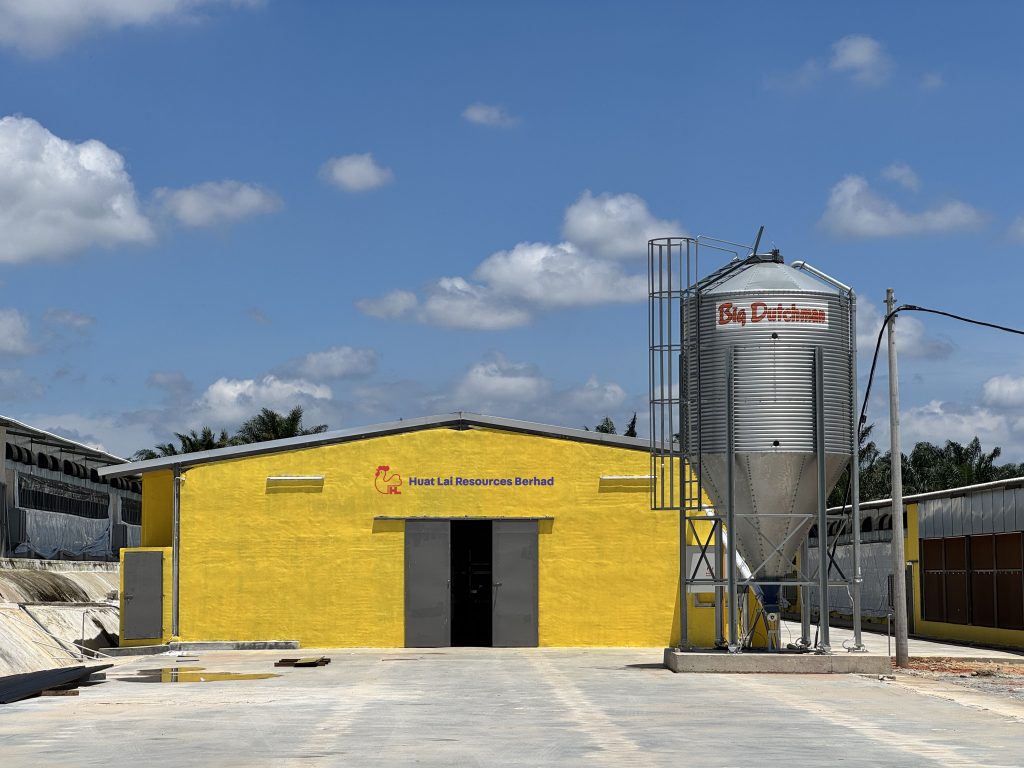
Leading egg producer Huat Lai to build Malaysia’s largest cage-free farm

MALACCA: Huat Lai Resources Bhd, one of Malaysia’s largest egg and poultry producers, won praise today from international NGO Lever Foundation for its new plans to develop the country’s largest cage-free egg production facility. Set to launch in Q4 2025, the expansive Malacca operation will house 200,000 layers in a multi-tier aviary system, positioning the company at the forefront of sustainable egg production in Southeast Asia. The transformative project represents a significant expansion of Huat Lai’s cage-free operations, which began with its Singapore subsidiary Chew’s Agriculture Pte Ltd in 2012. From its humble beginnings over 30 years ago as a modest poultry farm, Huat Lai has grown into one of Malaysia’s leading poultry producers. Ten of its egg production barns, which together house 200,000 birds, will transition to cage-free systems over the next few months, creating what will be Malaysia’s largest cage-free egg operation. The new facility will more than quadruple the company’s current cage-free capacity of 60,000 hens, creating a more affordable and reliable cage-free egg supply chain for the Malaysian and overseas markets. “In the past two to three years we’ve seen a remarkable shift in corporate demand for cage-free eggs,” said Edvin Lim, Business Development Manager of Huat Lai Group. “While consumers have long shown interest in animal welfare and sustainable sourcing, the corporate sector—hotels and retailers in particular—have driven the recent surge in demand. Clients now expect 100% cage-free supply once they make the switch, including shell, liquid, and powder egg.” Dozens of food companies in the country have committed to sourcing only cage-free eggs, including retailers such as MYDIN, Jaya Grocer, AEON Malaysia and Village Grocer, hospitality groups such as Sunway Hotels & Resorts and Hatten Hotels, and restaurant brands such as Old Town White Coffee and O’Brien’s. “Huat Lai’s evolution from a small family business to becoming Malaysia’s pioneer in large-scale cage-free egg production demonstrates remarkable entrepreneurial vision,” said Bagas Kusuma Jati, Sustainable Supply Chain Manager at Lever Foundation, which worked with Huat Lai on its cage-free egg expansion. “Their commitment to maintaining core values while boldly investing in sustainable production systems is an excellent model for the industry. The courage to make such significant infrastructure investments ahead of market demand reflects the forward-thinking leadership needed throughout Southeast Asia’s food production sector.” “You need to take a bold move before your clients demand it. Our new facility in Malaysia will allow us to supply cage-free eggs at a larger scale, ensuring a consistent supply for our clients,” Edvin Lim explained. He further noted that corporate customers transitioning to cage-free sourcing “rarely return to traditional caged eggs.” Meanwhile, Daniel Lim, Sales Manager of Huat Lai said “We are going beyond providing steady and reliable food sources to the nation. With the cage-free initiative, we are setting meaningful standards for Malaysia’s poultry industry.” A survey conducted by leading Asian consumer research agency GMO Research found that 77% of Malaysian consumers believe eggs sourced by restaurants, retailers, packaged foods producers and similar businesses should come from cage-free hens. The survey also found that 62% of consumers are willing to pay more for cage-free eggs, with more than half accepting a cost premium of 10-25%. Cage-free egg production, in which hens are given the freedom to move in open environments, improves animal welfare and food quality. Exhaustive research by the European Food Safety Authority found that cage-free egg farms have up to a 25 times lower rates of contamination by key Salmonella strains. An increasing number of consumers have also been leaving eggs off their plates as the best way to help laying hens.

News

Thailand Urged to Build Innovation Ecosystem as Key Growth Engine

Senior business leaders and policy experts are calling for Thailand to accelerate the development of a robust innovation ecosystem capable of producing rapid, tangible results to revitalise economic growth.   Speaking at a recent Thailand Science Research and Innovation (TSRI) dinner talk under the theme “Igniting Thailand’s GDP through the STI Fund”, Kris Chantanotoke, Chairman of the TSRI Board and Chief Executive of Siam Commercial Bank, emphasised that innovation should not be reduced to mere technological advancement. Rather, it must be embedded within a cohesive innovation system underpinned by clear goals, strategic collaboration and economic relevance. “Innovation is not just about technology — it’s about creating an effective system that can drive economic transformation,” Mr Kris stated. He warned that Thailand’s economy remains vulnerable and is unlikely to achieve GDP growth beyond 2% annually in the foreseeable future. Strategic Reorientation Needed Mr Kris highlighted a critical misalignment in Thailand’s current research and development strategy, which focuses primarily on inputs such as publication volume and aims to raise R&D spending to 2% of GDP by 2027. In contrast, other nations like Canada are targeting economic impact directly, with plans to generate US$50 billion in value through leadership in artificial intelligence over a decade. “Research activity is booming like mushrooms, but the application of innovation to solve real-world problems remains limited,” he said. “We need to move from disbursing funds to designing systems that drive real economic results.” He advocated a sharper focus on high-potential sectors aligned with Thailand’s strengths in natural resources and skilled labour. These include medical tourism and wellness, automotive, electronics, and food and agriculture — each with its own value chain that can deliver measurable outcomes. Mr Kris also pointed to external headwinds, including trade tensions and falling tourism, which are undermining the country’s economic base. Thailand remains heavily reliant on exports to the United States, which account for 18% of total trade, while household debt levels remain elevated. In terms of innovation output, Mr Kris cited a stark contrast in patent activity: Thailand registered only 11 resident patent applications per million people in 2023, compared with 274 in Singapore, 1,079 in China, 1,839 in Japan and 3,696 in South Korea. Enhancing Investment and Talent Ecosystems Kobsak Pootrakool, Executive Vice-President of Bangkok Bank, echoed the call for structural reform, urging Thailand to leverage its geographical location, infrastructure, and integrated supply chains to attract greater investment flows into Southeast Asia. He called for the development of a new talent ecosystem geared towards emerging sectors, particularly semiconductors, while also attracting foreign experts. This should be accompanied by continued investment in physical and digital infrastructure, modernisation of supply chains, regulatory reform, and improved ease of doing business. Mr Kobsak also emphasised the importance of upgrading traditional sectors and creating new strategic industries, including fintech, agritech, and climate technology. Delivering Real-World Impact Somkiat Tangkitvanich, President of the Thailand Development Research Institute, cautioned that reliance on export-led growth is increasingly unsustainable amid global protectionism, citing shifts in U.S. trade policy. He stressed that innovation must now become the engine of economic opportunity. He urged researchers to pursue projects that are both economically and commercially viable, citing examples from Japanese universities that, while not globally top-ranked, produce impactful research such as genetic profiling for athletes, matcha green tea innovation, and marine biology breakthroughs. “To deliver impact, research must produce results in a timely manner,” Mr Somkiat said. He called for rigorous assessments of market potential, technological feasibility, and financial viability — including revenue and profitability forecasts. Sompong Klaiyananwasuang, Director of TSRI, reiterated the organisation’s commitment to serving as a national platform that bridges academic research with practical application, ensuring that innovation drives measurable, sustainable progress. -Bangkok Post

News

India’s Aviation Strategy Faces Crosswinds Amid Global and Domestic Constraints

Prime Minister Narendra Modi’s prominent presence at the International Air Transport Association (IATA) annual meeting this week highlights the central role aviation is expected to play in India’s broader development strategy. Yet, as India positions itself for global prominence in air travel, the sector faces mounting operational and regulatory headwinds. Despite ongoing global volatility in the aviation sector—fueled by trade uncertainties and weakened consumer sentiment—India’s major carriers remain bullish. Airlines continue to invest aggressively in fleet expansion, building on historic aircraft orders placed over the past two years. However, industry leaders caution that India’s impressive growth trajectory could stall without critical reforms and infrastructure upgrades. Participants at the IATA gathering in Delhi raised concerns about persistent issues, including aircraft shortages, underdeveloped maintenance capabilities, and high operating costs driven by fuel taxes and airspace restrictions. Hostilities with neighbouring Pakistan have forced Indian airlines into costly detours, increasing fuel consumption and adding to passenger management burdens. Airline executives are lobbying for policy relief, seeking tax exemptions and fee waivers, though the government’s willingness to intervene remains unclear. This comes in contrast to New Delhi’s stated ambition of transforming India into a job-generating global aviation hub, akin to Dubai, which currently channels a significant portion of India’s international traffic. “In the coming years, the aviation sector is expected to be at the centre of massive transformation and innovation, and India is ready to embrace these possibilities,” Prime Minister Modi told industry leaders on Monday. Realising this vision will require extensive capital investment—potentially running into billions of dollars—to modernise airport infrastructure and streamline regulatory frameworks. India Aims High, but Performance Lags India, already the world’s third-largest aviation market by seat capacity after the United States and China, is poised for exponential growth. According to IATA, passenger traffic in India is projected to triple over the next two decades. The government has set an ambitious target to increase the number of operational airports from 157 in 2024 to 400 by 2047. “We are fast emerging as a strategic connector country … India is a natural connector of the skies and aviation as well,” said Civil Aviation Minister Ram Mohan Naidu, addressing global airline executives in New Delhi. Yet, there remains a notable gap between potential and performance. India, the world’s most populous nation with 17.8% of the global population, accounts for just 4.2% of air passengers. In 2024, India registered a record 174 million domestic and international travellers—well behind China’s 730 million. “The outlook is potentially very positive for both the Indian economy and air transport industry. However, such outcomes are not guaranteed,” IATA noted in a recent assessment. Structural limitations continue to weigh down progress. Industry stakeholders argue that existing regulations require modernisation to support sustainable growth. “Even the regulators will agree that they need to update their regulation, because there is a reason why India is not punching above its weight. In fact, it is punching very much below its weight,” said Subhas Menon, Director General of the Association of Asia Pacific Airlines. Global competitors are also calling for India to liberalise its market. Emirates President Tim Clark pointed to demand outstripping available capacity, stating, “For every seat we offer, particularly in the peaks, we’ve got three to ten people trying to get it.” Maintenance capacity is another bottleneck. India lacks sufficient domestic maintenance, repair, and overhaul (MRO) infrastructure, leaving its fleet heavily reliant on overseas facilities amid global shortages. “Airframe maintenance is a huge opportunity for India because you require labour and skills—and that’s something India is investing in,” said IATA Director General Willie Walsh. Compounding these challenges are delays in the delivery of next-generation, fuel-efficient aircraft due to global supply chain disruptions. IndiGo, India’s largest airline, has turned to aircraft leasing to support its international expansion. It has also signed strategic partnerships with Air France-KLM, Virgin Atlantic and Delta to extend its global reach through shared networks. As India accelerates its push to become a global aviation powerhouse, the path forward will demand pragmatic policy reform, infrastructure enhancement, and a regulatory ecosystem conducive to international competitiveness. -Reuters

Scroll to Top

Subscribe
FREE Newsletter