Generic selectors
Exact matches only
Search in title
Search in content
Post Type Selectors
post
Generic selectors
Exact matches only
Search in title
Search in content
Post Type Selectors
post

Property

Property

IJM Corp’s RM2.4 Billion Finsbury Circus Project Fuels Global Expansion

KUALA LUMPUR: IJM Corp Bhd’s Finsbury Circus project in London is set to deliver substantial value to the company, with an impressive gross development value (GDV) of RM2.4 billion. This development is a major boost to the group’s international property portfolio, according to MIDF Research. As part of its medium-term strategy, IJM Corp aims to expand its investment property portfolio to RM2 billion over the next five years. This ambitious plan will focus on strategically selected overseas assets that offer prime locations, sustainability credentials, and strong tenant profiles. One of the key highlights of the Finsbury Circus development is the long-term lease agreement signed with global law firm Simmons & Simmons LLP. The firm has committed to a 20-year lease, occupying approximately 62% of the 25 Finsbury Circus property, with an option to extend to 80%. This lease agreement is seen as a testament to the property’s appeal and the effectiveness of IJM Corp’s strategic plan to diversify and develop high-quality, income-generating assets. For the third quarter of the financial year ending December 31, 2024, IJM Corp reported a 12.9% year-on-year increase in net profit to RM113.3 million, driven by a 4.4% growth in revenue to RM1.54 billion. However, the company experienced a slight dip in its cumulative nine-month earnings, with net profit falling by 6.9% to RM274.4 million due to unrealised foreign exchange losses. Despite this, analysts remain optimistic, expecting IJM Corp to deliver strong earnings growth in the coming years, bolstered by a robust pipeline of industrial contracts, including several hyperscale data centre projects valued at a total of RM12 billion.-NST

Property

MM2H Visa Injects RM455.8 Million Into Malaysia’s Economy

KUALA LUMPUR: The latest data reveals that Malaysia’s revamped Malaysia My Second Home (MM2H) visa programme has injected a staggering RM455.8 million into the economy within just six months, following policy changes implemented in June 2024. With 782 new visa approvals, the programme is on track to generate nearly RM1 billion in annual investments, according to IQI Co-Founder and Group CEO Kashif Ansari. MM2H: A Major Economic Driver “Over the past six months alone, MM2H visa holders have contributed RM455.8 million, benefiting Malaysia in two key ways,” Ansari explained. “Firstly, their funds circulate through local financial institutions via fixed deposits, supporting loans and economic development. Secondly, MM2H participants invest significantly in real estate, particularly in luxury homes, stimulating the property market and related industries.” With 319 principal applicants and 463 dependents approved under the programme in this period, each main applicant brings an average of 1.5 family members into Malaysia, further amplifying economic activity. A Global Appeal Beyond China While Chinese nationals continue to be the largest group of MM2H applicants, they now represent less than one-third of total approvals. Australia ranks as the second-largest source of applicants, with South Korea, Japan, Bangladesh, and the United Kingdom also contributing significant numbers. “MM2H is more international than many realize,” Ansari noted. “We see strong demand from countries across Asia and beyond, showcasing Malaysia’s global appeal as a top destination for expatriates.” Why Foreigners Choose Malaysia Malaysia’s attractiveness lies in its affordable yet high-quality lifestyle, rich cultural diversity, excellent education system, and fast-growing economy. Additionally, Malaysia provides a relatively lower language barrier for Chinese applicants, with Mandarin-speaking services widely available—a major advantage for families bringing elderly relatives who may not speak English. “Many Malaysians may not fully appreciate just how desirable their country is,” Ansari remarked. “Foreigners are willing to invest significantly to live here because Malaysia offers an exceptional quality of life at a fraction of the cost compared to Western countries.” What’s Next for MM2H? The government’s 2024 reforms introduced a three-tiered visa system, offering longer residency periods for greater financial commitments. Additionally, MM2H holders must now purchase a home and retain ownership for at least 10 years. To attract younger, working-age participants, age requirements were lowered, and minimum income thresholds removed. Looking ahead, further enhancements could boost MM2H’s impact, including easier work and business opportunities for visa holders and tax incentives to encourage foreign entrepreneurs to establish businesses in Malaysia. “With MM2H driving close to RM1 billion annually in investments, it’s already proving to be a major success,” Ansari concluded. “With the right improvements, its potential to fuel Malaysia’s economic growth could be even greater in the years ahead.”    

Property

Why Asia’s Elite Are Investing in Property

Despite a volatile macroeconomic landscape, family offices in the Asia-Pacific region are strengthening their commitment to real estate, recognizing the sector’s potential for both capital appreciation and wealth preservation. According to The Wealth Report, Knight Frank’s latest survey of 150 single and multi-family offices worldwide, investors are increasingly diversifying into high-growth real estate sectors such as luxury residential, industrial logistics, and living spaces. The survey, conducted between November and December 2024, covered 121 single-family offices, 18 multi-family offices, and 11 senior investment heads. Notably, 51% of surveyed offices are headquartered in Asia-Pacific, highlighting the region’s growing influence in global investment strategies. Major hubs such as Singapore, Sydney, and Hong Kong SAR are emerging as key centers for wealth management and property investment, alongside established markets like London, New York, and Geneva. Growing Allocations to Real Estate With total assets under management (AUM) exceeding US$84 billion across the surveyed firms, the findings indicate a significant shift toward real estate: 40% of family offices operate businesses with real estate holdings. 28% increased their real estate allocations in the past 18 months, compared to just 17% who reduced exposure. Office spaces (20%), luxury residential (17%), industrial (14%), and hotels (12%) remain the most preferred asset classes. Looking ahead, real estate investment appetite continues to strengthen. 44% of family offices plan to increase their property exposure over the next 18 months, with the highest interest in Living sectors (14%), Industrial/logistics (13%), and Luxury residential (12%). “Despite concerns over macroeconomic conditions, family offices remain bullish on real estate, particularly in Asia, where diversification into emerging sectors like data centers and living-related assets is gaining traction,” said Christine Li, Head of Research at Knight Frank Asia-Pacific. Challenges and Investment Strategies While optimism remains high, investors face structural challenges in expanding their real estate portfolios. The top barriers include: Identifying reliable partners/operators (23%) Complex tax regulations (20%) Intense competition for assets (19%) Regulatory and compliance hurdles (17%) In response, family offices are shifting away from traditional core investments toward opportunistic (31.9%) and value-add (30.3%) strategies, seeking higher returns in a market shaped by rising interest rates and shifting economic conditions. A Regional Focus with Global Ambitions Asia-Pacific family offices exhibit a strong preference for domestic real estate investments, with 70% of their portfolios concentrated in local markets. Countries such as New Zealand (93%) and Australia (90%) demonstrate particularly high domestic investment levels. However, investors in Hong Kong SAR (33%) and Singapore (41%) are expanding their reach, targeting opportunities in both regional and international markets. For most family offices, real estate remains a long-term strategy: 37% of investments have a horizon of nine years or more 32% span between three to six years Only 3% of transactions are made with a sub-three-year outlook Shifting Dynamics Among Family Offices The leadership of family offices remains predominantly baby boomer-led (50%), with Gen X (36%) following closely behind. However, the next generation is increasingly influencing investment decisions: 58% of family offices have involved younger generations in decision-making 47% report some shifts in investment strategies, with 18% seeing a significant transformation Millennials and Gen Z are prioritizing sustainable investments, with 63% of millennial investors actively allocating capital to ESG-focused assets, compared to 35% of baby boomers Singapore: A Growing Wealth Hub Singapore continues to solidify its position as a global wealth and investment hub. The number of registered single-family offices (SFOs) surged from 400 in 2020 to over 2,000 by 2024, underscoring the city-state’s appeal to high-net-worth individuals seeking stability and pro-business policies. “In an era of rising geopolitical tensions and economic fragmentation, Singapore remains an attractive destination for wealth preservation and capital deployment,” said Galven Tan, Chief Executive Officer at Knight Frank Singapore. In 2024 alone, family offices played a crucial role in high-profile property acquisitions previously dominated by institutional investors. Notable transactions included: Admirax Industrial Building – Sold for S$154 million 21 Collyer Quay (Office Building) – Acquired for S$688 million River Valley Apartments (Collective Sale) – Closed at S$56 million, brokered by Knight Frank Singapore The growing influence of family offices in real estate investment signals a major shift in global wealth management. With a stronghold in Asia-Pacific, these investors are actively diversifying into resilient and high-yielding property assets, overcoming structural challenges through strategic partnerships and innovative investment approaches. As family offices continue to evolve, the next generation of leaders is expected to drive further changes, particularly in sustainable and technology-driven real estate investments.

Property

Radium Development Berhad’s PBT Surges 29% to RM24.9M in FY2024

KUALA LUMPUR:  Radium Development Berhad (“Radium” or “the Group”) (KLSE: RADIUM), a leading Klang Valley property developer, has reported robust financial results for the financial year ended 31 December 2024 (“FYE2024”), driven by strong project performance and strategic expansion. Radium’s revenue rose 19.1% to RM152.8 million (FYE2023: RM128.3 million), supported by key projects such as Suite Canselor @ Ampang, Vista Adesa, and Radium Adesa @ Sungai Besi. Profit before tax (“PBT”) surged 29% to RM24.9 million (FYE2023: RM19.3 million), attributed to higher revenue and improved cost efficiencies. In 4Q FYE2024, revenue jumped 63.3% to RM46.2 million (4Q FYE2023: RM28.3 million), though PBT was lower at RM9.5 million (4Q FYE2023: RM15.3 million) due to a one-off fair value gain in the previous year. As of 31 December 2024, Radium maintains a strong balance sheet with RM244.5 million in cash and a low gross gearing ratio of 0.13 times against shareholders’ funds of RM767.6 million. Strategic Growth & Market Expansion Radium continues expanding its project pipeline, with the successful launch of Radium Arena @ Old Klang Road (GDV: RM550 million) and high take-up rates for Desa East Residences. Recent land acquisitions in Cheras and Ampang add GDVs of RM2.54 billion and RM470 million, respectively, strengthening future development prospects. Diversifying beyond property development, Radium is entering the hospitality sector with a 145-room boutique hotel at Suite Canselor @ Ampang, marking a new growth avenue. Future Outlook Datuk Gary Gan Kah Siong, Group Managing Director, stated: “Our strong FY2024 results underscore Radium’s resilience and growth potential. Demand for our developments remains strong, and our strategic land acquisitions, coupled with diversification into hospitality, position us for long-term success. With a solid financial base and a low gearing ratio, we are well-placed to drive sustainable growth and enhance shareholder value.” Moving forward, Radium will continue expanding its land bank in prime locations, diversifying revenue streams, and delivering high-quality projects to meet evolving market demands.

Property

Gamuda Land’s The Clove Achieves 100% Take-Up for Phase One

SELANGOR: Gamuda Land has announced the overwhelming success of The Clove, its newly introduced Park Homes typology, which achieved a 100% take-up rate for its first phase across Gamuda Cove, Gamuda Gardens, and twentyfive7. This milestone highlights the strong market demand for customer-centric innovation and AI-powered home customization, setting a new benchmark for modern homeownership. The Clove introduces Malaysia’s first-of-its-kind Park Homes, featuring an innovative cluster-of-eight layout arranged around a private, gated common garden. By blending the best aspects of terrace and semi-detached homes, this concept offers spacious, flexible layouts designed to meet the evolving needs of modern families. Compared to conventional terrace houses, Park Homes provide lower density, enhanced privacy, and a higher proportion of corner units, ensuring more green space and natural light—key factors for homebuyers prioritizing wellness, nature, and a secure living environment for their families. A standout feature of The Clove is its cutting-edge home customization technology, powered by Generative AI (GenAI) through the GL Connect portal. Buyers can personalize their home’s room configurations—choosing between one to three bedrooms—based on their lifestyle needs, all at no additional cost. This eliminates the need for costly post-purchase renovations, offering homeowners a seamless and hassle-free buying experience. “The Clove is a result of extensive research and customer feedback,” said Jess Teng, Chief Operating Officer of Gamuda Land. “We wanted to go beyond traditional housing and create homes that are not only spacious and sustainable but also flexible and future-proof. With GL Connect, buyers can design their ideal space without the usual renovation struggles, making homeownership more accessible and tailored to real-life needs.” While the unique Park Homes concept was initially unfamiliar to many buyers, the exclusive show unit previews at Gamuda Cove and Gamuda Gardens quickly changed perceptions. “Seeing the actual space helped buyers understand the benefits of this design,” Teng explained. “The overwhelming response confirms that homebuyers today are looking for innovative, adaptable, and nature-focused living spaces.” What’s Next? With a Gross Development Value (GDV) of RM1 billion, The Clove represents Gamuda Land’s commitment to sustainable, modern living. The show units at Gamuda Cove and Gamuda Gardens remain open for public viewing, while the Signature Collection at twentyfive7 is set to launch in March. For more information or to experience Malaysia’s first AI-powered home customisation portal, GL Connect, visit gamudaland.com.my.

Property

EcoWorld sells land in Johor to Microsoft for RM693mil

PETALING JAYA: Eco World Development Group Bhd (EcoWorld Malaysia) is selling freehold industrial land measuring 138.532 acres at Eco Business Park I in Iskandar Malaysia to Microsoft Payments (Malaysia) Sdn Bhd for RM693.96mil. In a filing with Bursa Malaysia, EcoWorld Malaysia said part of the disposal price will be used to complete the remaining main infrastructure development on the land and to defray associated expenses for the proposed land sale, which are expected to be incurred within 24 months from the date of the sale and purchase agreement. “At this juncture, the quantum for each of these utilisations has yet to be finalised.” It added that the balance will be used as working capital. “Timing of utilisation cannot be ascertained at this juncture as it will depend on the actual amount available and actual working capital requirements at that point of time. “Any part of the disposal price which has yet to be utilised will be placed in deposits with financial institutions or short-term money market instruments. Interest derived from the deposits placed or any gain arising from short-term money market instruments will be used as working capital of the group.” Additionally, EcoWorld Malaysia said the proposed land sale, once it is completed, is expected to enhance the net assets and gearing of the group in view of the surplus cash after setting aside cash required to complete the remaining infrastructure works and to defray associated expenses. “The quantum of the surplus cash cannot be determined at this juncture as it will depend on, amongst others, actual development costs incurred for the development of the Land at the time of completion.” Commenting on the land deal, EcoWorld Malaysia said the industrial component of its business has been growing very rapidly over the past four years with annual sales having exceeded RM1bil in financial year 2023 (FY23) and FY24 from this segment alone. “This is largely attributed to the comprehensive three-pronged strategy adopted by the group, which has given it a wide range of products across two sizeable industrial revenue pillars, thus enabling it to serve local small and medium enterprises, larger industrialists and renowned international players. “The sale of industrial land with infrastructure to global multinationals, in both traditional manufacturing as well as the high-tech and digital space, is an integral part of the group’s strategy to grow its Eco Business Park.” EcoWorld Malaysia said the proposed land sale at Eco Business Park I marks the second strategic land deal entered into between the company and the buyer for their development and operation of a data centre in Iskandar Malaysia. “It demonstrates the southern state and Malaysia’s continued attractiveness as a hub for hyperscale data centre operators and is also testament to the suitability of the group’s industrial parks as ideal sites for such high-tech operations.” The company said the completion of sale will add to the group’s already substantial cash reserves (including short-term funds) which stood at RM1.36bil as at Oct 31, 2024. “Accordingly, EcoWorld Malaysia is in a very good position to not only expand its landbank but to also pursue strategic opportunities to grow its portfolio of recurring income assets in the commercial and / or industrial sector. “This is with the aim of establishing a solid foundation of new and sizeable recurring income sources to anchor future cashflow and earnings, thus complementing the group’s trading revenue generation from its sale of development properties.”–THE STAR

Property

Penang Welcomes its First Crowne Plaza Hotel

PENANG: The Crowne Plaza Penang Straits City marked its grand opening today with a jubilant celebration, signifying a major milestone in the Straits City Future City (海峡综合城) waterfront flagship development. This transformative 40-acre project is set to revitalize Butterworth into a dynamic and inclusive future city. A Vision for Transformation Ms. Chew Gek Khim, Executive Chairman of Straits Trading, emphasized the significance of this launch, stating: “Crowne Plaza Penang Straits City represents the transformation of our legacy assets and land bank in Butterworth. This is just the beginning of a transformative journey for Straits City. More than just infrastructure, Straits City is about creating a thriving urban ecosystem where businesses, communities, and innovation converge—contributing to Butterworth’s long-term growth and vibrancy as a place to work, live, and play.” Straits City is a collaboration between Singapore Exchange (“SGX”)-listed The Straits Trading Company Limited (“Straits Trading”) (海峡贸易) and Bursa Malaysia-listed Malaysia Smelting Corporation Berhad (“MSC”). Straits City: An Interactive, Intelligent, and Integrated Urban Hub Crowne Plaza Penang Straits City and Straits Galleria mark the first phase of the 40-acre development, which is set for completion by 2038. The master plan envisions Butterworth as a key future city in the Northern Region, seamlessly connecting Penang’s mainland and island. Reflecting on this broader vision, Ms. Chew stated: “Straits City is designed to create a balanced and sustainable community, meeting the needs of today while also fulfilling the aspirations of future generations. Our goal is to cultivate a thriving urban environment that enriches Butterworth’s economic and social fabric.” The development integrates retail, commercial, and residential components under the “Work, Live, Play” concept, fostering a seamless blend of work, leisure, and modern living. Sustainability is at the core of Straits City’s vision, featuring eco-conscious infrastructure and smart technologies, such as intelligence-driven security systems and Internet-of-Things solutions to enhance energy efficiency. Additionally, pedestrian-friendly walkways and cycling pathways will be introduced where feasible to promote an active and sustainable lifestyle. Straits City is also aligned with local initiatives, collaborating with agencies to empower communities and support projects like the ‘Levelling Up Seberang Perai’ program under the Penang State Government’s Penang 2030 plan. Strategic Growth and Economic Impact Strategically located just 2 km from the Northern region’s transportation hubs, Straits City offers excellent accessibility. The development is well-supported by existing and upcoming infrastructure, including highways, rail, and additional transport routes that enhance connectivity within the region. Butterworth’s rapid industrialization and projected population growth to 1.2 million by 2030—comprising 55% of Penang’s total population—make Straits City a crucial driver of the region’s evolving urban landscape. Additionally, Penang remains Malaysia’s top contributor to manufacturing Foreign Direct Investment (“FDI”), reinforcing its status as an economic powerhouse. With its close proximity to key industrial zones such as the Perai Free Industrial Zone, the development is primed to meet the rising demand for housing, services, and high-quality hospitality. Crowne Plaza Penang Straits City: A New Landmark in Hospitality As the first Crowne Plaza in Penang, the 23-storey hotel features 343 well-appointed rooms and suites designed to cater to the growing demand for luxury accommodations on the mainland. Equipped with motion-sensor lighting and offering stunning views of Penang Island, the hotel also underscores sustainability through organic bath amenities. The hotel provides versatile spaces for business and leisure, including: Straits Ballroom, accommodating up to 800 guests Smaller meeting rooms, ideal for intimate gatherings Straits Galleria, a multi-level retail podium with a curated selection of shops, restaurants, and entertainment venues Grand Opening Highlights The grand opening ceremony welcomed distinguished guests, including representatives from Straits Trading, MSC, IHG Hotels & Resorts (“IHG”), government officials, industry leaders, business associates, and the media. The celebration featured a traditional lion dance symbolizing prosperity, followed by an immersive video presentation showcasing the envisioned development of Straits City. Key speakers at the event included: Ms. Tan Hwei Yee, Chief Executive Officer of STC Property Management Sdn. Bhd. Shi’ai Liang, Senior Director, Development of IHG Ms. Chew Gek Khim, Executive Chairman of Straits Trading, who delivered the keynote address emphasizing Straits City’s long-term vision and the collaborative efforts that made this milestone possible The official opening was graced by Mr. Abdul Hadi Che Man, Director of Tourism Malaysia Northern Region, and YB Chee Yeeh Keen, Bagan Jermal State Assemblyman. Following the ceremony, guests enjoyed an exclusive guided tour of the hotel’s eco-friendly features and innovative designs. The event also included a visit to the Straits City Concept Centre (“SCCC”), a 10,000-square-foot gallery offering a comprehensive and interactive overview of the broader development. The day concluded with a networking luncheon at the hotel’s 1887 All Day Dining Restaurant. A Promising Future for Straits City With the launch of Crowne Plaza Penang Straits City, Butterworth is poised for a remarkable transformation. As Straits City evolves, it will play a crucial role in shaping the region’s future, fostering a vibrant urban ecosystem that aligns with economic growth, sustainability, and modern living.

Property

Windsor collection Relaunches ALAIA Titiwangsa

KUALA LUMPUR: ALAIA Titiwangsa, a premium serviced apartment development in Taman Tiara Titiwangsa, has been relaunched under the Windsor Collection. This follows the acquisition of Black Lotus Development Sdn Bhd, the project’s original developer, by Kenneth Lau, the founder of Windsor Collection, who is also serves as the Chairman of Multifield International Holdings Ltd, Hong Kong. With a gross development value of RM 285 million, Kenneth Lau made the acquisition as part of a strategic expansion in Malaysia. Recognising ALAIA Titiwangsa’s prime location and well-designed offering, he is relaunching the development under the Windsor Collection, bringing his international expertise to the local market. As the chairman of Multifield, Kenneth leads a company that has a strong presence across the Asia-Pacific region, with over three decades of experience in residential, commercial management and development, corporate housing, and hospitality projects. Under the Windsor Collection brand, he has successfully introduced international-grade hospitality and commercial projects across Shanghai and Zhuhai in China, and now Kuala Lumpur. This relaunch marks Windsor Collection’s first foray in Malaysia and reflects his commitment to enhancing urban living through quality design, curated facilities, and active community-building initiatives. Daryl Ng, the CEO of Windsor Collection said the relaunch signifies a new chapter for ALAIA Titiwangsa, injecting renewed energy and a refined living experience for homeowners and investors where community meets exclusivity. “We kept the design and features unchanged, and over 45% of our units have already been taken up, with strong demand expected to continue into the year. “The relaunch under Windsor Collection brings our international experience in delivering a high standard in property management and community-focused living, reinforcing our commitment to delivering homes that integrate luxury with functionality,” he said. Scheduled for completion in the fourth quarter of 2026, ALAIA Titiwangsa comprises 436 serviced apartments across 40 storeys, with unit sizes ranging from 635 sq ft to 1,012 sq ft. Units come in 1+1, 2+1 and 3+1 bedroom configurations with rectangular layouts to allow for easy furniture placement and minimise wasted space. Offering two distinctive view orientations, north-facing units offer scenic views of the Banjaran skyline, while south-facing units provide picturesque sight of the Kuala Lumpur city skyline and Titiwangsa Lake Gardens. This serviced apartment supports a work-from-home lifestyle with an integrated co-working space that includes a private meeting room. Residents can also enjoy various social spaces, including a vibrant social hub with 18 curated shop lots and Kebun, a green sanctuary featuring fruit trees and a spice garden. Additional amenities include the Green Folly and an array of sky facilities on Level 40, such as sky lounge, sky dining, jacuzzi, karaoke rooms, an infinity sky swimming pool, and sky cinema. The rooftop provides residents with breathtaking panoramic views of Kuala Lumpur city and the Titiwangsa range. It also offers a range of facilities, including electric vehicle charging stations, a jogging track, a sky gym, a kids’ playroom and a children’s pool. ALAIA features robust security measures, including 24-hour surveillance, CCTV coverage throughout the building, restricted access to lift lobbies and residential areas, as well as an additional security gate at night for enhanced safety. An activity van will also be available for weekend explorations of food, nature, art and to the nearby LRT and MRT stations. In conjunction with the relaunch, Windsor Collection is offering special Chinese New Year promotions for homebuyers. Customers who make bookings between 1st February to 13 March 2025 will receive an exclusive Angpau worth RM1,688, while a referral incentive programme will reward successful recommendations with a 2% referral fee. These incentives are part of Windsor Collection’s strategy to encourage greater community engagement and support buyers seeking a home in a prime Kuala Lumpur location. Daryl Ng emphasised that ALAIA Titiwangsa is designed to be more than just a residence, with Windsor Collection focusing on building a vibrant, well-connected community through thoughtfully curated experiences. He stated that the project’s facilities and amenities reflect a commitment to fostering an environment where residents can live, connect, and thrive. ALAIA is conveniently located to nearby international schools (Wesley Methodist, International School of KL and Sayfol International School); private and government hospitals (Tawakal, KPJ, HKL, Institut Jantung Negara and Columbia Asia, Gleneagles); hypermarkets and supermarkets (AEON, Giant, Jaya Grocers, Ben’s Independent Grocer); major banks and Titiwangsa Lake Gardens, which are all within a 10km radius. Adding a layer of convenience for residents, ALAIA also offers easy access to DUKE Highway for seamless city connectivity. For more information about ALAIA Titiwangsa, visit www.alaia.com.my or follow Windsor Collection on Facebook and Instagram.

News, Property

Temasek-backed Cuscaden moves to privatise Paragon Reit at S$0.98 per unit

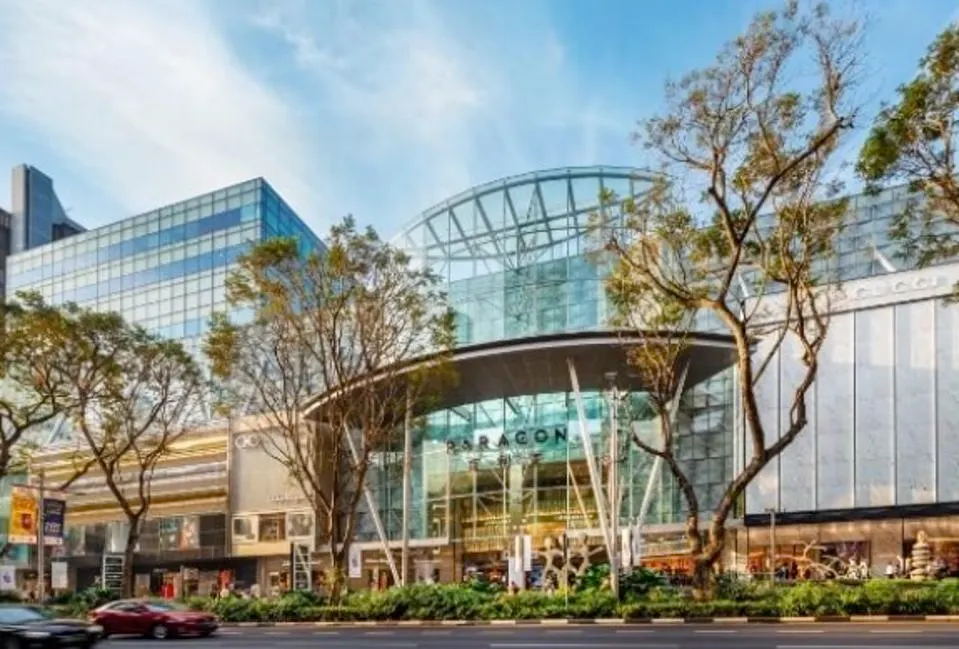
TIMES Properties, a wholly owned subsidiary of Cuscaden Peak Investments, is looking to take Paragon Real Estate Investment Trust : SK6U 0% (Reit) private by way of a trust scheme of arrangement, for S$0.98 per unit. The offeror is looking to acquire all units in Paragon Reit held by unitholders other than Cuscaden Peak and its subsidiaries. The offer values the Reit at S$2.8 billion. Cuscaden Peak Investments is wholly owned by Cuscaden Peak, which is in turn owned equally by Adenium, a wholly owned subsidiary of CLA Real Estate, and Mapletree Fortress, an indirect wholly owned subsidiary of Mapletree Investments. Both CLA and Mapletree are part of the Temasek stable. Ong Beng Seng’s Hotel Properties Limited : H15 0%, which was originally a part of the consortium, announced last month that it no longer holds any stake in Paragon Reit. In 2022, investment vehicle Cuscaden Peak acquired the then listed Singapore Press Holdings (SPH) Reit, which was mainly a property business after spinning off its media assets. SPH was then renamed Cuscaden Peak Investments. Cuscaden Peak acquired about a 61 per cent stake in SPH Reit as part of a chain offer following the privatisation of SPH. SPH Reit was renamed Paragon Reit with effect from Jan 3, 2023. As at the joint announcement date on Tuesday (Feb 11), Times Properties held directly and indirectly approximately 21.5 per cent of the issued units of Paragon Reit. The directors of Times Properties include Gerald Yong, who is also the chief executive and a director of Cuscaden Peak, as well as Chin Yean Cheng, chief financial officer of CapitaLand Development. The offer price represents a 10.1 per cent premium to the counter’s last transacted price of S$0.89 on Monday. It also represents a premium over the volume weighted adjusted price – of 10.9 per cent for one month, 11.6 per cent for three months and 12.8 per cent for 12 months. Long-term competitiveness Cuscaden Peak Investments and Paragon Reit said the scheme would allow unitholders “to realise their investment in cash at an attractive valuation with no trading costs”, and enable them “to immediately reinvest proceeds into other opportunities”. They noted that Paragon Reit has one of the lowest free floats among its retail Singapore Reit (S-Reit) peers, and has historically experienced low trading liquidity. Its total assets have grown 1.3 times since its initial public offering in 2013, compared to the average of 2.9 times for other retail S-Reits, they added. The offeror believes that Paragon Reit “faces trading conditions that will continue to constrain its potential for sustained growth and long-term value creation”. The Reit’s portfolio comprises three assets and it depends “heavily” on Paragon, which accounts for 72 per cent of the portfolio value. However, the mall’s premier status is being challenged, with increased competition from upcoming retail malls in the surrounding catchment as well as existing malls undergoing major upgrades. Rival malls include voco Orchard, Forum The Shopping Mall and Tanglin Shopping Centre. “In addition to these competitive pressures, a persistent slowdown in luxury spending post-pandemic, with international luxury spending at 74 per cent of its 2019 peak, has also weighed on Paragon’s performance,” the statement said. The Reit also owns Clementi Mall in Singapore, and in Australia, a 50 per cent freehold interest in Westfield Marion Shopping Centre. The offeror believes that a major asset enhancement initiative (AEI) is necessary for Paragon “to maintain its long-term competitiveness”. The mall, which opened in 1986, last went through a major AEI in 2009 at a cost of S$82 million. At the time, 42,000 square feet of space was added to the mall. However, the offeror pointed out that given the execution risks associated with a significant potential AEI, such as uncertainties around cost and timing, this would be “more suitably carried out in a private setting”. The proposed AEI would potentially take up to four years to complete, and may include upgrades to Paragon’s facade and interiors, reconfiguration of its spaces and improvements to connectivity, among others. The mall is likely to retain its position as an upscale one, said Yong of Cuscaden Peak during a media briefing on the offer on Tuesday. He estimates that the capital expenditure for Paragon’s AEI would range between S$300 million and S$600 million, or between 10 and 21 per cent of Paragon’s FY2024 appraised value. The estimation is based on the capital expenditure per square foot of precedent AEIs by other Reits and Paragon’s gross floor area. Based on these parameters, and had the AEI occurred in FY2024, Paragon Reit’s pro forma FY2024 adjusted distribution per unit (DPU) would have fallen to between S$0.0163 and S$0.0355. This represents a drop of between 21.4 and 64 per cent from the FY2024 adjusted DPU of S$0.0452. On whether unitholders should have the option to partake in the AEI, Yong reiterated that there are many uncertainties involved in the asset enhancement plans. These include the time frame of the AEI and market considerations, such as rental cycles. “Because of all these uncertainties, it is very difficult for the sponsor and offeror to give a very precise underwriting… We just don’t feel it’s suitable for the Reit unitholders to come along with us,” he said. He noted that the proposed scheme of arrangement would be submitted to the unitholders of Paragon Reit for voting, with the offeror and its concert party group abstaining from the vote. In the event that the scheme is not approved by unitholders, the offeror said it hopes to continue engaging with Paragon Reit to consider an appropriate plan, as it believes that an AEI “is critical for Paragon to remain competitive”. On whether this was the final offer, Andy Neo, the director for Asia-Pacific real estate investment banking at Citigroup Global Markets – the financial adviser to the offeror – declined to speculate. He noted that he hoped unitholders will be supportive of the offer put forth for consideration. Yong added, in response to another question, that while it was possible for Paragon Reit to return to the public market down the road, it was “premature”

Scroll to Top

Subscribe
FREE Newsletter