The Executives

The Executives

SC Names Abdulkader Thomas As First Sultan Nazrin Shah Fellow

The Securities Commission Malaysia (SC) has appointed Dr Abdulkader Thomas as its first Sultan Nazrin Shah Fellow, effective Nov 1, 2025, to strengthen thought leadership and innovation in Islamic finance. The appointment was endorsed by the Sultan of Perak, Sultan Nazrin Shah, who is the royal patron of Malaysia’s Islamic finance initiative. Dr Abdulkader, 69, is a well-known author and industry expert in Islamic finance. He previously served as publisher and CEO of the American Journal of Islamic Finance, and held senior roles at Guidance Financial Group and United Kuwait Bank. Under the fellowship, he will lead research on Islamic financial markets, focusing on promoting Malaysia’s leadership in Islamic finance guided by Maqasid al-Shariah. His work will also cover impact investing, sustainability, and environmental, social and governance (ESG) themes. The programme aims to strengthen collaboration with policymakers, regulators, financial institutions, academic partners, and international stakeholders, including in the UK. The Sultan Nazrin Shah Fellowship was established in November 2025, building on over 15 years of collaboration between the SC and the Oxford Centre for Islamic Studies (OCIS), including their annual SC-OCIS Roundtable on Islamic finance development.

The Executives

Malaysian Media Council Appoints RTM, Bernama Leaders

The Malaysian Media Council (MMC) has appointed Radio Televisyen Malaysia (RTM) director-general Datuk Suhaimi Sulaiman and Malaysian National News Agency (Bernama) CEO Datin Nur-ul Afida Kamaludin as government representatives on its board. The appointments follow Section 8(1)(b) of the Malaysian Media Council Act and were nominated by Communications Minister Datuk Fahmi Fadzil on Jan 14. “The Board welcomes the nominations,” the council said, noting that with these appointments, 20 of the 21 board positions have now been filled. The only remaining vacancy is for the chairperson, for which nominations are still open. Suhaimi brings extensive experience in broadcasting and journalism across both public and private sectors, while Nur-ul Afida has expertise in managing a national news organisation and media administration, with long-standing involvement in Malaysia’s mainstream media. The council is awaiting government funding to set up a secretariat and begin its operations. The MMC board, elected in November 2025, will serve a two-year term. In addition to the two government representatives, the board includes four members from media companies, four media practitioners, four representatives of public interests—including academics and civil society—and six additional members to ensure balanced representation across gender, geography, and media diversity by language and format.

The Executives

Jasa Kita Unveils New Leadership Following Shift In Major Shareholding

KUALA LUMPUR, Jasa Kita Bhd a power tools and industrial equipment maker, has appointed Datuk Yasmin Mahmood as executive chairman and her brother Datuk Seri Iskandar Mizal Mahmood as group managing director, marking the start of a new leadership era for the company. The appointments follow a change in controlling shareholders after Kintan Prima Sdn Bhd — an investment firm owned by Yasmin, her husband Abd Azis Mohamad, and Iskandar — acquired a 40.33% stake in Jasa Kita in September for RM68.9 million or 38 sen per share. The stake was purchased from former chairman Tan Sri Robert Tan Hua Choon, known as the “Casio King”, and his son Datuk Seri Tan Han Chuan. Datuk Yasmin Mahmood (right) and Datuk Seri Iskandar Mizal Mahmood. Following a subsequent mandatory takeover offer at the same price, Kintan Prima now holds a 77.93% stake in the Main Market-listed company. Robert and his children, who previously served on the board, resigned on Oct 25. Yasmin, the former CEO of Malaysia Digital Economy Corporation (MDEC) from 2014 to 2018, currently serves on the boards of MBSB Bhd, Citaglobal Bhd, and Malaysian Industrial Development Finance Bhd (MIDF). Iskandar, a corporate veteran with over 35 years of experience, has held key roles at Malaysia Airports Holdings Bhd, Media Prima Bhd, and Pos Malaysia Bhd. In a statement, Jasa Kita said the leadership transition marks the beginning of a “new phase” focused on strengthening the group’s core business, diversifying into strategic areas, and creating long-term value for shareholders. “This new chapter for Jasa Kita is about evolving with the times to deliver sustainable growth for all our stakeholders,” Yasmin said. “We are building on Jasa Kita’s strong, debt-free foundation to explore new growth opportunities and ensure the company remains future-ready.” Iskandar added that the group will stay “laser-focused on sustainable expansion, financial discipline, and unlocking shareholder value.” The company also said the entitlement date for its planned special dividend of 12 sen per share, totaling RM53.95 million, will be announced soon. The dividend follows the sale of four parcels of industrial land in Gombak to Logik Damai Sdn Bhd, a company linked to Robert Tan, for RM38 million — a deal that was part of the share sale conditions. Jasa Kita’s shares closed 1.5 sen or 4.11% higher at 38 sen on Wednesday, valuing the group at RM170.83 million. Year-to-date, the counter has climbed 21 sen.

The Executives

ZUS Coffee Plans Entry Into Pakistan, Morocco In 2026

KUALA LUMPUR, Homegrown coffee chain ZUS Coffee is set to expand beyond ASEAN with plans to debut in Pakistan and Morocco by the first half of 2026. Co-founder and chief operating officer Venon Tian told that the brand’s first outlet in Pakistan will be opened through a local master franchise, while its Morocco launch is expected in the first or second quarter of 2026. “We are actively exploring opportunities outside the ASEAN region,” he said. Co-founder and COO of ZUS Coffee, Venon Tian. In Malaysia, ZUS Coffee is targeting 850 outlets, alongside expansion to 20 stores in Thailand and 190–200 outlets in the Philippines, where it is already present. The company also plans to open its first Indonesian store in early 2026. “With these additions, we expect to surpass the 1,000-store milestone globally by end-2025,” Tian said. ZUS Coffee has grown into Southeast Asia’s fastest-expanding coffee chain, now boasting more than 900 outlets and over 6,000 employees. On whether the company plans to list, Tian said ZUS Coffee remains focused on strengthening its business fundamentals. “For us, business growth comes first before considering any corporate exercise. A listing is not a priority for now,” he said. Looking ahead to Budget 2026, which will be tabled on Oct 10, Tian hopes for stronger incentives for Malaysian entrepreneurs and greater focus on social welfare. “Specifically for the coffee industry, we hope to see initiatives that support local farmers and traders to uplift the entire coffee ecosystem,” he added.

The Executives

Bata Targets Growth In Johor, East Malaysia With Yearly Store Openings

KUALA LUMPUR, Bata Malaysia is set to grow its footprint with new store openings every year, focusing on Johor and East Malaysia, while also upgrading its existing outlets. Managing director for Malaysia and Singapore, Rabi Hasnabi, said the company is also boosting its online business, which has tripled in sales over the past three years and made Bata the first footwear brand in Malaysia to sell on TikTok. Bata Malaysia and Singapore managing director Rabi Hasnabi. Despite cautious consumer spending, Rabi said the outlook for Bata remains positive through 2026. “Consumers are more careful due to uncertainties, but we have strong programmes in place to meet changing demand with affordable, stylish and comfortable footwear,” he told Bernama in conjunction with Bata’s Founder’s Day celebration. The brand marked its 131st anniversary globally and 95 years in Malaysia on Sept 21, celebrating its deep roots in the country. With over 240 stores nationwide and a fast-growing online presence, Bata continues to blend international expertise with local insights. Women’s footwear remains its top-selling category, consistent across the nation, Rabi noted. On supply chain resilience, he said Bata is not affected by US tariffs or the US-China trade tensions. Operating 20 production facilities worldwide and present in over 70 countries, Bata leverages global design and sourcing while tailoring products to local needs. “You may find shoes designed in Italy but produced in Asia, specifically adjusted for Malaysian feet. This gives us scale while ensuring affordability and comfort without sacrificing quality,” Rabi added.

The Executives

Mohd Rafique Merican Appointed To Bursa Malaysia’s Board Of Directors

PETALING JAYA, Bursa Malaysia Bhd has announced the appointment of Datuk Mohamed Rafique Merican as an independent non-executive director, effective Aug 15, 2025. In his new role, Mohamed Rafique will also serve as a member of both the Audit Committee and the Nomination and Remuneration Committee, contributing to the exchange’s governance, oversight, and strategic decision-making. With more than three decades of experience spanning financial services, investment, energy, facilities management, and property development, Mohamed Rafique is recognised for his leadership in steering complex organisations through growth and transformation. He previously held prominent positions including group chief executive officer of Islamic Banking at Maybank Group and chief executive officer of Maybank Islamic Bhd. His career also includes serving as chief financial officer at Tenaga Nasional Bhd, chief executive officer of Radicare (M) Sdn Bhd, as well as chief financial officer and joint company secretary at Malakoff Bhd. Bursa Malaysia said Mohamed Rafique’s diverse expertise and proven track record in both the corporate and financial sectors would be invaluable in supporting the bourse’s mission to enhance market competitiveness, strengthen corporate governance, and deliver long-term value to stakeholders.

The Executives

Empowering A Digital Nation: How Sea Limited Is Fueling Malaysia’s MSME Transformation

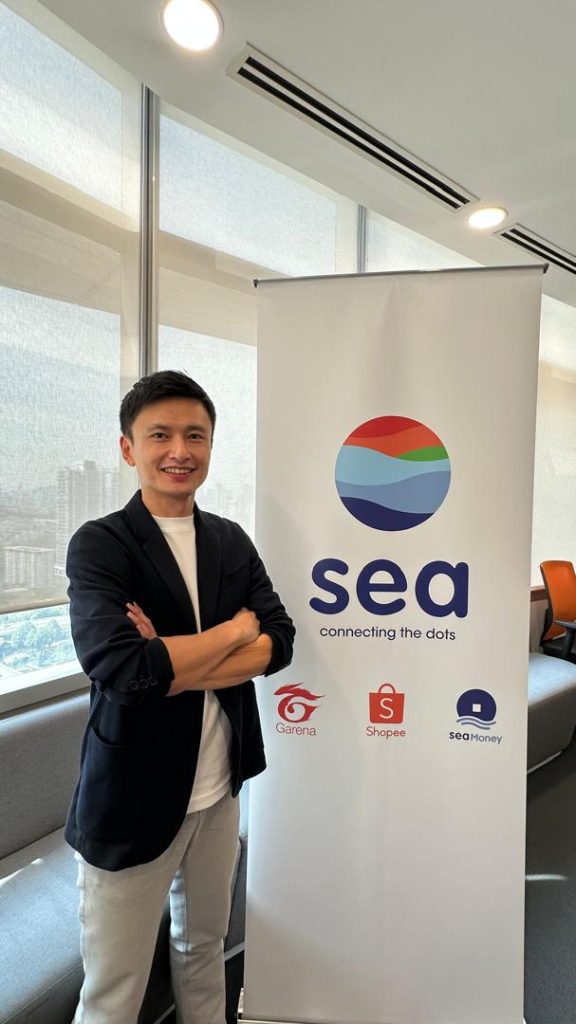
As Malaysia sets its sights on chairing ASEAN in 2025, the country’s digital economy is rapidly coming into sharper focus. At the heart of this shift is Sea Limited, a Southeast Asian tech powerhouse driving impact across e-commerce, digital entertainment, and financial services. Leading its Malaysian charge is Terence Terence Siau, Country Head, Sea Limited Malaysia As Southeast Asia’s digital economy continues its explosive growth, Malaysia stands at the cusp of a transformative chapter—poised to lead the region into a new era of digital integration. Driving this change is a new breed of innovation-led companies who not only provide platforms for business but build ecosystems that democratize opportunity and access. One such entity is Sea Limited, the tech juggernaut behind Shopee, Garena, and SeaMoney. At the helm of Sea Limited’s Malaysian chapter is Terence Siau, a key figure in the Founder’s Office and the current Country Head. In an exclusive interview with The Exchange Asia, Siau breaks down how Sea Limited is reshaping Malaysia’s MSME landscape, its role in preparing the country for ASEAN chairmanship in 2025, and the deep-rooted principles driving inclusion, innovation, and regional growth. A Mission Rooted in Inclusion Established as a consumer internet company with deep regional roots, Sea Limited’s vision goes far beyond digital transactions. It builds ecosystems, nurtures talent, and connects local businesses to regional markets. “We’re not just providing access—we’re creating a full-stack, inclusive digital ecosystem that allows micro and small businesses to thrive, scale, and connect with markets they never imagined possible,” shares Terence. This mission is made visible through Shopee, one of Southeast Asia’s largest e-commerce platforms, which now powers the online presence of over 2 million Malaysian sellers. But this number only scratches the surface. What truly differentiates Shopee is the suite of integrated, low-barrier tools it offers to MSMEs—from livestreaming and AI-driven product discovery to payment integration and seller education. Shopee University: An Engine for MSME Digital Upliftment One of Sea Limited’s flagship initiatives in Malaysia is Shopee University, a training and empowerment programme that has quietly become one of the most impactful digital education platforms for local entrepreneurs. Since its inception (pre-pandemic), Shopee University has trained over 200,000 micro-businesses in Malaysia. Its curriculum spans across multiple tiers—from basic onboarding (“how to set up a shop online”) to advanced topics like digital marketing, data analytics, and cross-border commerce. “Everyone can participate. Shopee University is open to all and completely free. It’s our way of ensuring no business is left behind,” says Terence. The impact of this initiative is tangible: Bella Hazaha, a Shopee Live seller, scaled her modest sleepwear business to selling over 1,000 units a day, using digital storytelling and live commerce. Batik Cantik, a rural Terengganu-based brand, scaled from one order a day to over 100 daily, gaining nationwide visibility through Shopee’s seller tools. The Digital Dividend: Enabling Revenue Growth and Reach How much can MSMEs grow once they plug into the Shopee ecosystem? While figures vary by industry and product category, Terence cites standout examples like Khairul Aming, a content creator turned entrepreneur who built the wildly popular Sambal Nyet brand on Shopee. In April 2023, a Shopee Live session sold 13,000 bottles of Sambal Nyet in just 2 minutes, generating over RM628,000 in gross sales. Such exponential growth is enabled by Sea Limited’s commitment to end-to-end digital enablement—from infrastructure to last-mile delivery. Shopee offers not just a marketplace but also: AI-powered recommendations Live video selling tools Payment and financing solutions Real-time analytics and logistics support “Shopee doesn’t just onboard businesses—it equips them with the tools to scale fast, manage risk, and expand regionally,” Terence affirms. Malaysia’s ASEAN Chairmanship: A Nation Ready to Lead In 2025, Malaysia will assume the ASEAN chairmanship—an opportunity to shape the regional digital economy agenda. According to Terence, the country is well-positioned to lead, thanks to three key indicators: Internet Penetration – Over 96% as of 2024, thanks to national broadband investments. E-Wallet Adoption – Over 20 million Malaysians use e-wallets regularly. GDP Contribution – The digital economy accounts for 22.6% of Malaysia’s GDP, highlighting its structural significance. With initiatives such as MyDIGITAL, the National AI Roadmap, and proactive regulatory bodies like MDEC and the National AI Office, Malaysia is already setting the pace. “We have the infrastructure, we have the policy support, and we have the talent. What’s needed now is deeper collaboration and inclusivity,” says Terence. Addressing Challenges: Infrastructure, Talent, and Trust Despite the optimism, Terence acknowledges three critical challenges: Economic Inclusion – Ensuring MSMEs across urban-rural lines can participate. Financial Inclusion – Serving the unbanked and underbanked segments. Cybersecurity – Building trust in digital ecosystems. To address these, Sea Limited is not only enhancing platform security through AI-driven fraud detection but is also participating in the Financial Education Network under Bank Negara Malaysia, offering nationwide workshops and roadshows to raise financial literacy. Strategic Partnerships with Government and Industry Collaboration is a recurring theme in Sea’s approach. Sea Limited works hand-in-hand with Malaysian ministries, agencies, and regulators to deliver targeted development programmes. Initiatives like #ShopeeSapotLokal, created in partnership with government agencies, have played a key role in highlighting and promoting local sellers and products. “For Malaysia to lead ASEAN’s digital shift, both public and private sectors must play their part. Government policy can pave the way, but industry players must build the infrastructure for real participation,” he explains. The Future: AI, Fintech, and Regional Expansion Looking ahead, Terence highlights three exciting trends Sea Limited is deeply invested in: AI & Automation – Improving customer experience, personalization, and productivity through AI. Social Commerce & Livestreaming – Moving from traditional e-commerce to interactive, video-driven sales. Cross-border Digital Trade – Enabling sellers in Malaysia to access buyers across ASEAN through seamless integration. Digital financial services are also central to Sea’s roadmap. From microloans and BNPL (Buy Now Pay Later) solutions to integrated cross-border payment systems, fintech remains a strategic pillar. “Fintech players and digital banks are key pillars of Southeast Asia’s economic future. Innovative credit, payment, and financing tools will be the arteries of the new digital economy.” Final Word: Digital Nation-Building Through Inclusion As Malaysia eyes regional leadership in ASEAN’s digital transformation, Sea Limited is playing a foundational role—not just as a service provider but as a digital nation-builder. The numbers are impressive. The stories are inspiring. But perhaps more importantly, Sea’s vision reflects a future where technology levels

The Executives

TH Plantations CEO Put on Leave Over RM5 Million Payouts; CFO Steps Down

KUALA LUMPUR, TH Plantations Bhd has placed its Chief Executive Officer (CEO), Mohamed Zainurin Mohamed Zain, on garden leave following a show cause letter issued over alleged unauthorised payments totaling RM5.1 million made to plantation workers. In a filing with Bursa Malaysia, the company stated that the CEO’s leave is effective immediately and will remain in place until further notice. Simultaneously, the company’s Chief Financial Officer (CFO), Marliyana Omar, who also received a show cause letter on the same day, has resigned with immediate effect. In a separate filing, TH Plantations noted that Marliyana’s resignation was voluntary. Marliyana, 44, joined the group in 2009 as an assistant manager and rose through the ranks to head the finance division, where she was responsible for planning and managing the group’s financial operations. Despite these leadership changes, TH Plantations assured stakeholders that business operations will continue without disruption. In the interim, the Board Executive Committee will assume the responsibilities of the CEO.

The Executives

RHB Bank Sees Singapore Unit as Key to Regional Growth Plans

SINGAPORE, RHB Singapore, a key subsidiary of Malaysia’s fourth-largest banking group, is set to play a central role in driving the group’s regional expansion and achieving key financial targets, including a return on equity (ROE) of 12% by 2027, a senior executive said on Friday. Singapore’s favourable tax environment, political stability, and status as a gateway to Southeast Asia continue to attract ultra-high-net-worth investors and financial institutions, reinforcing its position as a leading regional financial hub. RHB group managing director and CEO Datuk Mohd Rashid Mohamad To further strengthen its presence, RHB Singapore appointed Goh Ken-Yi as CEO earlier this year, with a focus on enhancing digital capabilities and delivering innovative financial solutions. RHB Singapore recorded strong financial performance in 2023, with pretax profit surging 95.6% year-on-year to S$98.7 million (US$76.82 million). “RHB Singapore’s outstanding performance reflects the forward momentum we aim to replicate across all our key markets,” said RHB Group Managing Director Datuk Mohd Rashid Mohamad during a press briefing. Beyond Singapore, RHB maintains a regional presence with operations in Cambodia, Thailand, Laos, and Brunei. According to its 2024 Annual Report, the Group achieved an ROE of 10.04% in 2023. It now targets reducing its cost-to-income ratio to below 44.8% and its gross impaired loans ratio to under 1.3% by 2027—improving from last year’s 46.7% and 1.47%, respectively.

The Executives

Izzana Salleh to Succeed as CPOPC Secretary General with Dr Musdhalifah Machmud as Deputy from June 2025

The Council of Palm Oil Producing Countries (CPOPC) has announced the appointment of Izzana Salleh as its next Secretary General, with Dr Musdhalifah Machmud named Deputy Secretary General. Their three-year terms will commence in June 2025 and run until May 2028. The leadership transition was unveiled during a press conference at the CPOPC Secretariat in Jakarta, signalling a new chapter as the organisation accelerates its global advocacy for sustainability, equity, and collaboration within the palm oil sector. Speaking virtually from Kuala Lumpur, Izzana expressed her commitment to strengthening regional cooperation, aligning sustainability standards, and elevating the role of smallholders in global value chains. “I’m honoured to lead CPOPC at a time when the voices of producing countries must be stronger than ever,” she said. “We will ensure palm oil, as responsibly and sustainably produced by our member countries, is recognised globally as a force for good, while supporting livelihoods, food and energy security, and climate action.” Izzana brings a wealth of experience in policy and international engagement. A graduate of Harvard University, she is a trustee of the Malaysian Palm Oil Council, founder of RISE Human Capital, and co-founder of the global mentorship network Girls for Girls. Her appointment follows the tenure of Dr Rizal Affandi Lukman, who, alongside Deputy Secretary General Datuk Nageeb Wahab, played a critical role in expanding CPOPC’s international presence. Their leadership was instrumental in navigating complex negotiations with the European Union, redefining strategic priorities, and promoting sustainable practices while defending the rights of smallholders. “This is not the end, but a continuation,” Dr Rizal said. “I’m confident that with the leadership of Izzana and Musdhalifah, CPOPC will move forward with renewed energy to meet the challenges and opportunities ahead.” Established in 2015 by Indonesia and Malaysia, CPOPC has grown to include Honduras and Papua New Guinea as full members. Observer countries include Colombia, Ghana, Nigeria, and the Democratic Republic of the Congo. Collectively, these nations account for nearly 89 per cent of global palm oil production, positioning the council as a key player in shaping international policy and sustainability frameworks. -Bernama

Scroll to Top

Subscribe
FREE Newsletter