As businesses contend with fluctuating demand, evolving employment models and growing expectations around compliance, the ability to deploy the right people at the right time has become an increasingly important operational advantage. For Wikicareer, this changing environment has shaped its evolution from a traditional staffing business into a more structured flexible workforce platform.
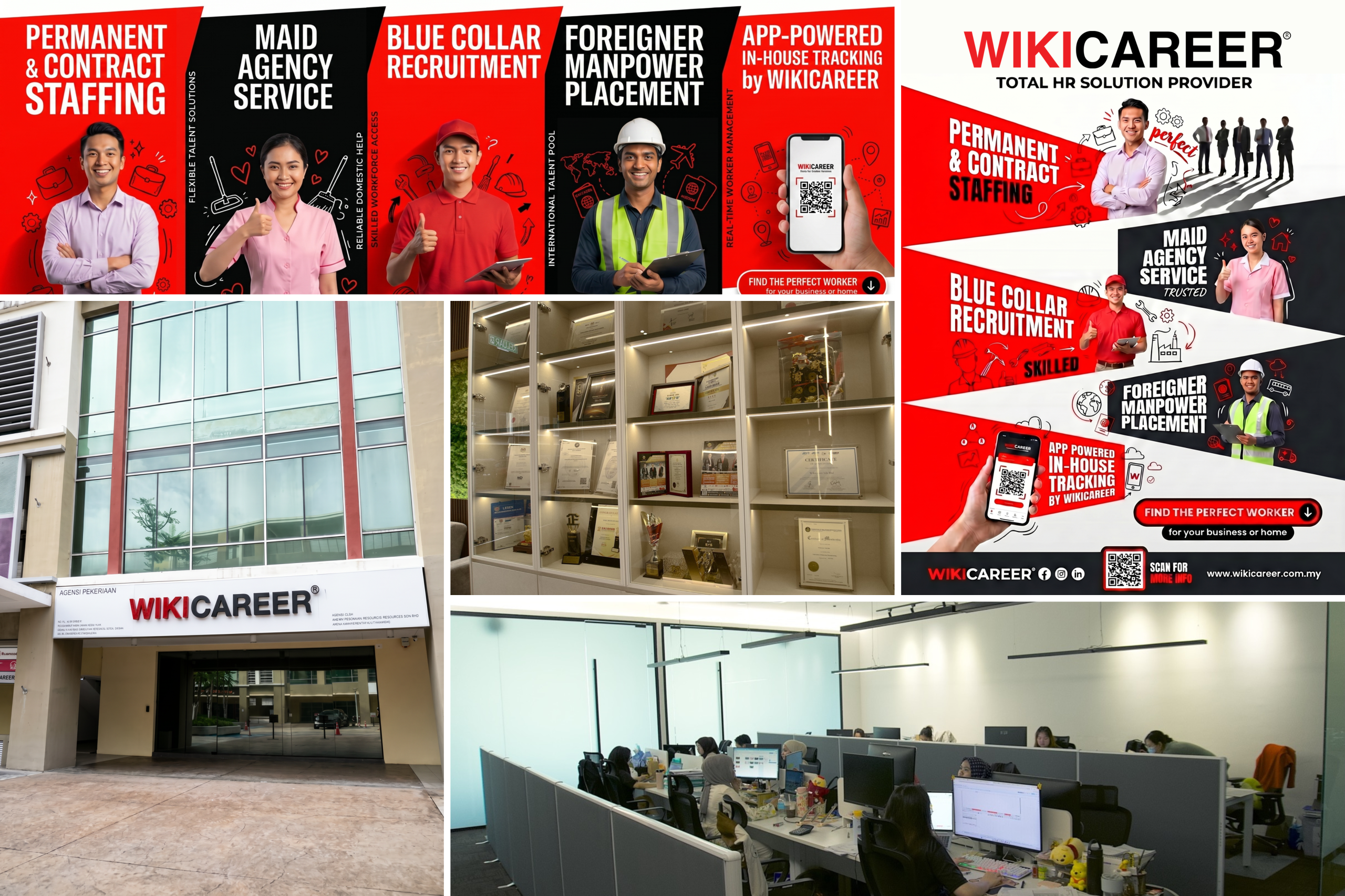
Established in 2014, Wikicareer initially focused on placing office staff and managers. In 2019, the company expanded into the gig economy, matching flexible workers with businesses across multiple employment levels.
Operating under a full Ministry of Human Resources Malaysia licence and as an ecosystem partner of the Malaysia Digital Economy Corporation (MDEC) Sharing Economy initiative, Wikicareer has built its proposition around regulatory compliance, operational speed and the ability to manage scalable, mobile workforces.
Responding to a Different Way of Working
Wikicareer sees its role as extending beyond filling vacancies. At its core, the company addresses the operational and financial friction that can emerge between businesses requiring flexible manpower and workers looking for accessible employment opportunities.
For companies, workforce requirements can change quickly. Seasonal demand, project requirements and unexpected increases in volume can create an immediate need for additional manpower. Workers, meanwhile, increasingly expect fair compensation, timely payment and proper employment protection.
Wikicareer positions itself between these needs, providing the structure required to make flexible employment work more effectively for both sides.
The opportunity became particularly apparent in 2019. While Malaysia’s gig workforce was expanding, the sector remained relatively fragmented. Flexible workers could too easily be treated as short-term manpower rather than human capital requiring proper engagement, management and protection.
As regulatory requirements and corporate expectations developed, businesses increasingly needed more than access to available workers. They needed assurance that workers were properly matched, engaged and managed within appropriate regulatory frameworks.
Building Structure Around Flexibility
The challenge becomes greater as workforce numbers increase.
For Wikicareer, managing turnover, daily attendance and responsiveness across multiple business units has become increasingly complex as its flexible talent pool has expanded.
The company has responded by decentralising parts of its supervisory structure, giving ground coordinators greater authority to address issues as they arise. Live applications and automated data loops are also being used to identify operational bottlenecks and enable faster decisions.
This forms part of what Wikicareer describes as an “Act First, Learn Fast” approach—allowing teams to test solutions, assess outcomes and make rapid, data-supported adjustments.
Its strategic direction is similarly influenced by a “First Principles” mindset. Instead of automatically following conventional recruitment practices, the company examines workforce challenges from their fundamentals and considers how processes and technology can be redesigned.
Increasingly, that means exploring artificial intelligence and smarter digital platforms to improve internal workflows, deployment and decision-making.
Growth Beyond Headcount
Despite operating in an industry where scale matters, Wikicareer does not define growth simply by the number of workers deployed or revenue generated.
Its focus is on creating a scalable ecosystem in which workforce productivity and service reliability improve together. Matching accuracy, worker sustainability and the ability to deliver consistently are therefore important measures of progress.
That philosophy has also made the company more selective about the business it pursues.
Wikicareer deliberately avoids low-paying, short-term assignments and unvetted partnerships that may provide immediate revenue but potentially place unnecessary pressure on its workforce, operations or reputation.
In a sector built around flexibility, the company believes long-term credibility requires knowing when not to pursue volume.
From Reactive to Predictive
Technology is expected to play an even larger role in Wikicareer’s next phase.
The company plans to deepen the integration of AI assistance and live enterprise resource planning data across its hiring and deployment ecosystem. Its ambition is to forecast labour requirements, identify operational patterns and automatically match gig associates with appropriate roles before workforce shortages develop into business bottlenecks.
Such capabilities could shift workforce management from a largely reactive function towards a more predictive model.
Preparing for that transition also requires changes internally. Wikicareer is developing a more data-driven workforce within its own organisation, ensuring employees can use technology to improve judgement and execution rather than simply treating digital platforms as administrative tools.
A decade after starting with conventional staffing, Wikicareer is positioning itself for an employment landscape where flexibility is becoming increasingly embedded in how businesses operate.
As that landscape continues to evolve, access to manpower alone is unlikely to be enough. Businesses will increasingly require workforce models that combine speed with accuracy, flexibility with compliance, and technology with effective human management.
For Wikicareer, driving workforce adaptability means building the systems that allow businesses and workers to move with those changes—without losing the structure and trust needed to make flexibility sustainable.