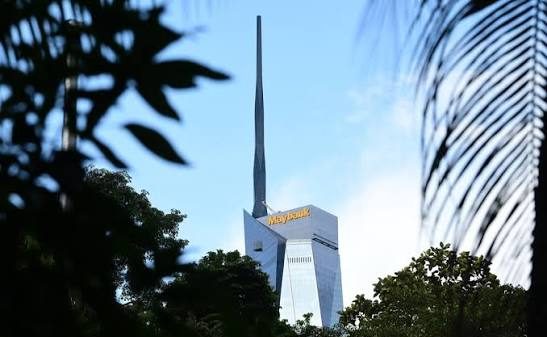
Government officials, industry leaders and global experts converge at MITEC to push the built environment from green labels toward measurable, net-zero performance.
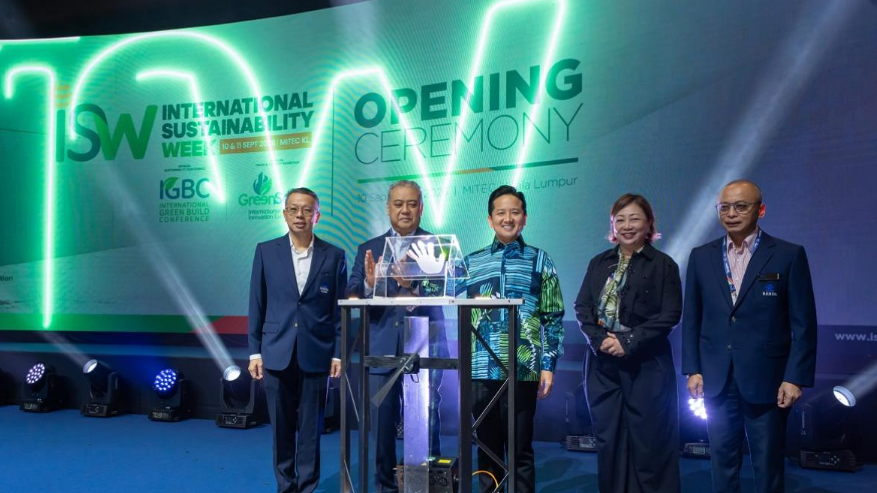
International Sustainability Week (ISW) 2026 opened at the Malaysia International Trade and Exhibition Centre (MITEC) on Thursday with a clear message from government and industry: green-building certification is a milestone, not a finish line, and the shared task now is turning climate policy into tangible results on the ground.
The two-day event was officially launched by the Minister of Natural Resources and Environmental Sustainability, Datuk Seri Arthur Joseph Kurup, alongside Rehda Malaysia deputy president Datuk Edward Chong Sin Kiat, GreenRE chairman Datuk Seri FD Iskandar, Qube Integrated Malaysia managing director Jessie Tan and Rehda Wilayah Persekutuan KL chairperson Datuk David Lim Boon Huat. ISW 2026 is organised by Qube Integrated Malaysia and co-organised by GreenRE. This inaugural programme pairs the sixth International Green Build Conference (IGBC) with the newly launched GreenScape: International Green Innovation Exhibition, bringing together developers,
solution providers and government agencies across green technologies, policy and financing.
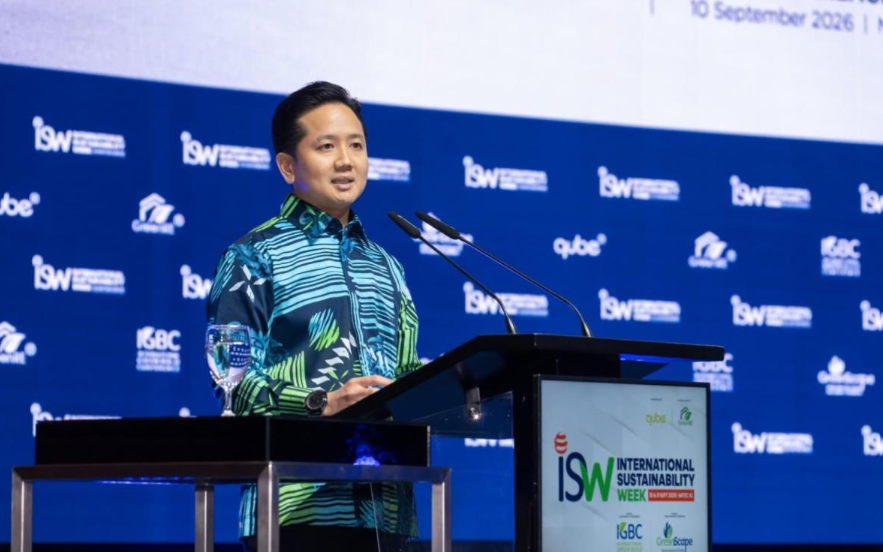
In his keynote address, Datuk Seri Arthur Joseph Kurup said Malaysia’s cities can no longer settle for doing less harm. “They must become climate-resilient and actively give back to the environment,” he said, citing UN and IEA data showing buildings account for over a third of the world’s energy consumption and nearly 40% of energy-related emissions.
Certification, he added, is an essential first step, but on its own it does not reduce carbon emissions; operational transformation does. “The transformation of our built environment will not happen through a single policy or project,” Kurup said. “It will happen through thousands of decisions made daily by architects, engineers, planners, developers, financiers, policymakers, and communities.”
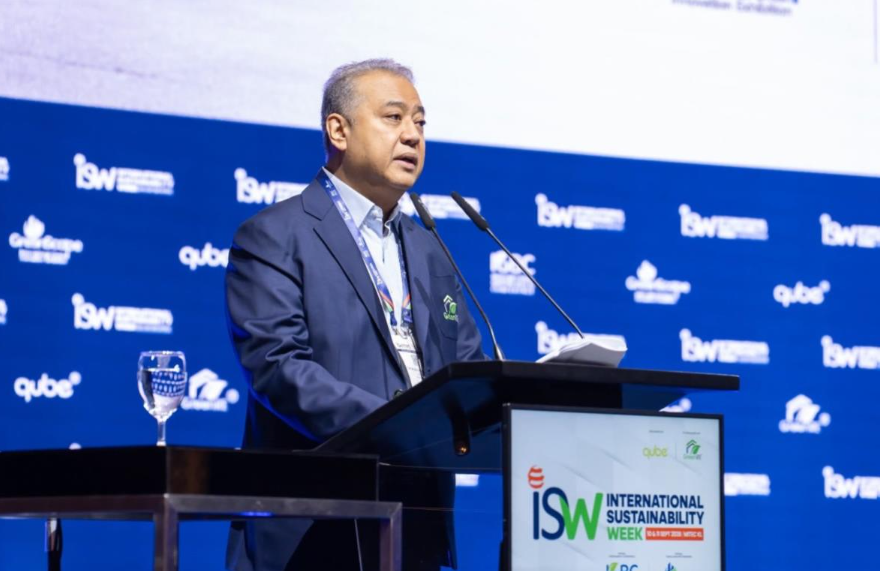
In his speech, ISW 2026 co-chair and GreenRE chairman Datuk Seri FD Iskandar argued that Malaysia already has strong sustainability policies, growing industry capability and home-grown assessment tools. The remaining gap, he said, is connecting those pieces so that certification translates into buildings that genuinely use less energy and water, cut emissions and perform better over time — framing certification as evidence of progress rather than an end goal in itself.
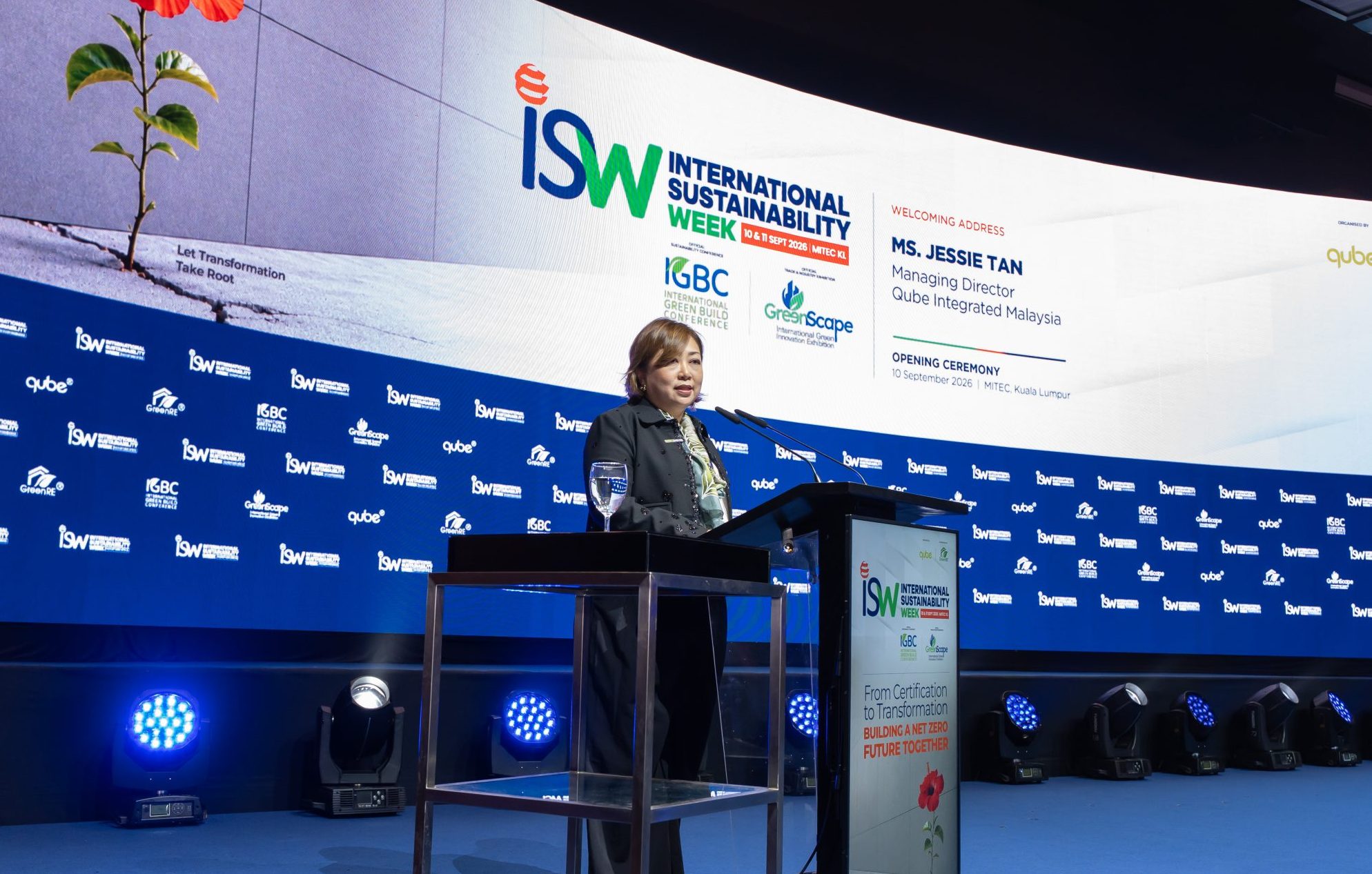
Qube Integrated Malaysia’s Jessie Tan echoed that theme in her welcoming remarks, telling delegates that achieving a net-zero future will require unified action combining clear policy, rigorous standards, capital and skilled people willing to execute — and that no single organisation, industry or government can deliver the transition alone.
Among the first day’s speakers was Expo City Dubai executive director Nadia Verjee, who urged cities to think beyond reducing harm and instead ask what they can create more of — resilience, biodiversity, productive economies and human connection, a concept she termed “place power.” Citing Dubai’s experience repurposing roughly 80% of Expo 2020’s infrastructure after the event, Verjee said long-term legacy planning, not certification badges, should be the real measure of a sustainable development.
A separate panel on climate-resilient urban design featured PLAN Malaysia’s Dr Chee Ping Ngang, former UN-Habitat senior policy adviser Dr Shipra Narang Suri and Global Network for Zero’s Geetanjali Prasad, who examined how cities can shift from mitigation-only planning toward resilience-led transformation.
The day closed with a panel on decarbonising energy systems at scale, where Malaysian Nuclear Agency official Julia Abdul Karim argued that clean-energy planning should not be framed as a binary choice between nuclear and renewables, given rising demand from industrial growth and artificial intelligence. Advisory Council for Atomic Energy chairman Datuk Raja Abdul Aziz Raja Adnan and Tenaga Nasional Bhd’s Dr Noor Miza Razali, moderated by Universiti Tenaga Nasional’s Prof Tiong
Sieh Kiong, discussed the need to replace roughly 7 gigawatts of capacity as coal is phased out, and the role battery storage and nuclear power could play in supporting an increasingly renewables-heavy grid.
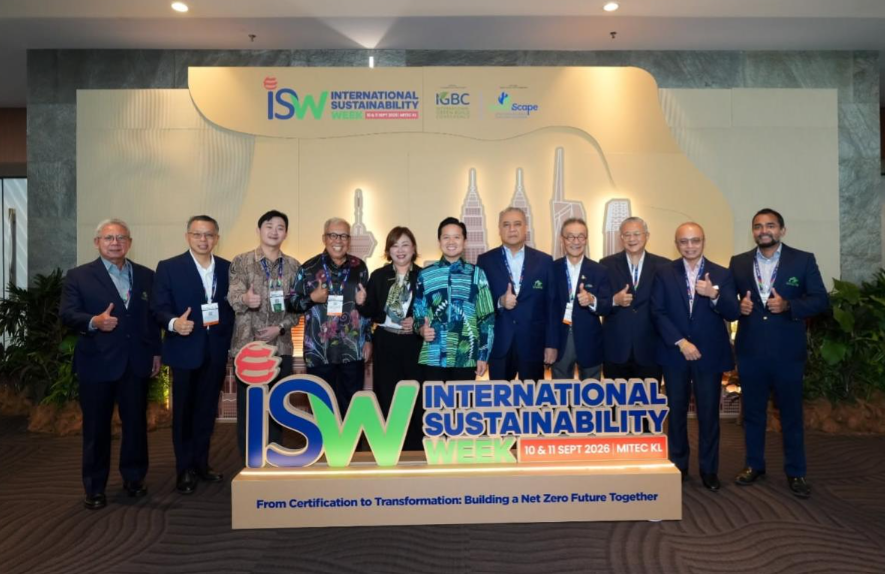
Themed “From Certification to Transformation, Building a Net Zero Future Together”, ISW 2026 continues into its second day under the sub-theme “Path to Sustainable Cities for All: The Urban Transition Towards Net Zero,” with sessions covering planning governance, green infrastructure, flood resilience and public-private collaboration.— The Exchange Asia