PETALING JAYA, Pelaburan Hartanah Bhd (PHB) is charting a new course in its growth strategy by broadening its property portfolio beyond traditional office and retail assets, venturing into emerging, high-growth sectors, and upgrading its existing properties to meet modern sustainability and tenant requirements.
The property investment firm, which manages assets valued at nearly RM11 billion, is also diversifying geographically — expanding beyond the Klang Valley into growth regions such as Kedah, Johor, and Terengganu, with plans to enter Sabah and Sarawak to align with Malaysia’s next phase of economic development.
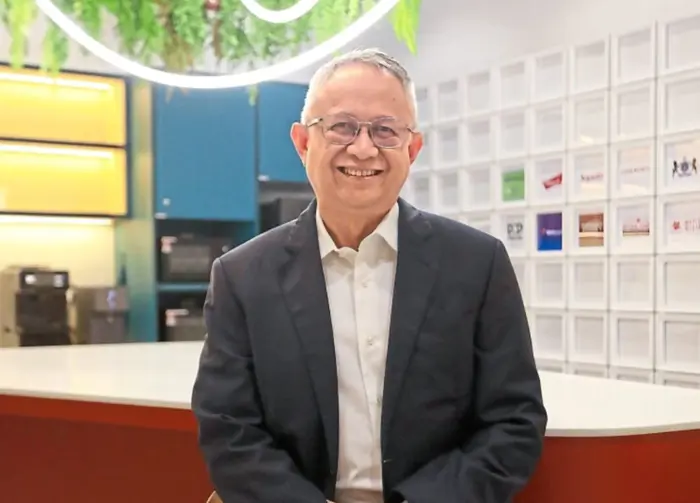
Pelaburan Hartanah Bhd group managing director and chief executive officer Mohamad Damshal Awang Damit.
Established to enhance bumiputra participation in commercial real estate, PHB manages the Amanah Hartanah Bumiputra (AHB) fund via its subsidiary, PHB Asset Management Bhd. AHB — a syariah-compliant unit trust — allows bumiputra investors nationwide to invest in income-generating properties for as little as RM1 per unit.
AHB’s portfolio includes notable assets such as Menara Prisma in Putrajaya, NU Sentral Shopping Centre, Gleneagles Hospital (Block B) in Kuala Lumpur, CP Tower in Petaling Jaya, One Precinct in Penang, and The Shore Shopping Gallery in Melaka.
PHB group managing director and chief executive officer Mohamad Damshal Awang Damit said the group aims to build a “balanced, resilient and future-ready” portfolio that supports long-term growth while protecting unitholder value.
“While our assets have traditionally been concentrated in offices and retail, we’re shifting towards sectors tied to structural trends that will shape Malaysia’s future,” he told StarBiz. “Healthcare is a key example — as Malaysia approaches aged-nation status by 2040, there will be growing demand for hospitals, specialist centres, and aged-care facilities.”
He added that industrial real estate is another strategic focus area. “With the rapid rise of eCommerce, AI, and cloud computing, the demand for advanced logistics hubs, smart warehouses, and data centres is accelerating. PHB is actively exploring investments in these segments as part of a long-term transformation strategy.”
As of August, PHB’s portfolio comprised 38% office assets, 20% retail, 13% land, 10% industrial, and 8% healthcare properties. Nearly 77% of the group’s assets are completed and income-generating, with the remainder consisting of development projects and strategically located land banks.
PHB recently acquired two industrial assets — one in Kulim Hi-Tech Park, Kedah, and another near the Port of Tanjung Pelepas, Johor — worth a combined RM247 million. The Kedah property, spanning 12 acres, is fully leased to Schott Glass, a global leader in specialty glass, while the Johor site is occupied by global logistics giant Maersk.
“These investments provide long-term, stable income streams from world-class tenants and strengthen PHB’s foothold in Malaysia’s key industrial and logistics corridors,” Mohamad Damshal said.
He noted that both Kedah and Johor are among Malaysia’s top five states for approved investments, driven by global supply chain shifts and nearshoring trends.
PHB also continues to expand along the east coast, with the opening of Mayang Mall in Kuala Terengganu last December, which has achieved an 84% occupancy rate.
In June, PHB reopened 300 million new AHB units for bumiputra investors. Since AHB’s inception in 2010, it has attracted over 82,000 individual investors and 19 institutional investors, with a cumulative RM2.43 billion in income distributed to date.
For the six months ended Sept 30, 2025, PHB declared a total income distribution of 2.5 sen per unit, inclusive of a 0.4 sen bonus for the first one million units held by each investor.
Looking ahead, Mohamad Damshal said PHB aims to expand further into high-potential regions such as Sabah and Sarawak, targeting sectors like green energy, logistics, and sustainable development.
“We are taking a disciplined approach to portfolio rebalancing — divesting mature assets when appropriate and reinvesting in higher-yielding, future-focused properties,” he said.
He also noted that tenant demand is evolving toward environmental, social and governance (ESG)-compliant buildings. “The definition of quality has changed. Tenants are no longer looking just at rent or location — they want sustainability, flexibility, and strong governance. PHB is investing in precisely these areas.”
PHB currently holds a AAA stable credit rating from RAM Ratings and a Gold3 sustainability rating, underscoring its strong financial discipline and ESG leadership.
“These recognitions affirm PHB’s commitment to financial resilience and responsible growth,” Mohamad Damshal said. “Ultimately, every step we take — from acquiring strategic assets to expanding AHB — supports our mission to grow bumiputra ownership in commercial real estate and strengthen bumiputra economic participation.”
PHB posted a net profit of RM117.2 million in the previous financial year.