international

News

Couche-Tard Withdraws US$47 Billion Bid for Seven and i Over Stalled Talks

Canadian convenience store giant Alimentation Couche-Tard has withdrawn its US$47 billion takeover bid for Japan’s Seven and i Holdings, citing a lack of constructive engagement from the Japanese retailer. The move marks the collapse of what could have been the largest foreign acquisition of a Japanese company, as Couche-Tard, operator of Circle K, sought to create a global convenience store powerhouse by acquiring the company behind 7-Eleven. “There has been no sincere or constructive engagement from Seven and i that would facilitate the advancement of any proposal, contrary to comments made publicly by its representatives,” Couche-Tard said in a letter to its board of directors. The letter further accused Seven and i of engaging in “a calculated campaign of obfuscation and delay, to the great detriment of the company and its shareholders.” In response, Seven and i said it was “disappointed” by Couche-Tard’s decision and disagreed with “numerous mischaracterisations,” but added it was “not surprised” by the withdrawal. The development is seen as a test of Japan’s openness to foreign takeovers, coming shortly after Nippon Steel secured a US$14.9 billion deal to acquire US Steel. Shares in Seven and i were untraded on Wednesday due to an excess of sell orders. “We are very disappointed in what appears to be a lack of willingness to engage from Seven and i,” said Manoj Jain, co-founder and co-chief investment officer of Hong Kong-based Maso Capital. “We believe there is significant value to be realised in a combination and have expressed this view to the management and the board.” Couche-Tard had initially offered US$38.5 billion in October last year and raised its bid to US$47 billion. In March, the Canadian group indicated it was willing to increase the offer further if Seven and i provided greater financial transparency. Couche-Tard also worked with the Japanese firm on a store divestiture plan aimed at easing regulatory hurdles. The approach seemed to gain momentum after the Seven and i founding Ito family’s US$58 billion white-knight bid failed to secure financing. However, Couche-Tard said attempts to engage directly with the family were rebuffed. Despite a non-disclosure agreement between the companies, Couche-Tard criticised the “negligible” due diligence process, which it claimed was limited to “two tightly constrained management meetings.” The Canadian firm believed a full merger would have maximised shareholder value but explored alternative proposals, including acquiring all of Seven and i’s international business and 40 per cent of its domestic operations. Convenience stores in Japan are considered critical infrastructure due to their role in supporting communities during natural disasters. Seven and i reportedly countered with a proposal to sell its international business to Couche-Tard in exchange for a stake in the Canadian company. However, Couche-Tard dismissed the suggestion, arguing it would not deliver the “significant premium” offered in its original proposals. Under pressure to improve sluggish earnings and prove it can grow independently, Seven and i has announced a share buyback, divested non-core assets, and plans to list its North American convenience store operations. “We remain fully committed to our standalone value creation plan, which we have been pursuing in parallel,” Seven and i said. -Reuters
Property

Combine Will International to Acquire Dongguan Land for USD2.2 Million

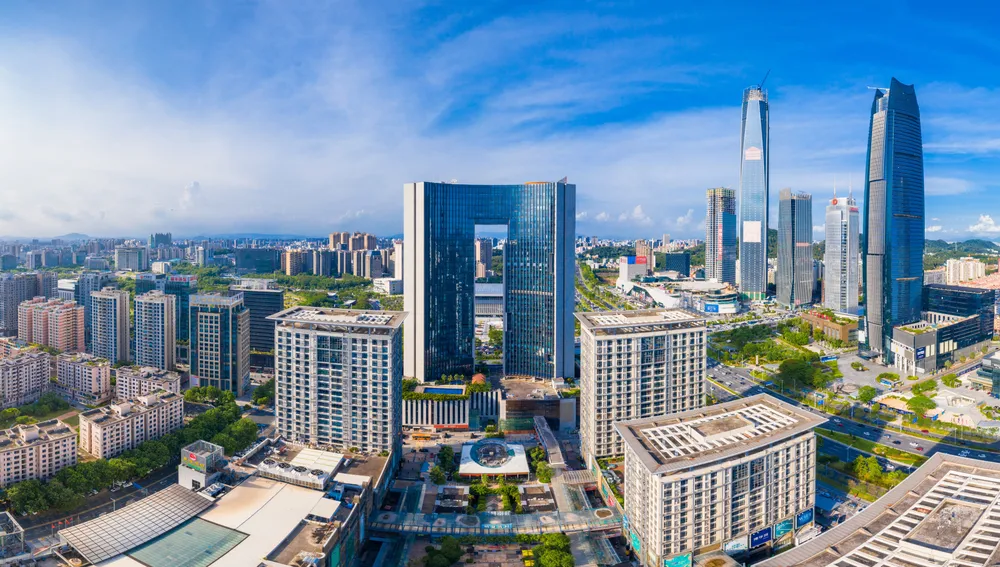
Combine Will International Holdings, through its indirect wholly owned subsidiary Dongguan Combine Will Tengda Technology Company Limited (DCWTT), has proposed the acquisition of a parcel of land in Tianraobu village, Hengli town, Dongguan city, China, from the Tianraobu Village Joint Stock Economic Cooperative (JSEC). The land, measuring 15,712.44 square metres (169,127.3 square feet), will be acquired for RMB12.4 million (USD2.2 million). The consideration was determined through negotiations and consultancy with the local government, with the final price set via public auction. The purchase price includes RMB2.5 million already paid as earnest money, with the balance due by 22 July. Combine Will plans to develop a manufacturing facility on the site to house its service centre and one of its toy manufacturing operations. This move follows the group’s disposal of parcels of land in the Shenshan industrial area of Hengli town, as announced on 8 November 2024. According to the group, the transfer term for the property is 50 years, with delivery expected before 12 July. An application for extension must be submitted approximately one year prior to the expiry date. Should the contract not be renewed, all buildings, structures and ancillary facilities constructed on the property will revert to the Tianraobu Village JSEC without compensation to DCWTT upon withdrawal of land rights. Construction on the site is scheduled to begin by 12 October and must be completed by 12 July 2027. Delays of up to one year would incur liquidated damages at 1% of the transfer price daily, payable to Tianraobu Village JSEC, until construction commences. Failure to settle the purchase consideration by the stipulated date would result in a penalty of 0.01% of the overdue amount per day, calculated from the final payment date until settlement. Should the delay exceed 60 days, Tianraobu Village JSEC reserves the right to terminate the land transfer contract, with no refund of the earnest money. The Tianraobu property has a book value and net tangible asset (NTA) value of RMB12.4 million (USD2.2 million) as of 23 June, the effective date of the land transfer contract. The acquisition will be financed through the group’s internal resources. -The Edge

Investment & Market Trends

Japanese Giant Mitsubishi Invests US$988 Million to Expand Global Salmon Production

Japanese trading giant Mitsubishi has announced a significant expansion of its salmon farming portfolio through the acquisition of businesses in Norway and Canada, underlining its commitment to strengthening its foothold in the global food sector with an emphasis on protein. Amid volatile fossil fuel markets and the pursuit of stable revenue streams, Mitsubishi and other Japanese conglomerates have increasingly diversified into the food industry, anticipating sustained demand driven by global population growth. “Securing food resources has become a critical global challenge in recent years, propelled by population increases,” Mitsubishi stated. The acquisition, valued at 10.2 billion Norwegian crowns (US$988.3 million), involves three companies owned by Norwegian seafood producer Grieg Seafood ASA. The deal was executed through Cermaq Group, Mitsubishi’s salmon farming subsidiary with existing operations in Norway, Canada and Chile. The move is set to raise Cermaq’s annual salmon production from its current level of approximately 200,000 tonnes to an estimated 280,000 tonnes by fiscal 2027, positioning the group as a key player in the industry. Salmon remains one of the most popular sushi ingredients in Japan, yet the majority of supplies are imported from countries such as Norway and Chile. In response, Japan has set a target to increase the proportion of locally sourced seafood it consumes to 94 per cent by 2033, from 54 per cent at present. In a similar development, Marubeni began marketing salmon last October from a farm operated near Mount Fuji in partnership with a Norwegian company, adding to the growing seafood ventures where competitors Mitsubishi and Mitsui are also active. -Reuters

Investment & Market Trends

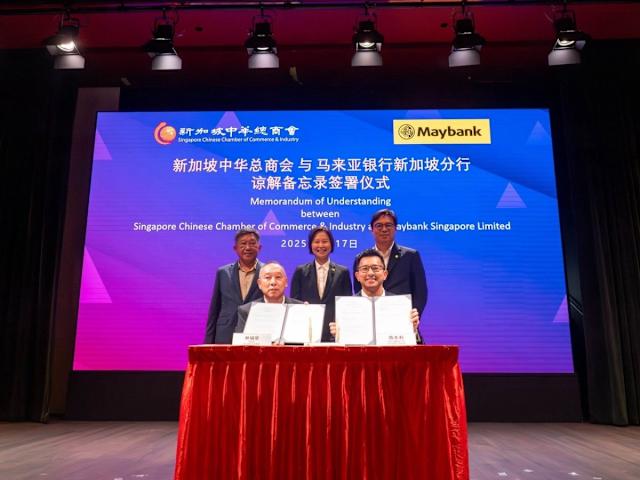
Maybank Singapore and SCCCI Partner to Advance JS-SEZ Investments

Maybank Singapore Ltd has entered into a memorandum of understanding with the Singapore Chinese Chamber of Commerce and Industry to enhance cross-border business collaboration and drive investments with a strategic focus on the Johor-Singapore Special Economic Zone. In a joint statement, the parties said the collaboration aims to promote economic development, investment and trade between the two countries. The partnership will see both organisations jointly organise meetings, visits, conferences, workshops and networking events while introducing new initiatives to advance shared objectives. Maybank will offer tailored solutions to businesses, including green lane financing, trade finance, cash management and ESG-linked products, as well as facilitate faster account onboarding. Members of the Chamber will also gain access to capacity-building programmes in areas such as sustainability, Halal advisory and financial services, supported by dedicated advisory services from Maybank’s Johor-Singapore Special Economic Zone Desk. The agreement is expected to benefit approximately 5,000 corporate members of the Chamber. SCCCI president Kho Choon Keng said the combination of the Chamber’s extensive business network with Maybank’s financial strength would enable members and local businesses to access cross-border financing, build ESG competencies and gain valuable market insights. He added that the partnership would open new economic opportunities and help businesses succeed in Malaysia and across Southeast Asia. Maybank Singapore chief executive officer Alvin Lee Han Eng highlighted the bank’s dual-market advantage in Singapore and Malaysia as one of the earliest proponents of the Johor-Singapore Special Economic Zone. He said Maybank is committed to supporting businesses with a comprehensive suite of banking solutions while identifying twinning opportunities for expansion into the zone. -The Star

News

HDC Achieves RM345.2 Million Potential Sales at Tokyo JFEX Summer Show 2025

Halal Development Corporation Bhd (HDC) has secured potential sales valued at approximately RM345.2 million during the JFEX Summer Show 2025 in Tokyo, held from 9 to 11 July 2025. In a statement, HDC head of international cooperation Mohamad Romzi Sulaiman said the corporation’s participation underscores Malaysia’s commitment to expanding its halal footprint in Japan and across the region. “HDC’s presence at JFEX 2025 provided a strategic platform for 50 Malaysian halal-certified exporters and export-ready companies to showcase their products and services to the Japanese market and neighbouring countries. This initiative aimed to promote the Halal Malaysia brand while creating valuable trade and investment opportunities for Malaysian businesses,” he said. Over the three-day event, HDC facilitated more than 100 business-to-business meetings between Malaysian exhibitors and high-quality Japanese and international buyers. The engagements highlighted strong demand for Malaysia’s halal offerings, further strengthening the country’s position as a key player in the global halal market. -Bernama

News

Sunway Unit Secures S$703.6 Million Residential Development Project in Singapore

The Urban Redevelopment Authority of Singapore has awarded a 1.58-hectare land parcel at Chuan Grove to Sing Holdings Residential Pte Ltd (SHRPL) and Sunway Developments Pte Ltd (SDPL), following the success of a joint tender by both parties. In a filing to Bursa Malaysia today, Sunway Bhd confirmed that the project involves a 99-year lease for residential development at a total consideration of S$703.6 million, equivalent to approximately RM2.33 billion. SDPL is a wholly owned subsidiary of Sunway Holdings Sdn Bhd, which is in turn wholly owned by Sunway Bhd. Sunway stated that SHRPL and SDPL will establish a joint venture company, with SHRPL and SDPL holding equity interests of 65 per cent and 35 per cent respectively, to undertake the development of the land parcel. The proposed development is expected to contribute positively to the earnings of the Sunway Group from the financial year ending 31 December 2026 onwards. -Bernama

News

ST Engineering to Record $80 Million One-Off Gain From SPTel Divestment

Singapore Technologies Engineering and Singapore Power have agreed to sell their broadband joint venture SPTel to private equity firm Seraya Partners for an enterprise value of $290 million. Established in 1997 by Singapore Power, SPTel saw ST Engineering acquire a 51 per cent stake in May 2017. Seraya Partners, which manages assets worth US$1.8 billion according to its website, focuses on infrastructure investments across Asia. In a joint statement issued on 17 July, ST Engineering and SP said the transaction would allow SPTel to expand under new ownership with a primary mandate to invest in and grow digital infrastructure platforms. “With this strategic alignment, SPTel will be better placed to scale and provide a more diverse network in Singapore,” the companies stated. ST Engineering expects to book a one-off gain of approximately $80 million from the divestment, based on SPTel’s carrying value of around $65 million. The group confirmed the deal would not have a material impact on its net tangible assets or earnings for the current financial year. The agreed price represents an implied EV/revenue multiple of 4.1 times and EV/EBITDA multiple of 21.4 times, based on SPTel’s revenue and EBITDA for the year ended December 2024. Additionally, the sellers could receive an earn-out payment of up to $15 million if certain return thresholds for the buyer are met. SPTel recorded revenue of $72 million and a net loss of $4 million for the year ended December 2024. The proposed transaction is anticipated to close in the fourth quarter of 2025, subject to customary regulatory approvals. This divestment follows ST Engineering’s recent announcement to sell its US-based construction machinery unit, Leeboy, for US$290 million. On 16 July, ST Engineering shares closed at $8.34, rising 0.12 per cent. The stock remains the top-performing component of the Straits Times Index so far this year, registering a gain of nearly 80 per cent. -The Edge

News

Shangri-La Asia Chairman Kuok Hui Kwong to Take Helm as CEO in August

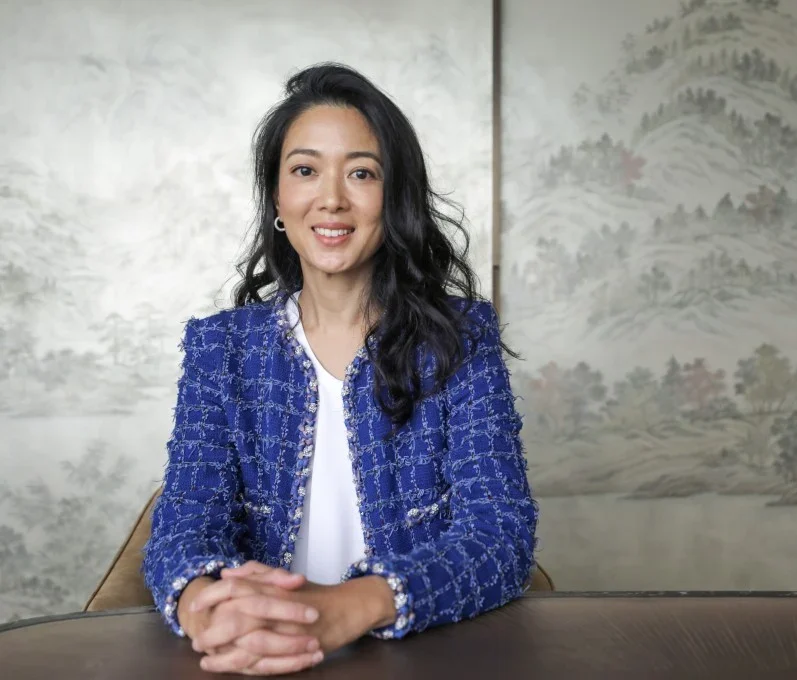
Kuok Hui Kwong, chairman and executive director of Shangri-La Asia, will assume the role of chief executive officer effective 1 August. The appointment consolidates leadership within the group as it navigates a challenging operating environment. Kuok, 47, was appointed as an executive director in June 2016 and elevated to chairman six months later. The company stated the dual role under Kuok’s leadership is expected to strengthen strategic cohesion and operational execution, ensuring a unified vision across all levels of management. Daughter of Malaysian tycoon Robert Kuok, she is entitled under her current contract to a monthly base salary of HK$576,000, in addition to a discretionary bonus and pension benefits. Kuok holds direct and indirect interests in 95,570,245 shares, listed on both the Hong Kong and Singapore exchanges. For the financial year ended December 2024, Shangri-La Asia reported revenue of US$2.185 billion, marking a 2 per cent year-on-year increase. However, net earnings declined 12.3 per cent to US$161.4 million as a result of elevated operating and financing costs. As at 31 December 2024, the company’s net asset value per share stood at HK$11.32, with an adjusted NAV per share of HK$23.56. Kuok succeeds former CEO Lim Beng Chee, who stepped down in December 2022 but continues to serve as a non-executive director on the board. Lim previously held the role of CEO at CapitaMalls Asia. Shares of Shangri-La Asia listed on the Singapore Exchange last traded at HK$4.72, reflecting a 9.92 per cent decline year to date. -The Edge

News

Uber Partners Baidu to Expand Global Robotaxi Network

Uber has announced a strategic partnership with China’s Baidu to introduce Baidu’s Apollo Go autonomous vehicles on its platform in several international markets outside the United States and mainland China. The companies confirmed on Tuesday that the initial deployment is set to begin later this year, with rollouts planned across Asia and the Middle East. Baidu’s Apollo Go currently operates a fleet of more than 1,000 fully driverless vehicles in 15 cities worldwide, including Dubai and Abu Dhabi. The service has already completed over 11 million rides as of May, underscoring its growing global presence. This collaboration marks another significant step in Uber’s ongoing push to strengthen its position in the competitive robotaxi sector. The ride-hailing giant has formed a series of alliances in recent months as it seeks to outpace rivals such as Lyft in the race to commercialise autonomous vehicle technology. -Reuters

Investment & Market Trends

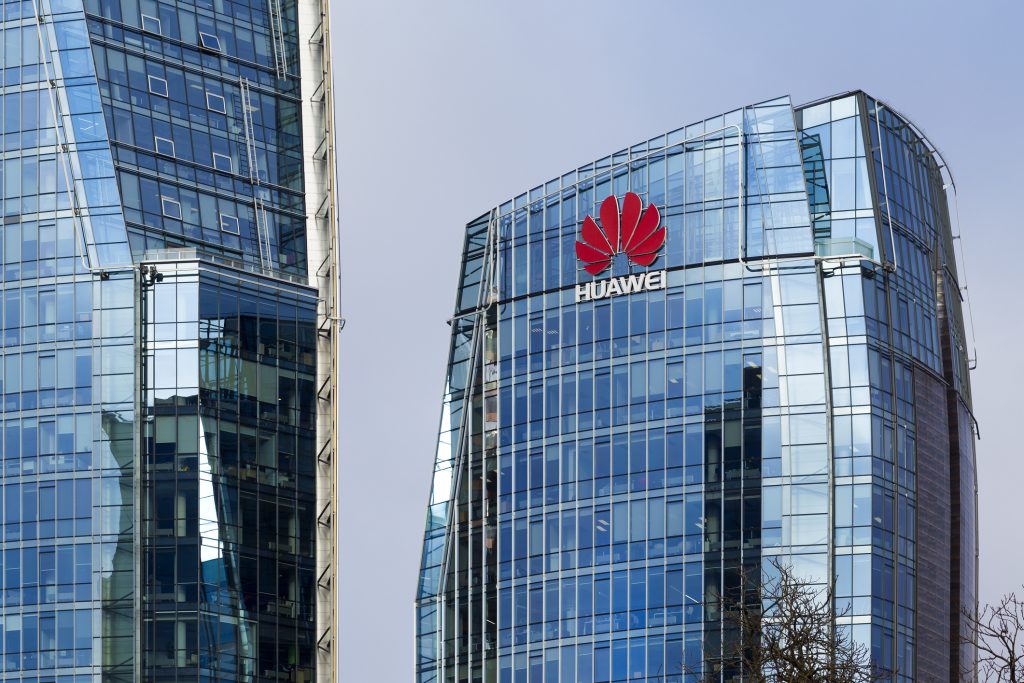
Huawei Reclaims Leadership in China’s Smartphone Market

Huawei has regained its position as the leading smartphone maker in China for the first time in over four years, surpassing US rival Apple and domestic brands including Xiaomi, according to data from the US-based International Data Corporation (IDC). The Shenzhen-based technology giant captured an 18.1 per cent share of China’s smartphone market in the second quarter of this year, with shipments reaching 12.5 million units, IDC reported on Tuesday. Huawei’s resurgence comes despite years of pressure from US export controls, Western bans, and a graft investigation in Belgium. The company has been at the centre of geopolitical tensions between the world’s two largest economies after Washington alleged its equipment could be used for espionage by Beijing, a charge the company has repeatedly denied. China’s broader smartphone market contracted after six consecutive quarters of growth. IDC data showed total shipments fell four per cent year on year to 69 million units in the second quarter. “Despite the recent US-China trade truce, the broader economic environment presents ongoing challenges, with consumer confidence remaining subdued,” said Arthur Guo, senior research analyst at IDC. “This suggests that a significant uplift in smartphone demand is unlikely in the immediate term, and the market will navigate a more complex landscape in the second half of the year.” Apple, meanwhile, experienced a slowdown in iPhone sales in China and last year lost its title as the country’s best-selling smartphone brand to two local competitors. The California-based firm ranked fifth in the IDC report, with a 13.9 per cent market share and 9.6 million units shipped. China’s economy expanded by more than five per cent in the second quarter, according to official data, even as the fallout from tariff disputes with the United States weighed on consumer sentiment. -AFP

Scroll to Top

Subscribe
FREE Newsletter