Malaysia

Events

Malaysia Launches International Healthcare Week 2025

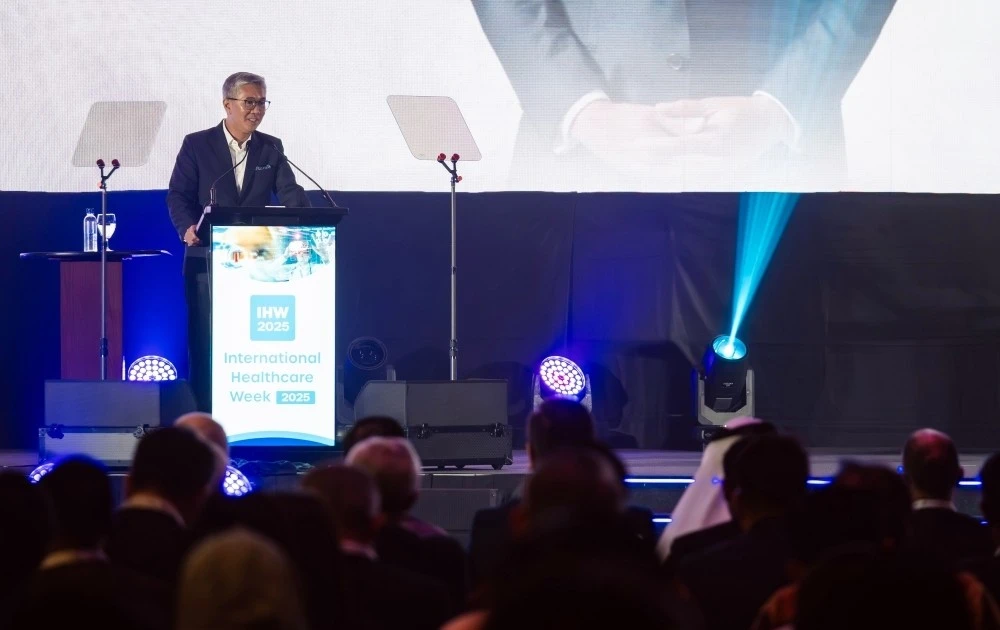
Malaysia has taken a decisive step in its ambition to become a global healthcare hub with the official launch of International Healthcare Week 2025 (IHW 2025). The event was inaugurated by the Minister of Investment, Trade and Industry, Tengku Datuk Seri Zafrul Tengku Abdul Aziz, at the Malaysia International Trade and Exhibition Centre (MITEC) on 16 July. Speaking at the opening ceremony, the Minister underscored the strategic importance of healthcare as one of five priority sectors under Malaysia’s national industrial policy framework. He emphasised that the country’s approach is grounded in industrial reform, strengthened international partnerships, and expanding trade diplomacy. In 2024 alone, Malaysia’s healthcare sector attracted RM2.13 billion (approximately USD500 million) in investment across medical devices and pharmaceuticals, resulting in the creation of over 2,700 high-value jobs. The sector continues to grow in scale and sophistication, supported by a mature supply chain and skilled talent pool. Malaysia is currently home to eight of the world’s top 30 medical device manufacturers and boasts more than 300 active healthcare companies, reflecting robust investor confidence and sustained sectoral growth. As Chair of ASEAN in 2025, Malaysia intends to leverage IHW 2025 as a regional platform to foster deeper healthcare integration within ASEAN and to contribute to a more connected and innovative global healthcare ecosystem. Co-hosted with Informa Markets, IHW 2025 is one of the largest healthcare trade events in the region. Spanning 26,000 square metres, it encompasses five major exhibitions covering pharmaceutical supply chains, medical devices and hospital technologies, diagnostics and laboratory equipment, medical device design and manufacturing, and digital health innovation. This year’s edition brings together over 900 exhibitors and is expected to welcome more than 21,000 visitors from 50 countries. The event will also host 125 conferences and forums, further strengthening Malaysia’s position as a regional leader in healthcare advancement.

Events

Smart Manufacturing Takes Centre Stage at Intelligent Manufacturing Kuala Lumpur 2025

Intelligent Manufacturing Kuala Lumpur (IMKL) 2025 concluded on 16 May following three days of strategic discussions, knowledge sharing, and technology showcases focused on advancing smart manufacturing across the ASEAN region. The third edition of this conference-led event welcomed 2,164 visits and 357 conference attendees to the Kuala Lumpur Convention Centre (KLCC), under the theme “Synergising technologies and workforce adoption for operational success.” Organised by Messe Frankfurt (HK) Ltd and endorsed by the Malaysia External Trade Development Corporation (MATRADE), IMKL 2025 brought together a global network of corporate leaders, industry experts and academic figures from nine countries and regions. The event featured 23 speakers, 19 conference sessions, four breakout discussions and 21 Tech Lab sessions, in addition to 19 product showcases representing six countries. Fiona Chiew, General Manager of Messe Frankfurt (HK) Ltd, remarked on the event’s success:“We are delighted that IMKL 2025 has once again attracted such a wide range of ASEAN manufacturing professionals. Feedback from participants has been highly positive, reaffirming the event’s role as a key platform for industry experts to connect and discuss the future of smart manufacturing. Moving forward, we will continue to expand this platform to ensure it remains a valuable resource for professional and industrial advancement in the region. I look forward to reuniting with speakers and attendees at next year’s edition.” This year’s programme featured the debut of the SPS Stage Kuala Lumpur pavilion, bringing internationally recognised content from the SPS brand to Southeast Asia. The event combined a two-day conference with live demonstrations, workshops and product exhibitions, all focused on digital transformation, AI adoption and operational excellence. Speakers and panelists offered key insights into the development and integration of artificial intelligence in manufacturing. Topics included real-world case studies, AI applications, workforce transformation and process optimisation. Breakout sessions offered interactive discussions tailored to specific interest areas, while the Tech Lab sessions and product showcases highlighted cutting-edge innovations ranging from smart factory solutions to robotics and data connectivity. Professor Dr David Romero, Scientific Vice-Chairman of the World Manufacturing Foundation, noted IMKL’s evolution:“In just three years, IMKL has become the ASEAN region’s key event for digital transformation and intelligent manufacturing technologies. We now see former delegates returning as speakers, creating a community of shared knowledge and collaboration.” The event drew strong support from national and international stakeholders. Mr Sam Majid, Head of the National AI Office (NAIO), said IMKL plays an instrumental role in helping Malaysian manufacturers leverage AI to drive innovation, reduce costs, and enhance output. Mr James Kok of AI Singapore echoed the sentiment, emphasising the importance of people, purpose and policy in intelligent manufacturing. For Dr Deny Sapian of Schaeffler Malaysia, IMKL provides essential industry clarity:“An event like IMKL is vital for fostering purposeful awareness, guiding stakeholders on priorities, and driving sustainable growth.” Industry exhibitors and educational institutions also played an active role in shaping discussions. Monash University Malaysia, MOXO and Bossard (M) Sdn Bhd were among those presenting innovations at SPS Stage Kuala Lumpur, with participants praising the format for encouraging ecosystem collaboration and in-depth exchange. Conference delegates echoed these sentiments. Representatives from Dell Technologies, FGV Holdings, Rovski Industries and the Malaysian Rubber Board noted the importance of accessible, actionable content. Key themes included AI integration, workforce training, robotics, and the digital readiness of SMEs. TS Dr Roland Ngeow of the Malaysian Rubber Board commented:“At Academy Hevea Malaysia, we work closely with rubber product manufacturers, and the insights shared at IMKL help us introduce transformative technologies to the sector.” The next edition of Intelligent Manufacturing Kuala Lumpur is set for 2026, with further details to be announced. The event continues to be co-organised with the Selangor Human Resource Development Centre (SHRDC) and supported by a broad coalition of government bodies, industry associations and academic institutions across the region. -messe frankfurt

News

Malaysia’s Workforce Strategy for a Digital and Inclusive Future

As the Fourth Industrial Revolution advances with unprecedented speed, nations across the globe are grappling with how to prepare their people for an increasingly digital and automated economy. In Malaysia, this preparation is taking a deliberate, evidence-based and human-centred approach—one that prioritises resilience, dignity and inclusion in the face of evolving technologies such as artificial intelligence (AI). When Rudyard Kipling penned The Secret of the Machines over a century ago, he captured the awe and trepidation that society felt during the second industrial revolution. Today, similar sentiments are being echoed as AI rapidly reshapes the contours of work. With it comes both the promise of augmented productivity and the existential worry of displacement. In Malaysia, these anxieties are being met with action. Upon assuming the role of Minister of Human Resources 17 months ago, Steven Sim was struck not by abstract theories but by real conversations with Malaysians—corporate leaders, employees, gig workers and entrepreneurs—all uncertain about their place in a changing economy. The questions were simple yet profound: Will I still have a meaningful job? Can I earn a dignified living? Will my skills remain relevant? In response, the Ministry of Human Resources, through its agency TalentCorp, initiated a nationwide study to examine the implications of AI, digitalisation and the green economy on the labour market. The results were sobering: approximately 620,000 jobs are at high risk of becoming obsolete due to automation. This necessitates large-scale cross-skilling, upskilling and reskilling to future-proof the workforce. However, the findings also revealed significant opportunities. The study identified 60 emerging job roles, with 70% rooted in AI and digital technologies. These roles are not hypothetical—they are already being advertised in job listings, and several countries are outpacing Malaysia in preparing their talent pipelines to fill them. Malaysia’s strategic response is both broad-based and data-driven. The country currently invests RM10 billion (£1.65 billion) annually in skills-related education and training, with roughly 30% of that funding sourced from a statutory levy imposed on private sector employers. To ensure this investment leads to meaningful outcomes, the government launched MyMahir—a national digital platform providing real-time insights into job trends, required competencies and available training. This tool is designed to empower individuals, companies and policymakers alike in making informed decisions about skills development. To align training more closely with industry needs, the Ministry established the Future Skills Talent Council, comprising sector-based, industry-led groups. These councils bridge the gap between policy and practical workforce requirements, ensuring that training programmes reflect the realities of the workplace. Early results are promising: workers trained under these schemes have earned a 12% higher average wage than the national norm in the programme’s first year. Looking ahead, the government plans to establish “skill universities”—accessible, industry-aligned institutions that offer credentials equivalent in value to traditional degrees. These will serve as a new model for post-secondary education in a skills-driven economy. The country’s workforce strategy is not limited to domestic ambitions. Recognising the interconnectedness of the ASEAN region, Malaysia will spearhead the ASEAN Year of Skills 2025 during its chairmanship, with support from the International Labour Organization. This initiative aims to catalyse deeper regional cooperation on human capital development. One of its flagship efforts will be to open Malaysia’s National Training Week in June 2025 to all ASEAN citizens. The programme will offer access to 65,000 high-quality training courses delivered by both local and international providers, positioning ASEAN as a globally competitive and highly skilled region. Gender inclusion is also a core component of Malaysia’s workforce agenda. In partnership with the World Economic Forum, Malaysia is co-chairing the Gender Parity in the Future of Work Accelerator. This programme will formulate data-driven policy recommendations to enhance women’s participation in the labour market, aligning with Malaysia’s broader Madani Economic Framework, which seeks to boost female labour force participation. As technology continues to redefine economies and societies, Malaysia remains committed to ensuring that human dignity is not an afterthought but the cornerstone of its future-of-work policies. Echoing Kipling’s reassurance that technology remains a tool—powerful yet ultimately subordinate to human intent—the government’s strategy is clear: people must write the manual for technology, not the other way around. Reflecting on his tenure, Minister Sim acknowledged that the greatest concerns were never just about employment statistics or wage growth. They were about ensuring that in the pursuit of innovation, no one is left behind. -World Economic Forum

Energy & Technology

Bintulu Port Subsidiary Strengthens Role in Offshore Energy Operations

Borneo Oil and Gas Supply Base Sdn Bhd (BOGSB), a subsidiary of Bintulu Port Holdings Bhd, has reaffirmed its commitment to advancing offshore energy operations through strategic infrastructure development and integrated support services. The company’s participation in International Energy Week (IEW) 2025, held at the Borneo Convention Centre Kuching (BCCK) from Tuesday to Thursday, underscored its dedication to enhancing Sarawak’s energy sector. “The event provided a valuable platform for meaningful engagement with industry stakeholders, paving the way for potential collaborations aimed at driving Sarawak’s energy ambitions,” BOGSB said in a statement. As Sarawak’s only dedicated supply base, BOGSB showcased its expertise in supporting offshore logistics and energy operations, receiving high-level recognition from state leaders during the exhibition. The strategic importance of BOGSB’s role was further highlighted by a visit from Sarawak Premier Tan Sri Abang Johari Tun Openg, accompanied by State Secretary Datuk Mohamad Abu Bakar Marzuki and members of the BOGSB board of directors. “As Sarawak’s premier supply base, we are committed to building infrastructure and forging partnerships that will shape the future of energy in the region and beyond,” the company added. With strong government endorsement and sustained industry engagement, BOGSB’s presence at IEW 2025 reinforced its position as a leader in transforming offshore logistics and supporting Sarawak’s growing prominence in the global energy landscape.

Property

Eastin Hotel to Rebrand as Petaling Jaya Marriott Hotel by 2026

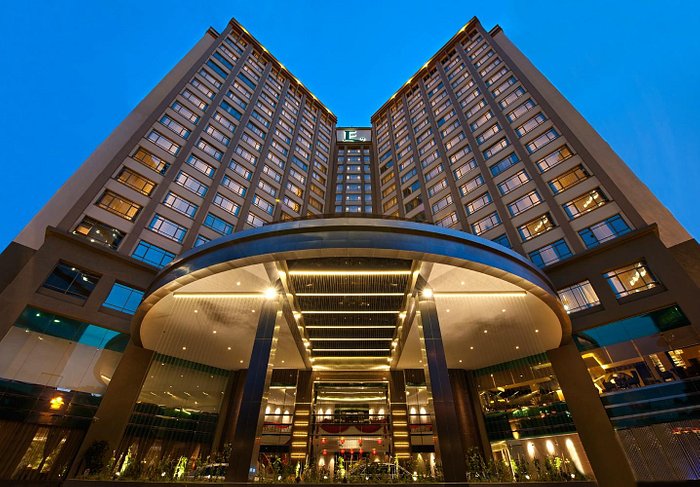
Marriott International has entered into an agreement with TSM Global Bhd to transform the 393-room Eastin Hotel Kuala Lumpur into the Petaling Jaya Marriott Hotel as part of its continued expansion in Malaysia’s hospitality sector. The hotel, strategically situated between Kuala Lumpur and Petaling Jaya, is expected to join the Marriott Hotels portfolio in December 2025 following a series of phased renovations. The renovations will commence with a complete lobby overhaul and guest room redesign to reflect Marriott’s contemporary brand standards. Planned additions include an exclusive M Club Lounge for Elite and Club members, a Chinese restaurant, and a Kids Club, all aimed at enhancing guest experiences. The fully rebranded property is scheduled to open its doors by December 2026, offering upgraded accommodations, signature Marriott service, and seamless access to key business and leisure destinations. Andree Susilo, Vice President of Hotel Development – Asia Pacific (excluding China) at Marriott International, highlighted the strategic importance of the project. “We are pleased to collaborate with TSM Global on this conversion project that will introduce the trusted Marriott Hotels brand to the dynamic commercial corridor of Petaling Jaya. The conversion-friendly platform of our flagship brand continues to resonate with owners and investors, and this agreement reflects our shared confidence in the future of Malaysia’s hospitality landscape,” Susilo said. TSM Global director Lim Tze Thean expressed optimism about the partnership. “We are excited to collaborate with Marriott International and introduce the Marriott Hotels brand to this strategic location. This signing represents our commitment to elevating hospitality standards in Malaysia, and we look forward to creating a compelling destination that delivers quality, consistency, and global recognition,” Lim said. Marriott International currently operates more than 60 properties in Malaysia under 20 brands and remains focused on expanding its footprint in strategic markets nationwide. -The Star

News

Ancom Nylex FY2025 Net Profit Declines to RM63.49 Million

Ancom Nylex Bhd reported a decline in net profit for the financial year ended 31 May 2025 (FY2025), registering RM63.49 million compared to RM81.47 million in the previous year. Revenue also eased to RM1.87 billion from RM1.99 billion in FY2024, the group disclosed in a filing with Bursa Malaysia today. The company attributed the lower revenue to softer contributions from its industrial chemicals segment, which faced reduced selling prices and volumes. The drop in net profit was primarily due to elevated freight costs and unfavourable foreign exchange fluctuations. Managing Director and Group Chief Executive Officer Datuk Lee Cheun Wei described FY2025 as a challenging year marked by geopolitical tensions that pushed up freight costs and created volatility in currency markets, weighing on overall performance. “Escalating tariffs and volatile trade conditions could further impact both global and domestic economic projections, making it increasingly difficult to anticipate trends in raw material costs and market prices,” he noted. Nevertheless, Lee expressed optimism that Malaysia’s economic growth is expected to remain positive over the next 12 months, with scope for further improvement if global conditions stabilise. For the fourth quarter ended 31 May 2025 (4Q2025), Ancom Nylex recorded a lower net profit of RM17.07 million compared to RM18.44 million a year earlier, while revenue slipped to RM459.4 million from RM487.2 million. During FY2025, the group declared a first interim dividend through the distribution of treasury shares on the basis of four shares for every 100 shares held. A second interim dividend was also distributed at one treasury share for every 100 shares. -Bernama

News

Saliran Group Names CFO Yong Wai Kin as Executive Director

Saliran Group Bhd has announced the appointment of its chief financial officer Yong Wai Kin as executive director, reflecting the board’s confidence in his leadership and expertise as the company advances its growth trajectory following its initial public offering. Yong, who has held the role of CFO since May 2022, brings more than three decades of experience in finance, audit and corporate management, spanning industries including manufacturing, automotive, media and palm oil. Since joining Saliran, he has played a key role in strengthening the company’s financial management, supporting its strategic expansion plans. The supplier and distributor of pipes, fittings and flanges said the appointment marks a significant step in reinforcing its leadership team to drive long-term value creation. -The Star

News

Boost Names New Deputy CEO and Consumer Business Head to Drive Innovation

Boost has announced key leadership changes aimed at accelerating its growth trajectory and reinforcing its position in the digital financial services landscape. Ungku Norliza Syazwan Ungku Halmie has been named Deputy Chief Executive Officer of Boost Bank. Formerly the CEO of Boost Life, Ungku Norliza was pivotal in transforming the Boost eWallet into a fast-growing platform. Recognised as ‘Female Leader of the Year’ in 2023, she will now collaborate with Boost Bank CEO Fozia Amanulla to spearhead the bank’s expansion and innovation agenda. Meanwhile, Gin Wong has been appointed Head of Consumer Business, assuming leadership of Boost Life. Previously serving as Head of Product, she played a critical role in evolving the eWallet into a comprehensive financial solution. In her new capacity, Gin will be responsible for advancing consumer strategy, enhancing user experience, and driving product innovation. Group CEO of Boost, Sheyantha Abeykoon, emphasised the company’s commitment to nurturing internal talent and providing growth opportunities. “At Boost, one of our core principles is creating a platform where every employee can grow and thrive professionally. We believe it’s our responsibility to provide opportunities, and it’s up to our people to seize them. There’s nothing more fulfilling than seeing Boosties who embrace this chance and advance in their careers, fuelling our collective growth as a company. Leaders like Ungku Liza and Gin exemplify this spirit, and we’re immensely proud whenever we can open doors for our own people to rise within Boost.” These appointments underline Boost’s strategic focus on strengthening leadership capacity as it works towards becoming a leading regional digital banking group. -Fintech News

News

Amanah Saham Sarawak Declares Final Dividend of Three Sen Per Unit

Amanah Saham Sarawak (Assar) has announced a final dividend of three sen per unit for the financial year ended 30 June 2025, bringing its total dividend distribution for the year to RM28.76 million. Sarawak Premier Abang Johari Openg said the final dividend will result in a payout of RM14.52 million, benefiting approximately 57,870 investors, according to The Borneo Post. This follows an interim dividend of the same amount distributed in January. The cumulative total dividend distribution since the fund’s restructuring has reached RM42.33 million, which Abang Johari described as a testament to prudent and forward-looking investment management. He emphasised that the fund has remained stable and resilient despite heightened global market volatility triggered by trade tensions following former US president Donald Trump’s reciprocal tariffs and ongoing conflict in the Middle East. “While the net asset value also experienced fluctuations in line with the market, volatility was well managed thanks to prudent and disciplined asset allocation strategies,” he said. Assar chief executive officer Norlia Madon reported a gross income of RM38.39 million for the 2025 financial year. The total included RM16.35 million from interest on fixed-income securities, RM13.96 million in capital gains from equity disposals, RM5.15 million in equity dividends, and RM2.93 million from money market instruments and capital gains on fixed-income securities. After deducting RM5.70 million in expenses, the fund recorded a net income of RM32.69 million. -FMT

News

CelcomDigi Retail Transformation Boosts Productivity Over 20 Percent Post Merger

CelcomDigi Bhd has reported a productivity increase exceeding 20 percent across its reimagined retail outlets, following an extensive revamp designed to offer a more immersive and digitally enhanced customer experience. This milestone comes in the wake of the merger between Celcom’s Blue Cube outlets and Digi stores, which have since been consolidated under a unified retail strategy and upgraded to reflect the group’s evolving vision. Chief Executive Officer Datuk Idham Nawawi highlighted that the refreshed outlets demonstrate CelcomDigi’s commitment to providing personalised experiences aligned with modern digital lifestyles. “These stores are pivotal touchpoints in CelcomDigi’s broader retail transformation strategy, following the merger between Celcom and Digi two years ago. We currently operate 61 self-owned outlets,” he said during an exclusive media walkthrough. The tour, held at The Gardens Mall, showcased the first CelcomDigi Life flagship store introduced since the merger. The second flagship outlet is located at Sunway Pyramid. “This transformation is not solely about numbers. It represents a physical manifestation of a fully integrated digital lifestyle ecosystem, encompassing health, entertainment and smart living,” Idham explained. The flagship outlet also brings several firsts to CelcomDigi’s service offerings, including a pioneering “retail-in-retail” model established through strategic collaborations with Samsung, Disney and Marvel. These partnerships are central to delivering the next generation of retail experiences. “CelcomDigi Life stores are not merely about selling devices. They are designed to enable and enrich every aspect of our customers’ digital lifestyles. We currently operate over 10,000 retail touchpoints nationwide and plan to expand further to serve wider geographies,” Idham added. -Bernama

Scroll to Top

Subscribe
FREE Newsletter