Malaysia

News

Nurjesmi Mohd Nashir to spearhead RHB’s Wholesale Banking

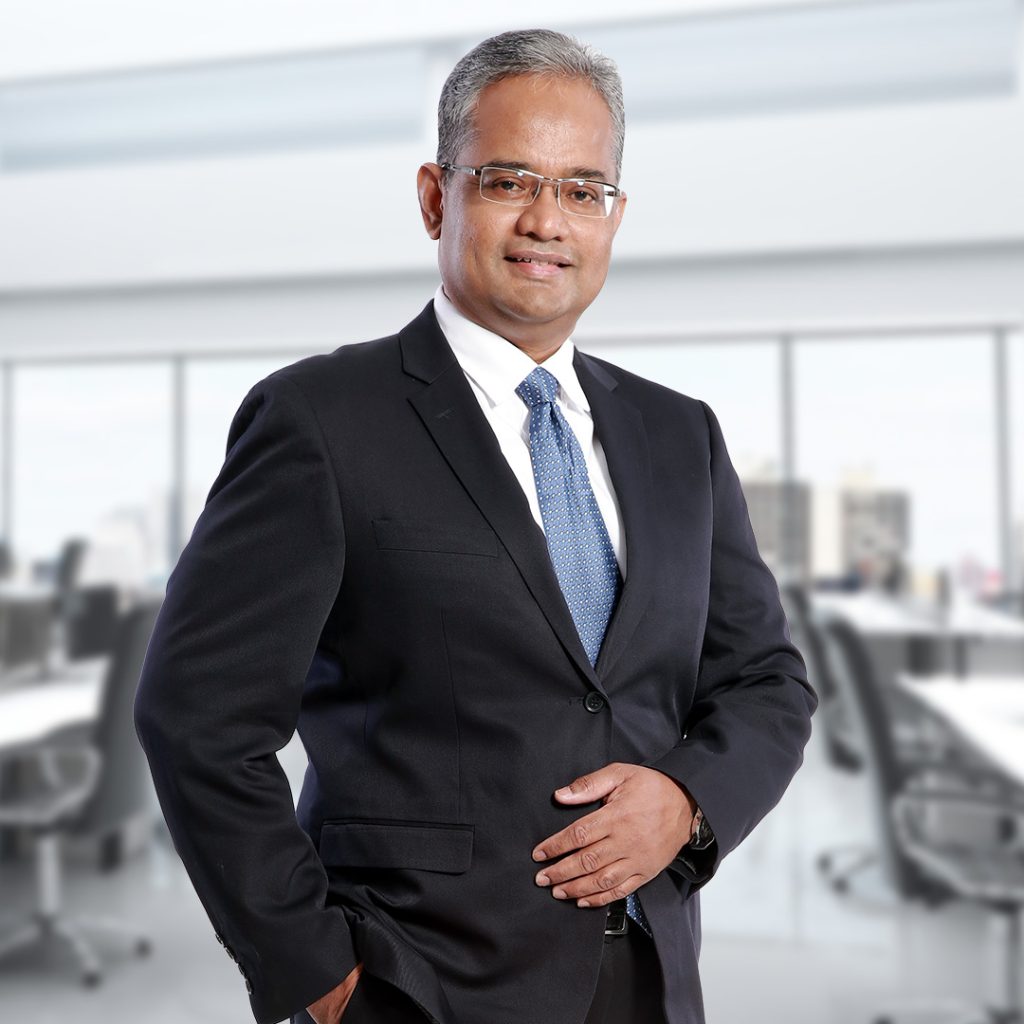
KUALA LUMPUR: RHB Bank Berhad (“RHB” or the “Group”) is pleased to announce the appointment of Nurjesmi bin Mohd Nashir as Managing Director of Wholesale Banking, effective 1 July 2025. Nurjesmi succeeds Datuk Fad’l Mohamed, who was recently appointed Chief Executive Officer of Bursa Malaysia. With over 3 decades of experience in banking and capital markets, Nurjesmi brings deep expertise in corporate banking, investment banking, and market development. In his previous roles, he has a strong track record in transformative efforts to drive growth, reinforce the banks’ market standing, and optimise operational performance.   He began his career as an equity analyst in 1993 and has held various leadership positions at Citibank Berhad between 1996 to 2013, covering sectors including energy, plantations, and real estate.   Dato’ Mohd Rashid Mohamad, Group Managing Director/Group Chief Executive Officer of RHB Banking Group said, “Nurjesmi’s market insights and proven leadership make him well-positioned to steer our Wholesale Banking business into its next phase of growth. With our recent organisational restructure, Wholesale Banking will focus on five core areas – Investment Banking, Treasury & Global Markets, Transaction Banking, Client Coverage and Economic Research. I am confident his experience and leadership will be valuable in driving the Group’s PROGRESS27 strategy.”   Nurjesmi holds a Bachelor of Science in Finance from Syracuse University, New York, and a Diploma in Business Studies from MARA University of Technology (UiTM). He also served as an Independent Board Member of Perbadanan Usahawan Nasional Berhad, from 2018 to 2023.   This appointment reaffirms RHB’s commitment to strengthening its leadership bench and driving long-term value creation across its Wholesale Banking business.

News

CGS International Deepens ASEAN-China Ties with Strategic MOUs, Including ETF Partnership with Bursa Malaysia and Fullgoal HK

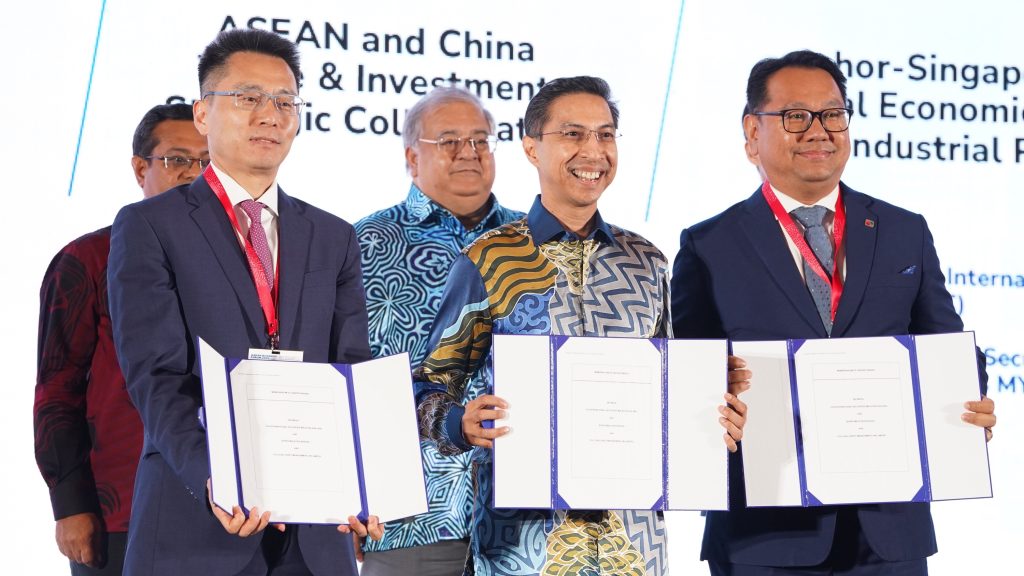
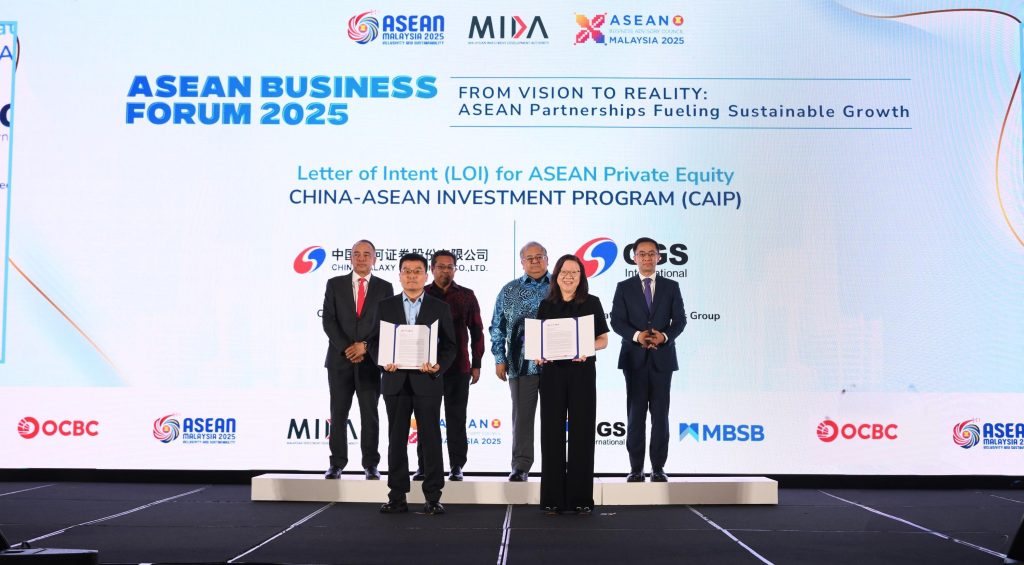
KUALA LUMPUR: CGS International Securities Group (“CGS International”) and its parent, China Galaxy Securities Co., Ltd (“CGS”), today formalised six new landmark agreements at the inaugural ASEAN Business Forum 2025 (ABF2025), co-hosted by the Malaysian Investment Development Authority (MIDA) and ASEAN Business Advisory Council (ASEAN-BAC) Malaysia. These include five Memoranda of Understanding (MOUs) and one Letter of Intent (LOI), advancing the firm’s ambition to catalyse ASEAN-China business collaboration across investment, trade and strategic sectors. The signing ceremony, held in conjunction with the 46th ASEAN Summit and the ASEAN-GCC + China Summit, was witnessed by key dignitaries including Datuk Sikh Shamsul Ibrahim Sikh Abdul Majid, CEO of MIDA (on behalf of YB Senator Tengku Datuk Seri Utama Zafrul Tengku Abdul Aziz, Minister of Investment, Trade and Industry), Dato’ Mohammad Faiz Azmi, Executive Chairman of the Securities Commission Malaysia (SC), Tan Sri Nazir Razak, Chairman of ASEAN-BAC Malaysia, and Mr Wang Sheng, Chairman of CGS. These agreements follow CGS International’s earlier pledge of RM6 billion during the Johor-Singapore Special Economic Zone (JS-SEZ) Partners’ Dialogue, comprising RM3 billion in foreign direct investment facilitation and RM3 billion in asset management under new Single Family Office Ventures. Strategic Agreements Signed 1. LOI for China-ASEAN Investment ProgrammeAims to establish a private equity fund focusing on high-growth sectors such as semiconductors, advanced manufacturing, renewable energy, healthcare, food security and consumer sectors. Malaysia will serve as a regional anchor and technology transfer bridge between China and ASEAN. 2. MOU with MIDABoth parties will jointly promote Malaysia as a prime investment hub, focusing on investor facilitation, business matching, fundraising and supply chain development across high-value sectors. 3. MOU with Fullgoal Asset Management (HK) Limited and Bursa MalaysiaThis trilateral collaboration is set to expand Malaysia’s Exchange-Traded Fund (ETF) offerings by enabling the listing of foreign-underlying ETFs on Bursa Malaysia. It will give Malaysian investors greater access to global markets and diversify capital market products. 4. MOU with GL Capital Management LimitedTo launch a private equity fund dedicated to ASEAN’s growing healthcare and medical devices sector. 5. MOU with OCBC Bank (Malaysia) BerhadTo support trade and investment flows between China and ASEAN by offering integrated banking, treasury, and investment services to regional clients. 6. MOU with Zhongguancun International Holding Limited (Hong Kong)To attract Chinese companies in advanced manufacturing, food security, digital tech, and healthcare to the JS-SEZ and selected Malaysian industrial parks. ETF Collaboration with Bursa Malaysia and Fullgoal HK In a separate but complementary development at ABF2025, CGS MY signed a tripartite MOU with Bursa Malaysia and Fullgoal HK to facilitate the listing of new ETFs on Bursa Malaysia. The initiative aims to expand Malaysian retail investors’ access to global investment products and markets. “This collaboration marks a pivotal step in expanding Malaysia’s ETF landscape,” said Dato’ Fad’l Mohamed, CEO of Bursa Malaysia. “It reinforces our position as an investment gateway bridging Malaysia with global financial markets.” Mr Ge Chen, Chairman of Fullgoal HK, cited strengthened Malaysia-China maritime and financial ties under the Belt and Road Initiative, stating, “This partnership enhances our international asset allocation capabilities and supports our ‘going global’ strategy.” CGS International CEO, Madam Carol Fong, added: “Our role as a connector and catalyst in ASEAN-China capital flows is made possible through partnerships like these. We’re excited to deepen investor access to unique global opportunities.” Currently, Bursa Malaysia lists 17 ETFs managed by six issuers with a combined AUM of MYR2.4 billion. A Regional Investment Catalyst With over 500 policymakers, investors, and corporate leaders in attendance, ABF2025 underscores Malaysia’s role as a regional anchor for investment and a facilitator of ASEAN-China connectivity under its 2025 ASEAN Chairmanship. CGS International’s multilateral signings serve as a strong vote of confidence in the region’s potential and its future as a united, high-growth economic powerhouse. For more information on CGS International’s initiatives, visit www.cgsi.com.

News

CGS International Signs Strategic Agreements at ASEAN Business Forum 2025 to Deepen ASEAN-China Partnerships

KUALA LUMPUR: In a landmark move signalling growing economic cooperation between China and ASEAN, China Galaxy Securities Co., Ltd (“CGS”) and its regional arm, CGS International Securities Group (“CGS International”), signed five strategic Memoranda of Understanding (MOUs) and one Letter of Intent (LOI) at the ASEAN Business Forum 2025 (ABF2025). The event, co-hosted by the Malaysian Investment Development Authority (MIDA) and ASEAN Business Advisory Council (ASEAN-BAC) Malaysia, underscores ASEAN’s ambitions to strengthen cross-border trade and investment in high-growth sectors. Witnessed by key regional stakeholders including Datuk Sikh Shamsul Ibrahim Sikh Abdul Majid, CEO of MIDA; Dato’ Mohammad Faiz Azmi, Executive Chairman of the Securities Commission Malaysia (SC); Tan Sri Nazir Razak, Chair of ASEAN-BAC Malaysia; and Mr Wang Sheng, Chairman of CGS – the signings mark a deepening of CGS International’s long-term strategic intent in ASEAN. Strengthening ASEAN-China Capital and Business Flows The agreements build on CGS International’s RM6 billion pledge made during the Johor-Singapore Special Economic Zone Partners’ Dialogue earlier this month. The commitment comprises RM3 billion in facilitation of foreign direct investment (FDI) over three years and RM3 billion in assets under management through the establishment of Single Family Office Ventures. Spanning areas including private equity, investment facilitation, ETF offerings, healthcare, advanced manufacturing, digital tech, and trade banking services, the six new agreements position Malaysia as a key regional anchor in ASEAN’s economic integration journey. Key Agreements Include: LOI for the China-ASEAN Investment Programme – A private equity fund targeting high-growth sectors such as healthcare, semiconductors, renewable energy, food security, and advanced manufacturing across ASEAN, with Malaysia as the core regional hub. The fund also aims to drive cross-border industry knowledge and tech transfer. MOU with MIDA – To jointly promote Malaysia as a premier investment destination and support investor facilitation, fundraising, business matching, and supply chain development. MOU with Fullgoal Asset Management (HK) & Bursa Malaysia – To introduce new Exchange-Traded Funds (ETFs) on Bursa Malaysia, expanding global investment access for local investors. MOU with GL Capital Management Limited – To launch a private equity fund focused on ASEAN’s fast-growing healthcare and medical devices sector. MOU with OCBC Bank (Malaysia) Berhad – To support ASEAN-China trade and investment flows through integrated banking, treasury, and investment banking services. MOU with Zhongguancun International Holding (Hong Kong) – To assist Chinese firms in entering Malaysian industrial parks and the Johor-Singapore Special Economic Zone, focusing on sectors such as advanced manufacturing, digital technology, and food security. Malaysia’s Role Under ASEAN Chairmanship The move highlights Malaysia’s proactive role during its ASEAN Chairmanship in catalysing intra-ASEAN and ASEAN-China economic linkages. It also reflects the region’s attractiveness as a long-term growth engine, with CGS International committed to serving as a bridge between ASEAN opportunities and Chinese capital. “These signings are more than just intents and agreements – they signify our strong confidence in the investment and growth potential of ASEAN and Malaysia,” said Madam Carol Fong, Group CEO of CGS International. “As a connector and catalyst, we aim to accelerate cross-border strategic collaborations, capital and talent mobility for business growth.” A High-Impact Business Forum Held in conjunction with the 46th ASEAN Summit and the ASEAN-GCC + China Summit 2025, ABF2025 gathered over 500 regional policymakers, investors, and business leaders. Organised by ASEAN-BAC Malaysia and MIDA with support from MBSB Bank and OCBC Malaysia, the forum featured high-level dialogues, strategic panels, and closed-door business matchmaking sessions. As CGS International expands its influence across ASEAN, these partnerships reaffirm its role as a key enabler in the region’s economic transformation. For more on CGS International’s services and initiatives, visit www.cgsi.com.
Investment & Market Trends

Destini Delivers RM23.2 Million Profit Over Nine Months

KUALA LUMPUR: Engineering solutions provider Destini Berhad has posted a net profit of RM23.2 million for the nine-month period ended March 31, 2025, buoyed by steady growth across its rail, defence, and energy operations. The group’s revenue totalled RM250.2 million, reflecting robust demand and the continued execution of high-value contracts. The company’s latest quarterly performance also remained solid. Destini recorded revenue of RM87.67 million for the third quarter, a 4.9% increase from RM83.56 million in the preceding quarter. Profit after tax for the period came in at RM8.47 million, up 4.8% quarter-on-quarter from RM8.09 million. Executive director Ismail Mustaffa expressed confidence in the group’s prospects, stating that Destini is on track to close the financial year on a strong note. “With sustained momentum across all business segments, the ongoing execution of high-value contracts, and strategic contributions from recent acquisitions, Destini is well-positioned to deliver continued growth,” he said. A key indicator of the group’s future potential is its growing tender book, which stood at RM1.01 billion as of March 31, underscoring Destini’s strong pipeline of opportunities. Segmental Highlights Destini’s mobility division emerged as the top-performing segment, contributing RM49.6 million in revenue and RM4.32 million in profit after tax and non-controlling interest (PATNCI). The strong showing was attributed to the successful delivery of three train units to the Ministry of Transport and the first revenue contribution from its recent acquisition of Trovon Group Pty Ltd, an Australian firm. The acquisition is expected to bolster Destini’s access to international markets and positively impact future earnings. In a notable turnaround, the aviation and defence segment posted RM22.42 million in revenue and RM2.42 million in PATNCI, rebounding from a loss of RM3.97 million in the same period last year. This marks a significant recovery in the division, driven by improved operational execution and contract fulfilments. The marine division delivered RM12.27 million in revenue and RM1.07 million in PATNCI, maintaining a steady contribution to the group’s overall performance. Meanwhile, the energy segment reported a modest RM260,000 profit on RM3.38 million in revenue. The return to profitability was supported by increased rig-related activity and effective cost management. A Diversified Engineering Powerhouse Destini is an integrated engineering group with diversified operations in mobility, aviation and defence, marine, and energy. The company offers maintenance, repair, and overhaul (MRO) services for both rail and aviation assets, supplies marine safety and defence equipment, and is expanding into renewable energy solutions. The group’s strategic expansion, particularly through its acquisition of Trovon, signals its intent to strengthen its global presence and unlock new sources of revenue. As its tender book grows and operational performance improves across all sectors, Destini is positioning itself as a resilient and future-ready engineering partner in Malaysia and beyond. With one quarter left in the fiscal year, market watchers will be observing whether Destini can sustain its upward momentum and deliver on its growth ambitions amid a complex global economic environment.

News

UPS Enhances Service in Johor to Accelerate Global Delivery

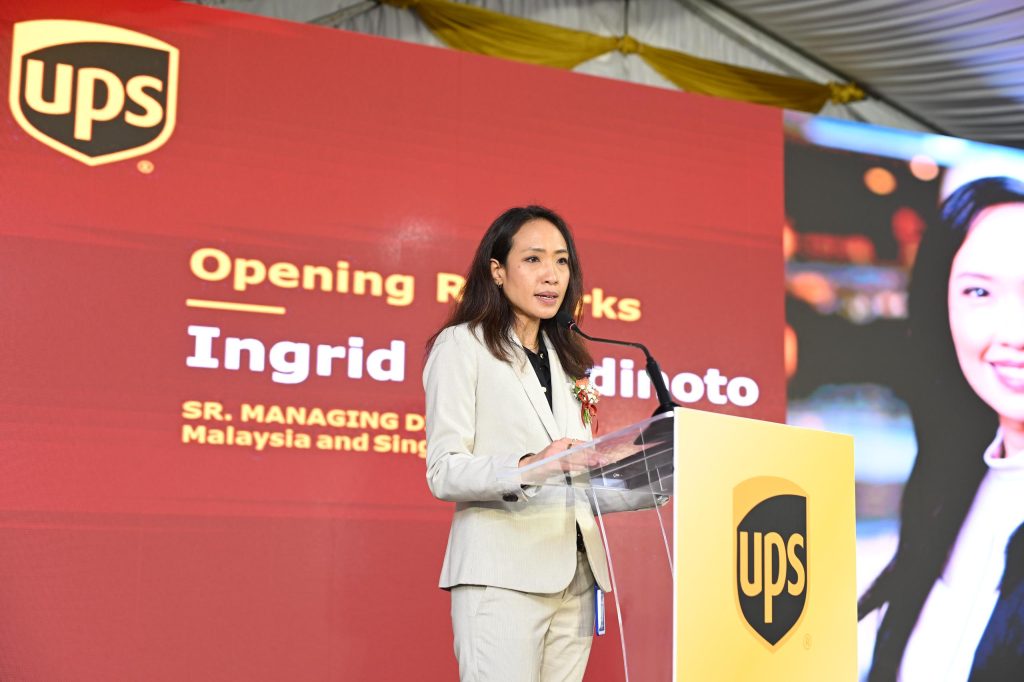
SENAI: UPS (NYSE: UPS), one of the world’s largest package delivery and supply chain management companies, has enhanced its services in Johor in a move that significantly reduces delivery times and boosts global connectivity for UPS customers across the state. The new operation, which consists of a bonded warehouse at Senai International Airport and a package centre in Senai, is located in one of Johor’s leading manufacturing and industry clusters and at the heart of the Johor-Singapore Special Economic Zone (JS-SEZ). It means imports and exports to Johor from countries across Asia Pacific can now enjoy next-day delivery, while imports and exports from Europe and the U.S. will arrive in as little as two business days. This is a time saving of one business day, facilitated by improvements in connectivity between Johor and Singapore’s Changi Airport. “In line with the growth possibilities presented by the Johor-Singapore Special Economic Zone, we’re excited to open our new Johor service at a time when there are opportunities for businesses to expand and build greater resilience into their supply chains,” said Ingrid Sidiadinoto, senior managing director UPS Malaysia. “Johor is an important industrial centre in southern Malaysia, particularly for manufacturing and high-tech companies. Being able to respond to orders quickly is critical in these sectors and now UPS customers in Johor can send and receive deliveries to and from anywhere in the world in two business days or less. This offers the fast and flexible access businesses need to our industry leading global network to make them more responsive, more resilient and more competitive.” The new Johor operation underscores UPS’s continued commitment to supporting businesses in Malaysia by providing better access to the company’s world class integrated global logistics network. “The establishment of UPS’s new Johor operation reflects Malaysia’s growing prominence as a regional logistics and supply chain hub,” said Datuk Sikh Shamsul Ibrahim Sikh Abdul Majid, chief executive officer of the Malaysian Investment Development Authority (MIDA). “Strategically located in Senai, the facility benefits from robust multimodal connectivity, including well-established highways, rail links, and proximity to key ports, making it an ideal gateway for integrated logistics solutions. “This milestone complements the government’s MADANI vision to position Malaysia as a high-value, innovation-driven economy. MIDA will continue to support companies like UPS, fostering their sustained growth within Malaysia’s vibrant logistics ecosystem.” This is the latest in a series of investments by UPS in its Malaysia network. In 2024, the company introduced a service enhancement to allow deliveries from Johor to over 50 countries across the Americas to be completed in as little as two business days. Later in the year UPS also announced a partnership with Ninja Van to provide UPS’s international express services at any of Ninja Van Malaysia’s 52 stores across Klang Valley

Energy & Technology

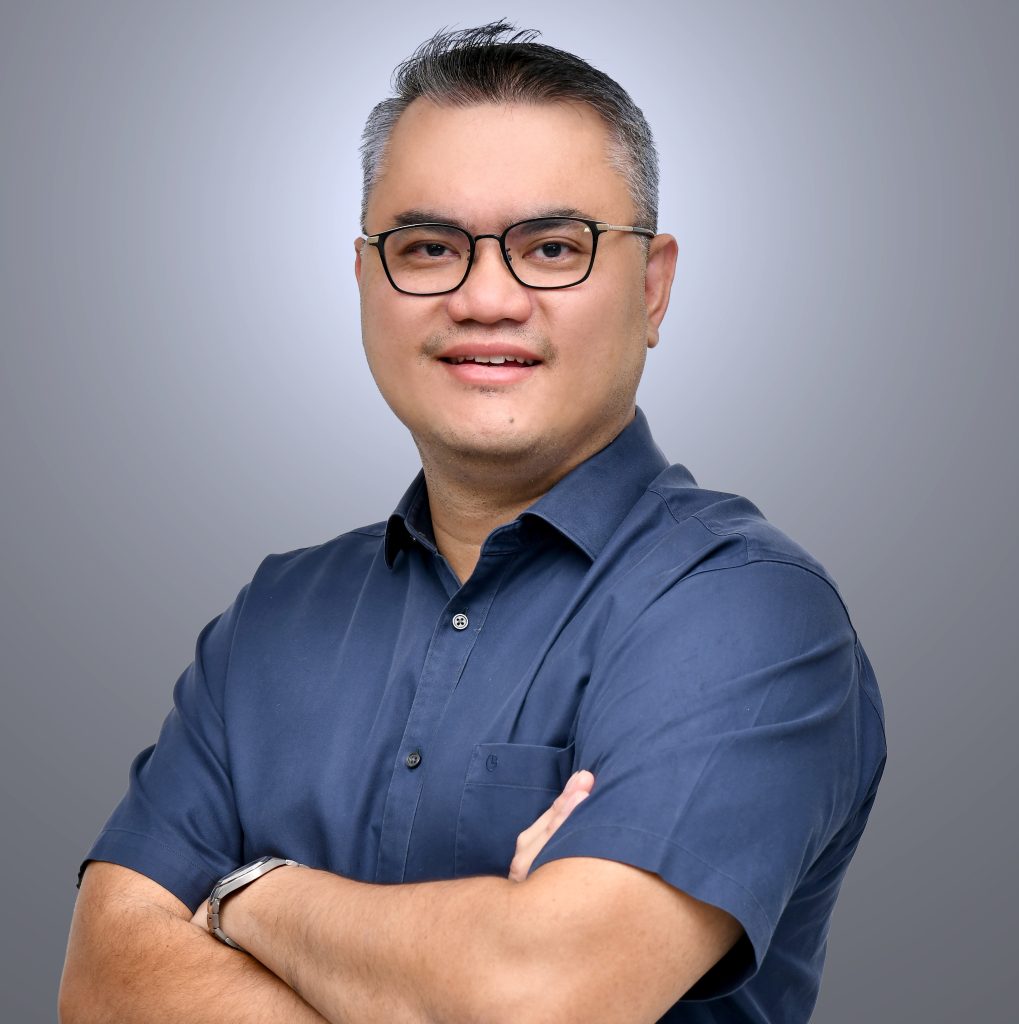
Pertama Digital Secures Extension to Execute Next Phase of National Digital Transformation

Pertama Digital Berhad (PDB) has secured a crucial Extension of Time (EOT) from Bursa Malaysia Securities Berhad, giving the company until 31 October 2025 to submit its Proposed Regularisation Plan. The approval reflects market confidence in PDB’s strategic vision and grants the company the necessary runway to finalise a series of transformative initiatives aimed at advancing Malaysia’s digital public service ecosystem and unlocking long-term shareholder value. The extension marks a turning point for PDB, enabling it to shift gears from planning to execution. Over the past year, the company has been charting a disciplined, impact-driven course, combining strategic acquisitions with internally developed digital solutions. These efforts are specifically designed to address inefficiencies in public sector delivery, enhance financial inclusion, and build trust in government services—placing user experience (UIUX) at the core of its digital-first model. PDB’s regularisation strategy centres on two key pillars: high-impact acquisitions and the expansion of its homegrown digital infrastructure. Central to this is the proposed acquisition of D-Ron Group, a profitable regional tech company with strong operations in Malaysia and Singapore. Known for its expertise in AI-driven surveillance, secure infrastructure, and public safety technologies, D-Ron’s track record of profitability and innovation adds both resilience and long-term growth prospects to PDB’s portfolio. The acquisition, now in its advanced due diligence stage, is expected to be finalised within the EOT period, with the signing of the Share Sale Agreement anticipated in the coming months. Parallel to this, PDB has sealed a strategic partnership with Infobip, one of the world’s top Communications Platform as a Service (CPaaS) providers. This alliance will strengthen government-to-citizen (G2C) engagement through omnichannel communications, AI-driven automation, and robust crisis response solutions. Infobip’s global hypernetwork—which reaches over 7 billion user touchpoints—will play a key role in scaling PDB’s digital reach, both locally and across the region. Beyond acquisitions and partnerships, PDB is accelerating the rollout of rakyat-focused digital initiatives. Its bail payment system, eJamin, has already processed more than RM1 billion in transactions, establishing itself as a core component of Malaysia’s digital public infrastructure. BizKecil, a platform developed in collaboration with a local bank, aims to digitally empower micro and small enterprises, while KOCEK, a financial literacy programme co-developed with Pintar Foundation, has received approval from the Ministry of Education and will be introduced in selected schools nationwide. In addition, PDB is exploring new frontiers in cybersecurity through a potential collaboration with Netsec Sdn Bhd, aimed at bolstering digital resilience for the public sector and high-security agencies. This move aligns with the Group’s wider objective of supporting national digital infrastructure and safeguarding essential public systems. The Board and management of PDB have expressed their gratitude to Bursa Securities for the trust placed in the company. Commenting on the extension, Lim Nasrul Halim, Group Chief Executive Officer Designate, said: “This extension is more than a procedural milestone; it is a vote of confidence in our mission and momentum. We extend our deepest appreciation to Bursa Malaysia Securities, our partners, clients, board, and advisors. Most importantly, we thank the dedicated team at Pertama Digital whose belief and resilience have brought us this far. With this clarity, we move forward decisively to complete our transformation and deliver lasting digital value for the rakyat and the nation.” As PDB moves into what may be its most pivotal chapter yet, its strategy is clear: to unite profitable acquisitions, rakyat-centric innovations, and powerful partnerships that place it at the forefront of Malaysia’s digital transformation. By building accessible, life-enhancing technologies that redefine how the government and society interact, PDB is living up to its core ethos—solutions made for the rakyat, by the rakyat.

Investment & Market Trends

Tune Protect Group Posts Strong 1Q25 with 100% PAT YoY Growth

Tune Protect Group Berhad (TUNEPRO, 5230) has begun its financial year on a strong note, recording a 100% year-on-year (YoY) growth in Profit After Tax (PAT) for the first quarter of 2025 (1Q25). This robust performance was underpinned by a notable turnaround in its net insurance service result and a sustained improvement in operational efficiency. According to How Kim Lian, Chief Executive Officer of Tune Protect Group, the group posted a net insurance service result of RM5.8 million in 1Q25, a stark improvement from the RM9.3 million loss in the same period last year. This recovery was driven by a 30.6% reduction in net incurred claims and attributable expenses, primarily due to more favourable claims experience in the Motor and Fire segments. The Group’s combined ratio improved to 93.4%, down from 109.8% in 1Q24, reflecting better underwriting performance. The Group’s PAT rose to RM7.4 million in 1Q25 from a loss after tax of RM3.9 million YoY. Although insurance revenue dipped slightly by 6.5% to RM88.5 million, the decline was partially offset by a stronger showing in the travel insurance portfolio. The increase in travel insurance revenue was attributed to higher take-up rates and expanded distribution channels, which mitigated the impact of higher acquisition costs. Investment income saw a 14.2% decline to RM8.1 million, largely due to market volatility and uncertainty surrounding US tariff policies. Despite this, the Group maintained a conservative investment strategy, shifting its portfolio to low-risk unit trust funds focused on Malaysian Government Securities and government-backed corporate bonds. This repositioning allowed the Group to benefit from the fixed income rally in April 2025, with further gains anticipated from potential rate cuts. Tune Protect’s travel segment continued to gain momentum with a 22% YoY increase in revenue. The Group activated six of the top ten key agents for its airline partner in Malaysia and expanded into new B2B markets including Zambia, Sri Lanka, Pakistan, and Kenya. Strategic digital partnerships, such as with AirPaz in Malaysia, Gettgo in Thailand, and TrueDtac in Thailand, supported this growth by improving accessibility to travel and personal accident insurance. In EMEIA, the Group launched Pet Health insurance through the Shory platform, demonstrating agility in addressing emerging consumer needs. Efforts to optimise pricing and portfolio management contributed to improvements in the Motor segment’s performance. The Group reported a second consecutive quarter of reduced net claims incurred (NCI) ratio, thanks to better claims management practices. A 5-percentage point YoY reduction in the Motor loss ratio and a 6% YoY rise in average premiums for Private Car policies reflected stronger underwriting and pricing discipline. The motorcycle segment’s share grew to 18.4% in 1Q25 from 17.6% in 4Q24, while Private Car Comprehensive policies valued above RM50,000 increased to 25.5% from 25.1%. Looking ahead, Tune Protect remains focused on three strategic pillars: expanding market reach, establishing a travel centre of excellence, and enhancing the travel experience through value-added services. The Group plans to introduce its insurance offerings in Pakistan and Uzbekistan, launch inbound travel products in the Philippines, and extend its partnership with AirPaz in Indonesia and Thailand. It is also set to roll out innovative products such as Baggage Shield for sports equipment and checked baggage, along with new services like Flight Watcher and Travel eSIM. The Group’s Delay Lounge Pass – already launched in Vietnam and Indonesia – will soon be available in the Philippines, reinforcing its commitment to delivering comprehensive travel solutions across ASEAN. With over 500,000 policies sold as of March 2025 and a 50% increase in airline platform take-up rates driven by enhanced UI/UX, Tune Protect’s continued digital innovation and customer-centric approach are set to sustain its positive momentum throughout the year.

News

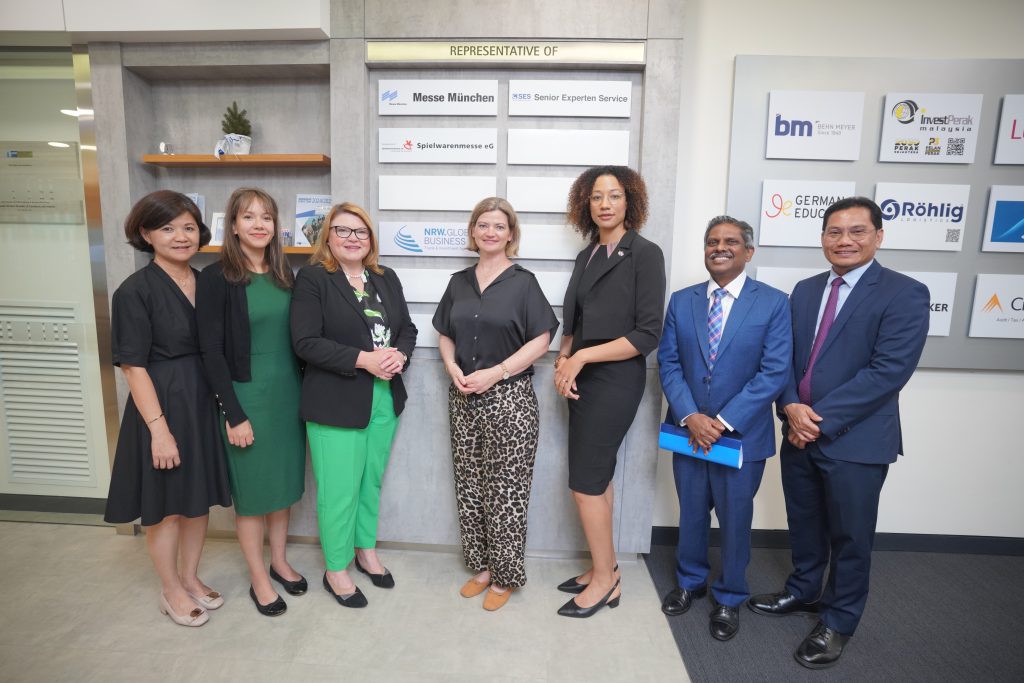
NRW.Global Business Opens ASEAN Desk in KL to Boost German Trade

KUALA LUMPUR: North Rhine-Westphalia (NRW), Germany’s most important economic region, is strengthening its international presence in Southeast Asia. The state-owned trade and investment agency, NRW.Global Business is opening a new ASEAN Service Desk in Kuala Lumpur to signal the intensification of economic relations between NRW and the ASEAN countries. The official opening took place today as part of a business roundtable with the Malaysian-German Chamber of Commerce and Industry (MGCC). The ASEAN countries are among the world’s most dynamic growth regions. Their economic relations with Germany are growing in importance. With the Service Desk, NRW.Global Business is establishing its first permanent point of contact in the region. The Service Desk will provide companies and potential investors from the ASEAN region with direct support on site, ranging from comprehensive information about NRW as a business location and investment conditions to practical assistance with specific location projects.    Felix Neugart, CEO of NRW.Global Business said, “With our ASEAN Service Desk, we aim to raise the profile of NRW as an innovative and attractive business location in the ASEAN region, intensify bilateral trade and investment relations and promote cooperation in future-oriented areas such as digitalisation, sustainable technologies and research. The ASEAN countries are important partners for us: They offer new sales and procurement markets as well as opportunities to establish business contacts with innovative companies and institutions. By establishing a direct presence, we are creating a point of contact to better leverage this potential together with local partners.”   The Business Roundtable on “Business Opportunities between NRW and Malaysia – Introducing NRW.Global Business ASEAN Service Desk” provides the framework for the official opening. Here, companies, local authorities, economic development agencies and multipliers from Malaysia and NRW come together to discuss opportunities for investment, cooperation and market development.   Jan Noether, Executive Director of the Malaysian-German Chamber of Commerce and Industry (MGCC), said, “We are delighted to be implementing the ASEAN Service Desk together with NRW.Global Business. NRW offers diverse opportunities for companies from the ASEAN region and the new service desk will significantly contribute to facilitating market access and further deepening relationships.”  

News

RHB Sees Q1 Growth, Profit Hits RM750 Mil

KUALA LUMPUR: RHB Bank Berhad (“RHB” or “the Group”) posted a net profit of RM750 million for the first quarter ended 31 March 2025 (Q1 FY2025), marking a 2.7% year-on-year (Y-o-Y) increase from RM730.2 million. The performance was driven by higher net fund-based income and improved credit cost management, reflecting RHB’s disciplined risk approach and operational resilience. Total income stood at RM2 billion, reflecting a marginal 1.9% Y-o-Y decline, mainly due to softer non-fund based income from lower gains in forex, derivatives, trading and investment activities. Net fund-based income, however, rose 7.3% Y-o-Y to RM1.5 billion, supported by a 6.3% increase in gross loans and stable net interest margins (NIM). The Group reported an effective NIM of 1.91% for the quarter, compared to 1.83% a year earlier. Operating expenses grew modestly by 1.2% Y-o-Y to RM970.7 million, while the cost-to-income ratio (CIR) rose slightly to 47.4% from 45.9% in the prior year due to lower income. Expected Credit Losses (ECL) declined sharply by 50.8% to RM105.8 million, attributed to the absence of one-off ECL from international operations. “We sustained our earnings growth momentum in the first quarter, underpinned by solid fundamentals and early traction from our PROGRESS27 strategy,” said Dato’ Mohd Rashid Mohamad, Group Managing Director and CEO of RHB Banking Group. “Our cost optimisation efforts are delivering results, while we remain focused on asset quality and disciplined execution.” Robust Capital, Steady Loan Growth As of 31 March 2025, RHB’s total assets expanded to RM353 billion. Shareholders’ equity stood at RM32 billion, with a Common Equity Tier-1 (CET-1) ratio of 16.0% and Total Capital Ratio (TCR) of 18.5% at Group level. The Bank’s standalone CET-1 and TCR were 14.7% and 17.4%, respectively. Gross loans rose 2.4% on an annualised basis to RM239 billion, led by solid performances in Group Community Banking (+5.5%) and Commercial segments (+16.9%). Domestic loans grew 4.7% annually, outpacing the industry average of 4.3%. The Group’s gross impaired loans (GIL) ratio was stable at 1.50%, while domestic GIL remained below industry levels at 1.22%. Customer deposits totalled RM249 billion, with the CASA (current account savings account) ratio improving to 28.0% from 27.6% in FY2024. Liquidity Coverage Ratio (LCR) was healthy at 134.6%. Loan loss coverage including regulatory reserves strengthened to 115.7%. Segment Performance Overview Group Community Banking recorded a pre-tax profit of RM425.7 million (+14.7% Y-o-Y), supported by growth in mortgages (+7.3%), auto finance (+9.0%), and SME loans (+5.5%). Gross loans stood at RM152 billion, while deposits reached RM125 billion. Group Wholesale Banking posted RM548.2 million in pre-tax profit. Commercial segment loans rose 16.9% to RM54 billion, with deposits of RM86 billion. Group International Business saw pre-tax profit surge to RM87.3 million due to lower ECL. Deposits grew 4.6% annually to RM37 billion, with CASA rising 22.2%. Group Shariah Business reported RM242.5 million in pre-tax profit, with Islamic financing at RM93 billion (+8.7% annualised). Islamic loans made up 45.1% of total domestic financing, up from 44.6% in December 2024. Group Insurance contributed RM17.7 million in pre-tax profit for the quarter. Strategic Outlook RHB maintains a cautious outlook amid global macroeconomic uncertainties, interest rate movements, and trade tensions. The recent reduction in the Statutory Reserve Requirement (SRR) by Bank Negara Malaysia is expected to support funding flexibility in the coming quarters. “Our new three-year strategic roadmap, PROGRESS27, charts a clear path to strengthening service excellence, profitability and purpose-driven growth,” added Dato’ Rashid. “With targeted execution across customer journeys and sustainability efforts, we are well-positioned to unlock both near-term and long-term value for stakeholders.”

News

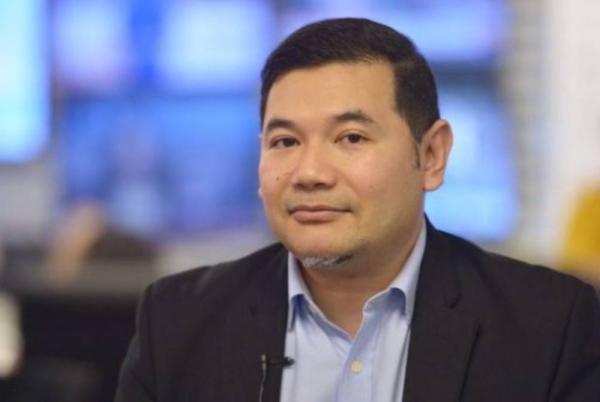
Rafizi Ramli Resigns as Minister of Economy

Rafizi Ramli has announced his resignation as Malaysia’s Minister of Economy, citing the loss of his mandate following a defeat in the recent Parti Keadilan Rakyat (PKR) internal elections. His resignation will take effect on 17 June 2025, with Rafizi set to go on annual leave until then. In a media statement issued Tuesday, Rafizi said his departure is in line with democratic practices, where party leaders who no longer hold internal support should make way for new leadership within the government. “I joined politics to promote a new political culture grounded in accountability and public mandate,” he said. “Losing the party’s confidence means I can no longer credibly deliver PKR’s policy agenda within the Cabinet.” Rafizi leaves office having completed his final task: the formulation of the 13th Malaysia Plan (RMK13), which he confirmed has been finalised and is ready for presentation in the upcoming parliamentary session. The plan, he said, places a strong focus on long-term structural reforms—particularly in the education sector. He urged the Cabinet to maintain the bold policy shifts outlined in RMK13, even in his absence, and commended the Ministry of Economy for its high calibre of public servants and policy execution. During his tenure, Rafizi championed structural reforms aimed at boosting national productivity, addressing income disparities, and positioning Malaysia for high-income status. His departure introduces a potential leadership gap at a critical point in the country’s economic reform trajectory. “The journey to restructure our economy for long-term strength and high-income status is far from over,” he noted. “Difficult decisions must continue to be made today for the benefit of future generations.” Rafizi also expressed his gratitude to public servants, industry stakeholders, the media, and the Malaysian public for their cooperation throughout his term in office. The Ministry of Economy’s leadership transition will be closely watched by investors and business leaders, particularly as the country prepares to implement RMK13 and navigate a complex global economic landscape.

Scroll to Top

Subscribe
FREE Newsletter